Bob Schwartz

Tag: meditation

Meditation is like another room you didn’t know you have

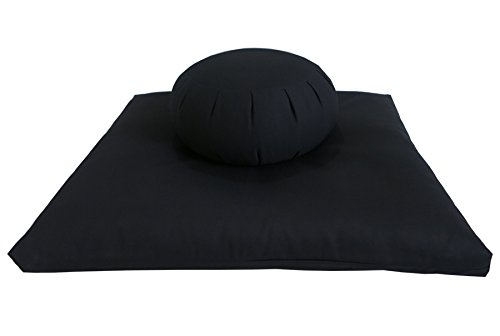
Looking at the mat and cushion on the floor of the room today, it looked like a place. Another room from the room it is in.

Meditation is another room. Whether you meditate for one of the simple reasons or as part of a greater practice and program, it is another room.

Whatever room you are in, in small apartment or a mansion, there is another room that has no walls, ceiling or floor (yes, that makes it hard to sit on a mat!), encompassing everyone and everything. As a bonus, rent-free and mortgage-free.

You are not going to stay there, as you live in all the other rooms—in your house, office, stores, or whatever. But a visit to this other room, seeing all it holds and reveals, can be inspiring (literally meaning breathing in).

Visit another room.

Meditation: More than just stress relief and anxiety reduction

Meditation can do more than just relieve stress, reduce anxiety and sharpen focus, although it may do all that.

To explain what that more might be, here are a couple of paragraphs from one of the best introductions to Buddhism available, by Traleg Kyabgon Rinpoche (1955-2012):


In the West, what meditation means and the reasons for practicing it are understood in many different ways. Meditation has become quite popular. Many people, particularly in the health professions, now recognize its benefits. Some people think that meditation will help them live longer, prolong their youth, lose weight, stop smoking, and so on. Meditation may do all those things, but in the Eastern traditions, such as Buddhism and Hinduism, it has a more profound meaning. Meditation is not practiced for a specific reason such as reducing stress, increasing concentration while playing sports, or dealing with anxiety. It has to be put in the overall context of how we view our lives and how we perceive the world; this can only be provided by a certain kind of philosophical or religious perspective.

Many people are frightened by the notion of religion and say, “I want to learn how to practice meditation, but please spare me the Eastern mumbo-jumbo. I am quite willing to do the breathing exercises or whatever else you tell me to do.” In the Eastern tradition, the practice of meditation relates to transforming ourselves in a fundamental way, not simply changing one aspect of our self. By transforming ourselves we are able to deal with whatever happens in our lives in an appropriate and a meaningful way.

The Essence of Buddhism: An Introduction to Its Philosophy and Practice by Traleg Kyabgon


Meditation is floating but not swimming

Floating can be joyful and necessary.

Swimming is more.

Learning how to swim you first learn how to float.

Floating peacefully in a pool, lake or ocean, floating can be enough. Drifting down a river, floating can be enough. Dropped in deep and distressed water, floating can be enough, more than enough, as it keeps you from sinking.

But floating is not swimming. Swimming can take you places that floating won’t.

Learn to float. Train to swim.

The past has gone and the future is not yet here: Meditation


We are not used to staying in the present but there is nowhere else to be. The past has gone and the future is not yet here. It is that simple: only now exists. The present cannot be controlled. If we hold this moment back, it becomes the past. If we try to make the moment last, we are sending it into the future.

All meditation methods have the same purpose: to keep us in the present and to introduce us to the mind. We are not trying to stop our thoughts but to feel less trapped by them. The earlier we can catch ourselves from falling in with habitual patterns and getting entangled the better, and one of the most dependable techniques for preventing this is awareness of the breath.

Usually we breathe without taking any notice but in this technique we watch the breath, following it as it flows in and out of the body. We keep calm. We are not trying to accomplish anything. We just allow the mind to use the breath to settle. We do not have to supervise our senses or our thoughts. If something distracts or interrupts us, we let it pass. Staying mildly aware of our breath, we observe it without getting too absorbed by it.

Meditation is like taking a holiday. We have permission to give up planning and worrying. We are off duty. It is time to relax and slow down. Too much effort with our practice makes us tight and that is no use, but allowing the mind to go completely flat is not the answer either. If we are not alert, we will fall asleep or our attention will wander without us knowing it. We are trying to find a balance, neither too tense nor too sluggish.

When we are not wound up or straying between the past and the future, the meditation gradually brings us into the present moment—grounded in our body.

Ringu Tulku, Mind Training


The best illustration about meditation ever

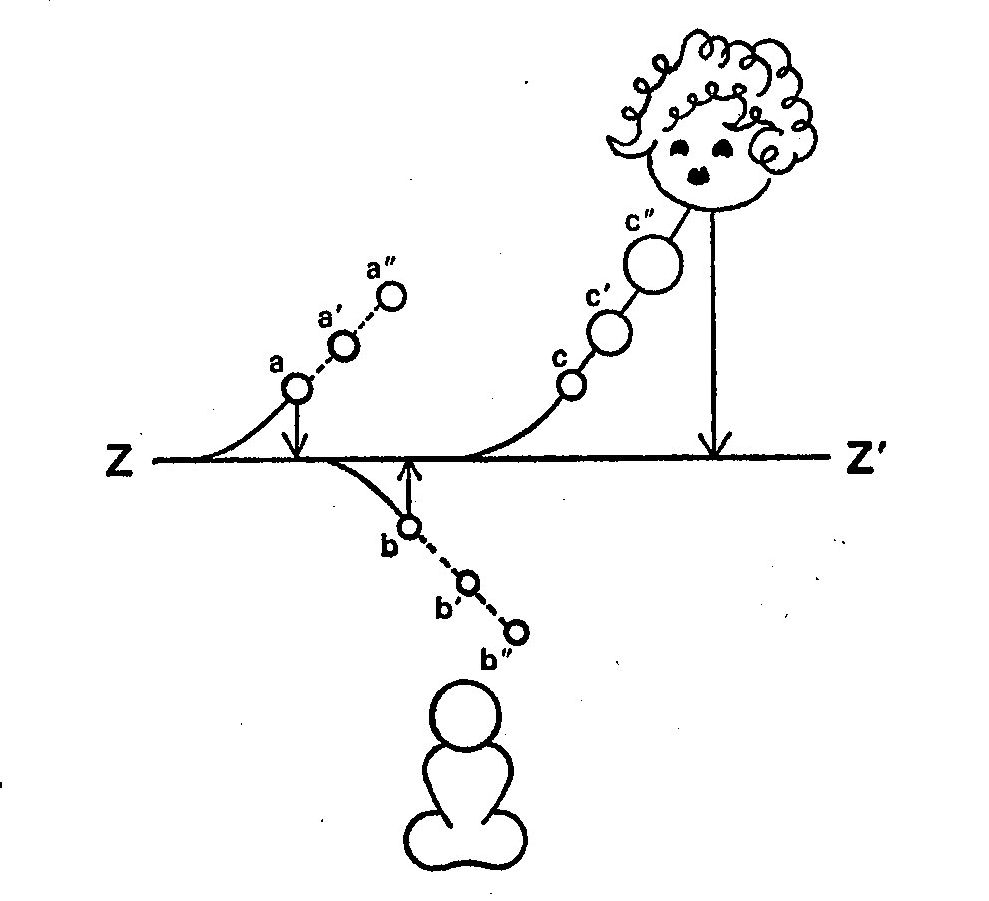
The above is my favorite illustration about meditation ever. Drawn by Zen master Kōshō Uchiyama, it is included in his book Opening the Hand of Thought. If you practice any type of meditation, not just Zen, or if you are interested in meditation but don’t know much about it, this illustration tells you so much.

About Kōshō Uchiyama:

Kōshō Uchiyama was born in Tokyo in 1912. He received a master’s degree in Western philosophy at Waseda University in 1937 and became a Zen priest three years later under Kōdō Sawaki Roshi. Upon Sawaki’s death in 1965, he became abbot of Antaiji, a temple and monastery then located on the outskirts of Kyoto. Uchiyama Roshi developed the practice at Antaiji and traveled extensively throughout Japan, lecturing and leading sesshins. He retired from Antaiji in 1975 and lived with his wife at Noke-in, a small temple outside Kyoto, where he continued to write, publish, and meet with the many people who found their way to his door, until his death in 1999. He wrote over twenty books on Zen, including translations of Dōgen Zenji in modern Japanese with commentaries, a few of which are available in English, as are various shorter essays. He was an origami master as well as a Zen master and published several books on origami.

The text accompanying the illustration:

Actually, zazen is not just being somehow glued to line ZZ’. Doing zazen is a continuation of this kind of returning up from sleepiness and down from chasing after thoughts. That is, the posture of waking up and returning to ZZ’ at any time is itself zazen. This is one of the most vital points regarding zazen. When we are doing zazen line ZZ‘, or just doing zazen, represents our reality, so it is essential to maintain that line. Actually, ZZ’ represents the reality of the posture of zazen, but the reality of our life is not just ZZ’. If it were only ZZ’, we would be as unchanging and lifeless as a rock! Although we aim at the line ZZ’, we can never actually adhere to it, because it (ZZ’) does not exist by itself. Nevertheless, we keep aiming at ZZ‘, because it is through clinging to thoughts that we keep veering away from it. The very power to wake up to ZZ’ and return to it is the reality of the life of zazen.

That is all you may need to know. Really.

Meditation is not about meditation

zafu-and-zabuton

Meditation is not about meditation.

Many meditate. Many think about meditation. Many talk about mediation. Many write about meditation.

The Zen expression “just sitting” is helpful. So many ways, with or without meditation, and so many ways of meditation. “Just” says it is enough in its unadorned, undecorated, uncomplicated way. Whether it is Zen or some other practice, “just” does not stop people from decorating, as they would a bare-walled house.

Without adding to this, without hanging one more picture on the wall, the thought arose: meditation is not about meditation. Not an original thought, but an essential one, maybe the essential one. Rather than explain it, I just repeat it. If you are meditating in any way, or thinking about meditating, or talking about meditating, or writing about meditating:

Meditation is not about meditation.

“Competitive About Your Meditation? Relax, Everyone Else is Too.”

Missing the way by a hairbreadth
is the gap between heaven and earth.
Xinxin Ming (Verses on the Faith Mind), Jianzhi Sengcan (d. 606)

When I saw the following in The Wall Street Journal, I was dumbfounded.

Competitive About Your Meditation? Relax, Everyone Else is Too
As hard-chargers descend on the ancient practice, they are tweaking the quest for inner peace
By Ellen Gamerman

Alan Stein Jr. is on his 324th straight day meditating—a streak he is tending with the mindfulness of a monk.

The 42-year-old performance coach from Gaithersburg, Md., has kept his record using the Headspace app, despite early-morning flights and travel across time zones. On a recent work trip to Atlanta, he remembered to meditate only just after the clock struck midnight. Worried he’d blown his record, he closed his eyes and quickly tried to meditate on the hotel bed for 10 minutes.

“The whole time I’m just waiting for the 10 minutes to be over to see if my streak was alive,” he said. …

Desperate to maintain streaks that can surpass 1,000 days, some driven spiritual voyagers have started looking for new ways to protect their records. On Headspace, the app counts any session completed in an eight-hour period as its own day. Pointing this out, a user on Facebook suggested logging three days in one by meditating at 4 a.m., 2 p.m. and 11 p.m.

On Mindful Makers, a private online group of roughly 250 meditators, members can check the streak rankings daily. Robin Koppensteiner was in second place with 71 days at the start of this week. Members are trusted to report their own meditation updates.

“I have to admit I check every day to see if I’m still in number two or if I’ve gone up to number one,” said the 29-year-old author from Vienna, Austria.

As astonishing as this seems, it should not be surprising.

Every tradition that includes meditation as a practice warns practitioners of objectifying the practice itself, rather than experiencing the practice only for what it is within a bigger context. This is a danger inherent in all religious and spiritual traditions, where specific practices seem to overtake the bigger point. As the Zen saying goes, it is confusing the finger pointing at the moon for the moon itself.

Chogyam Trungpa called this spiritual materialism, which is a central idea in his classic Cutting Through Spiritual Materialism: “The problem is that ego can convert anything to its own use, even spirituality.”

Now in the case of many of these meditators, they are pursuing calm, relaxation or peace of mind, rather than following any particular way, Buddhist or otherwise. Which is fine. But the advantage of practicing within a bigger context is that you are regularly reminded and discover for yourself that things like “meditation streaks” are kind of ridiculous and kind of misleading. In fact, the meditation session you miss might be the very session the brings you the calm, relaxation and peace of mind you are seeking. If you are a “competitive meditator” that will mean nothing to you. If you are, for example, a Zen practitioner, it makes perfect sense.

For meditators worried about breaking their streak and losing the meditation competition, this from Suzuki Roshi:

One of my students wrote to me saying, “You sent me a calendar, and I am trying to follow the good mottoes which appear on each page. But the year has hardly begun, and already I have failed!” Dogen-zenji said, “Shoshaku jushaku.” Shaku generally means “mistake” or “wrong.” Shoshaku jushaku means “to succeed wrong with wrong,” or one continuous mistake. According to Dogen, one continuous mistake can also be Zen. A Zen master’s life could be said to be so many years of shoshaku jushaku. This means so many years of one single-minded effort.