Bob Schwartz

Tag: Mahmoud Darwish

A Palestinian legend for a Palestinian moment: Poet Mahmoud Darwish
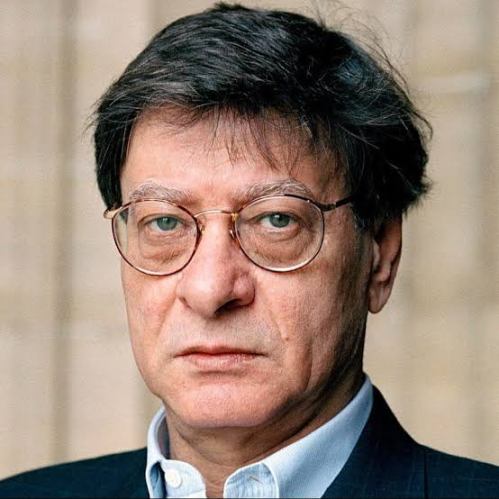
We have on this earth what makes life worth living:
a tyrant’s fear of songs.
Mahmoud Darwish – On This Earth

Israeli minister confirms goal of large-scale expulsion of Palestinians from Gaza
Human rights groups and lawyers say ‘voluntary migration’ policy amounts to ethnic cleansing
The Guardian, May 29, 2026

The news this morning about “cleansing” Gaza brought me back to poet Mahmoud Darwish (1941-2008), featured here a year ago.

“Mahmoud Darwish is a literary rarity: at once critically acclaimed as one of the most important poets in the Arabic language, and beloved as the voice of his people. A legend in Palestine, his lyrics are sung by fieldworkers and schoolchildren.”

From the start of this Israeli war on Gaza and its people, I have focused not just on the depraved indifference to Palestinian lives but also on the cultural decimation. Not long ago Trump threatened to end a civilization in Iran. While he hasn’t followed through yet on the threat, Israel appears to have no such compunctions in Gaza.

Mahmoud Darwish is one of the Palestinian cultural treasures. Fortunately, he is out of reach of current events. Fortunately, his poems cannot be destroyed by the most deadly weapons.

Following is just one poem. Please consider Unfortunately, It Was Paradise: Selected Poems or any of his poems, some of which are online.

Please also consider the vital message that “a tyrant’s fear of songs” does make life worth living.


On This Earth
By Mahmoud Darwish
Translated by Munir Akash and Carolyn Forché

We have on this earth what makes life worth living: April’s hesitation, the aroma of bread
at dawn, a woman’s point of view about men, the works of Aeschylus, the beginning
of love, grass on a stone, mothers living on a flute’s sigh and the invaders’ fear of memories.

We have on this earth what makes life worth living: the final days of September, a woman
keeping her apricots ripe after forty, the hour of sunlight in prison, a cloud reflecting a swarm
of creatures, the peoples’ applause for those who face death with a smile,
a tyrant’s fear of songs.

We have on this earth what makes life worth living: on this earth, the Lady of Earth,
mother of all beginnings and ends. She was called Palestine. Her name later became
Palestine. My Lady, because you are my Lady, I deserve life.
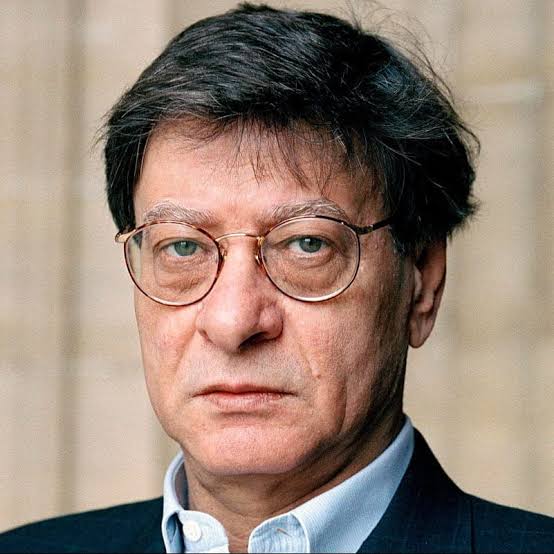

Mahmoud Darwish: The poetry of Palestine

I want to find a language that transforms language itself into steel for the spirit – a language to use against these sparkling silver insects, these jets. I want to sing. I want a language . . . that asks me to bear witness and that I can ask to bear witness, to what power there is in us to overcome this cosmic isolation.
—Mahmoud Darwish


Mahmoud Darwish (1941–2008) was born in the village of al-Birwa, in the Galilee, Palestine. He became a refugee at age seven. He worked as a journalist and editor in Haifa and left to study in Moscow in 1970. His exilic journey took him to Cairo, Beirut, Tunis, Paris, Amman, and Ramallah, where he settled in 1995. He is one of the most celebrated and revered poets in the Arab world. He published more than thirty books, and his poetry has been translated into thirty-five languages.


Even if you are a lover of poetry, you may not have heard of Mahmoud Darwish, despite his work—poetry and prose—being celebrated and translated into thirty-five languages. Translation into English was late in coming. And there is so much culture to taste and consume that it may be incidental ignorance of Arab poetry in general and Palestinian poetry in particular that has kept it out of sight.

Sample praise:

“Darwish’s poetry is an epic effort to transform the lyrics of loss into the indefinitely postponed drama of return.”
—Edward Said

“The most celebrated writer of verse in the Arab world.”
—Adam Shatz, The New York Times

“Did as much as anyone to forge a Palestinian national consciousness.”
—Peter Clark, The Guardian

“No poet in our time has confronted the violent tides of history with greater humanity or greater artistic range than Mahmoud Darwish.
―Michael Palmer, author of Company of Moths

“A world-class poet . . . Darwish has not only remade a national consciousness; he has reworked language and poetic tradition to do so.”
―Fiona Sampson, The Guardian

“Darwish, beloved as the beacon-voice of Palestinians scattered around the globe, had an uncanny ability to create unforgettable, richly descriptive poems, songs of homesick longing which resonate with displaced people everywhere.”
― Naomi Shihab Nye

“No list on Palestinian literature is complete without the acclaimed poet Mahmoud Darwish.”
—Esquire

“Mahmoud Darwish is perhaps the foremost Palestinian poet of last century.”
—Tablet

There are too many books to feature just one. Please consider giving Mahmoud Darwish a try.