Bob Schwartz

Tag: Judaism

The Hanukkah Guest: A Story from Rabbi Nachman of Bratslav

“Now, when you bring your thoughts to Paradise, you are there, on that holy mountain. But when your thoughts return to this world, you will find yourself here once again.”

The Hanukkah Guest, a story from Reb Nachman of Bratslav, retold by Howard Schwartz in A Palace of Pearls:

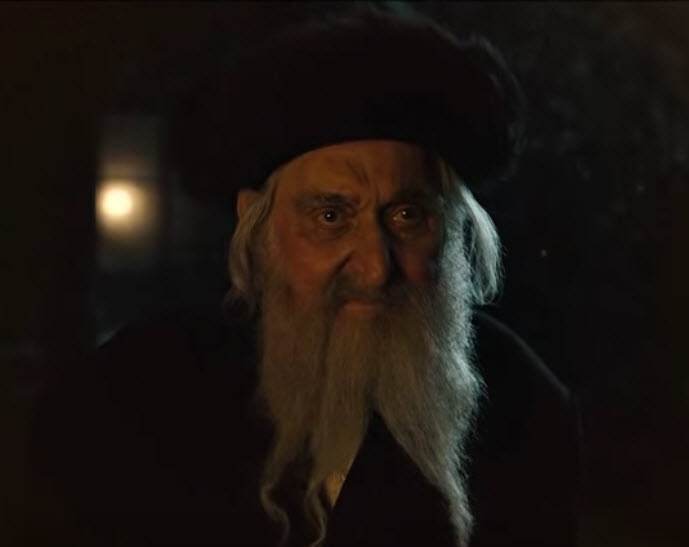
On the first night of Hanukkah, a poor man, who lived alone, chanted the Hanukkah blessings and lit the Hanukkah candle. He gazed at the candle for a long moment, and then there was a knock at the door. When he opened it, he saw a stranger standing there, and he invited him in. They began to discuss things, as people do, and the guest asked the man how he supported himself. The man explained that he spent his days studying Torah, and that he was supported by others, and didn’t have an income of his own. After a while, their talk became more intimate, and the man told the guest that he was striving to reach a higher level of holiness. The guest suggested that they study Torah together. And when the man discovered how profound were the guest’s insights, he started to wonder if he were a human being or an angel. He began to address the guest as Rabbi.

Time flew by, and the man felt as if he had learned more in that one night than in all the other years he had studied. All at once the guest said that he had to leave, and the man asked him how far he should accompany him. The guest replied, “Past the door.” So the man followed the guest out the door, and the guest embraced him, as if to say goodbye, but then he began to fly, with the man clinging to him. The man was shivering, and when the guest saw this, he gave him a garment that not only warmed him, but, as soon as he put it on, he found himself back in his house, seated at the table, enjoying a fine meal. At the same time, he saw that he was flying.

The guest brought him to a valley between two mountains. There he found a book with illustrations of vessels, and inside the vessels there were letters. And the man understood that with those letters it was possible to create new vessels. The man was taken with a powerful desire to study that book. But when he looked up for an instant, he found himself back in his house. Then, when he turned back to the book, he found himself in the valley once more. The guest, whoever he was, was gone. The man, feeling confident, decided to climb up the mountain. When he reached the summit, he saw a golden tree with golden branches. From the branches hung vessels like those illustrated in the book. The man wanted to pick one of those vessels, as one picks fruit from a tree, but as soon as he reached for one, he found himself back in his house, and there was a knock at the door. He opened the door and saw it was the mysterious guest, and he pleaded with him to come in. The guest replied, “I don’t have time, for I am on my way to you.” The man was perplexed, and asked the guest to explain what he meant. The guest said, “When you agreed to accompany me beyond the door, I gave your neshamah, your highest earthly soul, a garment from Paradise. Now, when you bring your thoughts to Paradise, you are there, on that holy mountain. But when your thoughts return to this world, you will find yourself here once again.” And that is how it remained for the rest of that man’s life, and the story has still not come to an end.

Kafka’s Parable (No answer to all questions, no solutions to all mysteries)

Note: This is the first day of Sukkot, the Jewish harvest festival that includes reading Ecclesiastes/Kohelet, one of my favorite books of the Hebrew Bible. Before writing a new post about Ecclesiastes, I reviewed my earlier posts that referenced it. It turns out the following was drafted but never published.


Kafka’s Parable (No answer to all questions, no solutions to all mysteries)

Kafka’s parable
Is a sounding of a bell
That half sickens me.
So obvious that
All searches do not succeed
Still hopeful that
Some do
Mine will.
Why embed the futility of Ecclesiastes
In a treasure map
That might as well say
Not here
Not here
Not anywhere.
Frustration is one thing
The waste of a life another.

© 2025 Bob Schwartz


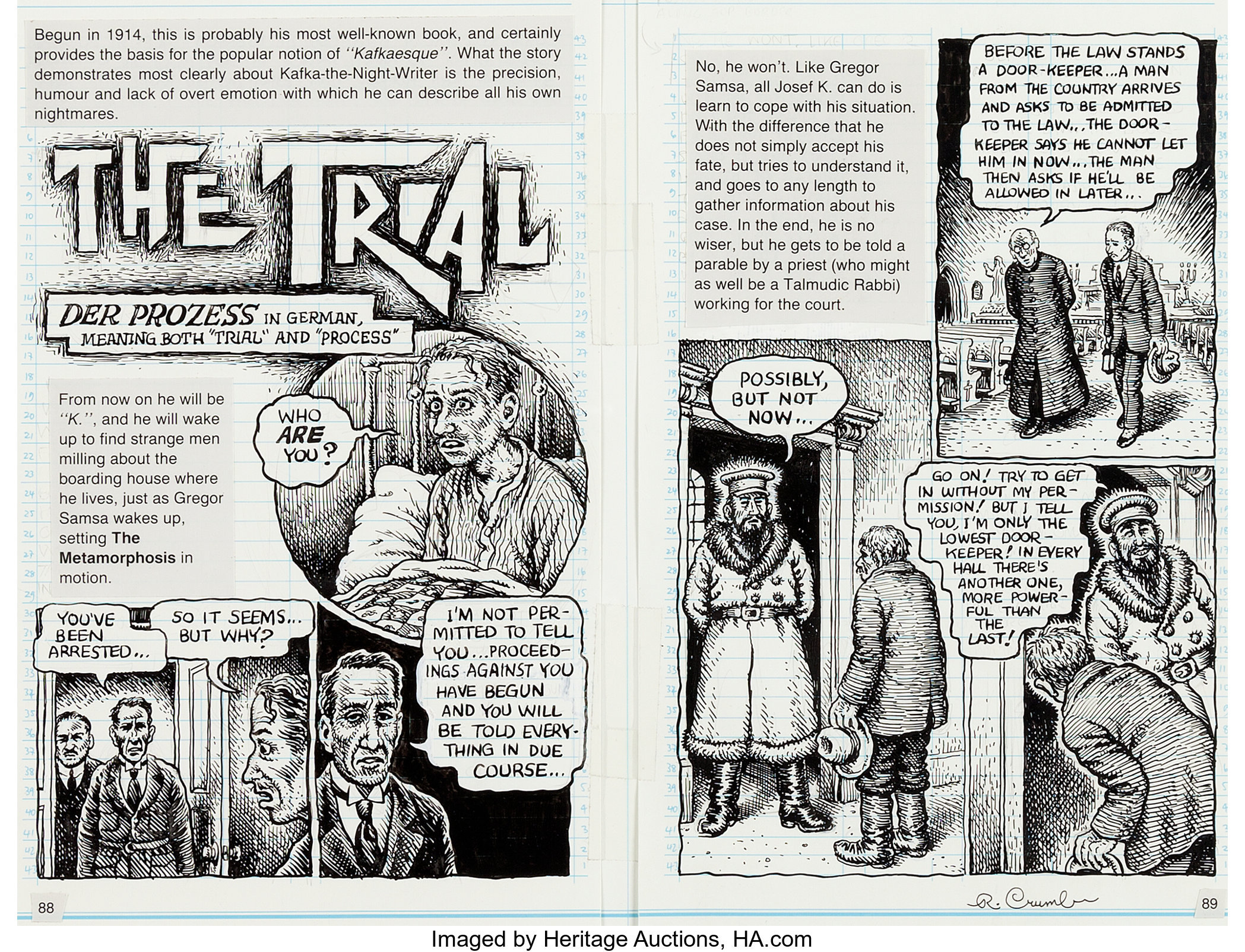
Kafka’s parable, found in his novel The Trial, “can be read as a religious allegory or as an allegory of human justice.” (see below).

The futility found in Ecclesiastes (entitled in Hebrew Kohelet) refers to a repeated theme of the biblical book, starting with its famous opening passage. While there is much disagreement about the English translation of the biblical Hebrew word hevel—air, vapor, breath, mist, smoke, futility, meaningless, absurd, pointless or useless—the line “hevel hevelim, kol hevel” it is best known in English this way:

Futility, futility, all is futility.


From Tree of Souls:The Mythology of Judaism by Howard Schwartz

BEFORE THE LAW

Before the Law stands a man guarding the door. To this doorkeeper comes a man from the country who asks to be admitted to the Law. But the doorkeeper says that he cannot grant him entry. The man thinks about it and asks if, in that case, he will be permitted to enter later. “Possibly,” says the doorkeeper, “but not now.”

As the gateway to the Law is, as always, open, and the doorkeeper steps aside, the man stoops to look within. When the doorkeeper sees this, he laughs and says, “If it tempts you that much, just try to get in. But be aware that I am mighty. And I am only the lowliest doorkeeper. From hall to hall there are doorkeepers, each mightier than the one before. Even I can no longer bear the sight of the third of these.”

The man from the country has not expected such difficulties. Surely, he thinks, the Law ought to be accessible to everybody, always, but now as he looks more carefully at the doorkeeper, with his big pointed nose and long, thin, black Tatar beard, he decides he’d rather wait for permission to enter. The doorkeeper gives him a stool and has him sit down beside the door. There he sits for days and for years. He often tries to be admitted, and wearies the doorkeeper with his pleas. The doorkeeper frequently questions him, asks him about where he comes from and many other things, but they are distant inquiries, the sort great men make, and in the end he always says that he cannot let him in yet. The man, who has equipped himself for his journey with many things, employs everything, however valuable, to bribe the doorkeeper. He takes it all, saying however, “I accept this only so you won’t think you’ve failed to do anything.”

All these long years the man watches the doorkeeper unceasingly. He forgets the other doorkeepers, and this first one seems to be the only obstacle between him and the Law. He curses his miserable luck, at first recklessly and loudly; later, as he grows old, he only grumbles to himself. He becomes childish, and since his years of scrutiny of the doorkeeper have enabled him to recognize even the fleas in his fur collar, he asks even the fleas to help change the doorkeeper’s mind. Finally his eyes grow feeble, and he doesn’t know if it’s really getting darker around him or if his eyes are only tricking him. But in the darkness he now observes an inextinguishable radiance streaming out of the door of the Law.

Now he will not live much longer. Before he dies all he has been through converges in his mind into one question that he has never yet asked the doorkeeper. He signals to him, as he can no longer raise his stiffening body. The doorkeeper has to bend down low to him, as their difference in size has altered, much to the man’s disadvantage. “What do you want to know now?” asks the doorkeeper. “There’s no satisfying you.” “Everyone struggles to reach the Law,” says the man. “How can it be that in all these years no one but me has asked to get in?” The doorkeeper recognizes that the man’s life is almost over and, because his hearing is failing, he roars at him, “No one else could be allowed in here. This entrance was intended only for you. I am now going to close it.”

* * *

This famous parable by Kafka from The Trial can be read as a religious allegory or as an allegory of human justice. Although it is generally thought of more in terms of the latter, it has the distinct elements of a religious allegory. The key image is that “of an inextinguishable radiance streaming out of the door of the Law.” This clearly suggests the eternal nature of the Law, which, of course, draws this eternal quality from God. This shifts the focus of the parable from human justice to the need for divine justice, and hints at the remoteness of God.

The doorkeeper guarding the gate to the Law is reminiscent of the angel placed at the gate of the Garden of Eden, with the flaming sword that turned every way, to guard the way to the tree of life (Gen. 3:24). Also echoed is the popular Christian conception of St. Peter serving as the doorkeeper at the Gates of Heaven.

Gershom Scholem has said that there are three pillars of Jewish mystical thought: the Bible, the Zohar, and the writings of Kafka. Thus he viewed Kafka’s writings, which have been interpreted in a multitude of ways, as mystical texts. Scholem pointed out parallels between “Before the Law” and passages in the Hekhalot texts about angels guarding the gates of the palaces of heaven. For a description of these angels, see “The Entrance of the Sixth Heavenly Palace,” p. 178. Compare this description with Kafka’s description of the doorkeeper in “Before the Law.” The parallels are striking, but since this Hekhalot text was little known during Kafka’s lifetime, it is not likely that he had direct knowledge of it. Moshe Idel also identifies the quest in this tale as the remnant of a mystical one. See Kabbalah: New Perspectives, p. 271.

Another perspective is suggested by Zohar 1:7b: Open the gates of righteousness for me . . . . This is the gateway to the Lord (Ps. 68:19-20). Assuredly, without entering through that gate one will never gain access to the most high King. Imagine a king greatly exalted who screens himself from the common view behind gate upon gate, and at the end, one special gate, locked and barred. Said the king: “He who wishes to enter into my presence must first of all pass through that gate.”

Another parallel is found in Ibn Gabirol’s eleventh century treatise, The Book of the Selection of Pearls (ch. 8): “The following laconic observations are said to have been addressed to a king, by one who stood by the gate of the royal palace, but who failed to obtain access. First: Necessity and hope prompted me to approach your throne. Second: My dire distress admits of no delay. Third: My disappointment would gratify the malice of my enemies. Fourth: Your acquiescence would confer advantages, and even your refusal would relieve me from anxiety and suspense.”

Max Brod, Kafka’s close friend and biographer, comments about this parable: “Kafka’s deeply ironic legend ‘Before the Law’ is not the reminiscence or retelling of this ancient lore, as it would seem at first glance, but an original creation drawn deeply from his archaic soul. It is yet another proof of his profound roots in Judaism, whose potency and creative images rose to new activities in his unconscious.” (Johannes Reuchlin und sein Kampf, Stuttgart: 1965, pp. 274-275).

Of course, “Before the Law” can also be read as a personal statement of the kind of obstruction Kafka experienced at the hands of his father. The role of the gatekeeper can also be identified with Kafka’s mother, for Kafka gave his mother the epic letter he wrote to his father, to pass on to him, but she decided not to do so. In such a reading Kafka’s father represents the Law, the strict, godlike figure. See Kafka’s Letter to His Father.

Also, Kafka’s parable is relevant to human justice, where, on many occasions, people have been denied justice by the very ones who were supposed to provide it for them. In doing so they perform the obstructive role of the gatekeeper, who was supposed to welcome the man from the country at the gate intended only for him, but instead prevented him from entering at all.

Readers may wonder why a modern parable by Franz Kafka has been included in a book of Jewish mythology. There are several reasons for this. Kafka’s fiction possesses a strong mythic element, and scholars have become increasingly aware of the strong influence on it of Jewish tradition; Kafka’s writing in general, and this parable in particular, has taken on the qualities of a sacred text in our time; and there are strong parallels between this parable and traditional Jewish myths about the quest to reach God, but also a strong element of doubt in Kafka’s parable that reflects the modern era. Just as the evolution of Jewish mythology did not end with the canonization of the Bible or the Talmud, and continued to flourish in the kabbalistic and hasidic era, so too it can be seen to continue in the modern era in the writings of Kafka. It also can be found in other seminal Jewish authors, such as I. L. Peretz, S. Y. Agnon, Bruno Schulz, and I. B. Singer.

Why compassion?

There is a notable lack of compassion in some of the public initiatives in America and in other nations. These are nations that officially or unofficially identify as Judaeo-Christian.

For some time I’ve focused on that lack of compassion and considered how it might be improved.

But here I move to a predicate question. Why do those traditions or society value and promote compassion at all?

The question particularly arises for students of Buddhism. It may be an overbroad characterization, but it is not imprecise to say that compassion is at the center of Buddhism.

Which leads to the question of whether and how much compassion is at the center of other traditions.

So why compassion at all?

Here a few of the possible answers.

It is the right thing to do.

God wants it and expects it.

The Golden Rule advises it, because we will be treated as we treat others.

It will get us into heaven or keep us out of hell.

It makes us feel good.

Unlike those and other explanations, Buddhism reaches compassion not as an assigned transactional value but as an unavoidable conclusion. To simplify in my own substandard understanding, if there is absolute equality among us, there can be nothing but compassion. If we don’t recognize that absolute equality—and we so often don’t, instead putting ourselves in an unequal position—how can we be genuinely compassionate?

With that, back to the events of the day, and the open question of how, once we have advanced our own compassion, we can find ways to advance it in our traditions and in our nations.

Confession for the Jewish High Holidays 5785/2024

Ashamnu
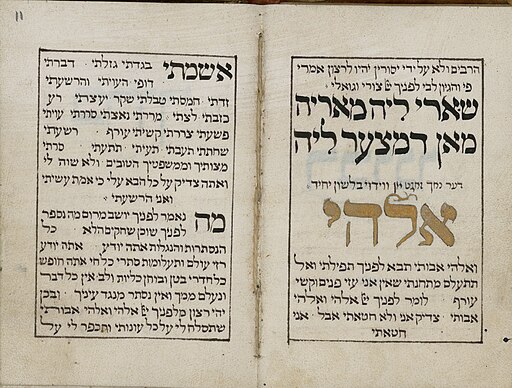
אָשַׁמְנוּ
nahn maswuwlun
نحن مسؤولون
We are responsible

Bagadnu
בָּגַדְנוּ
nahn nakhun
نحن نخون
We betray

Gazalnu
גָּזַלְנוּ
nahn nasriq
نحن نسرق
We steal

Dibarnu dofi
דִבַּרְנוּ דֹפִי
nahn nahtaqir
نحن نحتقر
We scorn

He-evinu
הֶעֱוִינוּ
nahn natasaraf bishakl munharif
نحن نتصرف بشكل منحرف
We act perversely

V’hirshanu
וְהִרְשַׁעְנוּ
nahn qusa
نحن قساة
We are cruel

Zadnu
זַדְנוּ
nahn nukhatit
نحن نخطط
We scheme

Chamasnu
חָמַסְנוּ
nahn eanifun
نحن عنيفون
We are violent

Tafalnu shaker
טָפַלְנוּ שֶקֶר
nahn alaiftira’
نحن الافتراء
We slander

Ya-atznu ra
יָעַצְנוּ רַע
nahn nabtakir alshara
نحن نبتكر الشر
We devise evil

Kizavnu
כִּזַבְנוּ
nahn naqul al’akadhib
نحن نقول الأكاذيب
We lie

Latznu
לַצְנוּ
nahn naskhar
نحن نسخر
We ridicule

Maradnu
מָרַדְנוּ
nahn naesi
نحن نعصي
We disobey

Ni-atznu
נִאַצְנוּ
nahn nasi’
نحن نسيء
We abuse

Sararnu
סָרַרְנוּ
nahn natahadak
نحن نتحداك
We defy

Avinu
עָוִינוּ
nahn nufsid
نحن نفسد
We corrupt

Tzararnu
צָרַרְנוּ
nahn eadaayiyuwna
نحن عدائيون.
We are hostile

Kishinu oref
קִשִׁינוּ עֹרֶף
nahn eanidun
نحن عنيدون
We are stubborn

Rashanu
רָשַׁעְנוּ
nahn ghayr ‘akhlaqiiyn
نحن غير أخلاقيين
We are immoral

Shichatnu
שִׁחַתְנוּ
nahn naqtul
نحن نقتل
We kill

Tiavnu
תִּעַבְנוּ
nahn nufsid
نحن نفسد
We spoil

Ta·inu
תָּעִינוּ
nahn nudil
نحن نضل
We go astray

Titanu
תִּעְתָּעְנוּ
nahn naqud alakharin ‘iilaa aldalal
نحن نقود الآخرين إلى الضلال
We lead others astray


The Jewish High Holidays 5785/2024—the ten Days of Repentance and Awe—begin with Rosh Hashanah, the New Year, on the evening of October 2, and end with Yom Kippur, the Day of Repentance, on October 10.

Confession is a centerpiece of the holiday. In the liturgy, Vidui includes two confessional prayers, Ashamnu and Al Cheit. Ashamnu is the shorter list of transgressions. Al Cheit is a longer detailed list of particular wrongdoings.

The past year has been one of tragedy, suffering and war in Israel, Gaza, the Middle East, and the Jewish world. Whatever our faith, status, history, ideology, grievances, or rationales, we are reminded now that none of is above responsibility, none of us as above the need for confession.

Above is my adaptation of Ashamnu. In Hebrew it is an acrostic, the first letter of each line in alphabetical order. English translations of those words vary, but all are admissions of conduct to be fixed in the year ahead. I’ve changed the common translation of the first word, Ashamnu. Often translated as “we have trespassed” or “we are guilty”, I have borrowed from Abraham Joshua Heschel. He famously said about his early protest of the Vietnam War: “In a free society, few are guilty, but all are responsible.”

My version also adds a rough translation of each expression into Arabic. Not in the least literate in the language, I’ve relied on a digital translator. For any errors in this, small or egregious, my humble and sincere apologies.

The message is that all of us, from the heinous to the heavenly, are responsible. The High Holidays insist that we are imperfect in ways that we may not acknowledge or may ignore. Our hearts may be hard when they should be soft. Why else do we literally beat our chests as we recite each of our wrongs? So we can locate our hearts, reach in, and know what condition they are in.

Shana tova. A good and sweet New Year to all.

© 2024 by Bob Schwartz

Passover message: “No stranger shall you oppress, for you know the stranger’s heart, having yourselves been strangers in the land of Egypt.”

גֵ֖ר לֹ֣א תִלְחָ֑ץ וְאַתֶּ֗ם יְדַעְתֶּם֙ אֶת־נֶ֣פֶשׁ הַגֵּ֔ר כִּֽי־גֵרִ֥ים הֱיִיתֶ֖ם בְּאֶ֥רֶץ מִצְרָֽיִם׃
Exodus 23:9

One line from the Book of Exodus crystallizes our moment.

As with all biblical Hebrew, the translation is challenging and varied.


Exodus 23:9

You shall not oppress a stranger, for you know the feelings of the stranger, having yourselves been strangers in the land of Egypt. (NJPS)

You shall not oppress a resident alien; you know the heart of an alien, for you were aliens in the land of Egypt. (NRSV)

No sojourner shall you oppress, for you know the sojourner’s heart, since you were sojourners in the land of Egypt. (Robert Alter)


Alter addresses one of the translation challenges, the Hebrew word nefesh/נֶ֣פֶשׁ:

“The Hebrew is nefesh, “heart”, “life,” “inner nature,” “essential being,” “breath.””

Another word needing expansion is the Hebrew ger/גֵּ֔ר. Scholars Mark Allen Powell and Dennis R. Bratcher explain in the HarperCollins Bible Dictionary:


alien (ger): In the Bible, one who is not a member of a particular social group. Accordingly, Abraham was an alien (NRSV: “stranger”) among the Hittites at Hebron (Gen. 23:4), as were Moses in Midian (Exod. 2:22) and the Israelites in Egypt (Deut. 23:7; cf. Ruth 1:1). The Hebrew word is ger, and it has often been translated “sojourner” in English Bibles. The NRSV is inconsistent, translating it “alien” in some instances and “stranger” in others. After the settlement in Canaan, the term not only designated a temporary guest but also acquired the more specialized meaning of “resident alien,” one who lived permanently within Israel (Exod. 22:21; 23:9). No doubt because the Israelites were keenly aware of their own heritage as aliens without rights in a foreign land, they developed specific laws governing the treatment of aliens. Strangers or aliens were to be treated with kindness and generosity (Lev. 19:10, 33–34; 23:22; Deut. 14:29). The basic principle was, “You shall also love the stranger, for you were strangers in the land of Egypt” (Deut. 10:19). And, again, “You shall love the alien as yourself, for you were aliens in the land of Egypt” (Lev. 19:34)….

“Alien” or “stranger” also appears in a figurative sense, usually in appealing to the generosity and mercy of God in dealing with undeserving people (Pss. 39:12; 119:19; 1 Chron. 29:15). The idea of dwelling in a land owned by someone else is also applied theologically to the relationship of the Israelites to the land; it belonged to God and they were the strangers in it (Lev. 25:23). (emphasis added)


This Passover, we give a thought to the nefesh—heart, life, inner nature, essential being, breath—of the ger—stranger, sojourner, resident alien. As the Bible reminds us, we were strangers too.

Hag Pesach sameach.

This

This

You say this is what God wants
God told you
Or told someone who heard
And told you
Told someone
Who wrote it down
Figured out
That this is what God wants.
I am no more than Moses or others
But no less.
Here is what I read and heard
And write.
Bereshit bara elohim et hashamayim v’et ha’aretz. V’ha’aretz hatah tohu v’bohu.”*
In the beginning was tohu and bohu, a formless wasteland.
All the rest is commentary
For us not God to write create destroy.
Write we did
Create we did
Destroy we did
And do.
This is what we want.

*Genesis 1:1-2

© 2024 by Bob Schwartz

Gaza war: Loss of mysticism means embrace of tragic materialism

Gaza Sefirot

What is mysticism? One of many words that can mean many things. As Humpty Dumpty said, “When I use a word, it means just what I choose it to mean — neither more nor less.”

In The Encyclopedia of Jewish Myth, Magic and Mysticism, Rabbi Geoffrey Dennis tries to define it:


The term “mysticism” is one commonly applied, but imperfectly defined….

Scholars have struggled to give a precise definition to what constitutes mysticism within the Western religious traditions. Most regard it to be the impulse, ideology, and discipline to experience the unmediated presence of God or, more radically, union with divinity or a more broadly defined “Absolute.” Evelyn Underhill calls it, “… the expression of the innate tendency of the human spirit towards complete harmony with the transcendental order; whatever be the theological formula under which that order is understood.” Others see mysticism as a project of human transformation, the radical revision of human nature in relationship to the divine.


There is a substantial body of mysticism in Judaism, as there is in its younger siblings Christianity and Islam. The place of mysticism in these religions is complex and varied over time and circumstances. While mysticism might lead to fierce conflicts (“my enlightened vision is better than your enlightened vision”), the “radical revision of human nature” can also lead to followers experiencing other people and things in a more humane, open and divine way.

I don’t know of research measuring the study and adoption of mysticism among contemporary Jews. My anecdotal observation is that it might be small.

To a certain extent, materialism is the opposite of mysticism. Things are things but also transcendentally more than things. Land is land but transcendentally more than land. As religionists say, the phenomenal and the noumenal. We need and can’t avoid having and using the things, but that leads to attaching to the things, which inevitably leads to trouble, within ourselves and in the world. Mysticism, easily lost in the everyday of religions, including Judaism, and certainly lost in the turmoil, could be helpful right now.

© 2024 by Bob Schwartz

The diverse candles of Hanukkah

Today is the last day of Hanukkah. The menorah was filled up last night and now it’s burned down and done. Just in time to mention the candles.

Once buying Hanukkah candles was simple: a box of white or a box of assorted colors. Now everything is different. Now there are choices. Lots of choices.

Here are some of the choices. For next year.

Dripless
Multicolored
Striped
Tapered
Metallic
Silver
Blue Frost
Colorful
Beeswax
Handmade
Sunburst
Hand Decorated
3-Tone
Pastel
Diamond Etched
Crayon
Spiral
Honeycomb Beeswax
Blue Hued
Natural
Organic
Vegetable Wax
Multi Splash
Sweet Scented
Tall
Wave Etched
Twisted
Thin
Blaze of Fire
Purple
Paraffin Wax
Tri Color
Handcrafted

© 2023 by Bob Schwartz

Ani Shalom – I am peace – אֲֽנִי־שָׁ֭לוֹם

Too long have I dwelt with those who hate peace.
I am all peace;
but when I speak,
they are for war.

Psalm 120:6-7

I am not a pacifist.

There are many definitions of pacifist, including:

A person who opposes war or violence as a means of settling disputes.
A person who believes that war and violence are unjustifiable.

Up until now, I hadn’t thought about whether I would classify myself as or be considered a pacifist. The short answer is ‘no”. During the wars I’ve lived through or for those I know from recent or ancient history, I can say that some of the wars and violence pursued were justified. Others were not, or were pursued in ways that were not justified, or for objectives that were not justified, or were pursued without trying other means, or were just stupid or evil.

But I am for peace. Peace should never be a secondary or tertiary objective once the other objectives have been achieved or not, once all the destructive and deadly means have been tried. Peace should have co-equal status at the top of the list.

During the ongoing war in Gaza, I’ve discovered that all the divergent thinking and rhetoric, from me and so many others, from just plain folks up to world leaders, is having little effect on the course of hostilities. Wars are about action, well-chosen or ill-chosen, and stubborn actors convinced of their rightness can be deaf.

Then I realized that if I am going to be using my words to little practical effect, I might as well use them to promote the possibility of peace.

Which is how I came to find a verse in Psalm 120. The standout Hebrew phrase is “Ani shalom”, literally the words are “I” and “peace”. Lacking a verb, it is variously translated as “I am peace”, “I am all peace”, “I am for peace”.

I am peace and I hope you are too.


רַ֭בַּת שָֽׁכְנָה־לָּ֣הּ נַפְשִׁ֑י עִ֝֗ם שׂוֹנֵ֥א שָׁלֽוֹם׃
אֲֽנִי־שָׁ֭לוֹם וְכִ֣י אֲדַבֵּ֑ר הֵ֝֗מָּה לַמִּלְחָמָֽה׃

Rabat shachna la nafshi
Ani shalom v’chi adaber hama lamilchama

Too long have I dwelt with those who hate peace.
I am all peace;
but when I speak,
they are for war.

Psalm 120:6-7

Mad Gods by the sea

Palestine Sunbird in Gaza

Mad Gods by the sea

God of Moses
God of Jesus
God of Mohammed
God of infinite names
Sitting by the desert sea
Pained and grieved.
This is madness.
These people
Every inclination
Is only evil
All the time.*
They take our names
In vile vain.**
There is the water
Let us drive them in
And start again
Just like days of old
Do better next time.
But how would they learn?
Hard hearts may soften
Dissolved in blood and tears.
We won’t abandon
We don’t approve.

*Genesis 6.5-7
**Exodus 20.6

© 2023 by Bob Schwartz