After the International Court of Justice (ICJ) ordered a halt to the Israeli offensive in Rafah, Israeli spokesperson Avi Hyman said, “No power on Earth will stop Israel from protecting its citizens and going after Hamas in Gaza.”
I have no two-way channel with God. Whether or not the age of prophets and prophecy is past or present, whether there are those who had or have revelations, I am not one. This has not stopped me from wondering what God would say or do when faced with the precise way Israel is going about its protection of citizens and its pursuit of Hamas.
It seems that Netenyahu and his war cabinet, and their supporters, believe that everything they are doing is exactly what God wants them to do. Whether that comes from direct communication or is derived from their interpretation of the tradition they haven’t said.
If they asked me how I interpret the tradition, that is, what I think God wants, I don’t think it is this. Again, I’m not a prophet, and they would never ask me anyway.
I imagine God being pretty harsh with these Israeli leaders. I imagine God would tell them that as strategists they are the worst. The word “idiots” might be used, if that is how God talks. I imagine that Israeli lack of mercy and compassion would come up. God might remind them that in biblical times, Israelites who strayed so far from basic moral principles could expect to be smitten.
Maybe this is what the spokesperson is hinting at. Yes, he might be saying, “No power on earth will stop us. But if God intervenes, that’s a whole different story.”
Hind Rajab, age six, senior kindergarten graduation, killed by tank fire in Gaza
The rapper Macklemore just released the new track Hind’s Hall, about the war in Gaza and the protests.
Macklemore is a hugely popular artist. On Spotify, he has 32 million monthly listeners, making him 128th in the world. His tracks have been streamed 13 billion times.
Eleven years ago, his track Same Love celebrated the right of relationships between all people, at a time when same-sex marriage was not yet fully allowed or protected in America. It was a hit and has become an anthem.
His new track about the Gaza war is another powerful statement.
Hamilton Hall/Hind’s Hall, Columbia University
Artists in various media have taken on the war in Gaza. Slowly, tentatively, because many are concerned about being dropped or rejected. Musical artists have been the slowest. Macklemore, who has built a career independent of record labels, laments:
Yet the music industry’s quiet, complicit in their platform of silence What happened to the artist? What do you got to say? If I was on a label, you could drop me today I’d be fine with it ’cause the heart fed my page
Macklemore isn’t a hater, except of thoughtless war and repression. The millions who will stream this track (all streaming proceeds going to UNRWA) are not haters, except of thoughtless war and repression. It is notable that Spotify, in today’s New Music Friday playlist, doesn’t include Hind’s Hall.
Thank you Macklemore. Thank you all artists—writers, filmmakers, musicians—who have stood up and those who haven’t yet but will.
Above is a photo of Martin Luther King Jr. being arrested in Atlanta for taking part in a sit-in. Below is an excerpt from Dr. King’s Letter from a Birmingham Jail, where he was being imprisoned for taking part in nonviolent demonstrations against segregation.
You will not hear much mention of Dr. King from those cracking down on campus protests these days. It is inconvenient, because they would then have to make some fine distinctions between demonstrating for civil rights and demonstrating for human rights. Silence combined with force is easier.
It should not be necessary to explain the role of nonviolent protest and civil disobedience in American and world history. But apparently, the current thinking is that protesting this way proves that your cause is unworthy and wrongheaded. It is implied that if protestors don’t remove their campus encampments by a deadline, they are obviously illegitimate. Just as the civil rights movement was unworthy, wrongheaded and illegitimate to some.
From Letter from a Birmingham Jail
In no sense do I advocate evading or defying the law, as would the rabid segregationist. That would lead to anarchy. One who breaks an unjust law must do so openly, lovingly, and with a willingness to accept the penalty. I submit that an individual who breaks a law that conscience tells him is unjust, and who willingly accepts the penalty of imprisonment in order to arouse the conscience of the community over its injustice, is in reality expressing the highest respect for law.
Of course, there is nothing new about this kind of civil disobedience. It was evidenced sublimely in the refusal of Shadrach, Meshach and Abednego to obey the laws of Nebuchadnezzar, on the ground that a higher moral law was at stake. It was practiced superbly by the early Christians, who were willing to face hungry lions and the excruciating pain of chopping blocks rather than submit to certain unjust laws of the Roman Empire. To a degree, academic freedom is a reality today because Socrates practiced civil disobedience. In our own nation, the Boston Tea Party represented a massive act of civil disobedience.
We should never forget that everything Adolf Hitler did in Germany was “legal” and everything the Hungarian freedom fighters did in Hungary was “illegal.” It was “illegal” to aid and comfort a Jew in Hitler’s Germany. Even so, I am sure that, had I lived in Germany at the time, I would have aided and comforted my Jewish brothers.
One line from the Book of Exodus crystallizes our moment.
As with all biblical Hebrew, the translation is challenging and varied.
Exodus 23:9
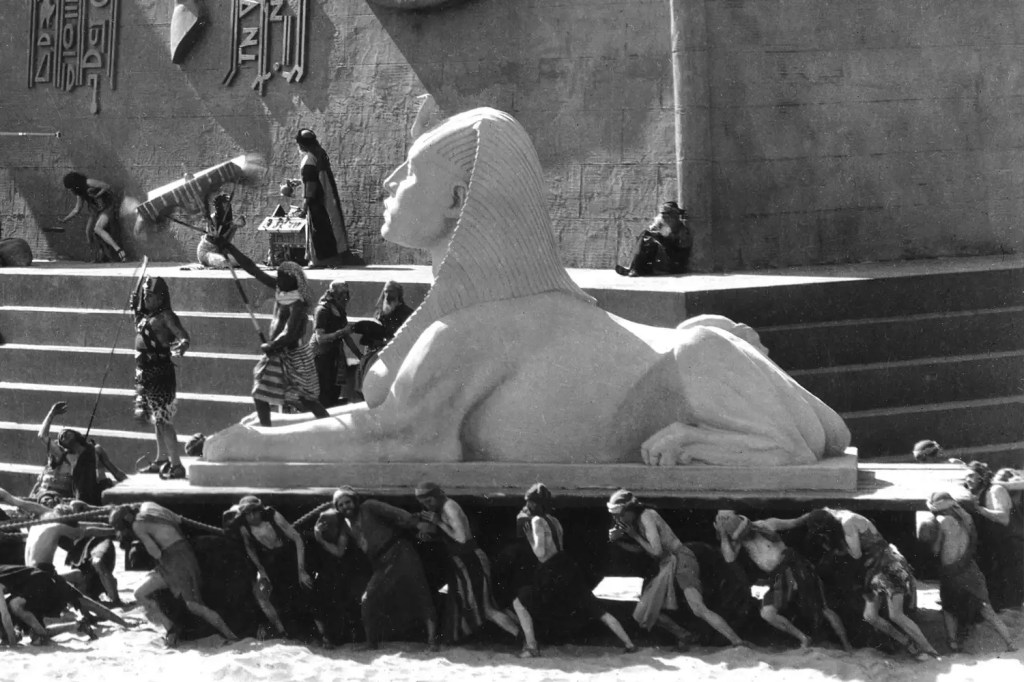
You shall not oppress a stranger, for you know the feelings of the stranger, having yourselves been strangers in the land of Egypt. (NJPS)
You shall not oppress a resident alien; you know the heart of an alien, for you were aliens in the land of Egypt. (NRSV)
No sojourner shall you oppress, for you know the sojourner’s heart, since you were sojourners in the land of Egypt. (Robert Alter)
Alter addresses one of the translation challenges, the Hebrew word nefesh/נֶ֣פֶשׁ:
“The Hebrew is nefesh, “heart”, “life,” “inner nature,” “essential being,” “breath.””
Another word needing expansion is the Hebrew ger/גֵּ֔ר. Scholars Mark Allen Powell and Dennis R. Bratcher explain in the HarperCollins Bible Dictionary:
alien (ger): In the Bible, one who is not a member of a particular social group. Accordingly, Abraham was an alien (NRSV: “stranger”) among the Hittites at Hebron (Gen. 23:4), as were Moses in Midian (Exod. 2:22) and the Israelites in Egypt (Deut. 23:7; cf. Ruth 1:1). The Hebrew word is ger, and it has often been translated “sojourner” in English Bibles. The NRSV is inconsistent, translating it “alien” in some instances and “stranger” in others. After the settlement in Canaan, the term not only designated a temporary guest but also acquired the more specialized meaning of “resident alien,” one who lived permanently within Israel (Exod. 22:21; 23:9). No doubt because the Israelites were keenly aware of their own heritage as aliens without rights in a foreign land, they developed specific laws governing the treatment of aliens. Strangers or aliens were to be treated with kindness and generosity (Lev. 19:10, 33–34; 23:22; Deut. 14:29). The basic principle was, “You shall also love the stranger, for you were strangers in the land of Egypt” (Deut. 10:19). And, again, “You shall love the alien as yourself, for you were aliens in the land of Egypt” (Lev. 19:34)….
“Alien” or “stranger” also appears in a figurative sense, usually in appealing to the generosity and mercy of God in dealing with undeserving people (Pss. 39:12; 119:19; 1 Chron. 29:15). The idea of dwelling in a land owned by someone else is also applied theologically to the relationship of the Israelites to the land; it belonged to God and they were the strangers in it (Lev. 25:23). (emphasis added)
This Passover, we give a thought to the nefesh—heart, life, inner nature, essential being, breath—of the ger—stranger, sojourner, resident alien. As the Bible reminds us, we were strangers too.
Some people, Jews and others, believe that the Israeli strategy in Gaza is justified and that the deaths and suffering of innocent people are unfortunate collateral damage of an important goal. Some people, Jews and others, disagree.
One thing we all can agree on is that when people, especially children, suffer, justifiably or not, it is our duty to help relieve that suffering in any way we can. People of all religious traditions or none can agree on this.
The International Rescue Committee is one of the most respectable and responsible organizations in the world working on this:
The International Rescue Committee (IRC) helps people affected by humanitarian crises—including the climate crisis—to survive, recover and rebuild their lives.
Founded at the call of Albert Einstein in 1933, the IRC is now at work in over 50 crisis-affected countries as well as communities throughout Europe and the Americas.
As Jews, on Passover we recall how our storied ancestors suffered—under the hand of a wicked ruler, wandering in a desolate desert. As we have suffered and suffer still, how can we deny the suffering of others and fail to relieve it?
When the Israelites were starving in the desert, we are told that God provided manna:
In the desert the whole community grumbled against Moses and Aaron. The Israelites said to them, “If only we had died by the Lord’s hand in Egypt! There we sat around pots of meat and ate all the food we wanted, but you have brought us out into this desert to starve this entire assembly to death.” Then the Lord said to Moses, “I will rain down bread from heaven for you. The people are to go out each day and gather enough for that day. (Exodus 16:2-4)
You say this is what God wants God told you Or told someone who heard And told you Told someone Who wrote it down Figured out That this is what God wants. I am no more than Moses or others But no less. Here is what I read and heard And write. “Bereshit bara elohim et hashamayim v’et ha’aretz. V’ha’aretz hatah tohu v’bohu.”* In the beginning was tohu and bohu, a formless wasteland. All the rest is commentary For us not God to write create destroy. Write we did Create we did Destroy we did And do. This is what we want.
Rhetoric doesn’t end war and save lives. Whatever the rhetoric he and his administration announce, Biden continues to arm a nation pursuing a questionable war strategy that is killing thousands. Reported just yesterday:
US reportedly approves transfer to Israel of bombs and jets worth billions Sources say weapons package authorized even as Washington expresses public concern over anticipated offensive in Rafah Friday, March 29, 2024
The US in recent days authorized the transfer of billions of dollars worth of bombs and fighter jets to Israel, two sources familiar with the effort said on Friday, even as Washington publicly expresses concerns about an anticipated Israeli military offensive in Rafah.
The new arms packages include more than 1,800 MK-84 2,000lb bombs and 500 MK-82 500lb bombs, said the sources, who confirmed a report in the Washington Post.
Whether you lived through the Vietnam War or know it only as history, this is seeming oppressively and depressingly familiar, not just as an unnecessary tragedy, but as a political nightmare.
LBJ accomplished a lot of important things for America, but his stubborn support of the war in Vietnam doomed his reelection in 1968, leading him to drop out of the race, and leading to the horrors of the Nixon White House.
Biden has also accomplished a lot of important things for America. But he already goes into the 2024 election with widespread questions about his age. Now added to that is his stubborn support, despite his rhetoric, for a war that is already tragic and a situation that will not look better by the time of the election.
The analogy isn’t perfect. But as the saying goes, history may not repeat itself, but it rhymes. This is looking a lot like Biden’s Vietnam. And as terrible as the Nixon presidency was, the Trump regime would be more evil and dangerous. Is there still time for Biden to do more than talk, to stand up and use American military support as leverage? Even if he does, is it too late to make a difference in what is almost certainly a toss-up election, with Biden in the eyes of some voters—especially some Democratic voters—a villain?
“There is a certain people. They do not keep the king’s laws, so that it is not appropriate for the king to tolerate them. Let a decree be issued for their destruction.” Esther 3:8
There has been an abundant supply of information, analysis, belief and emotion surrounding the current Israeli war in Gaza. I have increasingly kept the analysis, belief and emotion to myself, or at least in a very small circle. In Yiddish terms, who needs the tzuris (trouble, aggravation)?
As for information, I have continued to seek trustworthy work from scholars and historians who have studied the issues. Some of this work is not always in the mainstream of discussion. Here are a few books I have found:
“Just and Unjust Wars has forever changed how we think about the ethics of conflict. In this modern classic, political philosopher Michael Walzer examines the moral issues that arise before, during, and after the wars we fight. Reaching from the Athenian attack on Melos, to the Mai Lai massacre, to the war in Afghanistan and beyond, Walzer mines historical and contemporary accounts and the testimony of participants, decision makers, and victims to explain when war is justified and what ethical limitations apply to those who wage it.”
“A revelatory look at why we dehumanize each other, with stunning examples from world history as well as today’s headlines.
“Brute.” “Cockroach.” “Lice.” “Vermin.” “Dog.” “Beast.” These and other monikers are constantly in use to refer to other humans—for political, religious, ethnic, or sexist reasons. Human beings have a tendency to regard members of their own kind as less than human. This tendency has made atrocities like the Holocaust, the genocide in Rwanda, and the slave trade possible, and yet we still find it in phenomena such as xenophobia, homophobia, military propaganda, and racism. Less Than Human draws on a rich mix of history, psychology, biology, anthropology and philosophy to document the pervasiveness of dehumanization, describe its forms, and explain why we so often resort to it.
David Livingstone Smith posits that this behavior is rooted in human nature, but gives us hope in also stating that biological traits are malleable, showing us that change is possible. Less Than Human is a chilling indictment of our nature, and is as timely as it is relevant.”
“A new history of the American Jewish relationship with Israel focused on its most urgent and sensitive issue: the question of Palestinian rights.
American Jews began debating Palestinian rights issues even before Israel’s founding in 1948. Geoffrey Levin recovers the voices of American Jews who, in the early decades of Israel’s existence, called for an honest reckoning with the moral and political plight of Palestinians. These now‑forgotten voices, which include an aid‑worker‑turned‑academic with Palestinian Sephardic roots, a former Yiddish journalist, anti‑Zionist Reform rabbis, and young left‑wing Zionist activists, felt drawn to support Palestinian rights by their understanding of Jewish history, identity, and ethics. They sometimes worked with mainstream American Jewish leaders who feared that ignoring Palestinian rights could foster antisemitism, leading them to press Israeli officials for reform. But Israeli diplomats viewed any American Jewish interest in Palestinian affairs with deep suspicion, provoking a series of quiet confrontations that ultimately kept Palestinian rights off the American Jewish agenda up to the present era.”
“Remember the blood of the innocent cries forever. Should that blood stop to cry, humanity would cease to be.” —Abraham Joshua Heschel
Abraham Joshua Heschel was a great Jewish thinker, writer and prophet of the twentieth century. I have included him in over 30 posts, far more than any other figure. Here is one example.
Heschel was one of the earliest religionists to oppose the Vietnam War. As a friend and colleague of Martin Luther King Jr. in the civil rights movement, he influenced King to publicly come out against the war.
Benjamin Sax talks about the price Heschel paid:
“When he came out against the Vietnam War for example, there were a lot of Jewish presses and a lot of Jewish leadership that spoke out against him. There was a lot of criticism about his leadership, about his point of view – he was considered naive. Worse he was considered theologically naive. That what he was doing was undermining the safety of his own people and undermining the safety of our country. And that aspiring to these universal, patriotic values was something that at least many in the Jewish community wanted to put out there even if they were uncomfortable with the reasons why we were in Vietnam. And so, it also put his reputation at risk.”
Heschel wrote about the war:
“The blood we shed in Vietnam makes a mockery of all our proclamations, dedications, celebrations. Has our conscience become a fossil, is all, mercy gone? If mercy, the mother of humility, is still alive as a demand, how can we say yes to our bringing agony to that tormented country? We are here because our own integrity as human beings is decaying in the agony and merciless killing done in our name. In a free society, some are guilty and all are responsible. We are here to call upon the governments of the United States as well as North Vietnam to stand still and to consider that no victory is worth the price of terror, which all parties commit in Vietnam, North and South. Remember the blood of the innocent cries forever. Should that blood stop to cry, humanity would cease to be.”
Heschel died in 1972. It would be beyond presumptuous—criminal and sinful—to claim to know what he would be saying about the current Israeli war in Gaza. All we can know is that he urged flawed human beings to rise above self to do better and be better, which is what he believed God needs us to do.





 Bob Schwartz