Time Stood Still on Christmas?
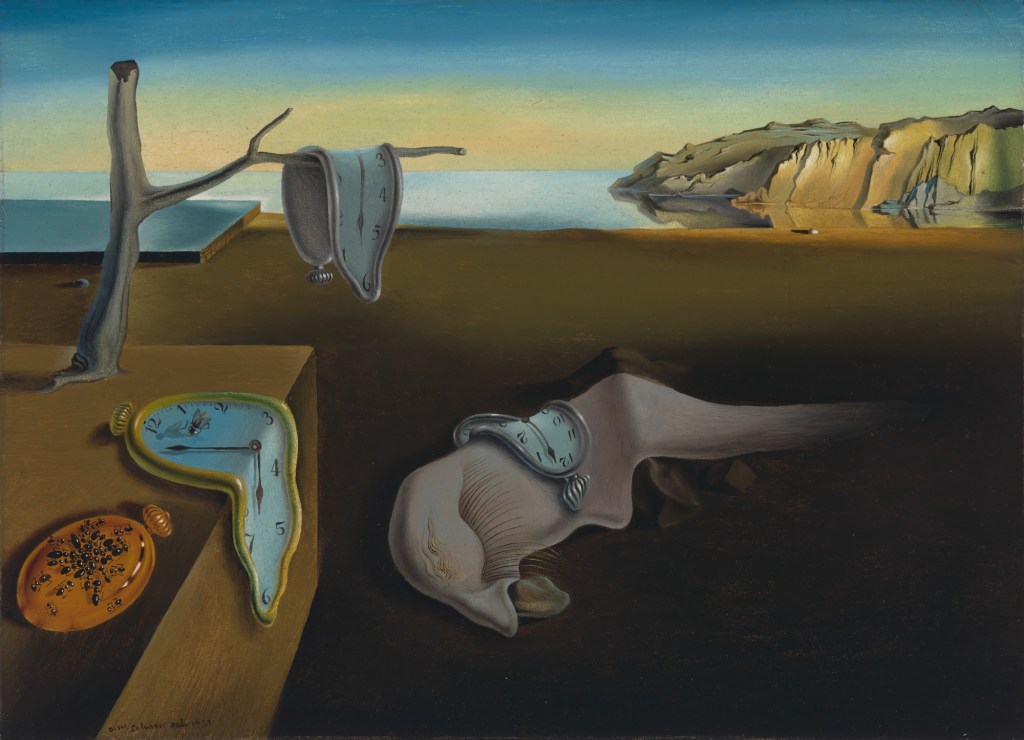
I’ve posted before about the infancy gospels, Christian texts that fill in missing information about the events surrounding the birth of Jesus. These gospels are apocryphal—they are not included in the biblical canon—but have been influential and interesting for centuries.
The Gospel of Pseudo-Matthew includes a fascinating story about dragons and wild beasts worshiping Jesus:
18
Baby Jesus Is Worshiped by Dragons and Other Wild Beasts
1 When they arrived at a certain cave where they wanted to cool themselves off, Mary came off the donkey and sat down, and held Jesus on her lap. There were three male servants with them on the road, and one female servant with Mary. And behold, suddenly many dragons came out of the cave. When the servants saw them they cried out. Then the Lord, even though he was not yet two years old, roused himself, got to his feet, and stood in front of them. And the dragons worshiped him. When they finished worshiping him, they went away. Then was fulfilled what was spoken by the prophet in the Psalms, who said, “Praise the Lord from the earth, O dragons and all the places of the abyss.”
2 The Lord Jesus Christ, though just a small child, walked along with them so that he might not be a burden to anyone. Mary and Joseph were saying to one another, “It would be better for those dragons to kill us than to harm the child.” Jesus said to them, “Do not think of me as a young child, for I have always been the perfect man, and am now; and it is necessary for me to tame every kind of wild beast.”
Then there is the Proto-Gospel of James:
Of all the early Christian apocrypha, none played a larger a role in the theology, culture, and popular imagination of late antiquity and the Middle Ages than the Proto-Gospel of James. This is the Gospel “prior to” the Gospel, an account of the events leading up to and immediately following the birth of Jesus.
Bart Ehrman, The Other Gospels: Accounts of Jesus from Outside the New Testament
In this story, time stands still for Joseph:
18
Joseph Watches Time Stand Still
1 He found a cave there and took her into it. Then he gave his sons to her and went out to find a Hebrew midwife in the region of Bethlehem.
2 But I, Joseph, was walking, and I was not walking. I looked up to the vault of the sky, and I saw it standing still, and into the air, and I saw that it was greatly disturbed, and the birds of the sky were at rest. I looked down to the earth and saw a bowl laid out for some workers who were reclining to eat. Their hands were in the bowl, but those who were chewing were not chewing; and those who were taking something from the bowl were not lifting it up; and those who were bringing their hands to their mouths were not bringing them to their mouths. Everyone was looking up. I saw a flock of sheep being herded, but they were standing still. The shepherd raised his hand to strike them, but his hand remained in the air. I looked down at the torrential stream, and I saw some goats whose mouths were over the water, but they were not drinking. Then suddenly everything returned to its normal course.
Bart Ehrman, a leading expert on these gospels, writes that every time he reads this passage, he thinks of the Twilight Zone.
Consider this history, consider this a story. It concerns a profound matter, for believers and non-believers, for philosophers and scientists.
In contracts, the term “time is of the essence” is commonly included. Meaning that it is a primary element of performance.
In the Bible, the story begins with time. The usual first word in translation is “when”, followed by a counting of days.
Time is of the essence. In our lives, we keep time, mark time, use time wisely, foolishly, carefully, carelessly. One thing we know, or think we know, whatever time is, it does not stop. Or can it?
An exceptional book about time: The Order of Time by Carlo Rovelli
 Bob Schwartz