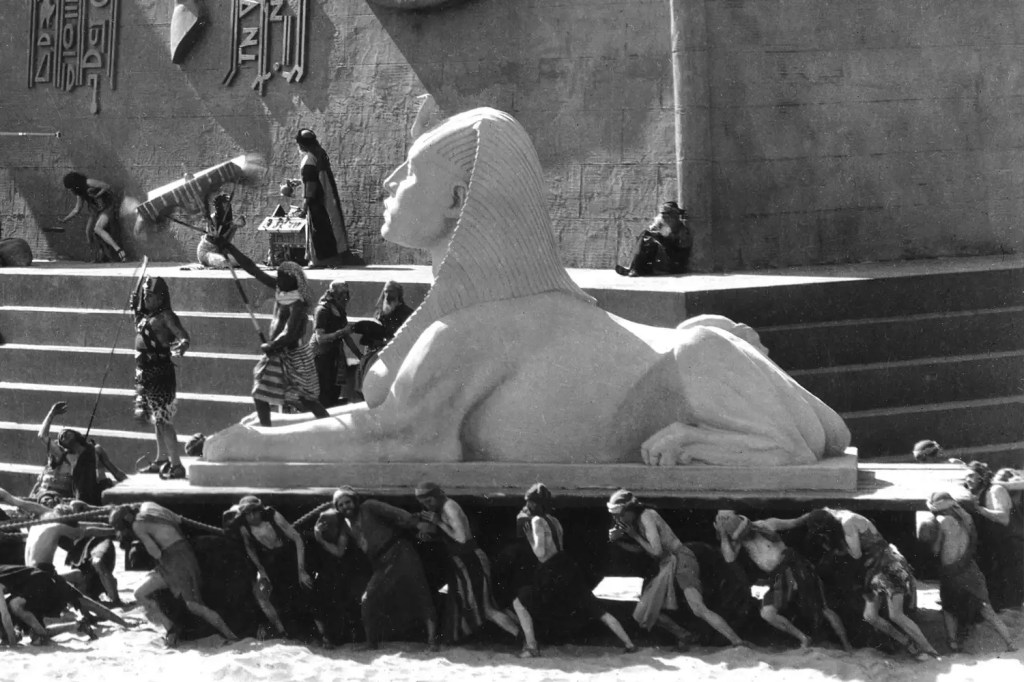
One line from the Book of Exodus crystallizes our moment.
As with all biblical Hebrew, the translation is challenging and varied.
Exodus 23:9
You shall not oppress a stranger, for you know the feelings of the stranger, having yourselves been strangers in the land of Egypt. (NJPS)
You shall not oppress a resident alien; you know the heart of an alien, for you were aliens in the land of Egypt. (NRSV)
No sojourner shall you oppress, for you know the sojourner’s heart, since you were sojourners in the land of Egypt. (Robert Alter)
Alter addresses one of the translation challenges, the Hebrew word nefesh/נֶ֣פֶשׁ:
“The Hebrew is nefesh, “heart”, “life,” “inner nature,” “essential being,” “breath.””
Another word needing expansion is the Hebrew ger/גֵּ֔ר. Scholars Mark Allen Powell and Dennis R. Bratcher explain in the HarperCollins Bible Dictionary:
alien (ger): In the Bible, one who is not a member of a particular social group. Accordingly, Abraham was an alien (NRSV: “stranger”) among the Hittites at Hebron (Gen. 23:4), as were Moses in Midian (Exod. 2:22) and the Israelites in Egypt (Deut. 23:7; cf. Ruth 1:1). The Hebrew word is ger, and it has often been translated “sojourner” in English Bibles. The NRSV is inconsistent, translating it “alien” in some instances and “stranger” in others. After the settlement in Canaan, the term not only designated a temporary guest but also acquired the more specialized meaning of “resident alien,” one who lived permanently within Israel (Exod. 22:21; 23:9). No doubt because the Israelites were keenly aware of their own heritage as aliens without rights in a foreign land, they developed specific laws governing the treatment of aliens. Strangers or aliens were to be treated with kindness and generosity (Lev. 19:10, 33–34; 23:22; Deut. 14:29). The basic principle was, “You shall also love the stranger, for you were strangers in the land of Egypt” (Deut. 10:19). And, again, “You shall love the alien as yourself, for you were aliens in the land of Egypt” (Lev. 19:34)….
“Alien” or “stranger” also appears in a figurative sense, usually in appealing to the generosity and mercy of God in dealing with undeserving people (Pss. 39:12; 119:19; 1 Chron. 29:15). The idea of dwelling in a land owned by someone else is also applied theologically to the relationship of the Israelites to the land; it belonged to God and they were the strangers in it (Lev. 25:23). (emphasis added)
This Passover, we give a thought to the nefesh—heart, life, inner nature, essential being, breath—of the ger—stranger, sojourner, resident alien. As the Bible reminds us, we were strangers too.
Some people, Jews and others, believe that the Israeli strategy in Gaza is justified and that the deaths and suffering of innocent people are unfortunate collateral damage of an important goal. Some people, Jews and others, disagree.
One thing we all can agree on is that when people, especially children, suffer, justifiably or not, it is our duty to help relieve that suffering in any way we can. People of all religious traditions or none can agree on this.
The International Rescue Committee is one of the most respectable and responsible organizations in the world working on this:
The International Rescue Committee (IRC) helps people affected by humanitarian crises—including the climate crisis—to survive, recover and rebuild their lives.
Founded at the call of Albert Einstein in 1933, the IRC is now at work in over 50 crisis-affected countries as well as communities throughout Europe and the Americas.
As Jews, on Passover we recall how our storied ancestors suffered—under the hand of a wicked ruler, wandering in a desolate desert. As we have suffered and suffer still, how can we deny the suffering of others and fail to relieve it?
When the Israelites were starving in the desert, we are told that God provided manna:
In the desert the whole community grumbled against Moses and Aaron. The Israelites said to them, “If only we had died by the Lord’s hand in Egypt! There we sat around pots of meat and ate all the food we wanted, but you have brought us out into this desert to starve this entire assembly to death.” Then the Lord said to Moses, “I will rain down bread from heaven for you. The people are to go out each day and gather enough for that day. (Exodus 16:2-4)
You say this is what God wants God told you Or told someone who heard And told you Told someone Who wrote it down Figured out That this is what God wants. I am no more than Moses or others But no less. Here is what I read and heard And write. “Bereshit bara elohim et hashamayim v’et ha’aretz. V’ha’aretz hatah tohu v’bohu.”* In the beginning was tohu and bohu, a formless wasteland. All the rest is commentary For us not God to write create destroy. Write we did Create we did Destroy we did And do. This is what we want.
Rhetoric doesn’t end war and save lives. Whatever the rhetoric he and his administration announce, Biden continues to arm a nation pursuing a questionable war strategy that is killing thousands. Reported just yesterday:
US reportedly approves transfer to Israel of bombs and jets worth billions Sources say weapons package authorized even as Washington expresses public concern over anticipated offensive in Rafah Friday, March 29, 2024
The US in recent days authorized the transfer of billions of dollars worth of bombs and fighter jets to Israel, two sources familiar with the effort said on Friday, even as Washington publicly expresses concerns about an anticipated Israeli military offensive in Rafah.
The new arms packages include more than 1,800 MK-84 2,000lb bombs and 500 MK-82 500lb bombs, said the sources, who confirmed a report in the Washington Post.
Whether you lived through the Vietnam War or know it only as history, this is seeming oppressively and depressingly familiar, not just as an unnecessary tragedy, but as a political nightmare.
LBJ accomplished a lot of important things for America, but his stubborn support of the war in Vietnam doomed his reelection in 1968, leading him to drop out of the race, and leading to the horrors of the Nixon White House.
Biden has also accomplished a lot of important things for America. But he already goes into the 2024 election with widespread questions about his age. Now added to that is his stubborn support, despite his rhetoric, for a war that is already tragic and a situation that will not look better by the time of the election.
The analogy isn’t perfect. But as the saying goes, history may not repeat itself, but it rhymes. This is looking a lot like Biden’s Vietnam. And as terrible as the Nixon presidency was, the Trump regime would be more evil and dangerous. Is there still time for Biden to do more than talk, to stand up and use American military support as leverage? Even if he does, is it too late to make a difference in what is almost certainly a toss-up election, with Biden in the eyes of some voters—especially some Democratic voters—a villain?
“There is a certain people. They do not keep the king’s laws, so that it is not appropriate for the king to tolerate them. Let a decree be issued for their destruction.” Esther 3:8
And to the angel of the church in Laodicea write: The words of the Amen, the faithful and true witness, the origin of God’s creation: I know your works; you are neither cold nor hot. I wish that you were either cold or hot. So, because you are lukewarm, and neither cold nor hot, I am about to spit you out of my mouth. Book of Revelation 3:14-16 (NRSV)
There are two kinds of equivocation. One is the careless “oh well” or “whatever”. The other is a concerned and studied “on the one hand, on the other hand”.
There can be value in a subtle and nuanced analysis that leads to an equivocal conclusion and solution. It can be a corrective to a stubborn, thoughtless or selfish attachment to one argument or one side.
But circumstances and situations don’t stand still. If and when one side goes from inconvenient and troubling outcomes to dangerous and tragic ones, what then for an equivocal position? It is possible to claim that changed circumstances now change the equivalence. But we can’t pretend that the delayed rebalancing, the belated abandonment of equivalence, has not had a cost and irretrievable loss.
It may be late to choose non-equivocation. Late to choose cold or hot. Late for those who would otherwise be alive and thriving. But never too late.
What is mysticism? One of many words that can mean many things. As Humpty Dumpty said, “When I use a word, it means just what I choose it to mean — neither more nor less.”
In The Encyclopedia of Jewish Myth, Magic and Mysticism, Rabbi Geoffrey Dennis tries to define it:
The term “mysticism” is one commonly applied, but imperfectly defined….
Scholars have struggled to give a precise definition to what constitutes mysticism within the Western religious traditions. Most regard it to be the impulse, ideology, and discipline to experience the unmediated presence of God or, more radically, union with divinity or a more broadly defined “Absolute.” Evelyn Underhill calls it, “… the expression of the innate tendency of the human spirit towards complete harmony with the transcendental order; whatever be the theological formula under which that order is understood.” Others see mysticism as a project of human transformation, the radical revision of human nature in relationship to the divine.
There is a substantial body of mysticism in Judaism, as there is in its younger siblings Christianity and Islam. The place of mysticism in these religions is complex and varied over time and circumstances. While mysticism might lead to fierce conflicts (“my enlightened vision is better than your enlightened vision”), the “radical revision of human nature” can also lead to followers experiencing other people and things in a more humane, open and divine way.
I don’t know of research measuring the study and adoption of mysticism among contemporary Jews. My anecdotal observation is that it might be small.
To a certain extent, materialism is the opposite of mysticism. Things are things but also transcendentally more than things. Land is land but transcendentally more than land. As religionists say, the phenomenal and the noumenal. We need and can’t avoid having and using the things, but that leads to attaching to the things, which inevitably leads to trouble, within ourselves and in the world. Mysticism, easily lost in the everyday of religions, including Judaism, and certainly lost in the turmoil, could be helpful right now.
There has been an abundant supply of information, analysis, belief and emotion surrounding the current Israeli war in Gaza. I have increasingly kept the analysis, belief and emotion to myself, or at least in a very small circle. In Yiddish terms, who needs the tzuris (trouble, aggravation)?
As for information, I have continued to seek trustworthy work from scholars and historians who have studied the issues. Some of this work is not always in the mainstream of discussion. Here are a few books I have found:
“Just and Unjust Wars has forever changed how we think about the ethics of conflict. In this modern classic, political philosopher Michael Walzer examines the moral issues that arise before, during, and after the wars we fight. Reaching from the Athenian attack on Melos, to the Mai Lai massacre, to the war in Afghanistan and beyond, Walzer mines historical and contemporary accounts and the testimony of participants, decision makers, and victims to explain when war is justified and what ethical limitations apply to those who wage it.”
“A revelatory look at why we dehumanize each other, with stunning examples from world history as well as today’s headlines.
“Brute.” “Cockroach.” “Lice.” “Vermin.” “Dog.” “Beast.” These and other monikers are constantly in use to refer to other humans—for political, religious, ethnic, or sexist reasons. Human beings have a tendency to regard members of their own kind as less than human. This tendency has made atrocities like the Holocaust, the genocide in Rwanda, and the slave trade possible, and yet we still find it in phenomena such as xenophobia, homophobia, military propaganda, and racism. Less Than Human draws on a rich mix of history, psychology, biology, anthropology and philosophy to document the pervasiveness of dehumanization, describe its forms, and explain why we so often resort to it.
David Livingstone Smith posits that this behavior is rooted in human nature, but gives us hope in also stating that biological traits are malleable, showing us that change is possible. Less Than Human is a chilling indictment of our nature, and is as timely as it is relevant.”
“A new history of the American Jewish relationship with Israel focused on its most urgent and sensitive issue: the question of Palestinian rights.
American Jews began debating Palestinian rights issues even before Israel’s founding in 1948. Geoffrey Levin recovers the voices of American Jews who, in the early decades of Israel’s existence, called for an honest reckoning with the moral and political plight of Palestinians. These now‑forgotten voices, which include an aid‑worker‑turned‑academic with Palestinian Sephardic roots, a former Yiddish journalist, anti‑Zionist Reform rabbis, and young left‑wing Zionist activists, felt drawn to support Palestinian rights by their understanding of Jewish history, identity, and ethics. They sometimes worked with mainstream American Jewish leaders who feared that ignoring Palestinian rights could foster antisemitism, leading them to press Israeli officials for reform. But Israeli diplomats viewed any American Jewish interest in Palestinian affairs with deep suspicion, provoking a series of quiet confrontations that ultimately kept Palestinian rights off the American Jewish agenda up to the present era.”
“Remember the blood of the innocent cries forever. Should that blood stop to cry, humanity would cease to be.” —Abraham Joshua Heschel
Abraham Joshua Heschel was a great Jewish thinker, writer and prophet of the twentieth century. I have included him in over 30 posts, far more than any other figure. Here is one example.
Heschel was one of the earliest religionists to oppose the Vietnam War. As a friend and colleague of Martin Luther King Jr. in the civil rights movement, he influenced King to publicly come out against the war.
Benjamin Sax talks about the price Heschel paid:
“When he came out against the Vietnam War for example, there were a lot of Jewish presses and a lot of Jewish leadership that spoke out against him. There was a lot of criticism about his leadership, about his point of view – he was considered naive. Worse he was considered theologically naive. That what he was doing was undermining the safety of his own people and undermining the safety of our country. And that aspiring to these universal, patriotic values was something that at least many in the Jewish community wanted to put out there even if they were uncomfortable with the reasons why we were in Vietnam. And so, it also put his reputation at risk.”
Heschel wrote about the war:
“The blood we shed in Vietnam makes a mockery of all our proclamations, dedications, celebrations. Has our conscience become a fossil, is all, mercy gone? If mercy, the mother of humility, is still alive as a demand, how can we say yes to our bringing agony to that tormented country? We are here because our own integrity as human beings is decaying in the agony and merciless killing done in our name. In a free society, some are guilty and all are responsible. We are here to call upon the governments of the United States as well as North Vietnam to stand still and to consider that no victory is worth the price of terror, which all parties commit in Vietnam, North and South. Remember the blood of the innocent cries forever. Should that blood stop to cry, humanity would cease to be.”
Heschel died in 1972. It would be beyond presumptuous—criminal and sinful—to claim to know what he would be saying about the current Israeli war in Gaza. All we can know is that he urged flawed human beings to rise above self to do better and be better, which is what he believed God needs us to do.
Hannah Arendt was a genius of twentieth century political philosophy. Her book The Origins of Totalitarianism (1951) is a seminal work. She was also one of the great Jewish thinkers of her time.
She faced obstacles. As a Jew, she once had a relationship with renowned philosopher Martin Heidegger, who was disgraced as a Nazi sympathizer and supporter. As a Jew and journalist, she covered the trial of Adolf Eichmann (Eichmann in Jerusalem), her analysis including the infamous term “banality of evil”. She suggested that Eichmann and others were not necessarily unique monsters, but were ordinary thoughtless people doing horrific things as a matter of course. This view did not sit well with many in the Jewish community. She also believed that Zionism, which she appreciated, had lost its way. Because of her perspectives on Eichmann and Zionism, she remains for some a pariah.
Hannah Arendt’s greatest contributions to Humanist Zionism are summoning a sophisticated historical context for the European Jewish experience, assessing the dangers of statist nationalism and imperialism, articulating a federalist alternative to nation-states, and diagnosing root pathologies in mainstream Zionism. She linked the onset of Zionism to the evolution in Europe of nationalism, the nation-state system, imperialism, modern antisemitism, and internal political and social dynamics in Europe’s Jewish communities. Although Arendt credited Zionists for giving Jews agency, she diagnosed the prevailing wing as suffering from two underlying maladies. First, it subscribed to a belief in an eternal antisemitism unaffected by broader historical developments or the choices made by Jewish communities. Consequently, mainstream Zionists regarded all outsiders as suspect and adopted a persecution complex. What followed was the second malady of a “tribal” nationalism, which rejects collaboration with the outside world as futile given unrelenting antisemitism.
Controversy surrounding Hannah Arendt is not going away.
A German foundation has said it will no longer be awarding a prize for political thinking to a leading Russian-American journalist after criticising as “unacceptable” a recent essay by the writer in which they made a comparison between Gaza and a Jewish ghetto in Nazi-occupied Europe.
Masha Gessen was due to be presented with the Hannah Arendt prize for political thought on Friday. But the award ceremony will now not take place as planned after the Green party-affiliated Heinrich Böll Foundation (HBS) said it was withdrawing its support. The HBS said it had reached its decision in agreement with the senate in Bremen, the northern port city where the ceremony was scheduled to take place….
The HBS said it objected to and rejected a comparison made by Gessen in a 9 December essay in the New Yorker between Gaza and the Jewish ghettos in Europe.
In the essay, Gessen, who uses they, criticised Germany’s unequivocal support of Israel, drawing attention to the Bundestag’s 2019 resolution condemning the Israel boycott movement BDS as antisemitic and quoting a Jewish critic of Germany’s politics of Holocaust remembrance as saying memory culture had “gone haywire”.
In the paragraph the HBS draws attention to, Gessen wrote that “ghetto” would be “the more appropriate term” to describe Gaza, but the word “would have drawn fire for comparing the predicament of besieged Gazans to that of ghettoized Jews. It also would have given us the language to describe what is happening in Gaza now. The ghetto is being liquidated.”
The foundation said Gessen was implying that Israel aimed to “liquidate Gaza like a Nazi ghetto”, adding that “this statement is unacceptable to us and we reject it”….
Supporters of Gessen, who is Jewish, and whose grandfather and great-grandfather were among family members murdered by the Nazis, have been quick to point out the irony of suspending a prize awarded in memory of Arendt, the German-born Jewish-American historian, philosopher and antitotalitarian political theorist who coined the phrase “the banality of evil”, in connection with the trial of leading Nazi Adolf Eichmann, which she covered as a journalist for the New Yorker.
Samantha Rose Hill, author of the profile Hannah Arendt and editor of Arendt’s collected poems, called it “an affront to Hannah Arendt’s memory. By their own logic, the Heinrich Böll Foundation needs to cancel the Hannah Arendt prize altogether.”
Another academic said that according to the reasons given for the decision, “Hannah Arendt wouldn’t get the Hannah Arendt award in Germany today.”
In an interview with Die Zeit published on Tuesday, Gessen spoke of the backlash Arendt had faced as one of Israel’s initial critics, warning against establishing a purely Jewish state in Palestine and in so doing excluding the Arab population.
In an open letter written with Albert Einstein and other Jewish intellectuals in 1948, Arendt had, Gessen pointed out, even compared the Israeli Freedom party to the Nazis after they used racially motivated violence against civilians.
“I am aware that this type of comparison, especially in Germany, is quickly seen as relativising the Holocaust. That’s why it’s so important to me that such a differentiated and intelligent thinker like Arendt didn’t shy away from this comparison,” Gessen told the newspaper.
Referring to people in Germany being wary of challenging “the logic of German memory policy” for fear of being accused of antisemitism, they added: “The problem is that criticism of Israel is often seen as antisemitic, which I think is the real antisemitic scandal. This overlooks the actual antisemitism.”