Bob Schwartz

Tag: Congress

American churches: No more sidelines about Trump
“We realize, hey, our churches and the people in our churches have been duped by this guy and so rather than hope someone else will clean up the problem, what we’ve seen is a lot of pastors respond with, you know what, I’m going to jump in and I’m going to be a part of the solution.”
Robb Ryerse in Arkansas, Christian pastor and former Republican, one of 30 Christian white clergy so far running as Democrats in the midterm elections.

Churches in America have taken different positions regarding Trump.

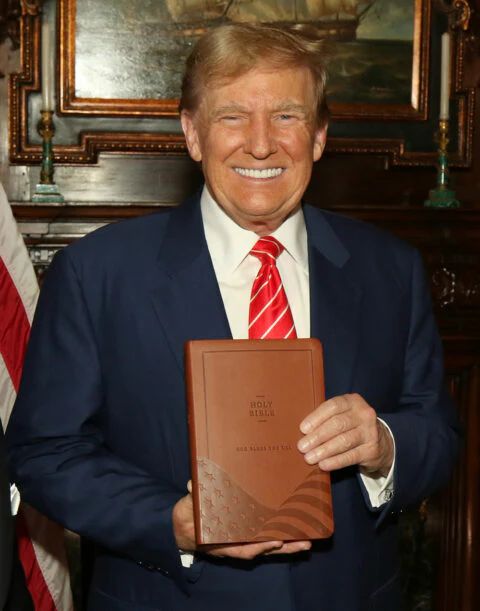
Some have vigorously supported him, going so far as to say he is an anointed savior for the nation. Trump does, after all, sell his own God Bless the USA Bible.

Some, particularly black churches, have vigorously opposed him.

Most churches have stayed on the sidelines. The main reason is that in this divided society, congregations often include supporters and opponents. In those congregations, the position is that the church serves as an elevated neutral ground, not a battlefield, interested in promoting and effectuating the highest principles of Jesus and the Gospels. Whether or not those principles are being advanced or decimated in the public sphere by the chief public executive. Whether or not the tax dollars of congregants are being used to help or hurt people. Besides, a divisive message might send some congregants running away.

From the Guardian:


‘Trump is inconsistent with Christian principles’: why the Democratic party is seeing a rise of white clergy candidates
From Texas and Iowa to Arkansas, faith leaders are wading into politics to counter the rise of Christian nationalism

David Smith
Sat 15 Nov 2025

He grew up on a farm in Indiana, the son of a factory worker and eldest of five children. He studied at Liberty, a Christian university founded by the conservative pastor and televangelist Jerry Falwell, and recalls wearing a T-shirt expressing opposition to Democratic presidential candidate John Kerry.

Two decades later, Justin Douglas is running for the US Congress – as a Democrat.

He is among around 30 Christian white clergy – pastors, seminary students and other faith leaders – known to be potential Democratic candidates in next year’s midterm elections, including a dozen who are already in the race. While stressing the separation of church and state, many say that on a personal level their faith is calling them into the political arena….

In Arkansas, Robb Ryerse, a Christian pastor and former Republican, is mounting a challenge to representative Steve Womack, adopting the slogan “Faith, Family & Freedom” – rhetoric more commonly found in Republican campaign literature.

Ryerse, 50, from Springdale, Arkansas, said: “I joke sometimes that the two people who have changed my life more than any others are Jesus and Donald Trump, for very different reasons. Donald Trump is absolutely inconsistent with Christian principles of love and compassion, justice, looking out for the poor, meeting the needs of the marginalized.

“But Donald Trump has also used and been used by so many evangelical leaders who want political power. He has used them to validate him to their followers and they have used him to further their agenda, which has been a Christian nationalist culture war on the United States, which I think is bad for both the church and for the country.”

White clergy are deciding to run for office, Ryerse believes, in part as a response to the rise of Christian nationalism and the reality that, according to a Public Religion Research Institute (PRRI) survey, Trump won 85% of the white evangelical vote in last year’s presidential election.

Ryerse said: “We realize, hey, our churches and the people in our churches have been duped by this guy and so rather than hope someone else will clean up the problem, what we’ve seen is a lot of pastors respond with, you know what, I’m going to jump in and I’m going to be a part of the solution.

“On a more positive note, there’s also that notion we need to do something for the common good. There’s so much alignment between what I believe personally is good for my neighbor, what it means to love my neighbor, and how that aligns with what public policy ought to be.”


The House will reopen soon, the federal government maybe not

Elected Republicans are thinking a little bit more today about the consequences of their actions and strategies.

Republicans control the House and have shut it down for months. They believe this issue has been lost in the bigger issue of the entire shutdown of the federal government and the damage it is doing and the suffering it has caused. Which, according to them, is all the fault of the Democrats.

That changed today. In light of the election results yesterday, which the president takes personally, he has reversed the claim that Democrats are to blame for the shutdown. He now properly blames the shutdown on the Republicans.

It is easier to open the House. Speaker Johnson can do this in the time it takes to read this post. He may have to bear up under the seating of newly elected Democrat Adelita Grajalva, who would be the deciding vote on demanding release of the infamous Epstein Files. But there is now a concern that Republicans are vulnerable at the polls, and the indisputable charge that they alone are responsible for the House not working at all—can’t blame the Democrats for that—will get noticed. Even if voters aren’t asking questions now, they will.

It is harder to open and restart the federal government, even now that the president has endorsed doing it. The Democratic demand is that SNAP and the ACA subsidies must be assured by Congress in the budget bill. No matter what the Republicans say, voters are also noticing that keeping food from 42 million Americans and cheaper health insurance from millions more is the fault of the Republicans. But not spending money on hungry people and on the health of Americans is part of the current Republican plan. It’s a quandary for Republicans.

So the House will reopen soon, even if it means seating Congresswoman Grijalva, but ending the shutdown may take longer.

© 2025 Bob Schwartz

Mr. Jesus Goes to Washington

Republicans in Congress seem to have lost their way. They could use a more altruistic, less self-serving vision of Americans and their lives.

Many of those members identify as religiously faithful, the majority faithful Christians.

What if some famous religious figures visit Congress and talk about its role in helping to make American lives better?

Mr. Smith Goes to Washington was made by legendary director Frank Capra, himself a faithful Christian. His movies, including It’s A Wonderful Life, reflect open-hearted idealism.

In the movie, small-town good guy Jefferson Smith, who leads a group of local boys, ends up in the U.S. Senate. There he finds himself among a group of much less innocent men. They reject his ideals, sure he will change or be distracted. He is advised to be pragmatic. When he won’t play along, forces try to stop him. In the end, it is the same group of boys who help good triumph.

What if Jesus visited Congress right now? Would Christian members believe him? Would they question whether he is the real Jesus? Would they argue that his interpretation of the Christian mission is wrong, even though it is his own words at issue?

Not for the first time, Jesus will still preach to these naysayers. Maybe he will filibuster, as Mr. Smith did until he collapsed in exhaustion. Jesus is no stranger to extreme public sacrifice in service of the greater good.

Will Mr. Jesus go to Washington? Many Republicans think he is already there. But is he really?

An authoritative, objective and non-partisan summary of the Israel/Gaza war—from Congress!?

The Congressional Research Service (CRS), a department of the Library of Congress, has since 1914 been one of the least-known and most significant government initiatives:


Mission

To serve Congress with the highest quality of research, analysis, information and confidential consultation to support the exercise of its legislative, representational and oversight duties in its role as a coequal branch of government.

Authoritative

All services and products are authoritative. Analysts demonstrate rigorous research methodologies, free of built-in bias. They present, explain and justify any critical assumptions; investigate and recheck data anomalies; use primary resources whenever available; double-check all statements of fact; and document and vet all sources. This assures Members, as they engage in debate, that the analysis they rely on is as accurate as it is current.

Objective and Nonpartisan

We maintain an outstanding reputation for objective and nonpartisan analysis. Our experts are vigilant in evaluating issues without bias. A multi-layered review process also helps ensure that CRS products present issues and analysis in a manner that is fair, considered and reliable.


Since the Israel/Gaza war began on October 7, CRS has been compiling and issuing an updated report, Israel and Hamas October 2023 Conflict:
Frequently Asked Questions (FAQs)
.

For those who have been devouring information from many and often divergent sources, this is as close as we may come to the informational middle of the road. This doesn’t mean that we will set aside our values and our opinions in this charged environment. We can’t and we won’t. It is just a reminder that in the so-called fog of war, there remains the possibility of the authoritative, objective and non-partisan.

Note: I was going to include some excerpts that seemed to support some of the points I believe in. But I realize that that defeats the purpose of simply asking people on all sides of the questions to consider one more source. Please do read.

© 2023 by Bob Schwartz

Cuba: No Democracy, No Embassy, So Recall the Ambassador to China

U.S. Embassy in Beijing

If you listen to those opposing normal diplomatic relations with Cuba, you learn that we should not do so until Cuba moves toward democracy.

With that rationale, we should be ending diplomatic relations with many countries, because no matter what our ideals and aspirations, the world still includes some fairly undemocratic nations.

Such as China. We have had full diplomatic relations with the People’s Republic of China since 1979, a period that includes both Republican and Democratic Presidents and Congresses. There is no way to characterize China as a democratic, democratic-leaning, democratic-seeking nation. So we should immediately recall our latest ambassador, former Sen. Max Baucus, and immediately close our embassy in Beijing.

Of course, that doesn’t make sense. As nothing has made sense in our relations with Cuba, even before Fidel Castro overthrew the Batista regime in 1959. The U.S. supported Batista and opposed Communism in the hemisphere. Commercial interests, legal and illegal, made money. Once Castro was in power, and refugees of substantial and modest means resettled in the U.S., it was thought that isolating Cuba would make it come around to right thinking and lucrative democracy. That didn’t work, and neither did the one attempt at forcing the issue, the debacle of the Bay of Pigs invasion.

If we had given Cuba the benefit of the doubt that we have given other non-democracies, not to mention the money we have invested in those nations, some good might have come of it, with little downside. But as with many issues, politics in the form of financial support, or the threat of withholding it, distorts what may be for the best.

Which is why, with Obama moving to normalize Cuban relations, you won’t hear anybody calling for the closing of the Beijing embassy, but lots of grandstanding and bluster about how a Cuban ambassador will mean the end of the world.

The President’s Speech: Prosecutorial Discretion in Immigration Enforcement

CRS - Prosecutorial Discretion in Immigration

The following will not necessarily make you smarter than the hundreds—thousands?—of talking heads you will hear opining and pontificating about the President’s speech tonight on immigration. But it just might.

For those who haven’t followed this political drama, the President has long awaited Congressional action on immigration reform, and in the absence of that, has decided to take executive action. Reports are that this will include deferring legal proceedings against a large number of undocumented immigrants. Charges are already flying from political opponents, claiming that the President is exceeding his authority, with impeachment even being discussed.

It appears that the basis for this executive action may be prosecutorial discretion. As you may know (and as recent events in Ferguson, Missouri have highlighted), prosecutors have broad, virtually unlimited and unreviewable discretion to decide who to prosecute and not prosecute. There are principles and theories about how this discretion might be less than absolute, but as a matter of practice, it is quite broad.

The Congressional Research Service (CRS) is the very valuable but little-known non-partisan government service that answers questions that Congress has about any issue that Congress is interested in. You name the topic or issue, CRS has probably studied it.

Last December, CRS answered a question that is at the heart of the President’s approach to the immigration crisis: What, if any, are the limits on prosecutorial discretion in immigration?

The report, Prosecutorial Discretion in Immigration Enforcement: Legal Issues is a must-read. It is true that legal opinions on many issues differ (see the Supreme Court), but CRS is supposedly the starting point for any questions that Congress has. Congress members may have disagreements with the reports, but few question the impartiality or skill of CRS researchers.

CRS concludes:

Regardless of whether it is characterized as “prosecutorial discretion” or “enforcement discretion,” immigration officers are generally seen as having wide latitude in determining when, how, and even whether to pursue apparent violations of the INA [Immigration and Nationality Act]. This latitude is similar to that possessed by prosecutors in the criminal law enforcement context and enforcement officials in other federal agencies. Whether and how to constrain this discretion has been a recurring issue for some Members of Congress, particularly in light of the June 2011 DHS [Department of Homeland Security] memorandum on prosecutorial discretion and the more recent DACA [Deferred Action for Childhood Arrivals] initiative. While some Members have expressed support for the DACA initiative, or called for expanded use of prosecutorial discretion by immigration authorities in other contexts, others have sought to prohibit DHS from granting deferred action or extended voluntary departure to removable aliens except in narrow circumstances, or to “nullify” particular policies regarding prosecutorial discretion that have been articulated by the Obama Administration….

In addition, the degree of intrusion into executive enforcement decisions may also impact a court’s review of any congressional response. For example, legal precedent suggests that Congress probably cannot directly limit the President’s exercise of discretion by requiring that the executive branch initiate enforcement actions against particular individuals. On the other hand, Congress would appear to have considerable latitude in establishing statutory guidelines for immigration officials to follow in the exercise of their enforcement powers, including by “indicat[ing] with precision the measures available to enforce the” INA, or by prohibiting DHS from considering certain factors in setting enforcement priorities.

However, the existing judicial presumption that “an agency’s decision not to take enforcement action [is] immune from judicial review,” and the deference potentially accorded to an agency’s interpretation of its governing statute, suggests that such statutory guidelines would likely need to be clear, express, and specific. The use of “shall” in a provision of the INA may not, in itself, suffice for a statute to be construed as having provided enforceable guidelines for immigration officials to follow in exercising prosecutorial discretion. Absent a substantive legislative response, Congress may still be able to influence the implementation of DACA or other discretion-based policies by the immigration authorities, including by engaging in stringent oversight over the DHS program or by exercising its “power of the purse” to prohibit DHS and its components from implementing particular policies related to the exercise of prosecutorial discretion that Congress does not support.

Translation: Congress cannot force the executive branch to enforce particular immigration provisions, which means that an executive policy to defer enforcement is not subject to Congressional control. (This is as good a point as any to mention that President Obama has already overseen a record number of immigrant deportations and he is not “soft” on undocumented immigration). However, in the view of CRS, Congress has “considerable latitude in establishing statutory guidelines for immigration officials to follow in the exercise of their enforcement powers.” That is, Congress could exercise its will by simply passing laws on this significant issue. Or on any significant issue that it claims to be vexed about. But it won’t. So can you blame the elected leader of the American people for being frustrated, and choosing to do what he can to step in where the brave and bold members of Congress are—how to say this politely—too fainthearted to go?

Obama Speech: Is It ISIS, ISIL or IS, and What is a True Religion?

Obama ISIS Speech

This is not a comprehensive review of last night’s speech by President Obama about ISIS/ISIL/IS. But if you asked me to join the millions of reviewers, descriptors that come to mind are lukewarm, vague, uninspiring, insufficiently informative, tactical (the speech, not the plan), and blah-blah-blah.

Here is one paragraph that stuck out, because it reflects two issues that may not get enough attention:

And one of those groups is ISIL — which calls itself the “Islamic State.”

Now let’s make two things clear: ISIL is not “Islamic.” No religion condones the killing of innocents. And the vast majority of ISIL’s victims have been Muslim. And ISIL is certainly not a state. It was formerly al Qaeda’s affiliate in Iraq, and has taken advantage of sectarian strife and Syria’s civil war to gain territory on both sides of the Iraq-Syrian border. It is recognized by no government, nor by the people it subjugates. ISIL is a terrorist organization, pure and simple. And it has no vision other than the slaughter of all who stand in its way.

What Is the Name of This Enterprise That We Are at War Against?

Is it ISIS, ISIL, or Islamic State? This is much more significant than whether the English transliteration of the name of the Egyptian President was Morsy, Morsi, or Mursi or the Libyan dictator was Gadhafi, Qaddafi, Kadafi, Gaddafi, or Gadafy. This is our new mortal enemy, and besides, all these IS names are in English.

Different nations and different news media have different approaches to this. The BBC, for example, has settled on Islamic State, apparently opting for whatever the organization chooses to call itself. What is totally strange about the “official” U.S. nomenclature is that at the highest levels, there is no consistency. The President prefers ISIL, while those in his cabinet regularly use ISIS.

One small matter about ISIL does deserve note. The full name is the Islamic State in Syria and the Levant. I challenge many in the administration, and many in Congress, and many in the media, to explain—without Google or cheat sheet—what the Levant is. For five hundred years or so it has described the land of the eastern Mediterranean, now roughly comprising Syria, Lebanon, Israel, and contiguous countries. The word comes from the French word for “rising”, as in the east where the sun rises. It isn’t much in use any more, outside of scholarly circles and, of course, in our latest war.

So please, President Obama, if you are gathering the support of dozens of nations and hundreds of millions of Americans, let’s all decide on what to call this organization that, in the words of Vice President Joe Biden, we will pursue to the Gates of Hell.

What is a True Religion?

“No religion condones the killing of innocents,” the President said. Without going into historic and contemporary detail, this is patently false. I believe the President knows better, but he didn’t want to get into a deep discussion, and instead just wanted to make a rhetorical flourish. If he doesn’t know, there are thousands of histories he can read and scholars he can consult, or even easier, news reports from the past few weeks, months, and years he can read.

If, however, he really did mean it, he has disqualified the majority of world religions from being classified as such. Which, by the way, plenty of critics of religion would applaud.

The President doesn’t have to be the Teacher in Chief, the Scholar in Chief, the Explainer in Chief, etc. Being Communicator in Chief is enough of a job, but if he just wants to say stuff for effect, without regard to its making sense or being true, we’ve already had plenty of that in years past, from those less smart or thoughtful than you. We get enough nonsense from many in Congress. Speak as if some of us are actually thinking about what you say. Because some of us are.

Do Something/Anything about ISIS? Would You Rather Have No Strategy or Bad Strategy?

Just Do It

President Obama candidly admitted that we have no strategy for dealing with ISIS, but that we are developing one.

Maybe too candid for the moment and his leadership position, but still a necessary truth. Necessary because no one on earth has a good strategy for dealing with that or the complex of situations around the world right now. For the religiously inclined, consider that Moses, Jesus, and Mohammed convening in the Situation Room would have a tough time figuring out what to do next, short of calling in the Big Gun and wiping the slate clean and starting again.

This hasn’t stopped Congress from urging a simple solution to this puzzle: do something/anything. This is an all-time irony, given that Congress is currently infamous for doing absolutely nothing, ever, no matter how important the problem and no matter how relatively simple the solution. If a number of the members had a sense of irony, we could all wryly laugh at this, except that their sense of irony is absent, along with a sense of duty, democracy, and Americanism (the real kind, not the fake). Some of these same members do seem to have a sense of justice, John Wayne frontier justice, which is unfortunately out of place in the liquid world of 2014 global politics and insurgency.

A few years ago, some thought that democracy would spread around the oppressed nations like an epidemic, like Arab Spring fever. But chaos is also an opportunistic contagion, and as those on one insurgent or imperialist front look at the other fronts multiplying, they see opportunity and seize it. It doesn’t help that the geography is claustrophobic. If you don’t know it, connect the dots from Iraq to Syria to Israel to Gaza to Egypt, Sudan, and Libya. And that’s just one pole of the current dynamic.

We have been tragically mistaken on strategy in the last three major American wars. One was an abject defeat, the other two—Iraq and Afghanistan—have sort of ended, with an indeterminate outcome, and withdrawal that may or may not last. Let’s pull back from partisan finger-pointing, and just admit that some situations—whether you choose to demur or however you choose to engage—may have outcomes, but may not have solutions.

You can be smart or stupid, fearless or timid, right or wrong, and you can still be overwhelmed by circumstances. That is, there is no “perfect” strategy, especially not with the way things are aligning. So no, you can’t wait for that perfect strategy. But you also shouldn’t rush in with the next idea that comes into your head, especially if that idea comes from some outdated playbook that has already proven itself ineffective in current realities.

“Just do it” sounds great, as long as you spend sufficient time really considering what “it” is and what the consequences and outcomes might be. Oh, and also, you might try being candid, as Obama has been, rather than making stuff up. Like about WMDs. Like about wars that will last weeks and cost nothing. Let’s leave that sort of unhelpful lying to fairy tale tellers like Vladimir Putin, who is not invading Ukraine, and to Putin’s admirers and portrait painters.

VA Health Crisis: Listen to IAVA

VA IG Report

We should listen to the Iraq and Afghanistan Veterans of America about this VA health system crisis.

As the name implies, IAVA represents the latest generation of American war veterans. They are in some ways the most attuned to the current realities and sensibilities of veterans’ issues in 2014. Not because they have been around the longest, but because they are native to the way things work, or don’t, here in the early 21st century in America.

Those realities regarding the health care crisis in the VA are shocking to some, but come as no surprise to those who have watched it happening, including Congress (both parties) and the President.

Is it fixable? What won’t fix it is political posturing, handwringing, or even the delayed but imminent departure of VA Secretary Shinseki.

What will fix it? Good policy well executed, without excuses or cover up. The IAVA can help with that.

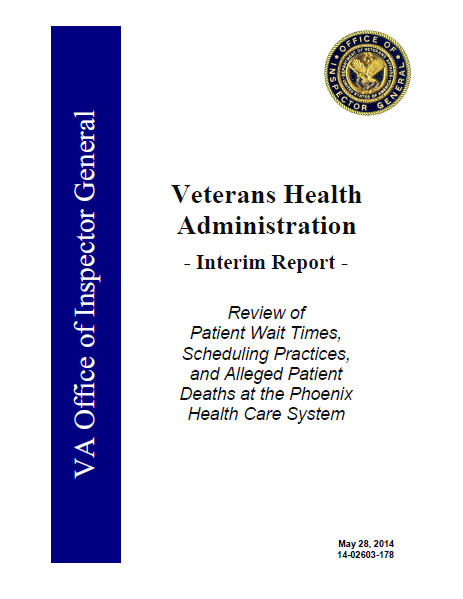
In the wake of yesterday’s Inspector General Report about the Phoenix VA health system, IAVA CEO and Founder Paul Rieckhoff said:

The new IG report on the Phoenix VA is damning and outrageous. It also reveals the need for a criminal investigation. Each day we learn how awful things are in Phoenix and across the country. The VA’s problems are broad and deep – and President Obama and his team haven’t demonstrated they can fix it. As one of only two combat veterans, Senator John McCain’s call for Secretary Shinseki’s resignation is particularly impactful…

Today’s report makes it painfully clear that the VA does not always have our veterans’ backs. Even before this report came out, IAVA members were losing confidence in Secretary Shinseki and President Obama. At Memorial Day events across the nation, our members voiced outrage, anger, and impatience at the growing VA scandal. This new report only increases the belief that the promise to veterans has been broken. We are sharing this report now with our members and seeking their reaction. In the coming days, we will share the voices of our members with the President, VA leaders and those in Congress.

In the IAVA 2014 Policy Agenda, the VA health system was just one of a number of initiatives offered for consideration. On that score, IAVA recommends this (excerpted):

I. Establish a Presidential Commission to end the VA claims backlog.

II. Transform the Veterans’ Benefits Administration’s (VBA) adversarial culture…

III. Reform VA’s work credit and productivity evaluation system for claims processor….

IV. Outline the VA’s responsibility about the requirements to substantiate a claim….

V. Adopt the “treating physician rule” for medical evaluations for compensation and pension…

VI. Require appeals form to be sent along with the Notice of Decision letters in order to expedite the appeals process.

VII. Evaluate the Segmented Lanes work initiative to continually assess whether it is meeting the goals of fast tracking…

VIII. Report the intake of new compensation and pension claims on the Monday Morning Workload Report.

IX. Report separated statistics on the intake and processing of supplemental and original claims in the Monday Morning Workload Report…

XIII. Continue to engage veteran stakeholders in updating the VA Schedule for Rating Disabilities (VASRD).

XIV. Require the VA to accept a PTSD diagnosis provided from a qualified private medical provider.

X. Establish a model to accurately project the claims workload and the resource and staffing requirements needed to meet the demand.

XI. Make all disability benefits questionnaires available to private medical providers.

XII. Simplify notification letters to provide easily digestible, specific and clear information about the reasons for rating decisions.

XV. Allow the VA to incentivize private medical providers to furnish medical health records to the VA for processing.

XVI. Clarify and report accuracy ratings for each regional VA….

This is an agenda, and if the President and the good people of Congress want to adjust or add, that is their prerogative and duty. But you have to start somewhere, with something on the table, and this is a good place for that. If these warriors are smart enough and capable enough and honorable enough to fight our wars, they are surely able to suggest the smart, honorable, and capable ways of treating them when those wars are over.

Online Gambling and Real Life Guns: It’s About The Children

sheldon-adelson-615cs013012
A team of highly-paid ex-politico lobbyists are out there arguing against proposed bills in Congress to allow Internet gambling. Under one of these bills, a 12% tax would be shared between the federal and state governments, 4% and 8% respectively. That would be a lot of revenue in these hard times.

Gambling is an American and ancient tradition. Lotteries helped fund the American Revolution, which makes them practically sacred. In this case, the main opponents of digital gaming for money are the wealthy owners of real-world casinos and establishments, most visibly billionaire Sheldon Adelson, who helped bankroll Mitt Romney’s quest for the Presidency. No surprise there. The practice of online gaming, which already goes on with offshore sites, would expand dramatically, leaving bricks, mortar and showgirl spots with a severely reduced market.

Some of the arguments against the bills are, on their own terms, not entirely unpersuasive. Gambling does support hospitality and tourism, and if the already declining dollars drop further, there are going to be folks who lose their jobs in this challenged economy. It’s not clear that the entrepreneurs getting rich off this have the will and creativity to come up with substitute businesses that would replace those jobs. Gambling is also already a social problem, damaging lives and families, and what is bad gets worse with increased volume. The final big argument is, naturally, about “the children.” No matter what we try to do, the online environment is notoriously freewheeling, and there is no question that underage players would find a way to play, just as they get cigarettes and alcohol.

On the tourism question, cultural and social trends have always left some forms of entertainment and diversion behind while other new or more appealing ones prospered. Either you believe overall in the free market or not. People who say that government shouldn’t be picking winners and losers shouldn’t be telling the government to pick winners and losers.

Out of control gambling can be pernicious, no doubt about it. But the argument, one actually made, that the poorest in society would be unfairly burdened by the attraction of online gambling is under current realities absurd. First, because it is not clear that all the opponents of online gambling care so very much for the lower tiers of American society. Second, because government already endorses, promotes and profits from easy-access gambling that does weigh on the most vulnerable—the lotteries. With all the strains on government budgets, it is unimaginable what state some states would be in without those gaming dollars.

Then there is the ultimate trump card: the children. That score is easy to answer. On the scale of things kids shouldn’t be allowed to do, alcohol is number 2, tobacco is a close number 3, and then comes gambling. Number 1 is easy. Children should not have guns, should not live in an environment where guns are widely available and acceptable, and where guns are regularly used to shoot, injure and kill innocent people—including children.

So if you happen to see or hear any of those lobbyists shilling for Sheldon Adelson and his ilk, talking about how it is about “the children” and how we must protect them from the evils of playing online poker or placing a digital bet on an NFL game, ask them if guns aren’t a tad more dangerous, and ask them what they’ve done to seriously reduce the ubiquity of those guns and to eliminate the personal and social costs that those guns have inflicted on all of us.

There likely won’t be a good answer, at least not one that isn’t laced with equivocation, hypocrisy and protests of irrelevancy. It is relevant. Ask them to put the two side by side, the harm to children from online gambling and from guns, and tell them that the billionaires are free to make billions more on their casinos—just as soon as the guns get put away.