Please pull back for a moment from thinking about what bargains we might find on Black Friday.
Black Friday used to be the one day after Thanksgiving, but is now an entire season of deals that seems to begin in October.
If you step back from bargain hunting, you might wonder why it is called “Black Friday”.
The term “Black Friday” has an interesting history. While widespread retail sales on this day began in the mid-20th century, the name itself has contested origins: The most commonly cited explanation is that it refers to retailers moving from being “in the red” (operating at a loss) to being “in the black” (turning a profit) due to the surge in sales. However, this explanation appears to be a later rebranding.
The term actually originated in Philadelphia in the 1960s, where police used it to describe the chaos of heavy pedestrian and vehicle traffic that flooded the city the day after Thanksgiving. The crowds came for the Army-Navy football game held on Saturday and began their holiday shopping on Friday. Police had to work long shifts dealing with traffic and crowds, which they found unpleasant—hence the “black” descriptor.
Retailers initially disliked the negative connotation and tried to rebrand it as “Big Friday,” but the name Black Friday stuck. By the 1980s, retailers embraced the term, reframing it with the more positive “red to black” accounting narrative.
Just for a moment—the deals will wait—let’s change colors. Yesterday, at Thanksgiving, we may have been able to share company and a table with family and friends. In the coming weeks, we will be celebrating holidays that have light as a theme.
So let’s set aside the black and feature the light. This, the day after Thanksgiving, is Bright Friday. Are there light Bright Friday things waiting to be grabbed? Sure, if you know what they are and can find them.
Today is the Winter Solstice in the Northern Hemisphere, when daylight starts growing. (Summer Solstice elsewhere, where daylight begins waning.)
Next week, Christmas and Hanukkah coincide, with the first candle of Hanukkah on Christmas night.
Whether your view is astronomical, with earth revolving round the sun, spiritual, with growing light, or religious, with a Messiah born or a temple retaken and rededicated, it is a special time.
Ecclesiastes (known as Kohelet in the Hebrew Bible) has grown into my favorite biblical book. Its view is consistent with all of those perspectives, whether a planet circling, darkness waning, children born, sacred spaces renewed.
We learn from Kohelet what we may not be taught during the holidays, but which the solstice demonstrates: All things pass.
This does not suggest that we restrain joy, our joy or especially the joy we bring to others. We can be the sun of the winter solstice, brighter day by day. We can be the candles, brighter every day, one to eight.
No book of the Bible has been more mysterious than Kohelet, the mystery being, with its somewhat existential view, why the compilers of the Hebrew Bible included it at all. The solstice tells us, as does the book itself, again and again.
All things pass, and in that passing, our role is to live. Seasons come and go, holidays come and go, we come and go.
Here, on Winter Solstice, with Christmas, Hanukkah and many other holidays for many people to come, we live.
In everything that happens below the sun. Go eat your bread and enjoy. Drink your wine Happily. God long ago approved your acts. Let your clothes always be freshly washed. Keep your hair scented with good oil. Enjoy life with the woman you love During all the shining days you are given Below the sun. Your unique purpose is To bellow a good life below the sun. Use all your powers while you are here. Ecclesiastes 9:4-10
December includes three notable religious holidays.
Christmas, commemorating the birth of Jesus. It is a major holiday, one of the two most important Christian holidays, and one that has become a secular celebration, especially in America.
Hanukkah, commemorating the retaking and rededication of the Temple in Jerusalem. Religiously, it is a minor holiday, not even included in the Hebrew Bible. Traditionally, it has become a cultural and social counterbalance to Christmas, especially in America.
Bodhi Day isn’t about the birth of a significant person or about the military victory over a religious oppressor. It is about a man who sat under a tree and ultimately woke up, or, as it is usually put, attained enlightenment.
I never rely on AI to do my writing, but I have given my friend Claude a chance to concisely explain Bodhi Day observances:
Bodhi Day (also known as Rohatsu in Japanese tradition) commemorates the day when Siddhartha Gautama attained enlightenment and became the Buddha. It’s typically observed on December 8th in the Mahayana tradition, though some traditions follow different calendars.
Here’s how Bodhi Day is observed in different parts of the world:
Japan (Rohatsu):
The day marks the end of a weeklong sesshin (intensive meditation retreat) in Zen monasteries
Practitioners often meditate through the night, mirroring the Buddha’s enlightenment experience
Traditional decorations include strings of colored lights, representing the stars the Buddha saw upon enlightenment
Southeast Asian Countries:
In countries like Thailand and Sri Lanka, the enlightenment is actually celebrated as part of Vesak Day in May
Temples are decorated with flowers and lights
Devotees participate in meditation sessions and listen to dharma talks
Food offerings are made to monks and sharing meals with the community is common
United States and Western Countries:
Buddhist temples and centers often hold special meditation sessions
Some practitioners decorate small ficus trees (similar to the Bodhi tree) with lights
Educational programs about the Buddha’s enlightenment are organized
Many observe the day with a traditional breakfast of milk and rice, recalling the offering made to the Buddha by Sujata
China and Taiwan:
Known as Laba Festival (腊八节)
Traditionally celebrated with Laba congee, a special porridge made with various grains and dried fruits
Temples hold ceremonies and offer free congee to visitors
Many people visit temples to make offerings and pray for blessings
Modern Observances:
Some Buddhists maintain a more contemplative practice, spending the day in meditation
Many practitioners dedicate themselves to acts of kindness and compassion
Some observe the day by reading Buddhist texts or sutras
Virtual meditation sessions and teachings have become common, especially in recent years
The focus across all these observances remains on the core meaning of the Buddha’s enlightenment – the realization that freedom from suffering is possible through understanding and practicing the dharma.
Claude
Each year I wonder what to say about Bodhi Day, the Buddha, and Buddhism. With a day to go, I still don’t know.
A couple of days ago, I was thinking about ways to be in this fraught moment of Election 2024.
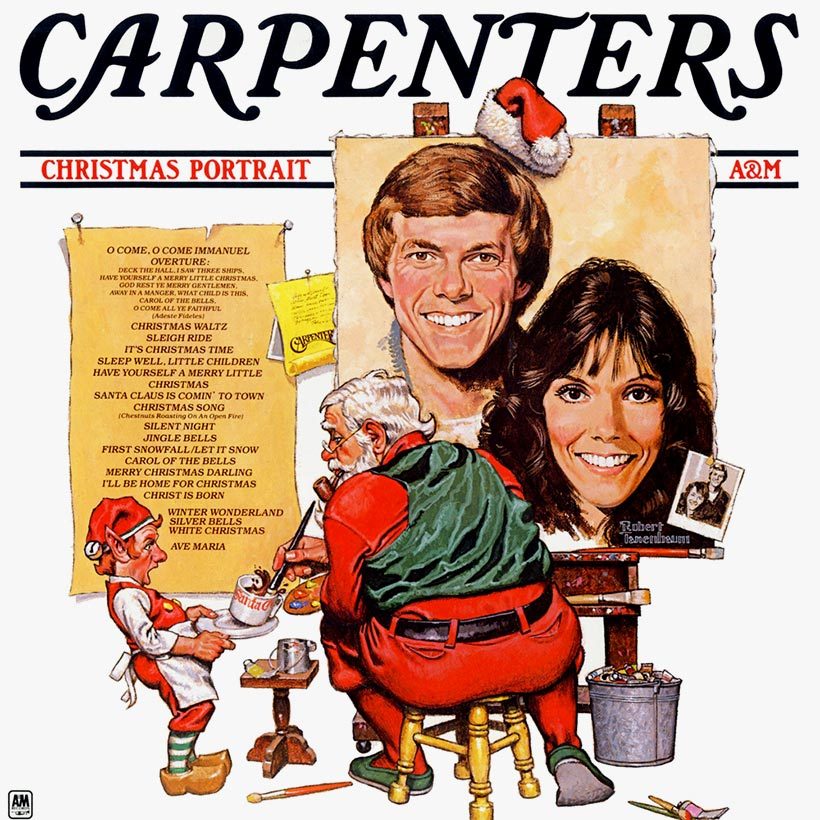
My typical search for just the right soundtrack ended with the perfect music: Christmas.
It is almost two months until Christmas. On the consumer front, Christmas has already begun. It used to be that shopping Christmas began at Thanksgiving. Now, the unofficial start is Halloween.
Commercial Christmas aside, no holiday more embodies good feeling—whether spiritual, peaceful, familial or just plain human. And that good feeling is embodied in the music.
What I have started to do, even though it is the first week in November, is to add Christmas music to my playlist. Lots of it, because I suspect that good feeling is going to be helpful in the days ahead.
You can choose the Christmas music you like. It comes in all flavors, and you likely have your favorites. Whatever that is, just listen as much as you need to keep things joyous and bright.
It’s hard to feature just one song from so many favorites. Here’s one, from an angel of song.
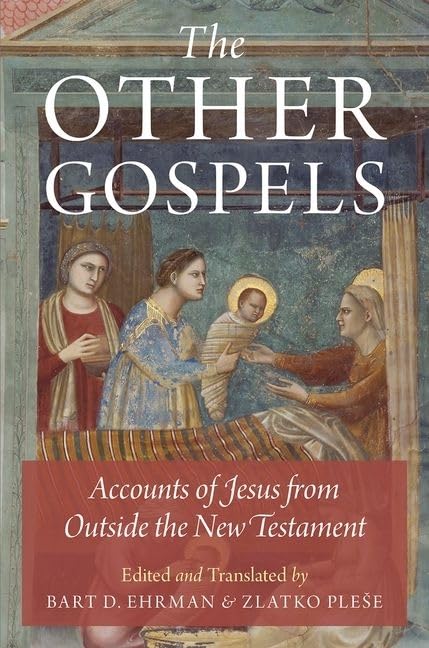
“Our canonical texts are largely silent about the events prior to and leading up to Jesus’ birth, but his unique standing as the Son of God led Christians to wonder about parts of the story left out. If he was special, as shown by the fact that he was conceived by a virgin—what can we say about his mother? Who was Mary? What made her special? How was she herself born? How did she maintain her own purity, to make her a worthy “vessel” for the Son of God?” The Other Gospels: Accounts of Jesus from Outside the New Testament Edited and translated by Bart D. Ehrman and Zlatko Pleše
The Proto-Gospel of James (The Birth of Mary, the Revelation of James) is one of the texts known as Infancy Gospels. These fill in the many details missing from the New Testament Gospels. Their authorship is unknown—who, when, where? For readers, whether faithful Christians or just those living in a Christmas culture, these are captivating stories.
From The Proto-Gospel of James:
Joseph Discovers Mary’s Condition
13
(1) When she was in her sixth month, behold, Joseph returned from his buildings. As he came into the house he saw that she was pregnant. Striking his face he cast himself to the ground on sackcloth, weeping bitterly and saying, “How can I look upon the Lord God? How can I utter a prayer for this young girl? For I received her from the temple of the Lord God as a virgin, but I did not watch over her. Who has preyed upon me? Who has done this wicked deed in my home and defiled the virgin? Has not the entire history of Adam been summed up in me? For just as Adam was singing praise to God, when the serpent came and found Eve alone, and led her astray, so too has this now happened to me.”
(2) Joseph rose up from the sackcloth, called Mary, and said to her, “You who have been cared for by God: why have you done this? Have you forgotten the Lord your God? Why have you humiliated your soul—you who were brought up in the Holy of Holies and received your food from the hand of an angel?”
(3) But she wept bitterly and said, “I am pure and have not had sex with any man.”22 Joseph replied to her, “How then have you become pregnant?” She said, “As the Lord my God lives, I do not know.”
14
(1) Joseph was very afraid and let her be, debating what to do about her. Joseph said, “If I hide her sin, I will be found to be fighting the Law of the Lord; if I reveal her condition to the sons of Israel, I am afraid that the child in her is angelic, and I may be handing innocent blood over to a death sentence. What then should I do with her? I will secretly divorce her.” Then night overtook him.
(2) Behold, an angel of the Lord appeared to him in a dream and said, “Do not be afraid of this child. For that which is in her comes from the Holy Spirit. She will give birth to a son, and you will name him Jesus. For he will save his people from their sins.” Joseph rose up from his sleep and glorified the God of Israel who had bestowed favor on him; and he watched over her.
The Authorities Discover Mary’s Condition
15
(1) But Annas the scribe came to see him and said, “Joseph, why have you not appeared before our council?” Joseph replied, “I was tired from my journey and rested on my first day back.” Annas then turned and saw that Mary was pregnant.
(2) He left and ran off to the priest and said to him, “Joseph, the one you have vouched for, has committed a great sin.” The priest replied, “What has he done?” He said, “He has defiled the virgin he received from the Lord’s temple and has stolen her wedding rights. And he has not revealed this to the sons of Israel.” The priest asked, “Joseph, has done this?” Annas the scribe replied, “Send some servants, and you will find that the virgin is pregnant.” The servants went off and found her just as he had said. They brought her back to the judgment hall, along with Joseph.
(3) The high priest said to her, “Mary, why have you done this? Why have you humiliated your soul and forgotten the Lord your God? You who were brought up in the Holy of Holies and received your food from the hand of an angel, and heard his hymns, and danced before him—why have you done this?” But she wept bitterly and said, “As the Lord my God lives, I am pure before him and have not had sex with any man.”
(4) The priest then said, “Joseph, why have you done this?” Joseph replied, “As the Lord my God lives, I am pure toward her.” The priest said, “Do not bear false witness, but speak the truth. You have stolen her wedding rights and not revealed it to the sons of Israel; and you have not bowed your head under the mighty hand that your offspring might be blessed.” Joseph kept his silence.
16
(1) The priest said, “Hand over the virgin you received from the Lord’s temple.” And Joseph began to weep bitterly. The priest said, “I will have both of you drink the Lord’s ‘water of refutation,’ and it will reveal your sin to your own eyes.”
(2) The priest gave it to Joseph to drink, and sent him away to the wilderness. But he came back whole. He then gave it to Mary to drink and sent her off to the wilderness. And she came back whole. All the people were amazed that their sin was not revealed.
(3) The priest said, “If the Lord God has not revealed your sin, neither do I judge you.” And he released them. Joseph took Mary and returned home, rejoicing and glorifying the God of Israel.
The Journey to Bethlehem
17
(1) An order went out from the king, Augustus, that everyone from Bethlehem of Judea was to be registered for a census. Joseph said, “I will register my sons. But what should I do about this child? How should I register her? As my wife? I would be too ashamed. As my daughter? The sons of Israel know that she is not my daughter. This day of the Lord will turn out as he wishes.”
(2) He saddled the donkey and seated her on it; and his son led it along, while Samuel followed behind. When they approached the third milestone, Joseph turned and saw that she was gloomy. He said to himself, “Maybe the child in her is causing her trouble.” Then Joseph turned again and saw her laughing. He said to her, “Mary, why is it that one time I see you laughing and at another time gloomy?” She replied, “Because my eyes see two peoples, one weeping and mourning and the other happy and rejoicing.”
(3) When they were half way there, Mary said to him, “Joseph, take me down from the donkey. The child inside me is pressing on me to come out.” He took her down from the donkey and said to her, “Where can I take you to hide your shame? For this place is a wilderness.”
Joseph Watches Time Stand Still
18
(1) He found a cave there and took her into it. Then he gave his sons to her and went out to find a Hebrew midwife in the region of Bethlehem.
(2) But I, Joseph, was walking, and I was not walking. I looked up to the vault of the sky, and I saw it standing still, and into the air, and I saw that it was greatly disturbed, and the birds of the sky were at rest. I looked down to the earth and saw a bowl laid out for some workers who were reclining to eat. Their hands were in the bowl, but those who were chewing were not chewing; and those who were taking something from the bowl were not lifting it up; and those who were bringing their hands to their mouths were not bringing them to their mouths. Everyone was looking up. I saw a flock of sheep being herded, but they were standing still. The shepherd raised his hand to strike them, but his hand remained in the air. I looked down at the torrential stream, and I saw some goats whose mouths were over the water, but they were not drinking. Then suddenly everything returned to its normal course.
The Birth of Jesus and the Witness of the Midwives
19
(1) I saw a woman coming down from the hill country, and she said to me, “O man, where are you going?” I replied, “I am looking for a Hebrew midwife.” She asked me, “Are you from Israel?” I said to her, “Yes.” She asked, “Who is the one who has given birth in the cave?” I replied, “My betrothed.” She said to me, “Is she not your wife?” I said to her, “She is Mary, the one who was brought up in the Lord’s temple, and I received the lot to take her as my wife. She is not, however, my wife, but she has conceived her child by the Holy Spirit.” The midwife said to him, “Can this be true?” Joseph replied to her, “Come and see.” And the midwife went with him.
(2) They stood at the entrance of the cave, and a bright cloud overshadowed it. The midwife said, “My soul has been magnified today, for my eyes have seen a miraculous sign: salvation has been born to Israel.” Right away the cloud began to depart from the cave, and a great light appeared within, so that their eyes could not bear it. Soon that light began to depart, until an infant could be seen. It came and took hold of the breast of Mary, its mother. The midwife cried out, “Today is a great day for me, for I have seen this new wonder.”
(3) The midwife went out of the cave and Salome met her. And she said to her, “Salome, Salome, I can describe a new wonder to you. A virgin has given birth, contrary to her natural condition.” Salome replied, “As the Lord my God lives, if I do not insert my finger and examine her condition, I will not believe that the virgin has given birth.”
20
(1) The midwife went in and said to Mary, “Brace yourself. For there is no small controversy concerning you.” Then Salome inserted her finger in order to examine her condition, and she cried out, “Woe to me for my sin and faithlessness. For I have put the living God to the test, and see, my hand is burning, falling away from me.”
(2) She kneeled before the Master and said, “O God of my fathers, remember that I am a descendant of Abraham, Isaac, and Jacob. Do not make me an example to the sons of Israel, but deliver me over to the poor. For you know, O Master, that I have performed my services in your name and have received my wages from you.”
(3) And behold, an angel of the Lord appeared and said to her, “Salome, Salome, the Master of all has heard your prayer. Bring your hand to the child and lift him up; and you will find salvation and joy.”
(4) Salome joyfully came and lifted the child, saying, “I will worship him, for he has been born as a great king to Israel.” Salome was immediately cured, and she went out of the cave justified. And behold a voice came saying, “Salome, Salome, do not report all the miraculous deeds you have seen until the child enters Jerusalem.”
Sure he was a Jew making a Christmas album. Sure he was a convicted murderer.
Phil Spector is also in the pantheon of record producers. He changed pop music forever. Brian Wilson of the Beach Boys, another production genius, started his career trying to better him.
Then there is A Christmas Gift for You from Phil Spector (1963). There were attempts to contemporize Christmas classics before, there have been many attempts after. To make the music sound eternal but new. This is the ultimate. In 2019, Rolling Stone ranked it the greatest Christmas album of all time. Brian Wilson cited this as his favorite album of all time.
Which is why searching Christmas Eve morning for something that hit the target—music not too familiar, music not straining too hard to be “different”—I ended up with Spector. His gift to us.
When Herod realized that he had been outwitted by the Magi, he was furious, and he gave orders to kill all the boys in Bethlehem and its vicinity who were two years old and under, in accordance with the time he had learned from the Magi. — Matthew 2:16
Coventry Carol is a favorite Christmas carol. A complicated one. It is beautiful and haunting, performed by great singers and choirs. But unlike other carols of joy and hope, it memorializes a tragic part of the nativity story.
The Book of Matthew narrates what is known as the Massacre of the Innocents. This is the only place this story appears in the Gospels.
Herod is a historical figure, but consensus is that this event never happened. Instead, it echoes a similar story about Pharaoh and the Hebrews.
The carol was originally performed in Coventry, England as part of a sixteenth century mystery play called The Pageant of the Shearmen and Tailors. The play is based on chapter two in the Gospel of Matthew. The song is the testimony of the mothers:
Lully, lullah, thou little tiny child, Bye bye, lully, lullay. Thou little tiny child, Bye bye, lully, lullay.
O sisters too, how may we do For to preserve this day This poor youngling for whom we sing, “Bye bye, lully, lullay”?
Herod the king, in his raging, Chargèd he hath this day His men of might in his own sight All young children to slay.
That woe is me, poor child, for thee And ever mourn and may For thy parting neither say nor sing, “Bye bye, lully, lullay.”
Why add this incident to a gospel? Why sing about it, listen to it, and love it for five hundred years? The theme of the gospels, of this season of the year, of this particular year, is darkness and ugliness to light and beauty.
Weeping may last for a night, but joy comes in the morning. Psalm 30:5
I don’t celebrate Christmas, not theologically. But I have always enjoyed the season culturally, socially and emotionally. It is fun and uplifting. Setting aside whether or not a messiah was born, who wouldn’t like to believe we have an opportunity for a better life and a better world? A new possibility. Besides, this concept is a Jewish one, though today the Jewish views range from it hasn’t happened yet to we aren’t waiting for it and it doesn’t matter anyway.
Hanukkah coincides on the calendar but has nothing to do with Christmas. This hasn’t stopped it from in some ways becoming Jewish Christmas, whether as a gift-giving holiday or in balancing big Christmas trees with big menorahs. For more on this, see Hanukkah in America: A History (the Kindle edition is on sale for $3.99—a steal!). The topline of the Hanukkah story is also inspirational: a family of Jewish warriors reclaimed their territory from an occupying power and restored and sanctified the Temple. The oil lamp that should have burned for one day lasted for eight. A miracle.
The story of the oil lamp may be legend, but the history of the family is very real. They began the Hasmonean dynasty which ruled Judea for generations. The history of the dynasty is filled with infighting, intrigue and occasional despotism. (The story is not included in the Hebrew Bible. Instead, it is only found in some versions of Christian Bibles, as the Books of Maccabees.)
News of current war in that very region is with us every day—for some of us, every hour or minute. It is important to pay attention and learn. It is also heartbreaking, agonizing and exhausting.
Which brings me back to Christmas.
Most years I think Christmas music appears too early. Most years I don’t watch the Hallmark-style Christmas TV rom-coms until later in December (Hallmark-style because there are now about a dozen channels or streaming services showing these). Why is this year different from other years?
This year I have begun listening to Christmas music already. This year I have begun watching Christmas rom-coms already. I will be doing that for weeks, maybe into the New Year.
It doesn’t mean I won’t be watching the war too—every day, multiple times a day. Speaking only for myself, only as this one Jew, I need a break once in a while. If centuries of Christmas inspired different music, some fun, some silly, some sublime, I’m listening. If people want to find themselves in ridiculous situations at Christmas and end up falling in love, I’m watching.
If a baby was supposedly born who supposedly would enable a kinder and more peaceful world—a still distant but worthwhile dream—there is no reason not to hope.
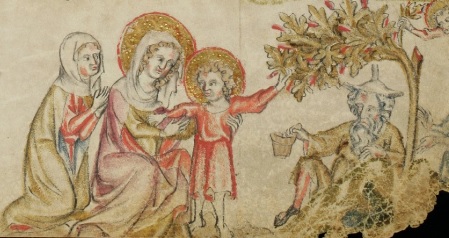
1 Then, after these things, on the third day after they had started out, Mary was weary from too much sun in the wilderness, and seeing a palm tree she wanted to rest awhile in its shade. Joseph hastened to lead her to the palm and he had her descend from the donkey. When Mary sat down, she looked to the foliage on the palm and saw that it was full of fruit, and she said, “If only I could get some of that fruit from the palm!” Joseph said to her, “I am surprised that you’re saying this, when you can see how high the palm is. You are thinking of the fruit of the palm; but I am thinking about the water that we no longer have in our water skins; we have nowhere to replenish them to quench our thirst.”
2 Then the young child Jesus, sitting in the lap of his mother, the virgin, cried out to the palm tree and said, “Bend down, O tree, and refresh my mother from your fruit.” Immediately when he spoke, the palm tree bent its top down to Mary’s feet. Everyone gathered the fruit in it and was refreshed. After all its fruit had been gathered, the tree remained bent, expecting that it would rise up at the command of the one who had ordered it to bend over. Then Jesus said to it, “Stand erect, O palm, and be strong, and become a companion of my trees that are in the paradise of my Father. And open up from your roots the hidden springs, that water may flow from them to quench our thirst.” Immediately the palm stood erect, and from its roots springs of water began to come forth, clear, cold, and very sweet. When they saw the springs of water flowing, they all rejoiced with a great joy and drank, together with their beasts and companions, giving thanks to God.
1 When King Herod saw that he had been deceived by the magi, his heart was inflamed and he sent his soldiers out on every path, wishing to capture them. When he was not able to find a trace of them, he sent soldiers to Bethlehem and killed every infant from two years and under, according to the time that he had solicited from the magi.
2 One day before Herod had done this, Joseph was warned by an angel of the Lord, “Take Mary and the child and go, take the desert route to Egypt.”
18
Baby Jesus Is Worshiped by Dragons and Other Wild Beasts
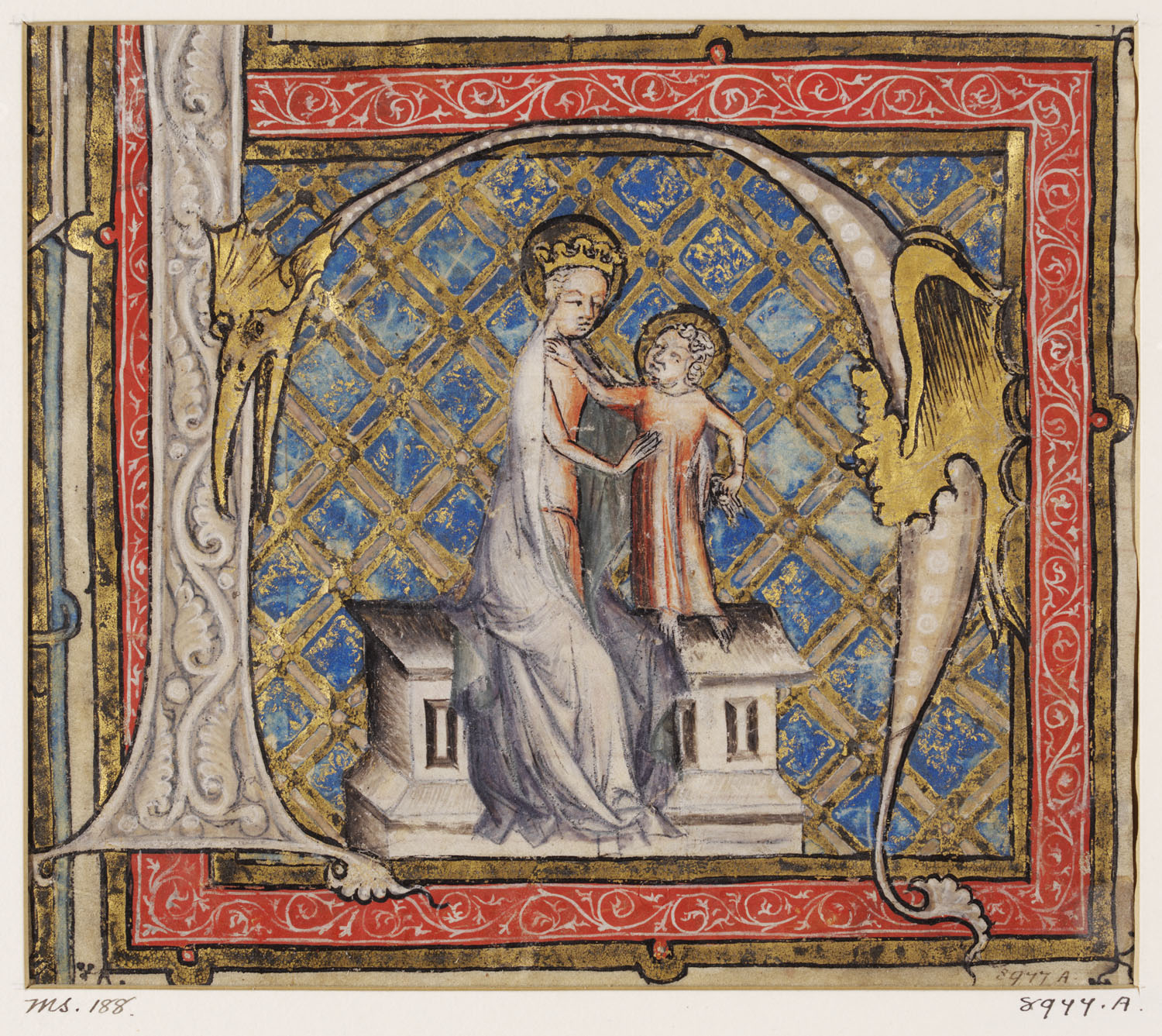
1 When they arrived at a certain cave where they wanted to cool themselves off, Mary came off the donkey and sat down, and held Jesus on her lap. There were three male servants with them on the road, and one female servant with Mary. And behold, suddenly many dragons came out of the cave. When the servants saw them they cried out. Then the Lord, even though he was not yet two years old, roused himself, got to his feet, and stood in front of them. And the dragons worshiped him. When they finished worshiping him, they went away. Then was fulfilled what was spoken by the prophet in the Psalms, who said, “Praise the Lord from the earth, O dragons and all the places of the abyss.”
2 The Lord Jesus Christ, though just a small child, walked along with them so that he might not be a burden to anyone. Mary and Joseph were saying to one another, “It would be better for those dragons to kill us than to harm the child.” Jesus said to them, “Do not think of me as a young child, for I have always been the perfect man, and am now; and it is necessary for me to tame every kind of wild beast.”
19
1 So too both lions and leopards were worshiping him and accompanying him in the desert, wherever Mary went with Joseph. They went before them showing them the way and being subject to them; and bowing their heads with great reverence they showed their servitude by wagging their tails. But on the first day that Mary saw lions, leopards, and various other wild beasts surrounding them, she was terrified. The young child Jesus smiled in her face and spoke to her with a consoling word, saying, “Do not fear, Mother, for they are hastening along, not to hurt you but to serve you.” With these words he removed the fear from their hearts.
2 And so lions, asses, oxen, and beasts of burden carrying their baggage were all walking together with them, and whenever they made a stop, they would graze. There were also tame goats who came out with them and followed them from Judah; these were walking among the wolves with no fear. One was not afraid of another, and none of them was harmed by another in any way. Then was fulfilled what Isaiah said, “Wolves will pasture with sheep and the lion and ox will eat straw together.” There were two oxen used as pack animals with them on the way; lions guided them on the way of our Lord Jesus Christ, whose baggage they were carrying.
Notes from The Other Gospels: Accounts of Jesus from Outside the New Testament:
The book is a Latin reworking of the (Greek) Proto-Gospel of James, based probably on one or more Latin editions of that work that have long since been lost. There are numerous differences from the Proto-Gospel, in both contents and emphases….Pseudo-Matthew tells of the holy family’s flight to Egypt, during which the infant Jesus performs numerous miracles—taming dragons, lions, and leopards; making a palm tree bend down to deliver its fruit to a famished Mary; causing idols in an Egyptian pagan temple to bow down in worship before him. These were some of the most familiar stories of the Christ child throughout the Middle Ages….
There continue to be debates concerning when the Gospel itself was composed….Pseudo-Matthew must obviously date to some time in the mid-seventh century, at the earliest.
In the most thorough analysis to date, Gijsel has maintained that even though direct literary dependence on the Rule of Benedict cannot be demonstrated, there are enough general similarities to suggest that the book was written when monastic orders were beginning to expand in the West, by someone invested in them. Largely on these grounds he makes a convincing argument that the text was produced in the first quarter of the seventh century, by a monk in the Latin-speaking West who was enchanted by the account of the Proto-Gospel and its potential for conveying homage to Mary as a model virgin embracing the monastic ideal.
Not only was Pseudo-Matthew itself popular in such circles for nearly a millenium, its message was spread even further abroad as its reworked stories were themselves edited for incorporation in the eleventh-century book, Libellus de nativitate sanctae Mariae (“Book on the Birth of Saint Mary”) and by Jacob of Voragine in The Golden Legend (written 1260 CE), which was the most widely read and influential book of the late middle ages, down to the Reformation.




 Bob Schwartz