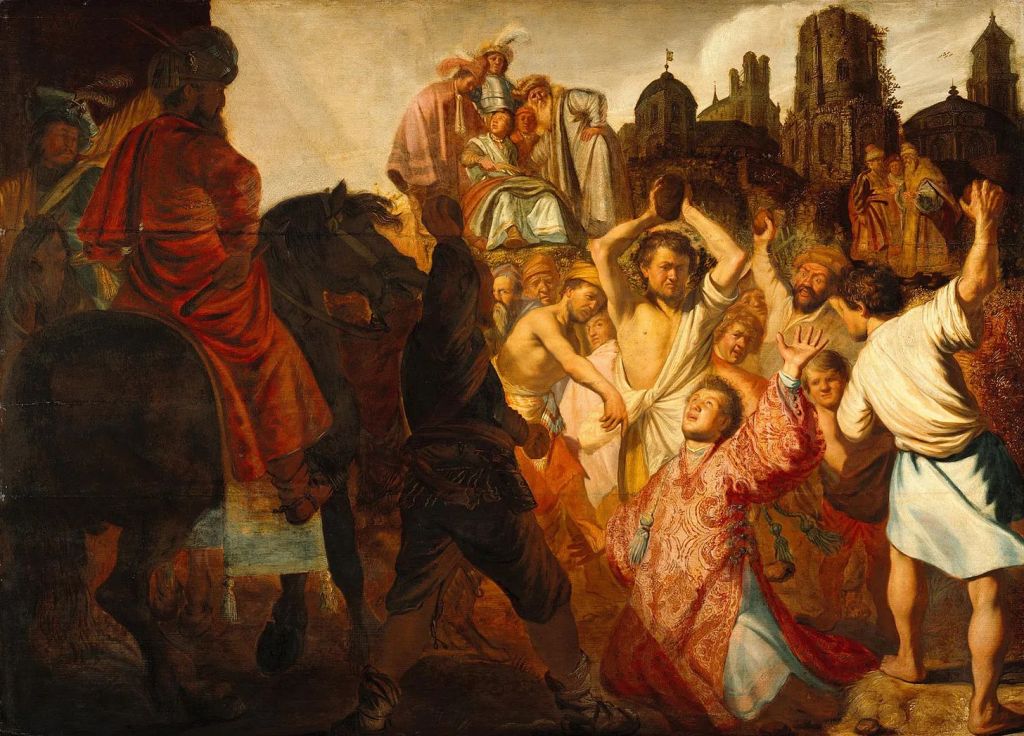
Today, the day after Christmas, is the Feast of St. Stephen, the first Christian martyr. As he was being stoned to death, he prayed for his attackers.
There is a video of the Christmas Eve dinner at Mar-A-Lago. Trump is sitting at a cordoned-off table, with his wife Melania and an unidentified man. Melania is talking to the man, Trump is alone, mostly ignored. It was sad.
In Buddhist traditions, we are asked to treat enemies as treasures and spiritual friends:
When I see ill-natured people, Overwhelmed by wrong deeds and pain, May I cherish them as something rare, As though I had found a treasure-trove…
Even if someone whom I have helped And in whom I have placed my hopes Does great wrong by harming me, May I see them as an excellent spiritual friend.
If you are one of the many affected directly or indirectly by what appears to be a one-man mission to carelessly hurt others and make things worse, it is beyond challenging to “love your enemy”—no matter that we have that advice on good authority.
A couple of things:
Empathy makes you stronger, not weaker.
Empathy does not mean giving up on trying to work against the worst and for the best, including opposition to those “ill-natured people, overwhelmed by wrong deeds and pain.”
I’ve posted before about the infancy gospels, Christian texts that fill in missing information about the events surrounding the birth of Jesus. These gospels are apocryphal—they are not included in the biblical canon—but have been influential and interesting for centuries.
The Gospel of Pseudo-Matthew includes a fascinating story about dragons and wild beasts worshiping Jesus:
18 Baby Jesus Is Worshiped by Dragons and Other Wild Beasts
1 When they arrived at a certain cave where they wanted to cool themselves off, Mary came off the donkey and sat down, and held Jesus on her lap. There were three male servants with them on the road, and one female servant with Mary. And behold, suddenly many dragons came out of the cave. When the servants saw them they cried out. Then the Lord, even though he was not yet two years old, roused himself, got to his feet, and stood in front of them. And the dragons worshiped him. When they finished worshiping him, they went away. Then was fulfilled what was spoken by the prophet in the Psalms, who said, “Praise the Lord from the earth, O dragons and all the places of the abyss.”
2 The Lord Jesus Christ, though just a small child, walked along with them so that he might not be a burden to anyone. Mary and Joseph were saying to one another, “It would be better for those dragons to kill us than to harm the child.” Jesus said to them, “Do not think of me as a young child, for I have always been the perfect man, and am now; and it is necessary for me to tame every kind of wild beast.”
Of all the early Christian apocrypha, none played a larger a role in the theology, culture, and popular imagination of late antiquity and the Middle Ages than the Proto-Gospel of James. This is the Gospel “prior to” the Gospel, an account of the events leading up to and immediately following the birth of Jesus. Bart Ehrman, The Other Gospels: Accounts of Jesus from Outside the New Testament
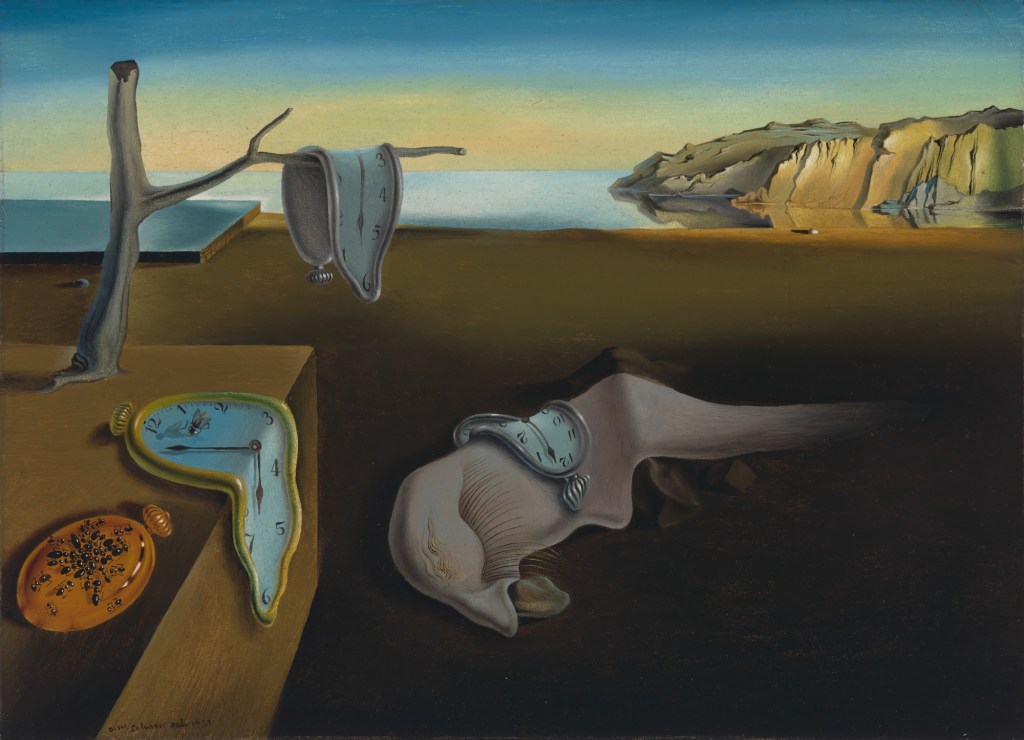
In this story, time stands still for Joseph:
18 Joseph Watches Time Stand Still
1 He found a cave there and took her into it. Then he gave his sons to her and went out to find a Hebrew midwife in the region of Bethlehem.
2 But I, Joseph, was walking, and I was not walking. I looked up to the vault of the sky, and I saw it standing still, and into the air, and I saw that it was greatly disturbed, and the birds of the sky were at rest. I looked down to the earth and saw a bowl laid out for some workers who were reclining to eat. Their hands were in the bowl, but those who were chewing were not chewing; and those who were taking something from the bowl were not lifting it up; and those who were bringing their hands to their mouths were not bringing them to their mouths. Everyone was looking up. I saw a flock of sheep being herded, but they were standing still. The shepherd raised his hand to strike them, but his hand remained in the air. I looked down at the torrential stream, and I saw some goats whose mouths were over the water, but they were not drinking. Then suddenly everything returned to its normal course.
Bart Ehrman, a leading expert on these gospels, writes that every time he reads this passage, he thinks of the Twilight Zone.
Consider this history, consider this a story. It concerns a profound matter, for believers and non-believers, for philosophers and scientists.
In contracts, the term “time is of the essence” is commonly included. Meaning that it is a primary element of performance.
In the Bible, the story begins with time. The usual first word in translation is “when”, followed by a counting of days.
Time is of the essence. In our lives, we keep time, mark time, use time wisely, foolishly, carefully, carelessly. One thing we know, or think we know, whatever time is, it does not stop. Or can it?
These three figures in the Christmas tradition appear in only one of the four Christian gospels, and even that role in Matthew is sketchy. They are foreigners bringing gifts for the infant Jesus and they return home by a different route to evade Herod. That’s it.
Translations and interpretations of what they brought vary, and even less clear is exactly who these foreigners were supposed to be in the story. They may be kings, wise men, astrologers or, as some have it, Zoroastrian priests from Persia.
This is why the particulars don’t matter much at all: the story is so basic and illuminating that it has captured the imagination of millions in its various retellings. Christian faithful have one view of it, and the more literal vision is that of concrete history. But for those who lean away from that, there is much to be gotten out of this compelling story:
Some people of discernment—in terms of wisdom, astrology or otherwise—had a sense that something special was going on outside of their ordinary sphere. Maybe they saw a light.
They travelled a long way to discover what was going on, and having found out, expressed their gratitude humbly and generously.
Again, that’s it. Some may want to think about theology. Others may want to think about other sorts of lights they’ve glimpsed, journeys they’ve made or haven’t made, and about possibilities. Christmas or just winter solstice and New Year, there is no better time to think about possibilities and all the rest.
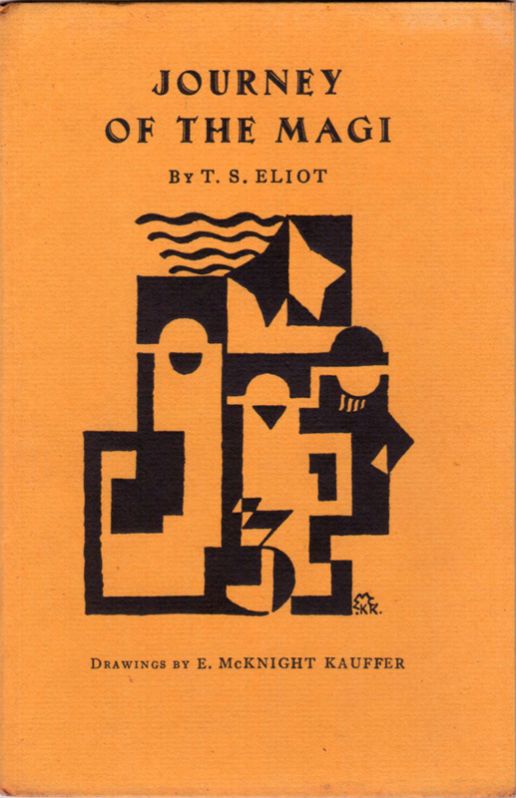
T.S. Eliot wrote a brief but cinematic poem about the magi. It is written from a believer’s perspective, as the magi suffer twice, once on the journey, once again when they return home and find themselves so spiritually transformed by the experience that they feel like strangers in their own land. This is certainly a Christian view of the holiday, but non-Christians may just as well consider the more general phenomenon of all sorts of enlightenment, sitting between the way you have been and the way you discover you could be or already are. The magi say they would be glad of another death like that.
‘A cold coming we had of it,
Just the worst time of the year
For a journey, and such a long journey:
The ways deep and the weather sharp,
The very dead of winter.’
And the camels galled, sorefooted, refractory,
Lying down in the melting snow.
There were times we regretted
The summer palaces on slopes, the terraces,
And the silken girls bringing sherbet.
Then the camel men cursing and grumbling
and running away, and wanting their liquor and women,
And the night-fires going out, and the lack of shelters,
And the cities hostile and the towns unfriendly
And the villages dirty and charging high prices:
A hard time we had of it.
At the end we preferred to travel all night,
Sleeping in snatches,
With the voices singing in our ears, saying
That this was all folly.
Then at dawn we came down to a temperate valley,
Wet, below the snow line, smelling of vegetation;
With a running stream and a water-mill beating the darkness,
And three trees on the low sky,
And an old white horse galloped away in the meadow.
Then we came to a tavern with vine-leaves over the lintel,
Six hands at an open door dicing for pieces of silver,
And feet kicking the empty wine-skins.
But there was no information, and so we continued
And arriving at evening, not a moment too soon
Finding the place; it was (you might say) satisfactory.
All this was a long time ago, I remember,
And I would do it again, but set down
This set down
This: were we led all that way for
Birth or Death? There was a Birth, certainly
We had evidence and no doubt. I had seen birth and death,
But had thought they were different; this Birth was
Hard and bitter agony for us, like Death, our death.
We returned to our places, these Kingdoms,
But no longer at ease here, in the old dispensation,
With an alien people clutching their gods.
I should be glad of another death.
Oh, my love, we live in troubled days Oh, my friend, we have the strangest ways All my friends on this one day of days Thank God it’s Christmas
Oh, my love, we’ve had our share of tears Oh, my friend, we’ve had our hopes and fears Oh, my friends, it’s been a long hard year
But now it’s Christmas Yes, it’s Christmas Thank God it’s Christmas
The moon and stars seem awful cold and bright Let’s hope the snow will make this Christmas right My friend, the world will share this special night
Because it’s Christmas Yes, it’s Christmas Thank God it’s Christmas For one night
Thank God it’s Christmas Thank God it’s Christmas Thank God it’s Christmas Can it be Christmas? Let it be Christmas Every day
Oh, my love, we live in troubled days Oh, my friend, we have the strangest ways All my friends on this one day of days Thank God it’s Christmas Yes it’s Christmas Thank God it’s Christmas For one day
The old Hanukkah dilemma for Jews was the coincidence of the holiday with the increasingly overwhelming Christian holiday of Christmas. The dilemma isn’t entirely solved, though in general we treat them as two of the December celebrations, though they have profound distinctions. There is universal agreement that Hanukkah is a minor Jewish holiday, just as there is universal agreement that Christmas is one of the two super-major Christian holidays. But inspiring winter lights, gifts, celebrations and fun are also universally appreciated.
The new Hanukkah dilemma is not as simple or simply solved. The historical holiday is based on a small band of Jewish guerillas defying the odds in defeating an oppressive empire. The storied miracle of the oil lamp is paired with a real military victory. Unfortunately, the Jewish dynasty that took over followed the well-known path of becoming oppressors themselves. If The Who created the rock opera, meet the new boss, same as the old boss.
The war in Gaza is not the first example of Israeli aggression in the name of security. It is not the first example in world history of aggression in the name of religious hegemony. Whether Israel or any other country or religion, whether now or any other era, questions arise about how the initiatives are conducted, what suffering is inflicted, and what happens next.
In the case of Hanukkah, the approach has been to stress the story of a bright miracle, including the immediate outcome of Jewish independence, but mostly look away from the darker elements of the history. In a certain light, that is exactly how the war in Gaza is being approached. By some Jews, but not all. Not by me. It’s a dilemma.
Our menorah, a box of candles, and a box of matches stand ready for Sunday evening. Will it matter if I don’t light the candles? Like the proverbial falling tree unseen in the forest, is it a hollow protest with no effect? If I do light the candles, will my wish for peace, repair and a new Jewish and Israeli ethos mean anything?
I guess that more light is better than less or none.
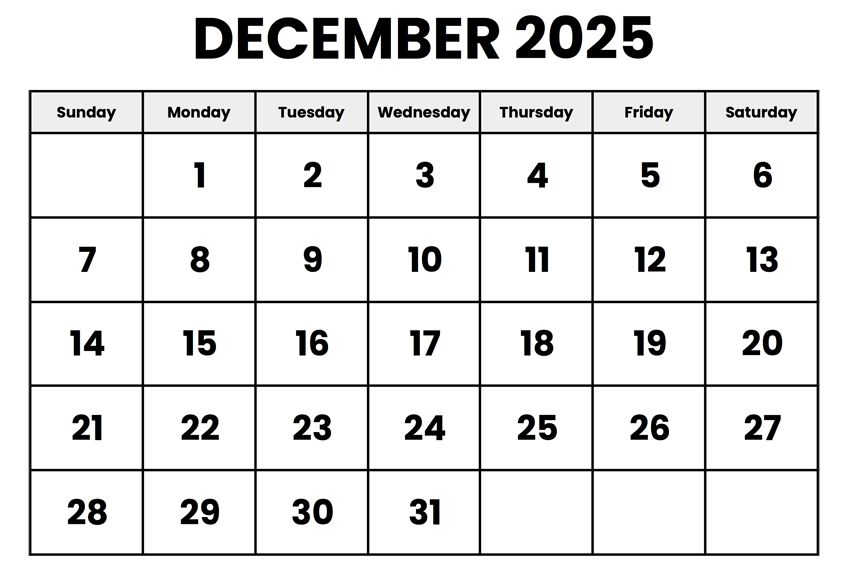
December is full of important holidays and dates. Following are some I will be featuring in the month ahead. In the meantime, feel free to learn more about them—even the ones you are familiar with.
December 8 Bodhi Day is the Buddhist holiday that commemorates the day that Gautama Buddha is said to have attained enlightenment.
December 8 Anniversary of the death of John Lennon (1940-1980)
December 10 Anniversary of the death of Thomas Merton (1915-1968)
It is advised that attachment to any of these will result in suffering, for yourself and others. You don’t have to be involved in any tradition, just as a human being, to know that is true.
Concern about receiving or not receiving gifts has other facets. Concern about receiving the “wrong” gift, or concern about whether to give a gift or about giving the “wrong” gift.
This is the season for receiving and giving gifts. This message is not about receiving or not receiving or giving or not giving gifts.
You may receive gifts and give gifts. You may be famous or disreputable. You may win praise or be subject to criticism. You may feel pleasure or pain. This is life. The holidays are on their way.
This season, clinging to concerns about what you receive will not make you and others happy. The empty box, or even no box at all, is okay.




 Bob Schwartz