Bob Schwartz

Tag: Christianity

One God Two God

One Fish Two Fish

One God
Two God
Red God
Blue God
(apologies to Dr. Seuss)

A professor at Wheaton College may be dismissed for saying that Christian and Muslims worship the same God.

There is so much that could be said about this.

About the history of American evangelicalism, of which Wheaton is a part. How it began as an open and activist socially liberal Christian movement and has ended up in some instances a radically conservative and strictly exclusivist movement.

About theology as complex as any machine ever built, and just as incomprehensible to those who are not religion mechanics and engineers. How even though the God of the Jews was absolutely the God of Jesus, and the God of the Jews and Jesus was absolutely the God of Muhammed, that isn’t so according to people who may think themselves smarter and more important than Jesus or Muhammed.

The concept of one God was a revolution in civilization. The earlier belief in an entourage of gods, greater and lesser, has been mostly replaced by the one. (Whether that one might be three-in-one goes back to the theology complexities mentioned above, so let’s leave that for now.)

It is no wonder that after thousands of years with religion as a standard way of life, more people are rejecting it than ever. Because if there is a God, and if religions have sprung up on his behalf (with or without his blessing), that God and those religions can look spectacularly ridiculous in the eyes of good people who want nothing but good for people. And because if God really cares about all this very human nonsense, a growing number of people want nothing to do with him or his religions. And who can blame them?

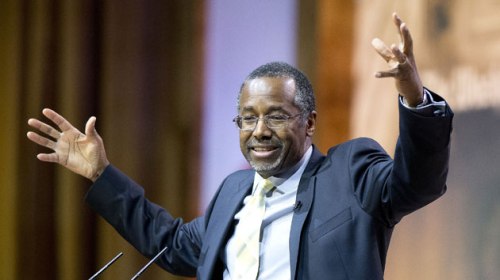
Ask for Forgiveness: The Perfect Ben Carson Strategy That He Won’t Use

Ben Carson

Ben Carson has gotten caught embellishing/lying about some details in his life that are part of his inspirational narrative.

What’s weirdest about his response—spin, blame the media, discount the degree of untruth, etc.—isn’t that making up stuff is unusual for politicians. Zebras and stripes, leopards and spots. What’s weird is that being a sincere and serious Christian, all he has to do is tell the truth. Say that he exaggerated or even lied, and ask for forgiveness. Because he is, after all, only human, only a sinner like us all.

His many Christian supporters should not only forgive him. They should see him as a model of genuine Christian contrition and humility. Which presumably is what God and Jesus ask of us. Not to be saints, which we can’t be anyway, but to be self-aware, confessing humans, bent on being better. It is entirely possible that he could actually make gains among Christian supporters for doing that.

If those supporters refused to forgive, that might put in question the depth of their unconditional Christian commitment. Lying itself doesn’t put your faith and commitment in question (remember, only human), but stubbornly persisting in finding every which way not to say you have lied is a little more troubling. And maybe a little less Christian.

Bacon and Ribs Illegal in America When Jews and Muslims Take Over

When Orthodox Jews or Muslims are in charge, bacon, ribs, and all sorts of other things will be made illegal.

Of course, that will never happen. Not because Orthodox Jews or Muslims will never take control of American democracy (anything’s possible). But because the U.S. Constitution—that imperfectly perfect protector of individual rights—would not permit it.

In the secular sphere, there is no higher law than the Constitution. Beyond being the law of the land, it is the law of the law of the land. Those who study it in the context of world history and politics recognize that it is a one-of-a-kind, no-other-time-or-place achievement.

Those who say there is some kind of higher law than that in the civic arena are misinformed, or in some cases, such as Ted Cruz who should know better, strategically mistaken. The question those folks have to answer is this: If there is higher law than the Constitution, whose law is it? If it’s “God’s” law, recall that God talks to lots of people in lots of religious traditions, and apparently isn’t always heard to say the same thing to everyone. It will shock some Christians to learn that God has been speaking to Jews for thousands more years, and while there seemed to have been plenty of talk about a messiah, nothing to indicate that one actually arrived. Or asked county clerks in Kentucky to stop issuing marriage licenses. Or told presidential candidates who claim to believe in law and order to defy the law of the law of the land. In his name. Amen.

Mountains Walking

Jesus, Dogen and Donovan each have something to say about mountains. In some ways the same thing.

Jesus says that faith can move mountains, by which he may mean that understanding the nature of things, including mountains, will allow us to see that mountains are always moving, if we will see it. Jesus is all about what we don’t see that is right in front of us.

Dogen says that mountains are mountains and mountains are walking. If you can walk, mountains can walk. Those without eyes to see mountains cannot notice, understand, see, or hear this reality.

Donovan sings about this reality of mountains appearing, disappearing, appearing.

Jesus

He answered, ‘Because you have so little faith. In truth I tell you, if your faith is the size of a mustard seed you will say to this mountain, “Move from here to there,” and it will move; nothing will be impossible for you.’ (Matthew 17:20, New Jerusalem Bible)

Dogen Zenji

Priest Daokai of Mount Furong said to the assembly, “The green mountains are always walking; a stone woman gives birth to a child at night.”

Mountains do not lack the characteristics of mountains. Therefore, they always abide in ease and always walk. Examine in detail the characteristic of the mountains’ walking.

Mountains’ walking is just like human walking. Accordingly, do not doubt mountains’ walking even though it does not look the same as human walking. The buddha ancestor’s words point to walking. This is fundamental understanding. Penetrate these words.

Because green mountains walk, they are permanent. Although they walk more swiftly than the wind, someone in the mountains does not notice or understand it. “In the mountains” means the blossoming of the entire world. People outside the mountains do not notice or understand the mountains’ walking. Those without eyes to see mountains cannot notice, understand, see, or hear this reality.

If you doubt mountains’ walking, you do not know your own walking; it is not that you do not walk, but that you do not know or understand your own walking. Since you do know your own walking, you should fully know the green mountains’ walking.

Green mountains are neither sentient nor insentient. You are neither sentient nor insentient. At this moment, you cannot doubt the green mountains’ walking.

From Mountains and Waters Sutra, Shobo Genzo, Fascicle 15 (1240)

Donovan

The caterpillar sheds his skin to find a butterfly within
Caterpillar sheds his skin to find a butterfly within
First there is a mountain, then there is no mountain, then there is

From There Is a Mountain

Easter

Gnostic Bible

I am not a Christian, not in any conventional or even unconventional sense. But I have been a student of Christian religion, literature and phenomena for decades. It is part of a religious triangle—or maybe universe—with my native Judaism and my adopted Buddhism.

One of my earliest Christian experiences was reading the Gospel of Thomas, part of the Nag Hammadi Library, a trove of early Christian writings discovered in 1945. That translation of one of the so-called Gnostic Gospels was done by Dr. Marvin Meyer; I did not know that years later I would work with and become friends with him. What I did know on first reading (and on first meeting) was that the late Dr. Meyer was brilliant. (You may well have seen him on many of the History and Discovery Channel type biblical shows.)

For this Easter, I include a selection from the Gospel of Thomas. It is taken from The Gnostic Bible, edited by Dr. Meyer and by the equally-brilliant poet, translator and scholar Willis Barnstone.

The Gospel of Thomas, often called the Fifth Gospel, is a work of sayings and wisdom; there is no action. Some of the sayings are similar to those that appear in the canonical gospels. Others are more assertively cryptic and mysterious, puzzling in the same way that Zen koans are. This section, appropriately for Easter, is about life and death:

11

Yeshua (Jesus) said,
This heaven will pass away
and the one above it will pass away.
The dead are not alive
and the living will not die.
During the days when you ate what is dead
you made it alive.
When you are in the light, what will you do?
On the day when you were one
you became two.
But when you become two, what will you do?

Willis Barnstone’s most recent work is The Restored New Testament, a monumental achievement in which he single-handedly translated the entire NT (including Gnostic Gospels) and provided hundreds of pages of lucid and enlightening commentary. In that book, he offers this wisdom for a modern age:

In the end, all people are people, and no people should ever be classified for whatever reason as less than another. Any marker of sect and theology that distinguishes any people adversely is human and humane error. So the gospels and Apocalypse should not be seen for the momentary and external conflicts they may contain, but rather for their greater universality of spirit in a world desperately poor in coming to terms with human consciousness within the perishable body. Happily, the call to spirit is deep and needs no name, and no divisive emblem. The New Testament is a book of the mind; it is infused with compassion and courage and the great questions of being, death, time, and eternity. For the perceptive reader, spirit eludes name, dogma, and even word to reside in the silence of transcendence.

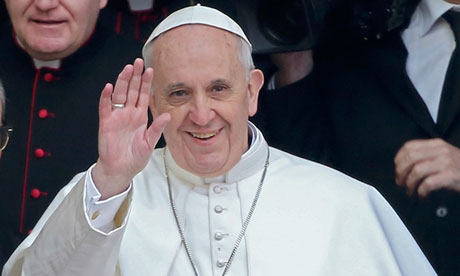
Is Pope Francis the Leader of the World?

Pope Francis
The Dalai Lama is the most famous Buddhist in the world. His message is powerful, positive and universal. Even with the huge platform he has, his brand of Tibetan Buddhism is a bit exotic for many people, so still somewhat limited. He is also one of the coolest people on the planet. So as much as a basic Buddhist message would be great for the world at large to take to heart, it isn’t about to happen.

Pope Francis is also an outsized moral leader. He is the head of a church with more than a billion followers. And while there are hundreds of millions of Protestant Christians who question whether that church and its Pope can claim Christian legitimacy—and who find the Catholic Church plenty exotic too—you can’t deny the size and scope of the Pope’s Christian community. And if the Dalai Lama is cool, so is Pope Francis; he was once a bar bouncer, which is something the Dalai Lama can never claim.

The biggest argument for the supreme leadership role of Pope Francis is that he is exactly the right person for the right time, acting and speaking on a very big stage. Two of the major characteristics of the moment are that materialism seems to be failing or failing us and that our changing social universe requires some tricky balance between the old and the new, the absolute and the relative.

Pope Francis gets this and sells this from the very foundations of his faith. He has just had to deny that his is a not a Marxist, but proceeded in the same breath to appreciate the work of those who sincerely act in the name of Marxist ideals. It is not just that he seems to have a vision that synthesizes the original Christian communities with the complicated world two millennia later. He sees in the very institution he is charged with running the embodiment of the problems. If the institutional church, the church membership and the world have lost their way, it is not his job to order them around. Instead he just points to a playbook that is to be taken seriously, not selectively and strategically, and advises to live by and as its example. It’s a choice, one he has made, one he hopes others, from the church hierarchy on out, will make.

Whether the Catholic Church straightens out its affairs, whether disaffected Catholics return, whether new Catholics arrive, whether we are Catholic or Protestant or Jewish or Buddhist is beside the point and beside the Pope’s point. It is about being better and getting better. Pope Francis is not the first to say that, not even the first Pope to say it. But his walking the walk in the world of 2013 is different. These are the times that try people’s souls. We seem to have a world leader willing to make that reality both an ancient and modern quest, a quest that may, in the real and not theological sense, save us all.

Saints for All

Catherine Wheel
It is All Saints’ Day, and you don’t have to be Catholic, Christian or a believer of any kind to appreciate it.

Observed in the Western Christian church on November 1, it is the day that makes All Hallows’ (Saints’) Eve, aka Halloween, possible. Many denominations, including Anglicans, Lutherans and others, find a place and meaning for the holiday. But it is most associated with the Catholic Church, where it is a celebration of all saints known and unknown.

Saints are most specifically and tightly defined in the Catholic context. Saints are those whose lives allow them a special theological position and a special relationship with the divine after death, so that they may intercede on behalf of the faithful. You’ve no doubt heard reports about the two-step process of being designated a saint by the Pope: beatification (with the title “Blessed”), followed by canonization, based on the investigation and proof of intercessory miracles. It is usually a long road, though it appears that the very popular Pope John Paul II is on the fast track to sainthood.

The Catholic Church has had an historic problem with saints, one that continues to the moment. Two related problems really. The first is that from the beginning, people had a way of venerating those who inspired and who they admired, essentially developing cults around them, whether or not it was “official.” The related problem is that this enthusiasm was often based more on legend and even on superstition, rather than on actual biography or theological fine points. Early on the Church took control of saint making, though sometimes to little avail. As for saints whose life stories were questionable or constructed out of whole cloth, in recent years the Church has begun cleaning up the database, literally demoting some and stripping them of their sainthood.

Many religions, including Judaism, Islam and Buddhism, hold special regard for those we might call saints, ones whose holiness goes above and beyond those of regular mortal people. In Judaism, for example, a tzadik is one whose righteousness sets him apart and allows him to serve as a channel flowing between the earthly and the divine, or better yet, serving as a model for the divine in the earthly.

Even if you don’t like religion but love good stories, saints are for you. Take Saint Catherine of Alexandria. In the early 4th century, this pious Christian scholar attempted to convince the Roman Emperor Maxentius not to persecute Christians. He arranged for Catherine to debate great pagan philosophers, but she won the argument. He tortured her. He proposed marriage, but she claimed her only marriage was to Jesus Christ. He condemned her to die on a spiked wheel that was to break her body apart. Instead, the wheel was destroyed at her touch. Maxentius then beheaded her; she became a martyr and a saint. (The wheel had its own life. Now known as a Catherine Wheel, it is used to this day as a spectacular spinning fireworks display.)

Or so the story goes. Despite her importance as one of the most revered of saints in the Middle Ages, this is now regarded as legend, with no evidence of the events or even of Catherine’s existence. Though she still has a place in Church tradition, her feast day was removed from the official Church calendar in 1969, only to have her day restored to the list in 2002 as optional.

Besides good stories, and besides the miraculous aspects that some find outside the circle of their own tradition, rationality or belief, the saints often provide some inspiring modeling in their lives. It isn’t necessarily the difference between the sacred and the profane, although there’s plenty of that in cases such as Augustine, where the base and worldly give way to something greater. It is the difference between the ordinary and the extraordinary—no more or less than we might admire athletes, artists or anyone who excels in ways that make the impossible seem possible for us too.

In a way, it is a back door path to redefining exactly what miracles are. We might not be martyrs, we might not make a deadly instrument of torture disappear at a touch, we might not heal the incurably sick. Saints reach beyond grasp, and besides asking them for help when no help seems available, that is why people are excited by them. We have arms, we can reach too. We can help, even if it isn’t the kind that gets us listed in some official church roster.

Good stories. Some fireworks. Plenty of inspiration. Maybe every day can be All Saints’ Day.

Barna: You Don’t Have to Be Christian

Spiritually Homeless
If you have any interest in the state of American religion—or of American society—you must pay attention to the Barna Group. Founded by George Barna in 1984, for decades jit has been analyzing American attitudes towards and participation in religion, from the perspective of informing Christian churches. By its nature, though, this is not necessarily a denominational narrow view. Consider, by analogy, market research by General Motors. That research is not entirely, or even primarily, about consumers and GM cars. It is about consumers and all car companies and cars and transportation in general. Just so, state-of-the-art quality research on religion is valuable to anyone in the field.

Beyond this, it is valuable for anyone interested in America. For example, our public discussion includes the terms Christian, evangelical, born again, etc., being thrown around casually as if everyone knows and agrees on what they mean—except that everyone doesn’t. That lack of rigor isn’t a luxury that Barna has. It has defined these and other terms with surgical precision, so that the research itself can be precise and informative.

The just-released report on Three Spiritual Journeys of Millennials is only the latest example of how fascinating and useful the Barna research can be. When numbers of people flee from organized religion, only the most shortsighted think that this is a just a problem for Christianity or for any other religious institution. A social sea change is a sea change, and not trying to seriously assess its meaning and implications is simply foolish. Those who applaud the phenomenon as a sign of long overdue enlightenment—of people finally coming to their senses—are not thinking it through. Jew, Muslim, Buddhist, atheist, areligionist, anti-religionist, this report—and all that Barna does—can help you with that thinking.

Stamping Eid al-Adha


The relationship between American society and Islam is complicated.

At this point in history, there are few sentences that could be more absurdly understated. In so many spheres, that relationship is, to be polite, messed up beyond all reason.

There is a long and growing list of events and phenomena that contribute to and reflect those complications. How the world’s largest or second-largest religion (depending on accounting) became so toxic in the world’s most tolerant democracy is a story still being written. No doubt having a black President whose father was a Muslim, who spent part of his youth in the world’s most Muslim country, and whose middle name is Hussein is the latest part of that.

The Postal Service, out of a sense of decency and diversity and political realities, rushes in where others fear to tread. This is itself a complicated thing.

October 26 is Eid al-Adha (“Feast of the Sacrifice”), the major holiday on the Muslim calendar.

Islam shares many stories with its Abrahamic precursors, Judaism and Christianity, though some of the scripture is added to or modified. So it is with the story of Ibrahim (Abraham) and his son Ishmael (Isaac). Ibrahim and Ishmael are said to have built the Kaaba, the building in Mecca that is the centerpiece of the commanded pilgrimage—the hajj. Ibrahim was also told in a dream to sacrifice his son as a sign of obedience to Allah and, as in the Old Testament, was stopped only at the last moment when Ishmael was replaced by a sacrificial sheep.

Eid al-Adha marks the end of the annual pilgrimage and Ibrahim’s faithful near-sacrifice of his son. (For discussion elsewhere, the question of how this deep and fascinating father-son sacrifice in the Old Testament—see, e.g., Kierkegaard’s Fear and Trembling—is not on the Jewish calendar, but became such a central event of the Christian and Muslim calendars.)

Some think that the Postal Service should not be in the business of commemorating religious holidays and people, given the wall—the admittedly porous wall—between church and state. The Mother Teresa stamp issued in 2010 is just one of those flash points. The Postal Service explains:

Following the announcement of the Mother Teresa stamp, groups such as the Freedom from Religion Foundation objected to the Postal Service’s seeming violation of its own guidelines.

“We received numerous letters saying that we should not be doing religious stamps,” says Terry McCaffrey, manager of stamp development. “But we are honoring her for her humanitarian work, not for being a member of a religious order.”

After all, McCaffrey asks, to what extent should religious inspiration disqualify an otherwise worthy subject?

Over the years, many religious figures have been depicted on stamps in recognition of their contributions to society, independent of their personal motivations or beliefs. Stamp honorees have included Dr. Martin Luther King, Jr., for leading the struggle for civil rights, Father Edward Joseph Flanagan for his work with delinquent and homeless boys, and Padre Félix Varela for his advocacy for the immigrant poor.

Still, the signs of protest for Mother Teresa were stronger than with most stamps.

As for minority religions, the Postal Service shies away (but see Hanukkah below). No Buddhism, for example. Interestingly and somewhat surprisingly, the Postal Service did dip its toe in Mormon waters. In December 2005, it gave a nod to the 200th anniversary of Joseph Smith’s birth, not with a stamp, but with the much less substantial cancellation mark. Note below that the Postal Service did not issue this postcard; that is privately produced. The only government involvement is the cancellation mark. Also notable is that given it was holiday season, this postcard includes a Madonna stamp to go along with the Joseph Smith cancellation.

Holidays provide a little bit of cover for the Postal Service. Instead of unacceptably eliminating Christmas, the Postal Service went to religious inclusiveness and diversity. So we have a Hanukkah stamp for Judaism—even though Hannukah is a relatively minor holiday on the Jewish calendar.

A few years ago, we were offered a Muslim stamp for the Eid feasts:

This stamp commemorates the two most important festivals — or eids — in the Islamic calendar: Eid al-Fitr and Eid al-Adha, and features the Arabic phrase “Eid mubarak” in gold calligraphy on a blue background. Eid mubarak translates literally as “blessed festival,” and can be paraphrased “May your religious holiday be blessed.”

Employing traditional methods and instruments to create this design, calligrapher Mohamed Zakariya of Arlington, VA, working under the direction of Phil Jordan of Falls Church, VA, chose a script known in Arabic as “thuluth” and in Turkish as “sulus.”

As shown above, the Postal Service modified the Eid stamp in 2011, keeping the exquisite calligraphy, changing the color from blue to red, and issuing it as a Forever® stamp:

The U.S. Postal Service® commemorates the two most important festivals — or eids — in the Islamic calendar: Eid al-Fitr and Eid al-Adha. On these days, Muslims wish each other Eid Mubarak, the phrase shown in calligraphy on the stamp. Eid Mubarak translates literally as “blessed festival” and can be paraphrased “May your religious holiday be blessed.” This Eid stamp features gold calligraphy against a reddish background.

Saying that the original Eid stamp was issued “a few years ago” is imprecise. It was actually issued on September 1, 2001—ten days before 9/11. It seems that this small step in the direction of recognition and tolerance got lost in some twisted history that as a country we are still trying to straighten out.

The stamp is available for purchase from the Postal Service. And even if you are not among the 1.7 billion people celebrating Eid al-Adha next week, it is still a beautiful addition to any piece of mail—and a beautiful statement.