Bob Schwartz

Tag: Buddhism

Lock Screen Pure Land

“If you are a smartphone user, you look at the lock screen—the opening screen you swipe to get into your phone—maybe a hundred times a day. Just a second at a time, but seconds add up to a real experience and impression. The pre-loaded images on lock screens are pretty banal, meant to show off the screen’s high-resolution capability without offending or overexciting anyone.”
The Art of the Lock Screen

A while ago—okay, a long while ago in Digital Time—I wrote about the creative possibilities of the lock screen on your mobile devices. Since then, my own devices have gone through a lot of different lock screen looks.

My latest lock screen art is shown above. It is a Tibetan thangka circa 1700, done in ink, pigments, and gold on cotton, depicting Amitabha in Sukhavati Paradise. Amithaba (Amida in Japanese) is the Buddha of Infinite Light and Life. Sukhavati Paradise is also known as the Pure Land, and is a centerpiece of Pure Land Buddhism—not as well-known in the West as other traditions such as Zen, but the dominant Buddhist tradition in Japan.

What the Pure Land is, where the Pure Land is, and how to get to the Pure Land are big topics for another time. But just look at that image. Even if you know nothing about what it means, seeing it each time you open your phone can certainly be a help in making things better.

The Eight Awarenesses: A List for Enlightenment

Handy lists of ways to think and behave are found in every tradition. Buddhism has plenty, including the Four Noble Truths and the Eightfold Path.


The Eight Awarenesses, also known as the Eight Realizations or Eight Awakenings, comprise an effective and easy to understand list. The list is notable for being part of the Buddha’s final teaching in the Mahaparinirvana Sutra, spoken before his death. It was also the subject of the final writing by Dogen Zenji, founder of the Soto Zen tradition, before his death.

The Eight Awarenesses

1. Having few desires

2. Knowing how to be satisfied

3. Enjoying serenity and tranquility

4. Exerting meticulous effort

5. Not forgetting right thought

6. Practicing samadhi [one-pointed attention]

7. Cultivating wisdom

8. Avoiding idle talk

“The Awarenesses are indeed the awarenesses of the enlightened person. A buddha, finding no separation between herself and other beings, very naturally acts in this way. Feeling no separation from others, a buddha naturally has few desires. Feeling no separation from others, from our surroundings, from what is happening right now, of course we can’t help but be satisfied, enjoying the serenity of life as it is. When we know the oneness of ourselves and others, effort becomes right effort, our activity becomes the embodiment of wisdom, and no talk is idle talk.”
Taizan Maezumi Roshi, The Hazy Moon of Enlightenment

I pay particular attention to avoiding idle talk (more successfully sometimes than others), given how much I talk and write, and given how much of it is easily categorized as idle.

In the Qu’ran, this is one of the descriptions of paradise:

They shall hear no idle talk therein, but only “Peace!” (19:62)


Happy Buddhaday to

The celebration of Vesak, also called Buddha Day, varies in detail from place to place around the world, from Buddhism to Buddhism, from Buddhist to Buddhist. This year it is May 18 or May 19 or another date. It is the Buddha’s birthday or the date of his enlightenment or the date of his death or all of them.

As a birthday, this is a Buddhaday poem. Sing the song and eat some cake.


Happy Buddhaday to

how many candles
on the Buddhaday cake
not one
not two

©

Four Reliances: How to Discern the Real Thing

When it comes to teachings and texts, when it comes to our own thoughts and conclusions, how can we tell the authentic from the inauthentic, the worthy from the unworthy?

The Buddha spoke and taught, and many of those discourses were recorded or remembered by those close to him. But over the centuries, as those discourses were passed along, changes were inevitably made. Later others spoke in the Buddha’s name, and still others spoke on their own, with the Buddha as guide and inspiration. The same can be said within other traditions.

How are we determine what is the real thing—not just in Buddhism, not just in religion, but in all facets of our lives?

Buddhism developed the universally useful Four Reliances to help in this quest and questioning. Whether you are reading a scripture from different traditions, or texts of any kind on any subject, or are hearing the news of current events, these are valuable guidelines.

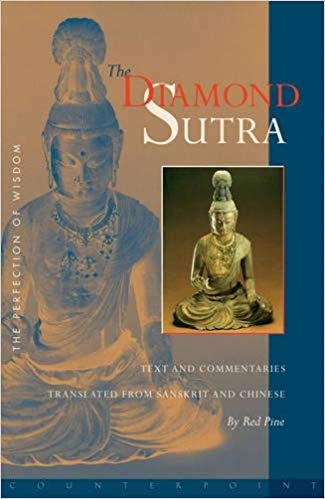
Here is the succinct formulation from Red Pine, found in his translation and commentary on the Heart Sutra.

Rely on the teaching and not the author
Rely on the meaning and not the letter
Rely on the truth and not the convention
Rely on the knowledge and not the information

Around the Worlds in 108 Beads (mala)

Around the Worlds in 108 Beads (mala)

Each bead a smooth and perfect sphere
Lustrous blue with floating continents of gray
My finger lingers then travels on
To a different world the same
I circumnavigate the strand of 108
Ten thousand splendid worlds within
Ten thousand splendid worlds
I have been to all and none
Beads in mind beads in hand

©

Note: A mala is a strand of 108 beads used in Buddhism and other traditions for chanting, contemplation and meditation. The mala can be carried, or can be worn as a necklace or bracelet. The beads are made from a variety of materials, including gemstones, wood and bone.

Malas are beautiful and powerful. I carry a short mala of 54 tiger’s eye beads in my pocket, the same pocket in which I carry my phone. When I reach for my phone, I am reminded that however wondrous that digital marvel appears to be, it is no match for a strand of beads.

MeruBeads is a premier maker of malas. The lapis lazuli mala pictured above is just one of the many they craft and sell. Please visit.

The Buddha Endorses Poetry

Gatha: A metrical unit of Indian verse that can be anywhere from two to six lines in length. It is sometimes used as a stand-alone poem and sometimes to restate preceding sections of prose.

From The Diamond Sutra, Chapter Thirty-two, translation and commentaries by Red Pine:

The Buddha speaks:

”Furthermore, Subhuti, if a fearless bodhisattva filled measureless, infinite worlds with the seven jewels and gave them as an offering to the tathagatas, the arhans, the fully-enlightened ones, and a noble son or daughter grasped but a single four-line gatha of this teaching of the perfection of wisdom and memorized, discussed, recited, mastered, and explained it in detail to others, the body of merit produced as a result would be immeasurably, infinitely greater.”

Red Pine writes:

The Buddha returns to the comparison he has made throughout this sutra, whereby an offering of the most valuable objects in the world is compared to an offering of a single poem that expresses the truth. As the extent and value of material offerings have steadily increased, the fearless bodhisattva has been presented as the most likely member of the Buddha’s audience to understand the greater value of a good poem. How ironic that at the end of this sutra, the merit of a fearless bodhisattva fails to compare to that of an ordinary person. For even a fearless bodhisattva can become attached to the net of jewels of an illusory world. But the message the Buddha wants to leave with his audience is that the body of merit synonymous with the Buddha’s own diamond body is accessible to anyone, that such a body is a four-line gatha away.

Bell

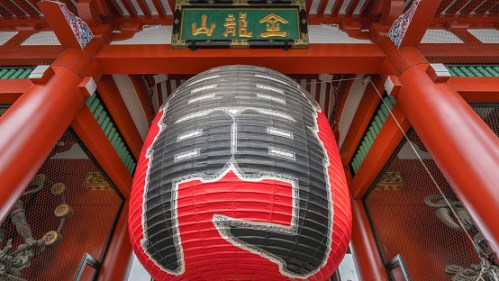
Sensoji

the sound of breathing
easy or labored
the temple bell rings

©

Wake Up! It’s Bodhi Day.

Bodhi Day is December 8, marking the enlightenment of the Buddha.

bodhi. In Sanskrit and Pāli, “awakening,” “enlightenment”.
—Princeton Dictionary of Buddhism

If the mad mind stops, its very stopping is bodhi.
—Śūraṅgama Sutra

Friend, wake up! Why do you go on sleeping?
The night is over— do you want to lose the day
the same way?
—Kabir, version by Robert Bly

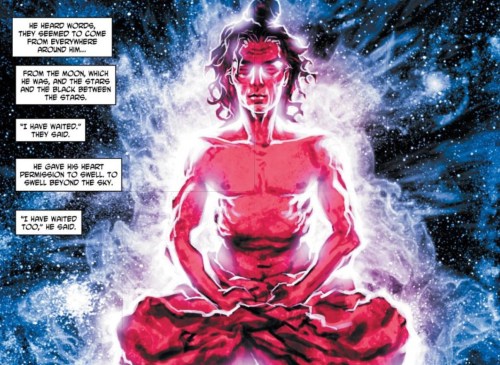
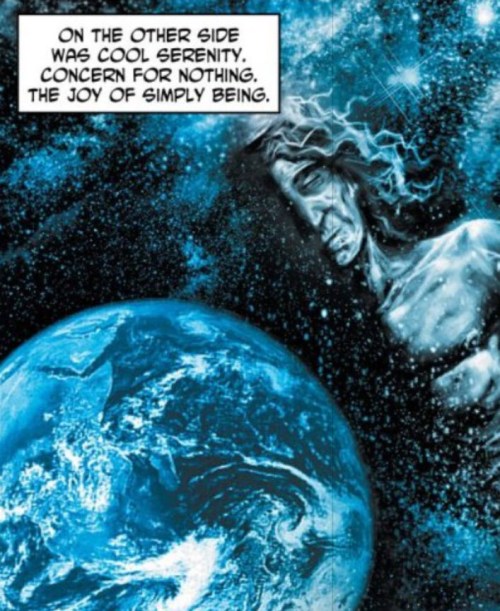
Deepak Chopra’s Buddha, Written by Deepak Chopra and Joshua Dysart, Art by Dean Ruben Hyrapiet


Thinksgiving

Dhammapada. One of the most popular and best-loved Buddhist texts. It consists of 423 verses divided into 26 sections arranged according to subject matter. In practice it is a sort of anthology of verses from various books of the canon.
A Dictionary of Buddhism

3. MIND

As the fletcher whittles
And makes straight his arrows,
So the master directs
His straying thoughts.

Like a fish out of water,
Stranded on the shore,
Thoughts thrash and quiver.
For how can they shake off desire?

They tremble, they are unsteady,
They wander at their will.
It is good to control them,
And to master them brings happiness.

But how subtle they are,
How elusive!
The task is to quieten them,
And by ruling them to find happiness.

With single-mindedness
The master quells his thoughts.
He ends their wandering.
Seated in the cave of the heart,
He finds freedom.

How can a troubled mind
Understand the way?
If a man is disturbed
He will never be filled with knowledge.

An untroubled mind,
No longer seeking to consider
What is right and what is wrong,
A mind beyond judgments,
Watches and understands.

Know that the body is a fragile jar,
And make a castle of your mind.
In every trial
Let understanding fight for you
To defend what you have won.

For soon the body is discarded.
Then what does it feel?
A useless log of wood, it lies on the ground.
Then what does it know?

Your worst enemy cannot harm you
As much as your own thoughts, unguarded.
But once mastered,
No one can help you as much,
Not even your father or your mother.

The Dhammapada: The Sayings of the Buddha
A Rendering by Thomas Byrom

“I would never disrespect you because you will all become buddhas.”

The Lotus Sutra—aka The King of Sutras, The Lotus Blossom of the Wonderful Dharma, The Discourse on the White Lotus of the True Doctrine—is one of the best-known and best-loved discourses of the Buddha.

A bodhisattva is one who takes up the way of the Buddha for the benefit of others. The Buddha speaks of various characters of bodhisattvas in the Lotus Sutra. In Chapter 20 we find Sadāparibhūta Bodhisattva—the Never Disrespectful, Never Disparaging, Never Belittling Bodhisattva.

The Never Disrespectful Bodhisattva was mocked and cursed by people, including those who were “attached to the Dharma superficially”, for his absolute refusal to disrespect others, no matter their behavior. His simple explanation was “I would never disrespect you because you will all become buddhas.” Ultimately, after a long while, the others learned and came around to his way.

How easy, even irresistible, it can be to disrespect, disparage and belittle others, especially when it seems to us so clearly appropriate and deserved. How cleverly cutting we can be. At those times, recall the Never Disrespectful Bodhisattva:

Then the World-Honored One, wanting to restate this teaching, spoke in verse:

There was a bodhisattva
Whose name was Never Disrespectful.

At that time the four groups
Were attached to the Dharma superficially.

Never Disrespectful Bodhisattva would go to them
And say: “I would never disrespect you,
For you are following the Way
And surely will all become buddhas.”

When people heard this
They made light of him or cursed him.
Never Disrespectful Bodhisattva
Withstood it all patiently…

At the end of his life
Never Disrespectful met countless buddhas,
And through teaching this sutra
Gained immeasurable happiness.

Gradually developing his blessings,
He quickly attained the Buddha way.
The Never Disrespectful of that time
Was really me.