Bob Schwartz

Tag: Buddha

Bodhi Day: The Ancient Path

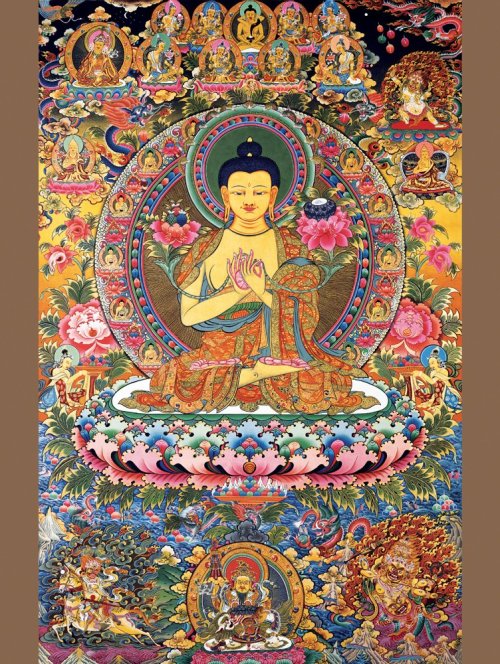
buddhas-of-the-celestial-gallery

“This was the third true knowledge attained by me in the last watch of the night. Ignorance was banished and true knowledge arose, darkness was banished and light arose, as happens in one who dwells diligent, ardent, and resolute.”

“Suppose, monks, a man wandering through a forest would see an ancient path, an ancient road traveled upon by people in the past. He would follow it and would see an ancient city, an ancient capital that had been inhabited by people in the past, with parks, groves, ponds, and ramparts, a delightful place. Then the man would inform the king or a royal minister: ‘Sire, know that while wandering through the forest I saw an ancient path, an ancient road traveled upon by people in the past. I followed it and saw an ancient city, an ancient capital that had been inhabited by people in the past, with parks, groves, ponds, and ramparts, a delightful place. Renovate that city, sire!’ Then the king or the royal minister would renovate the city, and some time later that city would become successful and prosperous, well populated, filled with people, attained to growth and expansion.”

“So too, monks, I saw the ancient path, the ancient road traveled by the Perfectly Enlightened Ones of the past. And what is that ancient path, that ancient road? It is just this Noble Eightfold Path; that is, right view, right intention, right speech, right action, right livelihood, right effort, right mindfulness, right concentration. I followed that path and by doing so I have directly known aging-and-death, its origin, its cessation, and the way leading to its cessation. I have directly known birth … existence … clinging … craving … feeling … contact … the six sense bases … name-and-form … consciousness … volitional formations, their origin, their cessation, and the way leading to their cessation. Having directly known them, I have explained them to the monks, the nuns, the male lay followers, and the female lay followers. This spiritual life, monks, has become successful and prosperous, extended, popular, widespread, well proclaimed among devas and humans.”

Saṃyutta Nikāya 12:65; II 104–7
In the Buddha’s Words: An Anthology of Discourses from the Pali Canon

Right Trees (Bodhi Day)

buddha-comic-enlightenment

December 8 is Bodhi Day, known in Japan as Rohatsu, the day of the Buddha’s enlightenment.  

Right Trees (Bodhi Day)

Which tree
To sit under?
Study each one
Counting branches
Inspecting leaves.
Is the ground
Too soft or wet
The shade
Too dark?
Who can deny
The forest
Yet it shrinks
To dust
On a distant shore.
The moon and
The morning star
Are just enough light
To brighten the night
Waking to find
This tree
All trees
Are right.

I wondered how the Buddha knew which tree to sit under for that consequential meditation. An easy answer is that it didn’t matter, that any tree or all trees would do. Another answer is that it didn’t have to be a tree at all. Another of the infinite answers is that there was no tree, no moon or morning star, no sitting. Just waking up.

Vesak: Buddha Day

Sakyamuni Buddha

Today is Vesak, the holiday also known as Buddha Day.

Around the world, especially in Buddhist Asia, Vesak combines a celebration of the Buddha’s birth, enlightenment and passing. This year the holiday was noted by the UN, by President Obama, by Canadian Prime Minister Trudeau, and by many others. This is part of the growing recognition that the world might benefit from even a little bit of Buddhism added to our complex, crazy and chaotic affairs.

Here is the Mangala Sutta (The Sutra on Happiness), a wise and uplifting discourse of the Buddha that is one of the best-loved and most frequently recited texts in the Southeast Asian Buddhist world.  Only twelve verses long, it is a recital of auspicious things, and along with texts such as the Metta Sutta, is believed to bring happiness and good fortune when chanted or heard.

The Sutra on Happiness

I heard these words of the Buddha one time when the Lord was living in the vicinity of Savatthi at the Anathapindika Monastery in the Jeta Grove. Late at night, a deva appeared whose light and beauty made the whole Jeta Grove shine radiantly. After paying respects to the Buddha, the deva asked him a question in the form of a verse:

“Many gods and men are eager to know
what are the greatest blessings
which bring about a peaceful and happy life.
Please, Tathagata, will you teach us?”

(This is the Buddha’s answer):

“Not to be associated with the foolish ones,
To live in the company of wise people,
Honoring those who are worth honoring—
This is the greatest happiness.

“To live in a good environment,
To have planted good seeds
And to realize that you are on the right path—
This is the greatest happiness.

“To have a chance to learn and grow,
To be skillful in your profession or craft,
Practicing the precepts and loving speech—
This is the greatest happiness.

“To be able to serve and support your parents,
To cherish your own family,
To have a vocation that brings you joy—
This is the greatest happiness.

“To live honestly, generous in giving,
To offer support to relatives and friends,
Living a life of blameless conduct—
This is the greatest happiness.

“To avoid unwholesome actions,
Not caught by alcoholism or drugs,
And to be diligent in doing good things—
This is the greatest happiness.

“To be humble and polite in manner,
To be grateful and content with a simple life,
Not missing the occasion to learn the Dharma—
This is the greatest happiness.

“To persevere and be open to change,
To have regular contact with monks and nuns,
And to fully participate in Dharma discussions—
This is the greatest happiness.

“To live diligently and attentively,
To perceive the Noble Truths,
And to realize nirvana—
This is the greatest happiness.

“To live in the world
With your heart undisturbed by the world,
With all sorrows ended, dwelling in peace—
This is the greatest happiness.

“For the one who accomplishes this
Is unvanquished wherever she goes;
Always he is safe and happy—
Happiness lives within oneself.”

Translated by Thich Nhat Hahn

Two Thoughts on the Passion: The Buddha and Bob Dylan


Bringing It All Back Home

“He not busy being born is busy dying.”

For anyone, Christian or not, the story of Easter is remarkable. Story, that is, not necessarily treated either as a story told or as a history chronicled.

Two of a thousand thoughts.

1.

The Buddhist conception of rebirth is complicated, beyond my simple and simplest understanding. So consider this just a summary and a thought about something of nearly infinite scope.

The realization that we are bound to grow old and die breaks the spell of infatuation cast over us by sensual pleasures, wealth, and power. It dispels the mist of confusion and motivates us to take fresh stock of our purposes in life. We may not be ready to give up family and possessions for a life of homeless wandering and solitary meditation, but this is not an option the Buddha generally expects of his householder disciples. Rather, as we saw above, the first lesson he draws from the fact that our lives end in old age and death is an ethical one interwoven with the twin principles of kamma and rebirth. The law of kamma stipulates that our unwholesome and wholesome actions have consequences extending far beyond this present life: unwholesome actions lead to rebirth in states of misery and bring future pain and suffering; wholesome actions lead to a pleasant rebirth and bring future well-being and happiness. Since we have to grow old and die, we should be constantly aware that any present prosperity we might enjoy is merely temporary. We can enjoy it only as long as we are young and healthy; and when we die, our newly acquired kamma will gain the opportunity to ripen and bring forth its own results. We must then reap the due fruits of our deeds. With an eye to our long-term future welfare, we should scrupulously avoid evil deeds that result in suffering and diligently engage in wholesome deeds that generate happiness here and in future lives.

In the Buddha’s Words: An Anthology of Discourses from the Pali Canon

My own take is that these rebirths are not a succession of lives, in the sense of multiple spans, but within this one life, this span of decades. We are constantly offered the opportunity to be new, based on who we have been but also on who we will be—who we will ourselves through thoughts and actions to be. If this sounds somewhat like the premise of Christian rebirth—of being born again—it might be.

(Note: To add yet another layer, Zen Master Bankei   talked about the unborn, that is, the unborn Buddha mind. When we realize that there is a reality that is there even before birth, we are marvelously illuminated. Not being born, we are not even subject to rebirth. But that’s another story.)

2.

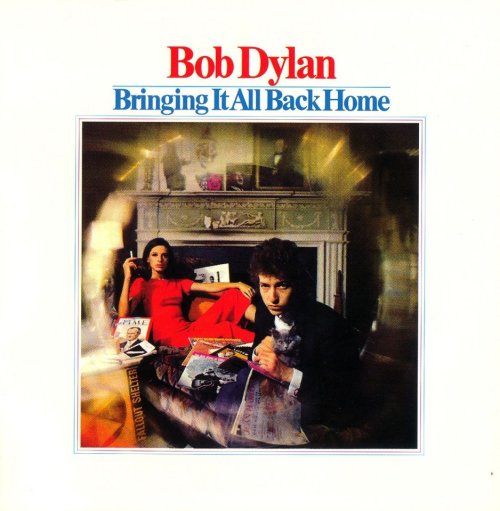
Thinking about the story of the death and resurrection of Jesus, a soundtrack came to mind: Bob Dylan’s song It’s Alright, Ma (I’m Only Bleeding), from the album Bringing It All Back Home (1965).

I looked to see whether Dylan had ever talked about a connection between the song and the Bible story. At first glance, it looks like not.

Maybe I’m just reaching, the way exegetes sometimes do, but it seems clear to me. If you’re not familiar with the song, please read the lyrics (below) and listen to the track. As a poem, it is up there with the classics of modern beat poetry, such as Allen Ginsberg’s Howl. It is that good.

The song begins with a son singing to his mother about a darkness at noon. He obviously is, or considers himself, some kind of prophet, railing against the status quo and the powers that be. He acknowledges that this is dangerous. He finishes by imagining his execution: “And if my thought-dreams could be seen/They’d probably put my head in a guillotine.”

All along, he assures the mother that everything is alright:

It’s alright, Ma, I’m only bleeding…
It’s alright, Ma, I’m only sighing…
And it’s alright, Ma, I can make it…
I got nothing, Ma, to live up to…
But it’s alright, Ma, if I can’t please him…
But it’s alright, Ma, it’s life, and life only


It’s Alright, Ma (I’m Only Bleeding)
Written by Bob Dylan

Darkness at the break of noon
Shadows even the silver spoon
The handmade blade, the child’s balloon
Eclipses both the sun and moon
To understand you know too soon
There is no sense in trying

Pointed threats, they bluff with scorn
Suicide remarks are torn
From the fool’s gold mouthpiece the hollow horn
Plays wasted words, proves to warn
That he not busy being born is busy dying

Temptation’s page flies out the door
You follow, find yourself at war
Watch waterfalls of pity roar
You feel to moan but unlike before
You discover that you’d just be one more
Person crying

So don’t fear if you hear
A foreign sound to your ear
It’s alright, Ma, I’m only sighing

As some warn victory, some downfall
Private reasons great or small
Can be seen in the eyes of those that call
To make all that should be killed to crawl
While others say don’t hate nothing at all
Except hatred

Disillusioned words like bullets bark
As human gods aim for their mark
Make everything from toy guns that spark
To flesh-colored Christs that glow in the dark
It’s easy to see without looking too far
That not much is really sacred

While preachers preach of evil fates
Teachers teach that knowledge waits
Can lead to hundred-dollar plates
Goodness hides behind its gates
But even the president of the United States
Sometimes must have to stand naked

An’ though the rules of the road have been lodged
It’s only people’s games that you got to dodge
And it’s alright, Ma, I can make it

Advertising signs they con
You into thinking you’re the one
That can do what’s never been done
That can win what’s never been won
Meantime life outside goes on
All around you

You lose yourself, you reappear
You suddenly find you got nothing to fear
Alone you stand with nobody near
When a trembling distant voice, unclear
Startles your sleeping ears to hear
That somebody thinks they really found you

A question in your nerves is lit
Yet you know there is no answer fit
To satisfy, insure you not to quit
To keep it in your mind and not forget
That it is not he or she or them or it
That you belong to

Although the masters make the rules
For the wise men and the fools
I got nothing, Ma, to live up to

For them that must obey authority
That they do not respect in any degree
Who despise their jobs, their destinies
Speak jealously of them that are free
Cultivate their flowers to be
Nothing more than something they invest in

While some on principles baptized
To strict party platform ties
Social clubs in drag disguise
Outsiders they can freely criticize
Tell nothing except who to idolize
And then say God bless him

While one who sings with his tongue on fire
Gargles in the rat race choir
Bent out of shape from society’s pliers
Cares not to come up any higher
But rather get you down in the hole
That he’s in

But I mean no harm nor put fault
On anyone that lives in a vault
But it’s alright, Ma, if I can’t please him

Old lady judges watch people in pairs
Limited in sex, they dare
To push fake morals, insult and stare
While money doesn’t talk, it swears
Obscenity, who really cares
Propaganda, all is phony

While them that defend what they cannot see
With a killer’s pride, security
It blows the minds most bitterly
For them that think death’s honesty
Won’t fall upon them naturally
Life sometimes must get lonely

My eyes collide head-on with stuffed
Graveyards, false gods, I scuff
At pettiness which plays so rough
Walk upside-down inside handcuffs
Kick my legs to crash it off
Say okay, I have had enough, what else can you show me?

And if my thought-dreams could be seen
They’d probably put my head in a guillotine
But it’s alright, Ma, it’s life, and life only

Translators May Be Traitors

If you read important books that are written in a language other than your own, you are at a disadvantage. You are depending on the kindness or brilliance of strangers. On translators.

That is doubly complicated if the original text is ancient, and the original language itself is a mystery, even for those who are expert.

The Bible, both First and Second Testaments, not to mention collatral ancient scriptural books and fragments, are a well-known example. The same problem arises with Asian texts such as the Tao Te Ching, the I Ching, or early Buddhist discourses.

So you see the challenge. Jesus or the Buddha said great things in their native language. Nobody transcribed them when spoken. The thoughts and words were remembered and kept accurately alive, as accurately as possible, in oral transmission and storage. Then they were set down in writing, in a language related to the original speech, maybe, but later in entirely different languages. And as the words migrated, the texts were overlaid and transformed, even as there was a sincere attempt to preserve the original.

Finally, they come to you, in the language you speak, read and understand. Which is far removed from the original.

When the French had the audacity to translate Dante into their own language, the Italians came up with a harsh accusation: Traduttore, traditore. Translator, traitor.

Consider that when you read translations, you are someone who cannot read yourself, or even see. You are in the dark. You depend on those who read to you. And hope that they are good and true readers themselves.

Morning Star

Morning Star 2

Morning Star

There is so much to learn.
Continue to learn that
There is nothing to learn.
But this.

Treasure Again

Dhammapada

How could I know
When I first read this treasure
How I would wander away
This way and that.
Make no mistake that others
Had value
Like other food that feeds well
Medicine that soothes ills.
But all along there it stood
Waiting for me to look again
And see its simplicity.
No time wasted
Here it is.

It is easier than we might think to lose track of things that once inspired us, the way a match is lost once we use it to light a fire.

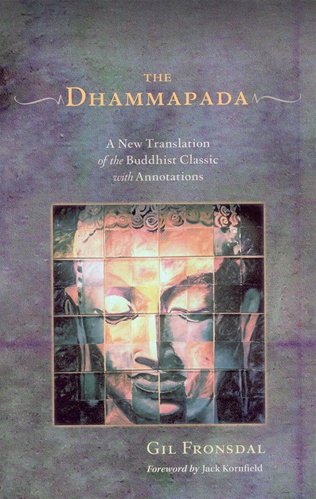
This verse refers to my turning back to the Dhammapada. It is the brief, most basic, and most widely-read collection of wisdom from the Buddha, whose recollected discourses fill volumes. Depending on which Buddhist trails you follow, just as with Jewish, Christian, Muslim, etc. trails, you will have read and heard plenty of excellent teaching from plenty of excellent teachers along the way. But there is something extraordinary about revisiting the first thing seen, the first coin from the treasure, which for many on the Buddhist way is The Dhammapada.

If you are curious to explore the Dhammapada, try this translation by Thomas Byrom or this one by Gil Fronsdal, both from Shambhala Publications.

The Day the Buddha Woke Up

Buddha Comic Bodhi

December 8 is Bodhi Day, the day on which the Buddha’s enlightenment is traditionally celebrated.

The English word “enlightenment” is so packed with meaning that it might be better to just go back to what the Buddha is reported to have said: I am awake.

This is useful because it leads to the two questions: woke up from what and woke up to what?

The Buddha, sitting there under the Bodhi tree, woke up from a journey. Born a royal son, he had fled a life of accidental privilege to answer ultimate questions about suffering and death—the very same questions that consume religious lives of all kinds. He believed that if he tried a, b, and c (such as extreme asceticism), he would discover some secret x, y, and z. There was some kind of magic formula, and all he had to do was learn it. That sort of magic is still at the heart of much of our religion.

He woke up to discover that there was no magic, not in such an instrumental sense. Nothing was different. Suffering and death would not go away, no matter what efforts we make. The best and worst aspects of life would go on, with and without us. Great fortunes would be made and lost. Great structures would be built and then destroyed, by cataclysms natural and human. Love would be here and gone.

But this: He could see something in all of that that made sense of all of that. There is no big plan in which we are players, active or passive, though we could and do make and execute our own little plans. There are just things, relationships between those things, and change, and of all those of a singular piece. We can and do overlay that with all of our very complicated details and distinctions, which is after all a definition of the life we live. But if we discover that underlying existence, we just might choose to live differently. And in that living differently, make change and wake others up. And on and on.

None of that eliminated suffering and death for the Buddha, as it won’t for anyone. He grew old and tired and, legend has it, died from being given spoiled food. He had told his followers what he had discovered, none of which involved magic. It was all about the infinite depth of the ordinary. For him, there was no more a kingdom in the clouds than the kingdom he had left behind when he started his journey. There was just what is. Strive on with diligence, he told those followers at the last.

Buddha’s Enlightenment Day

Buddha Comic Cover
Known as Bodhi Day, the Buddha’s day of enlightenment is called Rohatsu in Japan and is celebrated there on December 8th.

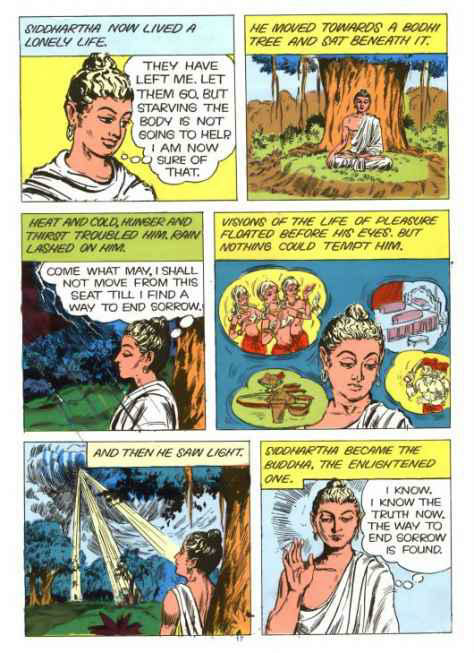
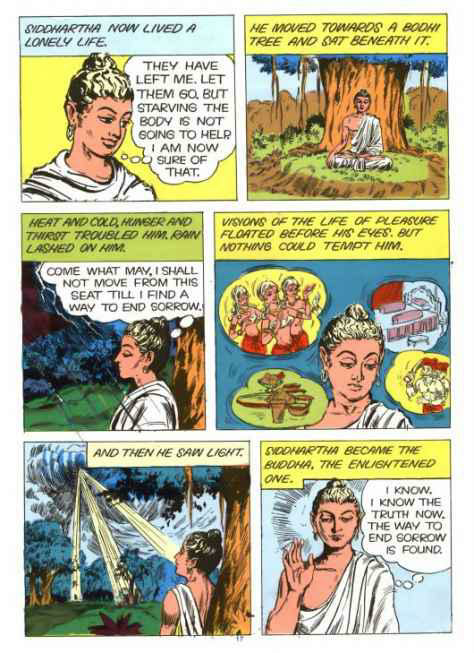
Here is a page from a Buddha comic book illustrating the event. It is published by the Indian company Amar Chitra Katha, which publishes a number of fascinating religious comic books—not only about Hinduism and Buddhism, but about Sikhimism, Zorostrianism and others.

Buddha Comic Enlightenment

In stillness, mind and object merge in realization and go beyond enlightenment. Thus, in the state of receptive samadhi, without disturbing its quality or moving a single particle, you engage the vast buddha activity, the extremely profound and subtle buddha transformation.

Grasses, trees, and lands that are embraced by this way of transformation together radiate a great light and endlessly expound the inconceivable, profound dharma. Grass, trees, and walls bring forth the teaching to all beings, including common people and sages; all beings in response extend this dharma to grass, trees, and walls. Thus, the realm of self-awakening and awakening others invariably holds the mark of realization with nothing lacking, and realization itself is manifested without ceasing for a moment.

This being so, the zazen of even one person at one moment imperceptibly accords with all things and fully resonates through all time. Thus, in the past, future, and present of the limitless universe, this zazen carries on the buddha’s transformation endlessly and timelessly. Each moment of zazen is equally the wholeness of practice, equally the wholeness of realization.

This is so not only while sitting; like a hammer striking emptiness, before and after its exquisite sound permeates everywhere. How can it be limited to this time and space? Myriad beings all manifest original practice, original face; it is impossible to measure. Even if all buddhas of the ten directions, as innumerable as the sands of the Ganges, exert their strength and with the buddha wisdom try to measure the merit of one person’s zazen, they will not be able to fully comprehend it.

Dogen Zenji, On the Endeavor of the Way
Treasury of the True Dharma Eye

Metta New Year

Enso 1

The Metta Sutta—the Buddha’s Discourse on Loving Kindness

This is what should be accomplished by the one who is wise,
Who seeks the good, and has obtained peace.

Let one be strenuous, upright, and sincere,
Without pride, easily contented, and joyous.
Let one not be submerged by the things of the world.
Let one not take upon oneself the burden of riches.
Let one’s senses be controlled.
Let one be wise but not puffed up and
Let one not desire great possessions even for one’s family.
Let one do nothing that is mean or that the wise would reprove.

May all beings be happy.
May they be joyous and live in safety,
All living beings, whether weak or strong,
In high or middle or low realms of existence.
Small or great, visible or invisible,
Near or far, born or to be born,
May all beings be happy.

Let no one deceive another nor despise any being in any state.
Let none by anger or hatred wish harm to another.
Even as a mother at the risk of her life
Watches over and protects her only child,
So with a boundless mind should one cherish all living things.
Suffusing love over the entire world,
Above, below, and all around, without limit,
So let one cultivate an infinite good will toward the whole world.

Standing or walking, sitting or lying down,
During all one’s waking hours,
Let one practice the way with gratitude.

Not holding to fixed views,
Endowed with insight,
Freed from sense appetites,
One who achieves the way
Will be freed from the duality of birth and death.