Bob Schwartz

Tag: Barack Obama

Actor Is Typecast As Satan

Satan
The media is all atwitter over the observation that the actor who plays Satan in a new Bible series looks a lot or something like President Obama.

The Associated Press got a response from the producers:

Mark Burnett and Roma Burnett said Monday the Moroccan actor who played Satan in the History channel series has played Satanic characters in other Biblical programs long before Obama was elected president.

First, separate from any questions about motives or about whether Mohamen Mehdi Ouazanni does look like Obama, let’s quickly get past a gap in this reply. If an actor looks like the President, and you have some creative notion that this helps make it a good casting choice (for artistic, political or publicity reasons), his having played Satan before just might be a bonus. Or if his experience as Satan is the driving reason, then the look-alike feature might be a bonus. The earlier Satan experience doesn’t fully dismiss any possibilities.

Beneath all this is a commentary on the craft and business of acting. From the producers’ comments, it appears that Mohamen Mehdi Ouazanni is, or is on his way to, being typecast as Satan. He played the part before, he is playing it now (and getting lots of attention for it), and may then be asked to play it again. If Charlton Heston had done a few more Moses movies after The Ten Commandments, what would his later career have looked like? Would he have been waiting around for the next Moses movie, instead of giving us Ben Hur, Planet of the Apes, Soylent Green, etc.? No major actor has ever reprised the role of Jesus, either, because besides the fact that there is no sequel to the story, it is the kind of part that is hard to shake.

There is a silver lining, though. Whether or not there are other Satan parts in this actor’s future, there is no doubt that in years to come, we will be seeing all kinds of films about Barack Obama. Some will even cast Obama as a metaphorical devil—a part he already plays in lots of political punditry. When those films are finally made, there will be a call for actors, and maybe having played Satan will be a real qualification.

The Untouchables: No Justice On Wall Street

The Untouchables
This week, PBS Frontline aired a follow-up to its powerful documentary Money, Power & Wall Street, which covered the origins and aftermath of the 2008 financial meltdown. The Untouchables is an equally scathing and disturbing story about the failure of the Justice Department to prosecute any Wall Street executives for fraud, in the wake of their apparently knowing securitization and sale of worthless mortgages.

For those who wonder whether investigative journalism still matters, this happened yesterday:

Lanny Breuer, the head of the DOJ Criminal Division featured in the documentary, resigned. Questions about why criminal prosecutions have taken so long—and whether there will ever be any—linger like a bad odor.

Mary Jo White, a former federal prosecutor, was nominated to be the next chairwoman of the Securities and Exchange Commission. Richard Cordray, another former prosecutor, was renominated to be director of the Consumer Financial Protection Bureau. The president said these nominations would help prevent a financial crash like the one he inherited four years ago.

People say that the new movie Zero Dark Thirty serves as a thought-provoking wake-up call about the role of torture and, ultimately, the effectiveness and judgment of President Obama. It has been said that those who support the president might find the film unnerving.

The Untouchables is much more unnerving, not just in looking at the president, but in looking at Attorney General Holder, at overseers,  and at all the others who seem to be strangely—or not so strangely—beholden to Wall Street.

Watch The Untouchables, then go back and watch Money, Power & Wall Street. Like all great investigative journalism, it is darkly entertaining, and like all unvarnished views of how government works, it is profoundly discouraging. But necessary.

The Real Basics of the Speech

Inaugural Address 2013
Self-congratulation can be unbecoming, even when it is deserved. It can also be unhelpful and even counterproductive.

The immediate aftermath of the election was a storm of emotions for Democrats. It combined exhilaration at winning with relief from avoiding an unthinkable alternative. The first weeks seemed to be filled with a Republican state of denial, to which “elections have consequences and we won” seemed a pretty succinct response.

Then the ice started to break a bit. A few concessions were made, with Republicans implicitly acknowledging that things were different, if not subject to a sea change. Then President Obama delivered his Inaugural address.

Judging by the reaction, for some liberals/progressives, this was the missing second beat of election night. Obama won, and now he was openly announcing where he stood on the supposed left/right divide. Verbal high-fiving, fist-bumping and chest-thumping could be widely heard. The address was pronounced a liberal/progressive triumph.

And looked at one way, it was. But that is a self-limiting analysis, and actually robs the speech of its power, and robs Obama of his vision and careful eloquence.

The speech had three basic points:

These are our shared American principles.
Government works from the bottom up, not the top down.
We have to live in the present not the past.

Labeling that liberal, progressive or otherwise, no matter who is doing the labeling, short-circuits a potentially valuable conversation and possibilities of common ground. The victory lap, even if it is meant to be dispiriting to the presumed opposition, doesn’t help.

Obama supporters say that he was too conciliatory in his first term, that he unwisely—even naively—believed that compromise was possible. Now they see and hear the less yielding partisan they always believed he was.

They are only partly right. Obama will stand more firmly, but if you listen to the speech beyond the specifics you may be happy to have heard, it was all about those three simple points. Set aside the labels and even the initiatives, and just talk about the basics. The challenge Obama set is for those who claim true Americanism to disagree.

If Not Now When: Today Is the Day to Talk About Guns

National Rifle Association - Newtown
In the immediate hours after the Newtown, Connecticut shootings, Presidential spokesman Jay Carney was asked whether this would move the President on the issue of gun control. “Today is not the day to talk about guns,” he replied. The focus, he said, should be on the victims and their families.

A few massacres ago, around the time of the Colorado movie theatre shootings, that sounded better. The boldness of those activists wanting to instantly seize the moment and make a point about gun control seemed insensitive. There would be time enough, soon, to talk about public policy.

“Today is not the day,” doesn’t sound so good or so responsible any more. Whether or not we go for years without another incident like this, or whether, as is more likely, it is a matter of a few weeks or months, the day to talk is today.

The National Rifle Association and the related Second Amendment groups are the most powerful and successful lobby in modern America. Grover Norquist is a pretender, thinking that his threats of losing elections have changed America. As much as Americans hate taxes, many love having their guns, and the NRA has helped those Americans get them, keep them and be allowed to use them.

The NRA’s biggest, though not only, problem is that they have constitutional paranoia. They perceive even the slightest hint of regulation as the first step on a slippery slope. That paranoia has mutated and spread to politicians of almost all types. Except that those politicians aren’t pathologically afraid of guns being taken away; they are pathologically afraid of losing their jobs.

Fortunately for him, the President just got his contract renewed for four years. Even if he has something to propose that won’t get the support of his own party, let alone Republicans, even if what he proposes will have trouble passing constitutional muster, that should not stop him, if he is the man of principle we believe him to be.

The dead can’t vote, and in the case of the children killed today at Sandy Hook Elementary School, they weren’t old enough anyway. So we have to speak for them and vote for them. Today is the day. President Obama, lead us and show us what to do.

John Boehner and the Judgment of History

John Boehner
John Boehner says he isn’t worried that compromising on taxes will result in his losing his job as House Speaker. It is a matter of principle.

He may be telling the truth, but it doesn’t matter.

When asked whether Americans will blame the Republicans for the stalemate, his answer isn’t that he doesn’t care, but that it would be wrong. President Obama and the Democrats are to blame, even if polls say that many people believe otherwise.

That doesn’t matter either.

The question isn’t whether Boehner cares about keeping his job (which he does) or whether he cares that many Americans blame him and the Republicans (which he does).

The question is about history.

Republicans have for quite a while seemed to be unconcerned about the judgment of history. There’s a practical reason for this: people vote, not history. And most people aren’t that interested in history. Anyway, history is often equivocal, so in those moments when people do care, history can be spun to say almost anything.

But, for example, history continues to be a problem for the Republicans and their most historic President. The principles of and lessons from Lincoln are not always congruent with current GOP practice and rhetoric. This is how Southern Republicans during the Civil Rights era didn’t just come to distance themselves from the Great Emancipator; they fled the party.

History is turning on the Republicans. An entire two-term Presidency—eight years of George W. Bush—has had to be nearly buried so that the party could move on. The most recent financial misstep, the 2011 debt ceiling debacle, looked at first like it could be blamed on an ineffectual President. But history has stepped in. Obama’s leadership has been established and electorally endorsed, And now that event looks like a dark mirror of this moment—a mirror featuring John Boehner’s face.

When the movie of this moment is made, the question for Boehner is who he wants to be. He’s not going to be Lincoln, he’s not going to be Thaddeus Stevens. The way it looks now, he may be one of those supporting characters, a middling Congressional leader serving as an antagonist, helping to move the action along by opposing it. He is a decent man, he may yet keep his Speakership, and the country may yet, hopefully, avoid another crisis. But history won’t care about any of that. It is ruthless in its judgment, and John Boehner still has time to sway it.

Compassion for Karl


In the movie Runaway Jury, based on the John Grisham novel, a gun company is being sued for the death of a man in an office shooting. Gene Hackman plays Fitch, a jury consultant who specializes in using dirty tricks to extort the “correct” verdict out of jury members. The chief executive of the gun company has paid Fitch big bucks to “buy” a verdict. But the trial doesn’t seem to be going well:

Mr. Fitch, I looked into the faces of those jurors. I didn’t see any friends sitting there. Now where the hell are we with securing my verdict?

It’s a cat-and-mouse game. We’re about to change all that…

You just be a little more cat, a little less mouse.

That’s Karl Rove above, honored by fellow conservative and conceptual artist Stephen Colbert with the sculpture “Ham Rove.”

Like Fitch, Rove promised some very rich men a verdict. And like Fitch, he ultimately didn’t deliver. A little too much mouse.

Unlike the scripted moment above, we don’t know what the conversations have been like in the aftermath of the election. We would like to know, and are sure that is much, much more dramatic than the Grisham book or film.

Rove’s anticipation of that moment is probably what explains his now-legendary appearance on Fox News last night, immediately after Fox called Ohio and the election for Barack Obama. Rove simply refused to believe it, babbling and furiously calculating in a scene worthy of a tragic absurdist mathematical drama. He was undoubtedly imagining the conversations he would soon have to have with some very powerful and disappointed people, and he genuinely appeared on the verge of a breakdown. Having questioned the capability and integrity of the very news channel that has served him, the decision desk at Fox was brought in to assure him that they were right to call the race.

This led—and this is completely earnest—to feeling a little sorry for Karl Rove. Strategists lose, whether in business, war or politics, and there is always a price to pay. Some learn from it, some don’t. There is no indication of what, if anything, Karl Rove has learned. But when the stakes are very high, that loss can leave “the smartest people in the room” as the loneliest people in the world. And that’s sad.

Of course, Rove’s response to such sentiment might be that he doesn’t need anyone’s pity and that there’s no crying in politics. Okay then, but for a moment, it did look like that was exactly what was about to happen on Fox last night. Or maybe not.

This closes with good news. Maybe juries can be bought, maybe they have been. After Citizens United, we have been right to worry that maybe elections were now going to be regularly bought. We still have to fix that, but in the meantime, the result of this particular election is that floating on oceans of money, democracy is alive and well.

Losers and Winners


In the first Presidential debate, which Barack Obama lost, Mitt Romney directly attacked the President on government support for energy innovators:

“Now, I like green energy as well, but that’s about 50 years’ worth of what oil and gas receives. You put $90 billion — like 50 years’ worth of breaks — into solar and wind, to Solyndra and Fisker and Tesla and Ener1. I mean, I had a friend who said, you don’t just pick the winners and losers; you pick the losers.”

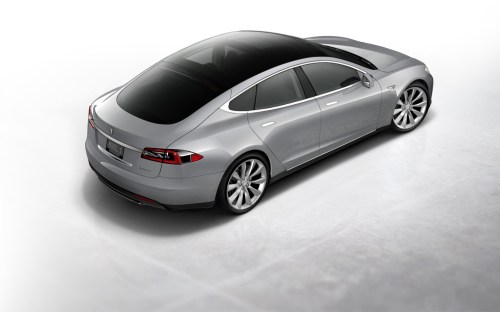
Today, that “loser” Tesla won. The Tesla Model S was named by Automobile Magazine as the 2013 Automobile of the Year:

The auto industry is tough enough for a giant like General Motors. What we can say with this award is that Tesla deserves to succeed. It has managed to blend the innovation of a Silicon Valley start-up, the execution of a world-class automaker, and, yes, the chutzpah of its visionary leader [Elon Musk]. The result is the Model S. It’s not vaporware. It’s our Automobile of the Year.

Sometimes picking winners and loser is difficult. Sometimes it’s not.

God’s Political Will


In the history of Christian theology, philosophy has sometimes been seen as a natural complement to theological reflection, whereas at other times practitioners of the two disciplines have regarded each other as mortal enemies….

Philosophy takes as its data the deliverances of our natural mental faculties: what we see, hear, taste, touch, and smell. These data can be accepted on the basis of the reliability of our natural faculties with respect to the natural world. Theology, on the other hand takes as its starting point the divine revelations contained in the Bible. These data can be accepted on the basis of divine authority, in a way analogous to the way in which we accept, for example, the claims made by a physics professor about the basic facts of physics.

 On this way of seeing the two disciplines, if at least one of the premises of an argument is derived from revelation, the argument falls in the domain of theology; otherwise it falls into philosophy’s domain.

Stanford Encyclopedia of Philosophy

Current American politics includes little study and application of philosophy. Some of our founders were steeped in philosophy, being educated sons of the Enlightenment. But even then, the struggling rebel nation was marked by pragmatism: there may be no atheists in foxholes, but there aren’t many philosophers either. Today, even when ideologues throw around the names of Mill or Burke, that is a rarity. Most of our politicians don’t know, can’t practice and don’t care about philosophy.

Theology is another story. Our government and the campaign trail seem to be overflowing with those who consider themselves theologians, whether they call themselves that or not. But even though the ground of theology is distinct from philosophy, the rigor and discipline required is exactly the same. The simplistic adoption of an isolated theological premise is no more sturdy than an isolated philosophical one. A solid theological conclusion must be supported from start to finish. If you can’t answer all (or at least most) of the consequent questions, you can’t be trusted to answer any.

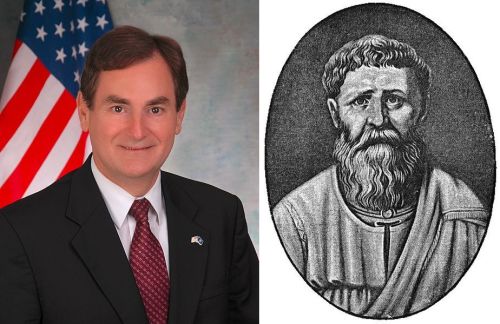
And so when Indiana Senate candidate Richard Mourdock announced that when a woman becomes pregnant through rape, the pregnancy is “God’s will,” the question isn’t whether that is true. The question is: assuming it is true, what else is God’s will?

Mr. Mourdock, and every other politician who claims to know God’s will, owes us a comprehensive list of those things that are and are not God’s will. In the case of Mr. Mourdock, if he is schooled in the fine points of Christian theology, that should be a straightforward matter.

For example: Are the outcomes of elections God’s will? If Mr. Mourdock’s opponent wins, will that be God’s will? If President Obama beats Mitt Romney, will that be God’s will?

There are a raft of sub-questions for the theologian. If God wills an election winner, how does it happen? Are some potential voters kept away from the polls by stormy weather or traffic jams? And how exactly does God decide who the winner should be? Is there a scorecard based on the Ten Commandments or the Seven Deadly Sins? Does a high score on “bearing false witness” or “greed,” for example, make it difficult to get an endorsement?

In the event Mr. Mourdock does not win, it may be God’s will after all. Just a few miles from his home in Darmstadt, Indiana is an excellent school, Trinity College of the Bible and Theological Seminary. Trinity offers a number of degree programs and dozens of courses on theology. If his keen interest in theology continues, that could be just the way to spend his time.

Presidential Debates Without Tears: Politics Isn’t Beanbag


You can’t expect objective evaluations of the first Presidential debate from either campaign. Republicans want to talk hyperbolically about a victory. Democrats may have candid ideas, but few outside the inner circles will hear them.

The significance of any competition, besides the actual win or loss, is lessons learned. After that first debate, four explanations appear:

The President and his campaign were complacent.
They misread the situation.
They could not strategize or execute effectively.
It was just a bad night.

It was probably a little of all of these. Some will think that last one is just an excuse made by losers, but if you’ve watched competitions of all kinds, sports and otherwise, you’ve seen it. It’s circumstances, it’s the moment. It’s a quantum thing.

Nevertheless, that still leaves the other three as explanations and lessons.

The most significant Republican politician of the last days of the 20th century—yes, that would be Newt Gingrich—said straight out during the halcyon days of the primaries that Mitt Romney was a liar. Whether that was said with admiration or dismay is hard to know.

During that same campaign, Romney observed that “Politics isn’t beanbag.” Detractors then and now focused on the absurdity of this reference to an obscure children’s game. It was like his mentions of trees or the Keystone Cops. Who talks like that, they scoffed.

The focus was on the wrong point of the statement. Strange as Romney may appear to many people, one thing that isn’t strange, and shouldn’t be, is his ambition. Few if any politicians have ever played beanbag, or seen a beanbag match, if that’s what it’s called. But every politician knows about fighting hard, with or without rules.

If a banner saying “Politics isn’t beanbag” isn’t hanging from the wall of the Obama debate headquarters, it should be. Everything the campaign needs to know about Mitt Romney is captured in those three words.

Mitt Romney Too Busy to Answer Questions from Kids

Mitt Romney has refused to appear on Nickelodeon to take questions from kids. He is too busy.

Here is the Hollywood Reporter story:

Mitt Romney Declines Nickelodeon’s Invitation for ‘Kids Pick the President’ Special

One spot Mitt Romney won’t be hitting on the campaign trail: the Nickelodeon studios.

The Republican presidential candidate declined an invitation from the children’s network to participate in its special “Kids Pick the President: The Candidates.” According to a release from Nickelodeon, Romney’s camp said he was unable to fit the taping into his schedule after multiple attempts from the network.

The special, part of Nick News With Linda Ellerbee, gives kids across the country the opportunity to ask questions of each candidate. It premieres at 8 p.m. Oct. 15. On Oct. 22, Nickelodeon will reveal the results of its Kids’ Vote poll, which has correctly predicted the winner of five of the past six presidential elections.

President Barack Obama sat down for a taping in the White House, where he answered questions regarding gun control, jobs, immigration, same-sex marriage, outsourcing, bullying and obesity, as well as light-hearted questions including his most embarrassing moment. (“Running into the wall is par for the course for me,” he says. “I’m running into doors and desks all the time.”)

Romney still will be featured in the special, with producers selecting previously taped clips from the campaign trail in which Romney addresses various issues raised in the kids’ questions.

“By answering kids’ questions directly, candidates show respect for kids,” says Linda Ellerbee in a statement. “We are disappointed that Mitt Romney wouldn’t take the time to answer the questions but are thrilled that President Obama participated in the special.”

Now in its 21st year, Nick News — produced by Lucky Duck Productions — is the longest-running kids news program in television history.