Bob Schwartz

Tag: Abraham Lincoln

You Kippur and Job


The days from Rosh Hashanah (“Head of the Year”, the New Year) and Yom Kippur (“Day of Atonement”) are the ten holiest on the Jewish calendar. Known as the Days of Awe or Days of Repentance, they are a time for reflection on the year past and the year to come, and a time to make amends—not by asking God for forgiveness, but by asking it from those who have been wronged, and through the practice of repentance (literally, “turning”), prayer and charity.

During these days, the Book of Life is metaphorically open, and on its pages your life is weighed: “On Rosh Hashanah it is written, on Yom Kippur it is sealed.”

The liturgy for these holidays, and particularly for Yom Kippur, is some of the most moving and soul-searching in all of the religious canon. There are Old Testament readings included, but not too often from the Book of Job.

There are two solid consensuses about the Book of Job.

Literary types agree that it is probably the greatest work of literature in the Bible.

Religious types agree that it is the most puzzling book in the Old Testament, and that even when you look at it in the most common and superficial way (“Why do bad things happen to good people?”), you end up scratching your head.

Job is the book to read for Yom Kippur. It is the book to ponder at the start of the year, at the end of the year, and at points between. (It was, by the way, Abraham Lincoln’s most studied book of the Bible.)

We begin with the book itself.

It is unusual for it to have been included in the canon of the Hebrew Bible because it is not about a Jew. When non-Jews appear in other books, it is usually a story of helping Jews or hurting Jews or marrying Jews or eventually becoming Jewish. None of that applies to the Book of Job.

The story is relatively simple, at least until the end. Job is a rich and pious man who has everything: health, wealth, family and friends (or so they seem). Satan wants to prove that Job’s piety is dependent on his having everything, and challenges God to take it all away. God does.

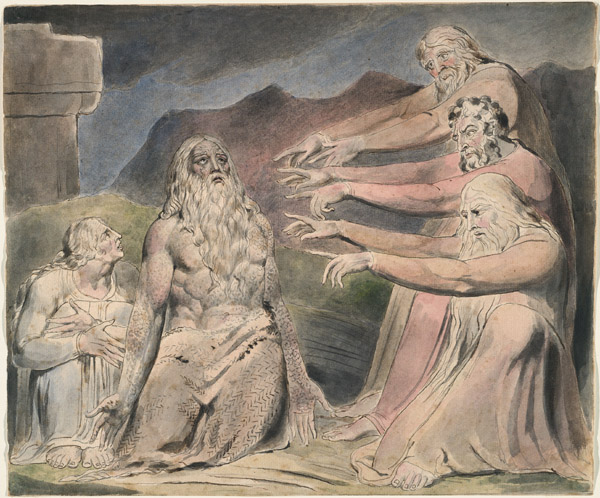
Job’s friends are convinced that he must have done something wrong, and urge him to figure it out and repent. The scenes with his friends are talky, like a play, or maybe like the film My Dinner With Andre—except this is My Dinner with Eliphaz the Temanite, Bildad the Shuhite and Zophar the Naamathite.

Job’s wife has a different suggestion: “Curse God and die.”

Job remains steadfast in his faith.

And then, in Chapter 37, God appears to Job, to explain it all.

The chapters that follow are a poetic and breathtaking description of the world’s wonders, by the one who made them. God tells Job that his friends don’t know what they’re talking about (God takes care of them later). And God implicitly tells Job the only two things to do: Be awed. Be humble.

Job’s reply in Chapter 42 is one of the most important passages in the Bible. It is not only the watchword for Yom Kippur; it is the watchword for everyone, religious or otherwise, who is convinced they are smarter than anyone in the room or in the universe:


Then Job answered the Lord:
“I know that you can do all things,
and that no purpose of yours can be thwarted.
‘Who is this that hides counsel without knowledge?’
Therefore I have uttered what I did not understand,
things too wonderful for me, which I did not know.
‘Hear, and I will speak;
I will question you, and you declare to me.’
I had heard of you by the hearing of the ear,
but now my eye sees you;
therefore I despise myself,
and repent in dust and ashes.”

“I have uttered what I did not understand, things too wonderful for me, which I did not know.”


Whether this is a day of reflection and fasting, reciting centuries-old prayers, or an ordinary day of work or study, managing others or being managed; whether you are Job beset by unexplained misfortune, or Job’s wife, ready to kill him if he doesn’t kill himself, or Job’s friends so quick with advice; whether you are being punished by God, Satan, or whatever other forces you believe are working against you; whether you are the smartest person in the room or not; this is what we can do, even if there is seemingly no comfort in it:

Be awed. Be humble.
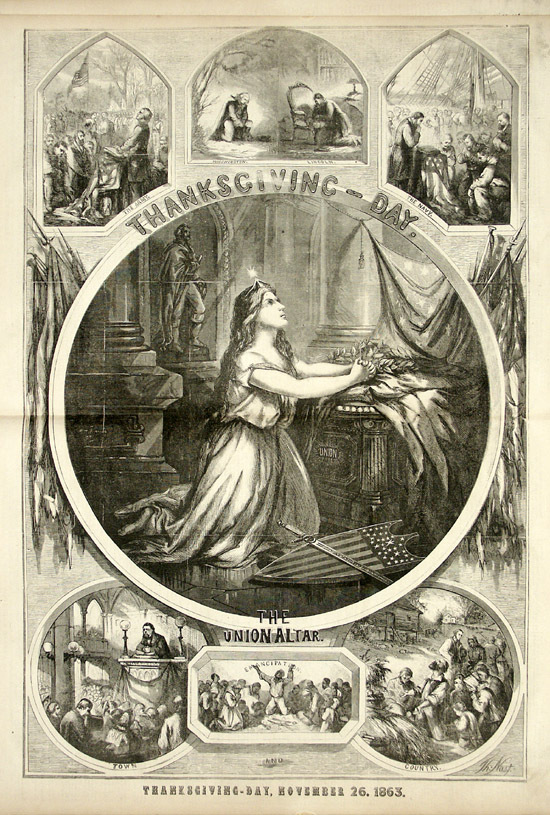
Lincoln Proclaims Thanksgiving: “Penitence for our national perverseness”

“Thanksgiving-Day,” by Thomas Nast, Harper’s Weekly, December 5, 1863.

“Thanksgiving-Day,” by Thomas Nast, Harper’s Weekly, December 5, 1863.

The modern Thanksgiving holiday begins with Abraham Lincoln issuing a Thanksgiving Day proclamation on October 3, 1863, at the height of the Civil War.

At that point, America was a country of two cultures; in fact, of two nations at war. Even history was the subject of dispute. The North traced our national origin to the Puritans of New England, thus Thanksgiving was their American holiday. The South believed America began with the settlement of Jamestown, Virginia.

In his proclamation, Lincoln calls for healing and for “peace, harmony, tranquillity, and union.” In terms of union, however, it isn’t clear who Lincoln refers to when he asks for “humble penitence for our national perverseness and disobedience.” Exactly who has been perverse and disobedient?

One thing is clear. Even with all his divine pleas, Lincoln calls this conflict of principles and cultures inevitable—“the lamentable civil strife in which we are unavoidably engaged.”

Lincoln held a famously and understandably dark view of his American times, shaded by realities and by his own depressive personality. We can and should take a brighter view this Thanksgiving, having come so far from the America of 1863, and having much to be thankful for. But just as we repeat his call for “peace, harmony, tranquillity” we are remiss to ignore the realities of 2016. Like Lincoln, we should be big, open and wise enough to see things as they are, and to change them as needed, always being painfully aware of the cost.

From his proclamation:

It has seemed to me fit and proper that they should be solemnly, reverently, and gratefully acknowledged as with one heart and one voice by the whole American people. I do, therefore, invite my fellow-citizens in every part of the United States, and also those who are at sea, and those who are sojourning in foreign lands, to set apart and observe the last Thursday of November next as a Day of Thanksgiving and Prayer to our beneficent Father who dwelleth in the heavens. And I recommend to them that, while offering up the ascriptions justly due to Him for such singular deliverances and blessings, they do also, with humble penitence for our national perverseness and disobedience, commend to His tender care all those who have become widows, orphans, mourners, or sufferers in the lamentable civil strife in which we are unavoidably engaged, and fervently implore the interposition of the Almighty hand to heal the wounds of the nation, and to restore it, as soon as may be consistent with the Divine purposes, to the full enjoyment of peace, harmony, tranquillity, and union.

© 2025 Bob Schwartz

Keeping the faith for Lincoln

Lincoln and Washington used to have separate national holidays for their birthdays. Then the holidays were combined into Presidents’ Day. It is now a bit of history, a lot of sales and shopping.

Lincoln is highly-regarded by historians. An overview of expert evaluations, across the ideological spectrum, is that the he was the greatest or near-greatest president in America’s long and sometimes rocky history.

Above is an editorial cartoon from 1963 by Bill Mauldin, an earlier time of American upheaval. Looking back now, we realize that we hadn’t seen anything yet.

Lincoln is crying, and the reasons for his tears may have changed over sixty years. Today the greatest President looks on the nation and the party he founded and they are somewhat unrecognizable. Lincoln also knew what Ben Franklin said when asked about what kind of government the new America had: “A republic…if you can keep it.”

Keep the faith in what America can be. Lincoln did—and sacrificed for it. We can too.

Quinnipiac University Poll: 72% of Republicans Say That Trump Is a Good Role Model for Children

Quinnipiac University National Poll :

It is important that a president be a good role model for children, 90 percent of American voters say, but President Donald Trump is not a good role model for children, these voters say 67 – 29 percent in a Quinnipiac University National Poll released today.

There is almost no gender gap in grading President Trump’s standing as a role model. Every party, gender, education, age and racial group, except Republicans, say the president falls short, the independent Quinnipiac University Poll finds.

Republicans say 72 – 22 percent that Trump is a good role model for children.

Inaugural Concert 2017

donald-trump-melania-trump-lincoln-memorial-inaugural-concert-jan-19-2017-getty

Look closely at Lincoln
Watching the Inaugural Concert of 2017
Below his monumental chair.
A slave to stone and circumstance
Eyes fixed open on a scene
Out of his control.
He tries not to think back
To other gatherings
On other occasions
Not like this.
Not at all like this.
Look closely
To see him
Struggling to escape
Not just to free himself
But to descend the steps
A giant in the crowd
Striding and proclaiming
What he had seen
And done
And hoped.
Instead he sits
Unmoving and silent
Witness to a truth
A struggle
He lived and died for:
Even now
Even this
All is not lost
All is never lost.

Lincoln Proclaims Thanksgiving: “Penitence for our national perverseness”

“Thanksgiving-Day,” by Thomas Nast, Harper’s Weekly, December 5, 1863.

“Thanksgiving-Day,” by Thomas Nast, Harper’s Weekly, December 5, 1863.

The modern Thanksgiving holiday begins with Abraham Lincoln issuing a Thanksgiving Day proclamation on October 3, 1863, at the height of the Civil War.

At that point, America was a country of two cultures; in fact, of two nations at war. Even history was the subject of dispute. The North traced our national origin to the Puritans of New England, thus Thanksgiving was their American holiday. The South believed America began with the settlement of Jamestown, Virginia.

In his proclamation, Lincoln calls for healing and for “peace, harmony, tranquillity, and union.” In terms of union, however, it isn’t clear who Lincoln refers to when he asks for “humble penitence for our national perverseness and disobedience.” Exactly who has been perverse and disobedient?

One thing is clear. Even with all his divine pleas, Lincoln calls this conflict of principles and cultures inevitable—“the lamentable civil strife in which we are unavoidably engaged.”

Lincoln held a famously and understandably dark view of his American times, shaded by realities and by his own depressive personality. We can and should take a brighter view this Thanksgiving, having come so far from the America of 1863, and having much to be thankful for. But just as we repeat his call for “peace, harmony, tranquillity” we are remiss to ignore the realities of 2016. Like Lincoln, we should be big, open and wise enough to see things as they are, and to change them as needed, always being painfully aware of the cost.

From his proclamation:

It has seemed to me fit and proper that they should be solemnly, reverently, and gratefully acknowledged as with one heart and one voice by the whole American people. I do, therefore, invite my fellow-citizens in every part of the United States, and also those who are at sea, and those who are sojourning in foreign lands, to set apart and observe the last Thursday of November next as a Day of Thanksgiving and Prayer to our beneficent Father who dwelleth in the heavens. And I recommend to them that, while offering up the ascriptions justly due to Him for such singular deliverances and blessings, they do also, with humble penitence for our national perverseness and disobedience, commend to His tender care all those who have become widows, orphans, mourners, or sufferers in the lamentable civil strife in which we are unavoidably engaged, and fervently implore the interposition of the Almighty hand to heal the wounds of the nation, and to restore it, as soon as may be consistent with the Divine purposes, to the full enjoyment of peace, harmony, tranquillity, and union.

Create a Fragrance by Abraham Lincoln

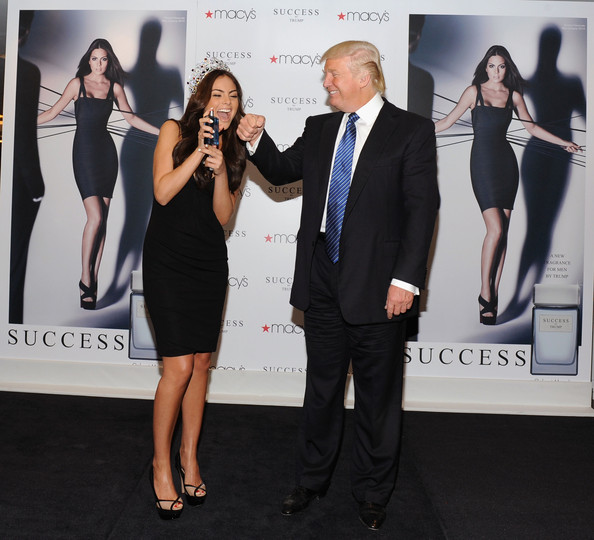
Trump Success Launch

We know what Donald Trump thinks that driven and confident men should smell like.

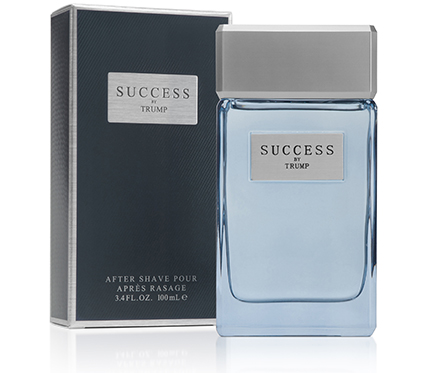
Success

“Success By Trump captures the spirit of the driven man. The scent is an inspiring blend of fresh juniper and iced red currant, brushed with hints of coriander. As it evolves, the mix of frozen ginger, fresh bamboo leaves and geranium emerge taking center stage, while a masculine combination of rich vetiver, tonka bean, birchwood and musk create a powerful presence throughout wear.”

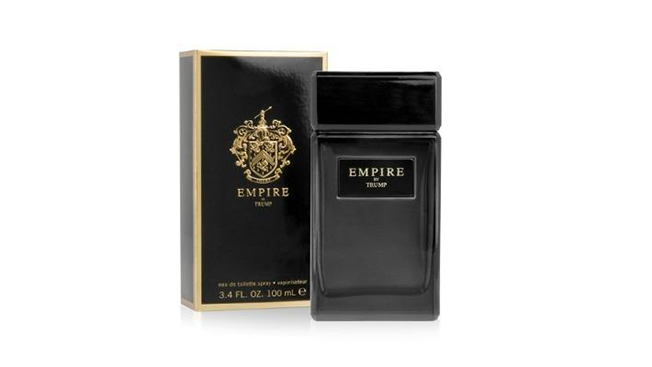
Empire

“Empire by Trump is the perfect accessory for the confident man determined to make his mark with passion, perseverance and drive. For those who aspire to create their own empire through personal achievement, this dynamic scent is both compelling and leaves a lasting impression. Bold notes of peppermint, spicy chai and a hint of apple demand attention.”

What would a fragrance by Abraham Lincoln be like? What would he call it? How would he describe it?

Abraham Lincoln

To get started, here is the list of ingredients Trump put in his fragrances, Success and Empire. But please feel free to be creative. You are creating a fragrance for one of our greatest Presidents.

Apple
Bamboo leaves
Birchwood
Chai
Coriander
Geranium
Ginger
Juniper
Musk
Peppermint
Red currant
Tonka bean
Vetiver

You Can Stop Worrying About Trump Being the Republican Nominee. But You Can’t Stop Worrying.

New York Daily News - Trump for Prez

If you were worrying about Donald Trump being the official nominee of the Republican Party, you can stop worrying about that, no matter what the results of Super Tuesday voting.

I have predicted for months that the GOP would never allow him to be its standard bearer, no matter what the delegate numbers. Whether that means changing the nominating rules, or splitting the party, or whatever, that part isn’t as clear. But the party of Lincoln and Reagan was never going to be Trump’s to represent.

The party will find a way to deny him its blessing. And then Trump will execute what has always been his contingency plan: amass as much support and publicity as possible, and then run as an independent candidate. Or maybe run as the candidate of a portion of the split Republican Party. And then win the presidency with a plurality of votes.

That’s where your worrying shouldn’t stop. Forget all the talk about people flocking to Trump because of their frustration and anger about political gridlock and ineffectiveness. You don’t have to take a deep dive into the research to see that tens of million Americans want to roll back progress not to the Reagan years, but to the years before civil rights and other modern principles of tolerance and equality. (My sad favorite remains the Trump supporter wearing a baseball cap saying “Make Racism Great Again!”).

These people may not be your friends, but they are your neighbors and fellow voters. Whether there are enough of them to elect a President of the United States is an open question. It certainly would be easier if they had the passive imprimatur of the Republican Party. But it finally appears they will not. Which is a good thing.

Unless we do have a multi-candidate election. And one of them is Donald Trump. Because one of them will win.

Suit and Tie: The Sad and Silly Syrian Election

Syrian President Assad Votes

It is reported that President Bashar al-Assad wore a dark suit and light blue tie for voting in today’s Syrian election. Good reporting. He looked good. So did his wife Asma.

Assad actually had opponents, the first time Syria has had a contested presidential election in fifty years. No one could think that this opposition meant anything. The other candidates could not think so. And yet there were supporters and voters at the polls, maybe out of fear, maybe out of hope, maybe just wanting to pretend things are normal. Some new normal, so that with one more term, a few more years added to his enlightened regime, there would be no more deaths after the 160,000, no more displaced and refugees after the millions.

Journalists and other nations are sworn by a sense of fairness and professionalism and diplomacy and sovereignty to pretend that this is an election, even if they have some quibbles. They might, if they had a better sense of irony or humor, treat it like Halloween or Mardi Gras. An occasion on which one dresses up to play the part of something you are not, say, a democratically elected leader in dark suit and light blue tie.

The U.S. also had an election during a civil war. Lincoln did have opposition and he did win. Whatever he wore when he voted, he certainly didn’t look as slick as Assad, nor was Mary Todd as socialite beautiful as Asma. By that point Lincoln was deeply tired and sick of the horrible conflict and would do anything he could to finally end it. The good news is that there would be only a few more months of war. The not so good news is that even with the good that came, it would take decades for the wounds to begin healing. The worst news, for Lincoln and the country, is that he would soon be assassinated.

Lincoln and the civil war were sad but never silly. Assad, in his dark suit and light blue tie, within this hollow semblance of an election, is sad and morbidly silly. Unlike Lincoln, he may be around for years, continuing to rack up votes and deaths. But looking real good.

Better to Remain Silent

Abraham Lincoln
Most of us have quotes that we trot out frequently, because they say what we mean better than we could ever say it ourselves. And also because the speaker or writer has some stature that we will never attain.

This is one of the ones I repeat often. In addition to talking heads on hundreds of media outlets, we now have talking heads on millions of social media outlets (yes, including me and this one). Lots of sense, lots and lots of nonsense. I would put this on signs everywhere, as a reminder not only about other people (where the fools are of course found) but about ourselves (where foolishness can be found too).

Better to remain silent and be thought a fool
than to speak out and remove all doubt.
Abraham Lincoln