Coyote Christmas (Faith)
For K
heard but unseen
arias in the dark
what do they mean
songs in the canyon
loneliness love longing
surely something there
in the night
unseen but heard
© 2021 Bob Schwartz
For K
heard but unseen
arias in the dark
what do they mean
songs in the canyon
loneliness love longing
surely something there
in the night
unseen but heard
© 2021 Bob Schwartz
There are infinite stories about someone who has lost the “meaning” of Christmas, then through a series of plot points, finds the “meaning” of Christmas, which is defined in the story. Dickens’ A Christmas Carol is the most famous, and there are many more (watch Hallmark Christmas movies for a sampling).
This glosses over the fact that there are multiple meanings of Christmas for different people. For the faithful, it is in the first place (but not only) the birth day of the foretold Messiah. It is also a time to emphasize peace, good will, emergence from the darkest of winter to a brighter season. It is a time for giving (and receiving), which has helped transform it into a holiday of commercial opportunity. These are just some of the meanings.
For those without faith in the conventionally detailed Christmas story (but who may still find Jesus a worthy teacher), there is still much positive meaning to be mined. The questions for anyone is what Christmas means to you, if anything, and what it might mean.
For me, those things mentioned above—peace, good will, more light—are perfect. I can’t speak for anyone else, but there are plenty of days that are soiled and spoiled by conflict, ill will and shade. Having at least one day a year, especially during such challenging years, is the least we can aspire to.
Have a joyful Christmas!
Writer Joan Didion has died at the age of 87. There are going to be so many literary and laudatory obituaries that I am not going to try. The New York Times obituary is just one of dozens.
Joan Didion wrote non-fiction and fiction. I am partial to her essays, where she demonstrated that she was one of the greatest English language prose voices. I have read and reread her collections, the best of which is The White Album (1979) .
The White Album begins with a long multi-part essay entitled The White Album. The whole collection is her vision of the Sixties, as a writer, person, and L.A. resident, but the opening essay is the key. It starts with a perfect paragraph about storytelling, then describes her disjointed life, wanders through the Doors, Eldridge Cleaver, and more, visits the Manson murders, and closes with her view of writing itself.
The essay begins:
We tell ourselves stories in order to live. The princess is caged in the consulate. The man with the candy will lead the children into the sea. The naked woman on the ledge outside the window on the sixteenth floor is a victim of accidie, or the naked woman is an exhibitionist, and it would be “interesting” to know which. We tell ourselves that it makes some difference whether the naked woman is about to commit a mortal sin or is about to register a political protest or is about to be, the Aristophanic view, snatched back to the human condition by the fireman in priest’s clothing just visible in the window behind her, the one smiling at the telephoto lens. We look for the sermon in the suicide, for the social or moral lesson in the murder of five. We interpret what we see, select the most workable of the multiple choices. We live entirely, especially if we are writers, by the imposition of a narrative line upon disparate images, by the “ideas” with which we have learned to freeze the shifting phantasmagoria which is our actual experience.
and ends:
I have known, since then, very little about the movements of the people who seemed to me emblematic of those years. I know of course that Eldridge Cleaver went to Algeria and came home an entrepreneur. I know that Jim Morrison died in Paris. I know that Linda Kasabian fled in search of the pastoral to New Hampshire, where I once visited her; she also visited me in New York, and we took our children on the Staten Island Ferry to see the Statue of Liberty. I also know that in 1975 Paul Ferguson, while serving a life sentence for the murder of Ramon Novarro, won first prize in a PEN fiction contest and announced plans to “continue my writing.” Writing had helped him, he said, to “reflect on experience and see what it means.” Quite often I reflect on the big house in Hollywood, on “Midnight Confessions” and on Ramon Novarro and on the fact that Roman Polanski and I are godparents to the same child, but writing has not yet helped me to see what it means.
Please read what’s in between.

Jefferson Smith: And this country is bigger than the Taylors, or you, or me, or anything else. Great principles don’t get lost once they come to light; they’re right here! You just have to see them again.
I walked in to find my nearest and dearest one watching Mr. Smith Goes to Washington (1939). The movie stars Jimmy Stewart, in one of his two most iconic film roles. The other is the Christmas classic It’s A Wonderful Life (1946), also directed by Frank Capra.
For those who don’t know, Mr. Smith is about an idealistic small town everyman who ends up in the U.S. Senate, where he discovers that his lifelong hero has been corrupted by the political machine—a machine that will do anything to get its way, even hurt children and destroy democracy. The good news, in the movie at least, is that democracy lives and prevails.
Thinking about Mr. Smith and Wonderful Life together, an idea was hatched. This Christmas, why not add American democracy to your list for Santa? Where you stack it on the list is up to you. Maybe you don’t believe in Santa, maybe if you believe in Santa you think that for him, American democracy is just too big an ask. Go ahead anyway. We have nothing to lose more than we already have and might.

Bodhi Day, marking the Buddha’s enlightenment, is known as Rohatsu in Japan and is celebrated there on December 8. A week ago. My apologies for the delay to the Buddha, to Buddhists in Japan and elsewhere, and to anyone who might benefit from a gentle reminder to be awake.
IT IS SAID that soon after his enlightenment the Buddha passed a man on the road who was struck by the Buddha’s extraordinary radiance and peaceful presence. The man stopped and asked, “My friend, what are you? Are you a celestial being or a god?”
“No,” said the Buddha.
“Well, then, are you some kind of magician or wizard?” Again the Buddha answered, “No.”
“Are you a man?”
“No.”
“Well, my friend, then what are you?” The Buddha replied, “I am awake.”
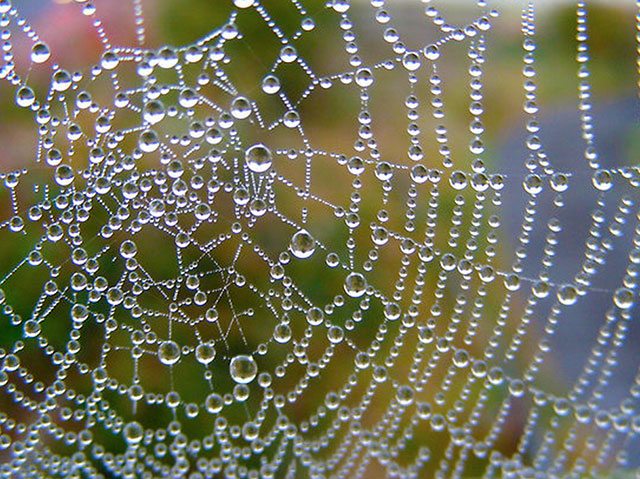
The sense, rather than just thought, that emerges from ultimate experience, the thing that all traditions are trying to get at and get us to, is encapsulated in the clichéd phrase “everything is everything.”
If that sounds like the “Oh wow!” revelation of someone in the throes of a psychedelic drug or spiritual experience, so be it. Its truth stands.
In Buddhism, the idea of interdependence is central. The image of the net of Indra is the model. Jewels or mirrors at each knot of the net are not just connected. They reflect each other, infinitely. Reason tells you that some things have nothing to do with each other at all. The net tells you that of course the smallest thing there is reflected here, no matter how seemingly remote.
The theory of the butterfly effect is well known. It is posited that tiny events may have big effects, as the flutter of wings may result in catastrophic weather.
This is one step beyond “may.” Our choices, thoughts, words or actions are reflected everywhere else, even if our rational analysis can’t detail any connection.
If you think this is hippie New Age nonsense, consider the mainstream religious traditions, if you happen to be an adherent. You are asked to watch or are being watched for every one of those choices, thoughts, words or actions. Not, as the more authoritarian leaders have it, because you will be punished, but because we are not smart enough to know exactly what their effect will be. Our best approach is to be aware and take care, knowing that every bit of it will be reflected.
Which is a way round to the covid pandemic. Once the virus was here, everything affected what happened next. Not just choices about socializing, masks, vaccines, etc. Everything that individuals chose to do, say, read, watch, listen to.
Some will, as noted, reject this as nonsense. Your social media and entertainment choices have nothing to do with covid, you believe. Nor do the things you choose to buy or the people you choose to be with. Anyway, if everything is everything, and everything really is reflected in the pandemic, so what? What can you do about it?
What can you do about it anyway?
© 2021 Bob Schwartz

In the early days of the pandemic—spring of 2020—Albert Camus’ 1947 novel The Plague became a bestseller. Camus is highly regarded as novelist and essayist (he won the 1957 Nobel Prize for Literature), so it was natural that his fiction about bubonic plague in the French town of Oran would gain so much attention.
That popularity and attention has faded. In the novel, the plague lasts for one year. In America and the world, the plague is finishing its second year. If you read comments from 2020, people were anticipating the end and what lessons we might learn as covid was in our rear view mirror. In many quarters, sober reflection has given way to either resignation or delusion.
Camus deftly pictures the stages of plague mentality, as other analysts have outlined the stages of grief. He offers characters that adopt different roles, some based on their nature, some developed to meet the moment as best they can. The novel has long been deeply mined. Some find it a metaphor for the ways we deal with the onslaught of sudden mass disease and death. Others see a metaphor for how the French handled the then-just-ended plague of Nazi occupation, some collaborating, some shrugging it off as the way things are, some like Camus actively resisting.
Now that the early days of our plague have evolved to these latter days, it is still worth reading The Plague. Because in describing the darkness, it is optimistic. Along with those who exploit the plague, or offer metaphysical solace, or give up and hope for the best, there are those who are compelled to help get the town through the worst days, however long those worst days last. To resist.
Here is a message from Camus in his Nobel acceptance speech:
Each generation doubtless feels called upon to reform the world. Mine knows that it will not reform it, but its task is perhaps even greater. It consists in preventing the world from destroying itself. Heir to a corrupt history, in which are mingled fallen revolutions, technology gone mad, dead gods, and worn-out ideologies, where mediocre powers can destroy all yet no longer know how to convince, where intelligence has debased itself to become the servant of hatred and oppression, this generation starting from its own negations has had to re-establish, both within and without, a little of that which constitutes the dignity of life and death. In a world threatened by disintegration, in which our grand inquisitors run the risk of establishing forever the kingdom of death, it knows that it should, in an insane race against the clock, restore among the nations a peace that is not servitude, reconcile anew labour and culture, and remake with all men the Ark of the Covenant. It is not certain that this generation will ever be able to accomplish this immense task, but already it is rising everywhere in the world to the double challenge of truth and liberty and, if necessary, knows how to die for it without hate. Wherever it is found, it deserves to be saluted and encouraged, particularly where it is sacrificing itself.
Albert Camus
Woke up to this in the New York Times:
As U.S. Nears 800,000 Virus Deaths, 1 of Every 100 Older Americans Has Perished
Seventy-five percent of people who have died of the virus in the United States — or about 600,000 of the nearly 800,000 who have perished so far — have been 65 or older.
Note that those reported numbers are below actual. Months ago, experts said that reporting remains imperfect, and that the number had already exceeded 1,000,000 covid deaths.
I also woke to read articles by presumably intelligent and principled people saying that covid restrictions had long been overreaching, and that “outside the world inhabited by the professional classes in a handful of major metropolitan areas” Americans don’t care about covid and are getting on with their lives.
From all reports, I am sure that many of those older Americans who died were not part of “the elites.” I am sure that some of them adhered to recommended restrictions and that some wouldn’t and didn’t. I am sure that none of them can comment because all of them are dead. I am sure that absent those restrictions and interventions the deaths would be higher, much higher.
I’ve learned this over my life. Intelligent and principled people don’t necessarily say and do the right or good thing in every circumstance. A quality shared in so many traditions is humility, that is, even if you think you are intelligent and principled, you have to let it go and admit to others and to your deity that you may very well be wrong. In this ongoing crisis, where here in my state, not an elite one, there are 60 or so covid deaths a day, and there are no ICU beds, and at least half the people act as if there is no covid, we could use more active compassion, and more humility among those who think they are smarter than a diabolical virus. Because they are not.

Thomas Merton died on this date in 1968. It was an untimely and unusual death, and happened on the anniversary of his entering the monastery in 1941.
He was traveling in Asia at the time. We are fortunate to have not only his many books, but also seven volumes of his journals. At that moment, he was intensifying his long-time interest in Asian religions, particularly Buddhism.
Merton readers and students—and there are millions—see in his later writings and testimony of others suggestions that at the time of his death he was planning to leave the monastery and pursue (return to) a more worldly life. If I ever participated in that speculation, maybe a more mature spiritual life has made me realize the question is pointless. Not just because we will never know, but because for someone as spiritually rich and talented as Merton, and so generous with his spiritual wealth, doubts and all, it is beside the point.
Here is the last journal entry before he died:
December 8, 1968. Bangkok
A Dutch abbot who is staying with an attaché of the Dutch Legation came around to the hotel yesterday and we went to Silom Road again, to find Dom Leclercq and others who had arrived. Most of the delegates were arriving today and I will go to the Red Cross place where we are supposed to stay and where the meeting is to be held. It is 30 kilometers out of Bangkok. The Dutch abbot was trying to talk me into participating in a TV interview but I am not sure it is such a good idea, for various reasons. And first of all I find the idea very distasteful. The suggestion that it would be “good for the Church” strikes me as fatuous as far as my own participation is concerned. It would be much “better for the Church” if I refrained.
It is good to have a second time round with these cities. Calcutta, Delhi, and now Bangkok. It now seems quite a different city. I did not recognize the road in from the airport, and the city which had seemed, before, somewhat squalid, now appears to be, as it is, in many ways affluent and splendid. What has happened, of course, is that the experience of places like Calcutta and Pathankot has changed everything and given a better perspective in which to view Bangkok. The shops are full of good things. There is a lot to eat. Lots of fruits, rice, bottles, medicines, shirts, shoes, machinery, and meat (for non-Buddhists). And the stores near the Oriental Hotel are really splendid. So too is the Oriental itself. I have a fine split-level dwelling high over the river, and you enter it through an open veranda on the other side, looking out over the city.
I went to Silom Road, walked into the French Foreign Missions place and found it deserted. I wandered around in the rooms looking at the titles of books on the shelves: [Sir Walter) Scott’s Marmion, André Maurois, along with Edward Schillebeeckx, a set of Huysmans, I forget what else-lots of magazines from Études to Paris-Match. Finally Fr. Leduc appeared, and presently-he told me to wait-the superior, P. Verdier, came in with Abbot de Floris, who is running the meeting, and Fr. Gordan. They said there was mail for me; it turned out to be a letter from Winifred Karp, the young girl who stayed with the nuns at the Redwoods, forwarded from Calcutta. I have a hunch some of my mail will be getting lost in this shift.
The flight over Malaysia: dark-blue land, islands fringed with fine sand, aquamarine sea. Lots of clouds. It was a Japan Air Lines plane. They made me weigh my hand luggage, which put me overweight for the economy class allowance, so instead of just paying more for nothing I paid the difference for a first-class ticket, thus covering it with the bigger baggage allowance. And had a very comfortable ride, overeating, drinking two free, and strong, Bloody Marys, and talking to a diplomatic courier for the State Department, who by now is getting ready to fly on to Karachi in Pakistan on the night Pan Am plane.
This evening I took a walk through Bangkok, down past the Post Office and into Chinatown. A Chinese Buddhist temple was all lit up and having some kind of fair, preparing a stage for a show, food for a banquet, and booths were selling all kinds of trinkets, lights, and incense. I went in and wandered around. There were hundreds of kids playing. Older people happy and fairly busy preparing whatever it was. Perhaps something to do with the king, whose birthday was yesterday. The city is full of flags, signs saying “Long live our noble King” and huge pictures of Phumiphol Aduldet himself, now as a Thai general and now as a bhikkhu in the lotus posture.
Last night I had a good Hungarian dinner at Nikas No. 1 (where, however, I seem to have been grossly shortchanged) and went on to see an Italian movie about some criminals in Milan, a quasi-documentary. It was not bad, very well filmed, and worth seeing.
Today is the Feast of the Immaculate Conception. In a little while I leave the hotel. I’m going to say Mass at St. Louis Church, have lunch at the Apostolic Delegation, and then on to the Red Cross place this afternoon.
The Other Side of the Mountain: The End of the Journey (The Journals of Thomas Merton v. 7)
History is a story of vulnerabilities and opportunities.
Humans are humans, with their natures and tendencies. These can be transcended and modified, but some are deep and abiding. We are, for example, not always inappropriately selfish and seeking comfort.
Those natures and tendencies exist in environments, personal and social. Depending on the circumstances of the moment, these can leave people vulnerable to all sorts of forces, some dark. History is clear that these vulnerabilities can be the ground for all kinds of phenomena, especially when the social environment is more extreme and challenging.
Here we are.
Opportunities for transcendence and transformation, for at least realizing where those natural vulnerabilities might lead, if not resisting them, what are they and where are they?
They are widely available. But. If we are to avoid falling prey to those forces, or if we are to escape in case they are here already, there are a few steps.
Admit that there’s a problem—not just in the circumstances but in ourselves, that we are human and that we are vulnerable.
Realize that there are those who are trying to exploit those vulnerabilities, ostensibly to make things better, even to turn back the clock to a time when things were better, but actually because few things are more human than wanting to dominate and make your ideology the rule of the land.
Try to find and follow a path of transcendence and transformation. This is tricky. Not so long ago, the Nazis were successful at exploiting the vulnerabilities of the German people. But they knew that the Church doctrine of transcendence and transformation, including compassion, was an obstacle. So they co-opted what the Church stood for, leaving Christians feeling comfortable being complicit in the worst perfidy.
Admit the natural human vulnerabilities, realize the unrelenting efforts to exploit those vulnerabilities, try to transcend and transform. That’s it.

