Trump will be getting more and more messages of appreciation from criminals who, like him, are being persecuted by law enforcement. Here is one of those possible messages.
Dear President Trump,
Thank you sir. Police, prosecutors, judges and juries say that I am a criminal and have been for many years.
Wrong, wrong, wrong!
Finally, someone important like you has the courage to say that the system is rigged, that law enforcement is corrupt, that all they do is plant evidence and frame innocent people like us, when we have done nothing wrong. Nothing!
You are my hero. You are a hero to all of us wrongly accused, tried and convicted.
The fake “justice” system is never going to convict you, sir. Because people like me are on your side.
Keep up the fight against all law enforcement. FBI never! Trump forever!
I know it probably won’t happen, but I sure do look forward to meeting you and thanking you in person when I get out of prison.
“You fucking generals, why can’t you be like the German generals?” “Which generals?” [Chief of Staff] Kelly asked. “The German generals in World War II,” Trump responded.
We are tired of hearing more and more about how terrible a president and person Trump was. We know. But today’s New Yorker excerpt from the forthcoming book The Divider: Trump in the White House, 2017-2021 tells us why we still have to keep learning.
It is a high-def picture of a man not only traitorously unsuited to lead the American republic, but a man unsuited for decent American society:
At first, Trump, who had dodged the draft by claiming to have bone spurs, seemed enamored with being Commander-in-Chief and with the national-security officials he’d either appointed or inherited. But Trump’s love affair with “my generals” was brief, and in a statement for this article the former President confirmed how much he had soured on them over time. “These were very untalented people and once I realized it, I did not rely on them, I relied on the real generals and admirals within the system,” he said.
It turned out that the generals had rules, standards, and expertise, not blind loyalty. The President’s loud complaint to John Kelly one day was typical: “You fucking generals, why can’t you be like the German generals?”
“Which generals?” Kelly asked.
“The German generals in World War II,” Trump responded.
“You do know that they tried to kill Hitler three times and almost pulled it off?” Kelly said.
But, of course, Trump did not know that. “No, no, no, they were totally loyal to him,” the President replied. In his version of history, the generals of the Third Reich had been completely subservient to Hitler; this was the model he wanted for his military. Kelly told Trump that there were no such American generals, but the President was determined to test the proposition.
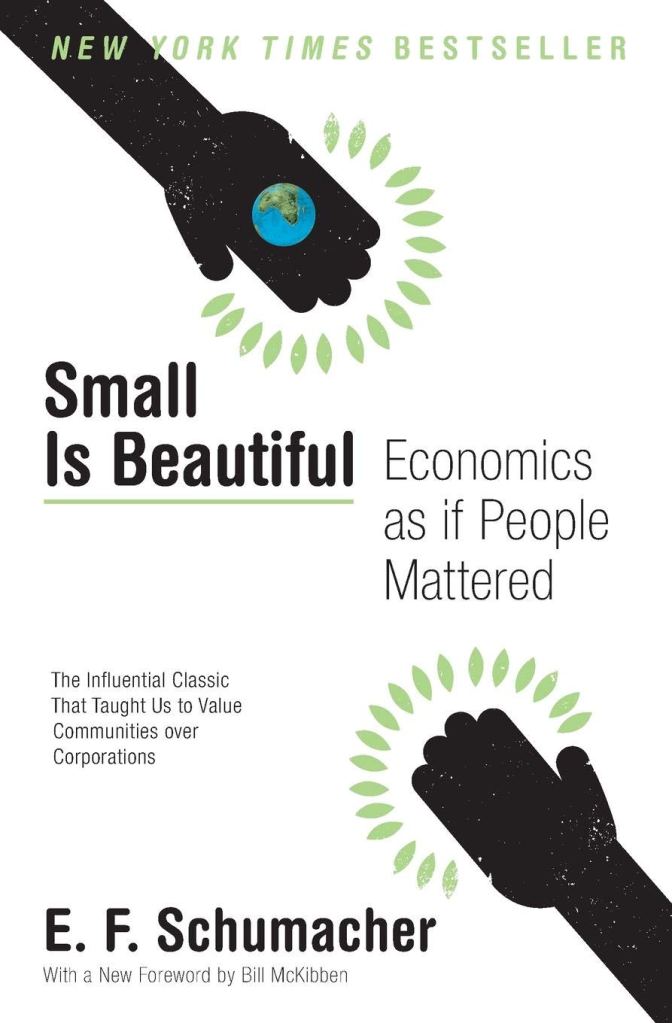
Everywhere people ask: ‘What can I actually do?’ The answer is as simple as it is disconcerting: we can, each of us, work to put our own inner house in order. The guidance we need for this work cannot be found in science or technology, the value of which utterly depends on the ends they serve; but it can still be found in the traditional wisdom of mankind. E. F. Schumacher, Small Is Beautiful: Economics as if People Mattered
The article and the new book are not what I am talking about here. I will comfort those who want to learn and teach that, in the odd event that colleges stop growing, there will still be plenty of places to learn and teach. As for post-capitalism, should it ever arise, don’t be put off. You will still have things—nice things—and you will still be able to make money—lots of money.
What I am talking about here is Small Is Beautiful, which was hugely popular and influential fifty years ago. The thought was going around in some circles that through the development and application of wisdom and discernment, we might temper our natural inclinations towards bigger, better and more, benefiting ourselves and humanity.
Following are excerpts from the Epilogue to Small Is Beautiful:
In the excitement over the unfolding of his scientific and technical powers, modern man has built a system of production that ravishes nature and a type of society that mutilates man. If only there were more and more wealth, everything else, it is thought, would fall into place. Money is considered to be all-powerful; if it could not actually buy non-material values, such as justice, harmony, beauty or even health, it could circumvent the need for them or compensate for their loss. The development of production and the acquisition of wealth have thus become the highest goals of the modem world in relation to which all other goals, no matter how much lip-service may still be paid to them, have come to take second place. The highest goals require no justification all secondary goals have finally to justify themselves in terms of the service their attainment renders to the attainment of the highest.
This is the philosophy of materialism, and it is this philosophy – or metaphysic – which is now being challenged by events. There has never been a time, in any society in any part of the world, without its sages and teachers to challenge materialism and plead for a different order of priorities. The languages have differed, the symbols have varied, yet the message has always been the same: “seek ye first the kingdom of God, and these things (the material things which you also need) shall be added unto you.’ They shall be added, we are told, here on earth where we need them, not simply in an after-life beyond our imagination. Today, however, this message reaches us not solely from the sages and saints but from the actual course of physical events. It speaks to us in the language of terrorism, genocide, breakdown, pollution, exhaustion. We live, it seems in a unique period of convergence. It is becoming apparent that there is not only a promise but also a threat in those astonishing words about the kingdom of God – the threat that ‘unless you seek first the kingdom, these other things, which you also need, will cease to be available to you’….
We shrink back from the truth if we believe that the destructive forces of the modern world can be ‘brought under control’ simply by mobilizing more resources – of wealth, education, and research – to fight pollution, to preserve wildlife, to discover new sources of energy, and to arrive at more effective agreements on peaceful coexistence. Needless to say, wealth, education, research, and many other things are needed for any civilization, but what is most needed today is a revision of the ends which these means are meant to serve. And this implies, above all else, the development of a life-style which accords to material things their proper, legitimate place, which is secondary and not primary.
The ‘logic of production’ is neither the logic of life nor that of society. It is a small and subservient part of both. The destructive forces unleashed by it cannot be brought under control, unless the ‘logic of production’ itself is brought under control – so that destructive forces cease to be unleashed. It is of little use trying to suppress terrorism if the production of deadly devices continues to be deemed a legitimate employment of man’s creative powers.
Nor can the fight against pollution be successful if the patterns of production and consumption continue to be of a scale, a complexity, and a degree of violence which, as is becoming more and more apparent, do not fit into the laws of the universe, to which man is just as much subject as the rest of creation. Equally, the chance of mitigating the rate of resource depletion or of bringing harmony into the relationships between those in possession of wealth and power and those without is non-existent as long as there is no idea anywhere of enough being good and more than enough being of evil….
It is hardly likely that twentieth-century man is called upon to discover truth that had never been discovered before. In the Christian tradition, as in all genuine traditions of mankind, the truth has been stated in religious terms, a language which has become well-nigh incomprehensible to the majority of modern men…
The type of realism which behaves as if the good, the true, and the beautiful were too vague and subjective to be adopted as the highest aims of social or individual life, or were the automatic spin-off of the successful pursuit of wealth and power, has been aptly called ‘crackpot-realism’. Everywhere people ask: ‘What can I actually do?’ The answer is as simple as it is disconcerting: we can, each of us, work to put our own inner house in order. The guidance we need for this work cannot be found in science or technology, the value of which utterly depends on the ends they serve; but it can still be found in the traditional wisdom of mankind.
Last night the room was uncluttered and clean Wake to find dirt and debris scattered The dread softened still not past Spirit rises to remind That the beautiful ugly trash of dreams Seems the ugly beautiful trash of waking Separated by sleep Separated by nothing The room was never uncluttered Never trashed Morning
We are not ready for the metaverse, whatever it is.
There isn’t yet a settled definition for the buzzword “metaverse”. Those who speak “knowledgeably” about it are like Humpty Dumpty in Through the Looking-Glass, who said, “When I use a word, it means just what I choose it to mean—neither more nor less.”
Instead of defining, here are a couple of pertinent observers from the wayback: Marshall McLuhan in 1964 and Neil Postman in 1985. Both observed trends in media and society, both concluded that unexamined and unguided powerful progress could lead us unwittingly to dangerous territory.
They weren’t the first or last of such observers. But they were early—early enough to have possibly had some impact on just how careful we are in embracing this latest generation of the next new thing. To show how little impact they have had, it is likely that fewer than ever—very few now—know them or their work.
After three thousand years of explosion, by means of fragmentary and mechanical technologies, the Western world is imploding. During the mechanical ages we had extended our bodies in space. Today, after more than a century of electric technology, we have extended our central nervous system itself in a global embrace, abolishing both space and time as far as our planet is concerned. Rapidly, we approach the final phase of the extensions of man — the technological simulation of consciousness, when the creative process of knowing will be collectively and corporately extended to the whole of human society, much as we have already extended our senses and our nerves by the various media.
The final phase of the extensions of man — the technological simulation of consciousness, when the creative process of knowing will be collectively and corporately extended to the whole of human society.
The media extensions of man McLuhan wrote about included Spoken Word, Written Word, Comics, Photograph, Press, Ads, Telegraph, Typewriter, Telephone, Phonograph, Movies, Radio, Television. While digital media and digital life were not an essential element in 1964, his description pertains more than ever: “[T]he technological simulation of consciousness, when the creative process of knowing will be collectively and corporately extended to the whole of human society.”
[I]n Huxley’s vision, no Big Brother is required to deprive people of their autonomy, maturity and history. As he saw it, people will come to love their oppression, to adore the technologies that undo their capacities to think. What Orwell feared were those who would ban books. What Huxley feared was that there would be no reason to ban a book, for there would be no one who wanted to read one. Orwell feared those who would deprive us of information. Huxley feared those who would give us so much that we would be reduced to passivity and egoism. Orwell feared that the truth would be concealed from us. Huxley feared the truth would be drowned in a sea of irrelevance. Orwell feared we would become a captive culture. Huxley feared we would become a trivial culture, preoccupied with some equivalent of the feelies, the orgy porgy, and the centrifugal bumblepuppy. As Huxley remarked in Brave New World Revisited, the civil libertarians and rationalists who are ever on the alert to oppose tyranny “failed to take into account man’s almost infinite appetite for distractions.”
Then it’s one foot, then the other as you step out on the road Step out on the road, how much weight, how much? Then it’s how long and how far and how many times Oh, before it’s too late?
Santa Maria, Santa Teresa, Santa Anna, Santa Susannah Santa Cecilia, Santa Copelia, Santa Domenica, Mary Angelica Frater Achad, Frater Pietro, Julianus, Petronilla Santa, Santos, Miroslaw, Vladimir and all the rest
A man is placed upon the steps and a baby cries High above you can hear the church bells start to ring And as the heaviness, oh, the heaviness, the body settles in Somewhere you can hear a mother sing
Then it’s one foot, then the other as you step out on the road Step out on the road, how much weight, how much? Then it’s how long and how far and how many times Oh, before it’s too late?
Oh, and every day you gaze upon the sunset with such love and intensity Why? It’s ah, it’s almost as if you could only crack the code then you’d finally understand What this all means
Oh, but if you could, do you think you would trade in all All the pain and suffering? Oh, but then you’d miss the beauty of the light upon this earth And the sweetness of the leaving
Calling all angels, calling all angels Walk me through this one, don’t leave me alone Calling all angels, calling all angels We’re tryin’, we’re hopin’, we’re hurtin’, we’re lovin’ We’re cryin’, we’re callin’ ’cause we’re not sure how this goes
Written by Jane Siberry Performed by k.d. lang and Jane Siberry
When a talented pitcher arrives in baseball with new and unseen stuff, hitters have to “figure him out.” For a while, sometimes for a long while, hitters are baffled. The better hitters are patient, watching, waiting, calculating. The lesser hitters just keep swinging and striking out.
For four years, Democrats on average couldn’t hit Trump pitching. Taking mighty swings like the Mueller Report and two impeachment trials, they whiffed.
Now comes the January 6 committee, which combining Democrats and a few willing Republicans, has figured out Trump pitching. Public hearing after hearing, inning after inning, they hit some singles, maybe a few for extra bases. With the testimony of Cassidy Hutchinson, they hit one out of the park.
Have they broken the game wide open? We read today that the Washington Examiner, the capital’s conservative newspaper, has now said that “Trump is unfit to be anywhere near power ever again.”
The best hope is that Democrats will study and analyze the hearings and try to learn some lessons from them. Even if Trump recedes from the scene as the main player, there are going to be many years and elections featuring some of the same game. Those pitches are coming high and hard as soon as this November. Let us not strike out again.
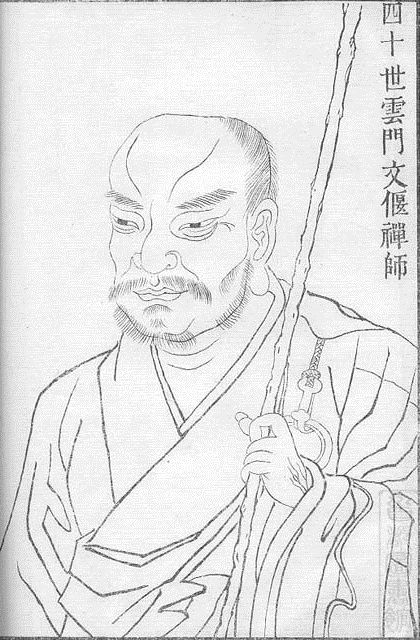
“Yunmen (d. 949) was one of the latest and greatest masters of the classical era, known for exceptional brilliance…
“He also insisted on common sense in Zen practice: when someone asked, “What is the road beyond?” Yunmen replied, “9 x 9 = 81.” Asked about Zen in these terms, “How does one apply it on the road?” Yunmen replied, “7 x 9 = 63.” These are not silly nonsequiturs, like so much nonsense seen in cults; and they are not just numerological symbolic statements either. Nine times nine does equal eighty-one, in the daily world we face when we wake up in the morning; a variety of “Zen” that does not help you is obviously not too useful…”
Thomas Cleary Instant Zen: Waking Up in the Present The Teachings of Foyan (1067-1120)





 Bob Schwartz