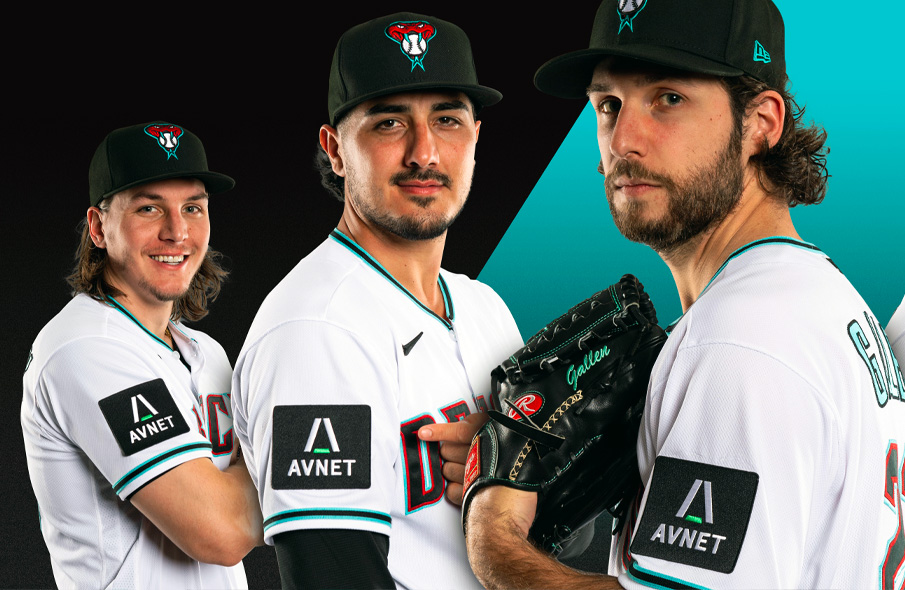
Major League Baseball has joined the NFL, NBA and NHL in allowing advertising on uniforms. This season, one of the first teams to take advantage is the Arizona Diamondbacks, who will be wearing patches for the Phoenix-based technology distributor Avnet.
D-backs President & CEO Derrick Hall says in the official press release:
“We are excited to partner with locally-based Avnet primarily because of our aligned values that include a real commitment to our employees and our fans (customers) as well as a dedication to making a difference in the great state of Arizona through our community support and investments.”
Avnet CEO Phil Gallagher adds:
“It was natural for us to partner with the Arizona Diamondbacks, a home-grown team that is as dedicated to Arizona and its communities as we are. As a global company, we’re dedicated to serving the communities in which our employees live, work and play, and we are excited to support the team’s work on and off the field while collaborating to make a difference in our community.”
When we watch D-backs players this season, the Avnet patch will be constantly in view. I love baseball and support our team. I wondered: How can I as a fan demonstrate that support?
When I visited the Avnet site, I knew. I, along with other fans, could buy products from Avnet. Just one problem. Avnet is a distributor of tech products to industry, not consumers. On top of that, as familiar as I am with some electronics, most of the products are way beyond my knowledge and understanding.
For the sake of baseball and the D-backs, I am not going to let that stop me. I have selected the following product to buy:
Core429 IP Module 16-Channel 12.5/100kbps PolarFire/SmartFusion2/IGLOO2/ProASIC3 Programmable Logic IP Core
This product sells for $262,546.30 (if I buy 500, the price per unit comes down to $221,425.00). I don’t know whether this is a bargain or a rip-off, and frankly I don’t care. If it supports the D-backs, no price too high. However, I may be looking for other fans to share the cost, because baseball or not, a quarter million dollars is still a lot of money.
Go D-backs! Go Avnet! Go Core429 IP Module 16-Channel 12.5/100kbps PolarFire/SmartFusion2/IGLOO2/ProASIC3! Play ball!
When Rhianna ran through her greatest hits at Super Bowl halftime, one of them was not actually hers. All of the Lights is a track from Kanye West’s album My Dark Twisted Fantasy (2011) on which she is featured. So Kanye made it to the Super Bowl through the side or back door.
That album is a masterpiece. Not just my favorite hip-hop album, but one of my favorite pop albums ever. A work of art in performance and production.
Whenever we hear the latest Kanye news, we are pushed to consider the tension between the artist as person, the artist as artist, and the art. So whatever you think about Kanye, listen without prejudice to this amazing work. I just did once again and I am, as always, blown away.
This Sunday morning began, as mornings do, with a quick check of the online news sites. Some of them may still be known as “newspapers” because of their legendary legacy, but I haven’t read a paper edition of the New York Times or Washington Post in ages.
Sundays were not always like this. I have been reading newspapers as long as I could read. In my first life chapter, ours was a New York Daily News/New York Mirror/New York Post kind of family. Sunday meant a fat paper with all kinds of special sections, especially the color comics pages.
My Sunday papers story expanded when we moved to the suburbs. I was in junior high school and more interested in everything than ever. On Sunday I walked a few blocks to the convenience store and picked up one or two of the weightiest (literally) New York Sunday papers: often the Herald Tribune (in its various merged incarnations such as the World Journal Tribune) and every week the Sunday Times. You could spend hours working your way through the Sunday Times if you were a completist, learning about things you didn’t even know you cared about. Many New Yorkers did, and so did I, then and for years to come.
It’s been a while since Sunday started with a Sunday paper paper for me, fat like the Times or skinnier like some of the local ones. So many other options now that don’t weigh or cost so much. But trust me, there’s something about drinking coffee and holding all the inked news “that’s fit to print” in your hands, spread out on the table or floor. That’s not nostalgia, just a different way that has its unique values and charms.
Participants in the Poor People’s Campaign walk peacefully toward the Capitol in Washington, June 24, 1968.
“We are coming to Washington in a Poor People’s Campaign. Yes, we are going to bring the tired, the poor, the huddled masses. … We are coming to demand government address itself to the problem of poverty.” Martin Luther King Jr.
Late in his too-brief life, Martin Luther King Jr. expanded his powerful focus from the inequities of race in America to the inequities of class. In December 1967, he announced the plan to bring together poor people from across the country for a new march on Washington, to demand better jobs, homes, education. It was to be the Poor People’s Campaign.
In March 1968, King went to Memphis to support striking sanitation workers. He addressed those workers on March 18:
And I come by here to say that America too is going to hell if she doesn’t use her wealth. If America does not use her vast resources of wealth to end poverty and make it possible for all of God’s children to have the basic necessities of life, she too will go to hell. I will hear America through her historians, years and generations to come, saying, “We built gigantic buildings to kiss the skies. We built gargantuan bridges to span the seas. Through our space ships we were able to carve highways through the stratosphere. Through our submarines we were able to penetrate oceanic depths.” It seems that I can hear the God of the universe saying, “Even though you have done all of that, I was hungry and you fed me not. I was naked and you clothed me not. The children of my sons and daughters were in need of economic security and you didn’t provide it for them. And so you cannot enter the kingdom of greatness.” This may well be the indictment on America. And that same voice says in Memphis to the mayor, to the power structure, “If you do it unto the least of these of my children you do it unto me. Martin Luther King Jr., March 18, 1968
King did not live to see the campaign begin in May 1968. He was assassinated on April 4. His inspired message and activism is as significant as it was more than fifty years ago. The inequities in America transcend identity and race. Addressing those inequities is not just an American or religious ideal—it is a commandment.
If one does something that has long-lasting effects, it is certain to result in achievement. However, there is one essential prerequisite: to be steadfast and upright. Then there will be no fault, and it will be favorable to go anywhere.
The I Ching (aka Yijing) has been consulted and studied for thousands of years. Some use it for divination, some for guidance and insights into current situations. It is as influential as ever.
At this new year, here is what the I Ching says when asked about the world in 2023 (see Part 1: America).
32 Heng • Long Lasting
NAME AND STRUCTURE Heng means persistence, perseverance, long lasting.
Sequence of the Gua: The union of husband and wife should not be short-lived. Thus, after Mutual Influence, Long Lasting follows.
Heng is translated by Wilhelm as Duration; by Blofeld as The Long enduring. In this book, it is translated as Long Lasting. The structure of the gua is Thunder above, Wind below. It is the inverse of the preceding gua, Xian , or Mutual Influence. The preceding gua symbolizes a new marriage. In the I Ching, Thunder represents an eldest son, and Wind an eldest daughter. Thus, this gua symbolizes the long-term union of an old married couple.
In the preceding gua the youngest son, Mountain, constitutes the lower gua, which is a subordinate position. In courtship, usually the young man tends to subordinate himself to the young woman. Here the lower gua is replaced by Wind, which symbolizes an older woman at a subordinate place. The attribute of Wind is gentleness. The lower gua also represents an inner situation. It suggests that the woman takes more responsibility at home. The attribute of the man, Thunder, is strength and activity. The upper gua is also known as the outer gua, which represents an outer situation. Here it indicates that the man takes more responsibility in the outside world.
There are two horizontal lines in the ideograph of this gua, one at the top and the other at the bottom. These two lines represent the two shores of a river. Between the shores there are two images—a boat on the right, and a heart on the left. Three people are sailing across the river in the boat. In ancient China, crossing a river was not an easy task. An old Chinese saying describes the situation: “People in the same boat share weal and woe.” Sharing weal and woe means working together in full cooperation with a united purpose—with one heart. For this reason, the ancient sage placed a heart beside the boat. Originally, the boat between two shores indicated the distance from this shore to that shore. Later on, the meaning was extended to suggest simply from here to there and, finally, from beginning to end. When the ancient sage drew a heart beside the boat, the meaning was further extended to include everlasting.
The main theme of Zhou is twofold: Follow the Tao of Heaven to establish the Tao of Humanity. To follow the Tao of Heaven, the ancient sage employed Qian and Kun, characterizing the function of Heaven and earth, to open the Upper Canon. To establish the Tao of Humanity, the ancient sage selected Xian and Heng, the prerequisite of a husband and wife, to commence the Lower Canon. The relationship of Heaven and earth is interactive and everlasting. In the same way, the relationship of a husband and wife should have the quality of long-lasting mutual influence.
The union of a man and woman, to the Chinese, is a sacred event. In the ancient ceremony of a wedding, the man and woman made a sacred vow before Heaven and Earth and to the person in charge of the marriage. Qian represented the bridegroom’s side, and Kun stood for the bride’s side. In this way, the union of a man and woman was akin to the union of Heaven and Earth. The message of this gua is that sincerity, purity, and unselfishness are the essential elements of a long-lasting relationship.
DECISION Long Lasting. Prosperous and smooth. No fault. Favorable to be steadfast and upright. Favorable to have somewhere to go.
COMMENTARY ON THE DECISION Heng is Long Lasting. The firm is above, the gentle below. Thunder and wind are in mutual support. Be gentle and in motion, The firm and the gentle respond. This signifies Long Lasting. Long Lasting brings success; there is no fault. It is favorable to be steadfast and upright. This indicates that Long Lasting accords with the Tao. The Tao of Heaven and Earth is long lasting; it never ends. It is favorable to go somewhere. An end is always followed by a new beginning. Sun and moon rely on the Tao of Heaven; Thus can their shining be long lasting. The four seasons change and transform; Thus can their production of beings long endure. The holy sage remains long lasting in his way of life; Then all things under Heaven are transformed to completion. Contemplate the Tao of Long Lasting, To see the nature of Heaven and Earth and of all beings.
COMMENTARY ON THE SYMBOL The union of Thunder and Wind. An image of Long Lasting. In correspondence with this, The superior person stands firm without changing his aim.
SIGNIFICANCE This gua takes the image of the union of Thunder and Wind to display a long-lasting relationship. Thunder and wind correspond to each other as natural phenomena. Thus, the superior person stands firm and does not change his aim. The Chinese believe that the way of Nature is always correct. Because it is always correct, it is long lasting. The Chinese concept of correctness is that it is free from deviation. Any excess or insufficiency represents deviation and is not right. The secret of success is to walk along the central path, that is, never overreact. Whatever is exactly right can be long lasting.
According to the structure, the upper gua, Thunder, is yang, the elder son. The lower gua, Wind, is yin, the eldest daughter. In the Commentary on the Decision, Confucius says, “The firm is above, the gentle below. Thunder and Wind are in mutual support.” This is the typical ancient Chinese concept of marriage—that a husband should take the initiative, and the wife should be subordinate. This is the way of a harmonious marriage. It is also a natural phenomenon that wind and thunder work together in making a thunderstorm. The lower gua, Wind, supports the actions of the upper gua, Thunder. According to the ancient sages, one should follow the natural law. This is the Tao of Heaven and Earth, which is long lasting, never ending. The main theme of this gua is stated by Confucius:
Sun and moon rely on the Tao of Heaven; Thus can their shining be long lasting. The four seasons change and transform; Thus can their production of beings long endure. The holy sage remains long lasting in his way of life; Then all things under Heaven are transformed to completion. Contemplate the Tao of Long Lasting, To see the nature of Heaven and Earth and of all beings.
In this gua, the first and the fourth lines are complementary yin and yang, as are the fifth and second lines and the sixth and third lines. All six lines are in harmony with their counterparts. This is necessary if something is to endure. If one does something that has long-lasting effects, it is certain to result in achievement. However, there is one essential prerequisite: to be steadfast and upright. Then there will be no fault, and it will be favorable to go anywhere.
The host of the gua is the solid line at the second place. According to the I Ching, only walking in the central path can have enduring effects. There are two central lines in this gua, the solid line at the second place and the yielding line at the fifth place. In most gua the fifth line is the superior position. But here, the line at the fifth place is weak. Although it is central, it is not as firm and strong as the solid line at the second place. Therefore, the solid line at the second place is more suitable to be the host of this gua. For stabilizing the social order and to affect the prevalent social customs, King Wen encouraged people to cultivate the virtue of perseverance and constancy of purpose. In this gua the Duke of Zhou narrates different ways of seeking long-lasting relationships and their results.
The ancient sages proclaimed that nourishing and nurturing were not a matter reserved for the family but concerned society as a whole. Nourishing and nurturing a family was selfish, nourishing and nurturing a society was selfless. Compared with nourishing one’s virtue, nourishing one’s body was secondary. Thus, the sages were cautious of words and moderate in diet and provided nourishment and nurturing to the people.
The I Ching (aka Yijing) has been consulted and studied for thousands of years. Some use it for divination, some for guidance and insights into current situations. It is as influential as ever.
At this new year, here is what the I Ching says when asked about America in 2023.
27 YI • NOURISHING
NAME AND STRUCTURE Originally, Yi denoted the chin, the lower jaw. Later its meaning was extended to include nourishing for keeping fit. Wilhelm translates Yi as The Corner of the Mouth (Providing Nourishment). Blofeld translates it as Nourishment (literally Jaws).
Sequence of the Gua: When things are accumulated in great amount, nourishing becomes available. Thus, after Great Accumulation, Nourishing follows.
The ideograph is made up of two parts. The left looks like the side view of an oral cavity with teeth set in the upper and lower jaws. An object is placed between the teeth, symbolizing the food to be eaten for nourishing the body and spirit. The function of the right part of the ideograph is to provide the sound, yi. It is an ancient ideograph representing a head. The image at the top right looks like a head with two horizontal strokes in the middle representing a mouth. Above the head is a kerchief, and underneath two strokes represent two legs. This is, in fact, another ideograph of ren, person.
Undoubtedly King Wen derived Nourishing, the name of the gua, from insight about its shape. Only the top and bottom of the six lines are solid; they represent the jaws. All other lines are broken; they represent the teeth. The shape of the six lines gives us a picture of a mouth, symbolizing the act of eating for nourishment. The structure of the gua is Mountain above, Thunder below. The attribute of Mountain is to stand still and that of Thunder is to move. When we eat, the upper jaw holds still; only the lower jaw moves up and down. The subject of the first three lines is to nourish oneself; that of the next three lines is to nourish others.
Needing, the fifth gua, also covers the subject of nourishing. Needing follows Childhood. The orderly sequence of the gua says, “When things are in their childhood, they should not be neglected without nourishing.” In Needing one nourishes the body for growth. However, the nourishing in this gua is different—it has to do less with the act of eating and drinking, and more with the wisdom of nourishing oneself as well as other people. King Wen’s Decision on the Gua advises to be aware of how you nourish others and pay attention to what you eat and drink.
DECISION Nourishing. Being steadfast and upright: good fortune. Watch your nourishment; Pay attention to what is in your mouth.
COMMENTARY ON THE DECISION Nourishing. Steadfast and upright: good fortune. When nourishing is right, Good fortune comes. Watching how you nourish others; It is to watch what you provide nourishment for. Paying attention to what is in your mouth. It is to pay attention to how you nourish yourself. Heaven and Earth nourish all beings. The holy sages nourish the virtuous, And thus reach all. Great indeed is nourishing in its time! Commentary on the Symbol Thunder beneath Mountain. An image of Nourishing. In correspondence with this, The superior person is careful of his words And moderate in eating and drinking.
SIGNIFICANCE This gua outlines the principle of nourishing. In ancient times, the Chinese concept of nourishing included nurturing, especially nurturing one’s virtue. To the ancient Chinese, nourishing without nurturing was the way of animals. The revered sage Mencius says,
Filling with food, Warming with clothes, Living leisurely without learning, It is little short of animals.
The ancient sages proclaimed that nourishing and nurturing were not a matter reserved for the family but concerned society as a whole. Nourishing and nurturing a family was selfish, nourishing and nurturing a society was selfless. Compared with nourishing one’s virtue, nourishing one’s body was secondary. Thus, the sages were cautious of words and moderate in diet and provided nourishment and nurturing to the people.
Either the yielding line at the fifth place or the solid line at the top could be the host of the gua. However, the solid line at the top is the source of nourishment. Confucius’s Commentary on the Decision says, “Heaven and Earth nourish all beings. The holy sages nourish the virtuous, and thus reach all.” The host of the gua refers to the person who is trying to follow in the steps of the sages. The first three lines of the gua refer to nourishing oneself. Either misfortune results or nothing will be favorable. The next three lines have to do with nourishing one’s self as well as others. The results are beneficial.
The gua indicates that after King Wu overthrew the Tyrant of Shang there was a famine in the realm of the Shang dynasty. King Wen instructed the people to nourish the adherents of the Shang dynasty physically as well as spiritually. The Duke of Zhou tells how the adherents of the Shang dynasty put aside their spiritual tortoises and sought physical nourishment from the Zhou dynasty. Normally, the conquered provide sustenance to the conqueror, but here the conqueror nourishes the conquered. If the conqueror were to supply only physical nourishment to the conquered, it would lead to misfortune. Nourishing physical needs and spiritual needs brought good fortune.
[The poet’s] role, in short, is to help people to live their lives. Wallace Stevens
I began this day, new year’s eve morning, thinking about poetry.
Chogyam Trungpa, Buddhist teacher and leader, founded a unique university in Colorado, the Naropa Institute. Among its schools is the Jack Kerouac School of Disembodied Poetics. A school for poets was central to Trungpa’s vision. The story is told that when he arrived after escaping Tibet he said, “Where are your poets? Take me to your poets.”
In 1941, master American poet Wallace Stevens lectured about the role of poetry during an era of crisis. The effect of the depression lingered while a new world war had begun. In “The Noble Rider and the Sound of Words” he said:
For more than ten years now, there has been an extraordinary pressure of news . . . at first, of the collapse of our system, or, call it, of life . . . and finally news of a war. . . . And for more than ten years, the consciousness of the world has concentrated on events which have made the ordinary movement of life seem to be the movement of people in the intervals of a storm. . . . Little of what we have believed has been true. Only the prophecies are true. The present is an opportunity to repent. This is familiar enough. The war is only a part of a war-like whole….
What is [the poet’s] function? Certainly it is not to lead people out of the confusion in which they find themselves. Nor is it, I think, to comfort them while they follow their readers to and fro. I think that his function is to make his imagination theirs and that he fulfills himself only as he sees his imagination become the light in the minds of others. His role, in short, is to help people to live their lives.
All of which is why 2023 should be The Year of Poetry. Maybe you read or write poetry sometimes, maybe frequently, maybe not at all. Those who do know its power. Those who don’t will be enriched by it. Who doesn’t need a little help to live their lives?
“’Tis not too late to seek a newer world.” Alfred Lord Tennyson, Ulysses (1842)
The transformation that is coming invites us to re-examine our own lives. It confronts us with a personal and individual choice: are we satisfied with how we have lived; how would we live differently? It offers us a recovery of self. It faces us with the fact that this choice cannot be evaded, for as the freedom is already there, so must the responsibility be there.
At the heart of everything is what we shall call a change of consciousness. This means a ‘new head’ – a new way of living – a new man. This is what the new generation has been searching for, and what it has started achieving. Industrialism produced a new man, too – one adapted to the demands of the machine. In contrast, today’s emerging consciousness seeks a new knowledge of what it means to be human, in order that the machine, having been built, may now be turned to human ends; in order that man once more can become a creative force, renewing and creating his own life and thus giving life back to his society.
It is essential to place the American crisis and this change within individuals in a philosophic perspective, showing how we got to where we are, and where we are going. Current events are so overwhelming that we only see from day to day, merely responding to each crisis as it comes, seeing only immediate evils, and seeking inadequate solutions such as merely ending the war, or merely changing our domestic priorities. A longer range view is necessary.
What is the nature of the present American crisis? Most of us see it as a collection of problems, not necessarily related to each other, and, although profoundly troubling, nevertheless within the reach of reason and reform. But if we list these problems, not according to topic but as elements of larger issues concerning the structure of our society itself, we can see that the present crisis is an organic one, that it arises out of the basic premises by which we live and that no mere reform can touch it.
Charles Reich, The Greening of America (1970)
I look back to the time around the 1960s and 1970s not with nostalgia but with evergreen hope. Things in America, and in other places globally, had lined up to pair suffering and tragedy with the possibility of fundamental change. Barely a generation past the end of World War II, a newer country and a newer world seemed within reach. Not without struggle, not without resistance, not imminent, but soon, maybe within a lifetime.
In the decades since, changes have happened, some of them substantial and much more than mere style. But the point Charles Reich made in his best-selling book The Greening of America remains central. What seemed to be beginning then and what he deemed essential was a change of consciousness, the emergence a new person. Some have, some not.
“Just a spoonful of coffee is medicine.” Mary Poppins?
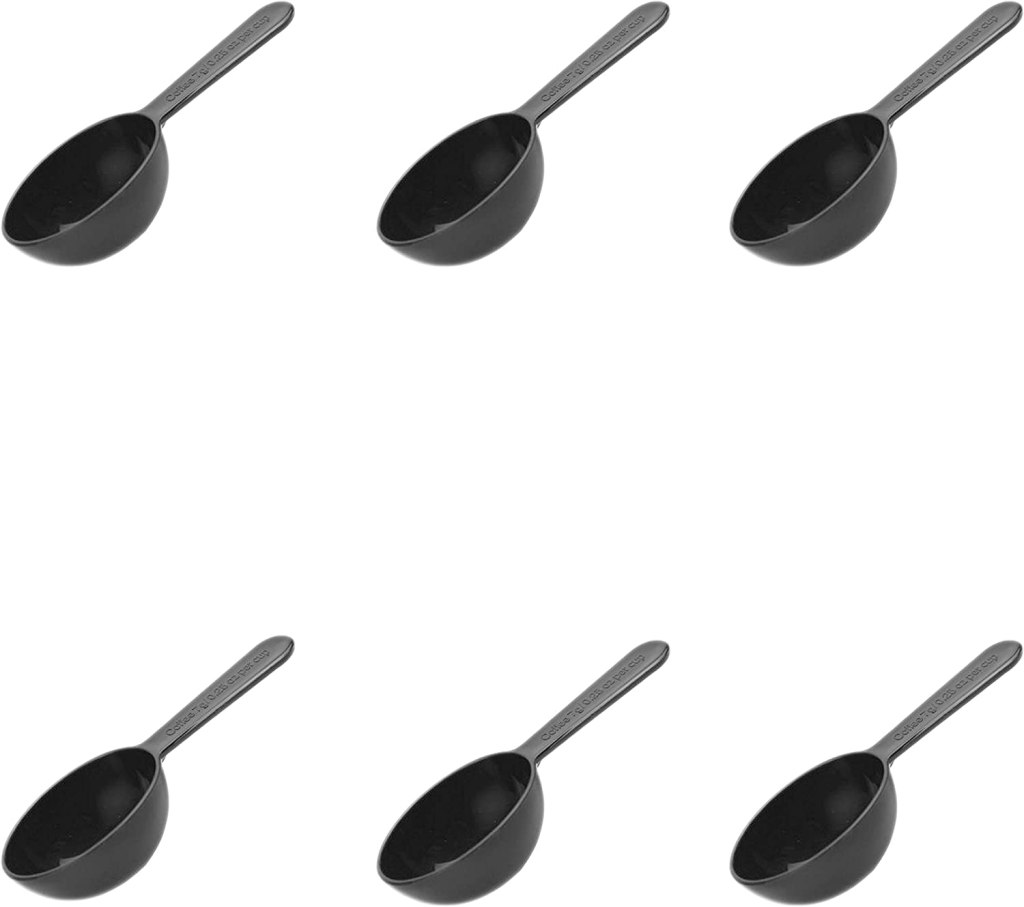
Early morning means counting out measuring spoons of ground coffee:
One spoon of coffee. Two. Three. Four. Five. Six.
Counting, as of breaths, is a part of some meditation practices. This feels like that.
But what, I wonder, if I was a pod person. That is, someone who made coffee with a pod machine. Which I am not. Would that also be a kind of meditation? Like this:
One pod.
Well, yes, maybe. Whether you are counting to six, or ten (a typical meditation counting number), you are also counting to one. Do you see? So whether it is spoons or pods, six or one, isn’t it all coffee?
If you don’t see now, you will. Good morning. Drink up.
I just learned that for a short time recently, Senator Mitt Romney, former (and some say future) Republican presidential nominee, had a beard.
The story is that over the Thanksgiving holiday, Romney didn’t shave, his wife Ann thought he looked “cute” and so he kept it. For a while.
Then Senator Ted Cruz, of all people, convinced Romney to shave it. At least that is Cruz’s story. “Of all people” because Cruz has had a beard for a long while, which some think makes him look like a wolverine or other feral animal. You be the judge.
This led me to wonder about Mormons and beards, which turns out to be a fascinating topic. Early Mormon leaders did have beards, but LDS has since had mixed policies. Brigham Young University, for example, has banned student beards since the 60s and still does.
Even with the current cultural embrace of beards, including at work, they are still rare in Congress, and rarer in the Senate.
As for Romney, I’m not sure about cute, but it did make him look a little rugged and real, counterpoint to his usual impeccable dress. He should have learned by now, as many of us have, never to listen to Ted Cruz.




 Bob Schwartz