One thing I know
I knew ten thousand things
Then coyote sang
Now only one
© 2023 by Bob Schwartz
I knew ten thousand things
Then coyote sang
Now only one
© 2023 by Bob Schwartz

An honest estimation of the moral state of our society will disclose: Some are guilty, but all are responsible.
Abraham Joshua Heschel
There are so many ways for people to distance themselves from being implicated in human-caused tragedy. For just one example, our American gun genocide.
Some will say they hold the more enlightened views, that they have spoken out, that they have acted out, that they have contributed to the cause, that they have voted for the proper candidates, that they have done all that they could.
Some others will say that there is a greater good, a greater ideology, not to mention the Second Amendment, so any responsibility is neutralized by their superior constitutional position (and their “thoughts and prayers”).
Heschel’s celebrated quote came out of the civil rights era and the still ongoing attempts to ameliorate racism. The point is that we can claim higher ground, criticizing those who obviously take no responsibility, and bemoan that we can do little more, given legal and political realities. But even with the limitations, and even with others shrugging off their glaringly obvious responsibility, they and we share the burden. Whatever the issue, whatever the tragedy.
The prophets’ great contribution to humanity was the discovery of the evil of indifference. One may be decent and sinister, pious and sinful.
The prophet is a person who suffers the harm done to others. Wherever a crime is committed, it is as if the prophet were the victim and the prey. The prophet’s angry words cry…
There are of course many among us whose record in dealing with African Americans and other minority groups is unspotted. However, an honest estimation of the moral state of our society will disclose: Some are guilty, but all are responsible. If we admit that the individual is in some measure conditioned or affected by the public climate of opinion, an individual’s crime discloses society’s corruption.
From The Insecurity of Freedom: Essays on Human Existence by Abraham Joshua Heschel

Perfect
When the animals and plants
first read Darwin they asked:
Are we perfect or not
doomed for extinction
marked for perpetuity?
We may not last forever
whatever forever is.
Yes of course
perfect.
© 2023 by Bob Schwartz
When the animals and plants
first read Darwin
they asked:
Are we perfect or not
doomed for extinction
marked for perpetuity?
How we are will not last forever
Whatever forever is.
Yes of course
perfect.
© 2023 by Bob Schwartz

You call it rain
but the human name
doesn’t mean shit to a tree
—Eskimo Blue Day, Jefferson Airplane
You have a child. You start a business. You invent a product. Once and often you will be caught in the process of naming things.
It is fun and daunting. Maybe you leave it to chance. Maybe you spend hours, days, of endless meetings and sleepless nights wrestling with the factors and implications. The child carries it for a lifetime (unless they change it, which they might). The business, product, organization might float or sink because of your choice. Then again, maybe it doesn’t matter.
Maybe someday someone interested will ask about the choice. You may have a story, a long explanation. Or you didn’t actually know what you were doing, but have to say something. You take credit. Or blame.
Naming is one of the very first things God does in the Bible, right after the initial creation. So we are godlike in our naming, for better or worse.
But as the Jefferson Airplane reminds, just as the Tao Te Ching says, just as Shakespeare says. The name is not the thing.
© 2023 by Bob Schwartz

True words aren’t beautiful
beautiful words aren’t true
Regular readers of the Chinese classic Tao Te Ching have absorbed its values and—when possible—integrated those values into their worldview and lives. Those students can recite some or many of the 81 verses by heart.
The final verse stands out. It lets the air out of the preceding verses, like a pin in a balloon. It neutralizes the words of wisdom texts, including its own.
Of the many quality translations, each different from another, my first choice is that of Red Pine (Bill Porter), whose work as a translator of Chinese spiritual texts is unsurpassed. Following is his translation of Verse 81 with commentary, followed by the interpretation of poet Witter Bynner, composed in 1944. Bynner’s version is special for me, since it was my first exposure to the Tao Te Ching and to Taoism. An unforgotten trailhead where the journey really began.
True words aren’t beautiful
beautiful words aren’t true
the good aren’t eloquent
the eloquent aren’t good
the wise aren’t learned
the learned aren’t wise
sages accumulate nothing
but the more they do for others
the greater their existence
the more they give to others
the greater their abundance
the Way of Heaven
is to help without harming
the Way of the Sage
is to act without struggling
At the beginning and at the end of the Taoteching, Lao-tzu reminds us not to become attached to the words. Let the words go. Have a cup of tea.
Taoteching, Verse 81, translation and comment by Red Pine
Real words are not vain,
Vain words not real;
And since those who argue prove nothing
A sensible man does not argue.
A sensible man is wiser than he knows,
While a fool knows more than is wise.
Therefore a sensible man does not devise resources:
The greater his use to others
The greater their use to him,
The more he yields to others
The more they yield to him.
The way of life cleaves without cutting:
Which, without need to say,
Should be man’s way.
The Way of Life According to Lao Tzu, Verse 81, translated by Witter Bynner
Controlled chaos. Sweet musical anarchy. Setting Sun (1997) by The Chemical Brothers:
You’re the devil in me I brought in from the cold
You said your body was young but your mind was very old
You’re coming on strong and I like the way
The visions we had have faded away
You’re part of a life I’ve never had
I’ll tell you that it’s just too bad
Inspired by the Beatles’ Tomorrow Never Knows—“Turn off your mind/relax and float downstream”—thirty years downstream was not necessarily relaxing but was exciting and expanding. Twenty-five years since and we can be/should be/are finding things in the lost and found sound. Even ourselves. Soundtrack for a revolution?
Listen below. The video is an appropriate bonus. “This is not dying.”
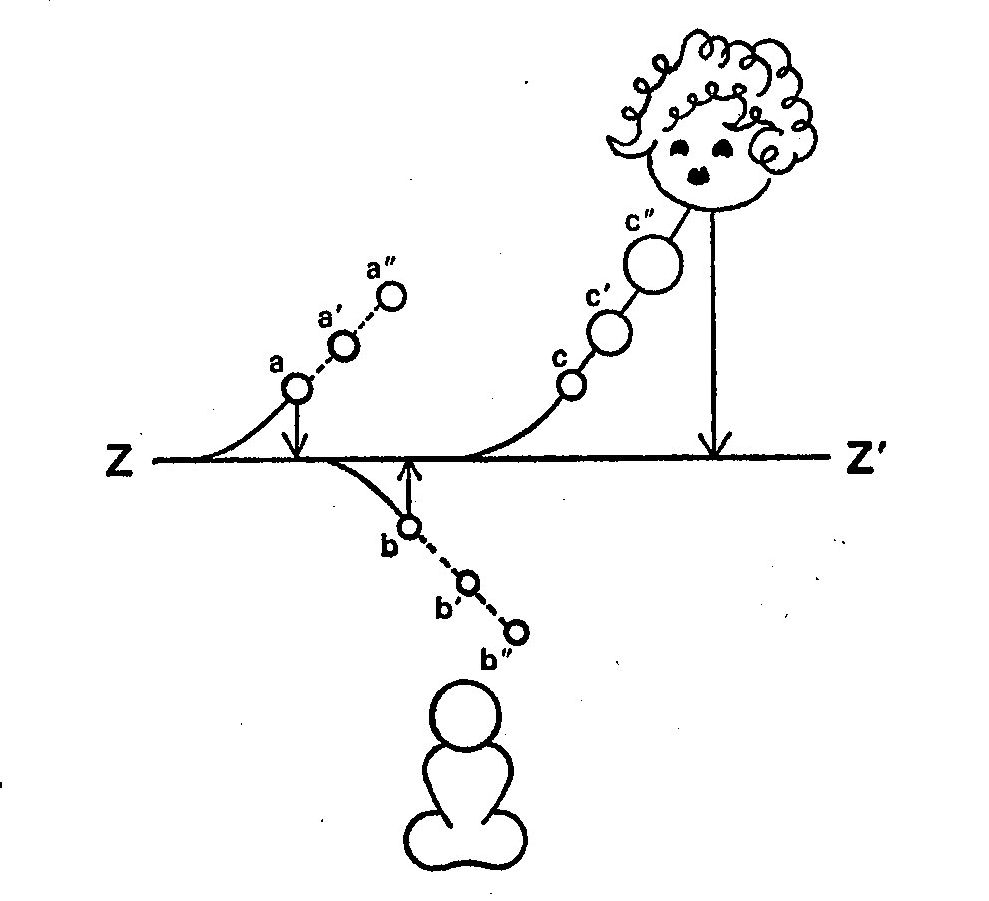
The above is my favorite illustration about meditation ever. Drawn by Zen master Kōshō Uchiyama, it is included in his book Opening the Hand of Thought. If you practice any type of meditation, not just Zen, or if you are interested in meditation but don’t know much about it, this illustration tells you so much.
About Kōshō Uchiyama:
Kōshō Uchiyama was born in Tokyo in 1912. He received a master’s degree in Western philosophy at Waseda University in 1937 and became a Zen priest three years later under Kōdō Sawaki Roshi. Upon Sawaki’s death in 1965, he became abbot of Antaiji, a temple and monastery then located on the outskirts of Kyoto. Uchiyama Roshi developed the practice at Antaiji and traveled extensively throughout Japan, lecturing and leading sesshins. He retired from Antaiji in 1975 and lived with his wife at Noke-in, a small temple outside Kyoto, where he continued to write, publish, and meet with the many people who found their way to his door, until his death in 1999. He wrote over twenty books on Zen, including translations of Dōgen Zenji in modern Japanese with commentaries, a few of which are available in English, as are various shorter essays. He was an origami master as well as a Zen master and published several books on origami.
The text accompanying the illustration:
Actually, zazen is not just being somehow glued to line ZZ’. Doing zazen is a continuation of this kind of returning up from sleepiness and down from chasing after thoughts. That is, the posture of waking up and returning to ZZ’ at any time is itself zazen. This is one of the most vital points regarding zazen. When we are doing zazen line ZZ‘, or just doing zazen, represents our reality, so it is essential to maintain that line. Actually, ZZ’ represents the reality of the posture of zazen, but the reality of our life is not just ZZ’. If it were only ZZ’, we would be as unchanging and lifeless as a rock! Although we aim at the line ZZ’, we can never actually adhere to it, because it (ZZ’) does not exist by itself. Nevertheless, we keep aiming at ZZ‘, because it is through clinging to thoughts that we keep veering away from it. The very power to wake up to ZZ’ and return to it is the reality of the life of zazen.
That is all you may need to know. Really.

who would be my teacher
to whom I would be a student
so many
smoke from a burning stick
© 2023 by Bob Schwartz
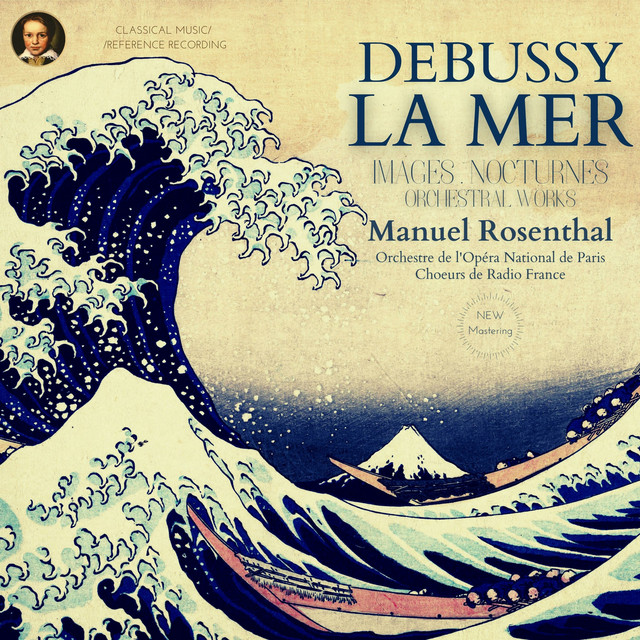
Debussy in the desert
listening to La Mer in the desert
Debussy hiding behind saguaros
irony as vast as the sea
© 2023 by Bob Schwartz
 Bob Schwartz