There are no atheists among baseball fans around the playoffs.
That needs clarifying. “Baseball gods” are not necessarily God in the conventional sense. Some fans will indeed pray to the Abrahamic God for team success, or if not Judaeo/Christian/Muslim, to their own parallel supreme deities.
Baseball gods are where a fan, true believer or not, seeks extra help for their team. Whether your team is an overwhelming favorite to win the whole thing, including the World Series, or your team is a long shot, the principle is the same: talent is not enough.
Twelve teams have survived the long, long season—162 grueling games—yet there are still more games to play against strong opponents. For those remaining games, talent is not enough. Something more is needed.
That’s where prayers to the baseball gods come in. Does each team have its own god? Is each of those gods equally powerful to give their team that extra something, that special boost, that can make the difference? Do those gods have playoffs among themselves? Who knows? Not me. Baseball theology is not my specialty.
It is too risky to leave baseball up to the talent of the players and the wisdom of the managers. If a little extra help is needed and sought, what’s the harm? In the playoffs, we want to enjoy the thrill of victory and avoid the agony of defeat. Whatever we believe, we pray on.
Today is the middle of the Jewish festival of Sukkot, named after the huts (sukkot) in which we are these days supposed to dwell in or at least visit and share meals in. These structures represent dwellings the Israelites inhabited during their storied 40 years of wandering in the desert. Sukkot is also a harvest festival, and the sukkah represents the temporary huts set up in the fields.
A few wandering notes:
Kohelet (Book of Ecclesiastes)
The Book of Ecclesiastes is traditionally read on Sukkot. In Hebrew, the book is called Kohelet (also written Qohelet), named after the book’s speaker, identified in English as Preacher/Teacher. Ecclesiastes is famous for the King James translation of the opening—“Vanity, vanity, says the Preacher, all is vanity.” Other modern translators choose a different word for the ancient Hebrew hevel, instead of vanity using absurd, meaningless, pointless, wind, breath, etc.
Ecclesiastes is distinct from any book in the Hebrew Bible, and may be the most philosophically puzzling and profound. Here is a summary of its message:
Qohelet and his audience live in a world of rapid political, social, and economic changes, and it is in such a context that he reflects on humanity’s plight. It is a world full of inconveniences, inconsistencies, and contradictions. Nothing that mortals do or have is ultimately reliable—not wealth, pleasure, wisdom, toil, or even life itself. People try to cope with the situation of anomie in various ways. They worry. They are never satisfied. They are obsessed with discovering any formula that will bring success and happiness. They try give an accounting of all that is happening. They endeavor to straighten everything that is crooked, correct every injustice, fill every void. They strive to gain an immortality of sorts through fame, progeny, wealth, or accomplishments. They try everything to gain some control, if not actually to secure an advantage in life. Nothing works, however, and still there looms the large shadow of death, from which no one can escape.
As Qohelet sees it, humans have no control over the world in which they live, for all is “vanity” (Hebrew hebel). His most persistent counsel, therefore, is to take pleasure in all that one does. Indeed, this call for enjoyment is so prominent that it is sometimes seen as the main message of the book. Yet enjoyment can hardly be the central message of the book. Nowhere in the book does Qohelet say that one should seek pleasure and, when he does speak of his own quest for pleasure, he tells us that he finds it to be, like everything else in life, elusive, fleeting, and as unreliable as wind. For Qohelet, human beings have no control over what will happen in the world, and so one should live moment by moment.
Throughout the book, there is profound awareness of God, although it is not an immanent deity of whom Qohelet speaks. The deity does not relate personally to anyone, does not enter into a covenant with anyone, does not intervene in the history of any nation in any identifiable fashion. God is wholly transcendent, and, indeed, the fundamental dissimilitude between God’s being and humanity’s being is stressed. This is what Qohelet means by the fear of God, a concept that conveys the indisputable distinction between divinity and humanity.
God remains an utter mystery to Qohelet. Although he would speak repeatedly of the power of God and the activity of God, he admits that he is not able to make much sense of them. There is no epistemological system by which to know God. Wisdom cannot fathom the significance of history. Nature, too, reveals nothing save the sovereignty and mystery of God. Neither history nor nature yields any knowledge of God to Qohelet, but Qohelet knows that there is nothing better for humanity than to enjoy the present as a gift of God.
C. L. Seow, HarperCollins Bible Commentary
Elijah
The prophet Elijah doesn’t have his own book in the Hebrew Bible, but he is a major figure (see 1 Kings 17:1 and following for his unforgettable exploits). Each Shabbat includes the song Eliyahu Hanavi:
Elijah the Prophet Elijah the Tishbite Elijah the Giladite May he soon come to us With Messiah the son of David
In our real lives, Elijah makes his most notable appearance at the Passover seder. A glass of wine is set at the table for him, the door is opened, and at some point Elijah drops by and drinks it. Or maybe the glass is secretly emptied by a seder attendee, which impresses the kids.
The question: Why isn’t Elijah invited to join us in the sukkot? There is not even a door to open because there aren’t doors. If Elijah is thirsty and drinks at Passover, why not at Sukkot?
Lao Tzu
Lao Tzu is the purported author of the Tao Te Ching, a basic text of Taoism and one of the world’s shortest and most powerful wisdom texts.
Chapter 11 of the Tao Te Ching relates directly to the huts, the sukkot of Sukkot:
11
Thirty spokes converge on a hub but it’s the emptiness that makes a wheel work pots are fashioned from clay but it’s the hollow that makes a pot work windows and doors are carved for a house but it’s the spaces that make a house work existence makes a thing useful but nonexistence makes it work
Te-Ch’ing (1546–1623) says, “We all have form and think ourselves useful but remain unaware that our usefulness depends on our empty, shapeless mind. Thus, existence may have its uses, but real usefulness depends on nonexistence. Nonexistence, though, doesn’t work by itself. It needs the help of existence.”
Tao Te Ching, Red Pine translation
Exactly. To rephrase:
an opening is left in the hut but it’s the spaces that make a hut work
Is this too far afield from Sukkot and Judaism? From Kohelet and Elijah? When next you ride a bicycle or cook in a pot or stand in a room or in a sukkah, please consider this.
Chris Christie is never going to be president. Or the Republican nominee.
But he’s had his moments. Hurricane Sandy in October 2012 was the largest Atlantic hurricane on record measured by diameter, with tropical-storm-force winds spanning 1,150 miles. It devastated New Jersey, where Christie was then governor.
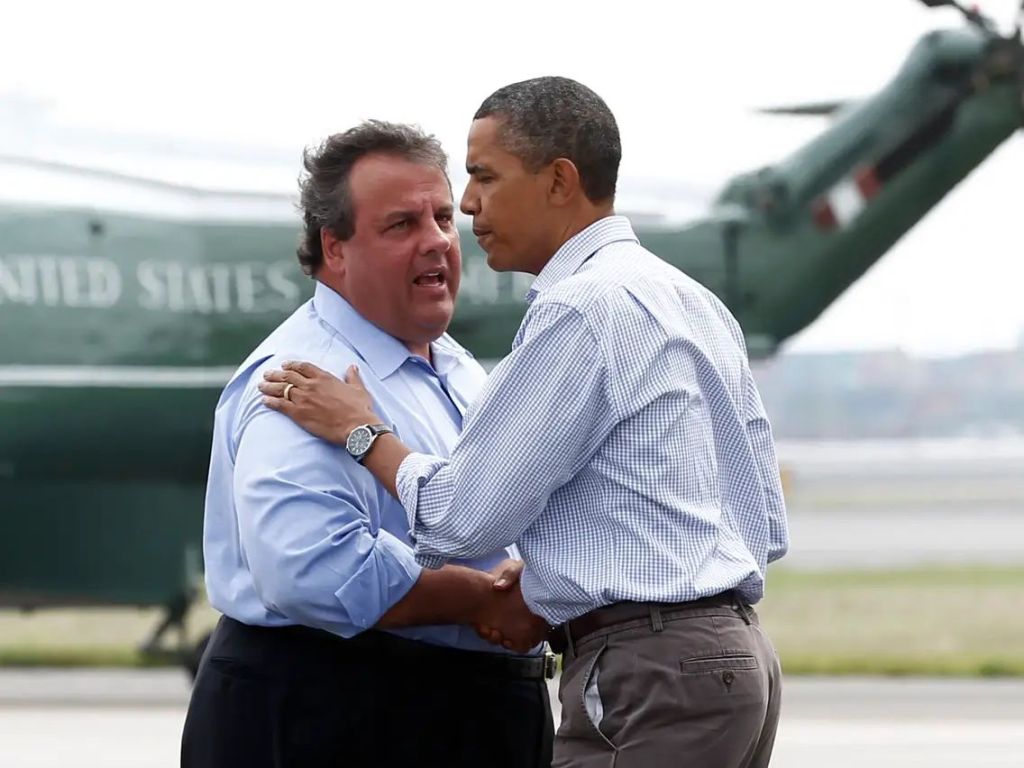
It was just a few weeks before the 2012 presidential election. Barack Obama, running for reelection, visited New Jersey as part of the federal response to the devastating damage. Christie greeted him on arrival and gave him a warm and appreciative welcome. Christie’s job was to take care of the people of New Jersey and Obama’s job was to help.
Republicans lost their minds, outraged that Christie would appear to do anything positive to help Obama. Even though Christie was just doing his job, regardless of partisan politics.
Christie is now running for the Republican nomination. He will not win that nomination, but he has an additional important role. Set apart from so many high-profile scared Republicans, he is out to destroy Trump as a suitable Republican nominee or president. Whether Christie is doing this to make room for himself or because he is one of the remaining decent Republicans who believes in the rule of law and the Constitution (Christie is a former U.S. Attorney), it doesn’t matter.
A hero, a minor one, but head and shoulders above the rest of his party.
The concluding service of Yom Kippur is Neilah, the closing of the gates of repentance. We have had our opportunity for introspection and commitment to do and be better. This is it.
Hours of services and a day without food are beneficial. But if we are honest, the mind wanders and the stomach growls.
I stared out the window as the sun set. Poems popped up like weeds. Here are a couple.
1
I lift up my eyes to the mountains— where will my help come from? Psalm 121
Sun sets behind the mountains Scattered clouds surround it Obscuring the last light Or exploding in colors The hills soon hide in darkness Until the later waxing moon Enlightens them and us
2
The gates are closing No one told the coyotes Roaming and eating Four-footed shofars Howling the holiday out
I daily walk a road surrounded by the spectacular. Amazing things to see and hear.
When we arrived I was convinced that every day these mountains and hills and cacti and birds would take my breath away, my heart soaring to heaven.
They do. But not quite as in those early days. Reminiscent of the way we love people, I suppose. You want that exhilaration to last, but it seems sometimes to settle in to a bit of subdued though still infinite appreciation for the beauty and wonder. Not quite the same thing.
No. None of that, nature or people, deserves to be even slightly demoted. Everything is new now. Sunryu Suzuki’s famous expression “Zen mind, beginners mind” is not just about Zen. About everything. One time it will be the last time. But this time is the first time.
Supreme Court Justice Clarence Thomas was at the Bohemian Grove, a secretive all-men’s retreat in Northern California, with billionaire industrialist David Koch, right, and Ken Burns, whose films Koch has financially supported.
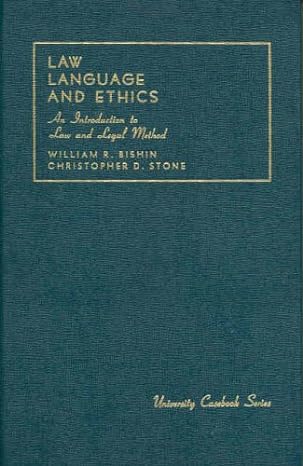
My first year of law school, I was privileged to have a course and book, Law, Language, and Ethics, taught by one of the course’s co-developers, William Bishin. It has stayed with me, not only as a lawyer but as a citizen.
Impossible to summarize a semester-long course and a 1,300-page book. Here is a concise point from the Preface:
“Law, Language, and Ethics is born of the belief that every legal problem…has its roots and perhaps its analog in traditional “philosophical” realms.”
Every day, whether discussing Trump-related criminal matters or Supreme Court Justice behavior, we naturally focus on whether laws, rules or guidelines have been formally and provably broken. In those reports and conversations, we miss so much and we miss the point.
If all or most of what we care about is whether laws or rules have been broken, we are in bad shape and will never get our government, nation or world better. We stay away from ethics because it is difficult and because thinking about ethics always comes back to thinking about ourselves. That isn’t easy or convenient.
So whatever the formal outcomes—a former president and his gang convicted, a Supreme Court Justice reprimanded, or not—we have to keep talking and talking about what is moral and what is ethical, not just about what is legal. In the long run, that is really what we have and what we need.
It is halfway through a Wednesday. Listening to or reading the news, I have already heard a fair share of bullshit. Some from those I don’t like, support or respect, some even from those I do. The same sometimes goes from others in personal conversations. Above all, I am far from immune to spewing nonsense, lots of it.
This has been going on forever, or at least as long as the earth has been populated by articulate talking animals. It is not good for us, but there it is.
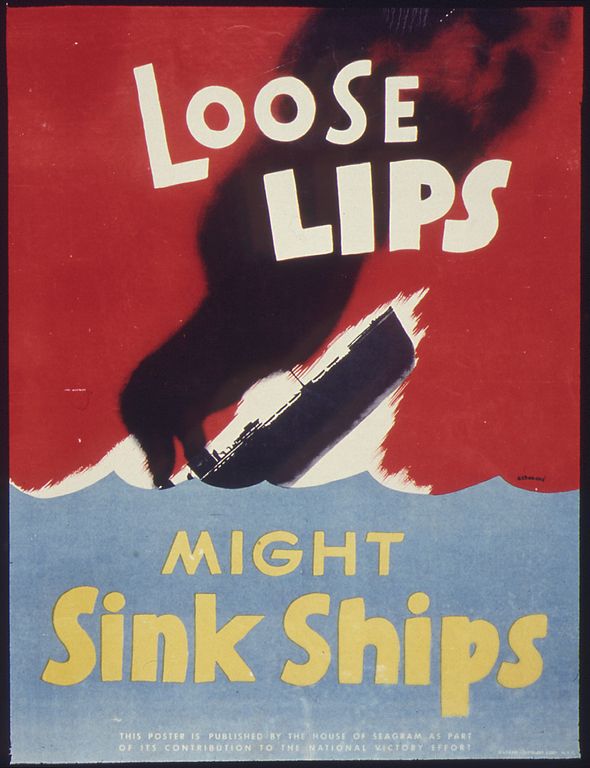
We need a vacation. So I am proposing a Global Day of Silence. No words spoken, written, heard or read. Like The Day the Earth Stood Still, there will be exceptions for health and safety. Otherwise, silence. We can consider, as with religious fasts, whether it should be sunrise to sunset or a full 24 hours.
After that, good and useful words will resume worldwide, as will the usual stuff. But we will at least have gotten a break. God knows we deserve it.
The traditional belief for the Jewish High Holidays is that for ten days, starting on Rosh Hashanah and ending on Yom Kippur, the Book of Life is open. Based on the life we live, informed and inspired by these sacred days, a judgment will be entered.
A common holiday greeting is l’shanah tovah tikateivu—”May you be inscribed [in the Book of Life] for a good year”.
For congregants who experience years of study and hours of services (especially during Yom Kippur services on days without food), the mind wanders and spins out. One thought I’ve been unable to shake is the similarity of the Book of Life and Santa’s List.
Just as God’s angels may be keeping tabs on us and reporting to the boss, so Santa’s elves are watching and supplying intelligence. One distinction is that the Book of Life affects the whole year, while Santa’s List only affects the gifts for that Christmas. Also, Santa is apparently only interested in boys and girls, not adults. Grown ups need not worry about coal and are free to do whatever they want, naughty or nice.
Continuing in the spirit of creative wandering, I revisit my first post for Yom Kippur—Yom Kippur: A Serious Day for a Serious Man. Set in the 1960s, A Serious Man is a great Jewish-themed movie, the Coen Brothers’ modern take on the Book of Job.
The penultimate scene takes place in the office of the ancient and unapproachable senior rabbi, Rabbi Marshak. Danny, recently bar mitzvah, has been sent to the rabbi’s office after he was caught listening to his transistor radio in Hebrew School class. The radio was confiscated and is in the rabbi’s desk.
Danny sits down across from the rabbi. After a long pause, Rabbi begins haltingly reciting the lyrics to the Jefferson Airplane’s Somebody to Love. “When the truth is found. To be lies….And all the hope. Within you dies….” Rabbi asks Danny, “Then what?” Danny doesn’t answer. Rabbi goes on, “Grace Slick. Marty Balin. Paul Kanta. Jorma. . .somethin. These are the members of the Airplane….Interesting.”
Rabbi pulls the radio from his desk drawer and pushes it across to Danny. Rabbi closes with his sage advice: “Be a good boy.”
If there is a summary of what God or Santa wants, on the High Holidays, at Christmas, or any day, that is it: Be a good girl or boy.
Translation: Pure and light like God’s angel, In the hand, the sail and flag, Loaded full with blessings The New Year is arriving now!
The New Year 5784 on the Hebrew calendar begins this evening at sundown.
A traditional greeting is l’shana tova tikateivu (May you be inscribed for a good year [in the Book of Life]).
This begins the ten days of the High Holidays, aka the Days of Awe. It ends with Yom Kippur—the Day of Atonement, the Day of Repentance.
Solemnity, introspection and commitment to betterment is paired with wishes for a sweet year. Although it is also considered the birthday of the world, there is no birthday cake. There are candles, and also the tradition of eating apples dipped in honey.
Let us all wish better for ourselves and everyone and, more than that, let us do whatever we can, big or small, to help make better happen.
Over decades—almost a century—this poem has had a “tangled story” in popular culture. For years misattributed, it is in fact the work of Max Ehrmann. It reached peak popularity in the 1960s and 1970s, when it was everywhere. At various times cynics criticized and mocked it as saccharine cliché and counterculture/new age nonsense. On the contrary, it is a simple and accessible statement of pragmatic idealism. “With all its sham, drudgery and broken dreams, it is still a beautiful world. Be cheerful. Strive to be happy.”
Desiderata
Go placidly amid the noise and the haste, and remember what peace there may be in silence. As far as possible, without surrender, be on good terms with all persons.
Speak your truth quietly and clearly; and listen to others, even to the dull and the ignorant; they too have their story.
Avoid loud and aggressive persons; they are vexatious to the spirit. If you compare yourself with others, you may become vain or bitter, for always there will be greater and lesser persons than yourself.
Enjoy your achievements as well as your plans. Keep interested in your own career, however humble; it is a real possession in the changing fortunes of time.
Exercise caution in your business affairs, for the world is full of trickery. But let this not blind you to what virtue there is; many persons strive for high ideals, and everywhere life is full of heroism.
Be yourself. Especially do not feign affection. Neither be cynical about love; for in the face of all aridity and disenchantment, it is as perennial as the grass.
Take kindly the counsel of the years, gracefully surrendering the things of youth.
Nurture strength of spirit to shield you in sudden misfortune. But do not distress yourself with dark imaginings. Many fears are born of fatigue and loneliness.
Beyond a wholesome discipline, be gentle with yourself. You are a child of the universe no less than the trees and the stars; you have a right to be here.
And whether or not it is clear to you, no doubt the universe is unfolding as it should. Therefore be at peace with God, whatever you conceive Him to be. And whatever your labors and aspirations, in the noisy confusion of life, keep peace in your soul. With all its sham, drudgery and broken dreams, it is still a beautiful world. Be cheerful. Strive to be happy.








 Bob Schwartz