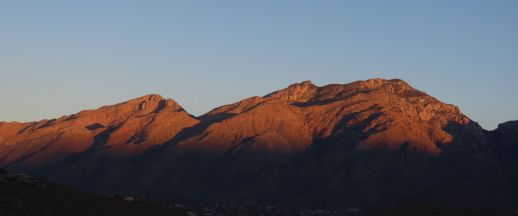
Every morning I open the curtains and say, silently or out loud, “Yeah, the mountains are still there.”
In Mountains and Waters Sutra, Dogen writes about mountains walking on water and giving birth. He also writes “mountains and waters of themselves become wise persons and sages.”
These mountains talk to me and teach me. About everything. Every day. Better than anyone
That’s why it’s a good thing that they are still there when I open the curtains.
“Far from providing false or unverifiable answers to our questions, the religions provide no answers at all. On this basis, one explanation for the proliferation of belief systems at the edges of the great religions is that they provide a shield against this absolute openness, a protection in advance against what might lie just beyond the horizon and so far unseen, or even imaginable.”
James P. Carse (1932-2020) taught at New York University for thirty years, where he was Professor of the History and Literature of Religion and Director of the Religious Studies Program. Among his many books is the masterpiece Finite and Infinite Games: A Vision of Life as Play and Possibility (1986).
A brief and groundbreaking book, Finite and Infinite Games is hard to summarize and understand without context. Carse closes with this:
The myth of Jesus is exemplary, but not necessary. No myth is necessary. There is no story that must be told. Stories do not have a truth that someone needs to reveal, or someone needs to hear. It is part of the myth of Jesus that it makes itself unnecessary; it is a narrative of the word becoming flesh, of language entering history; a narrative of the word becoming flesh and dying, of history entering language. Who listens to his myth cannot rise above history to utter timeless truths about it.
It is not necessary for infinite players to be Christians; indeed it is not possible for them to be Christians—seriously. Neither is it possible for them to be Buddhists, or Muslims, or atheists, or New Yorkers—seriously. All such titles can only be playful abstractions, mere performances for the sake of laughter.
Years later, Carse expanded on his vision with The Religious Case Against Belief (2008). In it, he distinguishes between religion and belief systems. The conflation and confusion between them has led to damage and tragedy, and to religion being devalued or dismissed.
As with Finite and Infinite Games, summarizing the book is impossible. Here in the final part, Conclusion: For the Recovery of Wonder, Carse tries to put religion in its proper place—as a source of inspired questions and wonder and not as the absolute source of (often weaponized) answers:
The question remains: if religion is at its core so antithetical to belief, why does it happen that belief systems gather so persistently around genuine religious expression? Recent critics of religion may have been mistaken in thinking that it was religion they were attacking and not the isolated beliefs with which they mistakenly identified them, but they have a point, inasmuch as believers do regularly represent themselves as truly religious—or impute to their beliefs an aura of pseudo-religious validation. Put another way, we might ask, What is it about religion that causes believers to reject it? Why are some Christians so certain in their understanding of the resurrection of Jesus, or Muslims so convinced that the Quran justifies a violent form of jihad, when it should be perfectly obvious to both that these are issues that have been unresolved after centuries of animated and learned debate?
Any answer to this curious fact must be speculative at best. We can at least say that whenever we turn to religion for answers to the questions that press all of us for our simply being human (what happens at death? why is there evil? where did it all come from? how will it end? why is there something rather than nothing?), instead of answers we are offered a deepened expression of the same question. When the dying Buddha assured his grieving friends that his body would decay like any other earthly object, he was asked whether he would live on after death. He answered in effect: we cannot say the Buddha lives on; we cannot say he does not; we cannot say he both lives on and does not; we cannot say he neither lives on nor does not. On the one hand, he emphasizes the reality of his death, on the other, the utter impossibility of understanding it. This open-ended, or what I have called horizonal, way of thinking then penetrates every aspect of Buddhism. It cancels the claim that anyone, even the most accomplished Buddhists, or bodhisattvas, can say what Buddhism is truly about.
By virtue of the ignorance inherent in its long conversation with itself, each religion can behold another only with wonder. That they are rivals, or that they have contradictory views of God, or that they cannot exist in the same time and place, or that one endangers the other—none of this comes to mind among the religious. The great danger of belief systems is that the opposing sides are sure they do understand each other. When Christians fault the Muslim idea of God, calling Islam a false deity or a satanic creation, they have done more than reveal their flawed understanding of Islam, they have severed themselves from their own faith. They are no longer Christians, but willfully ignorant ideologues.
Far from providing false or unverifiable answers to our questions, the religions provide no answers at all. On this basis, one explanation for the proliferation of belief systems at the edges of the great religions is that they provide a shield against this absolute openness, a protection in advance against what might lie just beyond the horizon and so far unseen, or even imaginable. Believers, in short, are terrified by genuine expressions of religion, and respond to them by vigorously ignoring them. They take refuge in agreement, solidarity of membership, and the sense that they belong to something that exists independently of their participation in it. Thus it was when Urban II saw a loss of fervor in Christendom, he initiated in the year 1095 what was to become several centuries of costly, savage, and ultimately failed crusades against the Saracens. It was far more reassuring for medieval Christians to battle Islam than it was for them to inquire unrestrictedly into the learned and thriving Islamic civilization. In the meantime, of course, it was a way of escaping any inquiry into the great uncertainties of Christianity itself. As much as it was a declared war against infidels, it was an undeclared war against their own poets.
The poets, of course, are not at war with believers. They do not meet the authority of sword and crown with armies of their own, but only, like Galileo, with a continuing attempt to reimagine the universe. And like Galileo, they are easily brushed aside by the powerful. Those who share their vision are small in number compared to the masses attracted to belief systems in general. Without their disturbing presence in the communitas, however, the communitas loses its integrity and if it survives at all it is by surrendering its authority to the civitas. As a result, the civitas itself will become hollow and brittle, finally sharing the fate of Soviet Marxism, or Italian fascism, or Argentine despotism, or American exclusivism.
In laying out the religious case against belief, it may seem that I have privileged the former over the latter. It must be said, however, although I can offer no statistical basis for it, that the world is far more attracted to belief systems than to religion as I have described it. Nonetheless, poets will always rise in their midst, even in the most severe, knowing they lack every form of worldly power, hoping only that their singing will outlast them. But if it does, even if it is long remembered, finally there is only oblivion. Why then do they continue to sing? They have no choice. They know they are ignorant.
“Remember the blood of the innocent cries forever. Should that blood stop to cry, humanity would cease to be.” —Abraham Joshua Heschel
Abraham Joshua Heschel was a great Jewish thinker, writer and prophet of the twentieth century. I have included him in over 30 posts, far more than any other figure. Here is one example.
Heschel was one of the earliest religionists to oppose the Vietnam War. As a friend and colleague of Martin Luther King Jr. in the civil rights movement, he influenced King to publicly come out against the war.
Benjamin Sax talks about the price Heschel paid:
“When he came out against the Vietnam War for example, there were a lot of Jewish presses and a lot of Jewish leadership that spoke out against him. There was a lot of criticism about his leadership, about his point of view – he was considered naive. Worse he was considered theologically naive. That what he was doing was undermining the safety of his own people and undermining the safety of our country. And that aspiring to these universal, patriotic values was something that at least many in the Jewish community wanted to put out there even if they were uncomfortable with the reasons why we were in Vietnam. And so, it also put his reputation at risk.”
Heschel wrote about the war:
“The blood we shed in Vietnam makes a mockery of all our proclamations, dedications, celebrations. Has our conscience become a fossil, is all, mercy gone? If mercy, the mother of humility, is still alive as a demand, how can we say yes to our bringing agony to that tormented country? We are here because our own integrity as human beings is decaying in the agony and merciless killing done in our name. In a free society, some are guilty and all are responsible. We are here to call upon the governments of the United States as well as North Vietnam to stand still and to consider that no victory is worth the price of terror, which all parties commit in Vietnam, North and South. Remember the blood of the innocent cries forever. Should that blood stop to cry, humanity would cease to be.”
Heschel died in 1972. It would be beyond presumptuous—criminal and sinful—to claim to know what he would be saying about the current Israeli war in Gaza. All we can know is that he urged flawed human beings to rise above self to do better and be better, which is what he believed God needs us to do.
A year ago, I declared 2023 the Year of Poetry. All the arts are valuable, but you can’t go wrong with poetry, whether reading it or writing it.
A new year, a new declaration. Nothing official has been decided, but I thought some of the candidates deserved mention.
Year of Buddhism and Taoism. For convenient classification, Buddhism and Taoism are often categorized as religions, though they don’t look like the others. We might better call them traditions. Anyway, as we approach a year that is certain to include much that goes sideways or turns upside down, it will be helpful to learn how to go with it. These are excellent for that. Other religious traditions are about keeping us steady and grounded by anchoring us in truths. B&T at their best acknowledge the ground but remind us that there is more than the ground, that whatever is propounded can be followed by “…and yet.”
Year of Philosophers. Ideally, philosophers don’t tell us what to see or think—though there’s plenty of that. They tell us how to see and think, for ourselves. That’s why I have been pleading with philosophers to take a more visible and audible place in our popular public conversations. Way too many talking heads offering conclusions and certainties in the face of complex or insoluble situations. Which tends to confirm or antagonize the conclusions and certainties of listeners and viewers. Instead, we need more people who teach us how to gather, distill and process knowledge and how to live with a little—or a lot—of uncertainty.
Year of the Absurd. This is currently at the top of my list. At some other point, I’ll deep dive into this topic. For now, know that when things don’t seem to make sense, it may be because they don’t make sense, and our futile job is not to make sense of them, though we feel compelled to try. Our real job is to learn how to live with it, not be discouraged or dispirited by it, crushed or drowned by it. If you think that 2024 won’t constantly offer us absurdities, you are mistaken. These may make you laugh or cry, or both, which is understandable and fine. It’s just absurd.
My first portable music device was a transistor radio. AM radio, tuner dial, 2-inch speaker, audio jack. It may amaze you to know that you can still buy a similar radio from Sony, Panasonic and others (see above), relatively cheap, now including AM and FM.
Today I listen to music on a tablet, millions of tracks on demand instead of a dozen stations, touch screen, pictures of artists and albums, quad speakers, infinite information.
The thought I had this morning is that with all the significant differences, the tablet is just a transistor radio. Or to be precise, it is and it isn’t. If you don’t understand that, you might.
Full moon in the very early morning is glorious. This morning the full moon was setting behind a mountain. On closer look, it was setting behind a mountain but also directly behind a house atop the mountain. Was the pure nature of the moment interrupted? Was the house speaking along with the moon and the mountain? Even singing together in harmony?
The moon has moved on, gracing someone else’s sky. The mountain is still there. The house on the mountain is still there. The people in the house are still there, if they are there, still sleeping, having breakfast, or having finished breakfast, doing next things.
“Our canonical texts are largely silent about the events prior to and leading up to Jesus’ birth, but his unique standing as the Son of God led Christians to wonder about parts of the story left out. If he was special, as shown by the fact that he was conceived by a virgin—what can we say about his mother? Who was Mary? What made her special? How was she herself born? How did she maintain her own purity, to make her a worthy “vessel” for the Son of God?” The Other Gospels: Accounts of Jesus from Outside the New Testament Edited and translated by Bart D. Ehrman and Zlatko Pleše
The Proto-Gospel of James (The Birth of Mary, the Revelation of James) is one of the texts known as Infancy Gospels. These fill in the many details missing from the New Testament Gospels. Their authorship is unknown—who, when, where? For readers, whether faithful Christians or just those living in a Christmas culture, these are captivating stories.
From The Proto-Gospel of James:
Joseph Discovers Mary’s Condition
13
(1) When she was in her sixth month, behold, Joseph returned from his buildings. As he came into the house he saw that she was pregnant. Striking his face he cast himself to the ground on sackcloth, weeping bitterly and saying, “How can I look upon the Lord God? How can I utter a prayer for this young girl? For I received her from the temple of the Lord God as a virgin, but I did not watch over her. Who has preyed upon me? Who has done this wicked deed in my home and defiled the virgin? Has not the entire history of Adam been summed up in me? For just as Adam was singing praise to God, when the serpent came and found Eve alone, and led her astray, so too has this now happened to me.”
(2) Joseph rose up from the sackcloth, called Mary, and said to her, “You who have been cared for by God: why have you done this? Have you forgotten the Lord your God? Why have you humiliated your soul—you who were brought up in the Holy of Holies and received your food from the hand of an angel?”
(3) But she wept bitterly and said, “I am pure and have not had sex with any man.”22 Joseph replied to her, “How then have you become pregnant?” She said, “As the Lord my God lives, I do not know.”
14
(1) Joseph was very afraid and let her be, debating what to do about her. Joseph said, “If I hide her sin, I will be found to be fighting the Law of the Lord; if I reveal her condition to the sons of Israel, I am afraid that the child in her is angelic, and I may be handing innocent blood over to a death sentence. What then should I do with her? I will secretly divorce her.” Then night overtook him.
(2) Behold, an angel of the Lord appeared to him in a dream and said, “Do not be afraid of this child. For that which is in her comes from the Holy Spirit. She will give birth to a son, and you will name him Jesus. For he will save his people from their sins.” Joseph rose up from his sleep and glorified the God of Israel who had bestowed favor on him; and he watched over her.
The Authorities Discover Mary’s Condition
15
(1) But Annas the scribe came to see him and said, “Joseph, why have you not appeared before our council?” Joseph replied, “I was tired from my journey and rested on my first day back.” Annas then turned and saw that Mary was pregnant.
(2) He left and ran off to the priest and said to him, “Joseph, the one you have vouched for, has committed a great sin.” The priest replied, “What has he done?” He said, “He has defiled the virgin he received from the Lord’s temple and has stolen her wedding rights. And he has not revealed this to the sons of Israel.” The priest asked, “Joseph, has done this?” Annas the scribe replied, “Send some servants, and you will find that the virgin is pregnant.” The servants went off and found her just as he had said. They brought her back to the judgment hall, along with Joseph.
(3) The high priest said to her, “Mary, why have you done this? Why have you humiliated your soul and forgotten the Lord your God? You who were brought up in the Holy of Holies and received your food from the hand of an angel, and heard his hymns, and danced before him—why have you done this?” But she wept bitterly and said, “As the Lord my God lives, I am pure before him and have not had sex with any man.”
(4) The priest then said, “Joseph, why have you done this?” Joseph replied, “As the Lord my God lives, I am pure toward her.” The priest said, “Do not bear false witness, but speak the truth. You have stolen her wedding rights and not revealed it to the sons of Israel; and you have not bowed your head under the mighty hand that your offspring might be blessed.” Joseph kept his silence.
16
(1) The priest said, “Hand over the virgin you received from the Lord’s temple.” And Joseph began to weep bitterly. The priest said, “I will have both of you drink the Lord’s ‘water of refutation,’ and it will reveal your sin to your own eyes.”
(2) The priest gave it to Joseph to drink, and sent him away to the wilderness. But he came back whole. He then gave it to Mary to drink and sent her off to the wilderness. And she came back whole. All the people were amazed that their sin was not revealed.
(3) The priest said, “If the Lord God has not revealed your sin, neither do I judge you.” And he released them. Joseph took Mary and returned home, rejoicing and glorifying the God of Israel.
The Journey to Bethlehem
17
(1) An order went out from the king, Augustus, that everyone from Bethlehem of Judea was to be registered for a census. Joseph said, “I will register my sons. But what should I do about this child? How should I register her? As my wife? I would be too ashamed. As my daughter? The sons of Israel know that she is not my daughter. This day of the Lord will turn out as he wishes.”
(2) He saddled the donkey and seated her on it; and his son led it along, while Samuel followed behind. When they approached the third milestone, Joseph turned and saw that she was gloomy. He said to himself, “Maybe the child in her is causing her trouble.” Then Joseph turned again and saw her laughing. He said to her, “Mary, why is it that one time I see you laughing and at another time gloomy?” She replied, “Because my eyes see two peoples, one weeping and mourning and the other happy and rejoicing.”
(3) When they were half way there, Mary said to him, “Joseph, take me down from the donkey. The child inside me is pressing on me to come out.” He took her down from the donkey and said to her, “Where can I take you to hide your shame? For this place is a wilderness.”
Joseph Watches Time Stand Still
18
(1) He found a cave there and took her into it. Then he gave his sons to her and went out to find a Hebrew midwife in the region of Bethlehem.
(2) But I, Joseph, was walking, and I was not walking. I looked up to the vault of the sky, and I saw it standing still, and into the air, and I saw that it was greatly disturbed, and the birds of the sky were at rest. I looked down to the earth and saw a bowl laid out for some workers who were reclining to eat. Their hands were in the bowl, but those who were chewing were not chewing; and those who were taking something from the bowl were not lifting it up; and those who were bringing their hands to their mouths were not bringing them to their mouths. Everyone was looking up. I saw a flock of sheep being herded, but they were standing still. The shepherd raised his hand to strike them, but his hand remained in the air. I looked down at the torrential stream, and I saw some goats whose mouths were over the water, but they were not drinking. Then suddenly everything returned to its normal course.
The Birth of Jesus and the Witness of the Midwives
19
(1) I saw a woman coming down from the hill country, and she said to me, “O man, where are you going?” I replied, “I am looking for a Hebrew midwife.” She asked me, “Are you from Israel?” I said to her, “Yes.” She asked, “Who is the one who has given birth in the cave?” I replied, “My betrothed.” She said to me, “Is she not your wife?” I said to her, “She is Mary, the one who was brought up in the Lord’s temple, and I received the lot to take her as my wife. She is not, however, my wife, but she has conceived her child by the Holy Spirit.” The midwife said to him, “Can this be true?” Joseph replied to her, “Come and see.” And the midwife went with him.
(2) They stood at the entrance of the cave, and a bright cloud overshadowed it. The midwife said, “My soul has been magnified today, for my eyes have seen a miraculous sign: salvation has been born to Israel.” Right away the cloud began to depart from the cave, and a great light appeared within, so that their eyes could not bear it. Soon that light began to depart, until an infant could be seen. It came and took hold of the breast of Mary, its mother. The midwife cried out, “Today is a great day for me, for I have seen this new wonder.”
(3) The midwife went out of the cave and Salome met her. And she said to her, “Salome, Salome, I can describe a new wonder to you. A virgin has given birth, contrary to her natural condition.” Salome replied, “As the Lord my God lives, if I do not insert my finger and examine her condition, I will not believe that the virgin has given birth.”
20
(1) The midwife went in and said to Mary, “Brace yourself. For there is no small controversy concerning you.” Then Salome inserted her finger in order to examine her condition, and she cried out, “Woe to me for my sin and faithlessness. For I have put the living God to the test, and see, my hand is burning, falling away from me.”
(2) She kneeled before the Master and said, “O God of my fathers, remember that I am a descendant of Abraham, Isaac, and Jacob. Do not make me an example to the sons of Israel, but deliver me over to the poor. For you know, O Master, that I have performed my services in your name and have received my wages from you.”
(3) And behold, an angel of the Lord appeared and said to her, “Salome, Salome, the Master of all has heard your prayer. Bring your hand to the child and lift him up; and you will find salvation and joy.”
(4) Salome joyfully came and lifted the child, saying, “I will worship him, for he has been born as a great king to Israel.” Salome was immediately cured, and she went out of the cave justified. And behold a voice came saying, “Salome, Salome, do not report all the miraculous deeds you have seen until the child enters Jerusalem.”
Sure he was a Jew making a Christmas album. Sure he was a convicted murderer.
Phil Spector is also in the pantheon of record producers. He changed pop music forever. Brian Wilson of the Beach Boys, another production genius, started his career trying to better him.
Then there is A Christmas Gift for You from Phil Spector (1963). There were attempts to contemporize Christmas classics before, there have been many attempts after. To make the music sound eternal but new. This is the ultimate. In 2019, Rolling Stone ranked it the greatest Christmas album of all time. Brian Wilson cited this as his favorite album of all time.
Which is why searching Christmas Eve morning for something that hit the target—music not too familiar, music not straining too hard to be “different”—I ended up with Spector. His gift to us.
In 1966, Vietnam was not yet the broadly unpopular war it would become. News coverage was mostly supportive or neutral. It wasn’t until February 27, 1968 that CBS news anchor Walter Cronkite—“the most trusted man in America”—broadcast his message that victory was not possible.
In October 1966, Esquire magazine published a 33,000-word report by John Sack about his time embedded with “M” company in Vietnam. George Lois, the legendary Esquire art director, accompanied this with a simple stark cover, quoting a soldier. It is considered the first anti-Vietnam War cover from a major American magazine; it was not the last.
Note: Despite protests and many more casualties, the war would last another nine years. Without victory.
Hannah Arendt was a genius of twentieth century political philosophy. Her book The Origins of Totalitarianism (1951) is a seminal work. She was also one of the great Jewish thinkers of her time.
She faced obstacles. As a Jew, she once had a relationship with renowned philosopher Martin Heidegger, who was disgraced as a Nazi sympathizer and supporter. As a Jew and journalist, she covered the trial of Adolf Eichmann (Eichmann in Jerusalem), her analysis including the infamous term “banality of evil”. She suggested that Eichmann and others were not necessarily unique monsters, but were ordinary thoughtless people doing horrific things as a matter of course. This view did not sit well with many in the Jewish community. She also believed that Zionism, which she appreciated, had lost its way. Because of her perspectives on Eichmann and Zionism, she remains for some a pariah.
Hannah Arendt’s greatest contributions to Humanist Zionism are summoning a sophisticated historical context for the European Jewish experience, assessing the dangers of statist nationalism and imperialism, articulating a federalist alternative to nation-states, and diagnosing root pathologies in mainstream Zionism. She linked the onset of Zionism to the evolution in Europe of nationalism, the nation-state system, imperialism, modern antisemitism, and internal political and social dynamics in Europe’s Jewish communities. Although Arendt credited Zionists for giving Jews agency, she diagnosed the prevailing wing as suffering from two underlying maladies. First, it subscribed to a belief in an eternal antisemitism unaffected by broader historical developments or the choices made by Jewish communities. Consequently, mainstream Zionists regarded all outsiders as suspect and adopted a persecution complex. What followed was the second malady of a “tribal” nationalism, which rejects collaboration with the outside world as futile given unrelenting antisemitism.
Controversy surrounding Hannah Arendt is not going away.
A German foundation has said it will no longer be awarding a prize for political thinking to a leading Russian-American journalist after criticising as “unacceptable” a recent essay by the writer in which they made a comparison between Gaza and a Jewish ghetto in Nazi-occupied Europe.
Masha Gessen was due to be presented with the Hannah Arendt prize for political thought on Friday. But the award ceremony will now not take place as planned after the Green party-affiliated Heinrich Böll Foundation (HBS) said it was withdrawing its support. The HBS said it had reached its decision in agreement with the senate in Bremen, the northern port city where the ceremony was scheduled to take place….
The HBS said it objected to and rejected a comparison made by Gessen in a 9 December essay in the New Yorker between Gaza and the Jewish ghettos in Europe.
In the essay, Gessen, who uses they, criticised Germany’s unequivocal support of Israel, drawing attention to the Bundestag’s 2019 resolution condemning the Israel boycott movement BDS as antisemitic and quoting a Jewish critic of Germany’s politics of Holocaust remembrance as saying memory culture had “gone haywire”.
In the paragraph the HBS draws attention to, Gessen wrote that “ghetto” would be “the more appropriate term” to describe Gaza, but the word “would have drawn fire for comparing the predicament of besieged Gazans to that of ghettoized Jews. It also would have given us the language to describe what is happening in Gaza now. The ghetto is being liquidated.”
The foundation said Gessen was implying that Israel aimed to “liquidate Gaza like a Nazi ghetto”, adding that “this statement is unacceptable to us and we reject it”….
Supporters of Gessen, who is Jewish, and whose grandfather and great-grandfather were among family members murdered by the Nazis, have been quick to point out the irony of suspending a prize awarded in memory of Arendt, the German-born Jewish-American historian, philosopher and antitotalitarian political theorist who coined the phrase “the banality of evil”, in connection with the trial of leading Nazi Adolf Eichmann, which she covered as a journalist for the New Yorker.
Samantha Rose Hill, author of the profile Hannah Arendt and editor of Arendt’s collected poems, called it “an affront to Hannah Arendt’s memory. By their own logic, the Heinrich Böll Foundation needs to cancel the Hannah Arendt prize altogether.”
Another academic said that according to the reasons given for the decision, “Hannah Arendt wouldn’t get the Hannah Arendt award in Germany today.”
In an interview with Die Zeit published on Tuesday, Gessen spoke of the backlash Arendt had faced as one of Israel’s initial critics, warning against establishing a purely Jewish state in Palestine and in so doing excluding the Arab population.
In an open letter written with Albert Einstein and other Jewish intellectuals in 1948, Arendt had, Gessen pointed out, even compared the Israeli Freedom party to the Nazis after they used racially motivated violence against civilians.
“I am aware that this type of comparison, especially in Germany, is quickly seen as relativising the Holocaust. That’s why it’s so important to me that such a differentiated and intelligent thinker like Arendt didn’t shy away from this comparison,” Gessen told the newspaper.
Referring to people in Germany being wary of challenging “the logic of German memory policy” for fear of being accused of antisemitism, they added: “The problem is that criticism of Israel is often seen as antisemitic, which I think is the real antisemitic scandal. This overlooks the actual antisemitism.”