Lilies
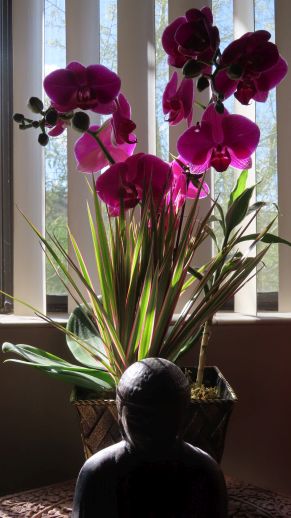
Lilies
Everything is alright
Orchids, Buddha
Sun and shade are alright
Neither sowing nor reaping
© 2024 by Bob Schwartz
Lilies
Everything is alright
Orchids, Buddha
Sun and shade are alright
Neither sowing nor reaping
© 2024 by Bob Schwartz
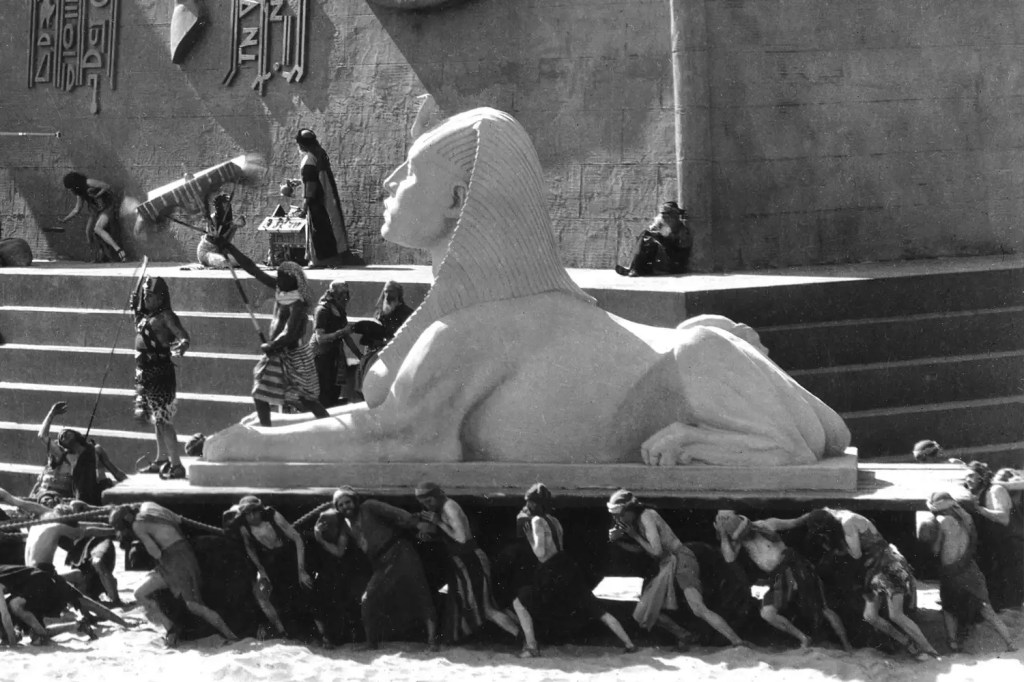
גֵ֖ר לֹ֣א תִלְחָ֑ץ וְאַתֶּ֗ם יְדַעְתֶּם֙ אֶת־נֶ֣פֶשׁ הַגֵּ֔ר כִּֽי־גֵרִ֥ים הֱיִיתֶ֖ם בְּאֶ֥רֶץ מִצְרָֽיִם׃
Exodus 23:9
One line from the Book of Exodus crystallizes our moment.
As with all biblical Hebrew, the translation is challenging and varied.
Exodus 23:9
You shall not oppress a stranger, for you know the feelings of the stranger, having yourselves been strangers in the land of Egypt. (NJPS)
You shall not oppress a resident alien; you know the heart of an alien, for you were aliens in the land of Egypt. (NRSV)
No sojourner shall you oppress, for you know the sojourner’s heart, since you were sojourners in the land of Egypt. (Robert Alter)
Alter addresses one of the translation challenges, the Hebrew word nefesh/נֶ֣פֶשׁ:
“The Hebrew is nefesh, “heart”, “life,” “inner nature,” “essential being,” “breath.””
Another word needing expansion is the Hebrew ger/גֵּ֔ר. Scholars Mark Allen Powell and Dennis R. Bratcher explain in the HarperCollins Bible Dictionary:
alien (ger): In the Bible, one who is not a member of a particular social group. Accordingly, Abraham was an alien (NRSV: “stranger”) among the Hittites at Hebron (Gen. 23:4), as were Moses in Midian (Exod. 2:22) and the Israelites in Egypt (Deut. 23:7; cf. Ruth 1:1). The Hebrew word is ger, and it has often been translated “sojourner” in English Bibles. The NRSV is inconsistent, translating it “alien” in some instances and “stranger” in others. After the settlement in Canaan, the term not only designated a temporary guest but also acquired the more specialized meaning of “resident alien,” one who lived permanently within Israel (Exod. 22:21; 23:9). No doubt because the Israelites were keenly aware of their own heritage as aliens without rights in a foreign land, they developed specific laws governing the treatment of aliens. Strangers or aliens were to be treated with kindness and generosity (Lev. 19:10, 33–34; 23:22; Deut. 14:29). The basic principle was, “You shall also love the stranger, for you were strangers in the land of Egypt” (Deut. 10:19). And, again, “You shall love the alien as yourself, for you were aliens in the land of Egypt” (Lev. 19:34)….
“Alien” or “stranger” also appears in a figurative sense, usually in appealing to the generosity and mercy of God in dealing with undeserving people (Pss. 39:12; 119:19; 1 Chron. 29:15). The idea of dwelling in a land owned by someone else is also applied theologically to the relationship of the Israelites to the land; it belonged to God and they were the strangers in it (Lev. 25:23). (emphasis added)
This Passover, we give a thought to the nefesh—heart, life, inner nature, essential being, breath—of the ger—stranger, sojourner, resident alien. As the Bible reminds us, we were strangers too.
Hag Pesach sameach.
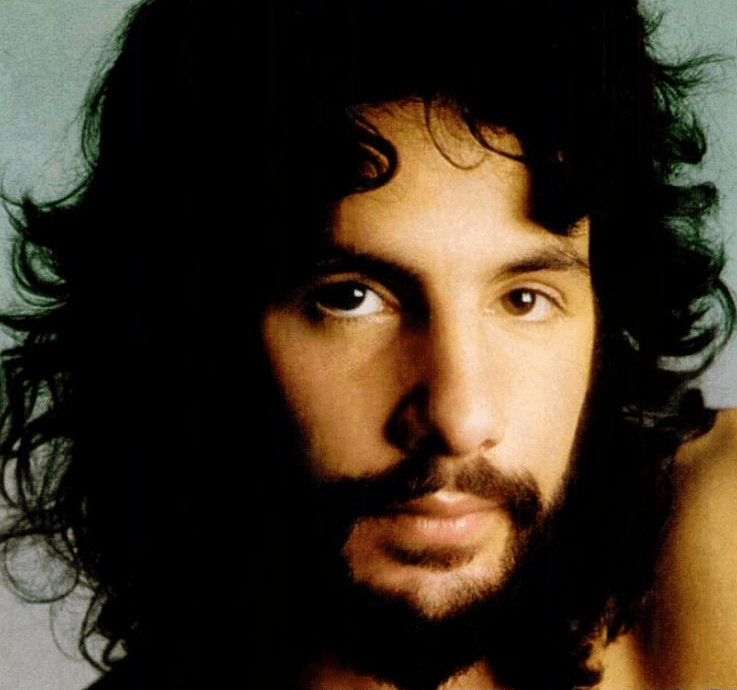
Where Do the Children Play? is the opening track on the fourth album by Yusuf / Cat Stevens, Tea for the Tillerman (1970). A beautiful simple profound song about the price of progress,
Well, I think it’s fine
Building jumbo planes
Or taking a ride on a cosmic train
Switch on summer from a slot machine
Get what you want to if you want
‘Cause you can get anything
Well, you roll on roads
Over fresh green grass
For your lorry loads
Pumping petrol gas
And you make them long
And you make them tough
But they just go on and on
And it seems that you can’t get off
Well, you’ve cracked the sky
Scrapers fill the air
But will you keep on building higher
‘Til there’s no more room up there?
Will you make us laugh?
Will you make us cry?
Will you tell us when to live?
Will you tell us when to die?
I know we’ve come a long way
We’re changing day to day
But tell me, where do the children play?

Passover begins on the evening of April 22, 2024.
Some people, Jews and others, believe that the Israeli strategy in Gaza is justified and that the deaths and suffering of innocent people are unfortunate collateral damage of an important goal. Some people, Jews and others, disagree.
One thing we all can agree on is that when people, especially children, suffer, justifiably or not, it is our duty to help relieve that suffering in any way we can. People of all religious traditions or none can agree on this.
The International Rescue Committee is one of the most respectable and responsible organizations in the world working on this:
The International Rescue Committee (IRC) helps people affected by humanitarian crises—including the climate crisis—to survive, recover and rebuild their lives.
Founded at the call of Albert Einstein in 1933, the IRC is now at work in over 50 crisis-affected countries as well as communities throughout Europe and the Americas.
As Jews, on Passover we recall how our storied ancestors suffered—under the hand of a wicked ruler, wandering in a desolate desert. As we have suffered and suffer still, how can we deny the suffering of others and fail to relieve it?
When the Israelites were starving in the desert, we are told that God provided manna:
In the desert the whole community grumbled against Moses and Aaron. The Israelites said to them, “If only we had died by the Lord’s hand in Egypt! There we sat around pots of meat and ate all the food we wanted, but you have brought us out into this desert to starve this entire assembly to death.” Then the Lord said to Moses, “I will rain down bread from heaven for you. The people are to go out each day and gather enough for that day. (Exodus 16:2-4)
We cannot wait for manna. It is up to you.
Please donate to International Rescue Committee. Chag Pesach sameach.

Francis Ford Coppola’s Apocalypse Now (1979) is regarded as an all-time great movie. Thought to be the best of many movies about the Vietnam War. To some, as great as his masterpiece Godfather movies.
It is more than a movie about the Vietnam War or about war. Inspired by Josef Conrad’s novella Heart of Darkness (1899), it is about how lost we can get on missions, no matter who we are or think we are, no matter how well or ill conceived, well or ill intentioned those missions are.
We are just people. As people we are irresistibly and inevitably prone to forces, inside and outside, seemingly controllable but ultimately uncontrollable, that drive us as we drift into terra incognita, unknown territory.
That is why to watch Apocalypse Now now. Right now.
One famous scene is the Air Cavalry descending on a Vietnamese village. The surfing colonel in charge blasts Wagner’s Ride of the Valkyries from the helicopters as they attack.
The soundtrack for the opening scene is The End by the Doors:
Lost in a Roman wilderness of pain
And all the children are insane
All the children are insane
Waiting for the summer rain

Elijah’s reward
Who wants to be a prophet?
Preaching and predicting
Making enemies of friends
Exhausted and enraged
By the constant gloom
Dying alone in the end.
Except Elijah.
Attending dinner parties
Seated in a special chair
As honored guest
Surrounded by admirers
Drunk on wine
Leaving bleak visions behind
Never dying.
Open the door.
© 2024 by Bob Schwartz

Blue gray
Black sky to blue gray
One bird begins to sing
Others join
More plentiful
Than stars in the black sky
© 2024 by Bob Schwartz

It is obvious to feature Pink Floyd’s Dark Side of the Moon for an eclipse soundtrack. The final track is called Eclipse so yeah, duh. And of course it is an awesome record. But listing it is so lazy that it hurts.
Instead I started today with Donovan and his song Sun. Donovan has 1.7 million Spotify monthly listeners so he isn’t quite as forgotten as some others. He is still performing and recording, and he long ago brought spirit and the spirit of the times to popular music in lyrical and listenable ways.
Sun is only one of the many Donovan songs that includes the sun. His most famous hit song (#1 in America) is Sunshine Superman:
Sunshine came softly through my a-window today
Could’ve tripped out easy but I’ve changed my ways
There are other examples of sun-related songs by Donovan. But Sun is the one for today.
Sun, the earth is turning
It’s turning round
And love is the axis
And they chop the tree down
The proud trees are standing
As green as the sky
As green as the greenstone
That makes seabirds fly
Ovens are baking
And rivers run dry
As dry as the ocean
On the wings of a fly
Go if you’re able
And come if you can
Life’s very unstable
It’s built upon sand
Well, Marianne, set the table
An old friend I see
Marianne, fetch the paper
There’s two for tea

Among Freud’s most controversial and often rejected concepts is what he termed Todestrieb—death drive—also fashioned as Thanatos—death instinct. Death drive or instinct, he proposes that as people we aim to reduce psychic tension to the lowest possible point, that is, death. Supposedly the drive is first directed inward as a self-destructive tendency and later turned outward in the form of the aggressive behavior. It stands opposed to the life instinct, Eros.
A total solar eclipse is a rare and spectacular event that has fascinated and enraptured humankind forever. The rarity of the spectacle is alone enough to explain the interest. Images won’t do. Just like attending a concert by a favorite performer is so much more than remotely listening and watching. Being there in the flesh as a participant is needed. The difference between pornography and sex.
But maybe more is at play. Maybe watching the sun go out, even for minutes, means something, or everything. Maybe, as R.E.M. sings, “It’s the end of the world as we know it and I feel fine.” Maybe we want to see it and, if possible, be there when it happens.
Freud can no longer help us with this because, death drive or not, he succumbed to the death reality eighty-five years ago in 1939. (Note that he missed seeing a total eclipse that happened just a couple of weeks later.)
There is another more uplifting explanation. Maybe we want to experience the sun going out so we can experience the sun coming back to life. People don’t want to watch the eclipse—they want to watch the eclipse ending. They want the victory of eros. They want to be there for that. Who can blame them?
© 2024 by Bob Schwartz
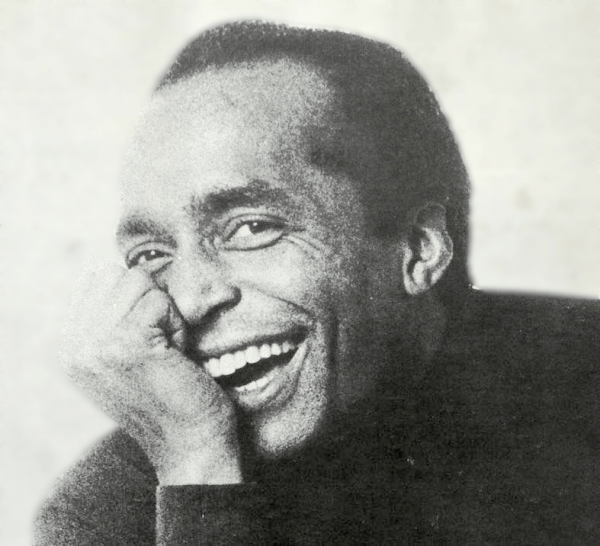
”When are we going to learn that controlling something does not take it out of the minds of people?”
Rosko
I was going to write today about radio. How it was a social medium for a generation, how formative it was for me.
I listened today to recordings of radio shows and personalities that I listened to growing up in New York, first thing in the morning to last thing doing homework and falling asleep. Today I touched base with some of the radio stations (found at http://www.nyradioarchive.com).
One standout station was WNEW-FM. In the late 1960s, it reformed from mainstream music to progressive anything and everything. The station personalities changed too. Among them was Alison Steele, the Nightbird. And then there was Rosko.
It wasn’t just Rosko’s inimitable voice at night. It was his sensibility, musical and otherwise. As the New York Times obituary below reflects.
Listen to an hour of Rosko from November 27, 1967. If this is distant history for you, listen without prejudice, and you will hear great music and a radically humane radio personality.
Rosko Is Dead
By Jon Pareles
New York Times
Aug. 6, 2000
William Roscoe Mercer, known for decades to New York radio listeners simply as Rosko, died on Tuesday. He was 73 and lived in New York.
The cause was cancer, according to his daughter Valerie J. Mercer.
Mr. Mercer was the first black news announcer on WINS in New York and, as Rosko, the first black disc jockey on KBLA in Los Angeles. He went on to become a pioneer of free-form FM radio in New York City. On WOR-FM in 1966 and on WNEW-FM from 1967 to 1970, his calm, husky voice with its hint of Southern drawl and his wide-ranging programming made him an authoritative companion amid the musical ferment of the late 1960’s.
He delved into rock, soul, folk and jazz; he read poetry and conversed with his unseen listeners in almost fatherly monologues. In one set during the late 1960’s, he recited antiwar poetry by Yevgeny Yevtushenko to the Mormon Tabernacle Choir singing the Lord’s Prayer, then played Richie Havens’s antiwar song ”Handsome Johnny” as a lead-in to a news report about bombing in Vietnam.
Mr. Mercer was born on May 25, 1927, in New York City and attended a Catholic boarding school in Pennsylvania as a charity student. His first jobs were as a government clerk and then a men’s-room attendant at the Latin Casino in Cherry Hill, N.J. He began his radio career as a jazz disc jockey at WHAT in Chester, Pa., moved to WDAS in Philadelphia, and then to WBLS in New York, playing jazz in live broadcasts from Palm Cafe in Manhattan. He played rhythm-and-blues on WNJR in Secaucus, N.J., in the late 1950’s, but after refusing to cross a picket line at the station during an effort to create a union for disc jockeys, he was blacklisted for six months.
He became the first black announcer for WINS, and was then hired as a disc jockey by KDIA in Oakland, Calif. Radio station KGFJ in Los Angeles sought to hire him away, leading to a precedent-setting lawsuit that changed the way disc-jockey contracts were written. For a time in the early 1960’s, Rosko was heard live on KGFJ and on tape in Oakland six nights a week; he spent the seventh in Oakland, live on KDIA. Then he was hired by KBLA, playing rock and rhythm-and-blues at a formerly all-white station.
He returned to New York to work at WBLS. In 1966, the Federal Communications Commission required radio stations to broadcast separate content on AM and FM stations, and rock music beyond the Top 40 rushed to fill the new air time. The disc jockeys Murray the K and Scott Muni, along with Rosko, moved to WOR-FM to introduce a new style, with disc jockeys freely choosing the music and speaking conversationally to listeners.
But in October 1967, WOR-FM decided to change to a restrictive format. On his last show, without warning the station’s management, Rosko spoke for five minutes about why he was resigning, saying, ”When are we going to learn that controlling something does not take it out of the minds of people?” and declaring, ”In no way can I feel that I can continue my radio career by being dishonest with you.” He added that he would rather return to being a men’s-room attendant.
But within the month, he was hired for an evening shift by WNEW-FM, which picked up WOR-FM’s format; soon afterward, WNEW-FM also hired Mr. Muni. Rosko stayed at WNEW until 1970, then moved to France for five years; there, he worked for the Voice of America. He returned to the United States and was heard during the 1980’s on the dance-music station WKTU in New York; he also did voice-over work for commercials. Most recently, his voice was heard in announcements for CBS Sports. In 1992, when he learned he had cancer, he refused chemotherapy, turning instead to alternative medicine.
 Bob Schwartz