Bob Schwartz

Category: World

Obama Must Renounce His Hawaiian Citizenship

Ted Cruz Birth Certificate

Now that we’ve (mostly) agreed that Barack Obama was born in Hawaii, there’s one final step: he must renounce his Hawaiian citizenship to legitimately serve as President of the United States.

That’s actually not right. Hawaii was a state when Obama was born there, and before that, it was an American territory (remember Pearl Harbor?).

But it is a splashy way to introduce the latest chapter in the story of Ted Cruz as possible presidential candidate.

Ted Cruz, U.S. Senator from Texas, was born in Calgary, Alberta, Canada to an American mother. The question of whether he is qualified to be President arises from Article Two, Section 1 of the U.S. Constitution, which restricts the presidency to “natural born Citizen[s]”. Even though there has been a colloquial understanding that this means “born in the U.S.A.”, the point has never been litigated, and there is a growing sense that it simply means born American, rather than naturalized.

There is no dispute that Cruz was an American citizen at birth, being born of an American citizen, even if abroad. But after he released his birth certificate this weekend (see above), to answer speculation that he might not be qualified, a new wrinkle has cropped up. As indisputably as he is an American citizen, it now appears that he is—at this very moment—also a Canadian citizen. A number of experts on Canadian law are making it clear that when you are born in Canada, citizenship is automatic. You can renounce it later on if you choose, as some do. But right now, Cruz is both an American and Canadian citizen, able to vote in Canadian elections and even run for office there. (Note how weirdly complicated this would have been had he been born there before 1947, when his birth would have made him both an American citizen and a British subject: God Save the Queen.)

It isn’t clear whether Cruz has long known he was also a Canadian citizen, whether he secretly participates in Canadian ceremonies, whether he privately exhibits the legendary Canadian civility and sensibility, whether his support of the XL Pipeline was specially motivated, whether his plan to bring the U.S. government to a halt is meant to make his Canadian homeland look better by comparison, whether he still has feelings for Her Royal Highness, given that he is a citizen of the Commonwealth, if not the United Kingdom.

There is a political issue here, though one that Cruz might be able to turn to his advantage. He might be able to continue his Senate role as a dual citizen (at least it’s Canada, not Russia), but the presidency is another matter. If he does choose to renounce, he could do it on an ideological basis, pointing out how the socialist leanings of his homeland to the north have left it far behind the achievements of free market America, and how, unless America is careful, it will end up exactly like Canada—the land he chose to leave at the age of four, precisely because he knew that America was the true land of freedom and opportunity. Not to mention a whole lot warmer, particularly in Texas.

Kate’s Baby

Rosemary's Baby

Meaning no disrespect (and if in any way disrespectful, hopefully less so than ten thousand other privacy-invading media sources). For some reason, the frenzy surrounding every detail of the birth of Kate Middleton’s baby, heir to the British throne, brought to mind the final scene of the movie Rosemary’s Baby.

For those who haven’t seen Roman Polanski’s masterful study of subtle scariness—as good as any Hitchcock—the simple plot explanation is that Rosemary’s husband has made a deal with the devil. He will succeed as an actor and his wife will, unwittingly, give birth to the devil’s baby. The entire local satanic coven dotes on her pregnancy, and when the baby is born, they show up en masse to take photos and rejoice at the prospect of a new leader.

Once again, no disrespect, no suggestion that Prince William is the devil or that Kate is implicated in any arcane and complex birth ritual that goes back centuries. This is a bright, happy and hopefully healthy occasion. It’s just a thought.

Duran Adam in Turkey

Duran Adam
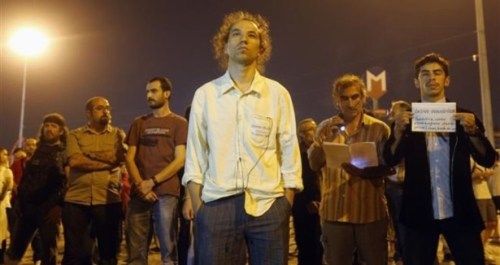
He is “duran adam”—the standing man. On Monday, Erdem Gunduz stood still for hours in Istanbul’s Taksim Square, staring at a public portrait of Kemal Ataturk, to protest the latest ban on demonstrations. Others joined him, as the image went national and then global. Police moved in: he was able to walk away and escape arrest, others didn’t.

As pointed out in a previous post, we should pay attention to Turkey because it is so special and so different than our preconceptions of what the world is and how it works. It is certainly a democracy today, but has not always been, and not quite what we think of as a democracy. It is certainly a Muslim country, but has not always been, and not quite what we think of as a Muslim country.

Whether Prime Minister Erdogan has been too long in office, whether he is taking Turkey in directions that defy many citizens and the ideals of Ataturk, whether he is truly a democrat, are things to be determined.

It is clear that he has crossed the line between firm response and heavy-handed overreach. It is clear that he is facing the quandary of all reformers, real or putative: your practice of reform is never the only game in town, and others have very different ideas. Most of all, Erdogan, like many leaders, seems to have no idea what he is dealing with, so he is under the impression that power is always the trump card.

He is half right. Power is always the trump card, but it is hard to know exactly which kind of power you are talking about or having to deal with. Is one man standing a power? What about a thousand people, or a million? History tells us that you can jail the thousands and even kill the millions. But as long as there are witnesses, might still is forced to co-exist with right, even when might wins.

The difference between witnessing and watching is a fine line. As this spreads, we will see if the media have the courage to cover a bunch of people just standing still. The media seem to like their reality shows with a little more action. Fortunately, the people’s media, the social media, may have more tolerance and a longer attention span. If you look long enough, standing still starts looking like moving forward, and that gets people really excited. It is how for millennia, from Christian origins through Gandhi through the civil right movement and on and on, nothing seemed to turn into something—because it was always something.

It was a standing man, that would not be moved.

Istanbul Spring

Today's Zaman
O Istanbul. Crown jewel and epicenter of Turkey. Literal crossroad of the world, east and west. Beloved city of many world travelers, who find themselves immersed in a multi-millennial mix of cultures. In Istanbul, you are simultaneously located and dislocated in geography and time.

The hours of coverage of the clashes in Taksim Square will not make this quite clear. Protests against the demolition of Gezi Park, one of the last green spaces in modern growing Istanbul, ripened into broader complaint about the direction of the democratically-elected government of Prime Minister Recip Tayyip Erdogan.

Today in Taksim, Erdogan acted on his threatend lost patience, setting the police on occupying protestors, whom he believes to have been infiltrated by violent political activists and radicals. Tear gas, water cannons, and other dispersal techniques followed.

Turkey—and particularly its world-class city Istanbul—does not fit easily in any of the usual boxes. The anomaly is the work of a single man, a visionary autocrat who managed to give autocracy a good name, who took one of the most culturally rich but tradition-bound countries in the world and pushed/dragged it into the twentieth century.

Mustafa Kemal Ataturk (1881-1938) disrupted and redirected a country’s trajectory as few have ever done. First President of the Republic of Turkey, and still almost a god-like presence, he was determined to see Turkey regain its former glory not by looking backward but by moving forward and becoming a modern, secular, European-style democracy. Along with universal education and changing the way that people dressed (he banned the fez, for example), he literally changed the language, reformatting Turkish with a Roman alphabet.

It worked for the most part, though with sporadic gaps. The old and the new live comfortably and excitingly with each other, as a visit to Istanbul demonstrates. Turkey is thriving. Those whose image of Islam is informed by skewed sketches find one of the world’s most Muslim countries defying stereotypes.

Democracy has been an on-again, off-again phenomenon in Turkey. As the twentieth century crept into the twenty-first, the progress that Ataturk enabled led to expectations that would not be denied. The rise of Islamism and traditionalism under the current leadership, even as Erdogan pushed important reform, does not sit well with a generation—again particularly in Istanbul—that takes secularism, modern culture and principles of freedom very seriously.

That is how we get here today. Even as Prime Minister Erdogan was intent on ending the occupation of Taksim Square, dozens of lawyers joined in and were arrested at the courthouse. These tensions are nothing new for Turkey; the military has been in charge more than once, and was then turned out. What is new is how much of the world is watching.

This isn’t about whether a little city park in Istanbul should make way for a shopping center, or whether drinking alcohol should be restricted in Turkey (another issue that has seeped into the discussion). It isn’t the same as other “springs”, Prague or Arab, about moving from dictatorship to democracy. This is a democracy already, one of the most interesting in the world. We are watching the kind of challenges that twenty-first century democracies will be facing, and seeing whether purportedly enlightened leaders can find appropriate ways of meeting them. For the sake of Turkey, and especially for the sake of glorious Istanbul, let’s hope so.

Istanbul

198 Ways to Make Change

Gene Sharp
The Albert Einstein Institution may be the most important organization you’ve never heard of, and Gene Sharp may be the most important person. Since 1983, he has dedicated himself to advancing the study and use of strategic nonviolent action in conflicts throughout the world.

These are just a few of the headlines he has garnered in the past year or so:

The New Statesman – Gene Sharp: The Machiavelli of non-violence.
The Progressive – Nonviolence Strategist Gets Deserved Recognition.
Deutsche Welle – Alternative Nobel Winner says non-violence works.
The New York Times – The Quiet American.
CNN – Gene Sharp: A dictator’s worst nightmare.
The Nation – Gene Sharp, Nonviolent Warrior.
The Boston Globe – Sharp: The man who changed the world.

His book From Dictatorship to Democracy is an introduction to the use of nonviolent action to change regimes. It has been translated into seventeen languages and has served as a pro-democracy guide for movements around the world. This and other books are available free for download on the website.

Even if you are not living in a dictatorship and are not planning to topple a government, you will find a very small and very valuable item at AEI. Think of it as a jewel of social action. It is a two-page list of 198 Methods of Nonviolent Action. You will find the list below.

For those who want to make change, big or small, the keys are commitment and creativity. We’ve seen some inspired actions take hold. We’ve also seen some well-meaning initiatives pop-up and die almost as quickly. There is no blame in this. Sometimes all that’s needed is a fresh spring wind to revive the spirit of change.

This list is that spring wind. Look it over. This may go without saying, but be well aware that a number of these actions are obviously aimed at a serious lack of or breach of democracy, and are appropriately serious for those situations. All of them necessarily involve social, economic, legal, moral and ethical issues that must be considered. Maybe you will find something to do. Maybe you won’t do anything, but will be uplifted by knowing that such things can be done, have been done, and have moved communities and whole nations—today, in this very world—a little way along a path to freedom and justice.

198 Methods of Nonviolent Action
Albert Einstein Institution

The Methods of Nonviolent Protest and Persuasion

Formal Statements
1. Public Speeches
2. Letters of opposition or support
3. Declarations by organizations and institutions
4. Signed public statements
5. Declarations of indictment and intention
6. Group or mass petitions

Communications with a Wider Audience
7. Slogans, caricatures, and symbols
8. Banners, posters, displayed communications
9. Leaflets, pamphlets, and books
10. Newspapers and journals
11. Records, radio, and television
12. Skywriting and earthwriting

Group Representations
13. Deputations
14. Mock awards
15. Group lobbying
16. Picketing
17. Mock elections

Symbolic Public Acts
18. Displays of flags and symbolic colors
19. Wearing of symbols
20. Prayer and worship
21. Delivering symbolic objects
22. Protest disrobings
23. Destruction of own property
24. Symbolic lights
25. Displays of portraits
26. Paint as protest
27. New signs and names
28. Symbolic sounds
29. Symbolic reclamations
30. Rude gestures

Pressures on Individuals
31. “Haunting” officials
32. Taunting officials
33. Fraternization
34. Vigils

Drama and Music
35. Humorous skits and pranks
36. Performances of plays and music
37. Singing

Processions
38. Marches
39. Parades
40. Religious processions
41. Pilgrimages
42. Motorcades

Honoring the Dead
43. Political mourning
44. Mock funerals
45. Demonstrative funerals
46. Homage at burial places

Public Assemblies
47. Assemblies of protest or support
48. Protest meetings
49. Camouflaged meetings of protest
50. Teach-ins

Withdrawal and Renunciation
51. Walk-outs
52. Silence
53. Renouncing honors
54. Turning one’s back

The Methods Of Social Noncooperation

Ostracism of Persons
55. Social boycott
56. Selective social boycott
57. Lysistratic nonaction
58. Excommunication
59. Interdict

Noncooperation with Social Events, Customs, and Institutions
60. Suspension of social and sports activities
61. Boycott of social affairs
62. Student strike
63. Social disobedience
64. Withdrawal from social institutions

Withdrawal from the Social System
65. Stay-at-home
66. Total personal noncooperation
67. “Flight” of workers
68. Sanctuary
69. Collective disappearance
70. Protest emigration (hijrat)

The Methods of Economic Noncooperation: Economic Boycotts

Actions by Consumers
71. Consumers’ boycott
72. Nonconsumption of boycotted goods
73. Policy of austerity
74. Rent withholding
75. Refusal to rent
76. National consumers’ boycott
77. International consumers’ boycott

Action by Workers and Producers
78. Workmen’s boycott
79. Producers’ boycott

Action by Middlemen
80. Suppliers’ and handlers’ boycott

Action by Owners and Management
81. Traders’ boycott
82. Refusal to let or sell property
83. Lockout
84. Refusal of industrial assistance
85. Merchants’ “general strike”

Action by Holders of Financial Resources
86. Withdrawal of bank deposits
87. Refusal to pay fees, dues, and assessments
88. Refusal to pay debts or interest
89. Severance of funds and credit
90. Revenue refusal
91. Refusal of a government’s money

Action by Governments
92. Domestic embargo
93. Blacklisting of traders
94. International sellers’ embargo
95. International buyers’ embargo
96. International trade embargo

The Methods Of Economic Noncooperation: The Strike

Symbolic Strikes
97. Protest strike
98. Quickie walkout (lightning strike)

Agricultural Strikes
99. Peasant strike
100. Farm Workers’ strike

Strikes by Special Groups
101. Refusal of impressed labor
102. Prisoners’ strike
103. Craft strike
104. Professional strike

Ordinary Industrial Strikes
105. Establishment strike
106. Industry strike
107. Sympathetic strike

Restricted Strikes
108. Detailed strike
109. Bumper strike
110. Slowdown strike
111. Working-to-rule strike
112. Reporting “sick” (sick-in)
113. Strike by resignation
114. Limited strike
115. Selective strike

Multi-Industry Strikes
116. Generalized strike
117. General strike

Combination of Strikes and Economic Closures
118. Hartal
119. Economic shutdown

The Methods Of Political Noncooperation

Rejection of Authority
120. Withholding or withdrawal of allegiance
121. Refusal of public support
122. Literature and speeches advocating resistance

Citizens’ Noncooperation with Government
123. Boycott of legislative bodies
124. Boycott of elections
125. Boycott of government employment and positions
126. Boycott of government depts., agencies, and other bodies
127. Withdrawal from government educational institutions
128. Boycott of government-supported organizations
129. Refusal of assistance to enforcement agents
130. Removal of own signs and placemarks
131. Refusal to accept appointed officials
132. Refusal to dissolve existing institutions

Citizens’ Alternatives to Obedience
133. Reluctant and slow compliance
134. Nonobedience in absence of direct supervision
135. Popular nonobedience
136. Disguised disobedience
137. Refusal of an assemblage or meeting to disperse
138. Sitdown
139. Noncooperation with conscription and deportation
140. Hiding, escape, and false identities
141. Civil disobedience of “illegitimate” laws

Action by Government Personnel
142. Selective refusal of assistance by government aides
143. Blocking of lines of command and information
144. Stalling and obstruction
145. General administrative noncooperation
146. Judicial noncooperation
147. Deliberate inefficiency and selective noncooperation by enforcement agents
148. Mutiny

Domestic Governmental Action
149. Quasi-legal evasions and delays
150. Noncooperation by constituent governmental units

International Governmental Action
151. Changes in diplomatic and other representations
152. Delay and cancellation of diplomatic events
153. Withholding of diplomatic recognition
154. Severance of diplomatic relations
155. Withdrawal from international organizations
156. Refusal of membership in international bodies
157. Expulsion from international organizations

The Methods Of Nonviolent Intervention

Psychological Intervention
158. Self-exposure to the elements
159. The fast
a) Fast of moral pressure
b) Hunger strike
c) Satyagrahic fast
160. Reverse trial
161. Nonviolent harassment

Physical Intervention
162. Sit-in
163. Stand-in
164. Ride-in
165. Wade-in
166. Mill-in
167. Pray-in
168. Nonviolent raids
169. Nonviolent air raids
170. Nonviolent invasion
171. Nonviolent interjection
172. Nonviolent obstruction
173. Nonviolent occupation

Social Intervention
174. Establishing new social patterns
175. Overloading of facilities
176. Stall-in
177. Speak-in
178. Guerrilla theater
179. Alternative social institutions
180. Alternative communication system

Economic Intervention
181. Reverse strike
182. Stay-in strike
183. Nonviolent land seizure
184. Defiance of blockades
185. Politically motivated counterfeiting
186. Preclusive purchasing
187. Seizure of assets
188. Dumping
189. Selective patronage
190. Alternative markets
191. Alternative transportation systems
192. Alternative economic institutions

Political Intervention
193. Overloading of administrative systems
194. Disclosing identities of secret agents
195. Seeking imprisonment
196. Civil disobedience of “neutral” laws
197. Work-on without collaboration
198. Dual sovereignty and parallel government

Dennis Rodman Fired from Council on Foreign Relations

Dennis Rodman
For the record, that headline is a joke.

Former NBA Star Dennis Rodman has never been a member of the Council on Foreign Relations, either before or after his surreal visit with Kim Jung Un in North Korea. The CFR says, “With nearly 4,700 members and term members, CFR’s roster includes top government officials, renowned scholars, business leaders, acclaimed journalists, prominent lawyers, and distinguished nonprofit professionals.” Dennis Rodman is not one of those.

If you have followed the story of Rodman’s North Korean visit, you may be amused.

If you have not, please do not spend a single brain cell on learning anything more. If you want any engagement at all, just take a look at the photo above of Dennis Rodman in a wedding dress (he was not getting married). Consider that he is one of the biggest stories in America today, at least for fifteen minutes. Then consider why we have difficulty solving real problems.

Have Morsy Morsi Mursi


It is Gadhafi, Qaddafi, Kadafi, Gaddafi, Gadafy all over again. Except that the former Prime Minister of Libya is dead, while the President of neighboring Egypt is very much alive and at the center of global affairs.

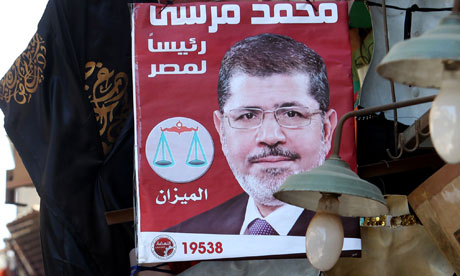
The English version of the official Egyptian information website lists the President as Mohammad Mohamed Morsy al-Ayat. That is the way they are writing the name in the Latin alphabet. And therein lies a problem.

Egypt, Libya and most other countries in the region are Arabic-speaking and Arabic-writing. As with Hebrew—another important language in the region, though with far fewer speakers—transliterating the words into English spelling and vocalization is an adventure, and sometimes a pretty imprecise task.

News organizations seem to have settled on a consensus for the spelling of his first name as Mohamed—though as one of the most popular names in the world, it has naturally led to variants including Mohammad, Muhammad, Muhamme, Mohamed, Mohammed.

(For language junkies, other common Arabic names share the three-consonant root of  H-M-D, meaning “praise.” This is at the base of many commonly-heard names beside Mohamed, including Hamid, Ahmed, Mahmud, and others that are often in the news.)

What news organizations can’t seem to agree on is how to spell the President’s last name. As mentioned, the official Egyptian site says “Morsy,” so CNN, Time and a few others are going that way. The BBC and Reuters have decided on “Mursi” (it must be a Brit thing, some special privilege left over from colonial days, though the BBC has taken the extra step of adding an “m” to his first name: Mohammed).

By and large though, according to the New York Times and most others, the President of Egypt is Mohamed Morsi.

Does it matter? How we deal with him and his country matters much more in this dynamic time than how we spell his name in English, just as it is more important to act wisely than to spell correctly when dealing with China or any of the other countries that don’t speak English and don’t even bother to use our alphabet. It’s just a nice lesson in globalism, about how what we know is small compared to what we have to learn.

“Will No One Rid Us of This Genocidal Leader?”

When Thomas Becket, Archbishop of Canterbury, stood in the way of Henry II of England, reports are that the king uttered these words: “Will no one rid me of this turbulent priest?” Henry’s men took this not as an idle wish but as a command, and killed Becket.

Except in times of war (which has taken on an ever fuzzier meaning), the assassination of world leaders risks crossing all kinds of legal, moral, and political lines, not to mention its assault on national sovereignty and its likelihood to incite new problems and precedents as it resolves old ones.

Nevertheless, even the most humane among us – or especially the most humane – may be heard to paraphrase good King Henry regarding Syria: “Will no one rid us of this of this genocidal leader?”

Sad to say that Syria today may not even be the worst we’ve seen in recent years. But there is some quality about it, perhaps the arrogance and impunity of Assad, perhaps the daily display of malevolent slaughter, which sets this one apart.

It would not be surprising to learn that in the corridors of power, behind closed doors, a “wish” like that is being made. In the front rooms idealistic but unworkable peace plans are being announced, but maybe in some back rooms there is talk about the pragmatics and consequences of “ridding.”

You have to be careful what you wish for, since wish fulfillment can carry high and unexpected prices. But for some, particularly those living in daily fear of annihilation and mayhem, the price may be worth it if certain wishes do come true.

Can Israel Stop the Syrian Genocide?

Can Israel stop the Syrian genocide? On its face, the question seems practically preposterous and crazy. But at its heart, the question has a right resonance.

Argue about conflict and aggression, current and historic, argue about religion, argue about appropriation, argue about morals and equities, but Israel remains the standard bearer and source of a tradition of forceful global compassion. On top of that, the existence of modern Israel is grounded in the repudiation of one of history’s most notorious genocides—it was the Holocaust that in part gave rise to the term itself.

Is there any practical expression of this, at this moment, in that neighborhood, that makes any sense or would not worsen rather than better situations? Almost certainly not. But in a world and region that continues to exhibit madness, maybe moments of crazy wisdom are what we need to break through. Because whatever we are doing isn’t working.