Bob Schwartz

Category: War

Syria: Things Fall Apart

I just checked to see how many posts I’ve published about or mentioning Syria. Twenty in the last four years.

Just when you think it couldn’t get worse, it does. When you think that nobody has “the answer” you are proven right. Again.

The oldest of the posts is Can Israel Stop the Syrian Genocide? (“Can Israel stop the Syrian genocide? On its face, the question seems practically preposterous and crazy….But in a world and region that continues to exhibit madness, maybe moments of crazy wisdom are what we need to break through. Because whatever we are doing isn’t working.”)

Of course, Israel wasn’t about to stop the Syrian madness, and hasn’t. Neither have we or any other nation, and neither are we or any other nation sure what to do—not only to stop the madness but to relieve the ongoing dismal and heartbreaking aftermath.

So we watch. It’s not the first time in our lifetimes, or in history, that good people have stood by uncertainly at the sight of spiraling tragedy and could not act or figure out what to do.

William Butler Yeats wrote The Second Coming in 1919, as the madness of World War I was just ended and the madness of the Irish War of Independence was just beginning. “Things fall apart; the centre cannot hold.” As Yeats saw it, one cycle was ending in utter darkness, but there was the possibility of light appearing again in history, as it had before.

This is a season of light for many people, but in Syria it is getting darker every day. We will do what we can, but if we and our leaders can do nothing, we can at least keep Syria in our hearts, right next to a burning light.

The Second Coming

Turning and turning in the widening gyre
The falcon cannot hear the falconer;
Things fall apart; the centre cannot hold;
Mere anarchy is loosed upon the world,
The blood-dimmed tide is loosed, and everywhere
The ceremony of innocence is drowned;
The best lack all conviction, while the worst
Are full of passionate intensity.

Surely some revelation is at hand;
Surely the Second Coming is at hand.
The Second Coming! Hardly are those words out
When a vast image out of Spiritus Mundi
Troubles my sight: somewhere in sands of the desert
A shape with lion body and the head of a man,
A gaze blank and pitiless as the sun,
Is moving its slow thighs, while all about it
Reel shadows of the indignant desert birds.
The darkness drops again; but now I know
That twenty centuries of stony sleep
Were vexed to nightmare by a rocking cradle,
And what rough beast, its hour come round at last,
Slouches towards Bethlehem to be born?

Veterans Day and Operation Unite America

veterans-day

Friday, November 11 is Veterans Day, which this year arrives during the same week as Election Day (you remember that day, don’t you?)

The great Iraq and Afghanistan Veterans of America (IAVA) has organized Operation Unite America:

Veterans Day 2016 is just 3 days after Election Day. Join IAVA’s campaign to do the impossible: bring together all Americans.

After a long, brutal and disgusting election season, everyone’s had it. It hasn’t been a good look for America. Everyone is exhausted–many are outright embarrassed. But Republican, Democrat, Independent, Other…we’re ALL sick of the bickering, the commercials, the debates, the politics, the fighting.

Here is your mission (if you choose to accept it!), JOIN US:

Tag your Veterans Day activities on social media with #veteransday

Donate $11 to IAVA to help us support veterans

Attend a #veteransday #VetTogether


tammy-duckworth

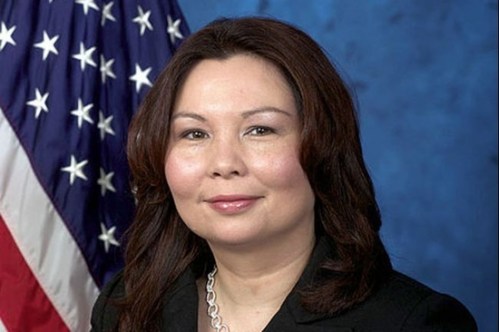
In the wake of Election Day, it is happy news to report that Rep. Tammy Duckworth of Illinois won a seat in the U.S. Senate. She is an Iraq War veteran, awarded the Purple Heart after losing both her legs. She joins a number of women warriors in Congress, which needs more women and more experienced warriors who know how to choose our wars carefully. And who will take good care of other warriors when they come home.

Another Cool Way to Show Support for Our Veterans

IAVA Lifeline Flex

I’ve written a number of times before about veterans issues and about the Iraq & Afghanistan Veterans of America (IAVA), which last month sponsored a televised Commander-in-Chief Forum featuring the presidential candidates.

It is an old song, but worth repeating. Our treatment of those we have asked to fight is a national shame. If we don’t want to fight and defend, and don’t ask others to do the job for us, fine. Peace is wonderful. But once we ask, we have to provide virtually infinite support for those who answer. This should be at the top of any policy priority list, because it is a moral test, not a partisan talking point. For a grade, I’d consider giving us an E for Effort, but really, it’s more like an F.

If you want to show your support, IAVA has a very cool and inexpensive wearable. It’s the IAVA Lifeline Flex:

IAVA Lifeline Flex
$14.99

Iraq & Afghanistan Veterans of America (IAVA) Lifeline Flex in Night Vision Yellow and Black with engraved logo on a metal toggle clasp. Hand-wound from the same 550 lb tested parachute chord used in WWII to attach men to their chutes, these cuffs give you up to 15ft of usable paracord when unwound. Not just an all purpose survival tool, the 550 cord also looks killer on your wrist. Don’t leave home without one of these killer bracelets.

ITEM DETAILS:
Hand-wound from military grade 550 cord
One size fits all “Flex” interior with IAVA closure clasp

Four Freedoms Passover

Four Freedoms - Norman Rockwell

Passover is coming. The first seder meal will be held on the evening of Friday, April 22. Even for non-observant Jews, this holiday is frequently a time for participation. One estimate says that 80% of Jews attend some sort of seder.

This year I suggest we go way back for a Passover theme. Back to FDR’s Four Freedoms from 1941.

The overall order of the seder (“seder” actually means order) has been standardized for centuries—the blessings, the rituals, the symbolic food and drink, the songs, and most of all, the recitation of the events of the exodus from Egypt. But the text and the form and the meaning have been subject to remixing, some of it pretty adventurous.

In the modern era, the freedom embedded in Passover has been extended to all sorts of concerns. During the time of the civil rights movement, the obvious connection was made between ancient and modern oppression, and the struggle to end that oppression.

In 1969 Rabbi Arthur Waskow created a Freedom Seder, making this connection more direct. He explains:

One of my earliest and warmest memories is that of my father reciting the Dayenu, the chant of rebellion, liberation, travail, and the creation of a new law that is the story of Passover. One of my latest and warmest memories is that of working with my wife and children to make of our own Passover Seder something that would speak to our deep concerns about our selves and our world.

Our efforts became sharper and more urgent in 1968, when the Passover came one bare week after the murder of Martin Luther King, the April uprising of black Washington against the blank-eyed pyramid-builders of our own time, and the military occupation of our city. Who in
those days could forget that the prophet King had remembered Moses?– had spoken of how he had been to the mountain-top, had seen the promised land, but might never enter. … And then we realized that in 1969, the third night of Passover, April 4, would be the first anniversary of King’s death.

Since then, Passover has become the platform for seders centered around all kinds of affliction, oppression, aspiration and freedom. Women. LGBT. Poverty. Peace. The Earth. And so on.

One example of this concerns a new tradition that is widely practiced. The seder plate contains a number of foods symbolizing the story of the Egyptian captivity and the fight for freedom. Susannah Heschel conceived of one more thing to add:

So how was it that the orange found its place on the seder plate as a Passover symbol of feminism and women’s rights?

Susannah Heschel, daughter of Abraham Joshua Heschel and a scholar in her own right, says that at the height of the Jewish feminist movement of the 1980s, she was inspired by the abundant new customs expressing women’s viewpoints and experiences and started placing an orange on the seder plate.

At an early point in the seder, she asked each person to take a segment of the orange, make the blessing over fruit and eat the segment in recognition of gay and lesbian Jews and of widows, orphans, Jews who are adopted and all others who sometimes feel marginalized in the Jewish community. She encouraged each guest to spit out the seeds in their orange segment to reject homophobia and hatred. The orange suggests the fruitfulness for all Jews when everyone in our community is a contributing and active member of Jewish life. (From The Wandering Is Over Haggadah, JewishBoston.com)

On January 6, 1941 President Franklin D. Roosevelt delivered an historic State of the Union Address. The world was increasingly gripped by brutal tyranny. On top of that, America was still recovering from the effects of the Great Depression. And it seemed almost impossible for the U.S. to stay out of the global fight for freedom.

In the address, FDR summarized what freedom meant—and why we would fight for it, here and abroad. That statement became known as the Four Freedoms–Freedom of Speech, Freedom of Worship, Freedom from Want, Freedom from Fear:

In the future days, which we seek to make secure, we look forward to a world founded upon four essential human freedoms.

The first is freedom of speech and expression—everywhere in the world.

The second is freedom of every person to worship God in his own way—everywhere in the world.

The third is freedom from want—which, translated into world terms, means economic understandings which will secure to every nation a healthy peacetime life for its inhabitants—everywhere in the world.

The fourth is freedom from fear—which, translated into world terms, means a world-wide reduction of armaments to such a point and in such a thorough fashion that no nation will be in a position to commit an act of physical aggression against any neighbor—anywhere in the world.

That is no vision of a distant millennium. It is a definite basis for a kind of world attainable in our own time and generation. That kind of world is the very antithesis of the so-called new order of tyranny which the dictators seek to create with the crash of a bomb.

Some will point out the hypocrisies and ironies of the statement. At that point in American history, millions were not free and were under attack because of their race, religion, and economic circumstances. Maybe the biggest irony of all is that the final call for disarmament and the final phrase “crash of a bomb” ultimately faced the reality of a horrific war and an unthinkable bomb to end it.

But as a goal and aspiration, the Four Freedoms still ring out. Maybe we can ring them this Passover.

The posters above are by Norman Rockwell. Maybe more famous than FDR’s speech are the propaganda posters that Rockwell painted based on the Four Freedoms. As with the speech, some complain that Rockwell’s America was over-idealized and far too white. Probably so, and the images themselves may look quaint and, from today’s perspective, backward looking.

To counter that, following are a couple of works from Ben Shahn, an illustrator who was contemporary with Rockwell, artistically his equal, culturally his opposite:

Ben Shahn was born in Kovno, Russia on September 12, 1898 to Joshua Hessel and Gittel (Lieberman) Shahn and died on March 14, 1969. A Jewish-born artist, muralist, social activist, photographer and teacher, he is best known for his works of Social realism…From May to June of 1933, Shahn served as an assistant to Diego Rivera while the artist executed the infamous Rockefeller Center mural. By circulating a petition among the workers to keep the mural on display, Shahn played an important role in fanning the controversy.

Among his many famous works, in 1930 Shahn created a series of watercolor drawings for a Passover Haggadah. In 1965 these drawings were incorporated into a complete haggadah. Here, in an illustration called The Bread of Affliction, the hand of God leads the people out Egypt:

Bread of Affliction 2 - Ben Shahn

And here is a bit of Shahn’s later work, part of a series of union posters urging people to register and vote:

M25958-1 001
Happy Passover! Let freedom ring!
British Victories in the American Revolution

British Occupation of Philadelphia

For those who are supporting an American political revolution, and may be discouraged by the results of some of the battles, take heart.

The original American Revolution, an attempt to bring truly representative democracy to the North American continent, was a long and seemingly impossible series of battles, many of which the colonists lost. And lost. And lost.

Today, of course, Americans of all beliefs celebrate the perseverance of those who, at the time, many considered political pests and unrealistic dreamers, naïve and fooling themselves into thinking that things could radically change.

Reason and evidence suggested that these revolutionaries were possibly delusional. Except. Except they didn’t think so, and thought that the naysayers were shortsighted or even traitors to the cause of freedom.

And so, for you political revolutionaries, a partial list of the British victories in the American Revolution. In case you forgot, the winner of these battles ultimately lost. Big time.

Battle of Kemp’s Landing – November 14, 1775
Battle of the Rice Boats – March 2-3, 1776
Battle of Block Island – April 6, 1776
Battle of The Cedars – May 18-27, 1776
Battle of White Plains – October 28, 1776
Battle of Fort Cumberland – November 10-29, 1776
Battle of Iron Works Hill – December 22-23, 1776
Battle of Bound Brook – April 13, 1777
Battle of Ridgefield – April 27, 1777
Battle of Thomas Creek – May 17, 1777
Battle of Short Hills – June 26, 1777
Siege of Fort Ticonderoga – July 5-6, 1777
Battle of Hubbardton – July 7, 1777
Battle of Fort Ann – July 8, 1777
Battle of Oriskany – August 6, 1777
Second Battle of Machias – August 13-14, 1777
Battle of Staten Island – August 22, 1777
Battle of Setauket – August 22, 1777
Battle of Cooch’s Bridge – September 3, 1777
Battle of Brandywine – September 11, 1777
Battle of Paoli – September 21, 1777
Siege of Fort Mifflin – September 26 –November 15, 1777
Battle of Germantown – October 4, 1777
Battle of Forts Clinton and Montgomery – October 6, 1777
Battle of Matson’s Ford – December 11, 1777
Battle off Barbados – March 7, 1778
Battle of Quinton’s Bridge – March 18, 1778
Battle of Crooked Billet – May 1, 1778
Mount Hope Bay raids – May 25-30, 1778
Battle of Alligator Bridge – June 30, 1778
First Battle of Ushant – July 27, 1778
Siege of Pondicherry – August 21–October 19 1778
Battle of Newport – August 29, 1778
Grey’s raid – September 5-17, 1778
Baylor Massacre – September 27, 1778
Battle of Chestnut Neck – October 6, 1778
Little Egg Harbor massacre – October 16, 1778
Carleton’s Raid – October 24-November 14 1778
Battle of St. Lucia – December 15, 1778
Capture of St. Lucia – December 18-28, 1778
Capture of Savannah – December 29, 1778
Battle of Brier Creek – March 3, 1779
Chesapeake raid – May 10-24, 1779
Battle of Stono Ferry – June 20, 1779
Great Siege of Gibraltar – June 24, 1779-February 7, 1783
Tryon’s raid – July 5-14, 1779
Penobscot Expedition – July 24-August 29, 1779
Action of 14 September 1779 – September 14, 1779
Siege of Savannah – September 16-October 18, 1779
Battle of San Fernando de Omoa – October 16-November 29, 1779
Action of 11 November 1779 – November 11, 1779
First Battle of Martinique – December 18, 1779
Action of 8 January 1780 – January 8, 1780
Battle of Cape St. Vincent – January 16, 1780
Battle of Young’s House – February 3, 1780
Battle of Monck’s Corner – April 14, 1780
Battle of Lenud’s Ferry – May 6, 1780
Bird’s invasion of Kentucky – May 25-August 4, 1780
Battle of Waxhaws – May 29, 1780
Battle of Connecticut Farms – June 7, 1780
Battle of Camden – August 16, 1780
Battle of Fishing Creek – August 18, 1780
Battle of Charlotte – September 26, 1780
Royalton Raid – October 16, 1780
Battle of Jersey – January 6, 1781
Battle of Cowan’s Ford – February 1, 1781
Capture of Sint Eustatius – February 3, 1781
Battle of Wetzell’s Mill – March 6, 1781
Battle of Guilford Court House – March 15, 1781
Battle of Cape Henry – March 16, 1781
Battle of Blandford – April 25, 1781
Battle of Hobkirk’s Hill – April 25, 1781
Action of 1 May 1781 – May 1, 1781
Siege of Ninety-Six – May 22-June 6, 1781
Action of 30 May 1781 – May 30, 1781
Battle of Spencer’s Ordinary – June 26, 1781
Battle of Green Spring – July 6, 1781
Battle of Dogger Bank – August 5, 1781
Battle of Groton Heights – September 6, 1781
Battle of Eutaw Springs – September 8, 1781
Siege of Negapatam – October 21-November 11, 1781
Second Battle of Ushant – December 12, 1781
Battle of Videau’s Bridge – January 2, 1782
Capture of Trincomalee – January 11, 1782
Battle of Saint Kitts – January 25-26, 1782
Battle of Wambaw – February 24, 1782
Action of 16 March 1782 – March 16, 1782
Battle of the Saintes – April 9-12, 1782
Battle of the Black River – April-August, 1782
Battle of the Mona Passage – April 19, 1782
Action of 20–21 April 1782 – April 20-21, 1782
Naval battle off Halifax – May 28-29, 1782
Battle of Negapatam – July 6, 1782
Battle of the Combahee River – August 26, 1782
Grand Assault on Gibraltar – September 13, 1782
Action of 18 October 1782 – October 18, 1782
Action of 6 December 1782 – December 6, 1782
Action of 12 December 1782 – December 12, 1782
Action of 22 January 1783 – January 22, 1783
Capture of the Bahamas – April 14-18, 1783

Iraq and Afghanistan Veterans of America

Sometimes Heroes Need Help

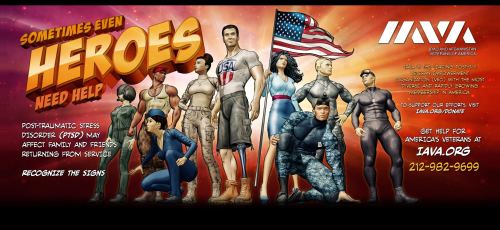
If it didn’t reduce the impact and get old for readers, I’d post about Iraq and Afghanistan Veterans of America (IAVA) and veterans issues just about every day. As I’ve noted many times, eagerly asking men and women to patriotically sacrifice for our security and then not treating them as the most important people in our country is a moral test we continue to flunk.

IAVA has reported its Program Impact in 2015 and it is impressive and heartening. Please read it and be astonished by how much one committed organization can do to advocate for so many important Americans. The report begins:

IAVA had huge accomplishments in 2015. We reached a record 439,269 veterans nationwide through in-person and online programs — and we did it with fewer resources, while maintaining top ratings from leading nonprofit reporting agencies, GuideStar and Charity Watch.

So if you are frustrated by how slowly and imperfectly our politics match our commitments in this area, please donate to IAVA. It is easy to say thank you to our veterans, as just about every politician does. It is harder and more costly to back it up capably and unconditionally.

Hasidic Tales of the Holocaust

Hasidic Tales of the Holocaust

For International Holocaust Remembrance Day, this story from Hasidic Tales of the Holocaust by Yaffa Eliach.


Good Morning, Herr Müller

Near the city of Danzig lived a well-to-do Hasidic rabbi, scion of prominent Hasidic dynasties. Dressed in a tailored black suit, wearing a top hat, and carrying a silver walking cane, the rabbi would take his daily morning stroll, accompanied by his tall, handsome son-in-law. During his morning walk it was the rabbi’s custom to greet every man, woman, and child whom he met on his way with a warm smile and a cordial “Good morning.” Over the years the rabbi became acquainted with many of his fellow townspeople this way and would always greet them by their proper title and name.

Near the outskirts of town, in the fields, he would exchange greetings with Herr Müller, a Polish Volksdeutsche (ethnic German). “Good morning, Herr Müller!” the rabbi would hasten to greet the man who worked in the fields. “Good morning, Herr Rabbiner!” would come the response with a good-natured smile.

Then the war began. The rabbi’s strolls stopped abruptly. Herr Müller donned an S.S. uniform and disappeared from the fields. The fate of the rabbi was like that of much of the rest of Polish Jewry. He lost his family in the death camp of Treblinka and, after great suffering, was deported to Auschwitz.

One day, during a selection at Auschwitz, the rabbi stood on line with hundreds of other Jews awaiting the moment when their fates would be decided, for life or death. Dressed in a striped camp uniform, head and beard shaven and eyes feverish from starvation and disease, the rabbi looked like a walking skeleton. “Right! Left, left, left!” The voice in the distance drew nearer. Suddenly the rabbi had a great urge to see the face of the man with the snow-white gloves, small baton, and steely voice who played God and decided who should live and who should die. He lifted his eyes and heard his own voice speaking:

“Good morning, Herr Müller!”

“Good morning, Herr Rabbiner!” responded a human voice beneath the S.S. cap adorned with skull and bones. “What are you doing here?” A faint smile appeared on the rabbi’s lips. The baton moved to the right—to life. The following day, the rabbi was transferred to a safer camp.

The rabbi, now in his eighties, told me in his gentle voice, “This is the power of a good-morning greeting. A man must always greet his fellow man.”

Based on my conversation with an elderly Hasidic personality.


In the literature of the Holocaust, Hassidic Tales of the Holocaust stands alone. As the publisher describes it, “Derived by the author from interviews and oral histories, these eighty-nine original Hasidic tales about the Holocaust provide unprecedented witness, in a traditional idiom, to the victims’ inner experience of “unspeakable” suffering. This volume constitutes the first collection of original Hasidic tales to be published in a century.”

As the author writes in her Foreword:

The Hasidic tale of the Holocaust is rooted in the Auschwitz reality, yet it soars to heaven and higher. It can carry the faithful above pits filled with bodies. Despite Auschwitz, the tale still expresses belief that man is good and capable of improvement; it can restore order to a chaotic world and offer unlimited freedom to the creative mind attempting to come to terms with the Holocaust. Its rich Jewish heritage and European tradition make it a unique genre of modern literature. The tales in this collection completed a full cycle from documentation to art to documentation and back to art. For in the beginning there was a tale.

There are many other books that will tell you about the history of the Holocaust. There are few other books that so deeply and creatively offer its soul.

God and the H-Bomb

God and the H-Bomb

The Hydrogen Bomb is in the news, thanks to North Korea’s questionable claim that they have one and have tested it.

In the years following World War 2, the H-Bomb was big news. Big, just like The Bomb. The world had seen the destructive power of the A-Bomb used at Hiroshima and Nagasaki. The H-Bomb made the A-Bomb look like a stick of dynamite. Where once there was the power to destroy cities, we could now destroy the world. And ourselves. We were as gods, at least in our punishing might.

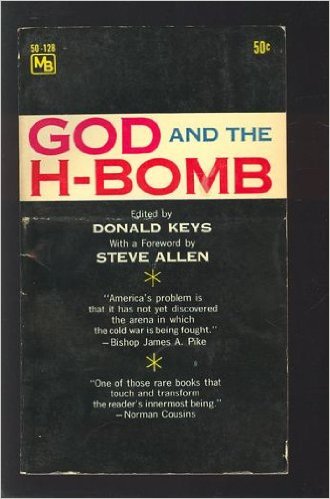
In 1961, a book called God and the H-Bomb was published. It’s not in print, but you might find a copy used or in a library, as I did a few years ago. The cover carries this question: “What counsel do our spiritual leaders offer in response to mankind’s greatest challenge?”

The roster of contributors is an impressive list of thinkers, some of whom are still recognized names, some less familiar. Paul Tillich, Martin Buber, Pope Pius XII, and so on.

We don’t see many—any—religious and spiritual leaders interviewed about the North Korean test, about the Iran deal, or about any Bomb related stories. Except for those religious and spiritual leaders with political strategy in mind or a political axe to grind.

That’s not what this 55-year-old book is about. It is about the moral and spiritual dimensions of the H-Bomb. That is reflected in the titles of the pieces. The power of self-destruction. War and Christian conscience. Fifteen years in hell is enough. Thy neighbor as thyself. The road of sanity.

The foreword is by Steve Allen, who is a little remembered as a significant television personality, but less as one of the most entertaining and brilliant public intellectuals of the middle twentieth century. Here’s what he writes:

That our nation is in the throes of moral collapse of serious dimensions is, apparently, no longer a debatable conclusion. Liberal and conservative spokesmen vie to see who shall express the conviction most vigorously. Churchmen and secularists, too, agree that we have fallen upon evil days. These various groups naturally differ as to the reasons for the situation, but that it exists no one seems to doubt….

Will our nation be guided in this dread hour by the moral code it professes to honor?

Will it?

War on ISIS: You Can’t Ask About Boots on the Ground Without Asking About the Draft

No poll about sending ground troops to fight ISIS—or anywhere else—is complete without asking questions about the military draft.

A recent NBC News poll taken after the events in Paris asked:

Would you support or oppose the United States sending additional ground troops to fight ISIS (Islamic militants) in Iraq and Syria?

Strongly support: 33%
Somewhat support: 32%
Somewhat oppose: 18%
Strongly oppose: 13%
DK/NA: 3%

The following questions should be added:

Do you have any family members in the eligible age range for Selective Service registration, between ages 18 and 25?

If a military draft was put in place by Congress, would you support or oppose the United States sending additional ground troops to fight ISIS in Iraq and Syria?

If your representative in Congress voted in favor of a military draft, would you be more likely or less likely to vote for them in the next election?

(That age range is based on the current requirement for men between 18 and 25 to register with Selective Service. At various times, the draft has covered a much wider range, all the way up to age 45.)

If a military draft was in place, the support for ground troops would likely plummet, if respondents were honest (which they sometimes aren’t). If the mandatory service included women—as it does in Israel, the darling of conservatives—the support number might approach zero. Especially if respondents/voters weren’t sure they could pull strings to get their loved ones out of serving.

Any member of Congress who voted in favor of a military draft, men only or men and women, is almost assured of losing the next election.

This is no way diminishes regard and thanks for the extraordinary valor and service of those who voluntary choose to serve in any military action. This is simply to suggest that those who righteously support such actions in the abstract might have a very different opinion when they, to put it bluntly, crudely and literally, have precious skin in the game.

Defeating ISIS: Lessons from the American and Israeli Wars of Independence

We can’t “defeat” ISIS. Not if that means declaring “victory” over Middle East-based Muslim radicalism and terror.

There are lessons from the American and Israeli Wars of Independence. This isn’t to suggest any moral equivalence comparing those world-changing events to the monstrosity of ISIS. But there are things to learn.

Both Wars of Independence were attempts to upend empire and established order and create a new model (both uprisings, not coincidentally, involving the British). Both were insurgencies by True Believers, one political and economic, one religious. Both are examples of the power of the heart, because the heart not only wants what the heart wants, it will do anything to get what the heart wants. True belief will find a way.

The British thought that their massive and formal force would roll right over the Americans. They did not count on all sorts of stealthy and tricky techniques, on secret communications, on a guerilla war. Mostly, the British didn’t account for the depth of American commitment: hearts and minds and souls. It may not always work that way, but competitions often go, simply, to the side that just wants it more. And that would be the Americans.

The British were never quite sure what they were doing in Palestine. But they did know something about world order and keeping order. Besides, some Brits didn’t much like the Jews anyway. The Zionists believed, literally, that they had God on their side. As far as hearts and minds and souls getting what they want, doing anything to win did mean the occasional act of terror (for example, the 1946 bombing of the King David Hotel in Jerusalem, leaving 96 dead). As far as who wanted it more, the founders of the modern Jewish state not only defeated the British, but turned back all attempts by hate-fueled neighbors to root them out.

In the aftermath of Paris, just as with 9/11 and other recent terrible events, if we keep talking simplistically about “defeating”, “eliminating” or “building American-style democracy”, we are—there’s no other way to say this—fools. We should eliminate and prevent horror, terror and monstrosity wherever and whenever we can. But if we think that the toxic mixture of true belief, grievance and pathology is just going to vanish because we are purer and more powerful, that would be funny if it weren’t so sad and dangerous.

If you don’t think that hearts, minds and souls matter when it comes to extremism, just look at the sorry record of irresolute and wasteful wars when we ignore that. We may feel righteous and superior, and want to vindicate civilization. But that doesn’t relieve us of the responsibility to be smart. Smart about what we face, what we can accomplish and how to accomplish it. So we can do some good, and do less harm.