I write a little about Zen, but not much. There are so many more who write about it, more experienced, able and articulate, that I am humiliated into quiet. Besides, I don’t really know what to say.
What I will say today is that Zen sitting, like all earnest meditation, is a way home, to a home you didn’t know you had. That is not a feeling or belief, just a fact. All the places that have been or are home for you are real and really yours. But the one that is really, really yours, underneath all these others, is the one that you in-habit when you meditate. Welcome home.
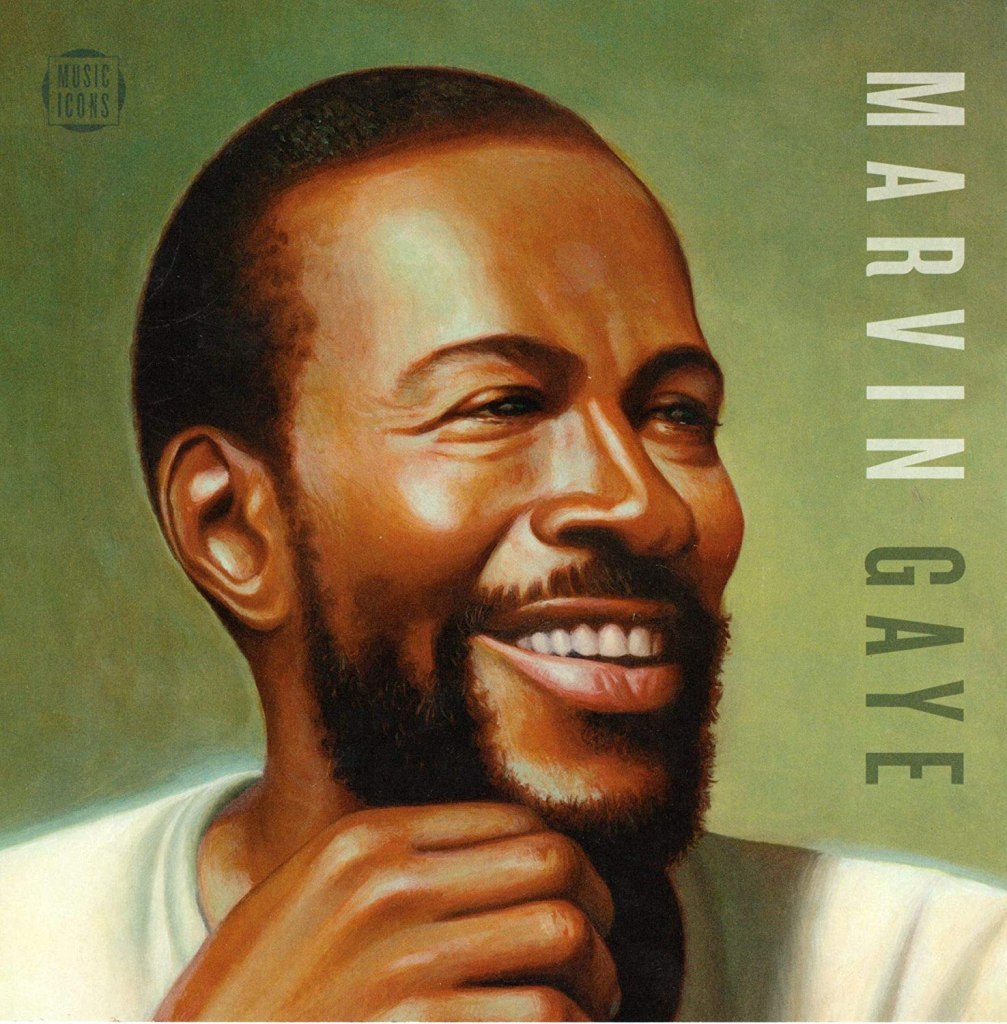
Marvin Gaye’s album What’s Going On (1971) is getting attention on the 50th anniversary of its release. As it deserves. You’ll see lots about it, its creation, its qualities, its significance. All you really need are ears to listen and eyes to know a little about America in 1971 and 2021.
The title track, first on the album, may be the best known. But the last track, Inner City Blues (Make Me Wanna Holler), is the crown.
Rockets, moon shots Spend it on the have nots Money, we make it Before we see it you take it
Make me wanna holler The way they do my life Make me wanna holler The way they do my life
Inflation no chance To increase finance Bills pile up sky high Send that boy off to die
Make me wanna holler The way they do my life Make me wanna holler The way they do my life
Bad breaks Set backs Natural fact is I can’t pay my taxes
Make me wanna holler Throw up both my hands Make me wanna holler Throw up both my hands
Crime is increasing Trigger happy policing Panic is spreading God knows where we’re heading
Watch the movie Z (1969) now. It is available on HBO Max and other platforms, and may be available from your library. Even if you have to spend a few dollars, watch it.
Why? Because while there are plenty of movies that incorporate the topics of political upheaval and repression, few are more exciting as a movie and more current in relevance than Z.
Greek director Costa-Gavras watched his country come under the control of a repressive military junta in the 1960s. Z is based on a chapter of that history, when a leader of the democratic resistance is killed, his murder and the complicity of the military leaders covered up. The movie, a French-Algerian production, is set in a French-speaking country that might be any.
Z was uniquely honored with Academy Award nominations for both Best Picture and Best Foreign Language Film; it won the Foreign Film award. Since then, it has gone on to be regarded as a classic political thriller, and Costa-Gavras has gone on to make acclaimed movies such as State of Siege and Missing.
As we watch earnest and idealistic people marginalized as radicals (and even as Communists, just as in Z), and as we watch officials of integrity threatened for doing their jobs and upholding the truth, and as we watch murders covered up in the name of law and order, Z reminds us that this is nothing new and reminds us where it all leads.
You will have seen or heard about the video that came to light today. It shows a black man handcuffed, beaten and killed by Louisiana State police officers—two years ago. At the time, the police reported to the family that he had died in a car crash. Since then, the official story has not changed, though they say there is an “investigation” ongoing. The only concern of the police today is that the video was leaked.
It is almost reflexive to blame any horrors of the past four years on the outlaw monster in the White House and his administration. In this case, though, you can see the through line. The police, not just the officers but their superiors, believed that in 2019 America, you could get away with anything, because at the highest levels, you could get away with anything, especially if you were claiming law and order. You might even be praised and honored for it. So there were no worries.
Our disgust is not just for what happened here, or the other cases, seen and still invisible. It is for the cover ups, the “what about” equivocations, the twisted visions of America that justify this. But above all, the emboldened racism and intolerance that is increasingly on display, showing what some knew, and some suspected but hoped wouldn’t be so brutally confirmed: There are millions of inhumane and hateful people in this country—yes, your neighbors, whatever your neighborhood—who are more comfortable than ever acting with impunity on that hate.
Trader Joe’s has stopped requiring masks for customers. How will they know you are vaccinated? Because you say so—no proof required.
This, when only 57% of Americans believe the 2020 election was legitimate and accurate (Reuters/Ipsos Poll, May 2, 2021).
I wish we lived in a country where a vast majority acted as if they were based in facts and embraced principles like honesty. We don’t. So if you would like only vaccinated customers to shop in your store without masks, and you ask an unvaccinated customer whether he is vaccinated, there is a good chance he will say, “Yeah, sure, of course.”
If you are someone who believes in the “honor system” for confirming Covid vaccination, then, respectfully, you are no less a fantasist than those who believe the election was stolen or that the January 6 assault on the U.S. Capitol involved peaceful visitors in orderly lines hugging the police (actual claims).
As we modify our response to the still ongoing pandemic, it is important as ever that we stay real and self-aware, even if it is not always a great look. Ignoring or rejecting reality is how this pandemic got as tragically bad as it did.
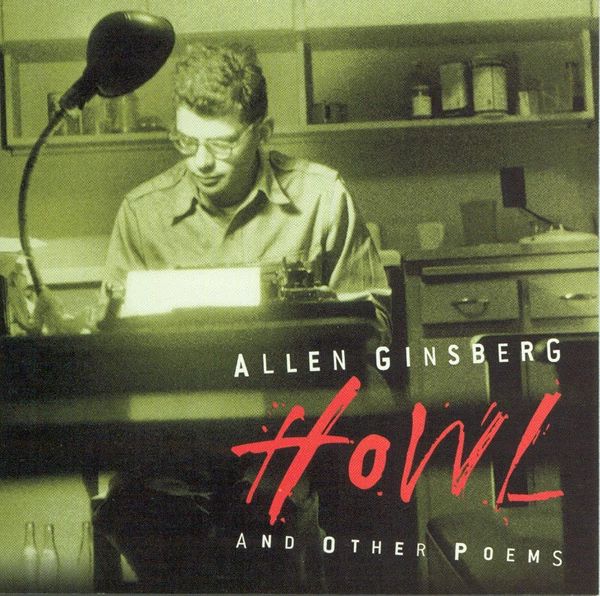
I listened to Allen Ginsberg reading his poetry the other morning. It was a recording made in 1959, by which time he had become a poster poet for the Beat Generation.
In the middle of the last century, we endured the darkest era in modern history. How darkest? We witnessed human depravity on a scale and of a type thus far unseen and barely imagined. We unleashed a weapon that for the first time assured total destruction.
Polite society tried to respond humanely and politely, acknowledging the worst, but determined to resume life (more or less) as usual. Nothing to see here but good times and progress.
Also in response, some creatives announced “not so fast”. Among them were the beat poets and writers. While not strictly a beat movie, in The Wild One (1953), Marlon Brando is asked “Hey, Johnny, what are you rebelling against?” “What do you got?” he answers. Like that.
Allen Ginsberg was crowned a king of the beats, partly because he reveled in the publicity and attention, also because his poetry captured the sense, as Bob Dylan wrote, that “something is happening here but you don’t know what it is, do you, Mr. Jones?”
Ginsberg’s poem Howl is considered the loudest and longest cry of beat. Very long. So here is something shorter, but still right to the point.
A Supermarket in California
What thoughts I have of you tonight, Walt Whitman, for I walked down the sidestreets under the trees with a headache self-conscious looking at the full moon.
In my hungry fatigue, and shopping for images, I went into the neon fruit supermarket, dreaming of your enumerations!
What peaches and what penumbras! Whole families shopping at night! Aisles full of husbands! Wives in the avocados, babies in the tomatoes! —and you, García Lorca, what were you doing down by the watermelons?
I saw you, Walt Whitman, childless, lonely old grubber, poking among the meats in the refrigerator and eyeing the grocery boys.
I heard you asking questions of each: Who killed the pork chops? What price bananas? Are you my Angel?
I wandered in and out of the brilliant stacks of cans following you, and followed in my imagination by the store detective.
We strode down the open corridors together in our solitary fancy tasting artichokes, possessing every frozen delicacy, and never passing the cashier.
Where are we going, Walt Whitman? The doors close in an hour. Which way does your beard point tonight?
(I touch your book and dream of our odyssey in the supermarket and feel absurd.)
Will we walk all night through solitary streets? The trees add shade to shade, lights out in the houses, we’ll both be lonely.
Will we stroll dreaming of the lost America of love past blue automobiles in driveways, home to our silent cottage?
Ah, dear father, graybeard, lonely old courage-teacher, what America did you have when Charon quit poling his ferry and you got out on a smoking bank and stood watching the boat disappear on the black waters of Lethe?
Three general types have emerged from the pandemic: deniers, normalizers and explorers. We will be living with the different approaches from now on.
Deniers are those who never believed there was much of a problem, or after that became unsustainable, believe that we have overreacted to the situation. We have done too much, and even the latest response, the vaccines, is an unnecessary step.
Normalizers, acknowledging how bad things got, still keep the faith in getting back, eventually, to the way things were at the end of 2019. They never deny that a tornado hit their house, but they are determined to rebuild it more or less the way it was where it was so they can move back in.
Explorers come to believe that we have crossed an ocean and been shipwrecked on a strange shore. Attempts to recreate some of the older basics may work, but besides some of the old ways not being suitable, there is a slowly growing sense that, like it or not, planned or not, we have arrived at a new world. So maybe, rather than stubbornly resisting, we should consider new possibilities—even if they make normal life something entirely different.
You may have heard that messages promoting Covid vaccination should stress all the wonderful things you can do once you are vaccinated. Partying and joining large social gatherings without masks, for example.
The problem: a number of people have every intention of partying and joining large social gatherings already, without getting vaccinated. Since there are no vaccination mandates for these and other activities, what’s the benefit? You can do all these things anyway. Nobody is saying you can’t. So why bother?
Of course there are significant individual and public health benefits to getting vaccinated. It’s just that being allowed to do what you are already allowed to do isn’t one of them.
William Carlos Williams and Wallace Stevens. Two giants of twentieth century poetry. Two poems, one from each, unusually brief compared to the writers’ other longer and denser works. Short strings of words that reflect tathagata, thusness, suchness, as well as words can. For the time being.
THE RED WHEELBARROW by William Carlos Williams
so much depends upon
a red wheel barrow
glazed with rain water
beside the white chickens
THIRTEEN WAYS OF LOOKING AT A BLACKBIRD by Wallace Stevens
I Among twenty snowy mountains, The only moving thing Was the eye of the blackbird.
II I was of three minds, Like a tree In which there are three blackbirds.
III The blackbird whirled in the autumn winds. It was a small part of the pantomime.
IV A man and a woman Are one. A man and a woman and a blackbird Are one.
V I do not know which to prefer, The beauty of inflections Or the beauty of innuendoes, The blackbird whistling Or just after.
VI Icicles filled the long window With barbaric glass. The shadow of the blackbird Crossed it, to and fro. The mood Traced in the shadow An indecipherable cause.
VII O thin men of Haddam, Why do you imagine golden birds? Do you not see how the blackbird Walks around the feet Of the women about you?
VIII I know noble accents And lucid, inescapable rhythms; But I know, too, That the blackbird is involved In what I know.
IX When the blackbird flew out of sight, It marked the edge Of one of many circles.
X At the sight of blackbirds Flying in a green light, Even the bawds of euphony Would cry out sharply.
XI He rode over Connecticut In a glass coach. Once, a fear pierced him, In that he mistook The shadow of his equipage For blackbirds.
XII The river is moving. The blackbird must be flying.
XIII It was evening all afternoon. It was snowing And it was going to snow. The blackbird sat In the cedar-limbs.
It is sad but inevitable to see that in America, and especially in some parts of the country, it is possible that the Covid vaccination rate of total population may barely hit 50%. There are already explanations offered up, analysis that includes pandemic fatigue, hesitancy, ideological objections, and so on. In the end, if the number of the vaccinated is that low, we may find ourselves saying: Oh well, we tried everything, we fought the good fight. That’s unfortunately how it goes in America.
This doesn’t mean we’ve given up. Now that vaccine supply is adequate and distribution points are expanding, there are three paths available.
The path that has been promoted almost from the first of the pandemic is messaging. The right people saying the right words and showing the right pictures about the right behavior for personal and public well-being. Unless you slept through the first pandemic year, you will know that among a large number of Americans, for various reasons, this proved ineffective.
Then there’s the incentive and reward option. Dunkin Donuts, for example, has offered to give every vaccinated American one free donut every day for the rest of the year. (My favorite snack food and a favorite bright spot in an otherwise dark time.) Should we be paying people to get vaccinated, thus saving some of the enormous public health costs that endemic Covid will later burden us with? It’s a thought. For some people, money trumps ideology.
Finally, there’s the path that is not about persuasion or incentive. It is about, not to sugar coat it, coercion. Maybe soft coercion, but sticks rather than carrots. If people choose to be public health menaces, which unvaccinated people behaving in pre-pandemic ways are, they may lose privileges enjoyed by their more responsible neighbors. “Freedom loving” ideologues object, since the freedom to infect others with a strange and deadly disease is said to be an American right, if you properly listen to the Founding Fathers and read the Constitution.
Words are powerful, and good words can do good. So can good pictures and good videos. Messaging does serve. But that power is limited. When the words fall on deaf or hostile ears, when anyone can conveniently get a vaccination but fewer and fewer do, when it is summer 2021 and only half of America is fully vaccinated, what do we do then?