Bob Schwartz

Category: Uncategorized

Once again: 198 Methods of Nonviolent Action
This is the SEVENTH time I have posted this list of 198 Methods of Nonviolent Action by the late Gene Sharp (1928-2018) of the Albert Einstein Institution. The first time was thirteen years ago, when things weren’t nearly so bad.

Why do I persist? Because Gene Sharp was a brilliant global strategist at actually moving nations from dictatorship to democracy. Because the list is the greatest ever of practical nonviolent actions big and small. Because much of America, which is well on a path to corrupt authoritarian rule, is either in denial or unable to figure out anything to effectively do about it. This is a list of things to do about it.

Will I be posting this list again, an eighth or ninth time? I suspect so. There are some capable and effective democracy leaders, but also many powerful authoritarian-friendly leaders and many well-meaning but inept and compromised leaders who are supposed to be fighting for democracy, but can’t seem to figure out how.

This is how.


198 Methods of Nonviolent Action

Formal Statements

  1. Public Speeches
  2. Letters of opposition or support
  3. Declarations by organizations and institutions
  4. Signed public statements
  5. Declarations of indictment and intention
  6. Group or mass petitions

Communications with a Wider Audience

  1. Slogans, caricatures, and symbols
  2. Banners, posters, displayed communications
  3. Leaflets, pamphlets, and books
  4. Newspapers and journals
  5. Records, radio, and television
  6. Skywriting and earthwriting
    Group Representations
  7. Deputations
  8. Mock awards
  9. Group lobbying
  10. Picketing
  11. Mock elections

Symbolic Public Acts

  1. Displays of flags and symbolic colors
  2. Wearing of symbols
  3. Prayer and worship
  4. Delivering symbolic objects
  5. Protest disrobings
  6. Destruction of own property
  7. Symbolic lights
  8. Displays of portraits
  9. Paint as protest
  10. New signs and names
  11. Symbolic sounds
  12. Symbolic reclamations
  13. Rude gestures

Pressures on Individuals

  1. “Haunting” officials
  2. Taunting officials
  3. Fraternization
  4. Vigils

Drama and Music

  1. Humorous skits and pranks
  2. Performances of plays and music
  3. Singing

Processions

  1. Marches
  2. Parades
  3. Religious processions
  4. Pilgrimages
  5. Motorcades

Honoring the Dead

  1. Political mourning
  2. Mock funerals
  3. Demonstrative funerals
  4. Homage at burial places

Public Assemblies

  1. Assemblies of protest or support
  2. Protest meetings
  3. Camouflaged meetings of protest
  4. Teach-ins

Withdrawal and Renunciation

  1. Walk-outs
  2. Silence
  3. Renouncing honors
  4. Turning one’s back

The Methods Of Social Noncooperation

Ostracism of Persons

  1. Social boycott
  2. Selective social boycott
  3. Lysistratic nonaction
  4. Excommunication
  5. Interdict

Noncooperation with Social Events, Customs, and Institutions

  1. Suspension of social and sports activities
  2. Boycott of social affairs
  3. Student strike
  4. Social disobedience
  5. Withdrawal from social institutions
    Withdrawal from the Social System
  6. Stay-at-home
  7. Total personal noncooperation
  8. “Flight” of workers
  9. Sanctuary
  10. Collective disappearance
  11. Protest emigration (hijrat)

The Methods of Economic Noncooperation: Economic Boycotts

Actions by Consumers

  1. Consumers’ boycott
  2. Nonconsumption of boycotted goods
  3. Policy of austerity
  4. Rent withholding
  5. Refusal to rent
  6. National consumers’ boycott
  7. International consumers’ boycott

Action by Workers and Producers

  1. Workmen’s boycott
  2. Producers’ boycott

Action by Middlemen

  1. Suppliers’ and handlers’ boycott

Action by Owners and Management

  1. Traders’ boycott
  2. Refusal to let or sell property
  3. Lockout
  4. Refusal of industrial assistance
  5. Merchants’ “general strike”

Action by Holders of Financial Resources

  1. Withdrawal of bank deposits
  2. Refusal to pay fees, dues, and assessments
  3. Refusal to pay debts or interest
  4. Severance of funds and credit
  5. Revenue refusal
  6. Refusal of a government’s money

Action by Governments

  1. Domestic embargo
  2. Blacklisting of traders
  3. International sellers’ embargo
  4. International buyers’ embargo
  5. International trade embargo

The Methods Of Economic Noncooperation: The Strike

Symbolic Strikes

  1. Protest strike
  2. Quickie walkout (lightning strike)

Agricultural Strikes

  1. Peasant strike
  2. Farm Workers’ strike

Strikes by Special Groups

  1. Refusal of impressed labor
  2. Prisoners’ strike
  3. Craft strike
  4. Professional strike

Ordinary Industrial Strikes

  1. Establishment strike
  2. Industry strike
  3. Sympathetic strike

Restricted Strikes

  1. Detailed strike
  2. Bumper strike
  3. Slowdown strike
  4. Working-to-rule strike
  5. Reporting “sick” (sick-in)
  6. Strike by resignation
  7. Limited strike
  8. Selective strike

Multi-Industry Strikes

  1. Generalized strike
  2. General strike

Combination of Strikes and Economic Closures

  1. Hartal
  2. Economic shutdown

The Methods Of Political Noncooperation

Rejection of Authority

  1. Withholding or withdrawal of allegiance
  2. Refusal of public support
  3. Literature and speeches advocating resistance

Citizens’ Noncooperation with Government

  1. Boycott of legislative bodies
  2. Boycott of elections
  3. Boycott of government employment and positions
  4. Boycott of government depts., agencies, and other bodies
  5. Withdrawal from government educational institutions
  6. Boycott of government-supported organizations
  7. Refusal of assistance to enforcement agents
  8. Removal of own signs and placemarks
  9. Refusal to accept appointed officials
  10. Refusal to dissolve existing institutions

Citizens’ Alternatives to Obedience

  1. Reluctant and slow compliance
  2. Nonobedience in absence of direct supervision
  3. Popular nonobedience
  4. Disguised disobedience
  5. Refusal of an assemblage or meeting to disperse
  6. Sitdown
  7. Noncooperation with conscription and deportation
  8. Hiding, escape, and false identities
  9. Civil disobedience of “illegitimate” laws

Action by Government Personnel

  1. Selective refusal of assistance by government aides
  2. Blocking of lines of command and information
  3. Stalling and obstruction
  4. General administrative noncooperation
  5. Judicial noncooperation
  6. Deliberate inefficiency and selective noncooperation by enforcement agents
  7. Mutiny

Domestic Governmental Action

  1. Quasi-legal evasions and delays
  2. Noncooperation by constituent governmental units

International Governmental Action

  1. Changes in diplomatic and other representations
  2. Delay and cancellation of diplomatic events
  3. Withholding of diplomatic recognition
  4. Severance of diplomatic relations
  5. Withdrawal from international organizations
  6. Refusal of membership in international bodies
  7. Expulsion from international organizations

The Methods Of Nonviolent Intervention

Psychological Intervention

  1. Self-exposure to the elements
  2. The fast
    a) Fast of moral pressure
    b) Hunger strike
    c) Satyagrahic fast
  3. Reverse trial
  4. Nonviolent harassment

Physical Intervention

  1. Sit-in
  2. Stand-in
  3. Ride-in
  4. Wade-in
  5. Mill-in
  6. Pray-in
  7. Nonviolent raids
  8. Nonviolent air raids
  9. Nonviolent invasion
  10. Nonviolent interjection
  11. Nonviolent obstruction
  12. Nonviolent occupation

Social Intervention

  1. Establishing new social patterns
  2. Overloading of facilities
  3. Stall-in
  4. Speak-in
  5. Guerrilla theater
  6. Alternative social institutions
  7. Alternative communication system

Economic Intervention

  1. Reverse strike
  2. Stay-in strike
  3. Nonviolent land seizure
  4. Defiance of blockades
  5. Politically motivated counterfeiting
  6. Preclusive purchasing
  7. Seizure of assets
  8. Dumping
  9. Selective patronage
  10. Alternative markets
  11. Alternative transportation systems
  12. Alternative economic institutions

Political Intervention

  1. Overloading of administrative systems
  2. Disclosing identities of secret agents
  3. Seeking imprisonment
  4. Civil disobedience of “neutral” laws
  5. Work-on without collaboration
  6. Dual sovereignty and parallel government
I Am Waiting (1958) by Lawrence Ferlinghetti

I am waiting
for a rebirth of wonder
and I am waiting for someone
to really discover America
and wail


I Am Waiting
By Lawrence Ferlinghetti

I am waiting for my case to come up
and I am waiting
for a rebirth of wonder
and I am waiting for someone
to really discover America
and wail
and I am waiting
for the discovery
of a new symbolic western frontier
and I am waiting
for the American Eagle
to really spread its wings
and straighten up and fly right
and I am waiting
for the Age of Anxiety
to drop dead
and I am waiting
for the war to be fought
which will make the world safe
for anarchy
and I am waiting
for the final withering away
of all governments
and I am perpetually awaiting
a rebirth of wonder

I am waiting for the Second Coming
and I am waiting
for a religious revival
to sweep thru the state of Arizona
and I am waiting
for the Grapes of Wrath to be stored
and I am waiting
for them to prove
that God is really American
and I am waiting
to see God on television
piped onto church altars
if only they can find
the right channel
to tune in on
and I am waiting
for the Last Supper to be served again
with a strange new appetizer
and I am perpetually awaiting
a rebirth of wonder

I am waiting for my number to be called
and I am waiting
for the Salvation Army to take over
and I am waiting
for the meek to be blessed
and inherit the earth
without taxes
and I am waiting
for forests and animals
to reclaim the earth as theirs
and I am waiting
for a way to be devised
to destroy all nationalisms
without killing anybody
and I am waiting
for linnets and planets to fall like rain
and I am waiting for lovers and weepers
to lie down together again
in a new rebirth of wonder

I am waiting for the Great Divide to be crossed
and I am anxiously waiting
for the secret of eternal life to be discovered
by an obscure general practitioner
and I am waiting
for the storms of life
to be over
and I am waiting
to set sail for happiness
and I am waiting
for a reconstructed Mayflower
to reach America
with its picture story and tv rights
sold in advance to the natives
and I am waiting
for the lost music to sound again
in the Lost Continent
in a new rebirth of wonder

I am waiting for the day
that maketh all things clear
and I am awaiting retribution
for what America did
to Tom Sawyer
and I am waiting
for Alice in Wonderland
to retransmit to me
her total dream of innocence
and I am waiting
for Childe Roland to come
to the final darkest tower
and I am waiting
for Aphrodite
to grow live arms
at a final disarmament conference
in a new rebirth of wonder

I am waiting
to get some intimations
of immortality
by recollecting my early childhood
and I am waiting
for the green mornings to come again
youth’s dumb green fields come back again
and I am waiting
for some strains of unpremeditated art
to shake my typewriter
and I am waiting to write
the great indelible poem
and I am waiting
for the last long careless rapture
and I am perpetually waiting
for the fleeing lovers on the Grecian Urn
to catch each other up at last
and embrace
and I am awaiting
perpetually and forever
a renaissance of wonder


Unreliable narrators in Trump’s America


An unreliable narrator is a storyteller whose credibility is compromised, leading readers to question or doubt the accuracy of their account. This narrative technique creates a gap between what the narrator tells us and what actually happened.

Common types include:

  • Mentally unstable narrators who may be delusional or mentally ill (e.g., the narrator in “The Tell-Tale Heart”)
  • Naïve narrators who lack the experience or knowledge to fully understand events (e.g., a child narrator)
  • Biased narrators who deliberately manipulate the truth for self-serving reasons
  • Narrators with impaired perception due to intoxication, trauma, or memory issues

The unreliability often becomes apparent through inconsistencies in their story, contradictions between their words and actions, or clues that reveal their misperceptions. This technique engages readers more actively, as they must piece together the truth themselves.

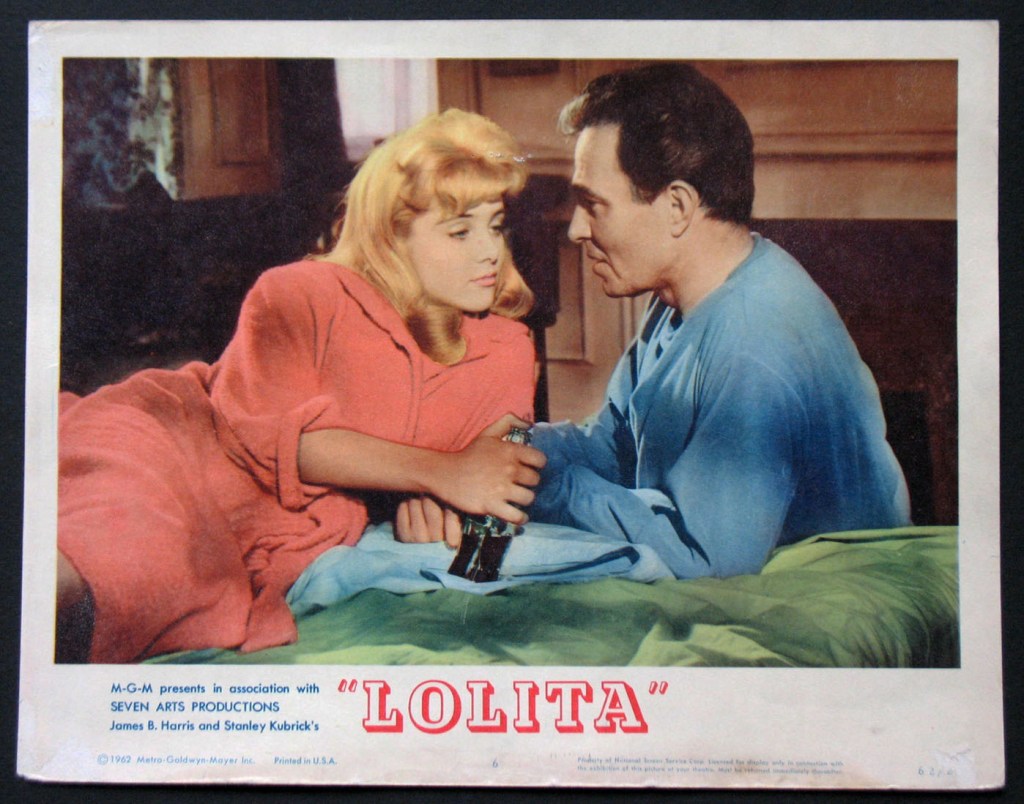
Classic examples include Humbert Humbert in “Lolita,” the narrator in Gillian Flynn’s “Gone Girl,” and Nick Carraway in “The Great Gatsby” (to a subtler degree).


Discussing Trump’s latest perfidy, the closing down of the Kennedy Center, I maintain that this may have been on his mind for a while. Someone else suggested that those in the know indicated it was his instant petulant reaction to the Melania movie fiasco there, when few of his sycophants showed up for the premiere. I replied that we couldn’t really know, because what people around him say is presumptively false, just as his own words are.

That leads to the broader issue of the unreliable narrator. It is common in storytelling and sometimes in the real world. But in America today, we have never had so many people with amplified voices say so many things that are manifestly untrue.

Maybe, as the above description says, this unreliability actively engages us to piece together the truth for ourselves. Regarding the shutting down of the Kennedy Center, spontaneous or planned? When we try to piece it together, we might say that it may matter to journalists and historians, but citizens like us might simply conclude that either way, something is terribly, horribly wrong.

Which brings us back to narrators, reliable, and increasingly among the loud, corrupt and powerful who lead us, totally unreliable. Who do you trust in Lolita, for example, a story told by a pedophile?

Believing and acting “as if”

Our religious traditions often ask us to act on faith, believing that which can’t be absolutely demonstrated or proven to our satisfaction. For theistic religions, God is at the top of that list, with many other beliefs following.

In Buddhism there is a belief in rebirth:


rebirth. The belief that one is reborn after death. Belief in rebirth is a corollary of the doctrine of karma, which holds that a person experiences the good or bad fruits of moral action at a later date. Rebirth is one of the ‘givens’ of Buddhist thought and since its truth is universally assumed it is rarely asserted or defended as a dogma. Some contemporary Buddhists have suggested that belief in rebirth is not an essential part of Buddhist teachings, but the notion is deeply ingrained in the tradition and the ancient texts.


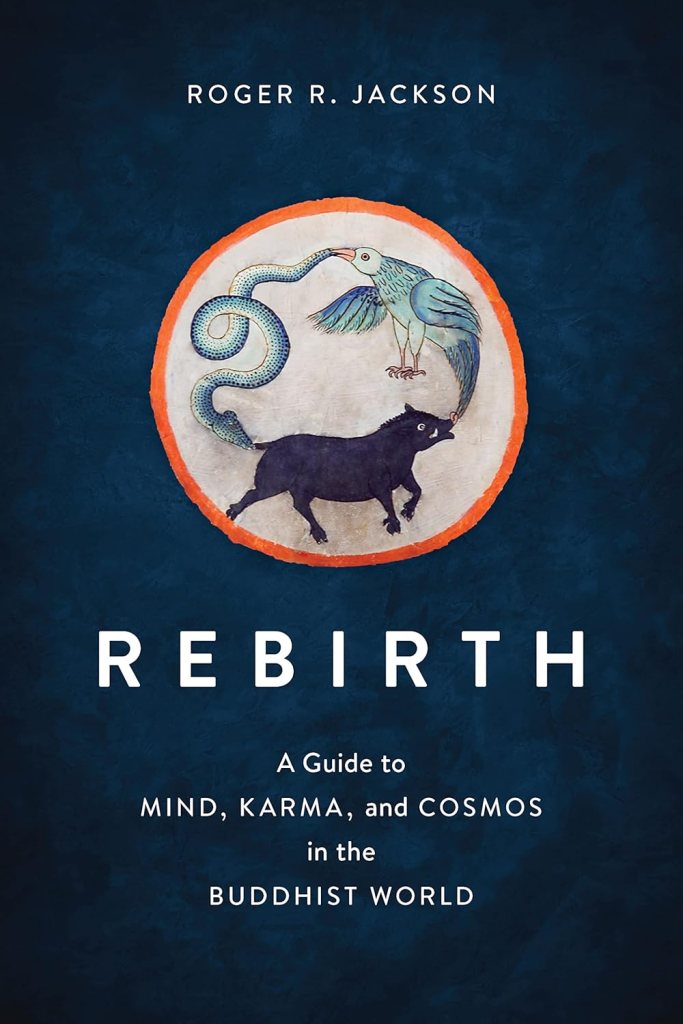
Roger Jackson in his masterful study Rebirth: A Guide to Mind, Karma, and Cosmos in the Buddhist World (2022) points to modern Buddhist masters and followers who suggest that rebirth is theory, not fact. Nevertheless, it remains a core belief.

In closing, Jackson points to a familiar Western resolution. The argument of 17th-century mathematician Blaise Pascal—sometimes called Pascal’s wager—is that by believing in God you risk nothing significant but could gain everything.

This leads Jackson to this:


I myself would argue without ambivalence for what I call “As-If Agnosticism.” My stance is agnostic because, like Hayes and Batchelor (and many others), I do not find traditional descriptions of karma and rebirth literally credible, nor am I fully persuaded by arguments in their favor, whether rational, empirical, or faith-based; on the other hand, I cannot rule out the possibility that such descriptions (or something akin to them) may in fact be true. The universe, after all, is surpassingly strange. In the spirit of Wallace Stevens’s famous statement that “we believe without belief, beyond belief,” I propose that we live as if such descriptions were true. I am not suggesting we simply take up wishful thinking: if only there were past and future lives, if only karma works the ways tradition says it does, if only glorious and perfect buddhahood awaited us all at the end of the rainbow. Maybe they do, maybe they don’t. But as Buddhists have argued for millennia, Western humanists have claimed for centuries, and scientists have recently begun to recognize, the world is actually built far more on our ideas, aspirations, and speculations—the As-If—than we suppose, and the solid foundations we presume to lie beneath us—the “As-Is”—are much more difficult to find than we assume. It’s not, therefore, that by living as if certain doctrines were true we really are in flight from some bedrock, objective reality, because that reality—though it certainly imposes limitations on us, most notably at the time of death—turns out to be far more a matter of convention and far less “just the way things are” than we had thought. Freed from the illusion of perfect objectivity, therefore, why not think and live as if Buddhism were true? In doing so, we empower ourselves to enter, as fully as is possible in a skeptical age, into the ongoing, ever-changing life of the Dharma, adopting Buddhist ideals, telling Buddhist stories, articulating Buddhist doctrines, performing Buddhist rituals, and embodying Buddhist ethics in ways that make meaning for ourselves, provide a measure of comfort to others, and perhaps contribute in some small way to the betterment of the imperfect and imperiled world in which we all live.

Let the final word belong not to me, however, but to the Buddha, who in the Rohitassa Sutta (Discourse about Rohitassa) recounts a previous life as a seer named Rohatissa, “possessing magical potency, able to travel through the sky…[with] speed like that of a light arrow easily shot by a firm-bowed archer.” Conceiving the wish to find the ends of the earth, he traveled for a hundred years as fast as the wind, yet “died along the way without having reached the end of the world.” There is no “end” to the geographic world, explains the Buddha, but that is not, in any case, the end-of-the-world we should be seeking. Rather, we must seek the place “where one is not born, does not grow old and die, does not pass away and get reborn.” And where is the end of the world in this deeper sense—nirvāṇa—to be found? “It is,” he says, “in this fathom-long body endowed with perception and mind that I proclaim (1) the world, (2) the origin of the world, (3) the cessation of the world, and (4) the way leading to the cessation of the world.” As a result, “…the wise one, the world-knower, who has reached the world’s end and lived the spiritual life, having known the world’s end, at peace, does not desire this world or another.”


“As if” is powerful. There is also a powerful caveat. If you believe “as if” something is true, though you may still doubt it, it is essential that the belief do good for others—not just for yourself. While Pascal says believing in the unprovable you “could gain everything”, it is others who should ultimately gain everything from your belief, not just you. If the belief brings other harm, better to not believe and act “as if.”

Cult of Personality by Living Colour (1988)

Neon lights, a Nobel prize
When a mirror speaks, the reflection lies

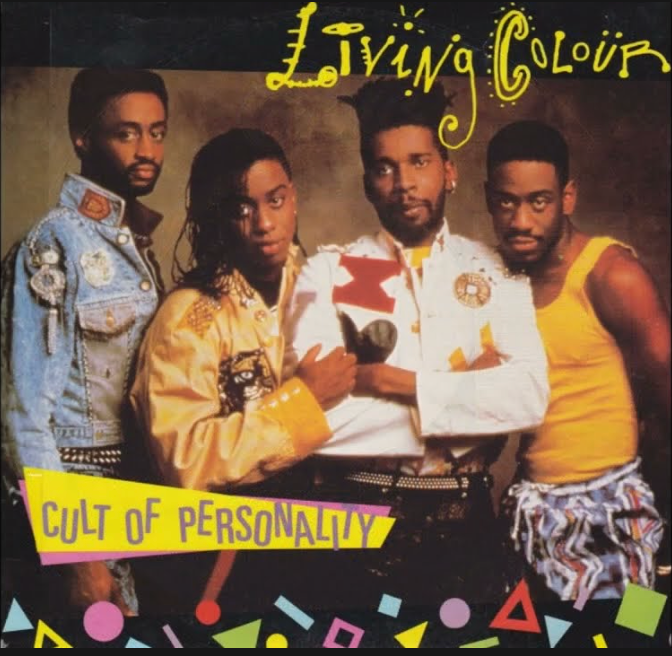
In 1988 the band Living Colour released their first album Vivid and the hit single Cult of Personality, which went on to win a Grammy.

It isn’t often that a track remains so relevant so many years later. But cults of personality have been around as long as leaders have been around, which is forever. Like now. Besides being a great song and performance (incendiary guitar by Vernon Reid), it is eerily notable that it specifically includes reference to “Neon lights, a Nobel prize”.

Living Colour is still playing, and was featured on Jimmy Kimmel last October.


Cult of Personality

And during the few moments that we have left
We want to talk right down to earth
In a language that everybody here can easily understand

Look in my eyes
What do you see?
The cult of personality

I know your anger, I know your dreams
I’ve been everything you want to be
Oh, I’m the cult of personality

Like Mussolini and Kennedy
I’m the cult of personality
The cult of personality

Neon lights, a Nobel prize
When a mirror speaks, the reflection lies
You won’t have to follow me
Only you can set me free

I sell the things you need to be
I’m the smiling face on your TV
Oh, I’m the cult of personality

I exploit you, still you love me
I tell you, one and one makes three
Oh, I’m the cult of personality

Like Joseph Stalin and Gandhi
I’m the cult of personality
The cult of personality

Neon lights, a Nobel prize
When a leader speaks, that leader dies
You won’t have to follow me
Only you can set you free

You gave me fortune, you gave me fame
You gave me power in your god’s name
I’m every person you need to be
Oh, I’m the cult of personality

If you buy the premise, you’ll buy the bit

“If you buy the premise, you’ll buy the bit” is a maxim of humor and joke telling. “A guy goes to a psychiatrist and says…” or “A priest, a minister, and a rabbi are sitting at a bar…” are setups for a joke. Someone who doesn’t buy that premise (someone of limited imagination, because it’s just a joke) will never get the joke.

This extends to logical argument in general. Without believing in a premise, the rest of the argument, like the rest of the joke, goes nowhere.

Sometimes the premise is hidden, incidentally or intentionally, and sometimes it is assumed without analysis and investigation. This is a reminder to find the premise, consider it carefully, and decide whether to buy it.

To close less seriously, with a ridiculous premise, one of my favorite jokes.


A guy goes to a psychiatrist.

Guy says, “Doc, my brother thinks he’s a chicken.”

Psychiatrist says, “Bring him in and I’ll examine him.”

Guy says, “I would, but we need the eggs.”


“ICE thwarted from entering Ecuador’s consulate in Minneapolis by employee”


ICE thwarted from entering Ecuador’s consulate in Minneapolis by employee

An Immigration and Customs Enforcement (ICE) agent attempted to enter Ecuador’s consulate in Minneapolis, but was turned back by an employee, prompting an official complaint to the US embassy in Quito, the country’s foreign ministry said….

Video of the incident verified by Reuters showed an employee at the consulate telling the agent: “This is the consulate of Ecuador, you are not allowed to enter.”

“Relax, relax, I didn’t enter,” the agent replies, before telling the staffer: “If you touch me, I will grab you.” The agent leaves shortly after.

The Guardian


Consulates, like embassies, are inviolable. They are literally extensions of their respective nations on foreign soil. On a small scale, entering without permission is an invasion.

This current crop of ICE agents appears to be either poorly trained, or incompetent, or overzealous, or violent, or unstable, or ignorant, or believe they are invulnerable and unaccountable, or some combination. Their bosses appear to be either poorly trained, or incompetent, or overzealous, or violent, or unstable, or ignorant, or believe they are invulnerable and unaccountable, or some combination.

The recent murders by ICE in Minneapolis are explosive high-profile examples of where things are and where they are going. So the attempted forced entry into a foreign nation’s consulate may seem less significant. It is not.

None other than the capo di tutti capi, the big chief, the head man, told the world that the only guardrail and restriction on his actions and orders was his own morality. That tells us all we have to know about the next three years—or more.

American Triple Play: A Change Is Gonna Come (Sam Cooke), Willin’ (Little Feat), This Land Is Your Land (Woody Guthrie)

Nobody living can ever stop me,
As I go walking that freedom highway;
Nobody living can ever make me turn back
This land was made for you and me.
Woody Guthrie, This Land Is Your Land

Each morning is an opportunity to string together a brief soundtrack before the news takes over.

Understanding and responding to this American moment is a challenge. What does it all mean?

A Change Is Gonna Come by Sam Cooke is regarded as the most lyrical theme song of the Civil Rights movement.


Then I go to my brother
And I say brother help me please
But he winds up knockin’ me
Back down on my knees.

There been times that I thought I couldn’t last for long
But now I think I’m able to carry on
It’s been a long, a long time coming
But I know a change gonna come, oh yes it will.


Willin’ by Little Feat is an irresistible song of perseverance.


Well, I’ve been kicked by the wind, robbed by the sleet
Had my head stoved in, but I’m still on my feet
And I’m still willin’


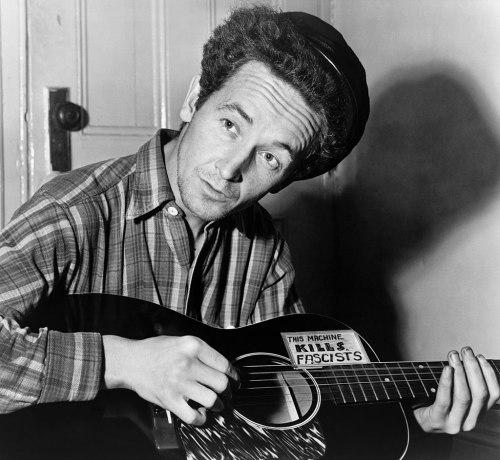
This Land Is Your Land by Woody Guthrie is the actual national anthem of the United States of America.


As I went walking I saw a sign there,
And on the sign it said “No Trespassing.”
But on the other side it didn’t say nothing.
That side was made for you and me.

In the shadow of the steeple I saw my people,
By the relief office I seen my people;
As they stood there hungry, I stood there asking
Is this land made for you and me?

Nobody living can ever stop me,
As I go walking that freedom highway;
Nobody living can ever make me turn back
This land was made for you and me.


Under Trump federal judicial contempt is hollow punishment

“Minnesota’s top federal judge has summoned the acting head of Immigration and Customs Enforcement (ICE) to appear before him on Friday, warning he may be held in contempt for allegedly defying court orders.”

Many in the Trump administration, including phony U.S. Attorneys like Alina Habba and Lindsey Halligan, have defied federal judicial orders and been threatened with contempt of court.

There is an overwhelming problem with enforcing such contempt, which is issued at the discretion of a federal judge.

Look closely at the seal above. Federal contempt is enforced by the U.S. Marshals Service. The U.S. Marshals Service is a division of the Department of Justice. Marshals work for Pam Bondi at the Department of Justice, who works slavishly for Trump.

Meaning: From Trump down to the lowest official in the federal government, anyone who defies a court order and is found in contempt has no worries, since the U.S. Marshals Service can be ordered to stand down by Pam Bondi and not enforce those orders.

I would include this as a footnote to any coverage that includes possible contempt of an administration official or worker for defying a federal court order.

Fascists begin with thugs: Mussolini’s Blackshirts and Hitler’s Brownshirts

Hitler’s SA

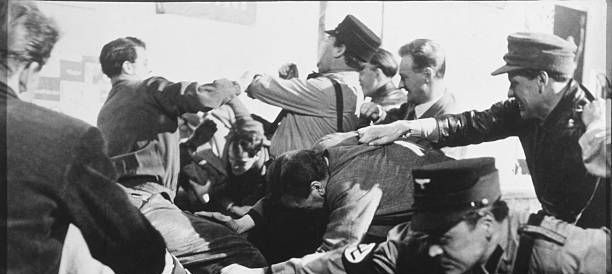
“Hitler’s SA beat up Jews, vandalized Jewish businesses, and intimidated voters and political opponents. This violence helped suppress opposition while the Nazis maintained a veneer of legality.”

Both Mussolini (the inventor of modern fascism) and Hitler began their rise to power with the help of organized thugs. Mussolini had his Blackshirts and Hitler had his Brownshirts (officially the SA, Sturmabteilung, “Storm Detachment).

These are not the only authoritarians, dictators and fascists to enlist thugs to help them. Above is a picture of Hitler’s thugs beating up German citizens in the streets.

Overview:


The Blackshirts (or Squadristi) were paramilitary fascist groups that emerged in Italy after World War I and became essential to Mussolini’s rise to power.

Origins and composition:
The Blackshirts formed around 1919-1920, initially as loosely organized squads of war veterans, unemployed workers, and disaffected young men. They wore black shirts as their uniform, which became their identifying symbol. Many members were ex-soldiers who felt betrayed by Italy’s treatment after WWI despite being on the winning side.

Their role in Mussolini’s rise:
The Blackshirts served as Mussolini’s instrument of violent intimidation and political control:

  • Strike-breaking and anti-socialist violence: They attacked socialist organizations, labor unions, and leftist politicians, beating opponents and burning down socialist newspapers, meeting halls, and cooperatives. This earned them support from landowners and industrialists who feared socialist revolution.
  • Creating chaos and positioning fascism as the solution: By generating political violence and instability, they helped create conditions where Mussolini could present himself and his fascist movement as the force that could restore order.
  • The March on Rome (1922): Tens of thousands of Blackshirts marched on Rome in October 1922 in a show of force. Though it was more political theater than military coup, the threat of violence pressured King Victor Emmanuel III to appoint Mussolini as Prime Minister rather than risk civil war.

The Blackshirts essentially functioned as Mussolini’s private army, using systematic violence to eliminate opposition and intimidate the political establishment into accepting fascist rule.


The Brownshirts, officially called the Sturmabteilung (SA, meaning “Storm Detachment”), were the Nazi Party’s paramilitary organization that played a crucial role in Hitler’s rise to power through street violence and intimidation.

Origins and composition:
Founded in 1921, the SA initially served as security for Nazi rallies. They wore brown uniforms (hence “Brownshirts”) and attracted war veterans, unemployed young men, and working-class Germans during the economic turmoil of the Weimar Republic. Led by Ernst Röhm, the SA grew rapidly during the late 1920s and early 1930s, eventually numbering in the hundreds of thousands.

Their role in Hitler’s rise:

  • Street violence and intimidation**: The SA engaged in brutal street fights with communists and socialists, attacked political opponents, and disrupted rival parties’ meetings. They created an atmosphere of chaos and civil conflict that undermined confidence in the Weimar government.
  • Projecting strength and inevitability: Through massive rallies, marches, and their visible presence in brown uniforms, the SA made the Nazi movement appear powerful and unstoppable, attracting supporters who wanted to be on the “winning side.”
  • Terror tactics: They beat up Jews, vandalized Jewish businesses, and intimidated voters and political opponents. This violence helped suppress opposition while the Nazis maintained a veneer of legality.
  • Electoral intimidation: During elections in the early 1930s, the SA’s presence at polling places and their attacks on opponents helped create conditions favorable to Nazi electoral success.

After Hitler became Chancellor in 1933, the SA helped eliminate remaining opposition. However, Hitler later purged the SA leadership in the “Night of the Long Knives” (1934) when they became a political liability.


SA flag