Beyond

Beyond
From a foothill
Face the foothill
Of the mountains beyond
Beyond that the hidden
Circling back to a foothill
From a foothill
© 2025 Bob Schwartz
Beyond
From a foothill
Face the foothill
Of the mountains beyond
Beyond that the hidden
Circling back to a foothill
From a foothill
© 2025 Bob Schwartz
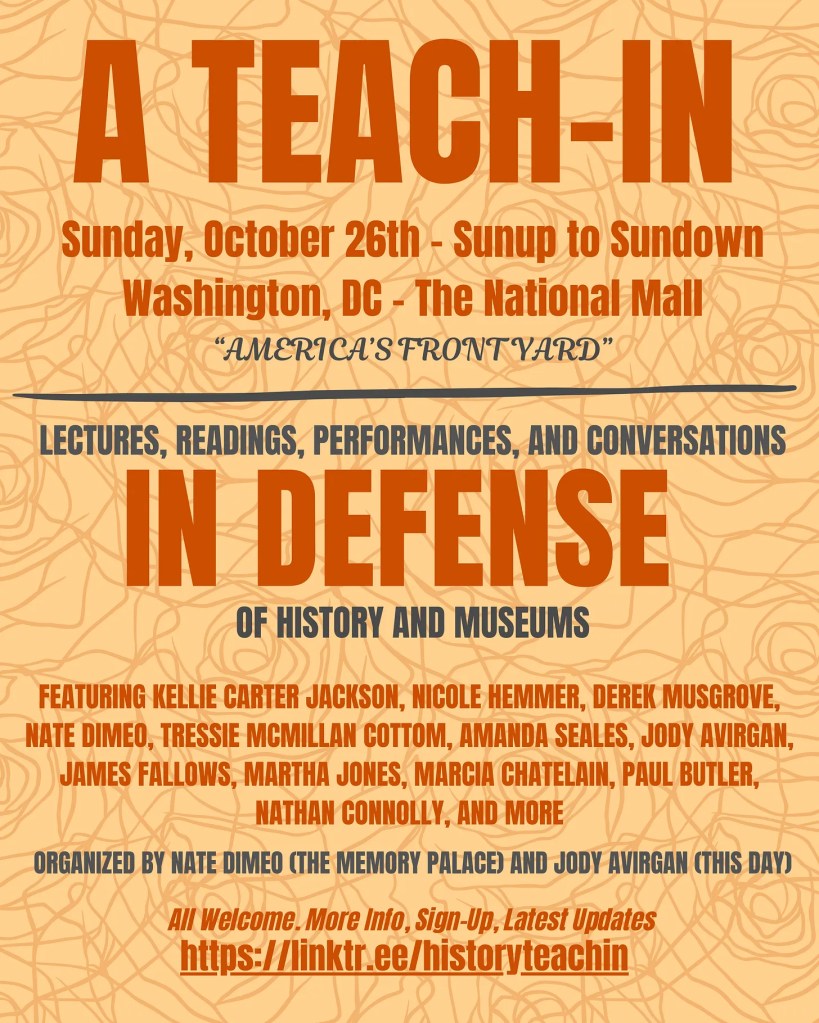
For some, teach-ins were an integral part of organized resistance and opposition to a war and to social and national injustice and inhumanity.
Teach-ins are extended educational gatherings where participants discuss and learn about controversial issues, typically combining lectures, debates, and workshops. They’re designed to raise awareness and foster critical thinking about social or political topics.
Teach-ins emerged in March 1965 at the University of Michigan as a response to the Vietnam War. Faculty members organized an overnight event with lectures and discussions as an alternative to striking, which would have disrupted students’ education. The format quickly spread to campuses nationwide.
Early teach-ins featured:
The model became a signature protest tactic of 1960s-70s campus activism, addressing civil rights, environmental issues, and anti-war movements.
Teach-ins are back, not yet in the same number as in the past, but they are spreading.
Like this:
Why we’re holding a teach-in about American history at the Smithsonian
On 26 October, podcasters, professors, journalists and ordinary citizens will gather on the steps of the Smithsonian National Museum of American History for a teach-in in defense of history and museums.
If you look online, you’ll find many more happening, maybe in your own backyard.
Here’s the original teach-in at the University of Michigan in March 1965:

Here’s a Free Speech teach-in at Barnard in September 2025:

Is this nostalgia for a time when protest happened and sometimes worked? No. It is confirmation that when people effectively organize and educate, it is possible that eventually things can be turned around. Eventually (not to put a damper on this) as in the ten years between the University of Michigan teach-in and the end of the Vietnam War. But without the teach-ins and the marches and levitating the Pentagon (look it up), there is no telling how much more death and damage and suffering would have been inflicted.
It is worth teaching-in.

When considering why this snake would appear on the president’s desk in the Oval Office, I concluded that it might be all the gold there that attracted it.
I asked Claude whether snakes are attracted to gold, the color or the metal. Claude replied:
No, snakes are not attracted to gold in either form.
Snakes lack the visual systems and cognitive processing to be drawn to specific colors like gold. Their color vision varies by species, but they don’t show preference for shiny or yellow objects.
They’re also not attracted to the metal itself. Snakes respond primarily to heat signatures (via infrared sensing in some species), chemical cues, and vibrations when hunting or navigating. Gold has no special thermal, chemical, or vibrational properties that would interest them.
The myth likely stems from old tales of snakes guarding treasure, which were metaphorical or served storytelling purposes rather than reflecting snake behavior.
I didn’t know that mythical snakes were said to guard treasures.
I do know a famous biblical story about snakes, a devilish snake that appears in a perfect setting and ruins everything.
As for storytelling, I am as capable of telling/making up stories as the ancients. In this case, there is a snake in the Oval Office, presumably attracted to all the gold that the president has kept adding to it.
President, Oval Office, gold, snakes. Pretty good story.
© 2025 Bob Schwartz

So much depends upon pouring the orange juice.
My second set of tasks each morning are household ones. Preparing breakfast for us.
The main breakfast item varies day to day, but there is a set of fixed daily preliminaries. Coffee is made, the table is set, juice is poured, berries are dished.
Each task, in the grand scheme of things, does not appear to have a major impact. But each of them is done with care, even if once in while the juice spills when poured. Only human.
There is something ultimate about each task. William Carlos Williams wrote, “so much depends Upon/a red wheel barrow”. So much depends upon pouring the orange juice.
© 2025 Bob Schwartz

Here is your wish-fulfilling gem.
You may say that even if there is such a thing as a wish-fulfilling gem, which you may doubt, that this is only a photo of it, not one you can hold in your hand, so whatever power it might have, which you doubt, it has no power since it is just a picture.
Here is your wish-fulfilling gem.
Think about a wish it might grant to you. You can’t have that wish.
Instead, give the wish away, not to any one person but to anyone and everyone. Wish it for all of them—except for yourself.
About 43 million Americans receive federal food assistance through the Supplemental Nutrition Assistance Program (SNAP). Those benefits ended today, though ongoing court cases might have them resume eventually. But not today, and maybe not soon.
Wherever you live in America, there are hungry people and a local food bank. You can find your local food banks here: Feeding America.
Please donate today.

Alas poor Yorick! I knew him…”
Hamlet, Act 5, Scene 1
Today, November 1, is Day of the Dead/Dia de los Muertos in Mexico and elsewhere. (It is also All Saints’ Day on many Christian calendars.)
Above is a famous skull scene from Hamlet. Shakespeare was all about everything, including death.
Here in Hamlet, Mercutio is stabbed, but still finds a way to pun his way out:

Ask for me tomorrow, and you shall find me a grave man.
Hamlet, Act 3, scene 1
Dia de los Muertos has many traditions associated with remembering and honoring those in our hearts who have died before us. It is also a way of remembering that we too will die and be somebody’s memory. While thinking about that may sadden and scare us, it is not a dark day.
Skulls/calaveras are a main motif of Dia de los Muertos. Faces are painted as skulls. Candy sugar skulls are enjoyed.

A late tradition from the 19th century is the calavera literaria. These are humorous or sarcastic writings about someone who is still alive as if they were dead. What you might hear at a roast or wake.
Thinking about death on this Day of the Dead or any day:
“Cultivate the thought, “The time of my death is unknown, and were it to come suddenly, my sole recourse would be this practice….In this way, make sure you fortify your mind so that no matter when you die, you do so joyfully and with palpable warmth within.”
Tibetan Buddhist master Sé Chilbu Chökyi Gyaltsen (1121-1189)
Today, November 1, is All Saints’ Day on many Christian calendars.
Saints are in short supply—in your family, in your community, at work, in politics, in your mirror. So if the search for them is likely to come up empty, what’s the point of looking?
In the intersecting realm of faith, policies and character, it is balance we seek, not absolutes or perfection. You stand certain on a line, maybe informed by your god and your traditions, and believe that everything else stands closer or farther on that line, in one direction or another. You can measure the distance and decide when someone has gone too far.
In the case of faith, policies and character, there are at least three dimensions. Trying to evaluate people in that space is hard and uncertain. Some think this gets us creeping toward relativism, where suddenly everyone and everything is acceptable. But it is no such thing. It just means that we are asked to look at everyone and every circumstance on its own, for itself, eyes wide open, in our own well-considered light. That is a lot of work, and so we want a shortcut. We may think we are able to take shortcuts, but there are no shortcuts, only understandably lazy paths.
Saints are in short supply because even saints are not saints. That is the point. Go easy on yourself and others, or go hard. Do the work, if you have the time and inclination, and don’t depend simply on a bible verse, a rule or an ideology. You are gifted, so use those gifts wisely.
© 2025 Bob Schwartz
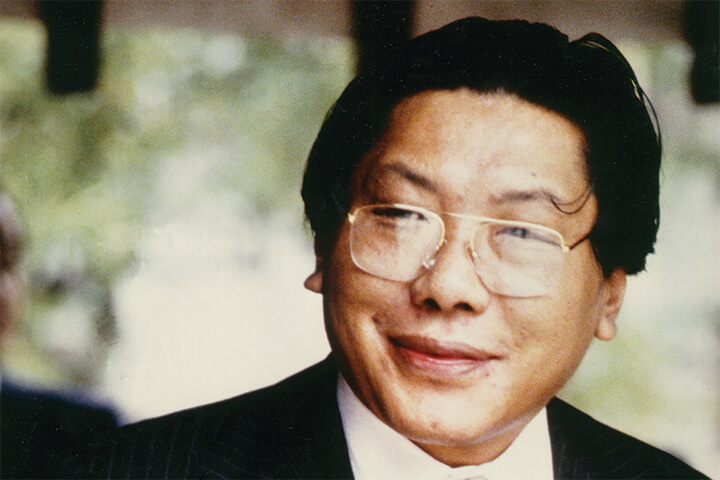
“If somebody doesn’t begin to provide some kind of harmony, we will not be able to develop sanity in this world at all. Somebody has to plant the seed so that sanity can happen on this earth.”
Chogyam Trungpa Rinpoche
Always maintain only a joyful mind.
If someone punches you in the mouth and says, “You are terrible,” you should be grateful that such a person has actually acknowledged you and said so. You could, in fact, respond with tremendous dignity by saying, “Thank you, I appreciate your concern.” In that way his neurosis is taken over by you, taken into you, much as is done in tonglen practice. There is an immense sacrifice taking place here. If you think this is ridiculously trippy, you are right. In some sense the whole thing is ridiculously trippy. But if somebody doesn’t begin to provide some kind of harmony, we will not be able to develop sanity in this world at all. Somebody has to plant the seed so that sanity can happen on this earth.
Training the Mind and Cultivating Loving-Kindness – Chogyam Trungpa
An opportunity to feature the song Make the Madness Stop (1968) by The Free Design.
The Free Design were one of the most inventive pop vocal groups of the late ’60s and early ’70s, transcending run-of-the-mill AM radio fare with intricate harmonies and arrangements that called on expanded instrumentation, uncommon time signatures, and advanced compositional touches. From 1967 to 1973, the band produced seven albums of their specific brand of pop sounds, one that appeared naïve and light on the surface, but held depth in its layers of precise production and emotionally unguarded musical themes. Perhaps too advanced for mainstream tastes, the Free Design would linger in commercial obscurity for their initial period of activity, producing only one charting single in their time while contemporaries like the Beach Boys and the Association dominated the airwaves and the charts. The group’s legacy would live on, however, as new generations of fans were blown over by their complex musicality and fearless sincerity. Artists like Beck, Stereolab, Belle and Sebastian, and Cornelius all cited the Free Design’s influence on their music, and the renewed interest in the band was enough for them to reconvene in 2001 for the album Cosmic Peekaboo.
Jason Ankeny, Rovi
Make the Madness Stop by The Free Design
Follow the way that leads between madness and madness
Flowers on both sides, each side has weeds and gladness and sadness
Pathways are green and black and white and yellow and crimson
Walk on the rainbow flooded by both sides’ truths and opinion
Deplete we must the store of hate immense
And grouping groping nonsense
Honesty and purity, beauty and sincerity
Doesn’t that sound corny?
Wish that I were corny
Walk the way of love, eyes open
Fly the skies above with hope and heart and sense
Blow your mind but not completely
Make the madness stop

Five years. First Covid. Then AI. Then Trump returns.
Were we ready? Are we ready yet?
It has been a mixed bag.
Ready for Covid? Science worked miracles in quickly developing Covid vaccines, saving countless lives. On the other hand, a number of people refused to comply with the most basic social guidelines, resulting in illness and death for uncounted millions. As an unreadiness bonus, many of those same people are now trying to end all vaccines, so that not only Covid but many other long-controlled diseases can get out of control.
Ready for AI? The vast majority of people don’t understand AI, beyond some applications they find useful or stocks to invest in. AI is a profound phenomenon, with tremendous upside and downside. Some who talk about the possibilities and perils know what they are talking about; many don’t. Meanwhile, AI rolls on, like Covid did, with few ready to address it knowledgeably and intelligently.
Ready for Trump? Monty Python said, “Nobody expects the Spanish Inquisition.” They were so right. It is confounding that having already experienced ten years of Trump before his return in 2025 (he announced his presidential run in 2015), including four years as president (10,000 certified lies), four more years as an angry and disgruntled loser, hardly anybody seems really ready to effectively respond. Maybe we should ask those same scientists who responded so brilliantly to Covid to create a Trump vaccine. Except that their research funding has been cut and vaccines are disfavored in some quarters.
The big point is that after Covid, AI and Trump, there is something else coming, something else we are not ready for. We don’t need to know exactly what that is, as if we could. We do have to train to be able to resiliently and effectively take on whatever it is. That is the ultimate readiness.
© 2025 Bob Schwartz
 Bob Schwartz