Bob Schwartz

Category: Technology

Etch A Sketch – the Original Digital Tablet – Goes Political and Mobile

Etch A Sketch is the original digital tablet, if digital means using your fingers to twirl some knobs. The Ohio Art toy company is thrilled that its Etch A Sketch has become a new prop in the public and political conversation.

But as much as we continue to hear about Mitt Romney’s positions in the primary being drawn on an Etch A Sketch – here now, shaken and redrawn in an instant – not many people are going to go out and buy one, let alone carry one around.

The good news is that just last month, digital game company Freeze Tag released an Android version of the official Etch A Sketch mobile app.

It’s a very simple app, permissions-light for the privacy conscious, fun and free, and it works just like the real thing, only much tinier (more advanced features like color and saving sketches are available with the 99-cent paid app). Even if you’re not an Etcher, those of a particular partisan persuasion might find it a handy way to signal your leanings.

SoLoMo and the Digital Have-Nots, Know-Nots and Want-Nots

The digital world is all abuzz about SoLoMo, most recently at SXSW Interactive. And why not? Here are the ingredients:

1/4 cup mayonnaise
Pinch dill
2 tablespoons fresh lemon juice
Black pepper
Orlando grape leaves, jarred
1 fresh skinless salmon fillet, 1 1/2 pounds, cut in 4 pieces
Greek imported feta, sliced 1/8-inch thick
Olive oil
Lemon slices

Actually, that’s the recipe for solomo keftiko, a delicious Greek salmon dish.

The other SoLoMo is social, local, mobile media, one of the latest categories in the Who Wants To Be A Billionaire lottery. The concept behind these apps is that if mobile devices know who and where users are in real time, users can then interact with who (people) and what (businesses) are all around them. Foursquare is the best-known, and the new Highlight was one of the interactive stars at SXSW.

This is ultimately about people, and not just the digital people who know that SoLoMo isn’t something to eat. This led to thinking about who all the people are, and it looks as if there are three big groups that deserve attention: the have-nots, the know-nots, and the want-nots.

There are still plenty of digital have-nots in America, not only those who can barely afford some of the world’s most expensive mobile phones and service, but those millions who don’t have broadband service. They may be actual elected mayors of real places, but they will never be the Foursquare mayor of the local hardware store.

Know-nots make up the vast majority. They are digitally capable, they have all the right equipment, but they just don’t know all the things they can do with it. They will watch, they will learn, they will adapt, they will adopt.

The want-nots are most interesting of all. They are not Luddites. They are enabled, they know what they can do, they have the normal social and communication needs, but they choose to limit their participation in the interactive universe. That can be hard, and when an application becomes a universal platform (Facebook, Twitter), the drumbeat to play is insistent.

Without implying that digital hyper-engagement is in any way a pathology, a model from medical investigation is helpful. In the face of an epidemic, the most useful information about the disease comes not from those who succumb but from those who survive. The digital want-nots seem to have partial immunity, and their choices should be fascinating to SoLoMoers and others.

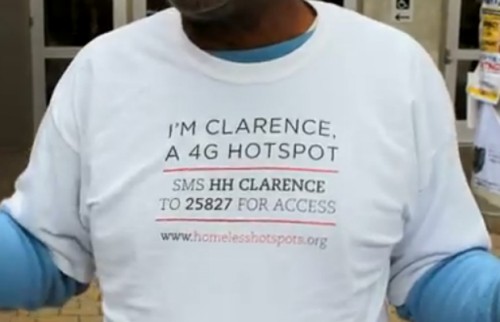
Tone Deaf Marketing at SXSW

The marketing program that turned homeless people into walking WiFi hotspots at the SXSW Interactive conference in Austin has gotten plenty of criticism and ridicule. But above all that, it seems to be one more example of epidemic tone deafness in marketing, entertainment, politics, and everywhere that people don’t seem to be listening to what they are saying and doing.

BBH Labs of New York came up with the concept. They posted:

This year in Austin, as you wander between locations murmuring to your coworker about how your connection sucks and you can’t download/stream/tweet/instagram/check-in, you’ll notice strategically positioned individuals wearing `Homeless Hotspot’ T-shirts. These are homeless individuals in the Case Management program at Front Steps Shelter. They’re carrying MiFi devices. Introduce yourself, then log on to their 4G network via your phone or tablet for a quick high-quality connection…You pay what you want (ideally via the PayPal link on the site so we can track finances), and whatever you give goes directly to the person that just sold you access. We’re believers that providing a digital service will earn these individuals more money than a print commodity.

The “print commodity” that inspired the program was the classic model of homeless people selling newspapers (remember them?) on the streets. Since coworkers are no longer wandering around murmuring about how it sucks that you can’t find a newspaper, this seemed to someone like a rational, even brilliant, marketing analog and social experiment. The critics have been quick to point out that treating people like digital transmitters might be a little depersonalizing, even if you tipped them. Expect to see this one satirized mercilessly and immediately.

You can’t catch all controversial ideas before they go live. It’s a fine line between “what were they thinking” and groundbreaking, just as, in the words of Nigel Tufnel, “It’s such a fine line between stupid and clever.” What can help, simple as it sounds, is taking time, listening to what you’re saying and doing, and exercising some discernment and discretion. All that is in shorter supply, given the pace of messaging and the opportunity to communicate infinitely and instantly. But a little less deafness, a little more time listening, is a way to avoid “it sounded like such a good idea at the time.”