Bob Schwartz

Category: Technology

MLB.com At Bat App

MLB-At-Bat-Splashscreen
About the game of baseball, you cannot say enough great things. No matter how many players in other sports wear John 3:16 eye black or bend a celebratory knee in devotion, baseball is the sport God invented and intended for great athletes to play—proven, among other evidence, by the 60 feet from home to first that is the perfect balance between the speed of a running batter and the speed of a ball thrown from shortstop. Proven also by that fact that very few stars in those other sports have succeeded at baseball, including the greatest of all basketball players, Michael Jordan. If baseball is God’s game, the curve ball is God’s wicked joke.

About the business of baseball, it is more equivocal. As with all sports, teams face daunting changes as the financial stakes have grown exponentially. Some teams have handled the challenge with professionalism, skill and finesse, and with respect for the game, for players, and most of all for fans. With other teams, the terms self-interested and heedless of baseball’s best interests may apply. Right now, a number of Florida fans consider Miami Marlins owner Jeff Loria the poster person for that.

About Major League Baseball, the enterprise overlord that oversees all this, there is even more equivocation. Most of that is centered on the Commissioner. Just as historians talk about the evolution of the Imperial Presidency, the Imperial Commisionership grew out the infamous Black Sox Scandal in 1919, when players on the White Sox were accused of throwing the World Series. The next year, federal judge Kenesaw Mountain Landis was appointed Commissioner to take control, and ever since, the Commissioner has served an increasingly central role in the fortunes (metaphorically and literally) of the game.

The best modern Commissioner, who combined the myth and poetry of baseball with its down and dirty aspects, was Bart Giamatti, whose tenure was truncated by his untimely death. Giamatti knew how to manage huge and venerable institutions as president of Yale, but also understood the soul of the sport as a writer and a passionate lover of baseball. The current long-time Commissioner, Bud Selig, is more controversial, and a bit less generally beloved or respected in some quarters. Selig is no poet, nor was meant to be, but some knowledgeable fans also believe that as the game both succeeded and suffered over the past decades, he was a catalyst for both.

Whether or not you are a fan of the Commissioner, or of the direction MLB is taking, or of the direction your particular team is taking, it is time to give credit where it’s due.

Baseball fans are as fanatic as any—some might say more than any—in delving into the details, past and present. Once upon a time, that might have meant reading the Sporting News, especially as spring training for a new season began. Then magazines began popping up, and then fantasy leagues, and then more magazines to inform the fantasy leagues.

But nothing beats the comprehension and immediacy of digital for any special interest, and baseball is no different. The very thought of having a mobile app to feed your baseball addiction is almost too much to bear. The sad news, though, is that with one grand exception, baseball is not yet successfully mobile. Typical for the mobile realm, there’s a bunch of junk and some almost-decent efforts.

The exception: love, hate or question MLB, you have to admit that the free MLB.com At Bat mobile app is a model of how to serve a universe of fanatics. (As an extension of their online offerings, there are paid premium versions that include live games.) Scoreboard, standings, players, teams, rosters, news—it is all there, in an admirably usable and appealing form. They keep working at it too, with a major overhaul just as spring training began. It is not perfect, but it will do until something better comes along.

If you are a real baseball fan, married to the game, you have reasons to complain and moan about MLB even as you are ecstatically thankful for your bliss. Set aside whatever those complaints are and here, as another season begins,  consider downloading the MLB.com At Bat mobile app today.

Permissions and Privacy: Medium

As with all mobile apps, please read carefully the Permissions requested by the developer. Users should be diligent in weighing potential privacy issues against the utility and value of an app.

American Experience: Silicon Valley

Silicon Valley
Tech history is our history. As enlightening and fun as it is, it is also more complex than learning about cars and trains and planes, all of which we understand, or can learn to. But transistors, integrated circuits and, ultimately, microprocessors are harder to grasp.

But this is also human history, the intertia of brilliant people at rest and in motion. That’s why the background of these digital days is fascinating, and why the new PBS American Experience documentary Silicon Valley is so enthralling.

You know where Silicon Valley is, what it is, and may have been there. How that agricultural Santa Clara Valley became the center of the world is a story. But the real story is how Robert Noyce, Gordon Moore and Andrew Grove—the godfathers of Intel—and their colleagues, predecessors and competitors changed the way the world worked technically, commercially and socially.

Silicon Valley is that story. It is inspiring, in the way that all risky ventures into the unknown are inspiring. It is also one of the rare worthy arguments for some sort of true American exceptionalism, since there is an inherent sense watching this—as politically incorrect as some may find it—that this is a quintessentially American story. This is what we did, this is what we do.

Silicon Valley is not to be missed.

Walt Whitman Helps Launch Consumer Electronics Show in Las Vegas

Walt Whitman
First it was Abraham Lincoln in the new television campaign for the Lincoln Motor Company (the founder of that firm was a fan of the president, back when the company was started in 1917).

Lincoln Motor Company

Now Walt Whitman, the father of modern American poetry and, coincidentally, a big fan of Lincoln himself, is helping to launch this year’s Consumer Electronics Show in Las Vegas (January 8-11).

Whitman will probably not be seen emerging from a mysterious fog as Lincoln does in the commercial, although that would be unspeakably cool.

Instead, Whitman’s most famous line of poetry is quoted (without attribution) in the official description of the very first CES SuperSession

The Digital Health Revolution: Body, Mind and Soul
January 8, 2013, 9:30-10:30 a.m.

“I sing the body electric” takes on new meaning in our brave new digital world, where devices let us monitor everything from our stress levels to our genetic sequences, and devices with 100 real-time biosensors loom on the horizon. Join moderator Arianna Huffington as she leads four digital health leaders in conversation — on the latest innovations in the field, how those innovations have the potential to change lives, and what the digital revolution means for the body, mind, and soul.

The literarily perspicacious will notice that the first line of copy includes allusions to two groundbreaking writers—not just Whitman, but also Aldous Huxley. Huxley’s Brave New World vision is actually much closer to what is going on at CES than Whitman’s. Unfortunately, Huxley will not be coming out of the mist either, though the thought of his joining up with Whitman in Las Vegas to look at the latest gadgets is mind-blowing—even without Huxley’s Soma or LSD. Add Lincoln, and it is the stuff that dream movies are made of (Steven Spielberg, are you listening?).

Back to Whitman, I Sing The Body Electric is included in his Leaves of Grass (1855). Whitman’s work was a sensation, in part because of his unabashed celebration of the splendor and wonder of the human body and sexuality. The poem is just such a celebration, a spiritual anatomy lesson that is like a painting, whose message is: be not ashamed.

It isn’t clear that is what the CES copywriter had in mind, though writers generally deserve much more credit than they get. If the point is that digital pioneers plan to touch every part of our bodies, that works too.

Meanwhile, Whitman—whose use of the term “electric” was itself quite pioneering—would probably be happy to see his poem alive and well in the context of keeping and making people healthy, head to toe, organ to organ. See you in Vegas, Walt.

For the digiterati and literati, here is the closing section of the poem:

O my body! I dare not desert the likes of you in other men and women, nor the likes of the parts of you,
I believe the likes of you are to stand or fall with the likes of the soul, (and that they are the soul,)
I believe the likes of you shall stand or fall with my poems, and that they are my poems,
Man’s, woman’s, child’s, youth’s, wife’s, husband’s, mother’s, father’s, young man’s, young woman’s poems,
Head, neck, hair, ears, drop and tympan of the ears,
Eyes, eye-fringes, iris of the eye, eyebrows, and the waking or sleeping of the lids,
Mouth, tongue, lips, teeth, roof of the mouth, jaws, and the jaw-hinges,
Nose, nostrils of the nose, and the partition,
Cheeks, temples, forehead, chin, throat, back of the neck, neck-slue,
Strong shoulders, manly beard, scapula, hind-shoulders, and the ample side-round of the chest,
Upper-arm, armpit, elbow-socket, lower-arm, arm-sinews, arm-bones,
Wrist and wrist-joints, hand, palm, knuckles, thumb, forefinger, finger-joints, finger-nails,
Broad breast-front, curling hair of the breast, breast-bone, breast-side,
Ribs, belly, backbone, joints of the backbone,
Hips, hip-sockets, hip-strength, inward and outward round, man-balls, man-root,
Strong set of thighs, well carrying the trunk above,
Leg fibres, knee, knee-pan, upper-leg, under-leg,
Ankles, instep, foot-ball, toes, toe-joints, the heel;
All attitudes, all the shapeliness, all the belongings of my or your body or of any one’s body, male or female,
The lung-sponges, the stomach-sac, the bowels sweet and clean,
The brain in its folds inside the skull-frame,
Sympathies, heart-valves, palate-valves, sexuality, maternity,
Womanhood, and all that is a woman, and the man that comes from woman,
The womb, the teats, nipples, breast-milk, tears, laughter, weeping, love-looks, love-perturbations and risings,
The voice, articulation, language, whispering, shouting aloud,
Food, drink, pulse, digestion, sweat, sleep, walking, swimming,
Poise on the hips, leaping, reclining, embracing, arm-curving and tightening,
The continual changes of the flex of the mouth, and around the eyes,
The skin, the sunburnt shade, freckles, hair,
The curious sympathy one feels when feeling with the hand the naked meat of the body,
The circling rivers the breath, and breathing it in and out,
The beauty of the waist, and thence of the hips, and thence downward toward the knees,
The thin red jellies within you or within me, the bones and the marrow in the bones,
The exquisite realization of health;
O I say these are not the parts and poems of the body only, but of the soul,
O I say now these are the soul!
Losers and Winners


In the first Presidential debate, which Barack Obama lost, Mitt Romney directly attacked the President on government support for energy innovators:

“Now, I like green energy as well, but that’s about 50 years’ worth of what oil and gas receives. You put $90 billion — like 50 years’ worth of breaks — into solar and wind, to Solyndra and Fisker and Tesla and Ener1. I mean, I had a friend who said, you don’t just pick the winners and losers; you pick the losers.”

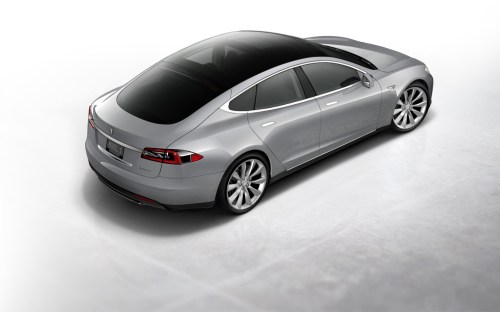
Today, that “loser” Tesla won. The Tesla Model S was named by Automobile Magazine as the 2013 Automobile of the Year:

The auto industry is tough enough for a giant like General Motors. What we can say with this award is that Tesla deserves to succeed. It has managed to blend the innovation of a Silicon Valley start-up, the execution of a world-class automaker, and, yes, the chutzpah of its visionary leader [Elon Musk]. The result is the Model S. It’s not vaporware. It’s our Automobile of the Year.

Sometimes picking winners and loser is difficult. Sometimes it’s not.

Android: Eat Dessert Last


On October 29, Google will introduce a new mobile device based on Key Lime Pie, the latest and likely sweetest version of the Android operating system.

This is great news for some. But for many Android users, who are looking for a little more sugar, it is somewhat strange.

The strangeness is that a number of high-end and upgradable devices sold just within the past year are still waiting for the last two Android upgrades. Some running on Gingerbread have been waiting for much of this year for Ice Cream Sandwich (version 4.0). Ice Cream Sandwich devices have been waiting months for Jelly Bean (4.2). Before all that happens for many devices, Key Lime Pie (4.3) will be a delicious reality—for some, but hardly for all.

The cause of the backlog is what has come to be called Android fragmentation (there’s no cute dessert way of saying that). As an open OS, Android is adopted and overlaid by each device maker for selected devices, and the various providers also get involved in the Android experience for each device they choose to carry.

This three-way would be complicated enough if Android were a static OS. But Android won’t stand still—those robot legs may be stubby, but they sure can move. Android is less than five years old, a relatively low-maturity but quickly-developing OS. The striving of the developers is admirable, and they are in the process of evolving Android from good to very good to great.

But every upgrade demands that Android, the device makers and the providers essentially go back to square one, determining which devices are suitable, testing and tweaking so that users will have a positive experience that reflects well on all involved.

That’s the ideal. The reality is that Android and the other players hype the improvements, but then are forced by dreaded fragmentation, and whatever other interests are involved, to make users wait.

It’s not that a piece of Gingerbread isn’t sweet and satisfying; it’s actually a pretty solid OS. And for the luckier ones, they’ve been happy with an Ice Cream Sandwich. It’s just that standing in front of the Mobile Sweet Shoppe, nose pressed to the glass, it’s tough to watch the customers inside scooping out all those colorful Jelly Beans. And now, insult to injury, the shop is passing around slices of Key Lime Pie. Not even lemon meringue, for goodness sake, but Key Lime!

We know, or hope, that dessert is really on the way. It’s just a little frustrating watching someone else eat it.

I Read Newsweek Today, Oh Boy


If we hold a wake for each print publication that dies or goes digital-only, we’d be drinking all the time (which is not a bad response). Newsweek today announced, in spite of recent protestations, that it was indeed ending publication of its print edition this year.

Volumes have been written about this phenomenon, and more will be on the way. You can read them on your computer, e-reader, or mobile device. In the meantime, an observation.

Print media are in fundamental ways different than their digital counterparts as tools. Not better or worse, just different. This is not the conceit of old-school anachronists who defy the new guard to take the paper magazines or books from their (sooner than later) cold, dead hands. To understand how that could be so, read the increasingly unread Marshall McLuhan. The message of the medium is the message is that each medium is particular in granular ways (not sure if McLuhan would have loved, hated, or wished he had coined that buzzword). Those ways are not just meaningful, they are some of the most important meaning. If you can’t make a long list of conceptual, non-practical ways that identical content is deeply different in paper and digital form, you aren’t thinking hard enough, and you haven’t read McLuhan.

Suffice it to say that in ways that matter, the Newsweek that doesn’t require electrons is different than the one that does, even if the content is the same.

After saying all those important and noble things, a small confession of complicity. There was a time when a mailbox full of top-tier magazines was both a sign and a source of erudition. Many news junkies got their start when their parents subscribed to the newsweeklies—one, two or, if you were lucky, all three. Newsweek, Time and U.S. News and World Report every week, highly anticipated and absorbed cover to cover once they arrived.

The arrival of paper magazines is still a thrill. But one by one, the subscriptions were allowed to dwindle. It wasn’t just access to free and instantaneous alternatives; as far as expense, many print magazines priced themselves ridiculously low. It was like a relationship that lapses and fades, even if you know you might well be better off in keeping it alive. It was just the times, the way of the world.

Maybe Newsweek and other print editions would have lasted if subscribers had been willing to make an effort and work on the relationship. But they didn’t. We may look back and see these print magazines as the ones that got away, but we shouldn’t have let them. Just because it’s the way of the world doesn’t mean it’s for the best.

The Goldilocks Test for Phone Size


First things first: You iPhone folks can leave. You have no choice on the size of your smartphone, because Apple has made that choice for you. The iPhone 5 is no wider, but one-half inch longer, than the previous version. Take it or leave it, and millions are taking it.

Android is a whole different world or, as we’ve learned to say, ecosystem. Screens are getting bigger, for optics and utility, and so have the phones. Samsung pushed the limits by creating the Note, half-phone/half-tablet (a “phablet”) with a screen more than five inches in size. Even the same phone may have slightly different dimensions for each carrier. Someone has no doubt charted the dozens of sizes available; it is enough to say that there is probably an optimal size for just about everyone.

But what is optimal? That very practical question arose in the course of handling and comparing two of the most popular and capable Android phones of the past couple of years, the Samsung Galaxy S2 and S3. The S2 is superb, but in almost all respects the S3 is better. The S3 does have a bigger screen, and so is ever so slightly bigger to hold.

Ultimately, the question is not whether size matters; the question is whether it matters to you.

That’s what the Goldilocks test is about. There are three parts, one about style, two about functionality.

The style part requires a mirror. If you are someone who uses a smartphone for voice calls (though fewer now do), hold up the phone to the side of your head. Do you feel that you look cool or silly? Do you feel like a modern version of the 1970s hotshot with a monstrous Motorola Brick pressed to his ear? (see above)

The second part is portability. Without getting stereotypical, this is a divide between women and men. Many women carry their phone in a bag, where up to a point, size doesn’t matter. Men usually carry theirs in a pocket, and depending on which pocket and which clothes, this can be an issue. Jeans and tight pants can be a problem (it is taking unreasonable will power not to paraphrase Mae West: “Is that a phone in your pocket or are you just happy to see me?”)

The final part is the most important: How much does size affect usability? This is where differences in hand size come into play. You want to be able to use a phone with one hand, and that’s going to depend on the hand that’s using it. This is also where the most objective part of the Goldilocks test was formulated.

Put the phone in the palm of your hand. Reach around the middle with your thumb and middle finger. If your fingers touch, you will mostly be comfortable using the phone with one hand. If not, you are on occasion going to find yourself doing some juggling or bringing in the other hand. It’s that simple.

Take the test. You want to be able to say about your phone, as Goldilocks said about beds, as others have said about the height of trees: This one is just right.

Diztronic: The Wonder Case for Smartphones


The world’s most advanced tech companies spend unlimited money and time to make sure your smartphone is as thin, light and beautiful as possible. And they have succeeded. The Samsung Galaxy S3, for example, is a work of practical art.

Then you put it in a box. An expensive box. As in, say, an OtterBox case.

You do that because you are human. And human beings have been known to drop or otherwise destroy five hundred dollar smartphones in the blink of an eye.

What was once sleek and sexy—but vulnerable—is now bulky and unattractive—but safe. It’s like the father who demands that his teenage daughter go out wearing a dumpy and loose-fitting dress that hides her arms, legs and everything else.

Then there is Diztronic.

Admittedly, the Diztronic cases do not include three or more layers of protection that some other overly-expensive body-armor cases offer. So if you know yourself to be dangerously clumsy or demand a case that will withstand an asteroid, you may have to live with your phone in a box.

But if you want to enjoy a more than reasonable amount of protection, be able to appreciate and enhance the beauty of your phone, have it feel great in your hand and save money, the Diztronic cases are for you.

Diztronic makes its cases from thermoplastic polyurethane (TPU), a plastic stronger and tougher than silicone, offering excellent shock absorption and scratch resistance. The cases are flexible, ultra-thin and perfectly custom fit for each type of phone. A subtly raised edge allows you to lay your phone down on the screen side without damage or worry. Then there are all the colors that match or complement your phone.

On top of that, Diztronic cases are ridiculously inexpensive, currently $9.90 for Android cases and $11.90 for the new iPhone 5 cases (some even less at their Amazon store).

If you have a new phone, visit Diztronic and buy your phone a new outfit. In fact, at that price, you can afford to buy it more than one look. And if your phone is currently encased in an unattractive hard shell, think how much better you and it will feel with something a little less restrictive and a lot more beautiful.

The Art of the Lock Screen


If you are a smartphone user, you look at the lock screen—the opening screen you swipe to get into your phone—maybe a hundred times a day. Just a second at a time, but seconds add up to a real experience and impression.

The pre-loaded images on lock screens are pretty banal, meant to show off the screen’s high-resolution capability without offending or overexciting anyone. The state-of-the-art Samsung Galaxy S3, for example, out-of-the-box displays a close-up of a dandelion. It can be changed out, but the few stock alternatives are not any better—beautiful, color-rich, but not much else. There is a cool effect that when swiped, the lock screen image ripples like water and fades, but a rippling and fading dandelion is still a dandelion.

As noted, it can be changed out, to any image at all. Outside the parameter of its being a vertical rectangle, the possibilities are infinite.

That’s how Jackson Pollock came to this lock screen.

It wasn’t an easy choice, but the road to it was a fascinating journey in art.

The first decision was to steer clear of the figurative. Even if a work was found that could properly fit the dimensions of the screen, or it was cropped to fit, people and things didn’t seem so appealing. There was also the issue of having typed words—time, date, etc.—and maybe icons on top of those figures.

That left thousands of variously abstract works of art. To narrow it down to a manageable, shorter-than-a-lifetime task (this is, after all, a phone, not the Getty), the online collections of the Museum of Modern Art and the Tate were reviewed.

And so, for a couple of hours, an intensive search. Surprisingly, the functional nature of the application wasn’t a drawback. It wasn’t like the derisive cliche about an interior decorator picking paintings on the basis of whether they match a planned color scheme. Instead, it was like speed dating art in a museum—in a good way. Every image had a chance to speak, but instantly, because that is exactly how it was going to be seen from now on.

A few styles were rejected. Pure monochromatic paintings may be important as works of art, but on a phone screen just look like a single color background. Op art seemed like it might work, but in that confined space, the screen seemed overbusy and dizzy, and a little jarring.

The finalists were Ad Reinhardt and Jackson Pollock. From Reinhardt, his blocks of color were especially inviting, including this version of Abstract Painting (Blue) (1952):

In the end, Pollock’s Full Fathom Five (1947) is the art of this lock screen. Here’s a description from the Museum of Modern Art:

Full Fathom Five is one of Pollock’s earliest “drip” paintings. While its lacelike top layers consist of poured skeins of house paint, Pollock built up the underlayer using a brush and palette knife. A close look reveals an assortment of objects embedded in the surface, including cigarette butts, nails, thumbtacks, buttons, coins, and a key. Though many of these items are obscured by paint, they contribute to the work’s dense and encrusted appearance. The title, suggested by a neighbor, comes from Shakespeare’s play The Tempest, in which the character Ariel describes a death by shipwreck: “Full fathom five thy father lies / Of his bones are coral made / Those are pearls that were his eyes.”

All along, before the search started, there was something about putting Pollock on the phone, just as there is something about putting him on the wall. People mocked abstract expressionism—and Pollock as its most famous artist—as some kind of cultural con game. “Anybody can do that, hell, my five-year-old can do that.”

Well, no. If you want evidence that this is art, check out the few square inches of screen above. Even if the screen says “swipe,” even if you’re in a hurry to get to a call or an app, just linger and look for a few extra seconds. What is going on there reaches out sixty-five years, from a time when pocket phones and pocket computers were glints in the eyes of scientists, madmen and mad scientists. And now Jackson Pollock lives there.

No dandelions. Just pure digital cool.

Think the Same: Apple as IBM, Android as Apple


Think Different.

That was the theme of Apple’s award-winning and successful ad campaign that ran from 1997 to 2002. Among other creative inspirations, the concept played off of the even more famous one-word IBM slogan “Think”, which had been in use since the 1920’s, when it was devised by IBM founder Thomas J. Watson, Sr.

To make the point, Apple created a series of commercials and posters featuring those who had thought differently, including Albert Einstein.

The ad copy included this:

Here’s to the crazy ones. The misfits. The rebels. The troublemakers. The round pegs in the square holes.

The ones who see things differently. They’re not fond of rules. And they have no respect for the status quo. You can quote them, disagree with them, glorify or vilify them.

Keep this in mind as thousands line up—camp out in tents on the street—to be one of the first to own an iPhone 5. Even many self-aware tech pundits have had to admit it: in the current state-of-the-art, the iPhone 5 is not all that cutting edge. But even knowing that, they too are craving it. Resistance is futile.

Apple began as the “other” personal computer. The IBM/Microsoft-based paradigm relentlessly rolled on and over the market. The hardware technology was almost universally licensed and adopted as a standard. Microsoft dominated the operating system, and software was developed for it. PCs were available at every price point and capability, and the market exploded.

Apple thought differently. From the beginning, and with only one brief foray into third-party licensing, Apple decided it would control everything. Quality and style could not be left to the vagaries of the market and to the poor judgment and penny-pinching ways of third party vendors. The result in personal computing was that while Apple won only a minority share of market, its products were not only different but (in the view of some) better, and adopted by creative and thought leaders.

The turning point came when Apple went mobile with the iPod. There had been portable music players for years, beginning with Sony’s revolutionary Walkman. By applying its computing model to this device, Apple did something just as revolutionary. Unlike having a minority position in computing, Apple took the lead in digital music players and never looked back. It not only owned the device, it owned the store for feeding the device. Apple was no longer the other; Apple was it.

Apple took the same tack as it always had when it entered the mobile phone market: superior technology plus superior style. And as with its earliest computers, it maintained complete ownership and control. This was more than just a matter of not sharing the rewards with third-parties. As a consumer, you could be sure that any application would run flawlessly with the Apple OS on an Apple device.

The iPhone is now a standard, one embraced by millions with a fanaticism that approaches a cult. Henry Ford’s famous message to car buyers of the original Model T was that you could have any color, as long as it was black. Steve Jobs may have never quoted this, but this is the experience of the iPhone buyer. And they are ecstatic at the lack of choice.

The iPhone is a standard, but not the standard. The other force in mobile phones is Android.

The metaphorical differences between Apple and Android are infinite. If Apple makes the trains run on time, Android has powerful trains still looking for the conductor, the schedules and even the track. If Apple is a tightly produced Broadway show, Android is a three-ring circus with the ringmaster on acid. If Apple is Singapore, Android is the Wild West.

And yet, Android is the dominant mobile platform in the world, and its lead over Apple is widening.

The Android system—if you can call it that—works like this. The operating system is developed and upgrades. Each version goes out to device makers, who adopt it to their own needs, including overlaying it with proprietary additions, and test its integrity and compatibility. These devices are then sent to carriers and service providers who add their own proprietary touches and do further testing. It is a lengthy process that is fraught with missteps, and explains why new versions and upgrades can take months to reach consumers.

Then there are the applications and developers. Quality and qualified developers face the challenge of making sure that their applications work properly on all permutations of Android versions and device-specific overlays. Developing for Apple iOS, on the other hand, is as simple as developing for Apple iOS: if it works, it will work for everyone. And anyone can and does develop for Android. With the exception of malicious apps kept out of the Android market, anything goes. There are thousands of Android apps that are dysfunctional, sometimes comically so.

For some of us who appreciate the excellent and forward-thinking devices in the Android world, even the weirdos and app pranksters are part of the charm. Yes, it can take far too long to get Android upgrades, and even then things may not work perfectly. But most of the time, the results are spectacular. If that is the price to pay for not enlisting in the Apple Army, we’ll pay it.

In the final analysis, that is the irony. Apple has become the world’s leading tech company the way IBM did in the 1950s and 1960s: by telling the world how computing should be done and making them accept it. IBM salesmen—in fact everyone in the company—was required to wear a uniform white shirt and tie. One of the legendary mantras of that period was recited by corporate purchasing agents: “Nobody ever got fired for buying IBM.”

Android is an adventure. It might say of itself, as one corporate iconoclast used to:

Here’s to the crazy ones. The misfits. The rebels. The troublemakers. The round pegs in the square holes.

The ones who see things differently. They’re not fond of rules. And they have no respect for the status quo.

Apple is now IBM. Android is now Apple. It doesn’t take a genius to see that.