Bob Schwartz

Category: Spirituality

Days of Awesome: Day 1 (Rosh Hashanah)


I brought them out of the land of Egypt and I led them into the wilderness. I gave them My laws and taught them My rules, by the pursuit of which a man shall live. Moreover, I gave them My sabbaths to serve as a sign between Me and them, that they might know that it is I the Lord who sanctify them.
Ezekiel 20:10-12 (New Jewish Publication Society translation)

Note from The Jewish Study Bible:

The Sabbath is the foundational sign of the covenant (Exod. 20.8–11; 31.12–17). Scholars have suggested that the Sabbath became particularly significant in the exile, as holy time replaced the vacuum of holy space (the Temple); this might explain why the Sabbath plays such a significant role here. As in Exod. 31.13, 17 (from the Priestly tradition), it is viewed as a sign, namely a symbol acknowledging God as Creator.

Here we are confronted with the phenomenon at the heart of this holiday. At the heart of every holiday. At the heart of religion and reality itself. We are concerned with space. We are concerned with being. We are concerned with time too. But we may not be properly concerned, in a balanced way that accounts for time, space and being.

We can rule space, or at least pretend to. If you visit New York or other great cities, you see how people have shaped space to their liking and purposes. But where in New York or elsewhere have even the richest and most powerful ultimately shaped time? We can mark time, but do we understand? To help us understand, time is set aside. It may be by God, it may be by our society or community, it may be by and for those close to us.

The Sabbath each week, and the Days of Awe each year, are set aside to be different than the other days of the week or of the year. Different in fact than any other days of eternity. In part to remind us of present eternity.

For more, see The Sabbath by Abraham Joshua Heschel and The Time-Being by Zen Master Dogen, which can be found in Enlightenment Unfolds.

This is the first post in a very small project/experiment in random wisdom I call The Days of Awesome. In addition to the standard and traditional forms of worship and contemplation associated with the Jewish High Holy Days (also known as Days of Awe), each day of the holiday I will be studying a randomly selected chapter of the Tanakh (also known as the Jewish Bible or the Old Testament), which has 39 books containing a total of 929 chapters.

Among other things, this is inspired by the I Ching and by social theorist and philosopher Gregory Bateson, who is quoted as saying “I am going to build a church someday. It will have a holy of holies and a holy of holy of holies, and in that ultimate box will be a random number table.”

How to Prepare Spiritually for the Debate

The Clinton-Trump debate is taking place tonight, if you hadn’t heard. People will watch for a whole lot of different reasons. Some to see the candidate they like succeed, some to see the candidate they don’t like that much succeed, some to see the candidate they really don’t like be destroyed, some because they just like to watch twisted spectacles and disaster movies. Sharknado, maybe?

The term soul-sucking may be colloquial, but there’s real truth in it. Some things just seem to draw the life force right out of you, creating a spiritual vacuum. Depending on your perspective, this debate could be one of those.

Here are three optional steps for dealing with this.

  1. Don’t watch. Estimates are that over 100 million people may watch this. This might include friends and loved ones, and it might include you. Which makes it unlikely that you won’t watch a little of it, or the whole thing. Friends don’t let friends watch alone.
  1. Prior to watching, read something or do something that will settle you firmly on the ground and in reality. This may already be part of your regular practice. If not, this may be a good time to start.
  1. After watching, you will notice seemingly millions of talking heads trying to spin what you’ve already seen and heard, or trying to prove how smart they are by repeating what you’ve already seen and heard, and then telling you about it, attempting to impart meaning to what you may regard as meaningless. At that point, if you insist on listening to them, repeat Step 2.

Music: Calling All Angels

Calling All Angels

The last post discussed asking angels to intercede on behalf our attempts to turn as a new year (Rosh Hashanah) begins. Whether or not you believe in angels, whether or not you believe they have any influence, it never hurts to ask.

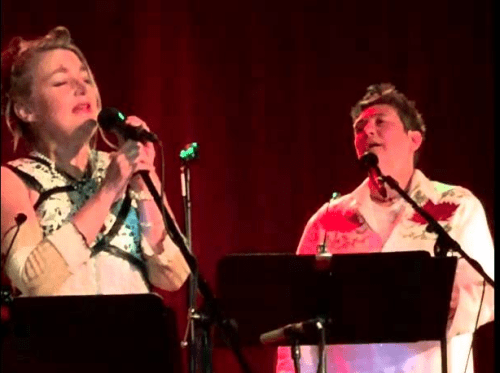
Here is a favorite angels song, Calling All Angels, written by the great Jane Siberry, performed by Siberry and the equally great KD Lang.

Calling All Angels

Santa Maria, Santa Teresa, Santa Anna, Santa Susannah
Santa Cecilia, Santa Copelia, Santa Domenica, Mary Angelica
Frater Achad, Frater Pietro, Julianus, Petronilla
Santa, Santos, Miroslaw, Vladimir and all the rest

A man is placed upon the steps and a baby cries
High above you can hear the church bells start to ring
And as the heaviness, oh, the heaviness, the body settles in
Somewhere you can hear a mother sing

Then it’s one foot, then the other as you step out on the road
Step out on the road, how much weight, how much?
Then it’s how long and how far and how many times
Oh, before it’s too late?

Oh, and every day you gaze upon the sunset with such love and intensity
Why?
It’s ah, it’s almost as if you could only crack the code then you’d finally understand
What this all means

Oh, but if you could, do you think you would trade in all
All the pain and suffering?
Oh, but then you’d miss the beauty of the light upon this earth
And the sweetness of the leaving

Calling all angels, calling all angels
Walk me through this one, don’t leave me alone
Calling all angels, calling all angels
We’re tryin’, we’re hopin’, we’re hurtin’, we’re lovin’
We’re cryin’, we’re callin’ ’cause we’re not sure how this goes

Selichot and Angels


Selichot

Do Jews pray to angels? Do all of us need all the help we can get?

The Jewish Days of Awe begin soon, starting with Rosh Hashanah on the evening of October 2, ending with Yom Kippur on the evening of October 11.

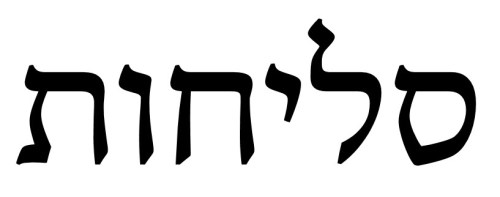
It is a time of teshuvah, often translated as “repentance”, but more precisely “turning”—that is, turning away from ourselves and our ways and to God and godly ways. To start the process of reflection, on a Saturday night before Rosh Hashanah a special set of preparatory prayers begin to be recited, known as Selichot. This year, Selichot begins tonight, on the night of Saturday, September 24.

The conventional cast of characters in the soulful dialogue of teshuvah and the Days of Awe are yourself, the people and world around you, and God. But Rabbi Geoffrey W. Dennis, in the fascinating Encyclopedia of Jewish Myth, Magic and Mysticism, adds an unexpected player:

Machnisei Rachamim (Conveyors of Compassion)

This is a prayer petitioning the angels to intervene with God:

Conveyers of compassions, obtain our mercy before the Master of compassion,
Makers of prayer, make our prayer heard before the Hearer of prayer.
Makers of wailing, make our wail heard, before the Hearer of wailing.
Conveyers of tears, convey our tears before the King who yields to tears.
Strive to raise up supplication, raise up supplication and plea,
Before the King, high and exalted. The King, high and exalted.

This prayer is only recited at Selichot, a penitential service recited prior to the coming of Rosh Hashanah.

This prayer is anomalous in that the rule that Jews should pray only to God, and not to intermediaries, extends back to Talmudic times: “If troubles come upon a person, do not entreat the angel Michael or the angel Gabriel. Rather, entreat Me alone and I will help you immediately” (J. Ber. 9:1). Maimonides makes this normative, “It is only fitting to pray to God and it is not fitting to pray to any other.”

The Maharal of Prague was sufficiently troubled by the appearance of this prayer that he amended the wording (Netivot Olam, Netiv Ha’Avodah no.12), an innovation that did not catch on. In modern times, no less an ultra-Orthodox authority than the Hatam Sofer wrote that at Selichot he personally skips over this prayer (Orach Chaim no. 166), a shocking confession from the leader of a community that insists ALL of the tradition is sanctified and obligatory. The prayer has been entirely edited out of Selichot liturgy in the modernist Reform movement.

And yet at least one Midrash exists that endorses the idea of angels as intermediaries of our prayers (S of S R. 2:7). And many Jews worldwide recite the words barchuni l’shalom … (“bless me with peace”), when they sing the popular Shabbat hymn, Shalom Aleichem. This prayer is found only in the Ashkenazi (northern European) tradition, suggesting it was written when Jews were surrounded by a Christian culture that emphasized the use of divine intermediaries (saints) and even had services in honor of specific angels (Michaelmas).

Music: Calling on John Coltrane

A Love Supreme

The last post was about Gil Scott-Heron’s Lady Day and John Coltrane. Realizing now that some (most?) readers were not familiar with Coltrane, here’s some background and suggestions.

Music fans love to debate “the best”. There is no debate here. Coltrane was the best saxophonist, and some would argue, jazz player. Along with his gifts as an artist, part of that is how spiritual his music is.

He came by that spirituality when, in the midst of his too short career, he kicked a heroin habit by finding a Higher Power. The truth is that he had always been channeling that Higher Power. He just hadn’t been aware of it.

His most overtly spiritual work is A Love Supreme. For those who are not jazz listeners, this may be a bit challenging for a first stop. But at some point, please give this a listen. Bach and centuries of holy music have nothing on Coltrane.

A good place to start gently is the album My Favorite Things, which opens with the title track. All due respect to Julie Andrews (who I do like), this is the famous Sound of Music song in a whole other cosmos. While you’re there, stick around for the next track, a slowly lyrical Every Time You Say Goodbye, a perfect piece of love’s longing, Coltrane style.

Praying for Everybody. Even Trump.

I ran into a neighbor this morning, someone who goes to morning prayers every day.

Me: How was davening (prayer) today?

Him: Good. I prayed for everybody. Even Trump.

Me: Thank you. That’s the Yiddishe (Jewish) way.

And so it is.

Reason and spirit, wisdom and compassion

Reason

Reason
as solid
as a rock.
Clinging to it
in the middle
of the ocean.

When I look to friends, colleagues and mentors who have taught and influenced me, I see in many of them a happy and helpful balance of reason and spirit. I thank them, and recommend having such people in your life.

This may be what I might want others to say of me, that I neither abandoned reason nor clung to it too tightly.

The Tao of No Place Like Home

These words from Verse 80 of the Tao Te Ching could come from the Wizard of Oz:

let there be another state so near
people hear its dogs and chickens
but live out their lives
without making a visit

In other words, there is no place like home.

The force of exploration, discovery and progress is strong with us. This post, for example, is drafted on an amazing digital device, edited on another amazing digital device, and published on an amazing global network. Moving house and traveling are easier and more convenient than ever. So many modern tools. So big a world.

Verse 80 proposes a different view. Labor-saving tools not used. Boats and carts not ridden. Knots used to communicate (a pre-writing system). Pleased and content with clothing and goods. You may think that this is regress, the opposite of progress. But is it? In your heart, is that what you believe?

Imagine a small state with a small population
let there be labor-saving tools
that aren’t used
let people consider death
and not move far
let there be boats and carts
but no reason to ride them
let there be armor and weapons
but no reason to employ them
let people return to the use of knots
and be satisfied with their food
and pleased with their clothing
and content with their homes
and happy with their customs
let there be another state so near
people hear its dogs and chickens
but live out their lives
without making a visit

Lao-tzu’s Taoteching, translated by Red Pine


Laughing at Swallowing a Flaming Iron Ball

Dhammapada - Juan Mascaro

This morning I laughed at a few translated lines from a great and serious spiritual classic. The Dhammapada is a brief (423 verses in 26 chapters) collection of the sayings of the Buddha. For over two thousand years, there may have been no more succinct summary of the heart of Buddhism.

As with the Bible, there are many translations of the Dhammapada from Pali into English, each with its own character. I keep a number of different translations handy, and given that chapters are short, it is possible to easily compare.

I was reading Chapter 25, called variously The Monk, The Practitioner, The Seeker, The Bhikku. In the very loose and poetic translation by Thomas Byrom, the chapter begins:

Master your senses,
What you taste and smell,
What you see, what you hear.

In all things be a master
Of what you do and say and think.
Be free.

You are a seeker.
Delight in the mastery
Of your hands and your feet,
Of your words and your thoughts.

It is at verse 371 that I got my laugh. There the worthy translation by Ven. Balangoda Ananda Maitreya reads:

Do not allow your heart to whirl in the pleasures of senses.
Do not swallow a flaming iron ball and then,
As you burn, cry out, “Oh, that hurts!”

I can’t explain, exactly, what is funny about that last line. It just is. Compared to the other translations of what you might say swallowing this hot iron ball (“This is woe!”, “This is pain!”, “This is suffering!”, “No more!”), “Oh, that hurts!” just tickled me.

Note: Some other translations of the Dhammapada worth looking at:

Juan Mascaro (The first I ever read, excellent, and an awesome bargain as an ebook: $.95 v. $6.38 for the paperback.)

Gil Fronsdal

Glenn Wallis

John Ross Carter

Abbeville, Louisiana and the Flood

City of Abbeville

Abbeville, Vermilion Parish, Louisiana is something more than special.

Here’s the bridge across the Vermilion River. That’s St. Mary Magdalen Church on the right.

Abbeville

Here’s Magdalen Square.

Magdalen Square

Here’s what Abbevile looked like on Saturday, August 13, during the flood.

Vermillion River 081316

This is a link to Vermilion Today, online home of the Abbeville Meridional newspaper, if you want to learn what’s going on after the flood.

This is a link to the Red Cross, if you’d like to donate something for the special people of Louisiana, who are suffering through perhaps the worst U.S. natural disaster in the past four years.

Finally, here’s a picture taken last December at the church. To lift your spirits. And open your hearts.

Abbeville Church 7 Select