Bob Schwartz

Category: Religion

The Saints Francis

St. Francis of Assisi
Right now, there are millions of words being written and spoken about who Pope Francis is and what kind of Pope he will be. Read and listen with care and a bit of skepticism, knowing that some (but not all) have an agenda or a bit of rosy vision, and knowing that almost all of the “experts” got this papal selection wrong. The fact is that predictions are all we have at the moment, but they will fade in the shadow of what the Pope actually does or doesn’t do and accomplish.

Instead or in addition, spend some time with the saints, particularly the various Saints Francis. Even for us non-Catholics and non-Christians, the saints are an enormously interesting, educational and in some cases enlightening phenomenon. If you don’t have some appreciation for the saints, whether or not you believe the intrinsic or underlying theology, you cannot understand the Catholic Church. Besides that, in the world of religion, not just Catholicism, the lives of the saints are just plain entertaining and their teachings often edifying and inspiring.

Here is the list of Saint Francis variations, taken from the SPQN site, a go-to location for summary saint information and references:

Francis Gil de Frederich
Francis Isidore Gagelin
Francis Jaccard
Francis Jerome
Francis Johnson
Francis Man
Francis Mary Paul Libermann
Francis Page
Francis Palau y Quer
Francis Patrizzi
Francis Pontillo
Francis Possenti
Francis Regis Clet
Francis Rogaczewski
Francis Seelos
Francis Solano
Francis Solanus
Francis Trung Von Tran
Francis Webb
Francis Xavier
Francis Xavier Bianchi
Francis Xavier Can Nguyen
Francis Xavier Mau
Francis Xavier Seelos
Francis de Capillas
Francis de Geronimo
Francis de Hieronymo
Francis de Montmorency Laval
Francis de Sales
Francis di Girolamo
Francis of Assisi
Francis of Girolamo
Francis of Nagasaki
Francis of Paola
Francis of Saint Michael
Francis of Sales
Francis, Caius
Francis, Gaius
Francisca Aviat
Francisca de Ambrosia
Francisca Salesia
Francisca Salesia Aviat
Francisco Castells Brenuy
Francisco Ferro, Ambrosio
Francisco José López-Caamaño García-Pérez
Francisco Marto
Francisco of the Child Jesus
Francisco Palau y Quer
Francisco Pascual Sánchez
Francisco Shoyemon
Franciscus de Hieronymo

The most-discussed and obvious of the lives behind Cardinal Bergoglio’s groundbreaking choice of name (he is the first Pope Francis) is Francis of Assisi. His turning from a worldly life to a mission of simplicity, service, peace and, of course, living with nature led to his founding of one of the Church’s most significant orders (the Franciscans) and indirectly to the founding of another by his star student (the Poor Clares). He is also a patron saint of dozens of occupations, causes and places, including

against dying alone
against fire
animal welfare societies
animals
birds
ecologists
ecology
environment
environmentalism
environmentalists
families
lace makers
lace workers
merchants
needle workers
peace
tapestry workers
zoos
Italy
Colorado
Ahuacatlán, Mexico
Assisi, Italy
Freising, Germany
Massa, Italy
Nambe Indian Pueblo
Quibdo, Choco, Colombia
San Pawl il-Bahar, Malta
Sante Fe, New Mexico
Sorbo, Italy
Denver, Colorado, archdiocese of
Kottapuram, India, diocese of
Lancaster, England, diocese of
Metuchen, New Jersey, diocese of
Salina, Kansas, diocese of
San Francisco, California, archdiocese of
Sante Fe, New Mexico, archdiocese of
Viana, Angola, diocese of

But he is not the only Saint Francis with a substantial presence in the Church. Saint Francis de Sales, for example, is the namesake of schools worldwide, founder of his own order (the Salesians), and in 1923 was named patron saint of writers and journalists (and presumably bloggers) by Pope Pius XI.

However you are celebrating the upcoming St. Patrick’s Day—if you are—you might start your study of the saints with him.  But don’t stop there. Take this opportunity of a new Pope to learn about the Saints Francis, from the big names to the lesser known but still worthy ones. You’ll find it a special experience, no matter what your spiritual perspective, and maybe much more fun and useful than listening to the earnest babble of certain media talking heads.
The Pope and the H-Bomb

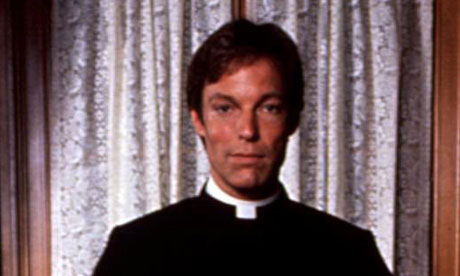
Richard Chaberlain in The Thorn Birds
From The Guardian

The Vatican has attacked reports in the Italian media linking Pope Benedict XVI’s resignation to the alleged discovery of a network of gay prelates as attempts to influence the cardinals in their choice of a new pontiff.

The Vatican secretariat of state said in a statement: “It is deplorable that as we draw closer to the time of the beginning of the conclave … that there be a widespread distribution of often unverified, unverifiable or completely false news stories that cause serious damage to persons and institutions.”

Whether or not that statement was written by Church lawyers (and even for lawyers, they serve the cause of language and reasoning with uncommon precision and conscientiousness), the denial is carefully constructed. The stories are described as one of three things: unverified, unverifiable or completely false. Note bene that two of these categories do not necessarily include or even imply falsity. Just verification. The reason for this care is that there is a top ten directive about false witness—which includes labeling as false that which is not.

Almost everyone willing to talk openly about the workings of the Church, and particularly its seminaries, will admit that there is a homosexual element of the enterprise. To say “everybody knows” is a ridiculous overstatement. But to say “nobody knows” or “not true” are equally ridiculous. Many know, some talk, most don’t.

The speculation that Pope Benedict resigned because the H-Bomb was about to drop will remain unverified and unverifiable, if the Vatican firewall holds, and it may. But whether you call it a code or a conspiracy of silence, speculation calls for and ultimately begs for verification.

Both law enforcement and the Church depend on the urge to confess. That urge is rooted in the complex and inchoate thing called conscience. In the case of the police, suspects are torn between punishment and a clean(er) heart. This is exactly the same tension for Catholics in the booth. But at this much higher level, the stakes and the choice to tell are much more momentous.

Metta New Year

Enso 1

The Metta Sutta—the Buddha’s Discourse on Loving Kindness

This is what should be accomplished by the one who is wise,
Who seeks the good, and has obtained peace.

Let one be strenuous, upright, and sincere,
Without pride, easily contented, and joyous.
Let one not be submerged by the things of the world.
Let one not take upon oneself the burden of riches.
Let one’s senses be controlled.
Let one be wise but not puffed up and
Let one not desire great possessions even for one’s family.
Let one do nothing that is mean or that the wise would reprove.

May all beings be happy.
May they be joyous and live in safety,
All living beings, whether weak or strong,
In high or middle or low realms of existence.
Small or great, visible or invisible,
Near or far, born or to be born,
May all beings be happy.

Let no one deceive another nor despise any being in any state.
Let none by anger or hatred wish harm to another.
Even as a mother at the risk of her life
Watches over and protects her only child,
So with a boundless mind should one cherish all living things.
Suffusing love over the entire world,
Above, below, and all around, without limit,
So let one cultivate an infinite good will toward the whole world.

Standing or walking, sitting or lying down,
During all one’s waking hours,
Let one practice the way with gratitude.

Not holding to fixed views,
Endowed with insight,
Freed from sense appetites,
One who achieves the way
Will be freed from the duality of birth and death.

God Does Not Like Guns

William Strutt - Peace
God does not like guns. God is also not crazy about nuclear weapons, and about all the easy to use and widely available tools of destruction in between.

This isn’t obvious. As scholars of religion and violence point out, the Old Testament is a compendium of both divine and divine-inspired and endorsed human mayhem. In the continuing battle against moral evil, which often has a religious component or context, the imperative to take up arms goes unquestioned among some, but not all. Finally, an entire eschatological theology is based on a battle that ends and transcends history as we know it, leading once and for all to the heaven on earth we have all been awaiting.

Let us pull back to the now and here, particularly last night in Newtown, Connecticut, where clergy of all faiths talked about God, if not for God.

The events in Newtown opened up a door to a new world. It was not Armageddon in an epic sense, but it was the end of the world for some, and everyone felt that. The door is a passage to the place where we leave the theology of the Second Amendment behind, where we stop listening to the priests of the National Rifle Association and their interpretations of what the founding gods meant.

This is the time to extend last night in Newtown to every congregation in America. There, leaders will explain to congregants whether God loves guns, and particularly whether God loves guns in such massive quantities and destructiveness.

The leaders can then cite Isaiah 11, and explain how “a child will lead them” is not merely some hermeneutic puzzle pointing to a messiah. Instead, it is reflected in the instruction by Jesus: “Let the little children come to me, and do not stop them; for it is to such as these that the kingdom of heaven belongs.”

The leaders will close by acknowledging that the faithful congregants will hear and themselves espouse practical arguments that stand in the way. Leaders will then patiently explain that all faith is ultimately impractical and heedless of impossibility. God does not like guns, but as his instruments, we are bound to do the worldly work of reducing their number and universal availability. If we claim to be faithful, that is more than just a good deed. It is a divine mission. God, it appears, will be more disappointed than ever if we fail.

Happy Hanukkah from Matisyahu

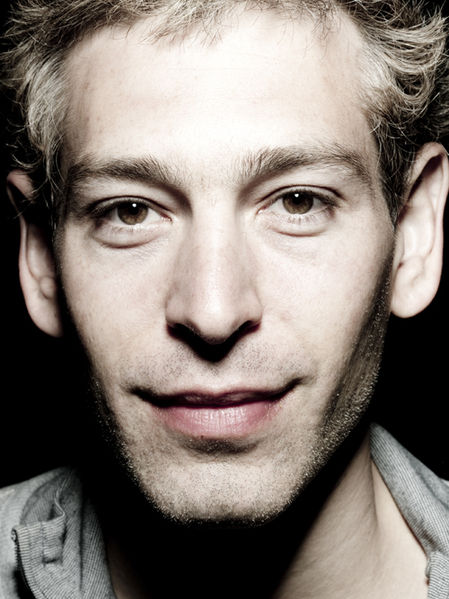
Matisyahu
Matisyahu is a Hanukkah miracle.

Not because suburban native Matthew Miller named himself after Mattathias, head of the family that took back the Temple in Jerusalem from the Assyrians, giving us the holiday. Not because he became a Chassidic reggae superstar. Not because last Hanukkah he shaved his beard and announced: “No more Chassidic reggae superstar.” Not because this Hanukkah his latest album Spark Seeker is Number 1 on the Billboard Reggae chart, a position it has held for weeks. Not even because his single Happy Hanukkah  is a joyous and irresistible rap reggae celebration about all that is good about the holiday, from which all proceeds go to Hurricane Sandy relief:

Happy Hanukkah
I wanna give a gift to you
Light up the night, my love shine through
From Mount Zion, this is what we do
Bring love to you

Matisyahu is a miracle because he did and is doing what we are supposed to do. Follow your light where it takes you, wherever it takes you. Wherever that is, when you get there, if you get there, shine a light of your own. It is a chance to make yourself happy and to make other people happy. And even if you are not sure you are there, or even sure where you are, celebrate anyway. It’s Hanukkah.

Black Friday

The shopping day after Thanksgiving, Black Friday is so named because for retailers, it can mean the difference between loss and profit–being in the black.

Like it or not, the Christmas shopping season is an important contributor to this consumer economy. But the term is an overwhelmingly bleak one, particularly in relation to Christmas. In all other contexts, Black Friday is historically associated with financial crises, weather disasters, fires, military attacks and massacres. Rather than concerning Christmas and the birth of Jesus, the death of Jesus is marked by what is called Good Friday–also known as Black Friday.

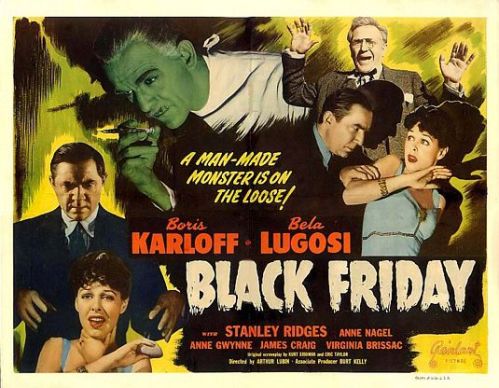
And then there is the 1940 horror movie (see above)…

The Rubicon and the Pillar: If We Pass This Little Bridge


The Lives of the Twelve Caesars
By Suetonius

XXXI.

…The lights going out, he [Julius Caesar] lost his way, and wandered about a long time, until at length, by the help of a guide, whom he found towards daybreak, he proceeded on foot through some narrow paths, and again reached the road. Coming up with his troops on the banks of the Rubicon, which was the boundary of his province, he halted for a while, and, revolving in his mind the importance of the step he was on the point of taking, he turned to those about him, and said: “We may still retreat; but if we pass this little bridge, nothing is left for us but to fight it out in arms.”

XXXII.

While he was thus hesitating, the following incident occurred. A person remarkable for his noble mien and graceful aspect, appeared close at hand, sitting and playing upon a pipe. When, not only the shepherds, but a number of soldiers also flocked from their posts to listen to him, and some trumpeters among them, he snatched a trumpet from one of them, ran to the river with it, and sounding the advance with a piercing blast, crossed to the other side. Upon this, Caesar exclaimed, “Let us go whither the omens of the Gods and the iniquity of our enemies call us. The die is now cast.”

Beautiful Quantum Scribbles


In Robert Wise’s classic sci-fi movie The Day The Earth Stood Still, Klaatu (Michael Rennie), a visitor from distant space, has come to earth to warn world leaders that their conflicts endanger universal order and must end. To enlist the help of the smartest scientist, Dr. Barnhardt (a fictionalized Albert Einstein played by Sam Jaffe), Klaatu visits the professor’s house. He finds an unsolved problem in celestial mechanics on the blackboard, and quickly corrects the equations. He is interrupted by the housekeeper Hilda:

HILDA
How dare you write on that blackboard! Do you realize the Professor has been working on that problem for weeks?

KLAATU
He’ll catch on to it in no time now.

HILDA
How did you get in here? And what do you want?

KLAATU
We came to see Professor Barnhardt.

HILDA
Well, he’s not here. And he won’t be back till this evening.
(Klaatu scribbles a note and hands it to Hilda.)

KLAATU
You might keep this. I think the professor will want to get in touch with me.

Hilda’s glance wanders to the blackboard and she picks up an eraser, debating whether to erase Klaatu’s corrections.

KLAATU
I wouldn’t erase that. The Professor needs it very badly.

Even if you are not a physicist, and are simply intrigued by the arcana that only geniuses and space aliens understand, this is a memorable moment.

People who are comfortable living in the old high school classroom picture of a determinate universe full of atoms and their constituent protons, neutrons and electrons have another think coming. In the quantum world beyond simple particles, anything is possible and nothing is certain, if certainty itself exists. In the view of some, in quantum physics are hints of rough sketches of the face of God, as well solutions to practical matters such as how to teleport information across the universe beyond light speed. Those of us of lesser minds struggle to grasp even the most basic concepts, while the greater minds solve puzzles beautiful in their incomprehensibility.

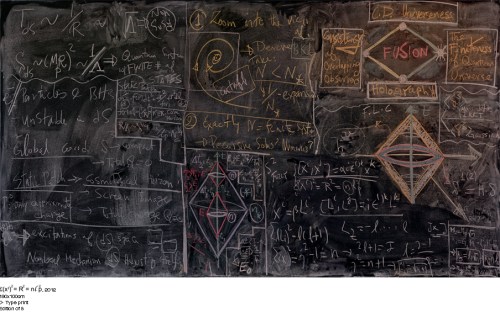
Spanish artist Alejandro Guijarro has combined two things at polar ends of research and education. On one end he has taken detailed photos of blackboards, a thinking and teaching tool so primitive that some are surprised to find them still around, and others have never seen one. On the far end, these particular blackboards belong to some of the world’s leading quantum thinkers. Guijarro traveled to institutes and laboratories around the world to record the smudged, chalk-streaked evidence of some of the world’s most sublime calculations…and erasures.

God’s Political Will


In the history of Christian theology, philosophy has sometimes been seen as a natural complement to theological reflection, whereas at other times practitioners of the two disciplines have regarded each other as mortal enemies….

Philosophy takes as its data the deliverances of our natural mental faculties: what we see, hear, taste, touch, and smell. These data can be accepted on the basis of the reliability of our natural faculties with respect to the natural world. Theology, on the other hand takes as its starting point the divine revelations contained in the Bible. These data can be accepted on the basis of divine authority, in a way analogous to the way in which we accept, for example, the claims made by a physics professor about the basic facts of physics.

 On this way of seeing the two disciplines, if at least one of the premises of an argument is derived from revelation, the argument falls in the domain of theology; otherwise it falls into philosophy’s domain.

Stanford Encyclopedia of Philosophy

Current American politics includes little study and application of philosophy. Some of our founders were steeped in philosophy, being educated sons of the Enlightenment. But even then, the struggling rebel nation was marked by pragmatism: there may be no atheists in foxholes, but there aren’t many philosophers either. Today, even when ideologues throw around the names of Mill or Burke, that is a rarity. Most of our politicians don’t know, can’t practice and don’t care about philosophy.

Theology is another story. Our government and the campaign trail seem to be overflowing with those who consider themselves theologians, whether they call themselves that or not. But even though the ground of theology is distinct from philosophy, the rigor and discipline required is exactly the same. The simplistic adoption of an isolated theological premise is no more sturdy than an isolated philosophical one. A solid theological conclusion must be supported from start to finish. If you can’t answer all (or at least most) of the consequent questions, you can’t be trusted to answer any.

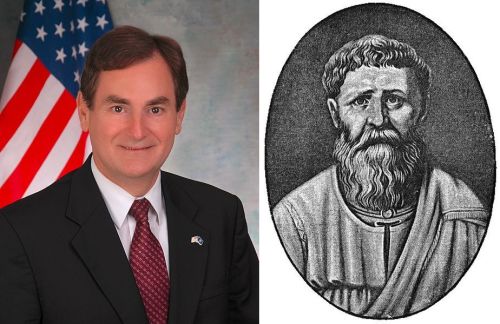
And so when Indiana Senate candidate Richard Mourdock announced that when a woman becomes pregnant through rape, the pregnancy is “God’s will,” the question isn’t whether that is true. The question is: assuming it is true, what else is God’s will?

Mr. Mourdock, and every other politician who claims to know God’s will, owes us a comprehensive list of those things that are and are not God’s will. In the case of Mr. Mourdock, if he is schooled in the fine points of Christian theology, that should be a straightforward matter.

For example: Are the outcomes of elections God’s will? If Mr. Mourdock’s opponent wins, will that be God’s will? If President Obama beats Mitt Romney, will that be God’s will?

There are a raft of sub-questions for the theologian. If God wills an election winner, how does it happen? Are some potential voters kept away from the polls by stormy weather or traffic jams? And how exactly does God decide who the winner should be? Is there a scorecard based on the Ten Commandments or the Seven Deadly Sins? Does a high score on “bearing false witness” or “greed,” for example, make it difficult to get an endorsement?

In the event Mr. Mourdock does not win, it may be God’s will after all. Just a few miles from his home in Darmstadt, Indiana is an excellent school, Trinity College of the Bible and Theological Seminary. Trinity offers a number of degree programs and dozens of courses on theology. If his keen interest in theology continues, that could be just the way to spend his time.

Stamping Eid al-Adha


The relationship between American society and Islam is complicated.

At this point in history, there are few sentences that could be more absurdly understated. In so many spheres, that relationship is, to be polite, messed up beyond all reason.

There is a long and growing list of events and phenomena that contribute to and reflect those complications. How the world’s largest or second-largest religion (depending on accounting) became so toxic in the world’s most tolerant democracy is a story still being written. No doubt having a black President whose father was a Muslim, who spent part of his youth in the world’s most Muslim country, and whose middle name is Hussein is the latest part of that.

The Postal Service, out of a sense of decency and diversity and political realities, rushes in where others fear to tread. This is itself a complicated thing.

October 26 is Eid al-Adha (“Feast of the Sacrifice”), the major holiday on the Muslim calendar.

Islam shares many stories with its Abrahamic precursors, Judaism and Christianity, though some of the scripture is added to or modified. So it is with the story of Ibrahim (Abraham) and his son Ishmael (Isaac). Ibrahim and Ishmael are said to have built the Kaaba, the building in Mecca that is the centerpiece of the commanded pilgrimage—the hajj. Ibrahim was also told in a dream to sacrifice his son as a sign of obedience to Allah and, as in the Old Testament, was stopped only at the last moment when Ishmael was replaced by a sacrificial sheep.

Eid al-Adha marks the end of the annual pilgrimage and Ibrahim’s faithful near-sacrifice of his son. (For discussion elsewhere, the question of how this deep and fascinating father-son sacrifice in the Old Testament—see, e.g., Kierkegaard’s Fear and Trembling—is not on the Jewish calendar, but became such a central event of the Christian and Muslim calendars.)

Some think that the Postal Service should not be in the business of commemorating religious holidays and people, given the wall—the admittedly porous wall—between church and state. The Mother Teresa stamp issued in 2010 is just one of those flash points. The Postal Service explains:

Following the announcement of the Mother Teresa stamp, groups such as the Freedom from Religion Foundation objected to the Postal Service’s seeming violation of its own guidelines.

“We received numerous letters saying that we should not be doing religious stamps,” says Terry McCaffrey, manager of stamp development. “But we are honoring her for her humanitarian work, not for being a member of a religious order.”

After all, McCaffrey asks, to what extent should religious inspiration disqualify an otherwise worthy subject?

Over the years, many religious figures have been depicted on stamps in recognition of their contributions to society, independent of their personal motivations or beliefs. Stamp honorees have included Dr. Martin Luther King, Jr., for leading the struggle for civil rights, Father Edward Joseph Flanagan for his work with delinquent and homeless boys, and Padre Félix Varela for his advocacy for the immigrant poor.

Still, the signs of protest for Mother Teresa were stronger than with most stamps.

As for minority religions, the Postal Service shies away (but see Hanukkah below). No Buddhism, for example. Interestingly and somewhat surprisingly, the Postal Service did dip its toe in Mormon waters. In December 2005, it gave a nod to the 200th anniversary of Joseph Smith’s birth, not with a stamp, but with the much less substantial cancellation mark. Note below that the Postal Service did not issue this postcard; that is privately produced. The only government involvement is the cancellation mark. Also notable is that given it was holiday season, this postcard includes a Madonna stamp to go along with the Joseph Smith cancellation.

Holidays provide a little bit of cover for the Postal Service. Instead of unacceptably eliminating Christmas, the Postal Service went to religious inclusiveness and diversity. So we have a Hanukkah stamp for Judaism—even though Hannukah is a relatively minor holiday on the Jewish calendar.

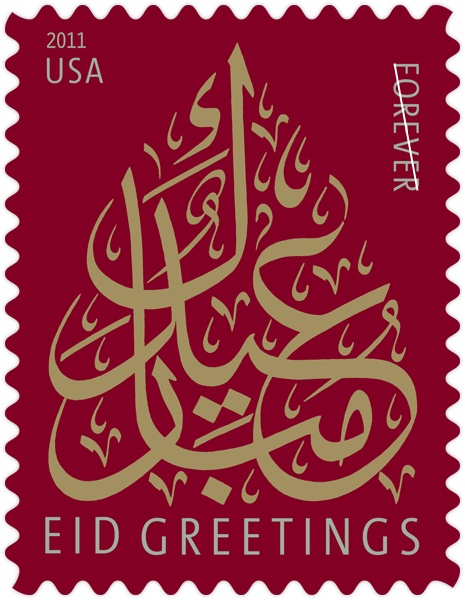
A few years ago, we were offered a Muslim stamp for the Eid feasts:

This stamp commemorates the two most important festivals — or eids — in the Islamic calendar: Eid al-Fitr and Eid al-Adha, and features the Arabic phrase “Eid mubarak” in gold calligraphy on a blue background. Eid mubarak translates literally as “blessed festival,” and can be paraphrased “May your religious holiday be blessed.”

Employing traditional methods and instruments to create this design, calligrapher Mohamed Zakariya of Arlington, VA, working under the direction of Phil Jordan of Falls Church, VA, chose a script known in Arabic as “thuluth” and in Turkish as “sulus.”

As shown above, the Postal Service modified the Eid stamp in 2011, keeping the exquisite calligraphy, changing the color from blue to red, and issuing it as a Forever® stamp:

The U.S. Postal Service® commemorates the two most important festivals — or eids — in the Islamic calendar: Eid al-Fitr and Eid al-Adha. On these days, Muslims wish each other Eid Mubarak, the phrase shown in calligraphy on the stamp. Eid Mubarak translates literally as “blessed festival” and can be paraphrased “May your religious holiday be blessed.” This Eid stamp features gold calligraphy against a reddish background.

Saying that the original Eid stamp was issued “a few years ago” is imprecise. It was actually issued on September 1, 2001—ten days before 9/11. It seems that this small step in the direction of recognition and tolerance got lost in some twisted history that as a country we are still trying to straighten out.

The stamp is available for purchase from the Postal Service. And even if you are not among the 1.7 billion people celebrating Eid al-Adha next week, it is still a beautiful addition to any piece of mail—and a beautiful statement.