Bob Schwartz

Category: Religion

Republican Jewish Coalition and the Sabbath

Republican Jewish Coalition Spring Leadership 2014

It’s Saturday, the Sabbath in Jewish communities. Why is this Sabbath different than all other Sabbaths?

Because on this Sabbath Sheldon Adelson’s Republican Jewish Coalition is continuing its three-day Spring Leadership Meeting, including a galaxy of political and policy stars looking for support, prestige, power, and money, including:

New Jersey Governor Chris Christie
Ohio Governor John Kasich
Wisconsin Governor Scott Walker
Vice President Dick Cheney
Israeli Ambassador Ron Dermer
Ambassador John Bolton

It’s true that the majority of American Jews don’t fully honor the Sabbath as a time for rest, reflection, and study. It’s also true that some number of those do try in small ways to live in the spirit of the Sabbath. Where Sheldon Adelson and the RJC sit on this spectrum of Sabbath observance and honor is between them and their God and their party.

One of the things that most non-Jews and many Jews don’t recognize is the complex significance of the Sabbath. The year is filled with special days, some regarded as very serious, very important and, in the case of the High Holidays, literally awesome. The Sabbath, though, stands apart, characterized as a beloved or royalty, as a bride or queen.

The great, deep and inspiring Jewish theologian Abraham Joshua Heschel wrote an incomparable work on the nature and meaning of this. The Sabbath presents a spiritual picture of what he calls sacred time. The book is considered by readers of all faiths and even no faith an uplifting view of how we are to live in the context of such a powerful reality.

It would be presumptuous to say whether the late Dr. Heschel, who among his many achievements marched with Martin Luther King in Selma almost fifty years ago, would attend the RJC Spring Leadership Meeting. In any case, most likely not the RJC on the Sabbath.

Although the RJC will be holding its political beauty pageant today, they still might have a moment to squeeze in some Heschel. This passage from the Epilogue of The Sabbath is out of context, and not so easy to appreciate on its own. It does have something to say about space, which can be owned and fought over, and time, sacred time, in which we are all joined and connected and sharing—no matter who you are, no matter how many casinos you own, no matter how big your PAC:

Time, then, is otherness, a mystery that hovers above all categories. It is as if time and the mind were a world apart. Yet, it is only within time that there is fellowship and togetherness of all beings.

Every one of us occupies a portion of space. He takes it up exclusively. The portion of space which my body occupies is taken up by myself in exclusion of anyone else. Yet, no one possesses time. There is no moment which I possess exclusively. This very moment belongs to all living men as it belongs to me. We share time, we own space. Through my ownership of space, I am a rival of all other beings; through my living in time, I am a contemporary of all other beings. We pass through time, we occupy space. We easily succumb to the illusion that the world of space is for our sake, for man’s sake. In regard to time, we are immune to such an illusion.

The Torah and the Supreme Court: Tazria and Scalia

Women of the Supreme Court

This week the portion of the Torah read in Jewish communities is Tazria (Leviticus 12:1–13:59). This week the Supreme Court heard arguments in the widely reported Hobby Lobby case. There is a significant but not obvious connection between the two.

Leviticus is the one of the Five Books of Moses that has the least action and the most rules. Lots of rules about the behavior of the Jewish people. In the thousands of years since those rules flowed into the processes of cultural and social oral tradition, and in the thousands of years since those traditions were set down in writing, different Jewish people and communities have determined which to honor and which to ignore. Those decisions are based on what exactly one thinks these rules are: God-given and inviolable, or ancient and subject to temporizing to suit modern philosophy and life. We should not wear clothing made from two different fabrics, Leviticus says. Non-literal interpretations of this have been conceived for centuries, but it says what it says, or rather, God says what God says. But what’s so wrong about a wrinkle-free, 60/40 cotton-poly blend shirt?

The Tazria portion begins:

The Lord spoke to Moses, saying: Speak to the Israelite people thus: When a woman at childbirth bears a male, she shall be unclean seven days; she shall be unclean as at the time of her menstrual infirmity. On the eighth day the flesh of his foreskin shall be circumcised. She shall remain in a state of blood purification for thirty-three days: she shall not touch any consecrated thing, nor enter the sanctuary until her period of purification is completed. If she bears a female, she shall be unclean two weeks as during her menstruation, and she shall remain in a state of blood purification for sixty-six days.

On the completion of her period of purification, for either son or daughter, she shall bring to the priest, at the entrance of the Tent of Meeting, a lamb in its first year for a burnt offering, and a pigeon or a turtledove for a sin offering. He shall offer it before the Lord and make expiation on her behalf; she shall then be clean from her flow of blood. Such are the rituals concerning her who bears a child, male or female. If, however, her means do not suffice for a sheep, she shall take two turtledoves or two pigeons, one for a burnt offering and the other for a sin offering. The priest shall make expiation on her behalf, and she shall be clean.

 The attitude toward and treatment of this passage in a modern context ranges widely, depending on belief sets. Some express wholesale acceptance and obedience (except for the sheep and bird sacrifice). Some faithfully regard it as God’s word, but pass it through interpretive filters suitable for the times. Some see it as a reflection of ancient people making sense of the mysteries of God and life.

One of those mysteries, of course, is women. Especially for men. Especially for the strange and foreign ways that women “work”. No matter your ideology, no matter how much the passage is accepted or spun, it is not hard to read meaning. Women are different. Some of that difference renders them unclean, even if that part is functionally essential (e.g., sex, birth). That uncleanness can be fixed, but it will cost you (e.g., lambs, pigeons).

The Hobby Lobby cases (Kathleen Sibelius, Secretary of Health and Human Services v. Hobby Lobby; Conestoga Wood Specialties Corp. v. Sebelius) concern the interaction of two federal laws: The Religious Freedom Restoration Act of 1993 (RFRA), which aims to protect Americans from intrusion on their religious lives, and the Affordable Care Act (ACA) which, among other things, requires employers to offer health insurance that includes coverage for contraception. The Tenth Circuit Court of Appeals found that the religious right of companies such as Hobby Lobby, which has Christian objections to providing that coverage, overcomes the particular requirement of the ACA.

The big legal issues are complex and significant. One arises every time religion is in the mix: we protect religion in this country, both in its expression and establishment, but in a nominally secular country, that is bound to clash with civil rights that may contravene religious belief. This isn’t easy to resolve, but resolve it we do. If, for example, your religion happens to believe that people of color are lesser human beings, and you are “commanded” to treat them accordingly, you still cannot follow that faith in the public square or the marketplace.

The other big legal issue is whether a company such as Hobby Lobby is a “person” able to enjoy religious liberties in the first place. We’ve seen this come up before and will again. Citizens United is the most recent and famous case deciding that enterprises may enjoy free speech, First Amendment rights, just as you do. Then there is Mitt Romney, former presidential candidate, who will forever be identified with his own legal interpretation of the issue: “Corporations are people, my friend.”

Besides these, the Hobby Lobby case is widely viewed as being about women, because practically it is. The ACA requirement that health insurance include contraceptives for women is a practically and realistically sound policy. A large majority of women use contraceptives, either for health reasons or, more frequently, to prevent conceiving as a result of sex. Preventing conception has a number of advantages, including avoiding unwanted or unplanned pregnancies. An advantage of this is that women do have sex, and do want to avoid pregnancy. It’s that basic. And then there’s this: many of those women who want to prevent conception are having sex with men.

The transcript of oral arguments in the Hobby Lobby case shows, as usual, a deeply divided court. Beyond the interesting central arguments concerning religious freedom and the personhood of corporations, there is a subtle subtext (some might say not so subtle). To a certain extent, the law, and arguments about it, are clinical. To the greatest extent possible, questions about impact are subservient to questions about the law itself: what it says, what was intended, how it works with other laws and with the Constitution. The rule of law prevails over the rule of people, and if the impact is unfair or disproportionate but still constitutional and legal, well, change the law.

But that has never been, will never be, and can never be how it works. Everyone—judges, lawyers, litigants, citizens—comes to the table with histories, psyches, lives, all the riches and trash we can carry. That’s how a case that seems about one thing can be, at least in small part, about another. That’s how the Hobby Lobby case is about women, something the three women on the Supreme Court without question get, something the six men may or may not.

Do read the transcript of the argument and maybe a few of the almost one hundred appellate briefs filed in the cases. In the arguments, you won’t find any express misunderstanding of the lives and impact of the case on women, though you may if you read between the lines. The briefs, which come from just about every corner of American society and politics, are a little clearer on how this is about women in ways that are not just incidental.

This brings us back to Tazria. It is easy to dismiss the passage as archaic, particularly for those who have found ways to work through or around it. Similarly, you may consider the Hobby Lobby case one about important and respectable religious and legal doctrines, and it is.

It can’t be said often enough: Men don’t get it and they can’t. They don’t know what it’s like to menstruate or be capable of bearing children or of having children. They don’t know what’s it like to be treated as unclean because of all of that, and then to be hypocritically treated as enjoyable and useful for those very same reasons. They don’t know how it feels to have some very simple means of adjusting all that, and then to have those means treated as something both profound and trivial, but not important.

Men don’t know, even if they are at the pinnacle, writing scripture or dispensing justice. So pleading ignorance, a little humility, a little learning, and a little compassion might be in order.


Spring: Flowers in the Sky

The Plum Blossoms - Henri Matisse
This message for the start of spring comes from the masterpiece Treasury of the True Dharma Eye (Shobo Genzo) by Dogen, the founder of Soto Zen.

The passage is taken from Fascicle 44, Flowers in the Sky, written in 1243:

Thus, when the time comes, flowers open. This is the moment of flowers, the arrival of flowers. At this very moment of flowers arriving, there is no other way. Plum and willow flowers unfailingly bloom on plum and willow trees. You see the flowers and know plum and willow trees. You understand flowers by looking at plum and willow trees. Peach and apricot flowers have never bloomed on plum and willow trees. Plum and willow flowers bloom on plum and willow trees. Peach and apricot flowers bloom on peach and apricot trees. Flowers in the sky bloom in the sky in just this way. They do not bloom on other grasses or trees.

Seeing the colors of flowers in the sky, you fathom the limitlessness of fruit in the sky. Seeing the opening and falling of flowers in the sky, study the spring and autumn of flowers in the sky. The spring of flowers in the sky and the spring of other flowers should be the same. Just as there are a variety of flowers in the sky, there should be a variety of springtimes. This being so, there are springs and autumns in the past and present.

Those who assume that flowers in the sky are not real and other flowers are real have not seen or heard the Buddha’s teaching. To hear the words that the sky originally had no flowers and assume that the flowers in the sky that did not exist do exist now is a lesser view based on shallow thinking. Step forward and think deeply.

Beyond Anger: How to Hold On to Your Heart and Your Humanity in the Midst of Injustice

Beyond Anger
The crisis in Ukraine is deepening, and with that lots of thought, opinion, and calls for action. It may seem like the wrong time for self-awareness and contemplation. Enough talk. This is a Nike world, so let’s just do it.

Whether it is about the Russian invasion of Ukraine or about unfairness in our own nation, our desire for justice and aversion to injustice is a good thing. But it can be so powerful and overwhelming that we easily get lost. It isn’t that we shouldn’t act decisively; it’s that in our zeal, we can be confused or overly certain about what the right decision is.

Last summer, in the face of terrible killings in India that had profound implications for Buddhist communities, Shambhala Publications published a free book you can get, Beyond Anger: How to Hold On to Your Heart and Your Humanity in the Midst of Injustice.

The publisher explains:

In July 2013, multiple bombs exploded in Bodh Gaya, India, in and around the holiest Buddhist pilgrimage site, the Mahabodhi temple that marks the spot where the Buddha attained enlightenment. In response, Shambhala Publications offers this free eBook consisting of excerpts from some of our books from a variety of Buddhist traditions that encapsulate values of love and nonviolence, which we can all practice ourselves.

You may not be a Buddhist, or care about Buddhist philosophy. You may or may not be angry about what is going on around the world, or about what some people say about how to solve the problems. You may believe that you have a better way, and you may be right. It’s just that no matter what, a different perspective can always be helpful.

In a section of the book called Conflict Resolution: Anger Is the Problem, The Karmapa, Ogyen Trinley Dorje talks about Global Conflicts, Global Solutions:

When bigger and more powerful nations step in to offer guidance to other nations, many of the same principles apply as when individuals intervene to resolve interpersonal conflicts. A sincere motivation is absolutely key, and on top of that, the intervention must be done with sensitivity and skill.

In this small world we live in, nations coexist interdependently. The actions of one country affect others deeply. Countries with more power have the potential to influence others more. I believe that with this power comes a great deal of responsibility, and that includes the responsibility not to exercise one’s power over others in pursuit of the private interests of one’s own nation….

Before you approve the actions proposed, you should be confident that they are in the best interest not only of your country, but of the world as a whole. To be a responsible, conscious citizen, it is important that you think for yourself, and take universal peace, stability, and well-being into account. Use your discernment and take a stand that serves the whole world, not just one corner of it.

Even when we are sure that the motivation to contribute positively to the well-being of the world is sincere, we also have to scrutinize the means used to pursue that aim. For example, in the name of bringing freedom to other countries, weapons are produced and wars are waged. As powerful countries themselves expand their arsenals and wage more war, the peace and stability of their own country and of the world are both placed at risk.

Again, a pure motivation needs to be applied with wisdom. I feel very strongly that war and fighting are not an effective means to bring about peace or prosperity, stability or freedom. I am certain that history will demonstrate war to be ineffective and counterproductive in the long run.

I have met many people from powerful countries who are deeply unhappy with how their leaders wield their power internationally. This seems especially common when people have failed in their efforts to urge the decision makers to pursue a more compassionate and skillful course. Some of these people become angry at their own governments. In other cases, people direct their anger at the governments of other countries.

If you find yourself angry at any government, please recollect how harmful anger is to yourself and others, and steady yourself with a firm resolve. Make an unwavering commitment to yourself that you will not allow your mind to become perturbed. Be immovable—unshakable from a peaceful state of mind.

Putin’s Bizarro World: Simultaneously Defending and Attacking Jews

Babi Yar Momument Kiev
In the last few days, Vladimir Putin has represented himself as the enemy of anti-Semitism and therefore the friend of Jews. He says, with a selective bit of truth, that among the many constituencies who deposed former Ukraine President Viktor Yanukovych were ultra-nationalists and neo-Nazis who are themselves anti-Semitic. By this logic, Putin claims that his intervention in Ukraine is in part to restore Yanukovych and deny power to those anti-Semites.

In those same last few days, synagogues in the Ukraine have been vandalized and attacked, according to Russia by those same ultra-nationalists and neo-Nazis. Few believe that. Instead it is widely believed that Russia is responsible for this anti-Semitic mischief, which conveniently fits the Russian story line.

Jews have had a tough time in Europe, in Eastern Europe, in Russia, and certainly in Ukraine. In September 1941, about 33,000 Jews were rounded up by the Nazis in Kiev, and along with tens of thousands of others, massacred in a ravine known as Babi Yar. Say what you will about the execrable, pathological and murderous Hitler, he knew how to play the strategic blame game. He regularly blamed the Jews for just about everything, but he rarely blamed someone else for hating and attacking the Jews. That was something he wanted full credit for.

So the suggestion for Putin is this: leave the Jews out of this particular rationale. The Jewish community in Ukraine is small, and it is true that in the just-evolving democratic regime, Jews will be uncomfortably standing side-by-side with people who don’t like them. Democracy makes for strange bedfellows, or at least that’s the lesson in America. Jews have enough problems without Putin as their friend and defender. Because with friends like that…

The Magi

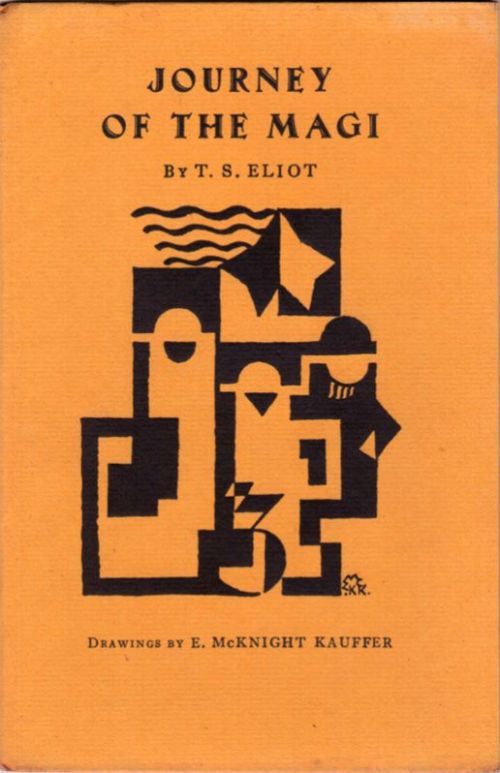
Journey of the Magi
The magi are for everyone, whatever your beliefs.

These three figures in the Christmas tradition appear in only one of the four Christian gospels, and even that role in Matthew is sketchy. They are foreigners bringing gifts for the infant Jesus and they return home by a different route to evade Herod. That’s it.

Translations and interpretations of what they brought vary, and even less clear is exactly who these foreigners were supposed to be in the story. They may be kings, wise men, astrologers or, as some have it, Zoroastrian priests from Persia.

This is why the particulars don’t matter much at all: the story is so basic and illuminating that it has captured the imagination of millions in its various retellings. Christian faithful have one view of it, and the more literal vision is that of concrete history. But for those who lean away from that, there is much to be gotten out of this compelling story:

  • Some people of discernment—in terms of wisdom, astrology or otherwise—had a sense that something special was going on outside of their ordinary sphere. Maybe they saw a light.
  • They travelled a long way to discover what was going on, and having found out, expressed their gratitude humbly and generously.

Again, that’s it. Some may want to think about theology. Others may want to think about other sorts of lights they’ve glimpsed, journeys they’ve made or haven’t made, and about possibilities. Christmas or just winter solstice and New Year, there is no better time to think about possibilities and all the rest.

T.S. Eliot wrote a brief but cinematic poem about the magi. It is written from a believer’s perspective, as the magi suffer twice, once on the journey, once again when they return home and find themselves so spiritually transformed by the experience that they feel like strangers in their own land. This is certainly a Christian view of the holiday, but non-Christians may just as well consider the more general phenomenon of all sorts of enlightenment, sitting between the way you have been and the way you discover you could be or already are. The magi say they would be glad of another death like that.

The Journey of the Magi
T.S. Eliot

‘A cold coming we had of it,
Just the worst time of the year
For a journey, and such a long journey:
The ways deep and the weather sharp,
The very dead of winter.’
And the camels galled, sorefooted, refractory,
Lying down in the melting snow.
There were times we regretted
The summer palaces on slopes, the terraces,
And the silken girls bringing sherbet.
Then the camel men cursing and grumbling
and running away, and wanting their liquor and women,
And the night-fires going out, and the lack of shelters,
And the cities hostile and the towns unfriendly
And the villages dirty and charging high prices:
A hard time we had of it.
At the end we preferred to travel all night,
Sleeping in snatches,
With the voices singing in our ears, saying
That this was all folly.

Then at dawn we came down to a temperate valley,
Wet, below the snow line, smelling of vegetation;
With a running stream and a water-mill beating the darkness,
And three trees on the low sky,
And an old white horse galloped away in the meadow.
Then we came to a tavern with vine-leaves over the lintel,
Six hands at an open door dicing for pieces of silver,
And feet kicking the empty wine-skins.
But there was no information, and so we continued
And arriving at evening, not a moment too soon
Finding the place; it was (you might say) satisfactory.

All this was a long time ago, I remember,
And I would do it again, but set down
This set down
This: were we led all that way for
Birth or Death? There was a Birth, certainly
We had evidence and no doubt. I had seen birth and death,
But had thought they were different; this Birth was
Hard and bitter agony for us, like Death, our death.
We returned to our places, these Kingdoms,
But no longer at ease here, in the old dispensation,
With an alien people clutching their gods.
I should be glad of another death.

Finite and Infinite Games: Thoughts to End and Begin a Year

Finite and Infinite Games
James P. Carse, now Professor Emeritus of history and literature of religion at NYU, published Finite and Infinite Games in 1986. The book’s spare 160 pages belie its significance. It is a masterpiece of clear, poetic and transformative thought, as Carse takes on the big question that faces us now and always: What are we doing and saying when we act and talk about things religious—or for that matter about life?

His answer—and this is impossibly oversimplified—is that we are playing games. To say even that little is misleading. The only way to appreciate the book and its power is to follow its 101 very brief sections end to end.

This was written at a time when the idea of religion as myth was enjoying renewed currency. It was not a new idea, but by the 1980s a generation of thinkers was trying to make intellectually honest sense of a conundrum: If religious narrative is merely myth, how can religious history have any value or substantial meaning, and how then can we be religious? It turned out in their view that it was not “merely” myth, but a matter that necessarily coexisted with, complemented  and completed religion.

This continues to be something both hard for many to accept or wrap their heads around and equally hard to articulate. Carse articulates this better than anybody else has, and elevates the entire area to a platform for considering the whole of existence and life. If that sounds like hyperbole, please read the book and decide.

In the meantime, a wholly inadequate sample, given that many definitions and premises are missing:

1

THERE ARE at least two kinds of games. One could be called finite, the other infinite.
A finite game is played for the purpose of winning, an infinite game for the purpose of continuing the play.

. . .

99

If it is true that myth provokes explanation, then it is also true that explanation’s ultimate design is to eliminate myth. It is not just that the availability of bells in churches and town halls of Europe makes it possible to forge new cannon; it is that the cannon are forged in order to silence the bells. This is the contradiction of finite play in its highest form: to play in such a way that all need for play is erased.

The loudspeaker, successfully muting all other voices and therefore all possibility of conversation, is not listened to at all, and for that reason loses its own voice and becomes mere noise. Whenever we succeed in being the only speaker, there is no speaker at all. Julius Caesar originally sought power in Rome because he loved to play the very dangerous style of politics common to the Republic; but he played the game so well that he destroyed all his opponents, making it impossible for him to find genuinely dangerous combat. He was unable to do the very thing for which he sought power. His word was now irresistible, and for that reason he could speak with no one, and his isolation was complete. “We might almost say this man was looking for an assassination” (Syme).

If we are to say that all explanation is meant to silence myth itself, then it will follow that whenever we find people deeply committed to explanation and ideology, whenever play takes on the seriousness of warfare, we will find persons troubled by myths they cannot forget they have forgotten. The myths that cannot be forgotten are those so resonant with the paradox of silence they become the source of our thinking, even our culture, and our civilization.

These are the myths we can easily discover and name, but whose meanings continually elude us, myths whose conversion to truth never quite fills the bells of their resonance with the sand of metaphysical interpretation. These are often exceedingly simple stories. Abraham is an example. Although only two children were born to Abraham in his long life, and one of those was illegitimate, he was promised that his descendants would be as numberless as the stars of the heavens. All three of the West’s major religions consider themselves children of Abraham, though each has often understood to be itself the only and final family of the patriarch, an understanding always threatened by the resounding phrase: numbered as the stars of the heavens. This is the myth of a future that always has a future; there is no closure in it. It is a myth of horizon.

The myth of the Buddha’s enlightenment has the same paradox in it, the same provocation to explanation but with as little possibility of settling the matter. It is the story of a mere mortal, completely without divine aid, undertaking successfully a spiritual quest for release from all forms of bondage, including the need to report this release to others. The perfect unspeakability of this event has given rise to an immense flow of literature in scores of languages that shows no signs of abating.

Perhaps the Christian myth has been the narrative most disturbing to the ideological mind. It is, like those of Abraham and the Buddha, a very simple tale: that of a god who listens by becoming one of us. It is a god “emptied” of divinity, who gave up all privilege of commanding speech and “dwelt among us,” coming “not to be served, but to serve,” “being all things to all persons.” But the worlds to which he came received him not. They no doubt preferred a god of magisterial utterance, a commanding idol, a theatrical likeness of their own finite designs. They did not expect an infinite listener who joyously took their unlikeness on himself, giving them their own voice through the silence of wonder, a healing and holy metaphor that leaves everything still to be said.

Those Christians who deafened themselves to the resonance of their own myth have driven their killing machines through the garden of history, but they did not kill the myth. The emptied divinity whom they have made into an Instrument of Vengeance continues to return as the Man of Sorrows bringing with him his unfinished story, and restoring the voices of the silenced.

100

The myth of Jesus is exemplary, but not necessary. No myth is necessary. There is no story that must be told. Stories do not have a truth that someone needs to reveal, or someone needs to hear. It is part of the myth of Jesus that it makes itself unnecessary; it is a narrative of the word becoming flesh, of language entering history; a narrative of the word becoming flesh and dying, of history entering language. Who listens to his myth cannot rise above history to utter timeless truths about it.

It is not necessary for infinite players to be Christians; indeed it is not possible for them to be Christians—seriously. Neither is it possible for them to be Buddhists, or Muslims, or atheists, or New Yorkers—seriously. All such titles can only be playful abstractions, mere performances for the sake of laughter.

Infinite players are not serious actors in any story, but the joyful poets of a story that continues to originate what they cannot finish.

101

There is but one infinite game.

Philip K. Dick’s Birthday

Philip K. Dick color
Yesterday was the birthday of writer Philip K. Dick (1928-1982).

If we measure creative success by the dollars generated through adaptation and exploitation, PKD was a monumental success, though he didn’t live to see most of it. His work was the source material for Blade Runner, Total Recall, Minority Report and other films.

If the measure of creativity is being creative, PKD is more than just the most adventurous science fiction/speculative fiction writer of his generation. Maybe no other writer of his century, or even now, has so masterfully taken readers to the edge, and then taken them a little further. In their view of the world, many of those readers never quite come back.

PKD lived, at least in his mind, beyond that edge. His mental instability is a matter of record, though there is still and will be questions about exactly what the clinical profile was.

In 1974 PKD had what can be called a religious experience. The comic artist R. Crumb illustrated some of that experience, as related by PKD. You can view the entire comic here.

PKD Crumb 1

“There will come a time when it isn’t ‘They’re spying on me through my phone’ anymore. Eventually, it will be ‘My phone is spying on me’.” ― Philip K. Dick

Is Pope Francis the Leader of the World?

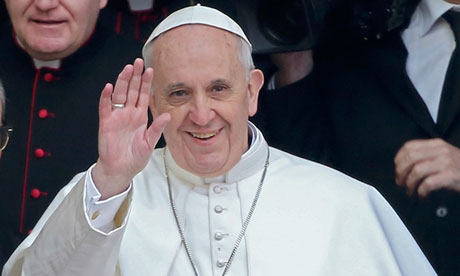
Pope Francis
The Dalai Lama is the most famous Buddhist in the world. His message is powerful, positive and universal. Even with the huge platform he has, his brand of Tibetan Buddhism is a bit exotic for many people, so still somewhat limited. He is also one of the coolest people on the planet. So as much as a basic Buddhist message would be great for the world at large to take to heart, it isn’t about to happen.

Pope Francis is also an outsized moral leader. He is the head of a church with more than a billion followers. And while there are hundreds of millions of Protestant Christians who question whether that church and its Pope can claim Christian legitimacy—and who find the Catholic Church plenty exotic too—you can’t deny the size and scope of the Pope’s Christian community. And if the Dalai Lama is cool, so is Pope Francis; he was once a bar bouncer, which is something the Dalai Lama can never claim.

The biggest argument for the supreme leadership role of Pope Francis is that he is exactly the right person for the right time, acting and speaking on a very big stage. Two of the major characteristics of the moment are that materialism seems to be failing or failing us and that our changing social universe requires some tricky balance between the old and the new, the absolute and the relative.

Pope Francis gets this and sells this from the very foundations of his faith. He has just had to deny that his is a not a Marxist, but proceeded in the same breath to appreciate the work of those who sincerely act in the name of Marxist ideals. It is not just that he seems to have a vision that synthesizes the original Christian communities with the complicated world two millennia later. He sees in the very institution he is charged with running the embodiment of the problems. If the institutional church, the church membership and the world have lost their way, it is not his job to order them around. Instead he just points to a playbook that is to be taken seriously, not selectively and strategically, and advises to live by and as its example. It’s a choice, one he has made, one he hopes others, from the church hierarchy on out, will make.

Whether the Catholic Church straightens out its affairs, whether disaffected Catholics return, whether new Catholics arrive, whether we are Catholic or Protestant or Jewish or Buddhist is beside the point and beside the Pope’s point. It is about being better and getting better. Pope Francis is not the first to say that, not even the first Pope to say it. But his walking the walk in the world of 2013 is different. These are the times that try people’s souls. We seem to have a world leader willing to make that reality both an ancient and modern quest, a quest that may, in the real and not theological sense, save us all.

Buddha’s Enlightenment Day

Buddha Comic Cover
Known as Bodhi Day, the Buddha’s day of enlightenment is called Rohatsu in Japan and is celebrated there on December 8th.

Here is a page from a Buddha comic book illustrating the event. It is published by the Indian company Amar Chitra Katha, which publishes a number of fascinating religious comic books—not only about Hinduism and Buddhism, but about Sikhimism, Zorostrianism and others.

Buddha Comic Enlightenment

In stillness, mind and object merge in realization and go beyond enlightenment. Thus, in the state of receptive samadhi, without disturbing its quality or moving a single particle, you engage the vast buddha activity, the extremely profound and subtle buddha transformation.

Grasses, trees, and lands that are embraced by this way of transformation together radiate a great light and endlessly expound the inconceivable, profound dharma. Grass, trees, and walls bring forth the teaching to all beings, including common people and sages; all beings in response extend this dharma to grass, trees, and walls. Thus, the realm of self-awakening and awakening others invariably holds the mark of realization with nothing lacking, and realization itself is manifested without ceasing for a moment.

This being so, the zazen of even one person at one moment imperceptibly accords with all things and fully resonates through all time. Thus, in the past, future, and present of the limitless universe, this zazen carries on the buddha’s transformation endlessly and timelessly. Each moment of zazen is equally the wholeness of practice, equally the wholeness of realization.

This is so not only while sitting; like a hammer striking emptiness, before and after its exquisite sound permeates everywhere. How can it be limited to this time and space? Myriad beings all manifest original practice, original face; it is impossible to measure. Even if all buddhas of the ten directions, as innumerable as the sands of the Ganges, exert their strength and with the buddha wisdom try to measure the merit of one person’s zazen, they will not be able to fully comprehend it.

Dogen Zenji, On the Endeavor of the Way
Treasury of the True Dharma Eye