Bob Schwartz

Category: Religion

For Me To Be A Saint Means To Be Myself: Thomas Merton and Pope Francis

Thomas Merton

In his speech to Congress, Pope Francis put Thomas Merton back in the public light, where he has long belonged as an American spiritual master:

A century ago, at the beginning of the Great War, which Pope Benedict XV termed a “pointless slaughter”, another notable American was born: the Cistercian monk Thomas Merton. He remains a source of spiritual inspiration and a guide for many people. In his autobiography he wrote: “I came into the world. Free by nature, in the image of God, I was nevertheless the prisoner of my own violence and my own selfishness, in the image of the world into which I was born. That world was the picture of Hell, full of men like myself, loving God, and yet hating him; born to love him, living instead in fear of hopeless self-contradictory hungers”. Merton was above all a man of prayer, a thinker who challenged the certitudes of his time and opened new horizons for souls and for the Church. He was also a man of dialogue, a promoter of peace between peoples and religions.

Pope Francis, like Merton, is a natural. One of those players who finds their game and becomes a star because their nature brought them to it. This doesn’t mean there aren’t struggles on the way to greatness. On the contrary, the unceasing struggles are an essential part of their nature. At first we may be inspired by the worthy message and outward model. But ultimately, when we explore them, it is the dimensions and shading we come to admire. A child’s drawing is all black and white, a simple sketch. A master drafts with subtle and powerful lines and shadows, in which we see so much depth.

The Pope’s regard and mention of Merton in his speech to Congress is also natural. Merton chose to be a cloistered monk, then rebelled against his voluntary and self-imposed discipline. The demands of quiet and obedience to authority clashed with the imperative of a great writer freely writing and a great thinker freely thinking. Not gratuitous and loose writing and thought. Always guided by a compass that pointed both higher and back to an inescapable benevolent source, always grounded in the reality of daily life, strong and weak. That sort of creative independence in calling seems to mark Pope Francis too.

Merton died in 1968, almost exactly a year before Pope Francis was ordained. To say they would have loved to have met is understatement. Like many of us, Pope Francis met Merton in countless books, by and about him. In those writings, we learn that Merton was a mystic and a man. What else are saints anyway? “For me to be a saint is to be myself,” Merton said. We can’t be our better self without being our truer self, our littler self and our bigger self. No divine without human, the most and best human possible. It’s all about love and awareness. So Merton lived and wrote. So Pope Francis echoes in his life and his messages.

If you want to learn more about Merton, see The Thomas Merton Center. Among the overwhelming list of books, consider starting small with these:

Thomas Merton: Essential Writings

Love and Living, a collection of essays from the later days of his life.

An excerpt from Learning to Live, the first essay in Love and Living:

What I am saying is this: the score is not what matters. Life does not have to be regarded as a game in which scores are kept and somebody wins. If you are too intent on winning, you will never enjoy playing. If you are too obsessed with success, you will forget to live. If you have learned only how to be a success, your life has probably been wasted. If a university concentrates on producing successful people, it is lamentably failing in its obligation to society and to the students themselves…

The least of the work of learning is done in classrooms. I can remember scores of incidents, remarks, happenings, encounters that took place all over the campus and sometimes far from the campus: small bursts of light that pointed out my way in the dark of my own identity. For instance, Mark Van Doren saying to me as we crossed Amsterdam Avenue: “Well, if you have a vocation to the monastic life, it will not be possible for you to decide not to enter” (or words to that effect). I grasped at once the existential truth of this statement.

One other scene, much later on. A room in Butler Hall, overlooking some campus buildings. Daisetz Suzuki, with his great bushy eyebrows and the hearing aid that aids nothing. Mihoko, his beautiful secretary, has to repeat everything. She is making tea. Tea ceremony, but a most unconventional one, for there are no rites and no rules. I drink my tea as reverently and attentively as I can. She goes into the other room. Suzuki, as if waiting for her to go, hastily picks up his cup and drains it.

It was at once as if nothing at all had happened and as if the roof had flown off the building. But in reality nothing had happened. A very very old deaf Zen man with bushy eyebrows had drunk a cup of tea, as though with the complete wakefulness of a child and as though at the same time declaring with utter finality: “This is not important!”

The function of a university is to teach a man how to drink tea, not because anything is important, but because it is usual to drink tea, or, for that matter, anything else under the sun. And whatever you do, every act, however small, can teach you everything—provided you see who it is that is acting.

Phyllis Tickle: The Godmother of Us All

Phyllis Tickle

Phyllis Tickle died last week at the age of 81. No matter the number, it would always be too low.

Phyllis is the godmother of contemporary religion publishing and those who worked there. She established the Religion section of Publishers Weekly, the bible of the industry. It is possible that no single individual has had a bigger impact on a significant genre of publishing.

She was also a remarkable writer and speaker on matters of religion and spirituality, including her insights into the emerging church for changing times. Among her many books: The Divine Hours, a series of guides to the ancient practice of hourly prayer, and The Shaping of a Life: A Spiritual Landscape, a memoir that is as close as those who didn’t know her will get to the unique and unforgettable person and spirit she was.

Like a brilliant and generous mother, she encouraged and enabled creative editorial talent and writing for decades. If you look at the careers of the good and the great in the field, you will find Phyllis at the nexus. She is found in the acknowledgments of scores of books, like this one picked at random:

“Phyllis Tickle answered countless e-mailed questions, no matter where in the world she was.”

I don’t precisely remember the first time I met Phyllis. She was just always there. I do remember the last time I spoke with her. That voice, the one I can hear clearly right now, that soft and distinctive Tennessee talk, just lifted and lightened you.

“I love you, Schwartz,” she would say. Love you back, Miss P. Miss you too.

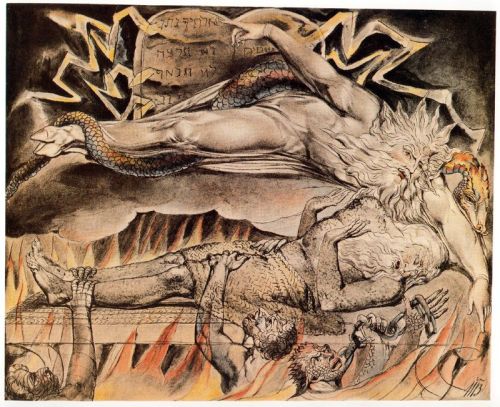
The Radical Book of Job

The Bible is a radical document. Just ask Pope Francis, who will be visiting the U.S. for Yom Kippur. Just ask the conservative critics of Pope Francis, who have been made very uncomfortable.

The Gospels particularly offer subversive guidelines for individuals and society. But there is also much of this in the Old Testament. Take the Book of Job.

As a Bible text, the book of Job is one of the most complex and challenging for biblical translators, interpreters and scholars. So it is no surprise that it has been boiled down in common understanding and tradition to a simple story. A good man suffers, his faith in God is shaken, God explains, the man renews his faith, God returns him to good fortune. End of story.

Except that is not what happens. There are many ways to interpret Job that look nothing like that. A number of characters appear, do a lot of talking, and offer divergent views of what Job should do in the face of his intolerable burden. Most infamously his wife, whose recommendation to her husband is “Curse God and die.” Someone named Elihu makes a late brief appearance (likely the result of a later addition to the book), offering his own take on things. And of course, God has (almost) the final word.

In his overview of Job in The Jewish Study Bible, Prof. Ed Greenstein reviews the possibilities, including this one:

A second, and arguably even more prevalent, theme in Job is that of honesty in talking about God. The book examines and tests the limits of appropriate speech. The test of Job is all about speech—will Job, severely afflicted with anguish and physical distress, “blaspheme [God] to [His] face” (1.11)? The dialogues, it goes without saying, consist only of speech—there is no action within them. Job’s companions continually denigrate the way he talks (e.g., 11.2–4), and he feels he must beg to be heard (13.13). Their view is shared by readers such as the Talmudic Sage Rav, who suggests that “dirt be put in Job’s mouth” to silence him.

But while the friends regard Job’s discourse as no more than hot air, “useless talk” (e.g., 15.2–3), Job takes pride in his absolute commitment to speaking only truth (see 27.3–4). The radical turning point in the book comes at its conclusion: God turns to Job’s companions and reproves them for not speaking “truthfully” (nekhonah is adverbial) about Him as Job “My servant” had done (42.7–8). Job may not have arrived at the truth, but he had reason to believe in what he was saying, as it came to him honestly, unlike the words of the companions, who merely repeated uncritically the wisdom they had received. Seen this way, the book of Job promotes honesty in theological discourse and rejects a blind reliance on tradition.

Promoting honesty in theological discourse and rejecting blind reliance on tradition. A radical approach we can consider this Yom Kippur, along with the universe of our humble introspections and pleas for forgiveness. A radical approach that Pope Francis seems very good at. A radical approach missing in the hot air and useless talk we hear from so many of our self-righteous public figures.

The Sandokai: You Don’t Have To Be Zenish

Branching Streams

You don’t have to be a Zen person to read and appreciate the Sandokai (Harmony of Difference and Equality). You don’t have to be any particular person at all.

The Sandokai is a poem by eighth-century Chinese Zen Ancestor Sekito Kisen. It is a core text that is recited daily by many Zen practitioners.

It is often described as “difficult” the same way that oceans are described as “deep.” The depth is valuable and explorable, and yet ships of all kinds from all nations seem to float and travel on its surface beneficially, without regard to the depths below.

It is read as a challenge to even the most practiced reader. But a first reading by a beginner (and we are all beginners) can be surprisingly lightening.

The unsurpassed modern overview of the Sandokai is by Shunryu Suzuki Roshi. His talks from 1970 at the Tassajara Zen Mountain Center are collected in Branching Streams Flow in the Darkness: Zen Talks on the Sandokai. (You can also read the unedited transcripts and hear the talks themselves by visiting the San Francisco Zen Center archives.)

If you have any interest in the nature of things, just read. Don’t worry about what else you’ve studied or about what perspective or tradition you are coming from, or not studied or are not coming from. Just read, and if any of the verses strike you—or strike you over the head—all for the good. And if not, well, it’s still an interesting and lyrical poem.


Harmony of Difference and Equality (Sandokai)

The mind of the great sage of India
is intimately transmitted from west to east.

While human faculties are sharp or dull,
the Way has no northern or southern ancestors.

The spiritual source shines clear in the light;
the branching streams flow on in the dark.

Grasping at things is surely delusion,
according with sameness is still not enlightenment.

All the objects of the senses
transpose and do not transpose.

Transposing, they are linked together;
not transposing, each keeps its place.

Sights vary in quality and form;
sounds differ as pleasing or harsh.

Darkness merges refined and common words;
brightness distinguishes clear and murky phrases.

The four elements return to their natures,
Just as a child turns to its mother.

Fire heats, wind moves,
water wets, earth is solid.

Eye and sights, ear and sounds,
nose and smells, tongue and tastes;

Thus for each and every thing,
according to the roots, the leaves spread forth.

Trunk and branches share the essence;
revered and common, each has its speech.

In the light there is darkness,
but don’t take it as darkness;

In the dark there is light,
but don’t see it as light.

Light and dark oppose one another
like the front and back foot in walking.

Each of the myriad things has its merit,
expressed according to function and place.

Existing phenomenally like box and cover joining;
according with principle like arrow points meeting.

Hearing the words, understand the meaning;
don’t establish standards of your own.

Not understanding the Way before your eyes,
how do you know the path you walk?

Walking forward is not a matter of far or near,
but if you are confused, mountains and rivers block your way.

I respectfully urge you who study the mystery,
don’t pass your days and nights in vain.

Translation from the Soto Zen Text Project.

Politics of Pessimism

Book of Job

It is one thing to say that things could be better in America. Another to say that things are terrible, horrible, very bad.

At the moment, that seems to be a Republican approach to “lifting up” the nation and winning the presidency. Make sure we realize just how dire things really are and then promise to swoop in as our rescuer. First we kill all hope.

Hope isn’t dead. Crushing our current spirit for the sake of future dominance is a terrible, horrible, very bad idea. The more Bible-minded will recognize this as one of the tricks played by some legendary figures. See, for example, the Book of Job.

For a post-debate review of this, see The ‘Everything is Bad’ Party.

Rosh Hashanah: God Is Busy Writing

Hebrew Alphabet

This week begins the Jewish Days of Awe, starting with Rosh Hashanah, the New Year. Shana Tova – a good year.

A tale about Hasidic master Reb Levi Yitzchak of Berditchev (1740-1809):

It was Yom Kippur. The faithful, weak from fasting, were waiting for the Rebbe to begin the Mussaf prayer, but he too was waiting. An hour went by, and another. Impatience turned into anguish. This time the Rebbe was really going too far. It was late. Why was he waiting?

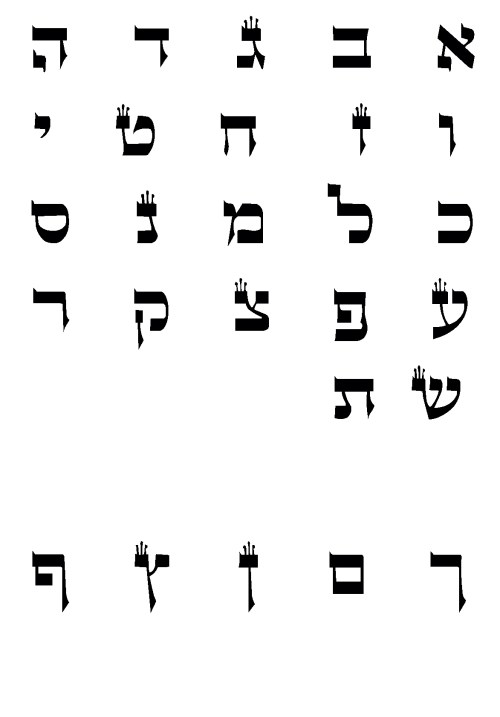
When he finally emerged from his meditation, he explained: “There is in our midst someone who cannot read. It is not his fault; he has been too busy providing for his family to go to school or study with a teacher. But he wishes to sing. And so he allows his heart to speak: ‘You are God; I am but a man. You are Almighty and know everything; I am weak and ignorant. All I can do is decipher the twenty-two letters of the sacred tongue; let me give them to You to make into prayers for me and they will be more beautiful than mine.’ ” The Rebbe raised his voice: “And that, brethren, is why we had to wait. God was busy writing.”

From Souls on Fire: Portraits and Legends of Hasidic Masters by Elie Wiesel


Biden and Colbert

Whatever your politics, it was TV history last night on The Late Show. Joe Biden and Stephen Colbert talking, just two great guys leaning in and getting real, while millions watched, and many teared up.

It starts with Colbert. The question has been whether and how he would progress from being a character on The Colbert Report to a different character that is more himself. There was that moment on the final Daily Show when Colbert exposed his most sincere and unironic thanks to Jon Stewart, the man who gave him his chance.

But last night’s Late Show interview skipped all the midpoints of developing a Colbert talk show persona to transcending any idea of what a late-night host might be. Beyond showing himself as a man of faith, Colbert served almost as a therapist and priest. He didn’t stay away from the pain. He compassionately went right for it, not for spectacle, but for the healing truth, and to reveal the depths of Biden’s quandary.

Reflecting their shared history of family tragedy, it was like a reunion of two old souls. On top of that, Colbert wore not only his faith but his politics on his sleeve, something that just isn’t done in his position. It was clear that he was urging Biden to run not because it was a good idea, but because Colbert and the Nation needed him.

It doesn’t take much to get Biden to speak from his soul. Hello will usually do. But Colbert brought out an extra dimension of that. Where certain candidates now running make us cringe, Biden made me and plenty of others cry. Where certain candidates make us want to run the other direction, listening to Joe just made me want to be a better person.

In the moment, it didn’t matter that Colbert was in only the third show of his widely-covered new TV venture. Or that Biden was in the final weeks of the will-he-or-won’t-he candidacy drama. It just was what it was, and what it was was good and human, so humbly and nobly human. Something we don’t see much on TV. Or in politics.

Bacon and Ribs Illegal in America When Jews and Muslims Take Over

When Orthodox Jews or Muslims are in charge, bacon, ribs, and all sorts of other things will be made illegal.

Of course, that will never happen. Not because Orthodox Jews or Muslims will never take control of American democracy (anything’s possible). But because the U.S. Constitution—that imperfectly perfect protector of individual rights—would not permit it.

In the secular sphere, there is no higher law than the Constitution. Beyond being the law of the land, it is the law of the law of the land. Those who study it in the context of world history and politics recognize that it is a one-of-a-kind, no-other-time-or-place achievement.

Those who say there is some kind of higher law than that in the civic arena are misinformed, or in some cases, such as Ted Cruz who should know better, strategically mistaken. The question those folks have to answer is this: If there is higher law than the Constitution, whose law is it? If it’s “God’s” law, recall that God talks to lots of people in lots of religious traditions, and apparently isn’t always heard to say the same thing to everyone. It will shock some Christians to learn that God has been speaking to Jews for thousands more years, and while there seemed to have been plenty of talk about a messiah, nothing to indicate that one actually arrived. Or asked county clerks in Kentucky to stop issuing marriage licenses. Or told presidential candidates who claim to believe in law and order to defy the law of the law of the land. In his name. Amen.

Hiroshima: The Year 70 AH and I Ching Heaven

Flag of Hiroshima City

How special is the atomic bomb? So special that many nations want one, many nations have more than one, and yet despite how crazy and desperate some nations have been in the past decades, only one nation has ever used one. A hoarded treasure so dark that it is displayed and demonstrated but not deployed.

So special that it should be the zero of a standard human calendar. Just as Jews measure time from the creation of the world, Christians from the birth of Jesus, Muslims from the hijra from Mecca to Medina, we might all measure time from August 6, 1945.

The U.S. did drop atomic bombs. Twice in three days (August 6 on Hiroshima, August 9 on Nagasaki). And divided history in half, before and after. Before, things might be brutal, tens of millions might be slaughtered, but it would take superhuman effort, and would be followed by an opportunity, however arduous, to rebuild and repopulate. After, in these times, our times, there is a theoretical prospect of erasing some, most, or all of the world and its people. Not easily, but not that hard either, leaving behind a wasteland the size of a city or country or continent.

Above is a picture of the Hiroshima municipal flag, adopted by the city in 1896, almost fifty years before the weapon that destroyed and damaged so many lives. Historians still debate the effect and necessity of the Bomb in hastening the end of the war with Japan, an argument heightened when talking about the second bomb.

On this 70th anniversary, 70 After Hiroshima, let us focus on the flag.

Brief research doesn’t reveal much about the flag’s design. But students of Asian culture might see in it one of the eight I Ching trigrams, since the Chinese oracle has been widely used across Asian nations for thousands of years.

This particular trigram, composed of three unbroken lines, is Qian. When doubled it forms Hexagram 1 of the I Ching, also known as Qian. Heaven. The Creative. Sublime success.

I Ching Hexagram 1

 
John Minford explains in his recent translation:

Heaven above Heaven. Pure Yang. This is the first of eight Hexagrams formed by doubling a Trigram of the same Name. The word chosen for the Trigram/Hexagram Name, Qian, whatever its original meaning may have been (and there are many understandings of this), came in later times to be used more and more as a shorthand for Heaven, emblem of Yang Energy and Creativity.

The classic Wilhelm/Baynes translation notes:

The first hexagram is made up of six unbroken lines. These unbroken lines stand for the primal power, which is lightgiving, active, strong, and of the spirit. The hexagram is consistently strong in character, and since it is without weakness, its essence is power or energy. Its image is heaven. Its energy is represented as unrestricted by any fixed conditions in space and is therefore conceived of as motion. Time is regarded as the basis of this motion. Thus the hexagram includes also the power of time and the power of persisting in time, that is, duration.

The power represented by the hexagram is to be interpreted in a dual sense—in terms of its action on the universe and of its action on the world of men. In relation to the universe, the hexagram expresses the strong, creative action of the Deity. In relation to the human world, it denotes the creative action of the holy man or sage, of the ruler or leader of men, who through his power awakens and develops their higher nature.

THE JUDGMENT

THE CREATIVE works sublime success,
Furthering through perseverance.

We have come a long way in 70 years, and whether or not that trajectory is to everyone’s liking, here we are. That we have managed not to drop any more nuclear bombs or fire any nuclear missiles might be a miracle, or might just be a sign of self-interest in survival coming before everything else.

That we did drop those bombs was a high price to pay for learning just how much damage the “good guys” were capable of and might feel compelled to perpetrate when dire circumstances seemed to call for it. It’s a lesson in self-awareness that we are still learning, more or less studiously. It’s a lesson that the traditions try to help us with. The devil, for example, is not an arm’s length third party who bargains and cajoles. The devil is in us, and handling it is one of our missions. The I Ching is clear on the fluid dynamics of our lives and the world, knowing that we and it flow this way and that, and heaven can be hell for a while, maybe deep and for a long while, but not forever.

Thusness

Soul Nebula

Thusness, suchness, tathata in Sanskrit, the ultimate and unconditioned nature of things.
Things as they are. Things as it is.

It is thought of as a Buddhist concept, or an Eastern concept. But it is basic to every faith and wisdom tradition, once you peel away many layers of sometimes self-righteous or overly fussy codification and interpretation. The Christian gospels, unconditioned by unnecessary accretions, are just one example. It would appear that Jesus could speak for himself, plainly articulating thusness as well as any other realized teacher.

Talking about thusness is challenging for some of the wisest people ever. Which puts me at a humble and stupid disadvantage. But fools, like me, rush in.

Is thusness seemingly separate from you?

Yes.

Are you within it?

Yes.

Is it within you?

Yes.

What does it contain?

Among other things, it contains all the attributes we usually consider good and admirable: love, compassion, justice, healing, and on and on.

Does thusness define those attributes?

No. People define those attributes, sometimes in long and complex detail. These definitions seem to help people act on these attributes. This act is loving, this act is not. This act is just, this act is not. It is a practical matter.

Is there a problem with defining the attributes?

No, except that people, often people of good will, confuse the definitions with the attributes themselves. That is, by doing this defined thing, they believe they are acting lovingly or justly. They may be wrong.

Is this a problem?

No, unless people forget to look back to the source of those attributes in thusness. If they identify their particular definition with the essence of the attribute, saying that compassion or justice means exactly what I say it means, they are grounded in themselves.

Is there a solution?

Every faith and wisdom tradition offers the same solution, though the terms may be different. The solution is eliminating the seeming separation from thusness, which leads to realizing that thusness is in you and you are in it. That way, when you hear or consider the attributes of love, justice, and so on, you don’t stop at someone else’s definition or at your own. You look deeper, to an ultimate source, that at once makes the attribute less certain and more complicated, and yet more real and simpler.