Bob Schwartz

Category: Religion

Hermitage

Thomas Merton hermitage

Four Walls

Four walls
Three doors
One window
One ceiling
One floor.
How simple
How deep.
Walls layered
And filled.
Behind two doors
Filled too.
One door
Is different.
Goes out
Comes in.
Out there
The same.
In here
The same.
But not.

Hermitage has been in and on my mind. While not exactly a hermitage, the poem above describes the room in which I write.

When I first started reading Thomas Merton, I learned about his building a hermitage on the grounds of the Kentucky abbey where he lived. Merton was a sublime conundrum, who committed himself to relative silence and disciplined orthodoxy as a monk, yet whose spirit (the Spirit) would not allow him to be quiet and stop exploring. So he wrote and discovered. Thank goodness for us.

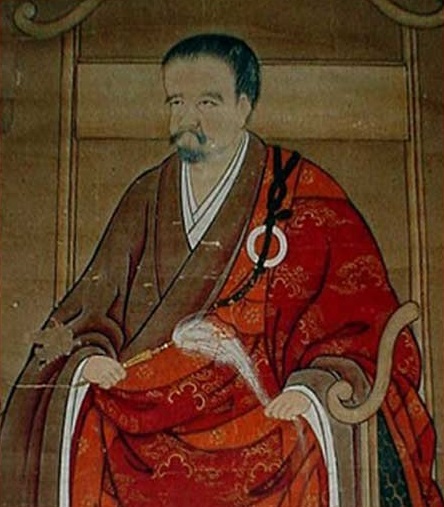
Sandokai is a famous poem by the Chinese Ch’an (Zen) Master Shitou Xiqian (700-790), who is known in Japanese as Sekito Kisen. I have long been reading and studying this, as have many Zen students. Of all the essential texts available, there are few more concisely powerful than Sandokai.

There is another poem by Sekito that is a little less known, but equally compelling. It is a description of his hermitage, a grass hut. There, he tells us, is nothing and everything.

Song of the Grass Roof Hermitage
by Shitou Xiqian

I’ve built a grass hut where there’s nothing of value.
After eating, I relax and enjoy a nap.
When it was completed, fresh weeds appeared.
Now it’s been lived in – covered by weeds.

The person in the hut lives here calmly,
Not stuck to inside, outside, or in between.
Places worldly people live, he doesn’t live.
Realms worldly people love, he doesn’t love.

Though the hut is small, it includes the entire world.
In ten square feet, an old man illumines forms and their nature.
A Great Vehicle bodhisattva trusts without doubt.
The middling or lowly can’t help wondering;
Will this hut perish or not?

Perishable or not, the original master is present,
not dwelling south or north, east or west.
Firmly based on steadiness, it can’t be surpassed.
A shining window below the green pines –
Jade palaces or vermilion towers can’t compare with it.

Just sitting with head covered, all things are at rest.
Thus, this mountain monk doesn’t understand at all.
Living here he no longer works to get free.
Who would proudly arrange seats, trying to entice guests?

Turn around the light to shine within, then just return.
The vast inconceivable source can’t be faced or turned away from.
Meet the ancestral teachers, be familiar with their instruction,
Bind grasses to build a hut, and don’t give up.

Let go of hundreds of years and relax completely.
Open your hands and walk, innocent.
Thousands of words, myriad interpretations,
Are only to free you from obstructions.
If you want to know the undying person in the hut,
Don’t separate from this skin bag here and now.

(from Taigen Daniel Leighton, Cultivating the Empty Field)

Donald Trump Wants to Make the Bible Great Again!

2 Corinthians

Donald Trump spoke to an assembly of students at Liberty University, one of the best-known evangelical colleges in the country. He quoted a Bible passage to show his depth of Christian faith and knowledge.

In doing that, he mispronounced the name of the New Testament book “2 Corinthians” as “Two Corinthians.” It is in fact universally called “Second Corinthians.” Anyone who has glancing familiarity with the Bible knows that, including five-year-olds in Sunday School. Every time there is a numbered series of books (such as 1 Kings and 2 Kings in the Old Testament, etc.), they are called by the ordinal number (First, Second).

Does this prove that Trump has little familiarity with the Bible? Yes. Does this prove that he is willing to cynically use faith as a tool to “close the deal” on the Republican nomination? Yes. Will this affect his support among evangelical Christians, Christians in general, or people of faith? Who knows?

Here’s the thing. It was no mistake.

Trump may not know much about the Bible or about the Presbyterian Church he identifies himself as belonging to. But he knows a “not great” situation when he sees it. Calling these books “First” or “Second” makes no sense. Plus, it’s a waste of time and breath. Everyone knows that Trump is all about making sense and not wasting breath.

And so, this is part of his strategy to make everything terrific. He wants to change the way people have been referring to the Bible for centuries.

He wants to make the Bible great again! Who can blame him? Thank you, Donald.

Bernie Sanders as John the Baptist

John the Baptist

The Democratic Party is in trouble. Politically, philosophically, spiritually, demographically. Bernie Sanders won’t save the party or win the presidency. But he is setting the scene for the party’s reform and renewal.

John the Baptist was a terrible candidate to lead a religious revolution. He was a wild-eyed radical who seemed to be crazy. His people skills needed work. But his cause found a much better spokesman and leader, who took it to the next level. And then some.

When you think carefully about the party and its recent Presidents and leaders, you look hard for real radical inspiration. Bill Clinton was affable and politically adept, but his was the politics of radical compromise, to the point of digging a rut in the middle of the road that invited neo-conservative disaster and greed. Barack Obama was genuinely inspirational, and has helped the cause of humane Americanism as much as politics would allow. But circumstances and inclination led him to solid pragmatism.

One problem with pragmatism is that it makes a terrible anthem and cause. Another is that it allows all sorts of accommodations that look to the would-be believer like nothing but surrender.

That’s where Bernie Sanders and John the Baptist come together. When the stakes are high, and the troubles are deep, that’s when you have to invoke big visions. That’s what gets people who have fallen into both practical and spiritual malaise to answer the call and start working for real change.

There are few in the Democratic Party willing or able to do this. Whether or not Hillary Clinton wins the nomination or the election, it is not her. If she wins the nomination but loses the election, the party will do some typical superficial soul searching. If she wins both, she may consolidate her power, and the power of the establishment, but the Congress will be even less effective than it is now.

Either way, it is possible that Bernie Sanders is unleashing something bigger than the Clintons or any tepid self-inquiry the party may pretend to engage in. He may not be heir to the spirit of Bobby Kennedy, but he might as well be saying this:

“There are those that look at things the way they are, and ask why? I dream of things that never were, and ask why not?”

When Bernie Sanders is done with this election, another Democratic reformer and revolutionary will come along, and another. At that point, if we are lucky, millions of previously unengaged and disappointed people may come to the party dreaming and asking “why not?” And Bernie, like John the Baptist, will have prevailed.

One God Two God

One Fish Two Fish

One God
Two God
Red God
Blue God
(apologies to Dr. Seuss)

A professor at Wheaton College may be dismissed for saying that Christian and Muslims worship the same God.

There is so much that could be said about this.

About the history of American evangelicalism, of which Wheaton is a part. How it began as an open and activist socially liberal Christian movement and has ended up in some instances a radically conservative and strictly exclusivist movement.

About theology as complex as any machine ever built, and just as incomprehensible to those who are not religion mechanics and engineers. How even though the God of the Jews was absolutely the God of Jesus, and the God of the Jews and Jesus was absolutely the God of Muhammed, that isn’t so according to people who may think themselves smarter and more important than Jesus or Muhammed.

The concept of one God was a revolution in civilization. The earlier belief in an entourage of gods, greater and lesser, has been mostly replaced by the one. (Whether that one might be three-in-one goes back to the theology complexities mentioned above, so let’s leave that for now.)

It is no wonder that after thousands of years with religion as a standard way of life, more people are rejecting it than ever. Because if there is a God, and if religions have sprung up on his behalf (with or without his blessing), that God and those religions can look spectacularly ridiculous in the eyes of good people who want nothing but good for people. And because if God really cares about all this very human nonsense, a growing number of people want nothing to do with him or his religions. And who can blame them?

God and the H-Bomb

God and the H-Bomb

The Hydrogen Bomb is in the news, thanks to North Korea’s questionable claim that they have one and have tested it.

In the years following World War 2, the H-Bomb was big news. Big, just like The Bomb. The world had seen the destructive power of the A-Bomb used at Hiroshima and Nagasaki. The H-Bomb made the A-Bomb look like a stick of dynamite. Where once there was the power to destroy cities, we could now destroy the world. And ourselves. We were as gods, at least in our punishing might.

In 1961, a book called God and the H-Bomb was published. It’s not in print, but you might find a copy used or in a library, as I did a few years ago. The cover carries this question: “What counsel do our spiritual leaders offer in response to mankind’s greatest challenge?”

The roster of contributors is an impressive list of thinkers, some of whom are still recognized names, some less familiar. Paul Tillich, Martin Buber, Pope Pius XII, and so on.

We don’t see many—any—religious and spiritual leaders interviewed about the North Korean test, about the Iran deal, or about any Bomb related stories. Except for those religious and spiritual leaders with political strategy in mind or a political axe to grind.

That’s not what this 55-year-old book is about. It is about the moral and spiritual dimensions of the H-Bomb. That is reflected in the titles of the pieces. The power of self-destruction. War and Christian conscience. Fifteen years in hell is enough. Thy neighbor as thyself. The road of sanity.

The foreword is by Steve Allen, who is a little remembered as a significant television personality, but less as one of the most entertaining and brilliant public intellectuals of the middle twentieth century. Here’s what he writes:

That our nation is in the throes of moral collapse of serious dimensions is, apparently, no longer a debatable conclusion. Liberal and conservative spokesmen vie to see who shall express the conviction most vigorously. Churchmen and secularists, too, agree that we have fallen upon evil days. These various groups naturally differ as to the reasons for the situation, but that it exists no one seems to doubt….

Will our nation be guided in this dread hour by the moral code it professes to honor?

Will it?

Hanukkah as Game of Thrones

The Hanukkah story of the Maccabees and the Hasmonean dynasty they founded is not for children. The aftermath of the overthrow of the Seleucid overlords is for grown-ups, a history of empire, guerilla wars, massacres, alliances made and betrayed, power marriages, expansionism, hegemony, and subjugation. And of course faith—the right kind, the wrong kind, and none at all.

It is the sort of story that belongs in Game of Thrones. You won’t see that series on HBO. We want simple tales of faith and miracles, for ourselves and especially for the kids. And why not? In troubled times and a troubled world, no one can begrudge any injection of light or miracles we can find or conjure up.

For a summary of this history, see this from the Israeli newspaper Haaretz: A Brief History of a Violent Epoch: Judas Maccabeus’ death would mark the end of the Maccabean revolt against the Greeks – and the start of the extremely unstable Hasmonean dynasty.

Here is a chart that outlines the chronology of the Hasmonean Dynasty:

Hasmonean Dynasty

Hanukkah has never been a major Jewish religious holiday, not on a par with Yom Kippur, Rosh Hashanah, Passover, and the rest. The events celebrated on Hanukkah do not appear in the Jewish bible. The canon of the Tanakh was closed before the Books of Maccabees could be included. Some of those books, though, can be found in Christian versions of the Old Testament.

Hanukkah was elevated, especially in America, as a seasonal companion to Christmas, for Jews living in decidedly Christian cultures. For a complete treatment of this phenomenon, see the book Hanukkah in America: A History.

The comparison to Christmas does suggest why we don’t have an epic series devoted to the Maccabees and their historical legacy.

The Christmas story has an even bigger and more significant and spectacular sequel. The newly born Jesus grows up to become the foundation of the faith and one of the great teachers in world history. The next part of his mission is told in the story of Easter. Sequels don’t get any bigger, clearer or cleaner than that.

The historical follow-up to the story of the Maccabees is more equivocal. It puts that era in Jewish history in a very real, human, political light that may clash with the simple idealized version of candles and dreidels.

This doesn’t mean we shouldn’t light the candles, eat the latkes, spin the dreidels, and commemorate the victory of God’s rule over the rule of the less godly. It’s just that sometime during the holiday, we might leave behind childish things and look at the history with eyes open. Not because it takes away from the holiday, but because it adds to it a fuller sense and understanding.

And because for two millennia, the exact same complexity has been unfolding in the exact same place. Not a children’s game. More like Game of Thrones. Only much more real.

Defeating ISIS: Lessons from the American and Israeli Wars of Independence

We can’t “defeat” ISIS. Not if that means declaring “victory” over Middle East-based Muslim radicalism and terror.

There are lessons from the American and Israeli Wars of Independence. This isn’t to suggest any moral equivalence comparing those world-changing events to the monstrosity of ISIS. But there are things to learn.

Both Wars of Independence were attempts to upend empire and established order and create a new model (both uprisings, not coincidentally, involving the British). Both were insurgencies by True Believers, one political and economic, one religious. Both are examples of the power of the heart, because the heart not only wants what the heart wants, it will do anything to get what the heart wants. True belief will find a way.

The British thought that their massive and formal force would roll right over the Americans. They did not count on all sorts of stealthy and tricky techniques, on secret communications, on a guerilla war. Mostly, the British didn’t account for the depth of American commitment: hearts and minds and souls. It may not always work that way, but competitions often go, simply, to the side that just wants it more. And that would be the Americans.

The British were never quite sure what they were doing in Palestine. But they did know something about world order and keeping order. Besides, some Brits didn’t much like the Jews anyway. The Zionists believed, literally, that they had God on their side. As far as hearts and minds and souls getting what they want, doing anything to win did mean the occasional act of terror (for example, the 1946 bombing of the King David Hotel in Jerusalem, leaving 96 dead). As far as who wanted it more, the founders of the modern Jewish state not only defeated the British, but turned back all attempts by hate-fueled neighbors to root them out.

In the aftermath of Paris, just as with 9/11 and other recent terrible events, if we keep talking simplistically about “defeating”, “eliminating” or “building American-style democracy”, we are—there’s no other way to say this—fools. We should eliminate and prevent horror, terror and monstrosity wherever and whenever we can. But if we think that the toxic mixture of true belief, grievance and pathology is just going to vanish because we are purer and more powerful, that would be funny if it weren’t so sad and dangerous.

If you don’t think that hearts, minds and souls matter when it comes to extremism, just look at the sorry record of irresolute and wasteful wars when we ignore that. We may feel righteous and superior, and want to vindicate civilization. But that doesn’t relieve us of the responsibility to be smart. Smart about what we face, what we can accomplish and how to accomplish it. So we can do some good, and do less harm.

The I Ching of Paris

Hexagrams 44 and 29

Question for the I Ching (using the coin method of consultation): How do we deal with the events in Paris?

The I Ching replies:

Hexagram 44 – Gou (Encountering, Coming to Meet)
Heaven above, Wind below.
Changing lines in the third, fourth and top place.

Changes to:

Hexagram 29 – Kan (Water, Darkness, The Abysmal)
Water above, Water below.

Excerpts from two leading translations:

The Complete I Ching
Alfred Huang

Hexagram 44 – Gou

The structure of the gua [hexagram] is Heaven above, Wind below. The wind blows everywhere under Heaven, encountering every being. It should be an auspicious gua. However, there is only one yielding line beneath five solid lines, symbolizing that the yin element is advancing and approaching the yang elements. When King Wen saw this happening, he heightened his vigilance. He realized that an unworthy person was worming his way into favor at the court. The growing negative influences would displace good people one after another. Darkness and difficulties had been eliminated, but their negative influences had not totally faded. These influences were permeating different areas. One must beware of this tendency and take prompt precautions against possible misfortune. Thus King Wen’s Decision and the Duke of Zhou’s Yao Text are full of warnings. But Confucius’s commentaries still shed light on the positive side.

This gua discusses the principle of encountering. In Chinese, meeting a person (or anything) unexpectedly is defined as encountering. When people encounter each other, either they are attracted, making adjustment for a harmonious relationship, or they reject each other, creating conflict between them. In human life sometimes one cannot refrain from misunderstanding and conflict. But one should not indulge in it and think that conflict is unavoidable and cannot be resolved. The ancient sages advocated adopting a conciliatory attitude. Here one yin element approaches five yang elements. She dares to come forward because her strength grows stronger. In this situation, one should not overlook taking preventive measures.

King Wen’s strategy of eliminating evil forces was to show no animosity but to act without tolerance. His administration constrained evil elements like tying up rams. But evil elements still wormed themselves into the favor of the court. King Wen realized that the evil forces had been eliminated, yet their influence had not totally faded. His analogy was that the maiden was too strong; it was not good to marry such a woman. The Duke of Zhou describes the evil forces as waiting to move forward like a lean pig. They should be stopped as if fastened with a metal brake. It is wise to restrain their influence by not letting them influence other people, but it was wiser to influence people with positive virtue.

[Changes to:]

Hexagram 29 – Kan

The central theme of this gua is: falling but not drowned; in danger but not lost. Maintain your confidence: soothe your mind. With assurance and faith, caution and trust, you can pass through any difficult situation. Both Abysmal and Abyss carry the sense of being bottomless. Kan is a pit, but it is not bottomless. There is hope.

Darkness represents not only a pit but also a situation of difficulty or danger. The structure of this gua is a doubling of the primary gua, Water. The image of Water is a yang line plunging between two yin lines, like running water flowing along and between the banks of a river. In ancient times, crossing a river represented a great danger. Thus, the attribute of Water was designated a situation of difficulty or danger. Here, Water is doubled, suggesting that one is plunging into a situation fraught with difficulties or danger. However, the ancient Chinese believed that no matter how dangerous or dark a situation was, if one was able to follow the way of Heaven, one could pass through it as safely as water passes through a ravine.

Water flows on twice over,
Darkness is doubled.
In correspondence with this,
The superior person cultivates and practices virtue constantly
And responds through teaching.


The I Ching
Wilhelm/Baynes

Hexagram 44 – Kou

This hexagram indicates a situation in which the principle of darkness, after having been eliminated, furtively and unexpectedly obtrudes again from within and below. Of its own accord the female principle comes to meet the male. It is an unfavorable and dangerous situation, and we must understand and promptly prevent the possible consequences.

The inferior man rises only because the superior man does not regard him as dangerous and so lends him power. If he were resisted from the first, he could never gain influence.
The time of COMING TO MEET is important in still another way. Although as a general rule the weak should not come to meet the strong, there are times when this has great significance. When heaven and earth come to meet each other, all creatures prosper; when a prince and his official come to meet each other, the world is put in order. It is necessary for elements predestined to be joined and mutually dependent to come to meet one another halfway. But the coming together must be free of dishonest ulterior motives, otherwise harm will result.

[Changes to:]

Hexagram 29 – K’an

In man’s world K’an represents the heart, the soul locked up within the body, the principle of light inclosed in the dark—that is, reason. The name of the hexagram, because the trigram is doubled, has the additional meaning, “repetition of danger.” Thus the hexagram is intended to designate an objective situation to which one must become accustomed, not a subjective attitude. For danger due to a subjective attitude means either foolhardiness or guile. Hence too a ravine is used to symbolize danger; it is a situation in which a man is in the same pass as the water in a ravine, and, like the water, he can escape if he behaves correctly.

Through repetition of danger we grow accustomed to it. Water sets the example for the right conduct under such circumstances. It flows on and on, and merely fills up all the places through which it flows; it does not shrink from any dangerous spot nor from any plunge, and nothing can make it lose its own essential nature. It remains true to itself under all conditions. Thus likewise, if one is sincere when confronted with difficulties, the heart can penetrate the meaning of the situation. And once we have gained inner mastery of a problem, it will come about naturally that the action we take will succeed. In danger all that counts is really carrying out all that has to be done—thoroughness—and going forward, in order not to perish through tarrying in the danger.

Properly used, danger can have an important meaning as a protective measure. Thus heaven has its perilous height protecting it against every attempt at invasion, and earth has its mountains and bodies of water, separating countries by their dangers. Thus also rulers make use of danger to protect themselves against attacks from without and against turmoil within.

Ask for Forgiveness: The Perfect Ben Carson Strategy That He Won’t Use

Ben Carson

Ben Carson has gotten caught embellishing/lying about some details in his life that are part of his inspirational narrative.

What’s weirdest about his response—spin, blame the media, discount the degree of untruth, etc.—isn’t that making up stuff is unusual for politicians. Zebras and stripes, leopards and spots. What’s weird is that being a sincere and serious Christian, all he has to do is tell the truth. Say that he exaggerated or even lied, and ask for forgiveness. Because he is, after all, only human, only a sinner like us all.

His many Christian supporters should not only forgive him. They should see him as a model of genuine Christian contrition and humility. Which presumably is what God and Jesus ask of us. Not to be saints, which we can’t be anyway, but to be self-aware, confessing humans, bent on being better. It is entirely possible that he could actually make gains among Christian supporters for doing that.

If those supporters refused to forgive, that might put in question the depth of their unconditional Christian commitment. Lying itself doesn’t put your faith and commitment in question (remember, only human), but stubbornly persisting in finding every which way not to say you have lied is a little more troubling. And maybe a little less Christian.

Pay Attention to Religion in America: Even If You Don’t Drive You Can Get Hit By a Car

Pew Research Center

The final report of the Pew Research Center 2014 Religious Landscape Study has just been released: “This report focuses on Americans’ religious beliefs and practices and assesses how they have changed in recent years.” (For those who don’t like to read, here’s a topline video.)

No matter your own religious inclinations, investigate. This is the best overview of religion in America, a survey of more than 35,000 U.S. adults.

Why should you care?

Let’s say you don’t have much to do with cars. You don’t own one. Maybe you even live in a city where you don’t need one, and in fact it is trouble to have one. You think that cars are a problem, not a solution. Anything having to do with cars is totally outside your area of interest.

Except that everywhere you go, the phenomena of cars surround you as part of your world. Streets, traffic, traffic lights, energy, etc. You can’t escape it. Why? Because hundreds of millions of Americans own and use hundreds of millions of cars that occupy a huge piece of our economic, social, psychic, cultural, legal space.

You don’t have to believe in cars, but you should not ignore or dismiss them or the people who own and use them. You don’t have to be an expert on cars, but it might be helpful to have some basic understanding and interest.

Because whether or not you believe in cars, if the traffic light is broken when you cross the street, you will believe in the car that hits you.