Bob Schwartz

Category: Psychology

It May Not Be Politically Correct to Talk About It, But Is Donald Trump Mentally Healthy?

Donald Trump says he saw something that nobody else did: people in Jersey City cheering as the Twin Towers fell on 9/11.

From the Washington Post:

Republican presidential candidate Donald Trump says he saw people cheering the Sept. 11 attacks across the river in New Jersey — a claim officials strongly deny.

Trump first told the story Saturday at a rally in Birmingham, Alabama, as he pressed the need for greater surveillance, including monitoring certain mosques, in the wake of the Paris attacks.

“I watched when the World Trade Center came tumbling down. And I watched in Jersey City, New Jersey, where thousands and thousands of people were cheering as that building was coming down. Thousands of people were cheering,” Trump said Saturday at a rally in Birmingham, Alabama.

Trump repeated the assertion Sunday in an interview with George Stephanopoulos on ABC’s “This Week,” as Stephanopoulos explained to Trump that police had refuted any such rumors at the time.

“It did happen. I saw it,” said Trump. “It was on television. I saw it.”

“There were people that were cheering on the other side of New Jersey, where you have large Arab populations. They were cheering as the World Trade Center came down,” he said.

“I know it might be not politically correct for you to talk about it,” he added, “but there were people cheering as that building came down, as those buildings came down. And that tells you something.”

It comes down to two possibilities.

One is that Trump is just saying stuff and making up stuff for political benefit. Pretty outrageous stuff, but it’s been working for him so far. There have long been internet rumors to this effect, but every possible objective source—police, news media, even Republican politicians—deny it ever happened. But it is a rumor that is a definite winner among certain constituencies.

Or. There is something creepily genuine about Trump’s profession of belief in this. He saw it on television, he says, even though it was never on television. Which means that maybe, just maybe, Donald Trump has a problem. A psychological one. People do and say all kinds of things that cross all kinds of lines—ethical, moral, criminal—without having mental illness. On the other hand, it would not be that surprising for someone who has skated for so long on the edge of saying whatever is needed—very successfully and profitably—to cross a boundary to the place where things that never happened do appear to have happened. All evidence to the contrary.
Not Born Bored

Here we are now
Entertain us
Nirvana, Smells Like Teen Spirit

A study by Lady Gaga’s Born This Way Foundation finds that, among other things, lots of high school students are bored. Suggested solutions included making teachers better and the experience more interesting.

There are some other possibilities, but to consider them we should look beyond high school.

First, people are not born bored. Babies are not bored. Everything is interesting to them.

People do grow up and develop something called boredom, about which we don’t spend nearly enough time defining or considering. We just lump it into the avoid-or-eliminate category, and associate it with pain. Fortunately for the suffering bored, at this moment in history we may have the most options for escaping boredom ever.

Pointing to high schoolers or young people in general as the easily bored is unfair to them. Plenty of their elders pursue ways to keep things constantly interesting. Mobile phones at dinner tables are not the purview of those under 21.

There’s no doubt that high school is not what it should be, never has been, and deserves attention and improvement. The same goes for the hourly and daily and yearly lives of many people, just like those students stuck being in a place they don’t want to be and doing things they don’t want to be doing.

One small suggestion: Don’t be bored. Put another way, instead of regularly working hard to eliminate boredom, once on a while eliminate boredom as a category of experience. You don’t have to think like a baby. But you might discover that seeing everything as interesting, even awesome, can provide some incredibly cheap and available thrills. And while we wait for high school to improve, maybe that’s something we can try to get across to our kids. Once we learn to practice it ourselves.

Compassion

A primary act of compassion is to lift the load and not add to the load of others.

Easy to say, not easy to do. Can you smile if unjoyful? Can you sing a happy song when you feel like a dirge?

Being true to your little self, no matter how dark it is, might seem like a good idea—if there is a little self, separate from the rest. We may be encouraged to let it all out, whether as a shout or a sulk. The complication is that if you think you are the center of the universe, privileged to make its own weather, you are right. You are the center of the universe, but so is everyone else. If they are to live subject to your clouds and storms, so you do to theirs.

Compassion, of which joy is an instrument, is at the top of the list for two reasons. It is the most powerful. And it is the hardest. So when next you wrap yourself in a blanket of seemingly private sadness, consider that you are most probably not alone. And that the smallest bit of light might be a big gift.

Craving Chaos

There are those who crave chaos, and some who create it when they don’t find it. Often they are those with low tolerance for boredom and regularity. They are like explorers and adventurers, who go places and do things that others question: Why are you doing this and why does it always have to be the hard way?

This isn’t good or bad. We need such people, because their constant engagement with challenges can result in remarkable learning, insight, and progress. That is, chaos is the nature of things, and dealing with it is a highly valuable skill. But it remains that those who find value in at least modest regularity and order might find all that occasionally troublesome.

Freud and Freund

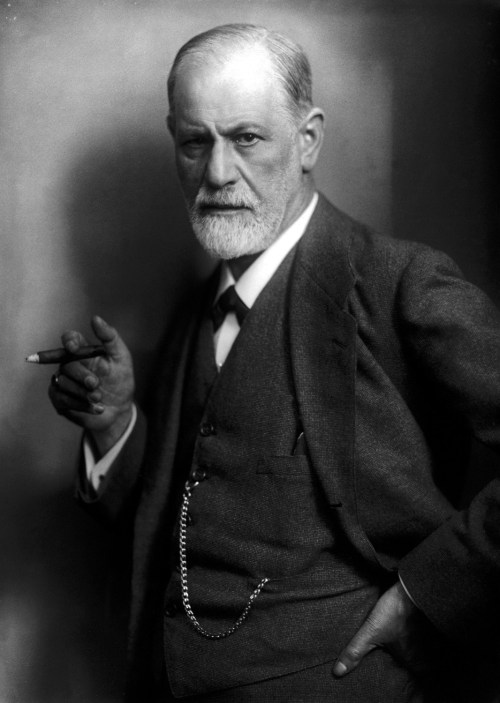
Sigmund Freud

Some dreams are literal or nearly so. Sometimes riding a roller coast is just riding a roller coaster. Some dreams, if you take a symbolic and analytical approach, mean more and say more than the action they depict. That roller coaster might be the story of your day or your life.

The rarest kind are wholly, or at least momentarily, conceptual and intellectual. That is, they are like reading a text or listening to a lecture, wherein an item is dictated or a point is announced.

Last night, a dream asked me to play a word game, to relate two words. It wasn’t quite a request, it was more like a reveal, as in “Look, don’t you see?”

The words were Freud and Freund (the German word for friend). I did not take this to mean that Freud is my friend. I took it to mean that analysis and investigation, which Freud is famous or infamous for, is/can be/may be near the heart of friendship. Friends may not want this or like this, we may not want to do this or complicate the joyful simplicity of a relationship, but it does happen.

Of course, Freud might find the dream and my interpretation of it…interesting. He might expect me to delve more deeply into why he made it into the dream at all, even if only as a name, and why in my dream I was playing word games instead of, say, riding a roller coaster or something equally thrilling. But then, I might ask him, as my freund, to kindly shut up and let me get back to sleep.

Why Be Curious?

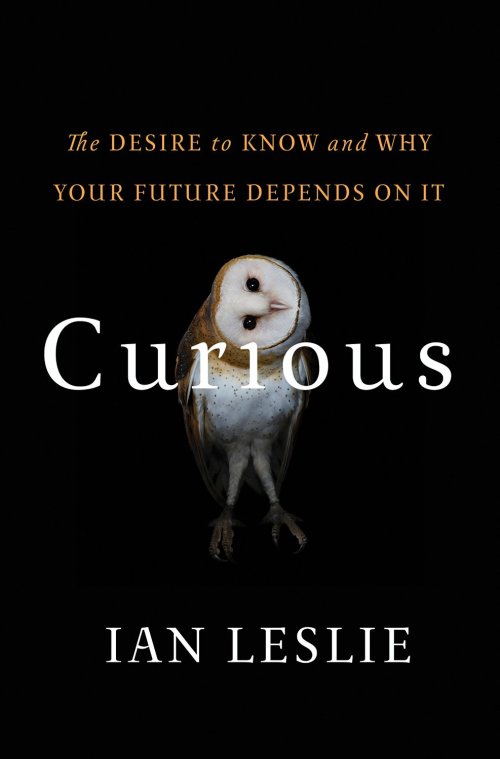
Curious

In his latest book Curious: The Desire to Know and Why Your Future Depends on It, Ian Leslie has found an essential key to the way things are and the way they—and we—might be much better.

Social observers are always looking for that one thing, that overriding concept, which succinctly explains how we got where we are, and how, if we are interested, we can use it as a way to move forward. Think Nassim Nicholas Taleb’s Black Swan. Think Malcolm Gladwell’s Tipping Point. Sometimes these concepts are interesting and useful, sometimes faddish and fatuous.

It’s impossible not to notice that something is fundamentally different about—or missing from—these times. It’s too facile just to inventory the innovative tools and techniques we enjoy, though that’s more than enough for the businesses making billions on them. We want an explanation.

Leslie explains:

A society that values order above all else will seek to suppress curiosity. But a society that believes in progress, innovation, and creativity will cultivate it, recognizing that the inquiring minds of its people constitute its most valuable asset. In medieval Europe, the inquiring mind—especially if it inquired too closely into the edicts of church or state—was stigmatized. During the Renaissance and Reformation, received wisdoms began to be interrogated, and by the time of the Enlightenment, European societies started to see that their future lay with the curious and encouraged probing questions rather than stamping on them. The result was the biggest explosion of new ideas and scientific advances in history.

The great unlocking of curiosity translated into a cascade of prosperity for the nations that precipitated it. Today, we cannot know for sure if we are in the middle of this golden period or at the end of it. But we are, at the very least, in a lull. With the important exception of the Internet, the innovations that catapulted Western societies ahead of the global pack are thin on the ground, while the rapid growth of Asian and South American economies has not yet been accompanied by a comparable run of indigenous innovation. Tyler Cowen, a professor of economics at George Mason University in Virginia, has termed the current period the Great Stagnation….

Our educational system is increasingly focused on preparing students for specific jobs. To teach someone to be an engineer or a lawyer or a programmer is not the same as teaching them to be a curious learner—yet the people who make the best engineers, lawyers, and programmers tend to be the most curious learners. So we find ourselves stuck in a self-defeating cycle: we ask schools to focus on preparing students for the world of work rather than on inspiring them, and we end up with uninspired students and mediocre professionals. The more we chase the goal of efficient education, the further it recedes.

The rewards of curiosity have never been higher, but our ideas about how curiosity works are muddled and misguided. We romanticize the natural curiosity of children and worry that it will be contaminated by knowledge, when the opposite is true. We confuse the practice of curiosity with ease of access to information and forget that real curiosity requires the exercise of effort. We focus on the goals of learning rather than valuing learning for itself. Epistemic curiosity is in danger of becoming the province of cognitive elites, with far too many of us losing or never learning the capacity to think deeply about a subject or a person. In a world where vast inequalities in access to information are finally being leveled, a new divide is emerging—between the curious and the incurious.

Curious is much more than just valuable diagnosis and description. After fascinating sections on How Curiosity Works and The Curiosity Divide, Leslie proposes a practical prescription, Seven Ways to Stay Curious:

Stay Foolish
Build the Database
Forage Like a Foxhog
Ask the Big Why
Be a Thinkerer
Question Your Teaspoons
Turn Puzzles into Mysteries

No summary or series of excerpts can do this book justice. Well-written and compelling, it is, to repeat, an essential. Read it. Even if you don’t want to apply it to yourself or your children or your colleagues, it is a book to keep handy as we try to remake what isn’t working and navigate unsteadily to a newer world.

See more from Ian Leslie here.

Man Arrested after Attempting Sex with ATM and Picnic Table

ATM

This is a test. It is an actual news story about a man who tried to have sex with an ATM and a picnic table.

Place and name have been deleted, and no link to the story is provided. There is more than enough embarrassment already. You can no doubt find the story if you are so moved.

This is a test not unlike an inkblot test. Listen to the police officer’s report. Then listen to your own thoughts. What are you thinking when you hear this? Are you laughing? Saddened? Disgusted? Confused? All that and more? What stories are you telling yourself? You might find that just as interesting as the original story.

A man was arrested Friday night and charged with public intoxication.

The police officer said, “He entered the bar and walked to the ATM. Once at the ATM, he pulled down his pants and underwear exposing his genitals, and then attempted to have sexual intercourse with the ATM…Once outside he again exposed himself and engaged in sexual intercourse with the wooden picnic table.”

Passover and Freud

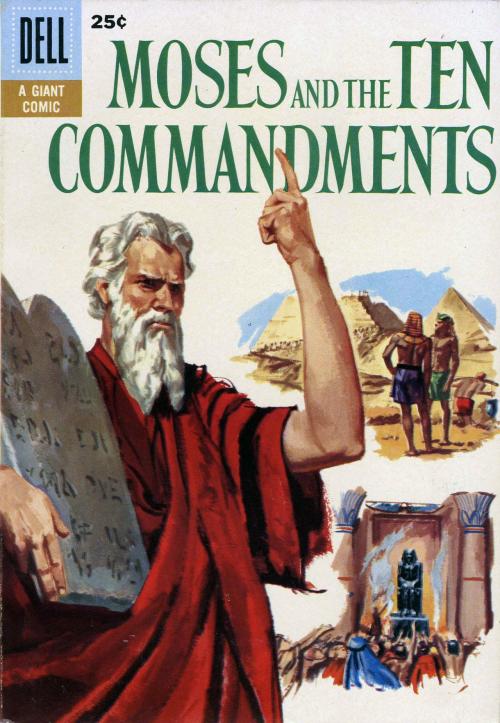
Moses and the Ten Commandments

What does Freud want? He might not want people attending a Passover seder, offering prayers to a God who isn’t there. But things are not that simple.

Sigmund Freud was a Jew by birth, an atheist by belief. He abstracted and analyzed religion as a powerful manifestation of powerful forces at work. But near the end of his career, he considered whether there was something in God that was more than a mere reflection of psychic need and dynamics.

In his final book, Moses and Monotheism, he suggests that while there is no God, the positing of one had forced the Jews—and all who followed on that spiritual path—to think and act differently. The gift of the idea of God was the imperative to transcend instinct and old ways, to make new and positive sense of the insensible, and to act accordingly.

Those in the Jewish communities will retell some version of the Moses story this Passover. But only some of those will have completely read the biblical account in the Book of Exodus. Even fewer will have looked beyond the popular stories to see what generations of historians and commentators have to offer.

One of those who does have something to offer is Freud. In Moses and Monotheism, he made a jump, if not a giant leap. Here is part of what Freud wrote (emphasis added):

How we who have little belief envy those who are convinced of the existence of a Supreme Power, for whom the world holds no problems because He Himself has created all its institutions!…We can only regret it if certain experiences of life and observations of nature have made it impossible to accept the hypothesis of such a Supreme Being. As if the world had not enough problems, we are confronted with the task of finding out how those who have faith in a Divine Being could have acquired it, and whence this belief derives the enormous power that enables it to overwhelm Reason and Science.

. . .

Let us return to the more modest problem that has occupied us so far. We set out to explain whence comes the peculiar character of the Jewish people which in all probability is what has enabled that people to survive until today. We found that the man Moses created their character by giving to them a religion which heightened their self-confidence to such a degree that they believed themselves to be superior to all other peoples. They survived by keeping aloof from the others. Admixture of blood made little difference, since what kept them together was something ideal the possession they had in common of certain intellectual and emotional values. The Mosaic religion had this effect because (1) it allowed the people to share in the grandeur of its new conception of God, (2) because it maintained that the people had been “chosen” by this great God and was destined to enjoy the proofs of his special favor, and (3) because it forced upon the people a progress in spirituality which, significant enough in itself, further opened the way to respect for intellectual work and to further instinctual renunciations.

. . .

In a new transport of moral asceticism the Jews imposed on themselves constantly increasing instinctual renunciation, and thereby reached at least in doctrine and precepts ethical heights that had remained inaccessible to the other peoples of antiquity. Many Jews regard these aspirations as the second main characteristic, and the second great achievement, of their religion….

It was this “respect for intellectual work” that Freud so appreciated. Freud may have seen himself as a sort of Moses, leading civilization from benighted antiquity to a new light and new heights. Just as religious innovation led Jews from the old ways to a new land, so he and psychoanalysis would lead to even further self-awareness and progress—without God, of course.

Whether or not you believe in God, Moses, or Freud, whether or not you will be sitting at a seder table this Passover, it can be a good time to consider old ways in a new light. According to Freud, the gifts of Moses are the tools to renounce instincts and move beyond mere legacy. If we are trapped as man or mankind, psychoanalysis and, yes, even a certain religious perspective might be able to liberate us.

Darren Aronofsky’s Noah is one of the most popular movies in America right now. Even with the film’s creative liberties, many of the faithful take the movie as cinematic validation of a biblical tale, just as The Ten Commandments was for an earlier generation. But some others of the faithful are bothered, as they should be, by a sense that there is something subversive going on.

Of course there is. Any retelling of our received stories can be subversive, if we are willing to investigate and recreate. In the passage above, Freud could not be clearer that for him the conventional belief in God stands in the way of reason and science. But he then begrudgingly admits that in the right circumstances, some good may and has come from it.

Do Republicans Have A Death Wish?

Sigmund Freud
In the first episode of Mad Men, psychologist Dr. Greta Guttman explains how the health dangers of cigarettes might be used to the advertiser’s advantage:

“I believe my most recent surveys have provided a solution. We can still suggest that cigarettes are “part of American life,” or “Too good to give up,” and most appealing “an assertion of independence”….Before the war, when I studied with Adler in Vienna, we postulated that what Freud called “the Death Wish” is as powerful a drive as those for sexual reproduction and physical sustenance.”

Even though this seems preposterous, account executive Pete Campbell tries it out later at a client meeting:

“At Sterling Cooper, we’ve been pioneering the burgeoning field of research. And our analysis shows that the health risks associated with your products is not the end of the world. People get in their cars everyday to go to work, and some of them die. Cars are dangerous. There’s nothing you can do about it. You still have to get where you’re going. Cigarettes are exactly the same. Why don’t we simply say, “So what if cigarettes are dangerous?” You’re a man. The world is dangerous. Smoke your cigarette—You still have to get where you’re going.”

To which the patriarch of the tobacco company replies:

“Is that your slogan? “You’re going to die anyway. Die with us.””

The Republican Party does not, as far as we know, have a psychoanalyst. And Freud’s so-called “death drive” remains one of his most controversial principles.

But there is no question that individuals and institutions exhibit behavior that surpasses our understanding of what is rational and adaptive. From the outside, it looks like a path that leads nowhere good. Sometimes it is our own shortcoming in not being able to see the complex and sophisticated strategy underneath. Sometimes people are too clever for their own good. And sometimes, there is no conclusion left other than a Freudian one, that there is an instinct not just to fail or epic fail, but to go all the way down. “You’re going to die anyway. Die with us.”

Mitt Romney Doesn’t Really Want To Be President


Mitt Romney doesn’t want to be President. This has been apparent for a while, but it seemed so unlikely—so strange for a person who is actually a nominee—that it defied saying. But it is the clearest explanation of everything that is happening.

Why would Romney run if he doesn’t want the office? The clichéd but useful explanation goes to a father-son dynamic.

In at least one objective respect, Mitt has spectacularly surpassed George Romney. Mitt Romney is a very, very rich man, wealthier than his father ever was.

As a businessman, it is a little more complicated. George Romney was, as the saying used to go, a captain of industry. He worked his way up to become head of one of the largest automakers, back when that mattered much more than it does now. Even if American Motors wasn’t one of the Big Three, it was a notable, forward-looking player in the field.

Mitt Romney’s success is different. Even treating the financial world as a discrete industry, which it of course is, the term “captain of industry” doesn’t seem to apply to Mitt. In the annals of financial history, no one will be talking about the creativity of Bain Capital the way business historians still do about the ahead-of-its-time thinking that marked American Motors—the company that believed the oversized car era was over, and that consumers would be buying compact and efficient automobiles. Eventually they would.

Politics is where the distinction is sharpest. George Romney was elected Republican Governor of Michigan three times—a state that was then decidedly Democratic. He had substantial political appeal and support, but his dream of being President was scuttled in part by the infamous “brainwashing” incident. He had visited Vietnam, and was told by the generals how well the war was going—in spite of evidence to the contrary. When he spoke about his opposition to the war, he said he had been “brainwashed” by the generals. George Romney’s political career never recovered.

As a politician, Mitt Romney has run for office just twice, and won only once. He was defeated for U.S. Senate from Massachusetts in 1994, and then was elected Governor in 2002. He chose not to run for re-election in 2006. Indications were that he would have a difficult race, and he instead began his run for the Presidency the day before he left office.

This father-son analysis—that Mitt Romney is trying, at all costs and for whatever reasons, to do what his father never could—may sound too easy. But the story of fathers and sons is just about the oldest story ever told. The patriarchal sagas of the Old Testament begin there, and great stories derive their greatness from the fact that some things never change.

Mitt Romney is following a program that he may not see or understand but that he has little or no choice about. It is a program, this running for President, that normally requires some combination of skill and desire. A surplus of one can balance out a deficit in the other. But trying to run without either—which we have never seen in a Presidential race—is bound to produce some anomalous results.

In the case of Mitt Romney, we can set aside the issue of how much political skill he has, though many have their doubts. The real question is how much desire he has. The answer, strangely, is little or none.

The outcome of the election is far from written. In case Mitt Romney loses, there is reason to believe that he will suffer some nagging psychic pain. But given the possibility that it is not something he really wants. there is also reason to believe he will go back to an extraordinarily comfortable life, and secretly be relieved.