Bob Schwartz

Category: Politics

The Unspoken Election Issue: The Economy

If you want to find the real issues that need addressing, just look at what is not talked about in the election campaign.

The economy has been a topic at a very superficial level, but the deeper issues have been avoided like poison. From a political standpoint, this is completely understandable. But as for problem solving, it is dangerous.

The economy is in the midst of a structural, existential transformation. Big time. One reason not to talk about it is that economics is substantially psychological, depending on a degree of optimism, and no one wants to enable pessimism and tank an already fragile economy. Another reason for politicians to avoid the topic is that they either have no good strategies, or the strategies require the sort of complex and long-winded discussion that citizens supposedly tune out or reject.

Too bad. We have to have “the talk” before it’s too late. It is a little like parents not having the sex talk with their children, only to discover those same children unexpectedly expecting children of their own.

The political question is who is most able to lead us into and through that talk, when the time comes that we can no longer delay and deny it. The answer is that we need leaders who are curious, creative, courageous and flexible. That doesn’t mean discarding guiding principles of ancient and venerable origin, principles such as honesty, integrity, compassion. But it does mean that trying to fit the future of the economy into the paradigms of the past is like watching a child trying to pound a square peg into a round hole. Which is not nearly as frightening as watching grown-up politicians trying to pound a 21st century economy into a 19th/20th century hole.

Predicting tomorrow’s election is a fool’s errand. But here’s a prediction you can take to the bank: This will be the last election that addresses the economic future in such simplistic and maladaptive terms. Because if the immediate future of leadership doesn’t end the tired nostrums and doesn’t include these big vision, big picture, new world considerations of the changes happening right now, the economic context of the next Presidential election could be much, much worse than this one.

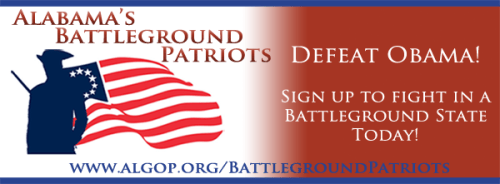
Alabama GOP To Hold Victory Party At Shooting Range

The Alabama Republican Party

will be holding its Victory Party tomorrow night at Hoover Tactical Firearms

Entertainment by Act of Congress

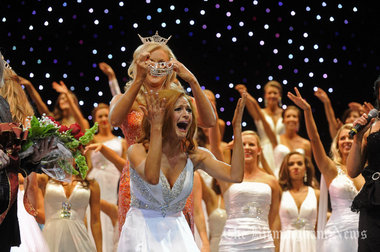
Special Guests Anna Laura Bryan, Miss Alabama 2012

Amie Beth Shaver, Miss Alabama 1994

Losers and Winners


In the first Presidential debate, which Barack Obama lost, Mitt Romney directly attacked the President on government support for energy innovators:

“Now, I like green energy as well, but that’s about 50 years’ worth of what oil and gas receives. You put $90 billion — like 50 years’ worth of breaks — into solar and wind, to Solyndra and Fisker and Tesla and Ener1. I mean, I had a friend who said, you don’t just pick the winners and losers; you pick the losers.”

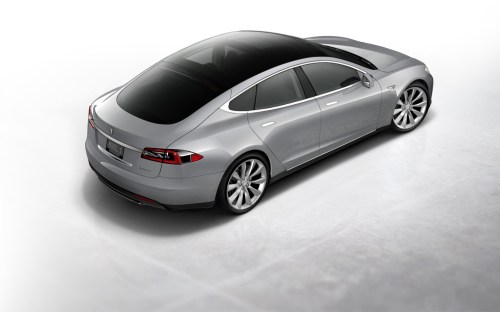
Today, that “loser” Tesla won. The Tesla Model S was named by Automobile Magazine as the 2013 Automobile of the Year:

The auto industry is tough enough for a giant like General Motors. What we can say with this award is that Tesla deserves to succeed. It has managed to blend the innovation of a Silicon Valley start-up, the execution of a world-class automaker, and, yes, the chutzpah of its visionary leader [Elon Musk]. The result is the Model S. It’s not vaporware. It’s our Automobile of the Year.

Sometimes picking winners and loser is difficult. Sometimes it’s not.

Des Moines Register Endorses Richard Nixon


The story of the Des Moines Register’s endorsing Mitt Romney—the first time the newspaper has endorsed a Republican since Richard Nixon in 1972—has been covered with entirely the wrong emphasis.

The point is not Mitt Romney’s potential for success in the office or Barack Obama’s supposed failures.

The point is that the Des Moines Register endorsed Richard Nixon. Yes, that Richard Nixon.

The Register was far from alone among major newspapers endorsing Nixon that year. Unfortunately, no archive has been found with the particular words of praise and support the newspaper used, though the search continues. It would be lovely to read those words—and then to compare them to the actualities of Nixon’s truncated term in office.

Absent that record, it is a good guess that the Des Moines Register did not predict that Nixon would lead a criminal conspiracy from the Oval Office, and that the cover-up of that behavior would include the undermining of the U.S. Constitution. That would not make for a very effective endorsement. Nor did the newspaper likely mention his nickname “Tricky Dick”, an allusion to his reputation for deviousness and ruthlessness.

The well-known moniker began not with his 1968 presidential campaign, nor with his 1962 gubernatorial campaign, nor with his 1960 presidential campaign, nor with his 1952 vice-presidential campaign, but with his 1950 senatorial campaign. By the time of the 1972 campaign, Nixon had been touted by some respectable people as “Tricky Dick” for 22 years.

For whatever reason, the Des Moines Register refused to believe it. They endorsed Nixon, and though we can’t really blame them for the election results—the late George McGovern’s historic loss—they didn’t help, and the rest is history.

Why Vote?


If you are someone who thinks that voting is pointless, that “they” (the people in power) only use it to give you the illusion of power, that “they” (those same people) are all the same, no matter what their party, you are misguided but not beyond redemption.

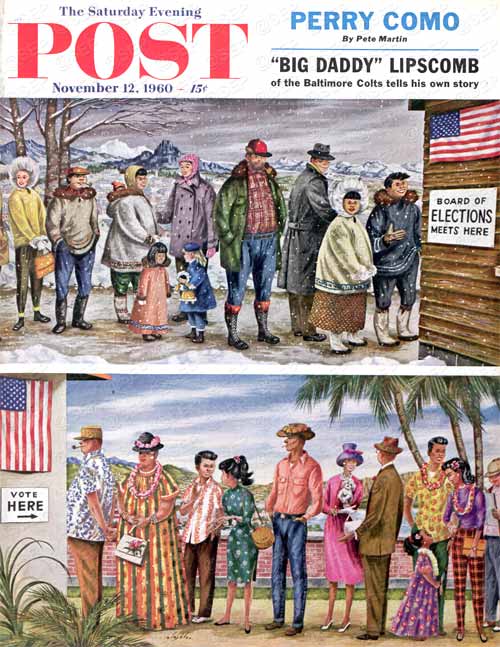
Today is an early voting day, and those who showed up at the county board of elections offices understand some of the reasons to vote:

It Matters

Do the math. In local elections especially, your vote may represent a fraction of a percent of a major public decision. Even in the broader-scale elections, at the state or national level, we know that elections are regularly decided by a few hundred votes. Yours could be one of them.

It’s Valuable

This is a line that seems a corny cliché, but if you think so, shame on you. Americans have died so that their countrymen and people around the world can enjoy this privilege. Things worth dying for are by definition valuable.

It’s Community

Absentee voting is effective and important, but if you vote at a polling place, you get a unique experience, especially at early voting. Precincts tend to be homogeneous in most places, in terms of class, race, etc. But entire counties tend to cut across those lines. We have precious few opportunities to stand up with the people who live nearby but not next door. Again, it may be corny, but in that polling place, it is no more or less than one person, one vote. Everything else is irrelevant.

It’s Fun

The naysayers and sophisticates may say that, sure, voting is fun, the same way that beanbag and Keystone Cops silent comedies are fun—for a bunch of really ancient and out of touch citizens. Not true. Fill in a little oval on the ballot and you can elevate the worthy and kill the evil, electorally speaking. What could be more fun than that?

You Get A Sticker

Seriously.

God’s Political Will


In the history of Christian theology, philosophy has sometimes been seen as a natural complement to theological reflection, whereas at other times practitioners of the two disciplines have regarded each other as mortal enemies….

Philosophy takes as its data the deliverances of our natural mental faculties: what we see, hear, taste, touch, and smell. These data can be accepted on the basis of the reliability of our natural faculties with respect to the natural world. Theology, on the other hand takes as its starting point the divine revelations contained in the Bible. These data can be accepted on the basis of divine authority, in a way analogous to the way in which we accept, for example, the claims made by a physics professor about the basic facts of physics.

 On this way of seeing the two disciplines, if at least one of the premises of an argument is derived from revelation, the argument falls in the domain of theology; otherwise it falls into philosophy’s domain.

Stanford Encyclopedia of Philosophy

Current American politics includes little study and application of philosophy. Some of our founders were steeped in philosophy, being educated sons of the Enlightenment. But even then, the struggling rebel nation was marked by pragmatism: there may be no atheists in foxholes, but there aren’t many philosophers either. Today, even when ideologues throw around the names of Mill or Burke, that is a rarity. Most of our politicians don’t know, can’t practice and don’t care about philosophy.

Theology is another story. Our government and the campaign trail seem to be overflowing with those who consider themselves theologians, whether they call themselves that or not. But even though the ground of theology is distinct from philosophy, the rigor and discipline required is exactly the same. The simplistic adoption of an isolated theological premise is no more sturdy than an isolated philosophical one. A solid theological conclusion must be supported from start to finish. If you can’t answer all (or at least most) of the consequent questions, you can’t be trusted to answer any.

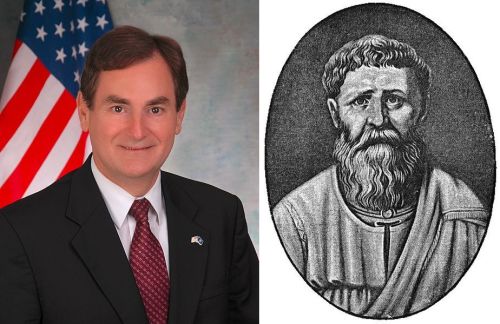
And so when Indiana Senate candidate Richard Mourdock announced that when a woman becomes pregnant through rape, the pregnancy is “God’s will,” the question isn’t whether that is true. The question is: assuming it is true, what else is God’s will?

Mr. Mourdock, and every other politician who claims to know God’s will, owes us a comprehensive list of those things that are and are not God’s will. In the case of Mr. Mourdock, if he is schooled in the fine points of Christian theology, that should be a straightforward matter.

For example: Are the outcomes of elections God’s will? If Mr. Mourdock’s opponent wins, will that be God’s will? If President Obama beats Mitt Romney, will that be God’s will?

There are a raft of sub-questions for the theologian. If God wills an election winner, how does it happen? Are some potential voters kept away from the polls by stormy weather or traffic jams? And how exactly does God decide who the winner should be? Is there a scorecard based on the Ten Commandments or the Seven Deadly Sins? Does a high score on “bearing false witness” or “greed,” for example, make it difficult to get an endorsement?

In the event Mr. Mourdock does not win, it may be God’s will after all. Just a few miles from his home in Darmstadt, Indiana is an excellent school, Trinity College of the Bible and Theological Seminary. Trinity offers a number of degree programs and dozens of courses on theology. If his keen interest in theology continues, that could be just the way to spend his time.

The Hamlet Voters

I am not Prince Hamlet, nor was meant to be;
Am an attendant lord, one that will do
To swell a progress, start a scene or two,
Advise the prince; no doubt, an easy tool,
Deferential, glad to be of use,
Politic, cautious, and meticulous;
Full of high sentence, but a bit obtuse;
At times, indeed, almost ridiculous—
Almost, at times, the Fool.

T.S. Eliot
The Love Song of J. Alfred Prufrock

It is reported that there are voters who are still undecided in this Presidential campaign.

Assuming they actually exist, they are the most simultaneously sought after and puzzling population in this country.

It’s easy to see why they are sought after with such a close election looming.

The puzzlement is slightly more complex. The questions to them roughly run like this: Have you been paying any attention at all to the candidates and the issues? Just how confused are you?

With all due respect and affection for fellow citizens, if you watched any of the focus groups of undecided voters that the news media have assembled, the answers may be: no, and just a bit.

But there is another explanation. The undecided voters are suffering from a Hamlet-like affliction. They are Hamlet voters.

Hamlet, you recall, found himself in the middle of overwhelming circumstances—his uncle had murdered his father, married his mother, and taken over the kingdom. Trying to right the wrong and unseat the chief of state, Hamlet at first feigned madness, and then, as best we can tell, really did go mad. One of his characteristics was an inability to decide and act: his speech considering suicide, “To be or not to be”, is one of the most famous in world literature.

These undecided voters seem to be equally confused and frozen, though their circumstances are not near as dire or existential. There is an important question about who will be the chief of state, but that’s where the similarity should end. Even Hamlet managed to make up his mind, though his action did result in just about everybody dying, including himself.

No one is asking undecided voters to be involved in anything like that. It’s time. Learn what you can, think as best you can. With his dying breath, Hamlet appointed Prince Fortinbras the new President of Denmark. You don’t have to go that far. No sword fights, no poison. All you have to do is decide and vote.

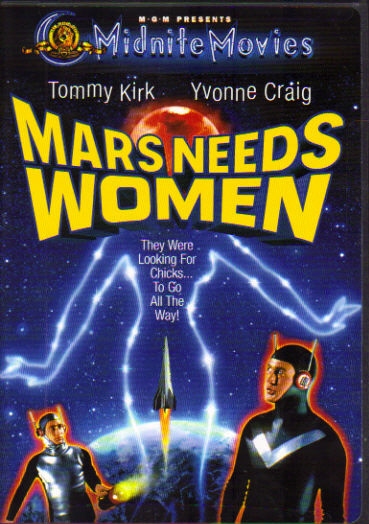
Romney Needs Women


Mitt Romney’s talking about being handed “binders of women,” a quote from the second Presidential debate, is not on its face all that funny, no matter how much it’s gone viral. But as a signal of a bigger picture, it seems to people meaningful.

In the wonderful depths of Mad Men in dealing with personal and social issues of the 1960s, the very first episode of the Emmy-winning series is on point. The execs at Sterling Cooper are about to meet prospective client Menken’s Department Store. In advance, Don Draper asks whether there are any Jews at the agency, and Roger Sterling laughingly doubts it. But at the meeting, there appears “David Cohen from the Art Department”, a nebbish who Roger has actually dug up from the mailroom.

This probably isn’t exactly how it went when Romney realized that as the new chief executive of Massachusetts state government, it would be appropriate to fill some of the jobs with qualified women. But what people are keying on is that it sounds a little like that. Do we have any women around here who are really qualified for these demanding jobs? Does anybody here know where we start to look for them? Hence, the binders of women.

By 2003, Massachusetts had been known for more than two centuries as the home of extraordinary women. While Abigail Adams was long gone, she should have offered a hint of the possibility that one of the most educated and vital states in America might include women of note and achievement. If you believed that they were actually out there, and weren’t some rare and exotic creature like a unicorn. And if you had a clue where to look—outside the mailroom or the binders.

Presidential Debates Without Tears: Politics Isn’t Beanbag


You can’t expect objective evaluations of the first Presidential debate from either campaign. Republicans want to talk hyperbolically about a victory. Democrats may have candid ideas, but few outside the inner circles will hear them.

The significance of any competition, besides the actual win or loss, is lessons learned. After that first debate, four explanations appear:

The President and his campaign were complacent.
They misread the situation.
They could not strategize or execute effectively.
It was just a bad night.

It was probably a little of all of these. Some will think that last one is just an excuse made by losers, but if you’ve watched competitions of all kinds, sports and otherwise, you’ve seen it. It’s circumstances, it’s the moment. It’s a quantum thing.

Nevertheless, that still leaves the other three as explanations and lessons.

The most significant Republican politician of the last days of the 20th century—yes, that would be Newt Gingrich—said straight out during the halcyon days of the primaries that Mitt Romney was a liar. Whether that was said with admiration or dismay is hard to know.

During that same campaign, Romney observed that “Politics isn’t beanbag.” Detractors then and now focused on the absurdity of this reference to an obscure children’s game. It was like his mentions of trees or the Keystone Cops. Who talks like that, they scoffed.

The focus was on the wrong point of the statement. Strange as Romney may appear to many people, one thing that isn’t strange, and shouldn’t be, is his ambition. Few if any politicians have ever played beanbag, or seen a beanbag match, if that’s what it’s called. But every politician knows about fighting hard, with or without rules.

If a banner saying “Politics isn’t beanbag” isn’t hanging from the wall of the Obama debate headquarters, it should be. Everything the campaign needs to know about Mitt Romney is captured in those three words.

Mitt Romney Too Busy to Answer Questions from Kids

Mitt Romney has refused to appear on Nickelodeon to take questions from kids. He is too busy.

Here is the Hollywood Reporter story:

Mitt Romney Declines Nickelodeon’s Invitation for ‘Kids Pick the President’ Special

One spot Mitt Romney won’t be hitting on the campaign trail: the Nickelodeon studios.

The Republican presidential candidate declined an invitation from the children’s network to participate in its special “Kids Pick the President: The Candidates.” According to a release from Nickelodeon, Romney’s camp said he was unable to fit the taping into his schedule after multiple attempts from the network.

The special, part of Nick News With Linda Ellerbee, gives kids across the country the opportunity to ask questions of each candidate. It premieres at 8 p.m. Oct. 15. On Oct. 22, Nickelodeon will reveal the results of its Kids’ Vote poll, which has correctly predicted the winner of five of the past six presidential elections.

President Barack Obama sat down for a taping in the White House, where he answered questions regarding gun control, jobs, immigration, same-sex marriage, outsourcing, bullying and obesity, as well as light-hearted questions including his most embarrassing moment. (“Running into the wall is par for the course for me,” he says. “I’m running into doors and desks all the time.”)

Romney still will be featured in the special, with producers selecting previously taped clips from the campaign trail in which Romney addresses various issues raised in the kids’ questions.

“By answering kids’ questions directly, candidates show respect for kids,” says Linda Ellerbee in a statement. “We are disappointed that Mitt Romney wouldn’t take the time to answer the questions but are thrilled that President Obama participated in the special.”

Now in its 21st year, Nick News — produced by Lucky Duck Productions — is the longest-running kids news program in television history.