Bob Schwartz

Category: Politics

Publius Speaks to Congress

Federalist Papers
Publius Valerius Publicola (“friend of the people”) was a Roman consul who helped found the Roman Republic circa 509 BCE. When James Madison, Alexander Hamilton and John Jay began publishing The Federalist Papers in 1787, they attached his name to their arguments for adoption of the Constitution.

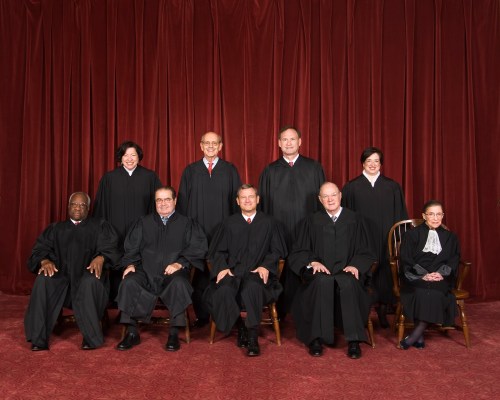
We don’t know how many current members of Congress have read the Federalist Papers—not even all 85 papers, maybe just a few. We also don’t know how many senior members of the executive branch have done so. We can assume that all nine Supreme Court Justices have; these are, after all, an essential part of the legislative history of the Constitution.

Every time you see politicians brandishing the Constitution as a weapon, well-meaningly or just plain meanly; every time you hear a half-baked political argument or analysis that makes absolutely no sense, but is based mostly or entirely on emotion or ambition; every time you wonder whether a particular politician is taking the best interests of the country to heart or is just interested I getting ahead, the Federalist Papers are your talisman.

The Federalist Papers are a brilliant combination of careful philosophy and political realities—a balance between aspiration and actuality, between the way we want to be and the way we are.

When we hear today about “grand bargains” being struck in Congress—or often not being reached at all—you have to laugh. The very same founders who are treated as saints or even gods had to make the grandest of all bargains so that this nation could exist and endure. And in the Federalist Papers, we find the philosophical intelligence, the political courage and the candid self-awareness to expose how narrow interest and pettiness can stand in the way of solutions. If anything has changed in more than two centuries, it’s that we seem to have fewer Madisons, Hamiltons and Jays front and center in our national discourse:

A torrent of angry and malignant passions will be let loose. To judge from the conduct of the opposite parties, we shall be led to conclude that they will mutually hope to evince the justness of their opinions, and to increase the number of their converts by the loudness of their declamations and the bitterness of their invectives.

An enlightened zeal for the energy and efficiency of government will be stigmatized as the offspring of a temper fond of despotic power and hostile to the principles of liberty. An over-scrupulous jealousy of danger to the rights of the people, which is more commonly the fault of the head than of the heart, will be represented as mere pretense and artifice, the stale bait for popularity at the expense of the public good.

It will be forgotten, on the one hand, that jealousy is the usual concomitant of love, and that the noble enthusiasm of liberty is apt to be infected with a spirit of narrow and illiberal distrust. On the other hand, it will be equally forgotten that the vigor of government is essential to the security of liberty; that, in the contemplation of a sound and well-informed judgment, their interest can never be separated; and that a dangerous ambition more often lurks behind the specious mask of zeal for the rights of the people than under the forbidden appearance of zeal for the firmness and efficiency of government.

Federalist No. 1

Forget the Senators, Love the Mayors

Mayor Annise Parker

If you are one of those angered and ashamed of members of the U.S. Senate today, you are not alone.

Forty-six U.S. Senators voted against the Manchin Amendment to the Safe Communities, Safe Schools Act of 2013. This amendment to the gun violence bill was crafted by Senator Joe Manchin (D-West Virginia) and Senator Pat Toomey (R-Pennsylvania) to be the mildest, least objectionable expansion of background checks conceivable. They tried.

The amendment was rejected. The vote was 54 Yeas to 46 Nays, less than the 60 votes needed under the Senate rules. All the other amendments attempting to enhance regulation also failed.

Three Republicans voted for the amendment, including Toomey, Susan Collins of Maine and John McCain of Arizona. McCain deserves special mention. From the year 2000 on, including the 2008 Presidential election, his “maverick” and “straight talk” credentials have been an on-again, off-again affair. At least for this amendment (though he did not support any other regulation), he took a stand.

Here are the Senators who voted against any expansion of background checks, no matter how small:

Alexander (R-TN)
Ayotte (R-NH)
Barrasso (R-WY)
Baucus (D-MT)
Begich (D-AK)
Blunt (R-MO)
Boozman (R-AR)
Burr (R-NC)
Chambliss (R-GA)
Coats (R-IN)
Coburn (R-OK)
Cochran (R-MS)
Corker (R-TN)
Cornyn (R-TX)
Crapo (R-ID)
Cruz (R-TX)
Enzi (R-WY)
Fischer (R-NE)
Flake (R-AZ)
Graham (R-SC)
Grassley (R-IA)
Hatch (R-UT)
Heitkamp (D-ND)
Heller (R-NV)
Hoeven (R-ND)
Inhofe (R-OK)
Isakson (R-GA)
Johanns (R-NE)
Johnson (R-WI)
Lee (R-UT)
McConnell (R-KY)
Moran (R-KS)
Murkowski (R-AK)
Paul (R-KY)
Portman (R-OH)
Pryor (D-AR)
Reid (D-NV)
Risch (R-ID)
Roberts (R-KS)
Rubio (R-FL)
Scott (R-SC)
Sessions (R-AL)
Shelby (R-AL)
Thune (R-SD)
Vitter (R-LA)
Wicker (R-MS)

For a change, we have a post-partisan moment, where some Democrats and Republicans can agree on something: the status quo of guns in America is just fine.

Forget the Senators. Whether they believe it or not, a political steamroller is on its way that, no matter how they calculate home state interests or expect the NRA to protect them, will flatten them like Wile E. Coyote in a Roadrunner cartoon. Too wily by half.

Let’s talk about mayors, the politicians who can’t distance themselves from the harsh realities of American life, politicians who, unlike others, have to actually work for a living and try, as best they can, to do a little something to make things better.

Mayors Against Illegal Guns is a coalition of over 900 mayors from big cities and small towns across the country:

As mayors, our highest responsibility is to enforce the law and to protect the people we serve. One of the most difficult challenges we face in meeting this responsibility is preventing criminals from illegally obtaining guns and using them. The issue of illegal guns is not conservative or liberal; it is an issue of law and order — and life or death.…

[W]hat binds us together is a determination to fight crime, and a belief that we can do more to stop criminals from getting guns while also protecting the rights of citizens to freely own them.  We have seen how the polarizing rhetoric of gun politics on all sides only obscures the tragic reality we see every day on our streets: violent criminals with easy access to illegal guns.

Above is a photo of Mayor Annise Parker of Houston. She is shown as a representative mayor against illegal guns because Houston is also the home of Senator Ted Cruz, one of the most vocal opponents of any gun legislation.

Maybe what we need to do is replace these Senators at the next available opportunity with almost any of these mayors. These mayors aren’t all angels, but they don’t have time to be blowhards or ideological purists. They know how to get the job done, know what it is to tackle difficult issues, and know what it’s like to do the dirty work of cleaning up messes—and most of all figuring out how to avoid some of those messes in the first place. They could do better, in part because nobody could do worse.

Your Congressional District on Drugs

Brain on Drugs
This is your geography.

NEO

This is your Congressional District on drugs.

Ohio 13th District

Any questions?

Gun Violence Legislation

HenQ: Why is there a picture of a chicken on this post about gun violence legislation?

A: Because a small number of U.S. Senators have decided that the best way to approach the very important issue of legislation to curb gun violence in America is to block a vote on any legislation.

Q: Why is this text so big?

A: Because there have been previous posts about gun violence and about political courage, and after saying the same thing multiple times, it can be therapeutic, if not any more effective, to say the same thing louder. Also, if any of those Senators are not wearing their glasses, they will still be able to see the chicken and read this message about the historic lack of political courage. (Idea borrowed from John Hancock.)

Q: Isn’t this childish and unbecoming adult and reasoned debate?

A: Which? The use of a chicken post? Or the failure of well-paid and trusted public servants to stand up and do their job?

Clinton, DOMA and GLAAD

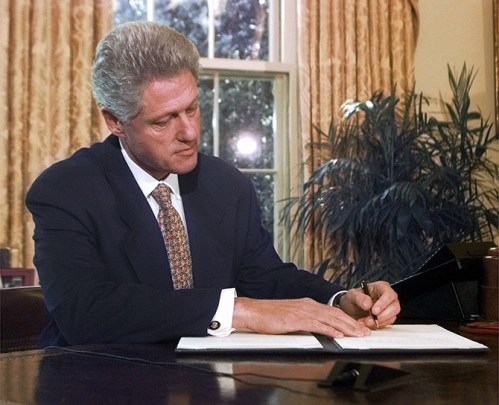
Bill Clinton
People—including some politicians—hate politics, for a thousand reasons. Every one of those reasons is valid.

The answer to these reasons is the often cited quote from Otto von Bismarck: “Politics is the art of the possible, the attainable – the art of the next best.”

Oh principles, oh pragmatism. We honor and admire the idealists, but in the end we support those who get things done—especially the things that we want done.

This is a timeline. The common thread is one of America’s current political dynasties.

  • 1996 – President Bill Clinton signs the Defense of Marriage Act.
  • 2003 – Hillary Clinton votes for the Iraq War Resolution.
  • 2008 – Hillary Clinton runs for President.
  • 2011 – Bill Clinton comes out in favor of marriage equality.
  • 2013 – The Iraq War ends.
  • 2013 – Bill Clinton calls DOMA unconstitutional.
  • 2013 – DOMA is argued before the United States Supreme Court.
  • 2013 – Hillary Clinton comes out in favor of marriage equality.
  • 2013 – Bill Clinton to receive the Advocate for Change Award from the Gay & Lesbian Alliance Against Defamation (GLAAD)
  • 2016 – Hillary Clinton runs for President?

People who do things for political reasons, or support those who do, should never be ashamed of that. Otto von Bismarck, unifier of the German Empire in the nineteenth century, certainly wasn’t.

But the “art of the possible” does create some tight and twisted places that Houdini might have trouble escaping from. Unless, of course, he had help.

Bill Clinton’s statement before signing DOMA includes this: “I also want to make clear to all that the enactment of this legislation should not, despite the fierce and at times divisive rhetoric surrounding it, be understood to provide an excuse for discrimination.”

Here is DOMA, which has been the law of the United States for the last seventeen years, and may or may not still be the law after the Supreme Court decision.

The statute reads:

No State, territory, or possession of the United States, or Indian tribe, shall be required to give effect to any public act, record, or judicial proceeding of any other State, territory, possession, or tribe respecting a relationship between persons of the same sex that is treated as a marriage under the laws of such other State, territory, possession, or tribe, or a right or claim arising from such relationship.

It also changed the definition of marriage in U.S. law:

In determining the meaning of any Act of Congress, or of any ruling, regulation, or interpretation of the various administrative bureaus and agencies of the United States, the word `marriage’ means only a legal union between one man and one woman as husband and wife, and the word `spouse’ refers only to a person of the opposite sex who is a husband or a wife.

Evolution—political, philosophical, or most other kinds—can be a wonderful thing, particularly if it leads to freedom and fairness. But evolution presupposes a prior state, which might be called “less evolved” or “unevolved.”

Some people approach this by pretending that the pre-evolutionary state didn’t exist. They may also be unwilling to acknowledge that the pre-evolutionary state was politically motivated, or that the evolution itself may be. Remember, the art of the possible is only possible by paying no attention to the man, or woman, behind the curtain. Once in a while, they even apologize for it, or contort themselves as John Kerry did, well-meaningly, about his prior support for the Iraq War: “I was for it before I was against it.”

Still, this is America. We love second chances and second acts. Consider the late Senator Robert Byrd, who emerged from the depths of racism to become a champion of Constitutional rights. But while it may not be fitting to punish people for having once upon a time acted in a powerfully less enlightened way, this doesn’t always mean they have to be rewarded. Or awarded.

198 Ways to Make Change

Gene Sharp
The Albert Einstein Institution may be the most important organization you’ve never heard of, and Gene Sharp may be the most important person. Since 1983, he has dedicated himself to advancing the study and use of strategic nonviolent action in conflicts throughout the world.

These are just a few of the headlines he has garnered in the past year or so:

The New Statesman – Gene Sharp: The Machiavelli of non-violence.
The Progressive – Nonviolence Strategist Gets Deserved Recognition.
Deutsche Welle – Alternative Nobel Winner says non-violence works.
The New York Times – The Quiet American.
CNN – Gene Sharp: A dictator’s worst nightmare.
The Nation – Gene Sharp, Nonviolent Warrior.
The Boston Globe – Sharp: The man who changed the world.

His book From Dictatorship to Democracy is an introduction to the use of nonviolent action to change regimes. It has been translated into seventeen languages and has served as a pro-democracy guide for movements around the world. This and other books are available free for download on the website.

Even if you are not living in a dictatorship and are not planning to topple a government, you will find a very small and very valuable item at AEI. Think of it as a jewel of social action. It is a two-page list of 198 Methods of Nonviolent Action. You will find the list below.

For those who want to make change, big or small, the keys are commitment and creativity. We’ve seen some inspired actions take hold. We’ve also seen some well-meaning initiatives pop-up and die almost as quickly. There is no blame in this. Sometimes all that’s needed is a fresh spring wind to revive the spirit of change.

This list is that spring wind. Look it over. This may go without saying, but be well aware that a number of these actions are obviously aimed at a serious lack of or breach of democracy, and are appropriately serious for those situations. All of them necessarily involve social, economic, legal, moral and ethical issues that must be considered. Maybe you will find something to do. Maybe you won’t do anything, but will be uplifted by knowing that such things can be done, have been done, and have moved communities and whole nations—today, in this very world—a little way along a path to freedom and justice.

198 Methods of Nonviolent Action
Albert Einstein Institution

The Methods of Nonviolent Protest and Persuasion

Formal Statements
1. Public Speeches
2. Letters of opposition or support
3. Declarations by organizations and institutions
4. Signed public statements
5. Declarations of indictment and intention
6. Group or mass petitions

Communications with a Wider Audience
7. Slogans, caricatures, and symbols
8. Banners, posters, displayed communications
9. Leaflets, pamphlets, and books
10. Newspapers and journals
11. Records, radio, and television
12. Skywriting and earthwriting

Group Representations
13. Deputations
14. Mock awards
15. Group lobbying
16. Picketing
17. Mock elections

Symbolic Public Acts
18. Displays of flags and symbolic colors
19. Wearing of symbols
20. Prayer and worship
21. Delivering symbolic objects
22. Protest disrobings
23. Destruction of own property
24. Symbolic lights
25. Displays of portraits
26. Paint as protest
27. New signs and names
28. Symbolic sounds
29. Symbolic reclamations
30. Rude gestures

Pressures on Individuals
31. “Haunting” officials
32. Taunting officials
33. Fraternization
34. Vigils

Drama and Music
35. Humorous skits and pranks
36. Performances of plays and music
37. Singing

Processions
38. Marches
39. Parades
40. Religious processions
41. Pilgrimages
42. Motorcades

Honoring the Dead
43. Political mourning
44. Mock funerals
45. Demonstrative funerals
46. Homage at burial places

Public Assemblies
47. Assemblies of protest or support
48. Protest meetings
49. Camouflaged meetings of protest
50. Teach-ins

Withdrawal and Renunciation
51. Walk-outs
52. Silence
53. Renouncing honors
54. Turning one’s back

The Methods Of Social Noncooperation

Ostracism of Persons
55. Social boycott
56. Selective social boycott
57. Lysistratic nonaction
58. Excommunication
59. Interdict

Noncooperation with Social Events, Customs, and Institutions
60. Suspension of social and sports activities
61. Boycott of social affairs
62. Student strike
63. Social disobedience
64. Withdrawal from social institutions

Withdrawal from the Social System
65. Stay-at-home
66. Total personal noncooperation
67. “Flight” of workers
68. Sanctuary
69. Collective disappearance
70. Protest emigration (hijrat)

The Methods of Economic Noncooperation: Economic Boycotts

Actions by Consumers
71. Consumers’ boycott
72. Nonconsumption of boycotted goods
73. Policy of austerity
74. Rent withholding
75. Refusal to rent
76. National consumers’ boycott
77. International consumers’ boycott

Action by Workers and Producers
78. Workmen’s boycott
79. Producers’ boycott

Action by Middlemen
80. Suppliers’ and handlers’ boycott

Action by Owners and Management
81. Traders’ boycott
82. Refusal to let or sell property
83. Lockout
84. Refusal of industrial assistance
85. Merchants’ “general strike”

Action by Holders of Financial Resources
86. Withdrawal of bank deposits
87. Refusal to pay fees, dues, and assessments
88. Refusal to pay debts or interest
89. Severance of funds and credit
90. Revenue refusal
91. Refusal of a government’s money

Action by Governments
92. Domestic embargo
93. Blacklisting of traders
94. International sellers’ embargo
95. International buyers’ embargo
96. International trade embargo

The Methods Of Economic Noncooperation: The Strike

Symbolic Strikes
97. Protest strike
98. Quickie walkout (lightning strike)

Agricultural Strikes
99. Peasant strike
100. Farm Workers’ strike

Strikes by Special Groups
101. Refusal of impressed labor
102. Prisoners’ strike
103. Craft strike
104. Professional strike

Ordinary Industrial Strikes
105. Establishment strike
106. Industry strike
107. Sympathetic strike

Restricted Strikes
108. Detailed strike
109. Bumper strike
110. Slowdown strike
111. Working-to-rule strike
112. Reporting “sick” (sick-in)
113. Strike by resignation
114. Limited strike
115. Selective strike

Multi-Industry Strikes
116. Generalized strike
117. General strike

Combination of Strikes and Economic Closures
118. Hartal
119. Economic shutdown

The Methods Of Political Noncooperation

Rejection of Authority
120. Withholding or withdrawal of allegiance
121. Refusal of public support
122. Literature and speeches advocating resistance

Citizens’ Noncooperation with Government
123. Boycott of legislative bodies
124. Boycott of elections
125. Boycott of government employment and positions
126. Boycott of government depts., agencies, and other bodies
127. Withdrawal from government educational institutions
128. Boycott of government-supported organizations
129. Refusal of assistance to enforcement agents
130. Removal of own signs and placemarks
131. Refusal to accept appointed officials
132. Refusal to dissolve existing institutions

Citizens’ Alternatives to Obedience
133. Reluctant and slow compliance
134. Nonobedience in absence of direct supervision
135. Popular nonobedience
136. Disguised disobedience
137. Refusal of an assemblage or meeting to disperse
138. Sitdown
139. Noncooperation with conscription and deportation
140. Hiding, escape, and false identities
141. Civil disobedience of “illegitimate” laws

Action by Government Personnel
142. Selective refusal of assistance by government aides
143. Blocking of lines of command and information
144. Stalling and obstruction
145. General administrative noncooperation
146. Judicial noncooperation
147. Deliberate inefficiency and selective noncooperation by enforcement agents
148. Mutiny

Domestic Governmental Action
149. Quasi-legal evasions and delays
150. Noncooperation by constituent governmental units

International Governmental Action
151. Changes in diplomatic and other representations
152. Delay and cancellation of diplomatic events
153. Withholding of diplomatic recognition
154. Severance of diplomatic relations
155. Withdrawal from international organizations
156. Refusal of membership in international bodies
157. Expulsion from international organizations

The Methods Of Nonviolent Intervention

Psychological Intervention
158. Self-exposure to the elements
159. The fast
a) Fast of moral pressure
b) Hunger strike
c) Satyagrahic fast
160. Reverse trial
161. Nonviolent harassment

Physical Intervention
162. Sit-in
163. Stand-in
164. Ride-in
165. Wade-in
166. Mill-in
167. Pray-in
168. Nonviolent raids
169. Nonviolent air raids
170. Nonviolent invasion
171. Nonviolent interjection
172. Nonviolent obstruction
173. Nonviolent occupation

Social Intervention
174. Establishing new social patterns
175. Overloading of facilities
176. Stall-in
177. Speak-in
178. Guerrilla theater
179. Alternative social institutions
180. Alternative communication system

Economic Intervention
181. Reverse strike
182. Stay-in strike
183. Nonviolent land seizure
184. Defiance of blockades
185. Politically motivated counterfeiting
186. Preclusive purchasing
187. Seizure of assets
188. Dumping
189. Selective patronage
190. Alternative markets
191. Alternative transportation systems
192. Alternative economic institutions

Political Intervention
193. Overloading of administrative systems
194. Disclosing identities of secret agents
195. Seeking imprisonment
196. Civil disobedience of “neutral” laws
197. Work-on without collaboration
198. Dual sovereignty and parallel government
Arm Postal Workers

United States Postal Service
It seems that the National Rifle Association and an incongruously growing number of fearful politicians are currently lining up behind a proposal to train and arm teachers to fight the threat of gun violence. In the view of some, this makes more sense than requiring universal background checks and limiting assault weapons and oversized ammunition magazines.

The scenario is that when psychopaths like Adam Lanza try to force their way into Sandy Hook School in Newtown, Connecticut, they will be shocked and awed to find themselves facing a militia of teachers, a special forces unit capable of both taking out terrorists and teaching reading to six-year-olds.

Good plan. But it doesn’t go far enough.

It is time to arm postal workers.

We know, to begin, that postal workers have faced their own sort of psychopathic terror over the years. Not often, and certainly not often enough to have earned the undeserved meme “going postal.” But on the principle that you can never have too many guns in the hands of good guys and gals, it would be a welcome preventative.

On top of that, postal workers walking their delivery routes regularly navigate the mean streets of America, just as our police do. Why not, then, train, arm and deputize these postal workers as sworn peace officers? This has many benefits: the streets will be safer, and the Postal Service will be playing a vital role—a role that should fend off any questions about their budgetary problems, especially with changes in the use of mail.

Part of being a good American is coming up with good ideas to keep our country safe—especially ideas that increase the number of guns and gun owners. Saving the Postal Service is just a bonus. You’re welcome, NRA.

Why Do Some Republicans and Democrats Hate Voting?

Profiles in Courage
With the news that some Republican Senators (including presidential hopefuls like Rand Paul and Marco Rubio)  plan to filibuster new gun control legislation, thus avoiding any votes on the proposed restrictions, it is now clear: Some current Republicans—and some Democrats—hate voting.

The evidence is mounting. During the 2012 elections, there were numerous instances of Republican legislatures and officials adding voter requirements, reducing voting hours, etc., which made it more difficult or frustrating to vote. The intent was to suppress Democratic votes; the evidence of that might be considered circumstantial, except that Republican strategists, arrogantly or stupidly, told us that it was their intention.

As was pointed out during the election, voter suppression has a long and inglorious history in America. Suppression of black voting was an art form in the South, though nominally the party lines were seemingly different. At the depth of Jim Crow, the South was Democratic. (In modern terms, though, these were DINOs—Democrats in Name Only. These Southern Democrats were different, and after living for a while as Dixiecrats, they underwent political reassignment surgery and became Republicans.)

The latest manifestation of this antipathy to voting is in the U.S. Senate, legendary and self-proclaimed “greatest deliberative body in the world.” (Be respectful; stop laughing.) Filibusters are an integral part of the Senate. When a Senator or group of them wanted to prevent a vote, he or they would have to hold the floor, and talk until they dropped or had to use the bathroom, or until the bill’s proponents gave up—as seen in the movies, most famously Mr. Smith Goes to Washington, and as seen in the attempts to block civil rights legislation in the 1960s. That all changed with a new Senate rule, promulgated a few years ago by Democratic Senators, allowing Senators to block a vote by simply saying that there would be no vote. There is no vote unless 60 Senators agree. And no Senator—setting aside Rand Paul’s recent talking filibuster stunt—needs to even stand up and talk, or even appear on the floor at all.

To understand why it is so important not to vote, we have the cautionary tale of some high profile Democrats. Congressional votes are not just a problem at the next election; they can come back to haunt you years later. In 1996, many Democrats voted for the Defense of Marriage Act (DOMA), and a Democratic President, Bill Clinton, signed it. DOMA came before the Supreme Court this week, which served as an uncomfortable reminder to those Democrats that times—and the party line—have changed. The briefs in the case included a mea culpa from some of those legislators, and just last week, Hillary Clinton released a strangely dark and dour video confessing her evolution on the question of marriage equality (Bill had previously apologized).

Even worse problems dogged Democrats who in 2003 enthusiastically voted for the Iraq War. Besides John Kerry’s “for it before I was against it” election year explanation, the war’s anniversary last week left some of them in a “what was I thinking?” mode.

What they were thinking during the Iraq War vote, and during the DOMA vote, was: I am a person of conscience, but that conscience will do no good if I lose this seat, so I have to ask just how this will play back home. The answer for both DOMA and the Iraq War, under the circumstances of the moment, was: not very favorably.

The lesson for some: Whether it is voting at the polls or voting in the Senate, sometimes discretion is the better part of valor, and sometimes less is more, and sometimes less voting is just better.

In the case of the ballot box, trying to suppress voting is un-American. In the case of standing up and being counted in the Senate, not voting is a dereliction of duty since, as a Senator, that’s your job.

On the other hand, those who fight and run away live to fight another day. That’s how the saying goes. The primary part of that, though, is that you at least fight in the first place. If all you do is run away by, say, not voting, it’s all about survival, and not about conscience and accountability. You may win an election, you may even get to be President. But if you’re thinking about being in the next volume of Profiles in Courage, don’t bother looking for your name.

Thank You for Your Service

IAVA
I continue to receive comments from veterans of the recent wars about the post The Tin Anniversary of the Iraq War.  Rather than just reply to each comment, here is what I want to say.

Politics debases our language. Language is a tool, and like all tools, can be used for good, for ill, or for some combination.

In the political context, it is hard to tell whether “thank you for your service” from various politicos is sincere, tactical or, most likely, both. But even if it is meaningful, it sometimes seems like an automatic phrase, much like the obligatory speech close “and God bless the United States of America.” It becomes a cliché.

The Vietnam War is not just a textbook case in modern American history. It is an entire encyclopedia. One of the sorriest lessons was the treatment of returning vets. “Thank you for your service” is something those vets rarely if ever heard. All these years later, they mostly still haven’t.

Here it is, to the veterans and the fallen of our wars, then and now, however essential or popular or ill-conceived the wars may be or have been, and to their families, friends and everyone who has supported them in all ways: Thank you for your service.

In a related note, thanks to the Iraq and Afghanistan Veterans of America (IAVA) for keeping the veterans of our longest wars out front and in our faces. Among our “never agains” should be never again asking Americans to sacrifice so gravely, then thanking them loudly or not at all, and then putting them at the back of the line. These people are not political props or calendar items, because every day is Veterans Day and Memorial Day.

Thank you.

Arguments on Marriage Equality, Part 1

Supreme Court
The audio and transcript of the Supreme Court arguments in Hollingsworth v. Perry, the Proposition 8 marriage equality case, are now available.

Without video, the best way to review these is to read and listen to them at the same time. Otherwise, you may not know which Justice is talking—though some of them have such distinctive voices, styles or insights that they are instantly recognizable. Hint: Justice Clarence Thomas is the one who is not talking; he never does.

The news channels deal with the lack of video (not permitted) by playing the audio, identifying the speaker on screen, and showing an artist’s sketch. You can do this yourself, creatively if you want. You might use a photo instead of a sketch, or you can just select a random picture of another distinguished Justice or lawyer, present or past.

The odds of correctly predicting outcomes in difficult Supreme Court cases like this are better than winning the Powerball lottery or picking all the NCAA brackets right, but not much. So here are some first impressions.

Standing

The path of this case is complicated. The California Supreme Court enabled same-sex marriage and for a few months couples did marry. Almost immediately, a group sponsored an initiative to reverse that decision by banning same-sex marriage in the state. The initiative passed, but the U.S. Ninth Circuit Court of Appeals declared the ban on same-sex marriage unconstitutional, thus allowing same-sex marriage to proceed. The sponsor of the initiative appealed and the Supreme Court agreed to hear the case.

That is where the standing issue comes in. The State of California refused to appeal the overturning of the initiative. This left the initiative sponsor as the closest thing to an interested party for purposes of appeal.

But maybe not legally close enough. The Supreme Court did agree to hear the case, but now appears to wonder whether the proponents of the initiative have legal standing to have brought the appeal in the first place. The Court is free at this point to reconsider the question and rule that their initial agreement to hear the case was “improvidently granted.”

The Justices spent a substantial amount of time during arguments on this standing question. If standing is denied, the Court won’t be deciding any of the other issues. The appeal is over, the decision of the Ninth Circuit will stand, and same-sex marriage will once again be the law of California. There is some discussion that for the moment, the Court would like to narrow whatever they have to say about same-sex marriage to California, and let the legal questions mature. If they don’t have to say anything, that narrowing takes place automatically.

How likely is that? If this was the only same-sex marriage case before the Court this term, it would be an easier route for them to take. It would allow more cases to move up the appeal chain, more Courts of Appeal to be heard from.

But it isn’t the only case like it this term, or even this week. Today the Court will consider the constitutionality of the Defense of Marriage Act (DOMA), passed by Congress and signed by Bill Clinton in 1996. DOMA prohibits the federal government from recognizing same-sex marriage, which among other things means that same-sex spouses enjoy no federal benefits. (This has proved to be an embarrassment for Democrats. Scores of Senators and Representatives submitted a brief in which they apologized for being wrong, and Bill Clinton has done the same thing in a recent op-ed piece.)

Procreation

Charles Cooper is the attorney representing the proponents of Proposition 8. Good lawyers get stuck with bad positions in tough cases, and this is that.

The primary argument for the constitutionality of a ban on same-sex marriage—aside from moral arguments, which are not legal ones—is that the tradition and essence and supreme societal value of marriage is procreation. You get married, above all, to have babies; if you can’t have babies, your right to marry is questionable or non-existent. Same-sex couples have no possibility of having children, at least the old-fashioned way (adoption being one of those modern, new-fangled techniques, like in vitro fertilization). Ergo, they have no right to marry.

The above is not hyperbole or sarcasm. For endless minutes, punctuated by occasional laughter, this is the argument that Cooper made, and that various Justices endorsed or, more frequently, questioned.

This part of the arguments has been widely covered, so there are no excerpts here. Listen and read for yourself. The discussion about the fertility of 55-year-old couples and of Strom Thurmond are worth the price of admission.

“The Experiment”

There was discussion of same-sex marriage being some sort of “experiment.” We supposedly have to wait for “scientific evidence” and “data” to determine how well it works.

The discussion of procreation was sad but silly, leavened by laughter. On this point, it is hard to laugh.

For the record, if marriage of any kind is an experiment, the results are in. Sometimes it goes blissfully right, sometimes it goes horribly wrong. Sometimes the children—who arrive in all sorts of ways and are raised in all sorts of permutations—turn out well, and once in a while they don’t. Some people like to go wild with the experiment, trying serial marriage and divorce (and marriage and divorce and marriage and divorce). It’s not an experiment for any of these couples. It’s just marriage. It’s life. It’s love. It’s being human connected.

Justice Antonin Scalia

[This space intentionally left blank.]