Bob Schwartz

Category: Politics

Fortune Magazine Pleads: Heed the Authentic Cry of Our Youth

Youth in Turmoil Cover

It is January 1969. Fortune, one of the world’s most conservative business magazines, publishes a special issue about Youth in Turmoil. It then adapts the issue into a book, with an image of a flame on the cover.

The message is not, as you might expect, about how these ungrateful long-haired drug-addled rebels are destroying the country. On the contrary, the message is that these young people are trying to tell us something important and we should listen—before it’s too late.

Here is the introduction:

American youth is trying to tell us something important. The brightest of our young men and women are telling us that as far as they are concerned the choices for our society are narrowing rapidly. We can, at worst, look ahead to a future, very near, in which they lose all heart for our national effort, thus robbing it of its nerve, vitality, and point—a state of affairs in which they range themselves against us either in violence or in withdrawal. Or we can heed the cry of these young adults. Though often marred by shrillness, arrogance, and negativism, that cry is authentic and valid in its central message. It tells us that in our rush to well-being we have left much undone at the same time we have made so much more do-able. It tells us that we should rechannel our enormous energies to deal with the lengthening list of environmental and social grievances. If we can enlist these young idealists and they can enlist us, the nation will evolve toward a life style that once again sets a new standard for the world. I hope that this book, adapted from the January, 1969, special issue of FORTUNE, will contribute to that mutual enlistment.

LOUIS BANKS,
MANAGING EDITOR, FORTUNE

Please read this word-for-word. It is extraordinary. This is a bible of the establishment, during one of our most anti-establishment times, acknowledging that many things are wrong—including environmental and social problems—and admitting that young people are trying to remind us of our responsibilities to make it right. If the establishment fails, Fortune says, “We can, at worst, look ahead to a future, very near, in which they lose all heart for our national effort, thus robbing it of its nerve, vitality, and point—a state of affairs in which they range themselves against us either in violence or in withdrawal.”

Consider how far we have come. Youth seems to be somewhat disaffected, maybe even having lost heart and been robbed of its nerve—but not exactly in turmoil. Much of the conservative establishment would now never dream of agreeing that we have justifiable environmental and social grievances, let alone that these should be aggressively addressed.

The Sixties are variously celebrated, trivialized, and even laughed at. Maybe it’s funny to see a Big Business publication like Fortune willing to open its eyes, look around, and decide that these kids just might have a point and we can do a whole lot better. Or maybe it’s a little sad that we don’t see more of that today.
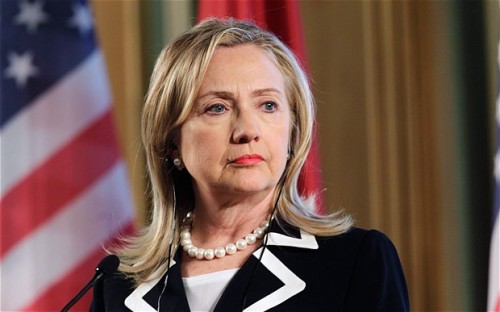

Hillary Says She Was Inartful

Hillary Clinton

Asked about her comments on the Clinton family wealth, Hillary Clinton now says, “Well, I shouldn’t have said the five or so words that I said, but my inartful use of those few words doesn’t change who I am, what I’ve stood for my entire life, what I stand for today.”

There were actually more than five words, on two recent occasions. First she said that she and Bill Clinton were not only dead broke when they left the White House, they were in debt. Then she said that they paid their taxes like regular people, not like others who were “truly well off.”

Aside from whether these words reflect their financial affairs, or whether they reflect her being out of touch or just a bit rusty as a candidate, this is the thing: regular people don’t use the word “inartful,” at least or especially not if they are running for President and trying to look like regular people.

Publicly, Bill Clinton would not say “inartful.” George W. Bush wouldn’t say it. Barack Obama wouldn’t say it. And besides those last three Presidents, John McCain wouldn’t say it. And neither would Mitt Romney, who when he faced having made a similar and very damaging comment about income, simply said that he “misspoke.”

There’s nothing wrong with being wealthy, smart, well-spoken, or intellectual. Plenty of Presidents and successful leaders have been some or all of these. But the challenging key is to be both comfortable with who you are and yet able to be appropriately yourself in whatever context you are in.

Lots of us may use “inartful” as part of our writing or conversation; it’s actually a very useful word. But lots of us—almost all of us—are not running for President, or considering it.

Finally, for those who are into word things, there is another point. “Artful” sounds pretty good, particularly if you mean getting your language just right to express your thoughts. But it is a close cousin of the word “artifice,” which has a very different meaning and feel. So if what Hillary was trying to say was that her previous comments were imperfect artifice—that she didn’t get the story about the Clinton wealth quite right—then maybe she is on to something. And maybe “inartful” was le mot juste.

Mississippi’s Existential Election

Mississippi Tourism Guide

The Republican primary runoff today between long-time U.S. Senator Thad Cochran and insurgent Tea Party candidate Chris McDaniel is a story of pragmatism clashing with political philosophy.

My love and appreciation of Mississippi is unbounded. My frustration at how it is misunderstood, mischaracterized, and disrespected is constant. But my sense of realism means saying this: Mississippi would not have survived and thrived as it has without generations of powerful U.S. Senators making sure that federal defense projects and other spending were directed its way. Mississippi is one of those states that receives much more in federal spending than it gives in taxes.

And that’s just fine. I have affection for the many states I’ve lived in, and recognize the distinctive value of each. Like a parent, I may not want to say that any of them is more or less deserving. Yet given a hard choice, I would choose to help Mississippi more than the others.

No doubt the anti-government, anti-earmarking tide is rising, and the Tea Party and Chris McDaniel are rising with it. But Thad Cochran, whose problems include his age and his supposed “liberalism”, has had to be pretty plain in pointing out that if re-elected, his seniority means that he will still be in a position to bring home the bacon for Mississippi. Maybe not as much as in years past, but still more than someone who is philosophically opposed to such spending, and who in any case would end up being one of the most junior Senators in the country.

And therein is the irony. If McDaniel wins the nomination, and if he wins the Senate seat, he can’t possibly serve the interests of his state by forcing it to go “cold turkey” without federal funds, as the Tea Party wants. Mississippi is wonderful and irreplaceable, and if there was any justice in the game of economic geography, it would be high on all the important rankings, rather than languishing at lower levels. It has been, and for the moment remains, a state in need.

There is no shame in that. If shame there is, it is in politicians who want to claim that Mississippi should just sink or swim because that’s what some abstract philosophy dictates. It may also be a shame that when push comes to shove, those same politicians may end up being hypocrites and opportunists. If and when they take office, they will face the existential question. Survival trumps philosophy, and in the case of Mississippi, it should.

Suit and Tie: The Sad and Silly Syrian Election

Syrian President Assad Votes

It is reported that President Bashar al-Assad wore a dark suit and light blue tie for voting in today’s Syrian election. Good reporting. He looked good. So did his wife Asma.

Assad actually had opponents, the first time Syria has had a contested presidential election in fifty years. No one could think that this opposition meant anything. The other candidates could not think so. And yet there were supporters and voters at the polls, maybe out of fear, maybe out of hope, maybe just wanting to pretend things are normal. Some new normal, so that with one more term, a few more years added to his enlightened regime, there would be no more deaths after the 160,000, no more displaced and refugees after the millions.

Journalists and other nations are sworn by a sense of fairness and professionalism and diplomacy and sovereignty to pretend that this is an election, even if they have some quibbles. They might, if they had a better sense of irony or humor, treat it like Halloween or Mardi Gras. An occasion on which one dresses up to play the part of something you are not, say, a democratically elected leader in dark suit and light blue tie.

The U.S. also had an election during a civil war. Lincoln did have opposition and he did win. Whatever he wore when he voted, he certainly didn’t look as slick as Assad, nor was Mary Todd as socialite beautiful as Asma. By that point Lincoln was deeply tired and sick of the horrible conflict and would do anything he could to finally end it. The good news is that there would be only a few more months of war. The not so good news is that even with the good that came, it would take decades for the wounds to begin healing. The worst news, for Lincoln and the country, is that he would soon be assassinated.

Lincoln and the civil war were sad but never silly. Assad, in his dark suit and light blue tie, within this hollow semblance of an election, is sad and morbidly silly. Unlike Lincoln, he may be around for years, continuing to rack up votes and deaths. But looking real good.

VA Health Crisis: Listen to IAVA

VA IG Report

We should listen to the Iraq and Afghanistan Veterans of America about this VA health system crisis.

As the name implies, IAVA represents the latest generation of American war veterans. They are in some ways the most attuned to the current realities and sensibilities of veterans’ issues in 2014. Not because they have been around the longest, but because they are native to the way things work, or don’t, here in the early 21st century in America.

Those realities regarding the health care crisis in the VA are shocking to some, but come as no surprise to those who have watched it happening, including Congress (both parties) and the President.

Is it fixable? What won’t fix it is political posturing, handwringing, or even the delayed but imminent departure of VA Secretary Shinseki.

What will fix it? Good policy well executed, without excuses or cover up. The IAVA can help with that.

In the wake of yesterday’s Inspector General Report about the Phoenix VA health system, IAVA CEO and Founder Paul Rieckhoff said:

The new IG report on the Phoenix VA is damning and outrageous. It also reveals the need for a criminal investigation. Each day we learn how awful things are in Phoenix and across the country. The VA’s problems are broad and deep – and President Obama and his team haven’t demonstrated they can fix it. As one of only two combat veterans, Senator John McCain’s call for Secretary Shinseki’s resignation is particularly impactful…

Today’s report makes it painfully clear that the VA does not always have our veterans’ backs. Even before this report came out, IAVA members were losing confidence in Secretary Shinseki and President Obama. At Memorial Day events across the nation, our members voiced outrage, anger, and impatience at the growing VA scandal. This new report only increases the belief that the promise to veterans has been broken. We are sharing this report now with our members and seeking their reaction. In the coming days, we will share the voices of our members with the President, VA leaders and those in Congress.

In the IAVA 2014 Policy Agenda, the VA health system was just one of a number of initiatives offered for consideration. On that score, IAVA recommends this (excerpted):

I. Establish a Presidential Commission to end the VA claims backlog.

II. Transform the Veterans’ Benefits Administration’s (VBA) adversarial culture…

III. Reform VA’s work credit and productivity evaluation system for claims processor….

IV. Outline the VA’s responsibility about the requirements to substantiate a claim….

V. Adopt the “treating physician rule” for medical evaluations for compensation and pension…

VI. Require appeals form to be sent along with the Notice of Decision letters in order to expedite the appeals process.

VII. Evaluate the Segmented Lanes work initiative to continually assess whether it is meeting the goals of fast tracking…

VIII. Report the intake of new compensation and pension claims on the Monday Morning Workload Report.

IX. Report separated statistics on the intake and processing of supplemental and original claims in the Monday Morning Workload Report…

XIII. Continue to engage veteran stakeholders in updating the VA Schedule for Rating Disabilities (VASRD).

XIV. Require the VA to accept a PTSD diagnosis provided from a qualified private medical provider.

X. Establish a model to accurately project the claims workload and the resource and staffing requirements needed to meet the demand.

XI. Make all disability benefits questionnaires available to private medical providers.

XII. Simplify notification letters to provide easily digestible, specific and clear information about the reasons for rating decisions.

XV. Allow the VA to incentivize private medical providers to furnish medical health records to the VA for processing.

XVI. Clarify and report accuracy ratings for each regional VA….

This is an agenda, and if the President and the good people of Congress want to adjust or add, that is their prerogative and duty. But you have to start somewhere, with something on the table, and this is a good place for that. If these warriors are smart enough and capable enough and honorable enough to fight our wars, they are surely able to suggest the smart, honorable, and capable ways of treating them when those wars are over.

Building the Perfect 2016 Candidate

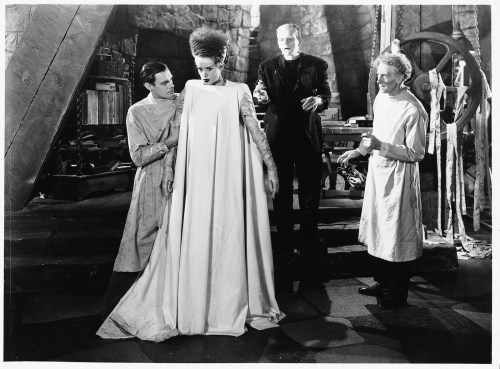
Frankenstein

A new report from the Pew Research Center doesn’t exactly tell us how to choose or build the most successful Presidential candidate for 2016. But the survey asking adults for their views of various Presidential traits offers some guidelines on who might be the best choices.

Views of Presidential Traits

Military service increases the likelihood of support more than any other factor. Being an atheist or never having held office before? Not so good. In between, take your pick. Being in your 70s is viewed as positive by just 6%, as negative by 36%. In fact, aside from atheism or inexperience, age is most likely to lose support. Interestingly, in 2008 when John McCain was running, Democrats overwhelmingly viewed age as a negative trait. They still don’t completely like candidates in their 70s, with 44% less likely to support, but something about the current possibilities seems to have softened that position (a favorite candidate who will be approaching 70, perhaps?).

If you look at the biggest differential between more and less likely to support, it appears that this is what Americans might be looking for:

Military veteran
Governor
Held office, but not Washington experience
Not in their 70s
Not gay or lesbian
No extramarital affair
Believes in God

How does your current favorite, if you’ve got one, fit that profile?

Project One America from the Human Rights Campaign

poa_maingraphic_1

The new Project One America from the Human Rights Campaign is extraordinary for two reasons. As HRC describes it:

HRC’s Project One America is a comprehensive, multi-year campaign to dramatically expand LGBT equality in the South through permanent campaigns in Mississippi, Alabama and Arkansas.

That this is aimed at these three Southern states is extraordinary because of the special circumstances and needs it addresses. These states have enjoyed the presence of gay men and women for generations, including some of the very famous: Tennessee Williams, for example, was not from Tennessee but from Columbus, Mississippi. “Enjoyed” is probably not the right word, since until recently—and still in some parts of these states—gay people had the choice of invisibility, damnation, lack of legal protection, or just leaving (which is precisely what many gay Southerners did).

The second extraordinary thing about Project One America is its strategy. Rather than confrontation, part of the approach is one of the front porch—conversations and discussions among family, friends, neighbors, citizens. This doesn’t mean that legal restrictions and inequities won’t continue to be addressed. It means that the South, some historical and present-day evidence to the contrary, does have a tradition of civility and caring. Caricatures are one part truth, one part projection of our own prejudices, one part wanting to feel morally superior, and the Southern caricature is all of these. Gently opening people’s eyes to the realities and humanity of LGBT life—including the lives of those close to them—is a valuable tactic. The lessons of loving and fairness and tolerance, in a place that tightly embraces its faith, should fall of fertile soil.

The Ukrainian Favor

Ukrainian Contingent Ends Iraq Mission

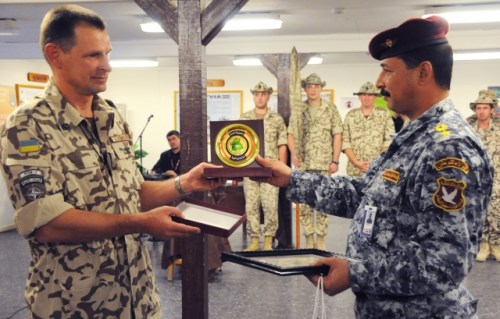
Commander of the Ukrainian contingent in Diwaniya presents a certificate and gift to
a member of the Qadisiya Province Iraqi Police, during an end of mission ceremony
at Camp Echo, Dec. 9, 2008.

“Are you asking as a friend or calling in a chit? A friend would not ask me to do this.”
“A friend just won’t hold it against you if you don’t.”
Adapted from Suits, USA Network

In 2008, Ukrainian troops officially left the U.S.-instigated Iraq War. Since 2003, 5,000 Ukrainian troops had served there (the third largest contingent in the multinational force) and 18 soldiers had died. No service or sacrifice can be minimized, even if these numbers pale in comparison to the American investment. Ukraine answered the call with honor and valor, as it had in other international conflicts, presumably because there are principles at stake, including the principle that modern internationalism means a commitment to mutual trust and support.

At the ceremony marking the end of the Ukrainian mission, Maj. Gen. Michael Ferriter, deputy commanding general for operations, Multi-National Corps-Iraq, said:

We know that violence is at its lowest level in five years, and the Iraqi Security Forces, partnering with Coalition forces, will take the lead in defending their country. And soon, the Iraqi people will vote in the future of their country in the provincial elections. These changes were not brought about naturally, but were instead brought about by the dedication and the hard work of the men and women from the nations such as yours. You helped create the Iraqi Security Force and instilled in them a solid foundation of skills essential to the future security and prosperity of Iraq.

To Iraq’s benefit, and through Ukraine’s efforts, you have helped ensure a higher quality of life for the people of Iraq. Ukraine forces made contributions that enabled all Coalition partners to be successful here, but it has not been without cost. A precious 18 Ukrainian Soldiers have died here.

Ukraine is asking for help from anyone to hold their country together. Under the circumstances, that is going to be difficult and may not be possible.

Are they asking as a friend or calling in a chit? If we don’t provide adequate or effective help, will they hold it against us? Should they?

Putin and the Little Engine That Could

Vladimir Putin - Little Engine

The pro-Russian insurgency in eastern Ukraine, and the Russian warnings to stay away and out, are not surprising. A fifth-grader doing a Social Studies assignment (if there is still Social Studies) had this one figured out.

So obviously did the American intelligence and foreign policy experts. They can’t tell us they know because that would give something away, even if that fifth-grader has already guessed. The other reason it isn’t officially talked about is that, officially, few are sure what to do next.

Vladimir Putin is well set up, for something. He can take little bites out of the region, or if Ukraine should erupt in instigated civil war, he can enter on the pretext of assuring the stability and security of a neighboring country. There is plenty of historical precedent for this strategy, and for this strategy working.

We—and this includes those who claim to know him—are not sure exactly who Putin is: cunning statesman, cowboy, sociopath? Whether he has himself killed people, up close, is a matter of conjecture, but many have no trouble believing it. German Chancellor Angela Merkel, who grew up in Communist East Germany and knows him, suggests that he is out of touch with the realities of the situation. Former U.S. President George W. Bush just displayed his painting of Putin, which picture says as much about W. as an artist as it does about the Russian President.

Putin is not out of touch with reality, any more than those people who believe that visualizing an outcome will ultimately make it so. He is under no delusion that realizing his reality will be cost free. He is just willing to pay the price, or allow others to chip in, maybe profoundly.

The U.S. may have the most distorted view of war in history. It isn’t that great sacrifice or valiant service haven’t been made. The U.S. didn’t just participate in some of the most significant defenses of human freedom; it helped freedom prevail. But for a few generations, there has been a lot of blood and treasure sacrificed in a sometimes well-meaning, sometimes self-serving fog. The source of the confusion is that for more than 150 years, the U.S. has not experienced national war on its soil. Regional conflicts and shocking, fleet- and building-destroying hostilities, but not a national war, inside or on our borders.

Whatever the list of solutions to international problems and provocations, war shouldn’t just be at the bottom of the list. It should be in some strategic sub-basement, below the last resort. At this moment, war in Europe is where it should be: unthinkable. But if something is unthinkable, then everything else has to be more thinkable, more discussed. Right now, the U.S. body politic is fascinated with other matters major and minor, because we need a break.

But trust this: Putin doesn’t give a care for what happened to a plane that has been at the bottom of the Indian Ocean for weeks. He is single-mindedly like that favorite American children’s book The Little Engine That Could, chugging along: I think I can, I think I can.

We don’t have to be concerned about Ukraine or we can be concerned. We don’t have to take action or we can take action. We don’t have to go to war or we can go to war. What isn’t optional is talking about it in the public square, in a conversation led by the President and others. This is not jumping the gun. It is a sensible prelude to an emerging situation, which could at any moment escalate from blah-blah-blah to something more active and serious.

The U.S. has not been very good at sensible preludes. The run-ups to recent wars have been filled with hyper-drama, fueled by the occasional exaggeration or lie. Ukraine, Europe, and the world need something else. Putin thinks he can. Who knows what we think?

McCutcheon: Is This the Electoral Apocalypse? (Maybe Not)

SupremeCourtJustices_2012_032620121

Six months ago I wrote a post called The Man Who Could Kill Democracy about the case of McCutcheon v. Federal Election Commission. McCutcheon was asking the Supreme Court, on free speech grounds, to lift federal limits on aggregate campaign contributions. By a 5-4 decision, the Court today agreed.

In that post I wrote:

The First Amendment is central to American democracy, but it has never been absolute. It could be of course, and we would be free to destroy the reputations of others, or talk freely about overthrowing the government, or republish the words of others without penalty, or yell fire in that crowded theater. Instead, as an exercise in social priorities, we argue about balance, though sometimes the argument for the good of the many and “democracy” is cover for what’s good for me and mine.

Today’s decision finds that limits on what an individual can give to a single candidate is allowable under the First Amendment as a way to prevent corruption (that is, you shouldn’t massively buy a single election on a quid pro quo, one hand washing the other basis). But restrictions on what an individual may give in aggregate offends the First Amendment (that is, you are free to try to buy as many elections as your wealth allows).

The majority opinion of Justice Roberts was joined in by Justices Scalia, Kennedy and Alito; Justice Thomas concurred, but believes that all limits on campaign finance are impermissible under the First Amendment. Justice Breyer filed a dissent, in which Justices Ginzburg, Sotomayor, and Kagan joined.

Justice Breyer writes in his dissent:

Today a majority of the Court overrules this holding. It is wrong to do so. Its conclusion rests upon its own, not a record-based, view of the facts. Its legal analysis is faulty: It misconstrues the nature of the competing constitutional interests at stake. It understates the importance of protecting the political integrity of our governmental institutions. It creates a loophole that will allow a single individual to contribute millions of dollars to a political party or to a candidate’s campaign. Taken together with Citizens United v. Federal Election Comm’n, 558 U. S. 310 (2010), today’s decision eviscerates our Nation’s campaign finance laws, leaving a remnant incapable of dealing with the grave problems of democratic legitimacy that those laws were intended to resolve.

So is this it, the electoral apocalypse? In the earlier post before the decision I wrote:

Get smart.
Vote.

Without casting aspersions too wide, it does seem that a number of Americans really don’t do their homework on public issues. As far as voting, our abysmal turnout numbers tell the tale. But if Americans did do their homework and did vote, we really could have a pragmatic, centrist, reasonable and successful country—instead of an extremist-obstructed one based more on blustery ideology and vaguely-veiled self-interest. We can hope.

That’s still it. If we have an aware, informed, moral, discerning electorate that votes, there is hope that in spite of McCutcheon (and Citizens United and whatever other shoes the Supreme Court has yet to drop), we can maintain what Justice Breyer calls “democratic legitimacy.” Without that, despite what Imagine Dragons sing, the apocalypse may not be followed by a new age, but by some back to the future America of the overpowered and the underpowered.

If you believe that America has a problem in any of those areas—awareness, information, morality, discernment, voting—then do whatever you can. Don’t blame nice Mr. McCutcheon, or nice Justices Roberts, Scalia, Kennedy, Alito, and Thomas (even if they are wrong). And if you are hand-wringing, which is admittedly hard to avoid, do it only for a moment; it is unattractive and useless. Then get busy.