Bob Schwartz

Category: Politics

Media and trump: The Reverse Cry Wolf Effect

The media are suffering from the Reverse Cry Wolf Effect. That is, not shouting out a warning when a real danger approaches.

Instead of pointing out what might actually be a serious danger, when trump raised the preposterous and unsupported issue of Obama’s birth, the media treated it as interesting, reportable and sort of funny. And then kept it alive, forever.

Since then, trump has continued to make preposterous allegations and statements. To put it less politely, to chronically lie about matters big and small. The media, having already decided that everything he said and did was interesting, reportable and sort of funny, kept right on treating it as normal, if a bit quirky.

The latest interesting, reportable, quirky, sort of funny thing that trump claimed without any evidence is that Obama (“Bad (or sick) guy!”) wiretapped trump tower. You can tell that the media is on the verge of saying what plenty of respectable commentators are saying: objectively, trump is trying to distract us from his incompetence and real problems, he has always had an irrational hatred of Obama, and he may also be a little bit unstable.

But the media isn’t sure whether anybody will believe them. Why should we?

The Beverly Hillbillies Go To Washington

clampetts-in-washington

I was thinking about a very rich family with more money than sense, and about their beautiful daughter and a son who thinks he is a lot smarter than he is. They eventually go to Washington.

The Clampetts of The Beverly Hillbillies.

In 1970, for the first three episodes of the hit show’s ninth and last season, the Clampetts (Jed, Granny, Elly May, Jethro) go to Washington, initially to solve the pollution problem.

It is a very long, complicated, politically incorrect and stupid story. At one point, Jed buys the White House from a fake Native American so that the Clampetts can move in. He later buys the Capitol. And that’s not even the stupidest part (taken to the Psych ward, Jethro tries to figure out where the countries of Paranoia and Schizophrenia are).

Following are descriptions of the episodes (from TV.com) and links to the videos. The descriptions are fun. As for watching the videos, you will not laugh once, you will occasionally cringe, but you may come away thinking that the Clampetts buying and moving into the White House is not the most ridiculous thing you’ve ever heard.

The Pollution Solution (9/15/70)

Drysdale is trying to get his money back, while Jed is trying to prevent him from doing so. And Jethro is trying to come up with a way to beat the smog problem. Drysdale sends Jane over to get the money, posing as a guard. When Jed doesn’t give it to him, Drysdale tells him what he’s got is a drop in the bucket, and only the President could really do anything. Jed returns the money and says he plans to give all his money to the President. To help out, Jethro comes up with the electric car, after inventing the smog-causing steam car, and says he can drive them to D.C. in it. Drysdale arranges a comic to pose as the President over the phone to keep them from giving their money away, telling him Jed thinks he is worth 95 million. Rich Little, posing as Nixon, tells them to do what the man in the white coat says. When a milkman at the mansion reads a note Granny left and tells Jethro the message says they’re going to Washington, the Clampetts get on a plane, and Drysdale is too late to stop them. They tell the stewardess about their plans when they meet Mr. President, which sound outrageous, and when Jed asks her how high they are flying, she tells them a lot higher than the plane.

The Clampetts in Washington (9/22/70)

The Clampetts head to Washington D.C. to give their money to the President, and Honest John and Flo follow. Honest John convinces the Clampetts that he knows the President and that they can give him money, which he will in return give to the President. Flo poses as Sitting Hawk, the last of the District Of Colombia Native Americans. She sells Jed the White House for one million. After that, the Clampetts go to the White House to move in, but are stopped by the guard. They use some of their new District Of Colombia words to the guard. He sends for a car to take the Clampetts away. They get in the car, expecting to go visit the President, when in reality they were taken away in a police car.

Jed Buys the Capitol (9/29/70)

The Clampetts are confused after being taken to a place called a Psych ward and being called “Paranoiacs and Schizophrenics.” They ask Honest John what it is about. He tells them it is a mistake and promises they can see the President, just as soon as some trouble is settled. He returns to Flo and tells her he is going to take the Clampetts for another two million. She wants to go to Guatemala, but he gets her to pose. They sell Jed the Capitol, and much more of the property. Meanwhile, Jethro is trying to figure out where the countries of Paranoia or Schizophrenia are. Jed and Granny return to say they’ve bought more land. Honest John sells them more and more property, and at the end, he has ten million in property sold. But Elly is looking for a kitten and walks in on Honest John and Flo. The Clampetts all see this and think he is still the salt of the earth for taking in a 150 year old Native American woman. He admits she is his wife, and they are crooks. They misunderstand and still praise him, and he tears up the checks worth ten million. The Clampetts think they have over-praised him yet again.

The Republicans Didn’t Get the trump Thing. Now They Don’t Get the Alt-Right Thing.

Bannon

Whether some people like it or not, the future of the Republic is in the hands of the Republicans. They dominate the states, and for the moment they dominate the federal government. Are they up to the task?

The Republican Party didn’t see trump coming. He didn’t look, talk or act like a conventional mainstream politician, candidate or President. He didn’t look, talk or act like a Republican. They could find no way of responding. He got the Republican nomination and the presidency.

Now the so-called alt-right comes along, which doesn’t look, talk or act like a conventional political movement, Republican or otherwise. Not only do the Republicans not know how to respond, but a leading figure of the movement is one whispered-in-the-ear directive away from the President.

Comparisons to movements like the Tea Party or the Liberty Caucus are dangerously silly. This is not a matter of degree or differences in positions. This is something else.

If the trump phenomenon is the example, the Republicans will do all kinds of things and make all kinds of noises to distance themselves from the alt-right and try to push it away from the party, just as they did with trump. It didn’t work then. And it won’t work now.

Republicans, right now the Republic is in your care and at your tender mercies. Let’s hope you get it very, very soon—and figure out what to do about it.

What did happen in Sweden on Friday night? Maybe this…

curious_yellow_cover_large1b

From Trump at his Saturday night rally:

“We’ve got to keep our country safe. You look at what’s happening in Germany. You look at what’s happening last night in Sweden. Sweden, who would believe this? Sweden. They took in large numbers. They’re having problems like they never thought possible. You look at what’s happening in Brussels. You look at what’s happening all over the world. Take a look at Nice. Take a look at Paris.”

Was there some terrorist activity in Sweden on Friday night? No. What was Trump talking about? Who knows? Sweden has officially asked the State Department what Trump was talking about.

I have a guess.

curious

The Swedish film I Am Curious—Yellow (1967) is one of the most controversial movies of the 20th century. It is both sexual and political. The Criterion Collection writes:

Seized by customs upon entry to the United States, subject of a heated court battle, and banned in numerous cities, Vilgot Sjöman’s I Am Curious—Yellow is one of the most controversial films of all time. This landmark document of Swedish society during the sexual revolution has been declared both obscene and revolutionary. It tells the story of Lena (Lena Nyman), a searching and rebellious young woman, and her personal quest to understand the social and political conditions in 1960s Sweden, as well as her bold exploration of her own sexual identity. I Am Curious—Yellow is a subversive mix of dramatic and documentary techniques, attacking capitalist injustices and frankly addressing the politics of sexuality.

Yes, there was sex on Friday nights in Sweden in 1967. Yes, there was sex in I Am Curious—Yellow in 1968, when Trump was 22, old enough to get in to see the restricted movie, which he no doubt saw (many times). Yes, there was sex last Friday night in the social democracy of Sweden.

And that, I believe, is what Trump was talking about. “Look at what’s happening last night in Sweden.” Yeah, look.

curious-2

Of course, I could be wrong.

Hell-dwellers, Beasts and Hungry Ghosts: Do We Become What We Behold? Do We Become What We Oppose?

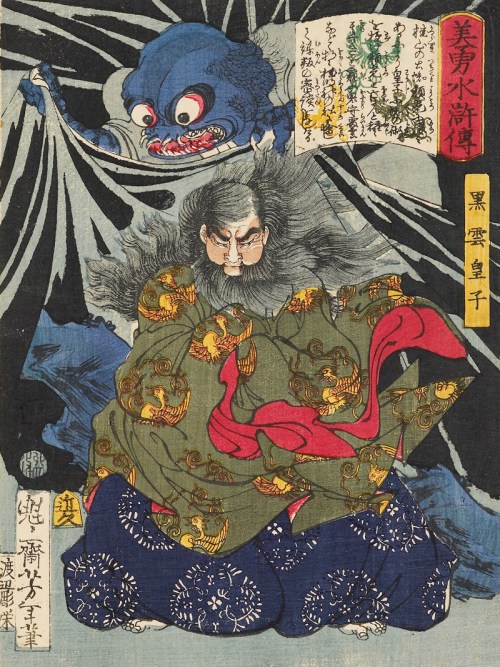
Yokitoshi

There is an ancient theme that says you must become a criminal to fight crime, you must become insane to stop the insanity. It is the basis for many profound stories.

I remain uneasy about allowing myself to be pulled into the miasma of current events. The analysis and criticism and predictions may be cogent and justified. But still, if we think we are untouched by that process because of our good intentions, we are mistaken.

I was reading Bankei (1622-1693), who is unique among Zen masters for his simple explanation of buddhahood. His is not a shortcut to becoming a buddha; there is no shortcut because there is no path. Each of us already has the marvelously illuminating Unborn Buddha Mind. Some will become aware just by hearing Bankei explain it.

But there is a catch. After realization, you may go back to your old ways. And that, says Bankei, would be worse:

But at our meeting today when you thoroughly grasp that each of you has the Unborn Buddha Mind right within himself, from today on you’ll live in the Buddha Mind and be living buddhas forever after. What I’m telling you all is simply to make you realize that the Unborn Buddha Mind is marvelously illuminating. When you’ve thoroughly realized this, from then on forever after you’ll possess a buddhas body no different from Shaka’s73 and never again fall into the Three Evil Realms. However, even if you grasp the Unborn Buddha Mind when I explain it to you here like this, once you go back home, things you see and hear may start up your angry mind again. And then, even if it’s only a tiny bit of anger, your sin will be a million times worse than it was before you’d heard me tell you about the Unborn Buddha Mind! You’ll switch the Unborn Buddha Mind you learned about now for hell-dwellers, beasts and hungry ghosts, transmigrating forever.

That is why thinking and writing about extreme and troubling current events does make me uneasy. Like it or not, to some degree we do become what we behold, we do become what we oppose. It may be worth it, even imperative, but we do pay a price.

With This Magazine Cover Germany Has Made Full Retribution

Der Spiegel

This is the cover from this week’s issue of the German news magazine Der Spiegel. It is accompanied by the story The Pain of the Donald Trump Presidency.

The cover has been controversial. The magazine explains it this way:

The image for this week’s cover was created by the artist Edel Rodriguez. Edel was nine years old when, in 1980, he came to the U.S. with his mother — two refugees, like so many others. “I remember it well, and I remember the feelings and how little kids feel when they are leaving their country,” he told the Washington Post on Friday night. The newspaper wrote: “This DER SPIEGEL Trump cover is stunning.” It wasn’t the first time Edel has drawn Trump. He usually portrays him without eyes — you just see his angry, gaping mouth and, of course, the hair. “I don’t want to live in a dictatorship,” he says. “If I wanted to live in a dictatorship, I’d live in Cuba, where it’s much warmer.”

I am Jewish, descended from Eastern European Jews, with extended family who likely perished there during World War II (they were never heard from after). I was a stamp collector as a kid, and a friend of my parents gave me his entire collection of German stamps from that era, with a note that explained why he could not keep them. For myself, I’ve treated Germany as just another nation, no more or less, depending on what it does and doesn’t do.

No nation in modern history has had to live down what Germany has. People of faith and good will have been visited with the sins of the Fatherland, and have tried hard for generations to establish that they are not those Germans. They have proven themselves, and with this cover, they are doing what some have the courage to do, some not, or at least not yet: Bear witness—graphically, unflinchingly—to what may not quite be an atrocity, but is a devastating and deadly affront to what Americans, Germans, and free people around the world hold dear.

Germany, you have proven your good faith time and time again over the decades. Germany, if there is even anything left to forgive, all is forgiven.

Paris 1968: A Popular Movement That Almost Toppled a Government

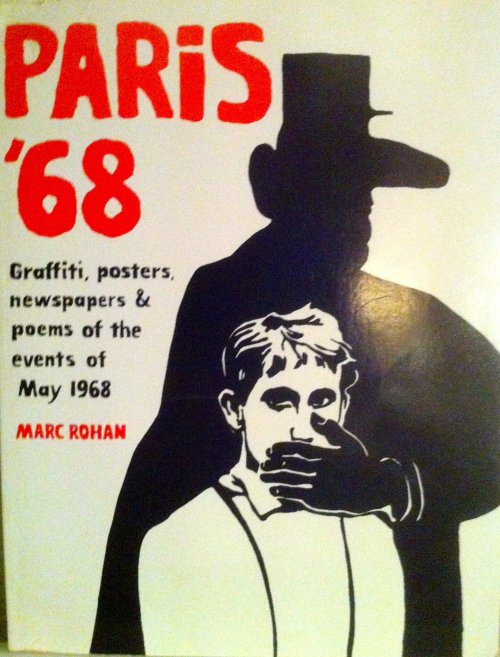
Paris '68

One of the most remarkable popular uprisings of the 1960s—possibly of the modern era—started in Paris in May 1968. It would ignite and inspire the entire nation, lead to a national general strike, and almost bring down the French government of Charles de Gaulle. It also captured the imagination of the world.

The movement did die down after a few months. But it left an indelible mark on the way cultural, social and political movements can combine and be conducted. In his Foreword to When Poetry Ruled the Streets: The Events of May 1968, Douglas Kellner writes:

In the historical memory of the Left, the Events of May ’68 in France have attained mythic proportion. The student uprising, workers’ strikes and factory occupations that erupted during a brief but explosive period in 1968 instilled fear in the hearts of ruling powers everywhere. They inspired those in revolt everywhere with the faith that social upheaval is possible and that spontaneous insurgency can overcome the force of circumstances. For an all-too-brief moment, imagination seized power, the impossible was demanded, and poetry and spontaneity ruled the streets.

Of course, the revolutionary energies of the May Events were soon exhausted, order was restored, and since then the significance of May ’68 has been passionately debated. Did the uprising reveal the exhaustion and bankruptcy of the existing political system and parties, or the immaturity and undisciplined anarchy of the forces in revolt? Did the Events indicate the possibility of fundamental change, or prove that the established system can absorb all forms of opposition and contestation? Did May ’68 signal the autonomy of cultural and social revolution, or demonstrate once again that the old economic and political forces still control the system and can resist all change?…

May ’68 demonstrates as well that spontaneous action can erupt quickly and surprisingly, that it can provide alternatives to standard politics, and that a new politics is practical and necessary. The initial inability of established Left political parties and unions to support the students and workers suggests the irrelevancy of politics as usual and the need to go outside of ordinary political channels and institutions to spark significant contestation and change. The Events also suggest the primacy of social and cultural revolution, of the need to change individuals, social relations, and culture as a prelude to political and systemic transformation. The total nature of the rebellion reflects the totalizing domination of the system which must itself be transformed if significant change is to take place….

For a brief moment, the spirit of 1968 appeared to promise fundamental change in France and in other places throughout the world. To counter historical forgetting, to keep memory and hope alive let us now rethink and relive these experiences, find connections with our contemporary situation, and strive to create our own alternative modes of thought and action.

One vital legacy of May 1968 are the posters, graffiti and poetry of the movement. A gallery of posters can be found here. About these posters, Justin McGuirk of the Guardian writes:

While their fellow students engaged in pitched battles with the police and millions of workers went on general strike, students at the École des Beaux Arts in 1968 occupied the printing studios and converted them into the uprising’s very own propaganda machine. Many of the resulting posters have become icons of political design.

Be young, shut up

Be young and shut up (Charles de Gaulle silencing a protester)

We are all undesirables

We are all undesirables

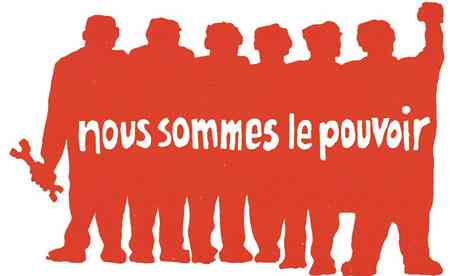
We are the power

We are the power

International Holocaust Remembrance Day: Conspiracy

conspiracy

Today is International Holocaust Remembrance Day.

Conspiracy (2001) is an HBO movie that tells the story of the Wannsee Conference, held in the Berlin suburb of Wannsee on 20 January 1942. It was a top secret meeting of senior government officials of Nazi Germany and SS leaders to debate the merits of Hitler’s ‘Final Solution,’ the extermination of the entire Jewish population of Europe.

The excellent movie and the horrifying meeting are both mesmerizing and near-sickening. But whatever your knowledge of the Nazis and the Holocaust, you should—must—see it.

Not only because you should know more about the Nazis and the Holocaust, though you should. See it because you will discover how men of supposed culture, faith, education, and managerial and professional stature (many at the meeting were lawyers) can find themselves not just following a debased and subhuman road, but actually designing and building the road themselves. A highway to hell.

Conspiracy should be made freely available, at least on this one day. Unfortunately, besides free availability on Amazon Prime Video, you will have to pay $9.99 to stream or buy it. You can at least view some clips for free.

Inaugural Concert 2017

donald-trump-melania-trump-lincoln-memorial-inaugural-concert-jan-19-2017-getty

Look closely at Lincoln
Watching the Inaugural Concert of 2017
Below his monumental chair.
A slave to stone and circumstance
Eyes fixed open on a scene
Out of his control.
He tries not to think back
To other gatherings
On other occasions
Not like this.
Not at all like this.
Look closely
To see him
Struggling to escape
Not just to free himself
But to descend the steps
A giant in the crowd
Striding and proclaiming
What he had seen
And done
And hoped.
Instead he sits
Unmoving and silent
Witness to a truth
A struggle
He lived and died for:
Even now
Even this
All is not lost
All is never lost.

Poetry As Insurgent Art

3c13276r

Lawrence Ferlinghetti is celebrated as a poet, as founder of City Lights Books in San Francisco, and as a pioneer publisher of cutting-edge poets of the 1950s and 1960s (sometimes identified as Beat poets), most famously Allen Ginsberg. Ever a cultural and social activist, Ferlinghetti published in 2007 a tiny book called Poetry as Insurgent Art:

I am signaling you through the flames.

The North Pole is not where it used to be.

Manifest Destiny is no longer manifest.

Civilization self-destructs.

Nemesis is knocking at the door.

What are poets for, in such an age?
What is the use of poetry?

The state of the world calls out for poetry to save it.

If you would be a poet, create works capable of answering the challenge of apocalyptic times, even if this meaning sounds apocalyptic.

You are Whitman, you are Poe, you are Mark Twain, you are Emily Dickinson and Edna St. Vincent Millay, you are Neruda and Mayakovsky and Pasolini, you are an American or a non-American, you can conquer the conquerors with words….

Woody Guthrie, godfather of modern protest music, was another artist who believed in the insurgent power of poetry and song. In 1941, he wrote and peformed Talking Hitler’s Head Off Blues. He followed that by adorning his guitar with this now iconic message, beloved by musical radicals everywhere: THIS MACHINE KILLS FASCISTS.

So the question arises for every creator. Can a poem be an instrument of insurgency? Can a guitar and song actually talk Hitler’s head off and kill fascists?

The targets of reactionary politics and authoritarian rule are your body, your mind and your heart. When any of the three are damaged, thoughtful and sincere resistance and progress are more difficult. When all three are healthy and vital and hopeful, all is possible. Ferlinghetti’s poetry and Guthrie’s fascist killing guitar and thousands of other creations can inspire and embolden us to sing and believe and wisely strategize together, like a chorus, like an army. If we listen and act.