Bob Schwartz

Category: Poetry

Are Presidential Comparisons Odious?

Lydgate - Horse, Sheep and Goose
Comparisons are odious.

This phrase, roughly meaning that comparing people and situations can be unhelpful and counterproductive, is centuries old. It is variously attributed, but as good a source as any seems to be medieval British writer John Lydgate. It comes from his poem The Debate of the Horse, Goose, and Sheep (1436–37).

(For those concerned that this blog just makes stuff up, be assured that scholarly authorities have been consulted. Maura Nolan’s John Lydgate and the Making of Public Culture (2006) was not read in its 290-page entirety, but it was used. Consider this pertinent passage:

Lydgate’s debt to Gower in this passage is obvious; though he has clearly read both Isidore and Higden’s accounts (and possibly Bromyard’s as well), he takes from the Confessio Amantis the notion that the vagaries of Fortune constitute the lesson of the exemplum, a lesson he later directly applies to present-day rulers, ‘‘wise gouernours of euery londe and region’’ (65, lines 25–26). Note: Lydgate makes a similar point in ‘‘The Debate of the Horse, Goose, and Sheep,’’ dated 1436–37 by Pearsall ( John Lydgate (1371–1449), 51), telling his readers that ‘‘thees emperours . . . with ther victories & triumphes’’ (lines 638–39) are subject to Fortune and fall. The political message is explicit: ‘‘Beth war, ye pryncis, your suggettis to despise’’ (line 643). See MacCracken, ed., Minor Poems of John Lydgate, part 2, 539–66)

(Please feel free to show off to your friends and colleagues who wonder if your liberal arts degree, if you have one, is worth anything. Knowing that “In the fifteenth century Lydgate was the most famous poet in England, filling commissions for the court, the aristocracy, and the guilds. He wrote for an elite London readership that was historically very small, but that saw itself as dominating the cultural life of the nation” should impress them.)

About Presidents and odious comparisons: In the many crises of his presidency, including the most recent, President Obama has endured more comparisons than perhaps any other President. Just in the past few days, we have heard about Woodrow Wilson, George W. Bush, Lyndon B. Johnson, Ronald Reagan, Bill Clinton, Jimmy Carter, John F. Kennedy, and in this very blog, Harry Truman.

Comparisons are natural for a few reasons. It is an office that has been held by a relatively small number of people over more than two centuries, and so how you do the job is defined as much by what others did as some sort of abstract definitions and expectations. There is also the flawed logic: the United States is the greatest country in the world, the President is the leader of the United States, therefore the President is the greatest leader in the world. At moments yes, but please check history, the sometimes impossibility of situations, and the nature of imperfection of all powerful humans. Finally, Obama is so unlikely, if not unlike any of his predecessors, that you almost want to jump to comparisons.

My best attempts to find out what the horse, sheep and goose were debating about six centuries ago, and what it has to do with comparisons, have come up empty. So I do have had to make this part up. If the debate was about which one is superior—whether a horse, sheep or goose is better—the answer is elusive and equivocal. This is in no way to cut the current President the slightest bit of slack, as readers of the blog already know. But the presidency is not a single job, even in more stable and simple times, which these are not. So compare away, but don’t let those comparisons obscure clear thinking and distract us with reveries (or lingering antipathies) about this leader or that. That would be odious, in a country and world with odium enough.

Detroit: Motown and Corvettes and Tigers, Oh My!

Stingray 1963

Sometimes the best way to tell a story is not to tell it. The news about Detroit’s municipal bankruptcy, the biggest ever in America, is like that. Others will tell it at length. Sometimes the best way is to offer a few items that are interesting and related, and let readers and listeners make the connections, draw the lines, complete the picture.

Just in case your dot-connecting doesn’t make it clear, the story of Detroit’s bankruptcy is the biggest American story of the day, and possibly one of the biggest in many years. It is bigger than the story of Trayvon Martin and George Zimmerman, bigger than last fall’s story of the rich son of a former Michigan governor disastrously running for President (and loving those Michigan trees, though not Detroit), bigger than the continuing economic malaise, but related to all of them.

Fifty years ago, in July 1963, Motown Records, Hitsville U.S.A., released the single Heat Wave by Martha and the Vandellas. It reached #4 on the Billboard Top 100, but did top the R&B chart. Like so many Motown records, who cares about the numbers? Motown is some of the best pop music ever produced in America. Want proof? Just play Heat Wave, or other irresistible tracks by the Vandellas, the Temps, the Tops, or put on another Motown single from fifty years ago that did go to #1, the astonishing Fingertips (Part 2) by 11-year-old phenomenon Little Stevie Wonder. Motown founder Berry Gordy was not just a model of black entrepreneurship in a white country, at a time when black voting rights had still not been established, but was the model for some of the hugest entertainment moguls in the world, including Jay-Z. But that was fifty years ago in Detroit.

Fifty years ago, the Corvette Stingray was introduced. Edmunds not only rates it the best Corvette of all time; it says “A full half-century after its debut, the 1963 Corvette coupe remains one of the most alluring automotive designs ever conceived.” The ad above shows an airline pilot in Los Angeles (back when being a pilot was super-special manly, and LA was the city of the future) ogling the new Stingray. He was envying the Motor City vision. But that was fifty years ago.

This very day, as the second half of baseball season begins, the Detroit Tigers are one of the best teams in baseball, with maybe the best pitcher (Max Scherzer) and certainly the best hitter (Miguel Cabrera), who may be on his way to becoming the first player to win consecutive Triple Crowns. Detroit fans appreciate this, and have been showing up for home games at a solid pace, about 37,000 a game—equal to the attendance for the Los Angeles Angels and way more than the 17,000 fans per game that show up in “ultra cool” Miami.

Saying that Detroit will be back from beyond the brink isn’t just wishful thinking. The idea that Detroit can fail but that everybody else in America will be alright is all wrong. The 17th century poet John Donne said it:

No man is an Island, entire of itself; every man is a piece of the Continent, a part of the main; if a clod be washed away by the sea, Europe is the less, as well as if a promontory were, as well as if a manor of thy friends or of thine own were; any man’s death diminishes me, because I am involved in Mankind; And therefore never send to know for whom the bell tolls; It tolls for thee.

And if you don’t go for old poetry that you hated in high school, and would rather forget the troubles of Detroit and the world, Motown has lots to offer, especially on a sweltering July day.

Whenever I’m with him
Something inside starts to burning
And I’m filled with desire
Could it be a devil in me
Or is this the way love’s supposed to be?

It’s like a heat wave, burning in my heart
I can’t keep from crying, it’s tearing me apart

Rabindranath Tagore

Rabindranath Tagore
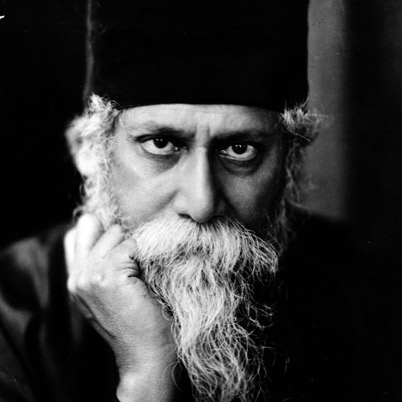
Take a break with Rabindranath Tagore (1861-1941).

He was a Bengali poet, essayist, dramatist, composer and philosopher, and is the most esteemed creative artist of modern India. He was the first non-European to win the Nobel Prize in Literature in 1913.

A brief introduction is Stray Birds (1916), which consists of 326 very short verses—each one usually one or two sentences. Below is a selection of them. Among the many online items by and about Tagore there is a 1961 documentary about Tagore by Satyajit Ray, India’s most celebrated film director. Here is a PDF of Stray Birds as originally published, with a translation from Bengali to English by Tagore himself.

These literary stray birds may seem at first glance to be mere poetic aphorisms. Taken together, though, this is a worldview of inspired simplicity.

From Stray Birds by Rabindranath Tagore

1
Stray birds of summer come to my window to sing and fly away.
And yellow leaves of autumn, which have no songs, flutter and fall there with a sigh.

2
O troupe of little vagrants of the world, leave your footprints in my words.

6
If you shed tears when you miss the sun, you also miss the stars.

28
O Beauty, find thyself in love, not in the flattery of thy mirror.

35
The bird wishes it were a cloud. The cloud wishes it were a bird.

36
The waterfall sings, “I find my song, when I find my freedom.”

40
Do not blame your food because you have no appetite.

43
The fish in the water is silent, the animal on the earth is noisy, the bird in the air is singing,
But Man has in him the silence of the sea, the noise of the earth and the music of the air.

45
He has made his weapons his gods. When his weapons win he is defeated himself.

48
The stars are not afraid to appear like fireflies.

52
Man does not reveal himself in his history, he struggles up through it.

58
The sparrow is sorry for the peacock at the burden of its tail.

62
The Perfect decks itself in beauty for the love of the Imperfect.

75
We read the world wrong and say that it deceives us.

88
He who wants to do good knocks at the gate; he who loves finds the gate open.

121
I carry in my world that flourishes the worlds that have failed.

123
The bird thinks it is an act of kindness to give the fish a lift in the air.

128
To be outspoken is easy when you do not wait to speak the complete truth.

130
If you shut your door to all errors truth will be shut out.

141
When I travelled to here and to there, I was tired of thee, O Road, but now when thou leadest me to everywhere I am wedded to thee in love.

146
I have my stars in the sky,
But oh for my little lamp unlit in my house.

156
The Great walks with the Small without fear.
The Middling keeps aloof.

158
Power takes as ingratitude the writhings of its victims.

161
The cobweb pretends to catch dew-drops and catches flies.

166
The canal loves to think that rivers exist solely to supply it with water.

169
Thought feeds itself with its own words and grows.

178
It is the little things that I leave behind for my loved ones, –great things are for everyone.

184
He who is too busy doing good finds no time to be good.

193
A mind all logic is like a knife all blade.
It makes the hand bleed that uses it.

207
Praise shames me, for I secretly beg for it.

208
Let my doing nothing when I have nothing to do become untroubled in its depth of peace like the evening in the seashore when the water is silent.

210
The best does not come alone. It comes with the company of the all.

235
Do not say, “It is morning,” and dismiss it with a name of yesterday. See it for the first time as a new-born child that has no name.

243
The stream of truth flows through its channels of mistakes.

248
Man is worse than an animal when he is an animal.

258
The false can never grow into truth by growing in power.

280
Let the dead have the immortality of fame, but the living the immortality of love.

296
Blessed is he whose fame does not outshine his truth.

317
Man’s history is waiting in patience for the triumph of the insulted man.

319
I long for the Island of Songs across this heaving Sea of Shouts.

323
I have suffered and despaired and known death and I am glad that I am in this great world.

The Year Begins with Baseball

Mom Marlins
The New Year finally begins. It is Opening Day for Major League Baseball.

Non-baseball people are turning away with a lack of interest or understanding. Even non-sports people know that football long ago took over as America’s pastime. The Super Bowl v. the World Series? Who are you kidding? When’s the last time the Rolling Stones performed at a World Series halftime. (Note: There is no halftime in baseball. Just a brief break known as the seventh inning stretch, where we sing Take Me Out to the Ballgame, not a Stones song.)

If baseball has somehow been eclipsed, it may be symptomatic. Whatever it is that has made football more popular than baseball might not be such a good thing. There are tomes by eminent scholars written about this. The time element alone is telling. Those leaning towards short attention spans and busy lives like football because something is always happening and it is time-constrained by a clock. For non-baseball fans, there are long stretches where nothing seems to be going on in a baseball game, except most of the players just standing around. Games can theoretically go on forever, and sometimes they seem to, exceeding five hours. Once again the chorus asks: Who are you kidding?

George Carlin, one of the sharptest and funniest observers of American life, focused on the differences between baseball and football. You can read the complete text and listen to a recording. Here’s an excerpt:

Baseball and football are the two most popular spectator sports in this country. And as such, it seems they ought to be able to tell us something about ourselves and our values.

I enjoy comparing baseball and football:

Baseball is a nineteenth-century pastoral game.
Football is a twentieth-century technological struggle….

Baseball begins in the spring, the season of new life.
Football begins in the fall, when everything’s dying.

In football you wear a helmet.
In baseball you wear a cap….

In football you receive a penalty.
In baseball you make an error.

In football the specialist comes in to kick.
In baseball the specialist comes in to relieve somebody.

Football has hitting, clipping, spearing, piling on, personal fouls, late hitting and unnecessary roughness.
Baseball has the sacrifice….

And finally, the objectives of the two games are completely different:

In football the object is for the quarterback, also known as the field general, to be on target with his aerial assault, riddling the defense by hitting his receivers with deadly accuracy in spite of the blitz, even if he has to use shotgun. With short bullet passes and long bombs, he marches his troops into enemy territory, balancing this aerial assault with a sustained ground attack that punches holes in the forward wall of the enemy’s defensive line.

In baseball the object is to go home! And to be safe! I hope I’ll be safe at home!

There are dozens of books containing art, poetry and writing about baseball. The other sports may have some, but not of the quantity or the caliber of these. As pointed out before, and it will be pointed out again, for a brief moment in the late 1980s, cut tragically short by illness, A. Bartlett Giamatti was the Commissioner of Major League Baseball. Bart Giamatti was the President of Yale University, a professor of literature, and a writer of note. When and only when the NFL, NBA, NHL, or any other sports league decides to appoint a person of equal credentials as their commissioner, then and only then will it be worth having a conversation about the big picture relative merits.

Bart Giamatti also wrote the quintessential essay about baseball. The Green Fields of the Mind is written not about Opening Day, but about the last day of the season for his beloved Boston Red Sox in 1977. He didn’t live to see that one of baseball’s most hapless teams would go on to become a championship powerhouse years later.

The essay is a poetic take not only on the refrain of baseball fans everywhere—“wait until next year”—but on the way that refrain works in our lives. It reflects the progress from the hopes of spring to the dimming of prospects in the fall, but only in the meantime. There is no justice in an excerpt of it, but here is one anyway:

It breaks your heart. It is designed to break your heart. The game begins in the spring, when everything else begins again, and it blossoms in the summer, filling the afternoons and evenings, and then as soon as the chill rains come, it stops and leaves you to face the fall alone. You count on it, rely on it to buffer the passage of time, to keep the memory of sunshine and high skies alive, and then just when the days are all twilight, when you need it most, it stops. Today, October 2, a Sunday of rain and broken branches and leaf-clogged drains and slick streets, it stopped, and summer was gone.…

That is why it breaks my heart, that game–not because in New York they could win because Boston lost; in that, there is a rough justice, and a reminder to the Yankees of how slight and fragile are the circumstances that exalt one group of human beings over another. It breaks my heart because it was meant to, because it was meant to foster in me again the illusion that there was something abiding, some pattern and some impulse that could come together to make a reality that would resist the corrosion; and because, after it had fostered again that most hungered-for illusion, the game was meant to stop, and betray precisely what it promised.

Of course, there are those who learn after the first few times. They grow out of sports. And there are others who were born with the wisdom to know that nothing lasts. These are the truly tough among us, the ones who can live without illusion, or without even the hope of illusion. I am not that grown-up or up-to-date. I am a simpler creature, tied to more primitive patterns and cycles. I need to think something lasts forever, and it might as well be that state of being that is a game; it might as well be that, in a green field, in the sun.

Finally, a rare personal note. Many, many families have memories tied up with sports. I am no exception. Those memories aren’t important because the game is, just as the game isn’t important because of the memories. They are just tied up in a package that you open on occasions. Opening Day is one of them. Above is a photo of my Mom, a few years before she passed away. She is watching a Marlins game. As Bart Giamatti wrote, “there are others who were born with the wisdom to know that nothing lasts.”

That’s another reason we love baseball and are happy it is Opening Day again.

Political Speeches As Mass Shout-Outs

Some political audiences still get fired up by pandering platitudes and principles, even if the words are not backed up by any substantive proposals, or by any proposals at all.

This is sometimes punctuated by the occasional mention of a target interest group, just to show that the politico is paying attention to them. Once again, this might not be attached to anything concrete, but it often does the trick.

It is time for this to be taken to the next level.

A really bold and innovative politician could skip the platitudes, principles and proposals. Instead, entire speeches could be built out of the names of places, organization and people. If this sounds too much like reading an atlas, almanac or phone book out loud, without context, that is precisely the idea.

Depending on the crowd, this would be a string of guaranteed cheer and applause phrases. Las Vegas. Wichita. National Rifle Association. Veterans of Foreign Wars. Latinos. Blacks. Women.

This is far from an uncreative exercise. In fact, it is a sort of minimalist poetry, idea and intention reduced to the smallest possible expression. Obviously, there are a few pitfalls, so care must be taken. Saying the word “Nazi” out of context can be trouble; saying it in relation to saying “Jews” may be more or less trouble, without the benefit of further explanation.

All in all, this would be an exciting and enlightening direction for our politics to take. We can stop wondering and fretting about speeches filled with air and little more. The pretense would be gone; speeches could once again be rooted in reality, or at least in one political reality. That reality, which lives alongside the genuine value of getting things done, is the value of getting elected or getting someone else defeated. And then there is the value, if just for a moment, of giving a little harmless recognition to folks who are waiting, maybe quixotically, for much more.

Walt Whitman Helps Launch Consumer Electronics Show in Las Vegas

Walt Whitman
First it was Abraham Lincoln in the new television campaign for the Lincoln Motor Company (the founder of that firm was a fan of the president, back when the company was started in 1917).

Lincoln Motor Company

Now Walt Whitman, the father of modern American poetry and, coincidentally, a big fan of Lincoln himself, is helping to launch this year’s Consumer Electronics Show in Las Vegas (January 8-11).

Whitman will probably not be seen emerging from a mysterious fog as Lincoln does in the commercial, although that would be unspeakably cool.

Instead, Whitman’s most famous line of poetry is quoted (without attribution) in the official description of the very first CES SuperSession

The Digital Health Revolution: Body, Mind and Soul
January 8, 2013, 9:30-10:30 a.m.

“I sing the body electric” takes on new meaning in our brave new digital world, where devices let us monitor everything from our stress levels to our genetic sequences, and devices with 100 real-time biosensors loom on the horizon. Join moderator Arianna Huffington as she leads four digital health leaders in conversation — on the latest innovations in the field, how those innovations have the potential to change lives, and what the digital revolution means for the body, mind, and soul.

The literarily perspicacious will notice that the first line of copy includes allusions to two groundbreaking writers—not just Whitman, but also Aldous Huxley. Huxley’s Brave New World vision is actually much closer to what is going on at CES than Whitman’s. Unfortunately, Huxley will not be coming out of the mist either, though the thought of his joining up with Whitman in Las Vegas to look at the latest gadgets is mind-blowing—even without Huxley’s Soma or LSD. Add Lincoln, and it is the stuff that dream movies are made of (Steven Spielberg, are you listening?).

Back to Whitman, I Sing The Body Electric is included in his Leaves of Grass (1855). Whitman’s work was a sensation, in part because of his unabashed celebration of the splendor and wonder of the human body and sexuality. The poem is just such a celebration, a spiritual anatomy lesson that is like a painting, whose message is: be not ashamed.

It isn’t clear that is what the CES copywriter had in mind, though writers generally deserve much more credit than they get. If the point is that digital pioneers plan to touch every part of our bodies, that works too.

Meanwhile, Whitman—whose use of the term “electric” was itself quite pioneering—would probably be happy to see his poem alive and well in the context of keeping and making people healthy, head to toe, organ to organ. See you in Vegas, Walt.

For the digiterati and literati, here is the closing section of the poem:

O my body! I dare not desert the likes of you in other men and women, nor the likes of the parts of you,
I believe the likes of you are to stand or fall with the likes of the soul, (and that they are the soul,)
I believe the likes of you shall stand or fall with my poems, and that they are my poems,
Man’s, woman’s, child’s, youth’s, wife’s, husband’s, mother’s, father’s, young man’s, young woman’s poems,
Head, neck, hair, ears, drop and tympan of the ears,
Eyes, eye-fringes, iris of the eye, eyebrows, and the waking or sleeping of the lids,
Mouth, tongue, lips, teeth, roof of the mouth, jaws, and the jaw-hinges,
Nose, nostrils of the nose, and the partition,
Cheeks, temples, forehead, chin, throat, back of the neck, neck-slue,
Strong shoulders, manly beard, scapula, hind-shoulders, and the ample side-round of the chest,
Upper-arm, armpit, elbow-socket, lower-arm, arm-sinews, arm-bones,
Wrist and wrist-joints, hand, palm, knuckles, thumb, forefinger, finger-joints, finger-nails,
Broad breast-front, curling hair of the breast, breast-bone, breast-side,
Ribs, belly, backbone, joints of the backbone,
Hips, hip-sockets, hip-strength, inward and outward round, man-balls, man-root,
Strong set of thighs, well carrying the trunk above,
Leg fibres, knee, knee-pan, upper-leg, under-leg,
Ankles, instep, foot-ball, toes, toe-joints, the heel;
All attitudes, all the shapeliness, all the belongings of my or your body or of any one’s body, male or female,
The lung-sponges, the stomach-sac, the bowels sweet and clean,
The brain in its folds inside the skull-frame,
Sympathies, heart-valves, palate-valves, sexuality, maternity,
Womanhood, and all that is a woman, and the man that comes from woman,
The womb, the teats, nipples, breast-milk, tears, laughter, weeping, love-looks, love-perturbations and risings,
The voice, articulation, language, whispering, shouting aloud,
Food, drink, pulse, digestion, sweat, sleep, walking, swimming,
Poise on the hips, leaping, reclining, embracing, arm-curving and tightening,
The continual changes of the flex of the mouth, and around the eyes,
The skin, the sunburnt shade, freckles, hair,
The curious sympathy one feels when feeling with the hand the naked meat of the body,
The circling rivers the breath, and breathing it in and out,
The beauty of the waist, and thence of the hips, and thence downward toward the knees,
The thin red jellies within you or within me, the bones and the marrow in the bones,
The exquisite realization of health;
O I say these are not the parts and poems of the body only, but of the soul,
O I say now these are the soul!

Election Poem: The Revolution Will Not Be Televised


A poem for Election Day seems in order.

Maybe surprising, maybe not, there are a bundle of poems about elections. Walt Whitman’s Election Day, November 1884 from Leaves of Grass, for example. That seems too literal and expected. Going in an entirely different direction, Allen Ginsberg’s Howl, a milestone in modern culture, was in the running. (And if this election is about anythings, modernity is one of them.)

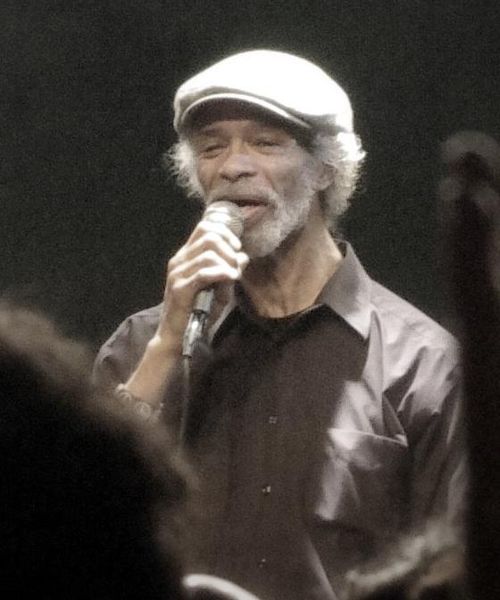
Somewhere in the middle—well, not exactly in the middle—is Gil Scott-Heron’s poem and song The Revolution Will Not Be Televised. Gil Scott-Heron (1949-2011) was a celebrated cutting-edge poet and musician. Even if you don’t know him, you’ve heard his work, as his version of an old R&B song, I’ll Take Care of You, was the foundation of the Drake hit song Take Care.

First recorded in 1970, The Revolution Will Not Be Televised may seem an offbeat choice for an election poem. But it does contain the lines

NBC will not be able predict the winner at 8:32
or report from 29 districts.
The revolution will not be televised.

More than that, it is about brighter days not being found in a media mediated version of reality

You will not be able to stay home, brother.
You will not be able to plug in, turn on and cop out.

Forty years and more, and it’s still visionary.

The Revolution Will Not Be Televised

You will not be able to stay home, brother.
You will not be able to plug in, turn on and cop out.
You will not be able to lose yourself on skag and skip,
Skip out for beer during commercials,
Because the revolution will not be televised.

The revolution will not be televised.
The revolution will not be brought to you by Xerox
In 4 parts without commercial interruptions.
The revolution will not show you pictures of Nixon
blowing a bugle and leading a charge by John
Mitchell, General Abrams and Spiro Agnew to eat
hog maws confiscated from a Harlem sanctuary.
The revolution will not be televised.

The revolution will not be brought to you by the
Schaefer Award Theatre and will not star Natalie
Woods and Steve McQueen or Bullwinkle and Julia.
The revolution will not give your mouth sex appeal.
The revolution will not get rid of the nubs.
The revolution will not make you look five pounds
thinner, because the revolution will not be televised, Brother.

There will be no pictures of you and Willie May
pushing that shopping cart down the block on the dead run,
or trying to slide that color television into a stolen ambulance.
NBC will not be able predict the winner at 8:32
or report from 29 districts.
The revolution will not be televised.

There will be no pictures of pigs shooting down
brothers in the instant replay.
There will be no pictures of pigs shooting down
brothers in the instant replay.
There will be no pictures of Whitney Young being
run out of Harlem on a rail with a brand new process.
There will be no slow motion or still life of Roy
Wilkens strolling through Watts in a Red, Black and
Green liberation jumpsuit that he had been saving
For just the proper occasion.

Green Acres, The Beverly Hillbillies, and Hooterville
Junction will no longer be so damned relevant, and
women will not care if Dick finally gets down with
Jane on Search for Tomorrow because Black people
will be in the street looking for a brighter day.
The revolution will not be televised.

There will be no highlights on the eleven o’clock
news and no pictures of hairy armed women
liberationists and Jackie Onassis blowing her nose.
The theme song will not be written by Jim Webb,
Francis Scott Key, nor sung by Glen Campbell, Tom
Jones, Johnny Cash, Englebert Humperdink, or the Rare Earth.
The revolution will not be televised.

The revolution will not be right back after a message
about a white tornado, white lightning, or white people.
You will not have to worry about a dove in your
bedroom, a tiger in your tank, or the giant in your toilet bowl.
The revolution will not go better with Coke.
The revolution will not fight the germs that may cause bad breath.
The revolution will put you in the driver’s seat.

The revolution will not be televised, will not be televised,
will not be televised, will not be televised.
The revolution will be no re-run brothers;
The revolution will be live.