Bob Schwartz

Category: Poetry

The Poetry of Citizenry

“You are Whitman, you are Poe, you are Mark Twain, you are Emily Dickinson and Edna St. Vincent Millay, you are Neruda and Mayakovsky and Pasolini, you are an American or a non-American, you can conquer the conquerors with words.”
Lawrence Ferlinghetti, Poetry as Insurgent Art

“There is a strong underground tradition of the poetry of engagement, which we might also call the poetry of citizenzry.”
Edward Hirsch, A Poet’s Glossary

“Poetry, an act of the imagination, is subject to historical forces, but it also talks back to history. The idea of witnessing should be widened to go beyond the documentary response to events. ‘I am the man . . . I suffered . . . I was there,’ Walt Whitman declared. A broad imaginative sympathy was part of his lived experience.”
Edward Hirsch, A Poet’s Glossary

I’ve written before about poetry as insurgent art, a term used by Lawrence Ferlinghetti. Here I add to the conversation with three entries from A Poet’s Glossary by Edward Hirsch—an essential book for those who read write study or teach poetry.

It is no surprise to regular readers that I think these are extraordinary times. And that I think people in all quarters should consider the ways they can help right the ship and steer it in a different direction. That is, all hands on deck, including poets.

How well that works, or whether it works at all, is to be determined. But as the student Sophie Scholl said of her tiny but morally mighty White Rose resistance movement in Nazi Germany, which boldly distributed simple leaflets, “Somebody, after all, had to make a start.” As well poets as anyone else.


From A Poet’s Glossary by Edward Hirsch:

political poetry

Poetry of social concern and conscience, politically engaged poetry. The feeling often runs high in the social poetry of engagement, especially when it is partisan. Poets write on both sides of any given war, defend the State, attack it. All patriotic and nationalistic poetry is by definition political. Political poetry, ancient and modern, good and bad, frequently responds vehemently to social injustice. Thus the poet is Jeremiah crying out to the assembly to witness the folly, unprecedented in both West (Cyprus) and East (Kedar), of a people who have forsaken the fountain of living waters for the stagnant water at the bottom of a leaky cistern. The Lamentations of Jeremiah, a series of poems mourning the desolation of Jerusalem and the sufferings of her people after the siege and destruction of the city and the burning of theTemple by the Babylonians, is also a political poem.

Strabo came up with the label stasiotika (“stasis-poems”) for Alcaeus’s partisan songs, political poems, which are propagandistic poems of civil war and exile, accounts of his political commitments. The premise of political poetry is that poetry carries “news” or information crucial to the populace. Political poetry is a poetry self-consciously written inside of history, of politics. It responds to external events. “Mad Ireland hurt you into poetry,” W. H. Auden famously decreed in his elegy for W. B. Yeats, and so, too, we might say that the madness of any country’s brutality has often wounded its poets into a political response in poetry. “I stand as a witness to the common lot, / survivor of that time, that place,” Anna Akhmatova wrote in 1961. Behind the poem in quest of justice, these lines from Shakespeare’s Antony and Cleopatra (1623): “our size of sorrow, / Proportion’d to our cause, must be as great / As that which makes it.”

There is an ephemeral quality to a lot of political poetry—most of it dies with the events it responds to—but a political poem need not be a didactic poem. It can be a poem of testimony and memory. For the best political poems of the twentieth century, I think of Vahan Tekeyan’s poems of the Armenian genocide; of the Spanish Civil War poet Miguel Hernandez’s haunting prison poems, especially “Lullaby of the Onion” (1939); and the Turkish poet Nazim Hikmet’s equally poignant prison poems, especially “On Living” (1948) and “Some Advice to Those Who Will Spend Time in Prison” (1949); of Bertolt Brecht’s World War II poems and Nelly Sachs’s Holocaust poems. I think of the Italian poet Cesare Pavese’s testimonies to ordinary people in trouble, Hard Labor (Lavorare stanca, 1936), and Pablo Neruda’s epic testament, Canto General (1950). I think of the many poems of indictment and summons, of land and liberty, collected in the Nigerian writer Wole Soyinka’s breakthrough anthology, Poems of Black Africa (1975).

There is a strong tradition in England of political poems. Edmund Spenser’s Complaints (1591) takes aim at social and political targets. John Milton wrote a series of pro-Cromwellian short poems in the 1640s and ’50s. Some of John Dryden’s greatest poetry was written in response to events, such as his two-part political satire Absalom and Achitophel (1681, 1682). William Wordsworth’s political poems are among his best, such as his sonnet “To Toussaint L’Ouverture” (1803), though a few of his late patriotic poems are also among his worst. Percy Bysshe Shelley’s The Mask of Anarchy (1819), which was “Written on the Occasion of the Massacre at Manchester” (“I met Murder on the way—/ He had a mask like Castlereagh”), is a frankly political poem that always gives me a chill. Elizabeth Barrett Browning published two striking books of political poetry during her Italian sojourn, Casa Guidi Windows (1850) and Poems Before Congress (1860). The most popular Victorian poet, Alfred, Lord Tennsyon, never distinguished between the personal and the political, the private and the public.

Political poetry has always seemed somewhat suspect in American literary history. “Our wise men and wise institutions assure us that national political events are beyond the reach of ordinary, or even extraordinary, literary sensitivity,” Robert Bly writes. Yet there is a strong underground tradition of the poetry of engagement, which we might also call the poetry of citizenzry. This runs from Walt Whitman’s political poems of the 1850s, which prefigure Leaves of Grass, and John Greenleaf Whittier’s Anti-Slavery Poems (1832–1887), to leftist poets of the 1930s (Kenneth Fearing, Edwin Rolfe, Muriel Rukeyser). The civil rights movement and the Vietnam War enraged poets, and, as Bly points out, some of the most inward poets, such as Robert Duncan, Denise Levertov, and Galway Kinnell, wrote some of the best poems against the Vietnam War. Most poetry of the 1940s and ’50s shunned politics, but Thomas McGrath (“Ode for the American Dead in Korea,” retitled in the early 1970s “Ode for the American Dead in Asia”) and Kenneth Rexroth (“A Christmas Note for Geraldine Udell,” 1949) bucked the trend. For forty years, Adrienne Rich was one of the most outspoken political poets in late twentieth-century American poetry, a model for a generation of political and activist poets. She went through several phases in relationship to polemics. She proposed a position that resists didacticism in “Power and Danger: Works of a Common Woman” (1978), her introduction to a collection of poems by Judy Grahn:

No true political poetry can be written with propaganda as an aim, to persuade others “out there” of some atrocity or injustice (hence the failure, as poetry, of so much anti-Vietnam poetry of the sixties). As poetry, it can come only from the poet’s need to identify her relationship to atrocities and injustice, the sources of her pain, fear, and anger, the meaning of her resistance.

protest poetry 

Poetry of dissent, of social criticism. It protests the status quo and tries to undermine established values and ideals. The protest poet is a rebellious citizen, speaking out, expressing disapproval of a political policy or social action. Protest poetry, the most earnest of genres, is timely, oppositional, reactive, urgent. It is an activist type of political poetry born from outrage and linked to social action. It turns poetry into a medium for polemics.

The reprehensible policy of apartheid in South Africa, which legislated racism, also stimulated a powerful tradition of protest poetry. The Zulu poet Herbert I. E. Dhlomo’s long poem Valley of a Thousand Hills (1941) is the most extended work of South African protest poetry. One thinks of the contributions of Dennis Brutus (1924–2009), whose work is brought together in Poetry and Protest: A Dennis Brutus Reader (2006); Arthur Nortje (1942–1970), whose work is published posthumously in Dead Roots (1973) and Lonely Against the Light (1973); and Mazisi Kunene (1930–2006), who first sounded his aggressive, telegraphic note in Zulu Poems (1970). The New Black poetry of the 1970s, or Soweto poetry, was a protest poetry of black consciousness. In the United States, there is also a strong tradition of African American poetry that protests racism. It extends from the Harlem renaissance to the Black Arts movement. Most antiwar poetry is protest poetry. The combatant antiwar poetry of Wilfred Owen (1893–1918) and Siegfried Sassoon (1886–1967) protested the technological horrors of modern warfare. The Spanish Civil War generated both local and global protest poetry. The Vietnam War galvanized a tremendous amount of protest poetry by such poets as Robert Lowell, Allen Ginsberg, Adrienne Rich, and Robert Bly. These poets felt a cultural imperative to speak out against the war. The repression and disintegration of the American imagination is one of the persistent themes of Vietnam-era protest poetry. Much of the feminist poetry of the 1960s and ’70s is protest poetry. “A patriot is not a weapon,” Adrienne Rich writes in her long poem An Atlas of the Difficult World (1981). “A patriot is one who wrestles for the soul of her country / as she wrestles for her own being.” Sam Hamill’s anthology Poets Against the War (2003) was a hastily gathered book of protest poems against the war in Iraq. The strength of protest poetry is its sense of immediacy and outrage. However, most of these politically motivated poems, which are often made in outrage against a specific atrocity, don’t outlive their historical moment.

witness of poetry, poetry of witness 

Poetry of testimony. In the early 1990s, Carolyn Forché transformed the Polish poet Czeslaw Milosz’s phrase the witness of poetry (taken from the book of the same name, 1983) into “the poetry of witness.” Her anthology Against Forgetting: Twentieth-Century Poetry of Witness (1993) gathers together the work of 145 poets “who endured conditions of historical and social extremity during the twentieth century—through exile, state censorship, political censorship, house arrest, torture, imprisonment, military occupation, warfare, and assignation. Many poets did not survive, but their works remain with us as poetic witness to the dark times in which they lived.” Poetry, an act of the imagination, is subject to historical forces, but it also talks back to history. The idea of witnessing should be widened to go beyond the documentary response to events. “I am the man . . . I suffered . . . I was there,” Walt Whitman declared. A broad imaginative sympathy was part of his lived experience.

In 1944, the Hungarian poet Miklós Radnóti wrote four harrowing “Postcard” poems in the midst of a forced march westward across Hungary. Radnóti was one of twenty-two prisoners murdered and tossed into a collective grave. After the war, his widow had his body exhumed and these poems were found in his field jacket, written in pencil in a small Serbian exercise book. Thus his poems nearly literally rise up from a mass grave. They inscribe a suffering unimaginably intense, a consciousness of death nearly unbearable. They are purposefully entitled “Postcards.” Here the informality of the postcard (dashed off, superficial) is belied by the scrupulousness with which Radnóti describes and re-creates the scene of his impending death. The postcard is a message directed to another person. It has a particular reader in mind, but its openness also suggests that it can be read by anyone. Thus the poem in the guise of a postcard is a testimony back to life, a signal that Radnóti had pushed back the silence long enough to embody a final experience. His poems of witness display the classical brevity and poise of an Orphic art that comes back from the underworld to give testimony.
Kafka’s Parable (No answer to all questions, no solutions to all mysteries)

Note: This is the first day of Sukkot, the Jewish harvest festival that includes reading Ecclesiastes/Kohelet, one of my favorite books of the Hebrew Bible. Before writing a new post about Ecclesiastes, I reviewed my earlier posts that referenced it. It turns out the following was drafted but never published.


Kafka’s Parable (No answer to all questions, no solutions to all mysteries)

Kafka’s parable
Is a sounding of a bell
That half sickens me.
So obvious that
All searches do not succeed
Still hopeful that
Some do
Mine will.
Why embed the futility of Ecclesiastes
In a treasure map
That might as well say
Not here
Not here
Not anywhere.
Frustration is one thing
The waste of a life another.

© 2025 Bob Schwartz


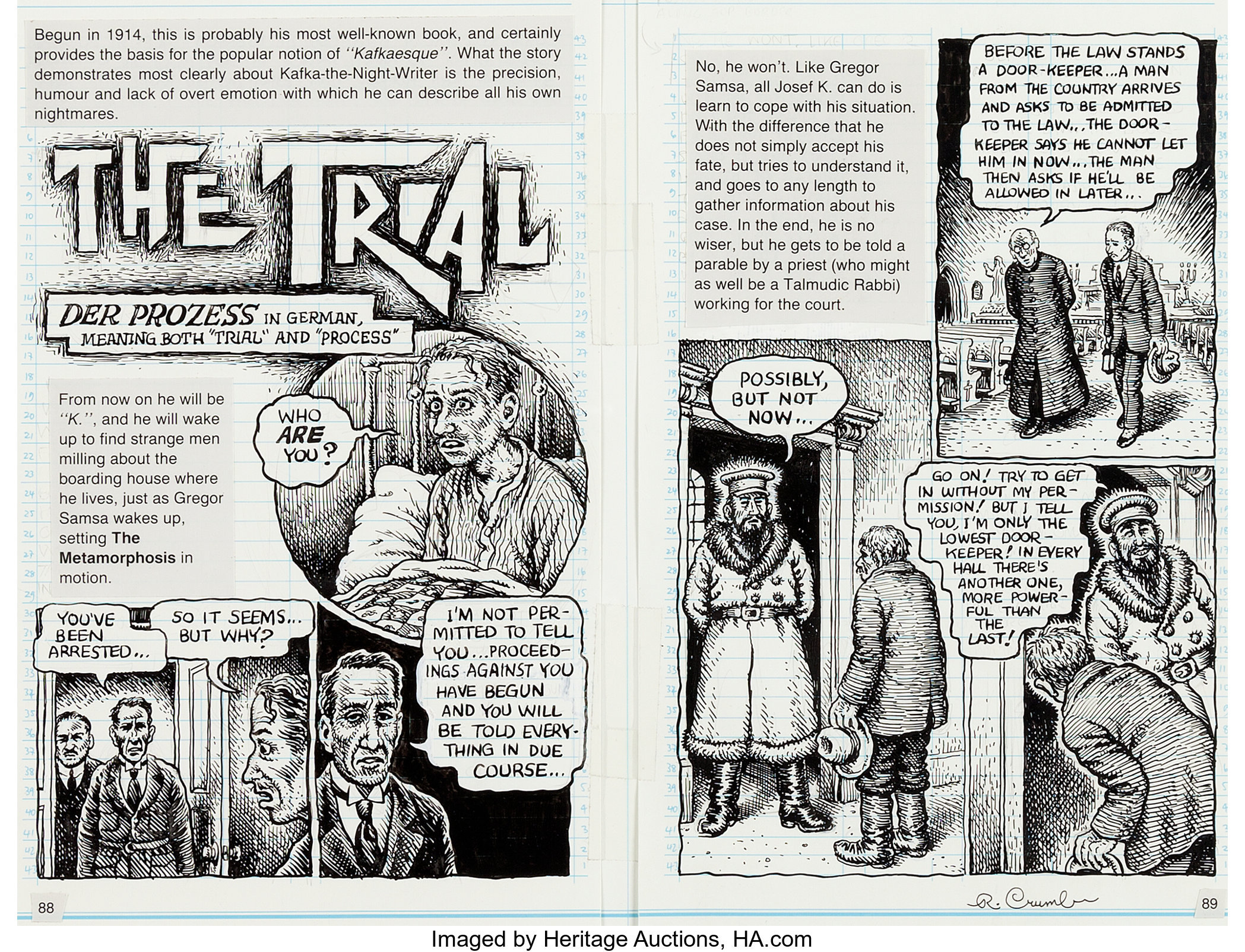
Kafka’s parable, found in his novel The Trial, “can be read as a religious allegory or as an allegory of human justice.” (see below).

The futility found in Ecclesiastes (entitled in Hebrew Kohelet) refers to a repeated theme of the biblical book, starting with its famous opening passage. While there is much disagreement about the English translation of the biblical Hebrew word hevel—air, vapor, breath, mist, smoke, futility, meaningless, absurd, pointless or useless—the line “hevel hevelim, kol hevel” it is best known in English this way:

Futility, futility, all is futility.


From Tree of Souls:The Mythology of Judaism by Howard Schwartz

BEFORE THE LAW

Before the Law stands a man guarding the door. To this doorkeeper comes a man from the country who asks to be admitted to the Law. But the doorkeeper says that he cannot grant him entry. The man thinks about it and asks if, in that case, he will be permitted to enter later. “Possibly,” says the doorkeeper, “but not now.”

As the gateway to the Law is, as always, open, and the doorkeeper steps aside, the man stoops to look within. When the doorkeeper sees this, he laughs and says, “If it tempts you that much, just try to get in. But be aware that I am mighty. And I am only the lowliest doorkeeper. From hall to hall there are doorkeepers, each mightier than the one before. Even I can no longer bear the sight of the third of these.”

The man from the country has not expected such difficulties. Surely, he thinks, the Law ought to be accessible to everybody, always, but now as he looks more carefully at the doorkeeper, with his big pointed nose and long, thin, black Tatar beard, he decides he’d rather wait for permission to enter. The doorkeeper gives him a stool and has him sit down beside the door. There he sits for days and for years. He often tries to be admitted, and wearies the doorkeeper with his pleas. The doorkeeper frequently questions him, asks him about where he comes from and many other things, but they are distant inquiries, the sort great men make, and in the end he always says that he cannot let him in yet. The man, who has equipped himself for his journey with many things, employs everything, however valuable, to bribe the doorkeeper. He takes it all, saying however, “I accept this only so you won’t think you’ve failed to do anything.”

All these long years the man watches the doorkeeper unceasingly. He forgets the other doorkeepers, and this first one seems to be the only obstacle between him and the Law. He curses his miserable luck, at first recklessly and loudly; later, as he grows old, he only grumbles to himself. He becomes childish, and since his years of scrutiny of the doorkeeper have enabled him to recognize even the fleas in his fur collar, he asks even the fleas to help change the doorkeeper’s mind. Finally his eyes grow feeble, and he doesn’t know if it’s really getting darker around him or if his eyes are only tricking him. But in the darkness he now observes an inextinguishable radiance streaming out of the door of the Law.

Now he will not live much longer. Before he dies all he has been through converges in his mind into one question that he has never yet asked the doorkeeper. He signals to him, as he can no longer raise his stiffening body. The doorkeeper has to bend down low to him, as their difference in size has altered, much to the man’s disadvantage. “What do you want to know now?” asks the doorkeeper. “There’s no satisfying you.” “Everyone struggles to reach the Law,” says the man. “How can it be that in all these years no one but me has asked to get in?” The doorkeeper recognizes that the man’s life is almost over and, because his hearing is failing, he roars at him, “No one else could be allowed in here. This entrance was intended only for you. I am now going to close it.”

* * *

This famous parable by Kafka from The Trial can be read as a religious allegory or as an allegory of human justice. Although it is generally thought of more in terms of the latter, it has the distinct elements of a religious allegory. The key image is that “of an inextinguishable radiance streaming out of the door of the Law.” This clearly suggests the eternal nature of the Law, which, of course, draws this eternal quality from God. This shifts the focus of the parable from human justice to the need for divine justice, and hints at the remoteness of God.

The doorkeeper guarding the gate to the Law is reminiscent of the angel placed at the gate of the Garden of Eden, with the flaming sword that turned every way, to guard the way to the tree of life (Gen. 3:24). Also echoed is the popular Christian conception of St. Peter serving as the doorkeeper at the Gates of Heaven.

Gershom Scholem has said that there are three pillars of Jewish mystical thought: the Bible, the Zohar, and the writings of Kafka. Thus he viewed Kafka’s writings, which have been interpreted in a multitude of ways, as mystical texts. Scholem pointed out parallels between “Before the Law” and passages in the Hekhalot texts about angels guarding the gates of the palaces of heaven. For a description of these angels, see “The Entrance of the Sixth Heavenly Palace,” p. 178. Compare this description with Kafka’s description of the doorkeeper in “Before the Law.” The parallels are striking, but since this Hekhalot text was little known during Kafka’s lifetime, it is not likely that he had direct knowledge of it. Moshe Idel also identifies the quest in this tale as the remnant of a mystical one. See Kabbalah: New Perspectives, p. 271.

Another perspective is suggested by Zohar 1:7b: Open the gates of righteousness for me . . . . This is the gateway to the Lord (Ps. 68:19-20). Assuredly, without entering through that gate one will never gain access to the most high King. Imagine a king greatly exalted who screens himself from the common view behind gate upon gate, and at the end, one special gate, locked and barred. Said the king: “He who wishes to enter into my presence must first of all pass through that gate.”

Another parallel is found in Ibn Gabirol’s eleventh century treatise, The Book of the Selection of Pearls (ch. 8): “The following laconic observations are said to have been addressed to a king, by one who stood by the gate of the royal palace, but who failed to obtain access. First: Necessity and hope prompted me to approach your throne. Second: My dire distress admits of no delay. Third: My disappointment would gratify the malice of my enemies. Fourth: Your acquiescence would confer advantages, and even your refusal would relieve me from anxiety and suspense.”

Max Brod, Kafka’s close friend and biographer, comments about this parable: “Kafka’s deeply ironic legend ‘Before the Law’ is not the reminiscence or retelling of this ancient lore, as it would seem at first glance, but an original creation drawn deeply from his archaic soul. It is yet another proof of his profound roots in Judaism, whose potency and creative images rose to new activities in his unconscious.” (Johannes Reuchlin und sein Kampf, Stuttgart: 1965, pp. 274-275).

Of course, “Before the Law” can also be read as a personal statement of the kind of obstruction Kafka experienced at the hands of his father. The role of the gatekeeper can also be identified with Kafka’s mother, for Kafka gave his mother the epic letter he wrote to his father, to pass on to him, but she decided not to do so. In such a reading Kafka’s father represents the Law, the strict, godlike figure. See Kafka’s Letter to His Father.

Also, Kafka’s parable is relevant to human justice, where, on many occasions, people have been denied justice by the very ones who were supposed to provide it for them. In doing so they perform the obstructive role of the gatekeeper, who was supposed to welcome the man from the country at the gate intended only for him, but instead prevented him from entering at all.

Readers may wonder why a modern parable by Franz Kafka has been included in a book of Jewish mythology. There are several reasons for this. Kafka’s fiction possesses a strong mythic element, and scholars have become increasingly aware of the strong influence on it of Jewish tradition; Kafka’s writing in general, and this parable in particular, has taken on the qualities of a sacred text in our time; and there are strong parallels between this parable and traditional Jewish myths about the quest to reach God, but also a strong element of doubt in Kafka’s parable that reflects the modern era. Just as the evolution of Jewish mythology did not end with the canonization of the Bible or the Talmud, and continued to flourish in the kabbalistic and hasidic era, so too it can be seen to continue in the modern era in the writings of Kafka. It also can be found in other seminal Jewish authors, such as I. L. Peretz, S. Y. Agnon, Bruno Schulz, and I. B. Singer.


Dreams night and day

Night dreams fall away
In first light
This day dream
Gone too

© Bob Schwartz

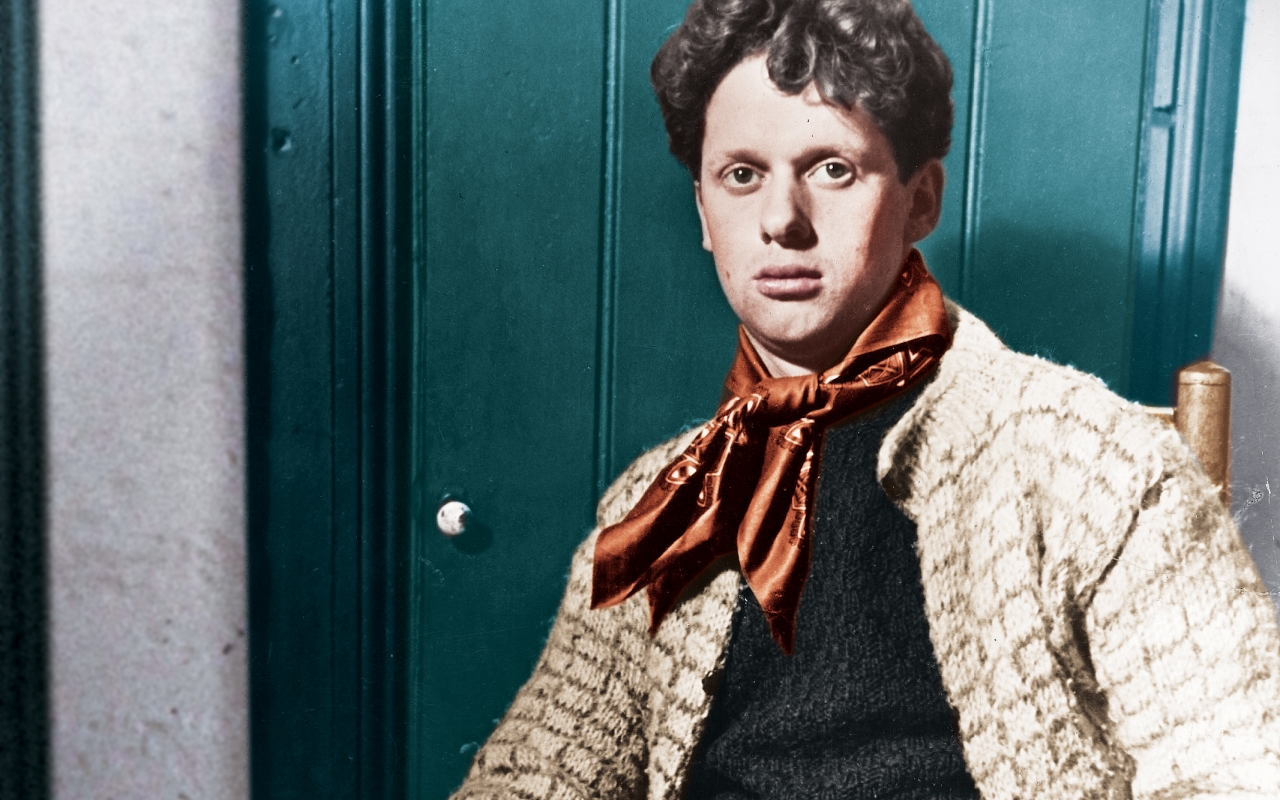
Easter Poem: This Bread I Break by Dylan Thomas

This Bread I Break

This bread I break was once the oat,
This wine upon a foreign tree
Plunged in its fruit;
Man in the day or wine at night
Laid the crops low, broke the grape’s joy.

Once in this time wine the summer blood
Knocked in the flesh that decked the vine,
Once in this bread
The oat was merry in the wind;
Man broke the sun, pulled the wind down.

This flesh you break, this blood you let
Make desolation in the vein,
Were oat and grape
Born of the sensual root and sap;
My wine you drink, my bread you snap.

Dylan Thomas


Making breakfast for one: one’s not half two

It is one of those days unusually when I am making breakfast just for myself. e.e. cummings came to mind.


one’s not half two. It’s two are halves of one:

by e.e. cummings

one’s not half two. It’s two are halves of one:
which halves reintegrating,shall occur
no death and any quantity;but than
all numerable mosts the actual more

minds ignorant of stern miraculous
this every truth-beware of heartless them
(given the scalpel,they dissect a kiss;
or,sold the reason,they undream a dream)

one is the song which fiends and angels sing:
all murdering lies by mortals told make two.
Let liars wilt,repaying life they’re loaned;
we(by a gift called dying born)must grow

deep in dark least ourselves remembering
love only rides his year.
All lose,whole find

Walt Whitman Visits the White House

The White House would benefit from many visitors. The founders of the republic, particularly the authors of the Federalist Papers. Abraham Lincoln would be a welcome presence. Above all, the current White House needs poetry, most especially the poet who most embodied, ahead of his time, the spirit of the ages taking form in the present American ideal.

As it happens, Walt Whitman recently visited the White House. This is how it went.

DJT: Who the hell are you? How did you get in here?

WW: I am large, I contain multitudes. I am Walt Whitman. I live here in Washington and work for the Attorney General. I am also a poet.

DJT: You work for Barr? (picks up phone) Get me Barr. Bill, there’s some homeless guy here who says he works for you.

WW: Let me read you a poem about an election.

DJT (hangs up phone): About my election?

WW: It is called Election Day: November 1884

If I should need to name, O Western World, your powerfulest scene and show,
‘Twould not be you, Niagara—nor you, ye limitless prairies—nor your huge rifts of canyons, Colorado,
Nor you, Yosemite—nor Yellowstone, with all its spasmic geyser-loops ascending to the skies, appearing and disappearing,
Nor Oregon’s white cones—nor Huron’s belt of mighty lakes—nor Mississippi’s stream:
—This seething hemisphere’s humanity, as now, I’d name—the still small voice vibrating—America’s choosing day,
(The heart of it not in the chosen—the act itself the main, the quadriennial choosing,)
The stretch of North and South arous’d—sea-board and inland—Texas to Maine—the Prairie States—Vermont, Virginia, California,
The final ballot-shower from East to West—the paradox and conflict,
The countless snow-flakes falling—(a swordless conflict,
Yet more than all Rome’s wars of old, or modern Napoleon’s:)
the peaceful choice of all,
Or good or ill humanity—welcoming the darker odds, the dross:
—Foams and ferments the wine? it serves to purify—while the
heart pants, life glows:
These stormy gusts and winds waft precious ships,
Swell’d Washington’s, Jefferson’s, Lincoln’s sails.

DJT: Yeah, Mississippi, Texas, Virginia, they’re going to swell my sails! My heart pants, I get it. Napoleon, I like the sound of that. I’m going to tweet about you right now. How do you like Wild Walt?

WW: Another poem:

To the States or any one of them, or any city of the States, Resist
much, obey little,
Once unquestioning obedience, once fully enslaved,
Once fully enslaved, no nation, state, city of this earth, ever
afterward resumes its liberty.

DJT: Resist much, obey little!? (picks up phone again) Get this bum out of here!

WW: I’ll be back. Be best.

I. Can’t. Say.

I. Can’t. Say.

ask me today
where I am from
I
can’t
say
ask me tomorrow
I
will
tell
you
I am not from where

© Bob Schwartz

Note: There is a cold morning rain in the desert. Waiting long enough there will be cloudless sun and scorching heat.

The Second Coming at 100: “Things fall apart; the centre cannot hold”

It has been 100 years since William Butler Yeats wrote his poem The Second Coming, in the wake of World War I and in the early days of the Irish War of Independence. It is an unsurpassed observation of a descent into societal darkness, as order passes and chaos reigns.

It is no wonder that its phrases are some of the most borrowed by writers over the past century: “Things fall apart; the centre cannot hold”; “The best lack all conviction, while the worst/Are full of passionate intensity”; “what rough beast, its hour come round at last,/Slouches towards Bethlehem to be born?”. Once we have read the poem, the lines force themselves on us when our lesser attempts to describe the most dire circumstances fail.

The Second Coming

Turning and turning in the widening gyre
The falcon cannot hear the falconer;
Things fall apart; the centre cannot hold;
Mere anarchy is loosed upon the world,
The blood-dimmed tide is loosed, and everywhere
The ceremony of innocence is drowned;
The best lack all conviction, while the worst
Are full of passionate intensity.

Surely some revelation is at hand;
Surely the Second Coming is at hand.
The Second Coming! Hardly are those words out
When a vast image out of Spiritus Mundi
Troubles my sight: somewhere in sands of the desert
A shape with lion body and the head of a man,
A gaze blank and pitiless as the sun,
Is moving its slow thighs, while all about it
Reel shadows of the indignant desert birds.
The darkness drops again; but now I know
That twenty centuries of stony sleep
Were vexed to nightmare by a rocking cradle,
And what rough beast, its hour come round at last,
Slouches towards Bethlehem to be born?

William Butler Yeats (1919)

Thunder and Lightning, Fire and Ice

The wheel is turning and you can’t slow down
You can’t let go and you can’t hold on
You can’t go back and you can’t stand still
If the thunder don’t get you then the lightning will
Jerry Garcia, The Wheel

Some say the world will end in fire,
Some say in ice.
From what I’ve tasted of desire
I hold with those who favor fire.
But if it had to perish twice,
I think I know enough of hate
To say that for destruction ice
Is also great
And would suffice.
Robert Frost, Fire and Ice

Raindrops

Raindrops

Is there pattern
to raindrops
splashing in the puddle or
do they fall at random?
The birds sing:
there is they do.

© Bob Schwartz