Bob Schwartz

Category: Philosophy

The Age of Enlightenment Has Left the Building (At Least in America)

Age of Enlightenment: an intellectual and scientific movement of 18th century Europe which was characterized by a rational and scientific approach to religious, social, political, and economic issues.

It was great while it lasted. At times difficult, but fun too. The Age of Enlightenment gave us, for example, the American Revolution. Helpful.

If more evidence is needed that the “rational and scientific approach” is going or gone, here is the new EPA Administrator Scott Pruitt on the role of carbon dioxide in global warming:

“There’s tremendous disagreement about the degree of impact…So, no, I would not agree that carbon dioxide is a primary contributor to the global warming that we see.”

The United Nations Intergovernmental Panel on Climate Change disagrees with him. Almost all scientists disagree with him. The current EPA website disagrees with him (though that will be fixed). Many junior high school students disagree with him (though our new Secretary of Education should be able to fix that too).

The Age of Enlightenment doesn’t have a special holiday, because it is already embedded in so much we do (see, for example, the Fourth of July). But maybe we should at least recognize its passing. We’ll miss it, more than we know.

Thoreau: Life Without Principle

thoreau

Please read a little Henry David Thoreau if you have the chance. Maybe no American writer has made a plainer case for living a life of truth, a life of principle, a life that matters.

You may know of his most famous works.

There is Walden, about his choosing to live for a time in the woods, within nature and by himself (“I went to the woods because I wished to live deliberately, to front only the essential facts of life, and see if I could not learn what it had to teach, and not, when I came to die, discover that I had not lived.”) There is Civil Disobedience, about determining how, when and why defying the powers that be is a conscientious imperative.

There is much more Thoreau beyond these (see Walden and Other Writings). Following are some brief excerpts from Life Without Principle, published posthumously in the Atlantic Monthly in 1863.


In proportion as our inward life fails, we go more constantly and desperately to the post-office. You may depend on it, that the poor fellow who walks away with the greatest number of letters proud of his extensive correspondence has not heard from himself this long while…. [Note: If you substitute “greatest number of followers” for “greatest number of letters”, you will see just how timely and relevant this is today.]

I am astonished to observe how willing men are to lumber their minds with such rubbish,—to permit idle rumors and incidents of the most insignificant kind to intrude on ground which should be sacred to thought. Shall the mind be a public arena, where the affairs of the street and the gossip of the tea-table chiefly are discussed? Or shall it be a quarter of heaven itself….

Just so hollow and ineffectual, for the most part, is our ordinary conversation. Surface meets surface. When our life ceases to be inward and private, conversation degenerates into mere gossip. We rarely meet a man who can tell us any news which he has not read in a newspaper, or been told by his neighbor; and, for the most part, the only difference between us and our fellow is that he has seen the newspaper, or been out to tea, and we have not….

We may well be ashamed to tell what things we have read or heard in our day. I do not know why my news should be so trivial,—considering what one’s dreams and expectations are, why the developments should be so paltry. The news we hear, for the most part, is not news to our genius. It is the stalest repetition….

Really to see the sun rise or go down every day, so to relate ourselves to a universal fact, would preserve us sane forever. Nations! What are nations? Tartars, and Huns, and Chinamen! Like insects, they swarm. The historian strives in vain to make them memorable. It is for want of a man that there are so many men. It is individuals that populate the world….

It requires more than a day’s devotion to know and to possess the wealth of a day.

After the Election: No Path Without Guidance

Feelings are magnified about the election right now. They will remain strong for a while, and may get more pronounced as the actuality sets in.

These strong feelings can be a motivator in trying to move things in a direction you view as better. You will think about what that direction is, and you will think about what actions can contribute. This can be all good.

But strong feelings and well-meaning thought and action can be ineffective, counterproductive, and even harmful, if we don’t seek guidance. However bad you feel, however smart you are, you need to look outside yourself for that guidance.

The kind and source of guidance depends on which voices and principles have served you in the past. And if you haven’t spent much time with such voices and principles, you might take this opportunity to try it.

This doesn’t at all mean just religious, spiritual or philosophical voices to listen to. In a political situation, you will find plenty of great political thinkers, some ancient, some contemporary, who offer sound and principled advice.

The point is not to listen just to yourself, and not just to individuals in your circle of like-minded people, who may be just as passionately unsettled as you. You may have good ideas and approaches, they may have good ideas and approaches. But hard as it is to believe right now, there is nothing new under the sun, even in politics and governing, and people have been refining their thinking about this not just for decades or centuries, but for thousands of years.

When it seems dark, politically or personally, we may think we can find a path solely by our own lights. Almost always, we are wrong.

Making America Crazy Again: How to Survive and Thrive After the Election

make-america-crazy-again

You don’t want to hear this, but things may get crazier after the election.

If Hillary Clinton wins, she will be the least liked, least trusted President to ever take office. All the assumptions and suppositions about how the Clintons’ good intentions have been mixed with and compromised by expedient centrism, ambition, greed, secrecy and overall ugliness have been confirmed.

Progressives who tried an insurgency within the Democratic Party will learn that if they have a place at the table, it will be set with modest meals, if not mere crumbs.

Republicans will be gleeful at the prospect of obstructing everything and unwinding anything, without much of a plan of their own. Their glee is misplaced, since there is no Republican Party left, not one recognizable as such. Instead, it is merely the shaky platform for another set of would-be Presidents to start jockeying for position as the candidate in 2020.

And then of course there’s Donald Trump, whose hat should have first read Make The GOP Crazy, then Make The Election Crazy, and finally Make America Crazy Again. He is good at each of these. There is no doubt, whatever form his public pathology takes, he will help make 2017 a year we will not forget, just as 2016 is an election we will not forget, no matter how we try.

And so, some suggestions for getting on with our lives, not just surviving, but thriving, after the election.

  1. Religion, spirituality, philosophy, or something like them. Principled views of reality and the world can be very helpful. There is nothing inherently wrong with making stuff up as we go along. Except that when the wind blows, which it does pretty much all the time, and sometimes with hurricane force, we might want to have something to keep us steady.
  1. Media diet. When I see the ad for that cheeseburger with six strips of crisp bacon on top, something in me wants one. Except I don’t eat cheeseburgers any more, don’t eat bacon anymore, and if I did, I don’t think it would be in that particular configuration, since I plan to live a long and healthy life. The news media, even the supposedly respectable ones, are mostly offering us the equivalent of 1-pound burgers with an entire package of bacon on top, hour after hour. If you don’t want to be crazy unhealthy, please watch what you eat.
  1. Learning. You don’t have to learn about anything or anyone. You can learn exactly as much as you need to get on with your life and through the day. If you do choose to be interested in something, including public affairs, do try to learn and discern. We have spent the past year in a storm of misinformation and disinformation, lies and nonsense. That is not going to stop after the election. In fact, it could get worse, hard as that is to believe.
  1. Silence.

Trump as Political Philosopher: The Conceptual Endorsement

hegel

From The Hill:

In an interview with Florida’s WJXT-TV, Trump touted his endorsement from the national Fraternal Order of Police as well as other groups and organizations.

“We had a fantastic meeting with the folks, [a] pretty large group of folks, and they’re very upset about the way they’re being treated, and I understand that fully,” Trump said.

“And they’ve endorsed me, endorsed me fully. I’ve been endorsed by virtually every police department and police group. And I’ve been endorsed largely, conceptually at least, by the military and by the vets,” he continued. (emphasis added)

It’s time to stop talking about Donald Trump as a candidate. Now let us consider him as one of the most creative political thinkers of this or any era.

There are so many examples of how he has turned conventional political thinking inside out and upside down. It is sometimes hard to tell whether he does it out of cleverness or by accident and ignorance. Either way, we continue to be exposed to one novel thought after another.

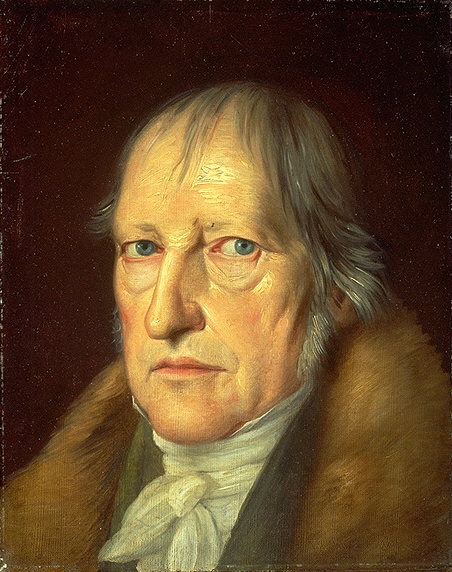
The latest is this idea of the “conceptual” endorsement. As with many advanced political philosophers—Hegel and others come to mind—it is sometimes hard to tell exactly what he means. He knows, but even he struggles to make it clear to lesser minds like ours.

So we now have some sort of endorsement that isn’t “actual” in the conventional sense. Instead, these military folks have “endorsed” him without technically “endorsing” him. Instead, they embrace a “concept” that endorses Trump, if concepts could endorse a candidate. That might totally misconstrue what Trump meant. But no matter what Trump meant, the idea of conceptual endorsement, as with so many innovations he has given us, will live on long after this election is over.

Are we all happy and enlightened now?

Political Insanity Defense

People have watched enough criminal trials on TV to know about the insanity defense—or actually defenses, since it differs state to state:

THE INSANITY DEFENSE

  • What are the legal standards for insanity?

Each state, and the District of Columbia, has its own statute setting out the standard for determining whether a defendant was legally insane, and therefore not responsible, at the time his crime was committed. In general, the standards fall into two categories.

About half of the states follow the “M’Naughten” rule, based on the 1843 British case of Daniel M’Naughten, a deranged woodcutter who attempted to assassinate the prime minister. He was acquitted, and the resulting standard is still used in 26 states in the U.S.: A defendant may be found not guilty by reason of insanity if “at the time of committing the act, he was laboring under such a defect of reason from disease of the mind as not to know the nature and quality of the act he was doing, or if he did know it, that he did not know what he was doing was wrong.” (emphasis added) This test is also commonly referred to as the “right/wrong” test.

Twenty-two jurisdictions use some variation of the Model Standard set out by the American Law Institute (A.L.I.) in 1962. Under the A.L.I. rule, a defendant is not held criminally responsible “if at the time of his conduct as a result of mental disease or defect he lacks substantial capacity either to appreciate the criminality (wrongfulness) of his conduct or to conform his conduct to the requirements of law.” (emphasis added) The A.L.I. rule is generally considered to be less restrictive than the M’Naughten rule.

Some states that use the M’Naughten rule have modified it to include a provision for a defendant suffering under “an irresistible impulse” which prevents him from being able to stop himself from committing an act that he knows is wrong.

Three states — Montana, Idaho, and Utah — do not allow the insanity defense at all.

PBS Frontline: A Crime of Insanity

What if—and I know this is far-fetched and fantastical—some political candidate was suffering from what some of the states call “mental disease or defect”? Could that candidate claim no responsibility for behavior on or off the campaign trail? No responsibility for behavior in office, if by some chance elected?

Such a candidate might claim—and again, far-fetched and fantastical—that ISIS will be taking over the United States if he is not elected. That Speaker of the House Paul Ryan is part of a “secret deal” and a vast conspiracy to defeat him. That he, the candidate, is a savior, and that he and he alone in all the world is capable of saving the nation.

This is fertile territory for legal, psychological and political scholars, as far-fetched and fantastical as it may be.

Poem, Joke, Etc.: Confused Birds

Confused Birds

These birds are confused
Not angry
Wondering where
The cold winds are.
Exulting in
Extended summer.
What’s time to a bird
Or me?

The line “What’s time to a bird” is borrowed from a favorite joke with a surprisingly philosophical punch line. It goes something like this:

A guy is driving along a country road. He sees a farmer under an oak tree, holding up a pig so the pig can eat acorns. The guy stops. “You know,” the guy says, “it would be a lot easier and take a lot less time if you just shook the tree and let the acorns fall to the ground.” “Maybe,” says the farmer, “but what’s time to a pig?”

More about birds:

In the sky a bird was heard to cry.
Misty morning whisperings and gentle stirring sounds
Belied a deathly silence that lay all around.
Hear the lark and harken to the barking of the dog fox gone to ground.
See the splashing of the kingfisher flashing to the water.
Grantchester Meadow, Pink Floyd

“Well, then, just what does it mean that everybody has the Buddha Mind?…in the course of listening to my talk, if a dog barks outside the temple, you recognize it as the voice of a dog; if a crow caws, you know it’s a crow…you didn’t come with any preconceived idea that if, while I was talking, there were sounds of dogs and birds, children or grown-ups somewhere outside, you were deliberately going to try to hear them. Yet here in the meeting you recognize the noises of dogs and crows outside and the sounds of people talking… the fact that you recognize these things you didn’t expect to see or hear shows you’re seeing and hearing with the Unborn Buddha Mind.”
From Bankei Zen: Translations from the Record of Bankei

Zen and Intellectualism: Sit Down and Dance

By inclination and training, I can do some pretty fancy intellectual dancing. There’s a lot of stuff I can understand and learn to understand, a lot of stuff I can talk about and write about in complex and sometimes coherent ways.

Yet I’ve cultivated a view that doesn’t exactly see all that as real, a view that puts every bit of that in perspective.

I was just reading a summary of the development of literary theory, from ancient times to modern. Structuralism. Formalism. Deconstruction. Poststructuralism. On and on. Like all of the sophisticated intellectual arts, this requires real work to understand what analysts and proponents are up to, and even more to get into the conversation and make a contribution. In the end, the aim of practitioners is not only to fill journals and books with these thoughts, but to affect and improve the way we live. Sometimes, they succeed.

Yet there is a part of me that is certain that no matter how cogent and valuable this is, by its nature it misses the target. I am so certain because I am certain of what the nature of that target is, and it doesn’t look, sound or feel like that.

If you think I am suggesting an end to all that as futile and pointless, I am not. There is no point in dancing, but many people love it, and engage in it spontaneously, as soon as they hear the beat. The only suggestion is to consider gaining the perspective that poststrucuralism is poststructuralism, dancing is dancing, and not those are not those.

My intellect loves to dance. Especially when I’m sitting down.

Reason and spirit, wisdom and compassion

Reason

Reason
as solid
as a rock.
Clinging to it
in the middle
of the ocean.

When I look to friends, colleagues and mentors who have taught and influenced me, I see in many of them a happy and helpful balance of reason and spirit. I thank them, and recommend having such people in your life.

This may be what I might want others to say of me, that I neither abandoned reason nor clung to it too tightly.

The Tao of No Place Like Home

These words from Verse 80 of the Tao Te Ching could come from the Wizard of Oz:

let there be another state so near
people hear its dogs and chickens
but live out their lives
without making a visit

In other words, there is no place like home.

The force of exploration, discovery and progress is strong with us. This post, for example, is drafted on an amazing digital device, edited on another amazing digital device, and published on an amazing global network. Moving house and traveling are easier and more convenient than ever. So many modern tools. So big a world.

Verse 80 proposes a different view. Labor-saving tools not used. Boats and carts not ridden. Knots used to communicate (a pre-writing system). Pleased and content with clothing and goods. You may think that this is regress, the opposite of progress. But is it? In your heart, is that what you believe?

Imagine a small state with a small population
let there be labor-saving tools
that aren’t used
let people consider death
and not move far
let there be boats and carts
but no reason to ride them
let there be armor and weapons
but no reason to employ them
let people return to the use of knots
and be satisfied with their food
and pleased with their clothing
and content with their homes
and happy with their customs
let there be another state so near
people hear its dogs and chickens
but live out their lives
without making a visit

Lao-tzu’s Taoteching, translated by Red Pine