Bob Schwartz

Category: Peace

The Gates Book and the Gates Speeches
Duty
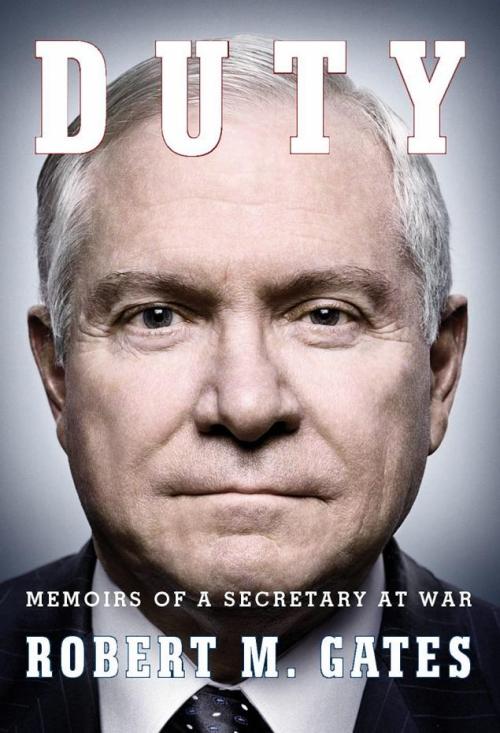
Former Secretary of Defense Robert M. Gates is about to release a memoir of his tenure under Presidents Bush and Obama. Provocative advance excerpts from Duty are now being released, and these explosive devices are anything but improvised.

Every news outlet, pundit and politician is already busy making points about President Obama, Vice President Biden, former Secretary of State Hillary Clinton and others, based on comments clipped from these excerpts, rather than having read the whole book. Even out of context, it is clear that Gates has formed some definite opinions based on working for and with these American leaders. That is anyone’s privilege, but particularly that of a man who spent forty-five years in laudable public service, much of it at the highest levels of government.

As always, though, opinion and criticism is a matter of perspective, that is, where the critic stands underlies what a critic sees and says.

You can read all the speeches that Gates delivered as Secretary of Defense. This is guaranteed not to be as titillating as reading or hearing about the “best parts” of Duty, but it might give you additional insight that will make the context of the book clearer.

Here, for example, are excerpts from remarks he made to the Heritage Foundation on May 13, 2008, when he was serving under President George W. Bush. (You can read the entire speech here) At that point, the Iraq war was five years old, only halfway to its conclusion. At that point, he had been Secretary of Defense for two years, and from that point, he would remain in that position under President Obama until July 2011.

But there is a more fundamental point that I will close with – and again, historical perspective is important. It is impossible to separate discussions of the “broken” Army following Vietnam – a conscription army – from the ultimate result of that conflict. At a congressional hearing last year, General Jack Keane, former Vice Chief of Staff of the Army, recounted the profound damage done to the Service’s “fiber and soul” by the reality of defeat in that war.

The risk of overextending the Army is real. But I believe the risk is far greater – to that institution, as well as to our country – if we were to fail in Iraq. That is the war we are in. That is the war we must win.

There it is, the context: Iraq was “the war we must win.” Gates’ insights into military matters is often brilliant and sensible, informed by his intelligence, experience and education. But on this point he candidly reveals a premise that for some colors everything else he offers. We must win Iraq because the failure to win would “break” the military the way that Vietnam did.

We did not win in Iraq, but technically, we did not lose. That current events in Iraq point to some devolution doesn’t really settle the question. That some U.S. Senators are calling for us to return to Iraq to avoid that loss or at least to avoid the appearance of futility is a partial reflection of exactly what Gates said.

We know that Gates’ personal critiques are based on close working relationships and observations. We also know, or should recognize, that those critiques are grounded in a worldview that others may not, very legitimately, share. If for Gates one of the measuring sticks is whether someone believes that Iraq had to be won, that measure may be skewed by genuine differences in informed opinion. One opinion is that as valorous as the service and sacrifice was, Iraq was a mistake, to be abandoned as prudently as possible; others might now say the same about Afghanistan. What Gates has to say about our leaders is certainly worth listening to, provided we pay equal attention to the mindset of the speaker.

Buddha’s Enlightenment Day

Buddha Comic Cover
Known as Bodhi Day, the Buddha’s day of enlightenment is called Rohatsu in Japan and is celebrated there on December 8th.

Here is a page from a Buddha comic book illustrating the event. It is published by the Indian company Amar Chitra Katha, which publishes a number of fascinating religious comic books—not only about Hinduism and Buddhism, but about Sikhimism, Zorostrianism and others.

Buddha Comic Enlightenment

In stillness, mind and object merge in realization and go beyond enlightenment. Thus, in the state of receptive samadhi, without disturbing its quality or moving a single particle, you engage the vast buddha activity, the extremely profound and subtle buddha transformation.

Grasses, trees, and lands that are embraced by this way of transformation together radiate a great light and endlessly expound the inconceivable, profound dharma. Grass, trees, and walls bring forth the teaching to all beings, including common people and sages; all beings in response extend this dharma to grass, trees, and walls. Thus, the realm of self-awakening and awakening others invariably holds the mark of realization with nothing lacking, and realization itself is manifested without ceasing for a moment.

This being so, the zazen of even one person at one moment imperceptibly accords with all things and fully resonates through all time. Thus, in the past, future, and present of the limitless universe, this zazen carries on the buddha’s transformation endlessly and timelessly. Each moment of zazen is equally the wholeness of practice, equally the wholeness of realization.

This is so not only while sitting; like a hammer striking emptiness, before and after its exquisite sound permeates everywhere. How can it be limited to this time and space? Myriad beings all manifest original practice, original face; it is impossible to measure. Even if all buddhas of the ten directions, as innumerable as the sands of the Ganges, exert their strength and with the buddha wisdom try to measure the merit of one person’s zazen, they will not be able to fully comprehend it.

Dogen Zenji, On the Endeavor of the Way
Treasury of the True Dharma Eye

Yellowcake and Red Line: The Colors of Casus Belli

Yellowcake
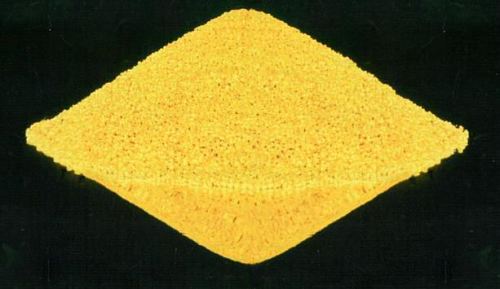
You may not remember yellowcake. Not the kind you eat. The kind that is uranium, the stuff of nuclear fission, the stuff of weapons of mass destruction, the stuff that was supposed to be in Iraq but was never found there.

Colors seem to be troublesome in talking about reasons for going to war. So maybe President Obama should have picked a different metaphor than red line. Line in the sand comes to mind. Of course, lines in the sand have a different quality. They are harder to see, and are subject to being erased by wind or water, or by a quick brush of the foot.

Maybe better to stay away from colors and lines altogether, and instead do the much harder, painful and less appealing work, leaders and citizens, of talking honestly about our strengths and limitations, the world we have and the one we want to have, and how to practically and ideally get from here to there. That would be a nice grownup change from childish colors and macho ultimata.

What Would Truman Do?

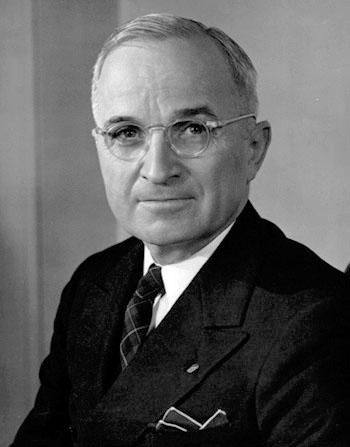
Harry Truman
Harry Truman is maybe the most interesting American President of the twentieth century, and maybe the most significant.

He held a power that no one had held in human history and he took the decision to use it. He had no precedent to guide him—except maybe God in the Bible. He dropped atomic bombs on Hiroshima and Nagasaki. From that point forward, everyone who uses nuclear weapons will be the second or third to do it.

He is also the only President in the twentieth century without a college degree, and one of the relatively few in American history. Grover Cleveland was the last before him. But there are some before that who did manage to stand out without college, such as George Washington and Abraham Lincoln.

Obama shares some things with Truman, and on other scores couldn’t be more unlike. Truman was an unabashed though pragmatic reformer: he used executive power to desegregate the military, but his Fair Deal liberal agenda failed in the face of a recalcitrant Republican Congress. Truman’s second term was the model for all other second term disasters, marked by a war that was both unpopular and unsuccessful and by a President whose effectiveness was a constant question.

Unlike Obama, Truman was not a spell-binding orator or a scholar. He had come up through politics and to the Senate the old back room way, and his ascension to the 1944 presidential ticket was a matter of political manipulation and happenstance. The legendary 1948 election pitted him against the dapper, smooth talking, hard-nosed, well-educated federal prosecutor and New York Governor. It was considered no contest for Thomas E. Dewey. Truman won.

The reasons that Truman has risen to the top ten on nearly all lists of great American Presidents (he is number 5 on a few) are many. This puts him in the range of both Roosevelts, TR and FDR, both of whom went to Harvard, both of them charismatic patricians with colorful histories and silver tongues. Among Truman’s gifts, the one most associated with him was a plain-spoken decisiveness in word and deed, even if the decision turned out troublesome or wrong.

There were reasons to like Truman at the time of his presidency, and a number of reasons not to. But there was a sense—even those who were his enemies at the time acknowledge it and historians have come to treasure it—that underneath it all was a man who had fought in a world war (only a few Presidents have), a man who had lived a modest life, a man who knew how to practice politics, a man who could surprise by analyzing deeply, a man who faced with the prospect of killing hundreds of thousands of people in a moment gave the order to do it.

Plain speaking. Decisive action. Truman was not the ideal President because there is no such thing. But at every critical juncture, it can’t hurt to ask: what would Truman do?

Syria Indecision: Give Them A (Small) Break

Decision Tree
Hard cases make bad law.

This is a maxim of the legal process. Roughly, it means that cases with lots of moving parts, with lots of collateral considerations, with no clear and straight path to resolution, produce rulings that are unsettling and unsatisfactory and, worse, have limited or counterproductive effect down the road.

Maybe the corollary is that hard foreign cases make bad foreign policy.

The indecision of Congressfolk is usually vexing, as so many of them claim to be weighing the factors, all the while putting their finger in the air to feel which way the wind blows.

This decision on attacking Syria seems to be different. There are certainly plenty of politicians who are trying to look thoughtful as they assess potential electoral damage. But this situation is so complex that for the moment, despite the usual frustration as a voter and citizen, a number of the Senators and Representatives deserve a little bit of a break. A lot of them are understandably having real trouble figuring out what to do—as are many of us.

The complexity isn’t just the result of a force of nature, and isn’t even due entirely to Assad. President Obama may have handled Syria with some degree of insight, intelligence and integrity, but he has made a difficult situation much harder. It is now widely agreed that announcing a chemical weapon “red line” long ago without a clear plan—public or at least private—to respond if and when it was crossed was a mistake. This contingency plan did not have to be tactically certain: how much evidence to need, which particular sites would be targeted. But the much bigger strategic issues—objectives and the dizzying range of possible consequences, good and bad—should have been vetted in all sorts of venues, including Congress.

That didn’t happen. So in short order, we are discussing the international conventions on chemical warfare, the forensics of discovering the use of chemical weapons, our ability to execute a limited strike, all the more or less likely impacts of a limited strike, the interpretation of the history of all our recent wars, comparison of our current situation to all those wars, and even the question of what exactly war is. So we have the Chairman of the Joint Chiefs of Staff telling a House committee this week that an air strike such as the one contemplated would be an act of war, while Secretary of State John Kerry, sitting right beside him, begged to differ: “We don’t believe we are going to war, in the classic sense of taking American troops and America to war.”

Americans are also being asked to learn more about a country and civil conflict that was often regarded as a video clip, sound bite or talking point—including discovering the shocking news that two million people are currently refugees from Syria (including one million children), leaving their country at a rate of one million people every six months.

Among those more or less likely impacts, there is a possibility that even this small action could precipitate wider and deeper crises, ones that might make our previous (mis)adventures look relatively small. We can’t be sure, of course, of this or just about anything else right now.

That’s a lot to discuss and digest. But we only have a few weeks, or so we are told. So, while Congress may be the most disliked institution in the country, seemingly stuffed with people who are uncertain about the proper ratio of self-interest to national interest, on this they are going to get a brief pass while they really do contemplate a genuinely serious and complicated situation. But after that break, when confusion is no longer an option, because deciding is the reason they get the honor and the big bucks, we expect them to vote conscientiously and to explain their vote clearly and unequivocally.

One more small matter: If any of them do vote “Present” in the final roll call on this, they should be expected to fall on their sword and offer their resignation forthwith. With only an 11% approval rate (and dropping), Congress doesn’t have room for any more of that sort of mushy politics.

Rosh Hashanah and Syria

UNHRC

Politics and prayer. There will be plenty of both during these Jewish High Holy Days.

Rosh Hashanah, the New Year, begins this evening. Please consider a donation to the UN Refugee Agency (UNHCR) to help the more than two million refugees who have so far fled Syria.

Ktivah v’chatima tova. May you be inscribed and sealed for a good year.