Bob Schwartz

Category: Music

Two Thoughts on the Passion: The Buddha and Bob Dylan


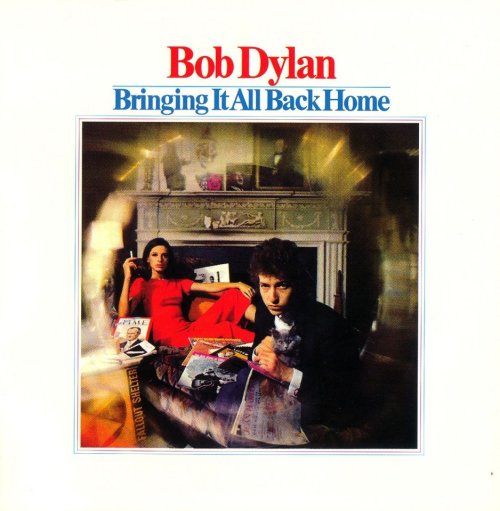
Bringing It All Back Home

“He not busy being born is busy dying.”

For anyone, Christian or not, the story of Easter is remarkable. Story, that is, not necessarily treated either as a story told or as a history chronicled.

Two of a thousand thoughts.

1.

The Buddhist conception of rebirth is complicated, beyond my simple and simplest understanding. So consider this just a summary and a thought about something of nearly infinite scope.

The realization that we are bound to grow old and die breaks the spell of infatuation cast over us by sensual pleasures, wealth, and power. It dispels the mist of confusion and motivates us to take fresh stock of our purposes in life. We may not be ready to give up family and possessions for a life of homeless wandering and solitary meditation, but this is not an option the Buddha generally expects of his householder disciples. Rather, as we saw above, the first lesson he draws from the fact that our lives end in old age and death is an ethical one interwoven with the twin principles of kamma and rebirth. The law of kamma stipulates that our unwholesome and wholesome actions have consequences extending far beyond this present life: unwholesome actions lead to rebirth in states of misery and bring future pain and suffering; wholesome actions lead to a pleasant rebirth and bring future well-being and happiness. Since we have to grow old and die, we should be constantly aware that any present prosperity we might enjoy is merely temporary. We can enjoy it only as long as we are young and healthy; and when we die, our newly acquired kamma will gain the opportunity to ripen and bring forth its own results. We must then reap the due fruits of our deeds. With an eye to our long-term future welfare, we should scrupulously avoid evil deeds that result in suffering and diligently engage in wholesome deeds that generate happiness here and in future lives.

In the Buddha’s Words: An Anthology of Discourses from the Pali Canon

My own take is that these rebirths are not a succession of lives, in the sense of multiple spans, but within this one life, this span of decades. We are constantly offered the opportunity to be new, based on who we have been but also on who we will be—who we will ourselves through thoughts and actions to be. If this sounds somewhat like the premise of Christian rebirth—of being born again—it might be.

(Note: To add yet another layer, Zen Master Bankei   talked about the unborn, that is, the unborn Buddha mind. When we realize that there is a reality that is there even before birth, we are marvelously illuminated. Not being born, we are not even subject to rebirth. But that’s another story.)

2.

Thinking about the story of the death and resurrection of Jesus, a soundtrack came to mind: Bob Dylan’s song It’s Alright, Ma (I’m Only Bleeding), from the album Bringing It All Back Home (1965).

I looked to see whether Dylan had ever talked about a connection between the song and the Bible story. At first glance, it looks like not.

Maybe I’m just reaching, the way exegetes sometimes do, but it seems clear to me. If you’re not familiar with the song, please read the lyrics (below) and listen to the track. As a poem, it is up there with the classics of modern beat poetry, such as Allen Ginsberg’s Howl. It is that good.

The song begins with a son singing to his mother about a darkness at noon. He obviously is, or considers himself, some kind of prophet, railing against the status quo and the powers that be. He acknowledges that this is dangerous. He finishes by imagining his execution: “And if my thought-dreams could be seen/They’d probably put my head in a guillotine.”

All along, he assures the mother that everything is alright:

It’s alright, Ma, I’m only bleeding…
It’s alright, Ma, I’m only sighing…
And it’s alright, Ma, I can make it…
I got nothing, Ma, to live up to…
But it’s alright, Ma, if I can’t please him…
But it’s alright, Ma, it’s life, and life only


It’s Alright, Ma (I’m Only Bleeding)
Written by Bob Dylan

Darkness at the break of noon
Shadows even the silver spoon
The handmade blade, the child’s balloon
Eclipses both the sun and moon
To understand you know too soon
There is no sense in trying

Pointed threats, they bluff with scorn
Suicide remarks are torn
From the fool’s gold mouthpiece the hollow horn
Plays wasted words, proves to warn
That he not busy being born is busy dying

Temptation’s page flies out the door
You follow, find yourself at war
Watch waterfalls of pity roar
You feel to moan but unlike before
You discover that you’d just be one more
Person crying

So don’t fear if you hear
A foreign sound to your ear
It’s alright, Ma, I’m only sighing

As some warn victory, some downfall
Private reasons great or small
Can be seen in the eyes of those that call
To make all that should be killed to crawl
While others say don’t hate nothing at all
Except hatred

Disillusioned words like bullets bark
As human gods aim for their mark
Make everything from toy guns that spark
To flesh-colored Christs that glow in the dark
It’s easy to see without looking too far
That not much is really sacred

While preachers preach of evil fates
Teachers teach that knowledge waits
Can lead to hundred-dollar plates
Goodness hides behind its gates
But even the president of the United States
Sometimes must have to stand naked

An’ though the rules of the road have been lodged
It’s only people’s games that you got to dodge
And it’s alright, Ma, I can make it

Advertising signs they con
You into thinking you’re the one
That can do what’s never been done
That can win what’s never been won
Meantime life outside goes on
All around you

You lose yourself, you reappear
You suddenly find you got nothing to fear
Alone you stand with nobody near
When a trembling distant voice, unclear
Startles your sleeping ears to hear
That somebody thinks they really found you

A question in your nerves is lit
Yet you know there is no answer fit
To satisfy, insure you not to quit
To keep it in your mind and not forget
That it is not he or she or them or it
That you belong to

Although the masters make the rules
For the wise men and the fools
I got nothing, Ma, to live up to

For them that must obey authority
That they do not respect in any degree
Who despise their jobs, their destinies
Speak jealously of them that are free
Cultivate their flowers to be
Nothing more than something they invest in

While some on principles baptized
To strict party platform ties
Social clubs in drag disguise
Outsiders they can freely criticize
Tell nothing except who to idolize
And then say God bless him

While one who sings with his tongue on fire
Gargles in the rat race choir
Bent out of shape from society’s pliers
Cares not to come up any higher
But rather get you down in the hole
That he’s in

But I mean no harm nor put fault
On anyone that lives in a vault
But it’s alright, Ma, if I can’t please him

Old lady judges watch people in pairs
Limited in sex, they dare
To push fake morals, insult and stare
While money doesn’t talk, it swears
Obscenity, who really cares
Propaganda, all is phony

While them that defend what they cannot see
With a killer’s pride, security
It blows the minds most bitterly
For them that think death’s honesty
Won’t fall upon them naturally
Life sometimes must get lonely

My eyes collide head-on with stuffed
Graveyards, false gods, I scuff
At pettiness which plays so rough
Walk upside-down inside handcuffs
Kick my legs to crash it off
Say okay, I have had enough, what else can you show me?

And if my thought-dreams could be seen
They’d probably put my head in a guillotine
But it’s alright, Ma, it’s life, and life only


(What’s So Funny ‘Bout) Peace Love and Understanding?

Coldplay Glastonbury

After watching the chaos surrounding the Trump rally in Chicago on TV, I surfed and came across a Coldplay concert, which served to cleanse my soul.

The huge crowd at Glastonbury looked very happy. I wondered if, when the political conventions are held this summer, we can magically replace them with music festivals.

Coldplay performed Wonderful World, and then that anthem of making things better, Fix You:

Lights will guide you home
And ignite your bones
And I will try to fix you

I thought about other positive music I love. Like Elvis Costello’s (What’s So Funny ‘Bout) Peace Love and Understanding? What is?

As I walk on through this wicked world,
Searching for light in the darkness of insanity,
I ask myself, is all hope lost?
Is there only pain, and hatred, and misery?

And each time I feel like this inside,
There’s one thing I wanna know,
What’s so funny ’bout peace, love, and understanding?

And as I walked on through troubled times,
My spirit gets so downhearted sometimes,
So where are the strong?
And who are the trusted?
And where is the harmony?
Sweet harmony

‘Cause each time I feel it slipping away, just makes me wanna cry,
What’s so funny ’bout peace, love, and understanding?

A Visual Vacation in Fun and Relevant History: WPA Posters

WPA - Shall the Artist Survive

In case you think that government has no positive role to play in our lives, society or culture, especially in times of national stress, please have a look at the WPA posters from 1936 to 1943.

The Library of Congress has the largest collection:

The Work Projects Administration (WPA) Poster Collection consists of 907 posters produced from 1936 to 1943 by various branches of the WPA. Of the 2,000 WPA posters known to exist, the Library of Congress’s collection of more than 900 is the largest. The posters were designed to publicize exhibits, community activities, theatrical productions, and health and educational programs in seventeen states and the District of Columbia, with the strongest representation from California, Illinois, New York, Ohio, and Pennsylvania. The results of one of the first U.S. Government programs to support the arts, the posters were added to the Library’s holdings in the 1940s.

Here is a description of the WPA:

Of all of Roosevelt’s New Deal programs, the Works Progress Administration (WPA) is the most famous, because it affected so many people’s lives. Roosevelt’s vision of a work-relief program employed more than 8.5 million people. For an average salary of $41.57 a month, WPA employees built bridges, roads, public buildings, public parks and airports.

Under the direction of Harry Hopkins, an enthusiastic ex-social worker who had come from modest means, the WPA would spend more than $11 million in employment relief before it was canceled in 1943. The work relief program was more expensive than direct relief payments, but worth the added cost, Hopkins believed. “Give a man a dole,” he observed, “and you save his body and destroy his spirit. Give him a job and you save both body and spirit”….

When federal support of artists was questioned, Hopkins answered, “Hell! They’ve got to eat just like other people.” The WPA supported tens of thousands of artists, by funding creation of 2,566 murals and 17,744 pieces of sculpture that decorate public buildings nationwide. The federal art, theater, music, and writing programs, while not changing American culture as much as their adherents had hoped, did bring more art to more Americans than ever before or since.

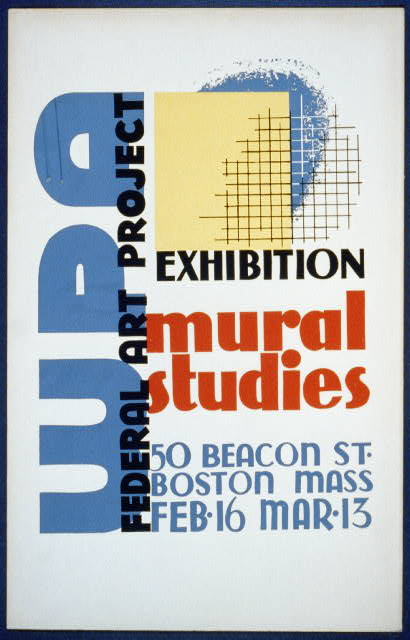
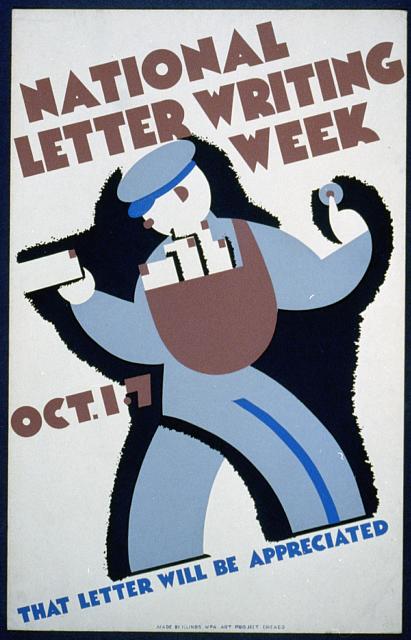
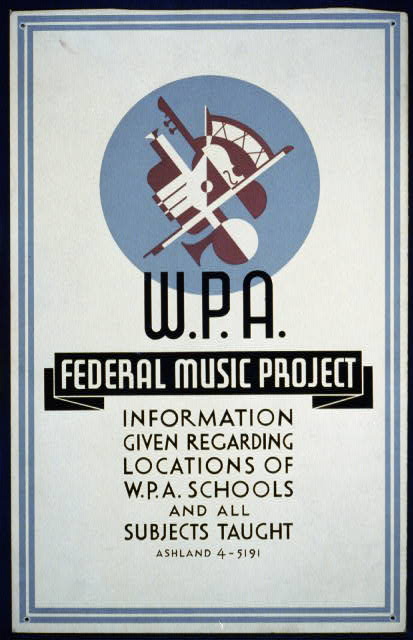
It would be lovely to include dozens of the posters here. Instead, here are just a few more. Please visit and enjoy the entire collection.

WPA - Yellowstone

WPA - Mural Studies

WPA - Letter Writing

WPA - Music Project

WPA - Lack of Funds

Something is happening here but you don’t know what it is, do you, Mister Jones?

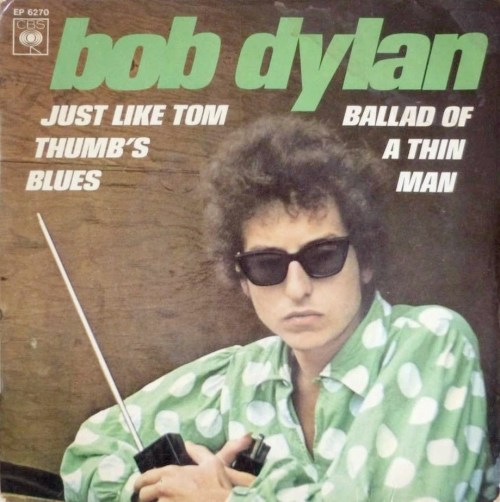
Ballad of a Thin Man

When I look at the current political scene, or listen to analysis and prognostication by dozens of clueless paid or partisan political “experts”, I keep hearing a song from Bob Dylan.

Poetic word salad? Sure. Fitting message? Absolutely.

Ballad Of A Thin Man

You walk into the room
With your pencil in your hand
You see somebody naked
And you say, “Who is that man?”
You try so hard
But you don’t understand
Just what you’ll say
When you get home

Because something is happening here
But you don’t know what it is
Do you, Mister Jones?

You raise up your head
And you ask, “Is this where it is?”
And somebody points to you and says
“It’s his”
And you say, “What’s mine?”
And somebody else says, “Where what is?”
And you say, “Oh my God
Am I here all alone?”

Because something is happening here
But you don’t know what it is
Do you, Mister Jones?

You hand in your ticket
And you go watch the geek
Who immediately walks up to you
When he hears you speak
And says, “How does it feel
To be such a freak?”
And you say, “Impossible”
As he hands you a bone

Because something is happening here
But you don’t know what it is
Do you, Mister Jones?

You have many contacts
Among the lumberjacks
To get you facts
When someone attacks your imagination
But nobody has any respect
Anyway they already expect you
To just give a check
To tax-deductible charity organizations

You’ve been with the professors
And they’ve all liked your looks
With great lawyers you have
Discussed lepers and crooks

You’ve been through all of
F. Scott Fitzgerald’s books
You’re very well read
It’s well known

Because something is happening here
But you don’t know what it is
Do you, Mister Jones?

Well, the sword swallower, he comes up to you
And then he kneels
He crosses himself
And then he clicks his high heels
And without further notice
He asks you how it feels
And he says, “Here is your throat back
Thanks for the loan”

Because something is happening here
But you don’t know what it is
Do you, Mister Jones?

Now you see this one-eyed midget
Shouting the word “NOW”
And you say, “For what reason?”
And he says, “How?”
And you say, “What does this mean?”
And he screams back, “You’re a cow
Give me some milk
Or else go home”

Because something is happening here
But you don’t know what it is
Do you, Mister Jones?

Well, you walk into the room
Like a camel and then you frown
You put your eyes in your pocket
And your nose on the ground
There ought to be a law
Against you comin’ around
You should be made
To wear earphones

Because something is happening here
But you don’t know what it is
Do you, Mister Jones?

U.S. voter turnout is very low. But what if something is happening here?


U.S. Voter Turnout

Pew Research reports that “U.S. voter turnout trails most developed countries.” But what if something is happening here?

What if U.S. voter turnout was more like Belgium (89% of voting age population)? Or Australia (82%)? Or Israel (76%)? To name just a few of the countries where people vote in great numbers.

Instead, U.S. voter turnout is mired at 54% of voting age population, just a few places from the bottom.

There are about 235 million Americans of voting age. If turnout increased to the top of the list (89%), that would increase the number of voters by 35% (89%-54%). Thirty-five percent of 235 million is about 82 million more voters.

82 million more voters. To put that in perspective, the winner of the last presidential election received about 66 million votes.

82 million more votes. Many young. Many not white. Many open to new ideas and proposals, as the old ones don’t seem to work so well. Many not committed to maintaining the status quo, which has not been all that good to and for them.

This is what should worry all the established political parties and politicians. And the establishments that depend on them and on predictable stability rather than change, radical or even incremental.

Except that the parties, politicians and establishments don’t seem, at least publicly, to be worried. They appear to believe that non-voting Americans won’t suddenly show up at the polls in great numbers to vote their own views and interests. And just in case, some of those establishments are ready to deploy tools to help keep those numbers down.

Sometimes history is a bending arc. Sometimes it’s a runaway train. Votes are the fuel. That train may already be rolling slowly. Getting ready to speed up.

Because something is happening here
But you don’t know what it is
Do you, Mister Jones?

Bob Dylan, Ballad of a Thin Man

Shepard Fairey: The Art of Political Revolution

Shepard Fairey - Bernie Sanders Concert

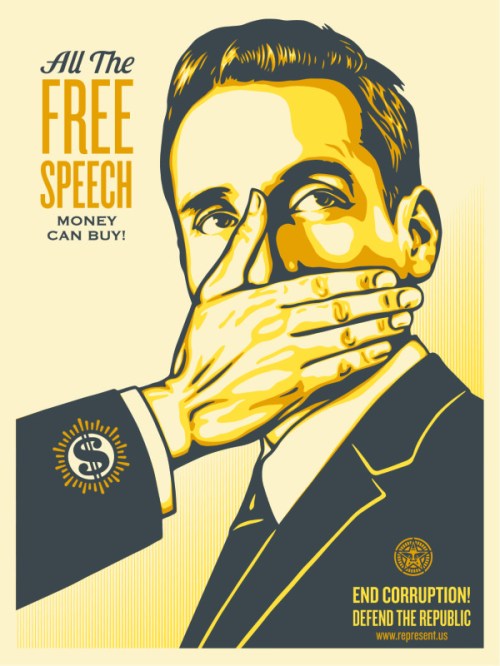
Not many people had heard of the artist Shepard Fairey (“Manufacturing Quality Dissent Since 1989”) until he created the Obama “Hope” poster, one of the most famous pieces of art in modern American politics.

Since then, he has been spending his time creating, exhibiting and selling all sorts of provocative and eminently viewable art/propaganda on the beneficial edge of society, politics and culture.

He created the poster above for today’s Bernie Sanders benefit concert in Los Angeles. For those who haven’t looked for a while, or don’t know Shepard’s work, here is a sampling:

End Corruption

Make Art Not War

3fe6ad0d-98bd-49f4-b2d3-851ef7c7a746


John Kasich Will Reunite Pink Floyd

Ohio governor and Republican candidate John Kasich has said that if elected President, he will try to reunite Pink Floyd.

“And if I’m President, I am going to once and for all try to reunite Pink Floyd to come together and play a couple of songs. And since we have so much trouble in America with our finances, I’m going to (ask the band to) start with a little song they created called Money.”

This is obviously meant to announce that Kasich is down with whatever the kids are/were listening to (he said his favorite concert of all time was seeing them on “The Wall” tour). And it is probably better than Marco Rubio’s professing his love for Wu Tang Clan.

The ability to reunite Pink Floyd may not be a qualification to be President. But if he can also resurrect the late great Syd Barrett for the concert, I think we’ve got our new Commander (Concert Promoter) in Chief.

Trump: Psycho Killer q’est-ce que c’est?

Stop making sense

There are lots of things left to say about Donald Trump. But say it once, why say it again?

Which segues into the song I think fits Trump pretty well. Maybe not as well as one of those Trump suits (the kind Macy’s stopped selling, not the kind that Trump has filed or had to defend, and not the kind in bridge).

I admit I can’t quite explain how it fits. But when I listened this morning to Psycho Killer by Talking Heads, I spontaneously thought “Donald Trump!”

I hate people when they’re not polite.

Listen here.

And here are the lyrics:

I can’t seem to face up to the facts
I’m tense and nervous and I
Can’t relax
I can’t sleep ’cause my bed’s on fire
Don’t touch me I’m a real live wire

Psycho Killer
Qu’est-ce que c’est
fa fa fa fa fa fa fa fa fa far better
Run run run run run run run away

You start a conversation you can’t even finish it.
You’re talkin’ a lot, but you’re not sayin’ anything.
When I have nothing to say, my lips are sealed.
Say something once, why say it again?

Psycho Killer,
Qu’est-ce que c’est
fa fa fa fa fa fa fa fa fa far better
Run run run run run run run away

Ce que j’ai fais, ce soir la
Ce qu’elle a dit, ce soir la
Realisant mon espoir
Je me lance, vers la gloire … OK
We are vain and we are blind
I hate people when they’re not polite

Psycho Killer,
Qu’est-ce que c’est
Run run run run run run run away

Notes:

For those who don’t know Talking Heads, Rock Hall inductees since 2002, please investigate.

For those who don’t know French, “Q’est-ce que c’est?” means “What is this?” And the French lyrics mean:

What I did, that evening
What she said, that evening
Fulfilling my hope
Headlong I go towards the glory… OK

Glenn Frey

Glenn Frey and the Eagles

Glenn Frey of The Eagles died yesterday at the age of 67. David Bowie died a few days ago at the age of 69.

Q: Does it seem that we are losing rock stars all at once? Will there be more?
A: We are all, rock stars or not, living in an actuarial table.

My favorite Eagles song is not one that Glenn Frey or Don Henley wrote. It is Ol’ 55, written by the also great Tom Waits:

Well my time went so quickly, I went lickety-splitly out to my old ’55
As I drove away slowly, feeling so holy, God knows, I was feeling alive.

Now the sun’s coming up, I’m riding with Lady Luck, freeway cars and trucks,
Stars beginning to fade, and I lead the parade
Just a-wishing I’d stayed a little longer,
Oh, Lord, let me tell you that the feeling’s getting stronger.

“Didn’t Occur to Me That David Bowie Could Die”

David Bowie - Heroes

Of the thousands of messages after David Bowie’s death, none seemed truer than this from a fan: “Didn’t occur to me that David Bowie could die.”

There are rooms in our life/culture houses for people and things that joyed us a little or influenced us a lot. For many of us, the David Bowie room was pretty big. Even though we may not have visited that much anymore, we knew it was there, we knew what was in it, and we knew we would always find David Bowie there—getting older, as must be, but there.

Whether you call it re-invention or evolution, and even though most of us in any one version won’t be what he was in multiple versions, we could all share in the possibility of growing and changing. If the Rolling Stones have been doing the same thing for fifty years, David Bowie seemed not to be doing the same thing for fifteen minutes.

No lyrics excerpts here, no album recaps, no discussion of his life, loves, and death, all of which will be found in infinite number elsewhere today. But of all the tracks, especially for those unfamiliar with Bowie, it is worth mentioning Heroes. We can do anything.