Bob Schwartz

Category: Literature

The Great Gatsby and the Great Draper

Gatsby and Draper
At this point, the reviews of Baz Luhrmann’s The Great Gatsby are mixed, which isn’t surprising. His love of over-the-top spectacle is not to all tastes, and has a tendency to obscure story for fireworks. (His best movie may be his first, most personal and sweetest, the little and lovely 1992 romantic comedy Strictly Ballroom).

Literature to film goes in all directions. Small gets bigger as even the shortest stories are adapted. Big gets smaller, given the need to cut out sometimes huge chunks of narrative. Big gets bigger, as in Gone with the Wind. Big stays big, trying to preserve and show everything, as in Peter Jackson’s still-not-completed Tolkien opus.

The Great Gatsby is a little book. You can read it, even out loud, in a few hours. What has made it endure as one of the great novels is how much Fitzgerald packed into it. Word for word, it is one of the best fictional descriptions of a moment in history; not just that critical moment of the early 1920s either, but maybe every time the country is changing radically, as fortune swings in a blink between good fortune and bad.

Gatsby is not about the parties or the mansions. You can argue that the colorful wildness and glamour and licentiousness make the tragic end starker, so that when narrator Nick Carraway announces that the party is over, we get it. But we can miss the point.

Gatsby is a touching little story about a lost soul in a lost time. The only two ways to tell this story on film are to keep it small, or to actually rewrite and expand the story beyond its outline, to hours and hours of film.

The expanded story is already being made, by Matthew Weiner. Mad Men is the extended, history-spanning story of a fatally charismatic and ambitious man, so ambitious that in keeping with the dynamic times he lives in, he sheds his entire early life and identity to become a successful man of mystery. But he never stops trying to fill the holes that he knows are still there.

Every man wants to be him, every woman wants to have him, nobody knows him. The only difference between James Gatz/Jay Gatsby and Dick Whitman/Don Draper is that so far Draper has managed, somehow, to outlive his younger manhood to reach his middle years without crashing—but coming close almost daily. So just in case the Baz Luhrmann Gatsby doesn’t prove satisfying, don’t worry. The murky madness and capriciousness of Gatsby’s go-and-stop American dream is on view in the epic of Mad Men.
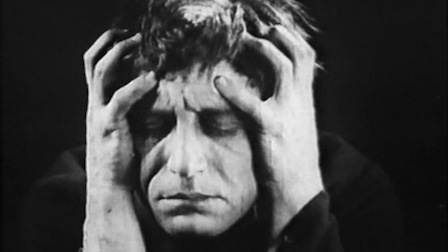
Crime and Punishment

Crime and Punishment
It is just like a movie, some are saying.

No, like a novel.

Two brothers. The older one dead, run over by the younger. The younger on the run—maybe caught or even dead by the time this is read.

In the media, fragments of information are spun into explanations, like Rumplestiltskin’s straw into gold. It is the job of experts to provide answers, and when pieces are missing, to speculate. Can they be blamed?

Writers are the real experts at helping us on this. In 1962, when Truman Capote applied his considerable skill as storyteller to a pair of real-life cold-blooded killers, the book In Cold Blood became something new: the non-fiction novel. Critics celebrated, but others complained that the humanizing of evil made the author an accomplice.

A century earlier, Fyodor Dostoyevsky took an even deeper look at the mind of the killer, a fictional one, in Crime and Punishment. He did not minimize the horror of the crime or humanize the killer for purposes of sympathy, empathy or excuse. He instead set the standard for psychological depth and ambiguity that is the hallmark of modern literature since.

Standard or simplistic explanations and labels fit many needs, including the need of broadcasters to fill dead air while an extended manhunt and its aftermath proceed. But Dostoevsky demanded a trip on the subtle dark seas of family, society and the mind. That’s not just a way we understand the bad actors. It’s how we understand ourselves, even when our own seas are not nearly so dark.

From Crime and Punishment, as Rodion Raskolnikoff  pursues his plan to kill the moneylender Alena Ivanovna. He walks down the street, when someone remarks about his unusual hat:

“I knew it,” he muttered in confusion, “I thought so! That’s the worst of all! Why, a stupid thing like this, the most trivial detail might spoil the whole plan. Yes, my hat is too noticeable…. It looks absurd and that makes it noticeable….With my rags I ought to wear a cap, any sort of old pancake, but not this grotesque thing. Nobody wears such a hat, it would be noticed a mile off, it would be remembered…. What matters is that people would remember it, and that would
give them a clue. For this business one should be as little conspicuous as possible….Trifles, trifles are what matter! Why, it’s just such trifles that always ruin everything….”

He had not far to go; he knew indeed how many steps it was from the gate of his lodging house: exactly seven hundred and thirty. He had counted them once when he had been lost in dreams. At the time he had put no faith in those dreams and was only tantalizing himself by their hideous but daring recklessness. Now, a month later, he had begun to look upon them differently, and, in spite of the monologues in which he jeered at his own impotence and indecision, he had involuntarily come to regard this “hideous” dream as an exploit to be attempted, although he still did not realize this himself. He was positively going now for a “rehearsal” of his project, and at every step his excitement grew more and more violent.

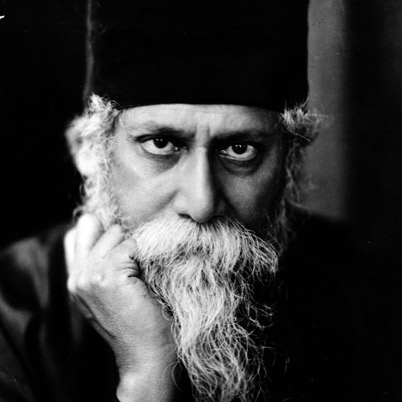
Rabindranath Tagore

Rabindranath Tagore
Take a break with Rabindranath Tagore (1861-1941).

He was a Bengali poet, essayist, dramatist, composer and philosopher, and is the most esteemed creative artist of modern India. He was the first non-European to win the Nobel Prize in Literature in 1913.

A brief introduction is Stray Birds (1916), which consists of 326 very short verses—each one usually one or two sentences. Below is a selection of them. Among the many online items by and about Tagore there is a 1961 documentary about Tagore by Satyajit Ray, India’s most celebrated film director. Here is a PDF of Stray Birds as originally published, with a translation from Bengali to English by Tagore himself.

These literary stray birds may seem at first glance to be mere poetic aphorisms. Taken together, though, this is a worldview of inspired simplicity.

From Stray Birds by Rabindranath Tagore

1
Stray birds of summer come to my window to sing and fly away.
And yellow leaves of autumn, which have no songs, flutter and fall there with a sigh.

2
O troupe of little vagrants of the world, leave your footprints in my words.

6
If you shed tears when you miss the sun, you also miss the stars.

28
O Beauty, find thyself in love, not in the flattery of thy mirror.

35
The bird wishes it were a cloud. The cloud wishes it were a bird.

36
The waterfall sings, “I find my song, when I find my freedom.”

40
Do not blame your food because you have no appetite.

43
The fish in the water is silent, the animal on the earth is noisy, the bird in the air is singing,
But Man has in him the silence of the sea, the noise of the earth and the music of the air.

45
He has made his weapons his gods. When his weapons win he is defeated himself.

48
The stars are not afraid to appear like fireflies.

52
Man does not reveal himself in his history, he struggles up through it.

58
The sparrow is sorry for the peacock at the burden of its tail.

62
The Perfect decks itself in beauty for the love of the Imperfect.

75
We read the world wrong and say that it deceives us.

88
He who wants to do good knocks at the gate; he who loves finds the gate open.

121
I carry in my world that flourishes the worlds that have failed.

123
The bird thinks it is an act of kindness to give the fish a lift in the air.

128
To be outspoken is easy when you do not wait to speak the complete truth.

130
If you shut your door to all errors truth will be shut out.

141
When I travelled to here and to there, I was tired of thee, O Road, but now when thou leadest me to everywhere I am wedded to thee in love.

146
I have my stars in the sky,
But oh for my little lamp unlit in my house.

156
The Great walks with the Small without fear.
The Middling keeps aloof.

158
Power takes as ingratitude the writhings of its victims.

161
The cobweb pretends to catch dew-drops and catches flies.

166
The canal loves to think that rivers exist solely to supply it with water.

169
Thought feeds itself with its own words and grows.

178
It is the little things that I leave behind for my loved ones, –great things are for everyone.

184
He who is too busy doing good finds no time to be good.

193
A mind all logic is like a knife all blade.
It makes the hand bleed that uses it.

207
Praise shames me, for I secretly beg for it.

208
Let my doing nothing when I have nothing to do become untroubled in its depth of peace like the evening in the seashore when the water is silent.

210
The best does not come alone. It comes with the company of the all.

235
Do not say, “It is morning,” and dismiss it with a name of yesterday. See it for the first time as a new-born child that has no name.

243
The stream of truth flows through its channels of mistakes.

248
Man is worse than an animal when he is an animal.

258
The false can never grow into truth by growing in power.

280
Let the dead have the immortality of fame, but the living the immortality of love.

296
Blessed is he whose fame does not outshine his truth.

317
Man’s history is waiting in patience for the triumph of the insulted man.

319
I long for the Island of Songs across this heaving Sea of Shouts.

323
I have suffered and despaired and known death and I am glad that I am in this great world.

The Year Begins with Baseball

Mom Marlins
The New Year finally begins. It is Opening Day for Major League Baseball.

Non-baseball people are turning away with a lack of interest or understanding. Even non-sports people know that football long ago took over as America’s pastime. The Super Bowl v. the World Series? Who are you kidding? When’s the last time the Rolling Stones performed at a World Series halftime. (Note: There is no halftime in baseball. Just a brief break known as the seventh inning stretch, where we sing Take Me Out to the Ballgame, not a Stones song.)

If baseball has somehow been eclipsed, it may be symptomatic. Whatever it is that has made football more popular than baseball might not be such a good thing. There are tomes by eminent scholars written about this. The time element alone is telling. Those leaning towards short attention spans and busy lives like football because something is always happening and it is time-constrained by a clock. For non-baseball fans, there are long stretches where nothing seems to be going on in a baseball game, except most of the players just standing around. Games can theoretically go on forever, and sometimes they seem to, exceeding five hours. Once again the chorus asks: Who are you kidding?

George Carlin, one of the sharptest and funniest observers of American life, focused on the differences between baseball and football. You can read the complete text and listen to a recording. Here’s an excerpt:

Baseball and football are the two most popular spectator sports in this country. And as such, it seems they ought to be able to tell us something about ourselves and our values.

I enjoy comparing baseball and football:

Baseball is a nineteenth-century pastoral game.
Football is a twentieth-century technological struggle….

Baseball begins in the spring, the season of new life.
Football begins in the fall, when everything’s dying.

In football you wear a helmet.
In baseball you wear a cap….

In football you receive a penalty.
In baseball you make an error.

In football the specialist comes in to kick.
In baseball the specialist comes in to relieve somebody.

Football has hitting, clipping, spearing, piling on, personal fouls, late hitting and unnecessary roughness.
Baseball has the sacrifice….

And finally, the objectives of the two games are completely different:

In football the object is for the quarterback, also known as the field general, to be on target with his aerial assault, riddling the defense by hitting his receivers with deadly accuracy in spite of the blitz, even if he has to use shotgun. With short bullet passes and long bombs, he marches his troops into enemy territory, balancing this aerial assault with a sustained ground attack that punches holes in the forward wall of the enemy’s defensive line.

In baseball the object is to go home! And to be safe! I hope I’ll be safe at home!

There are dozens of books containing art, poetry and writing about baseball. The other sports may have some, but not of the quantity or the caliber of these. As pointed out before, and it will be pointed out again, for a brief moment in the late 1980s, cut tragically short by illness, A. Bartlett Giamatti was the Commissioner of Major League Baseball. Bart Giamatti was the President of Yale University, a professor of literature, and a writer of note. When and only when the NFL, NBA, NHL, or any other sports league decides to appoint a person of equal credentials as their commissioner, then and only then will it be worth having a conversation about the big picture relative merits.

Bart Giamatti also wrote the quintessential essay about baseball. The Green Fields of the Mind is written not about Opening Day, but about the last day of the season for his beloved Boston Red Sox in 1977. He didn’t live to see that one of baseball’s most hapless teams would go on to become a championship powerhouse years later.

The essay is a poetic take not only on the refrain of baseball fans everywhere—“wait until next year”—but on the way that refrain works in our lives. It reflects the progress from the hopes of spring to the dimming of prospects in the fall, but only in the meantime. There is no justice in an excerpt of it, but here is one anyway:

It breaks your heart. It is designed to break your heart. The game begins in the spring, when everything else begins again, and it blossoms in the summer, filling the afternoons and evenings, and then as soon as the chill rains come, it stops and leaves you to face the fall alone. You count on it, rely on it to buffer the passage of time, to keep the memory of sunshine and high skies alive, and then just when the days are all twilight, when you need it most, it stops. Today, October 2, a Sunday of rain and broken branches and leaf-clogged drains and slick streets, it stopped, and summer was gone.…

That is why it breaks my heart, that game–not because in New York they could win because Boston lost; in that, there is a rough justice, and a reminder to the Yankees of how slight and fragile are the circumstances that exalt one group of human beings over another. It breaks my heart because it was meant to, because it was meant to foster in me again the illusion that there was something abiding, some pattern and some impulse that could come together to make a reality that would resist the corrosion; and because, after it had fostered again that most hungered-for illusion, the game was meant to stop, and betray precisely what it promised.

Of course, there are those who learn after the first few times. They grow out of sports. And there are others who were born with the wisdom to know that nothing lasts. These are the truly tough among us, the ones who can live without illusion, or without even the hope of illusion. I am not that grown-up or up-to-date. I am a simpler creature, tied to more primitive patterns and cycles. I need to think something lasts forever, and it might as well be that state of being that is a game; it might as well be that, in a green field, in the sun.

Finally, a rare personal note. Many, many families have memories tied up with sports. I am no exception. Those memories aren’t important because the game is, just as the game isn’t important because of the memories. They are just tied up in a package that you open on occasions. Opening Day is one of them. Above is a photo of my Mom, a few years before she passed away. She is watching a Marlins game. As Bart Giamatti wrote, “there are others who were born with the wisdom to know that nothing lasts.”

That’s another reason we love baseball and are happy it is Opening Day again.

The Ides of March

Julius Caesar - Mercury Theater
Today is the Ides of March, which is the 15th of March in the Roman calendar. (The Ides are a monthly mid-point, between the Nones early in the month and the Kalends on the first day.)

It is the day of Julius Caesar’s assassination in 44 BCE, made forever famous by Shakespeare’s play Julius Caesar, where the Soothsayer warns him (twice) to “beware the ides of March”. It did turn out to be a bad day.

Above is a scene from the Mercury Theater’s legendary 1937 presentation of the play in modern dress and sensibility, set by director Orson Welles in Fascist Italy. The theater company was organized by Welles and John Houseman, and this was their first play. In the photo above, Marc Antony (George Coulouris) kneels over the lifeless body of Julius Caesar (Joseph Holland).

Welles was only 22 at the time, but already a rising star. The Mercury Theater, intended as an independent answer to the restrictions placed on Welles by the Federal Theater Project, was really the launch pad for his fame and infamy as a world class artistic iconoclast.

For an entertaining look at this Mercury Theater production and company, at Orson Welles, and at the promises and disappointments of being young, in love, and working for an impossibly wonderful/horrible genius, see Richard Linklater’s Me and Orson Welles (2008).

The movie is underrated and did very poorly at the box office (as did most Welles films). It is a fully-realized and charming fictionalization of a real cultural milestone, with  recreated scenes from the Julius Caesar production and great ensemble acting. The star turn, appropriately, is from Christian McKay as Welles. There have been other attempts to play this part, which is a double challenge, since the Welles persona is so huge and Welles himself did such a good job of playing Orson Welles. McKay is near perfect, for the part and the story; maybe not “Daniel Day Lewis is Abraham Lincoln” (which he was), but still impressive from such a young actor. McKay is currently listed in five movies in production, which he deserves to be.

Christian McKay - Me and Osrson Welles

There is no special Roman designation for the 16th of March, so enjoy the ides while you can.

The Hamlet Voters

I am not Prince Hamlet, nor was meant to be;
Am an attendant lord, one that will do
To swell a progress, start a scene or two,
Advise the prince; no doubt, an easy tool,
Deferential, glad to be of use,
Politic, cautious, and meticulous;
Full of high sentence, but a bit obtuse;
At times, indeed, almost ridiculous—
Almost, at times, the Fool.

T.S. Eliot
The Love Song of J. Alfred Prufrock

It is reported that there are voters who are still undecided in this Presidential campaign.

Assuming they actually exist, they are the most simultaneously sought after and puzzling population in this country.

It’s easy to see why they are sought after with such a close election looming.

The puzzlement is slightly more complex. The questions to them roughly run like this: Have you been paying any attention at all to the candidates and the issues? Just how confused are you?

With all due respect and affection for fellow citizens, if you watched any of the focus groups of undecided voters that the news media have assembled, the answers may be: no, and just a bit.

But there is another explanation. The undecided voters are suffering from a Hamlet-like affliction. They are Hamlet voters.

Hamlet, you recall, found himself in the middle of overwhelming circumstances—his uncle had murdered his father, married his mother, and taken over the kingdom. Trying to right the wrong and unseat the chief of state, Hamlet at first feigned madness, and then, as best we can tell, really did go mad. One of his characteristics was an inability to decide and act: his speech considering suicide, “To be or not to be”, is one of the most famous in world literature.

These undecided voters seem to be equally confused and frozen, though their circumstances are not near as dire or existential. There is an important question about who will be the chief of state, but that’s where the similarity should end. Even Hamlet managed to make up his mind, though his action did result in just about everybody dying, including himself.

No one is asking undecided voters to be involved in anything like that. It’s time. Learn what you can, think as best you can. With his dying breath, Hamlet appointed Prince Fortinbras the new President of Denmark. You don’t have to go that far. No sword fights, no poison. All you have to do is decide and vote.

The Goldilocks Test for Phone Size


First things first: You iPhone folks can leave. You have no choice on the size of your smartphone, because Apple has made that choice for you. The iPhone 5 is no wider, but one-half inch longer, than the previous version. Take it or leave it, and millions are taking it.

Android is a whole different world or, as we’ve learned to say, ecosystem. Screens are getting bigger, for optics and utility, and so have the phones. Samsung pushed the limits by creating the Note, half-phone/half-tablet (a “phablet”) with a screen more than five inches in size. Even the same phone may have slightly different dimensions for each carrier. Someone has no doubt charted the dozens of sizes available; it is enough to say that there is probably an optimal size for just about everyone.

But what is optimal? That very practical question arose in the course of handling and comparing two of the most popular and capable Android phones of the past couple of years, the Samsung Galaxy S2 and S3. The S2 is superb, but in almost all respects the S3 is better. The S3 does have a bigger screen, and so is ever so slightly bigger to hold.

Ultimately, the question is not whether size matters; the question is whether it matters to you.

That’s what the Goldilocks test is about. There are three parts, one about style, two about functionality.

The style part requires a mirror. If you are someone who uses a smartphone for voice calls (though fewer now do), hold up the phone to the side of your head. Do you feel that you look cool or silly? Do you feel like a modern version of the 1970s hotshot with a monstrous Motorola Brick pressed to his ear? (see above)

The second part is portability. Without getting stereotypical, this is a divide between women and men. Many women carry their phone in a bag, where up to a point, size doesn’t matter. Men usually carry theirs in a pocket, and depending on which pocket and which clothes, this can be an issue. Jeans and tight pants can be a problem (it is taking unreasonable will power not to paraphrase Mae West: “Is that a phone in your pocket or are you just happy to see me?”)

The final part is the most important: How much does size affect usability? This is where differences in hand size come into play. You want to be able to use a phone with one hand, and that’s going to depend on the hand that’s using it. This is also where the most objective part of the Goldilocks test was formulated.

Put the phone in the palm of your hand. Reach around the middle with your thumb and middle finger. If your fingers touch, you will mostly be comfortable using the phone with one hand. If not, you are on occasion going to find yourself doing some juggling or bringing in the other hand. It’s that simple.

Take the test. You want to be able to say about your phone, as Goldilocks said about beds, as others have said about the height of trees: This one is just right.

You Kippur and Job


The days from Rosh Hashanah (“Head of the Year”, the New Year) and Yom Kippur (“Day of Atonement”) are the ten holiest on the Jewish calendar. Known as the Days of Awe or Days of Repentance, they are a time for reflection on the year past and the year to come, and a time to make amends—not by asking God for forgiveness, but by asking it from those who have been wronged, and through the practice of repentance (literally, “turning”), prayer and charity.

During these days, the Book of Life is metaphorically open, and on its pages your life is weighed: “On Rosh Hashanah it is written, on Yom Kippur it is sealed.”

The liturgy for these holidays, and particularly for Yom Kippur, is some of the most moving and soul-searching in all of the religious canon. There are Old Testament readings included, but not too often from the Book of Job.

There are two solid consensuses about the Book of Job.

Literary types agree that it is probably the greatest work of literature in the Bible.

Religious types agree that it is the most puzzling book in the Old Testament, and that even when you look at it in the most common and superficial way (“Why do bad things happen to good people?”), you end up scratching your head.

Job is the book to read for Yom Kippur. It is the book to ponder at the start of the year, at the end of the year, and at points between. (It was, by the way, Abraham Lincoln’s most studied book of the Bible.)

We begin with the book itself.

It is unusual for it to have been included in the canon of the Hebrew Bible because it is not about a Jew. When non-Jews appear in other books, it is usually a story of helping Jews or hurting Jews or marrying Jews or eventually becoming Jewish. None of that applies to the Book of Job.

The story is relatively simple, at least until the end. Job is a rich and pious man who has everything: health, wealth, family and friends (or so they seem). Satan wants to prove that Job’s piety is dependent on his having everything, and challenges God to take it all away. God does.

Job’s friends are convinced that he must have done something wrong, and urge him to figure it out and repent. The scenes with his friends are talky, like a play, or maybe like the film My Dinner With Andre—except this is My Dinner with Eliphaz the Temanite, Bildad the Shuhite and Zophar the Naamathite.

Job’s wife has a different suggestion: “Curse God and die.”

Job remains steadfast in his faith.

And then, in Chapter 37, God appears to Job, to explain it all.

The chapters that follow are a poetic and breathtaking description of the world’s wonders, by the one who made them. God tells Job that his friends don’t know what they’re talking about (God takes care of them later). And God implicitly tells Job the only two things to do: Be awed. Be humble.

Job’s reply in Chapter 42 is one of the most important passages in the Bible. It is not only the watchword for Yom Kippur; it is the watchword for everyone, religious or otherwise, who is convinced they are smarter than anyone in the room or in the universe:

Then Job answered the Lord:
“I know that you can do all things,
and that no purpose of yours can be thwarted.
‘Who is this that hides counsel without knowledge?’
Therefore I have uttered what I did not understand,
things too wonderful for me, which I did not know.
‘Hear, and I will speak;
I will question you, and you declare to me.’
I had heard of you by the hearing of the ear,
but now my eye sees you;
therefore I despise myself,
and repent in dust and ashes.”

“I have uttered what I did not understand, things too wonderful for me, which I did not know.”

Whether this is a day of reflection and fasting, reciting centuries-old prayers, or an ordinary day of work or study, managing others or being managed; whether you are Job beset by unexplained misfortune, or Job’s wife, ready to kill him if he doesn’t kill himself, or Job’s friends so quick with advice; whether you are being punished by God, Satan, or whatever other forces you believe are working against you; whether you are the smartest person in the room or not; this is what we can do, even if there is seemingly no comfort in it:

Be awed. Be humble.

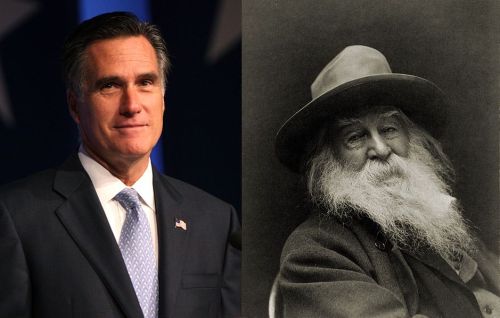
The Body Electric: Mitt Romney and Walt Whitman


Those who love America and poetry should love Walt Whitman. So should Mitt Romney.

Just as the Civil War was a dividing line in our history, Whitman was the line in poetry and culture. His lyrical innovation and his exuberant celebration of all things human and exciting—including sex and beautiful bodies—limited appreciation by nineteenth century readers. If Whitman seemed out of place then, he is right at home now:

Of Life immense in passion, pulse, and power,
Cheerful—for freest action form’d, under the laws divine,
The Modern Man I sing.

Why should Mitt Romney care about Walt Whitman?

Whitman was more than just an expert on being himself and singing about himself. He recognized that constancy and consistency is not a part of the artist’s makeup. And so he wrote the mantra for all those who stand so accused:

Do I contradict myself? Very well, then I contradict myself, I am large, I contain multitudes.

Romney should also care as a student of the Presidency. The most memorable poems about an American President (and there are surprisingly few) were written by Whitman. On the death of Abraham Lincoln, he wrote not one but two famous elegies that are still read and recited today.

From O Captain My Captain:

O CAPTAIN! my Captain! our fearful trip is done;
The ship has weather’d every rack, the prize we sought is won;
The port is near, the bells I hear, the people all exulting,
While follow eyes the steady keel, the vessel grim and daring:
But O heart! heart! heart!
O the bleeding drops of red,
Where on the deck my Captain lies,
Fallen cold and dead.

From When Lilacs Last in the Door-yard Bloom’d:

WHEN lilacs last in the door-yard bloom’d,
And the great star early droop’d in the western sky in the night,
I mourn’d—and yet shall mourn with ever-returning spring.

O ever-returning spring! trinity sure to me you bring;
Lilac blooming perennial, and drooping star in the west,             5
And thought of him I love.

Finally, while Mitt Romney may have never read the poem I Sing the Body Electric, there is an extraordinary scene in the third verse. It is a pastoral picture of a tall older man—fifteen years older than Romney—standing with his five grown sons. He is deeply beloved for who he is and what he has done. It is not just the way that Mitt Romney wants to be seen; it may be the way he is seen by those who do know and love him:

I know a man, a common farmer—the father of five sons;
And in them were the fathers of sons—and in them were the fathers of sons.

This man was of wonderful vigor, calmness, beauty of person;
The shape of his head, the pale yellow and white of his hair and beard, and the immeasurable meaning of his black eyes—the richness and breadth of his manners,
These I used to go and visit him to see—he was wise also;
He was six feet tall, he was over eighty years old—his sons were massive, clean, bearded, tan-faced, handsome;
They and his daughters loved him—all who saw him loved him;
They did not love him by allowance—they loved him with personal love;
He drank water only—the blood show’d like scarlet through the clear-brown skin of his face;
He was a frequent gunner and fisher—he sail’d his boat himself—he had a fine one presented to him by a ship-joiner—he had fowling-pieces, presented to him by men that loved him;
When he went with his five sons and many grand-sons to hunt or fish, you would pick him out as the most beautiful and vigorous of the gang.

You would wish long and long to be with him—you would wish to sit by him in the boat, that you and he might touch each other.

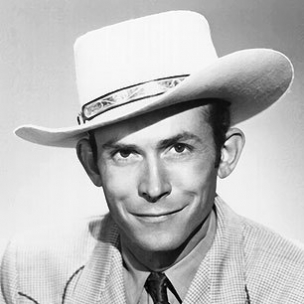
The One The Only The Real Hank Williams


Sometimes something good can come from something bad.

Somebody wearing the ill-fitting name Hank Williams has been going around saying nasty things about President Obama (he’s a Muslim, he hates America). Despite that name being a few sizes too big for him, it appears he has somehow managed to have some success as a musician and as the son of a more famous father. But as with the name, the shoes are also way too big to fill.

Hank Williams (1923-1953) was one of the great musical artists and folk poets in America. He died too young at the age of 29, but had already produced songs that entertained millions and inspire musicians fifty years after his death. His songs have been covered by scores of artists as diverse as Al Green, Beck, Bob Dylan, Bruce Springsteen, George Thorogood, Keb’ Mo’, Keith Richards, Red Hot Chili Peppers and Tom Petty.

If you haven’t heard of Hank Williams, you are missing something. If you haven’t heard him, because you “don’t like country music”, you are missing something. Don’t believe it? Believe the Pulitzer Prize Board, which in 2010 awarded him a Special Citation for “his craftsmanship as a songwriter who expressed universal feelings with poignant simplicity and played a pivotal role in transforming country music into a major musical and cultural force in American life.”

So if someone named Hank Williams, Jr. is going around badmouthing the President, what good can come of that?

Just this: In the midst of looking around for things to say about Hank Williams, a brand new independent film came to light. The Last Ride is the story of a fateful trip. Hank Williams was heading out for a series of concerts to end in Canton, Ohio on New Year’s Day 1953. Bad weather prevented flying, so a college student was hired to drive him from Nashville to the concerts. Before reaching Ohio, on January 1, Williams died in West Virginia. Last Ride is the story of that trip. The film has already been screened in New York and Los Angeles, and later this week can be seen in Nashville, Dallas, Seattle and Bakersfield.

There’s plenty of Hank Williams music around. Give it a listen. Because if the only Hank Williams you know about is the Junior who seems so out of touch with reality, there’s someone to discover. Hank Williams—the one the only—was nothing but real.

Hear the lonesome whippoorwill
He sounds too blue to fly
The midnight train is whining low
I’m so lonesome I could cry

I’ve never seen a night so long
When time goes crawling by
The moon just went behind a cloud
To hide its face and cry

Did you ever see a robin weep
When leaves begin to die
That means he’s lost the will to live
I’m so lonesome I could cry

The silence of a falling star
Lights up a purple sky
And as I wonder where you are
I’m so lonesome I could cry