Bob Schwartz

Category: Literature

Darkside: When Philosophy Drama Pink Floyd and Madness Collide

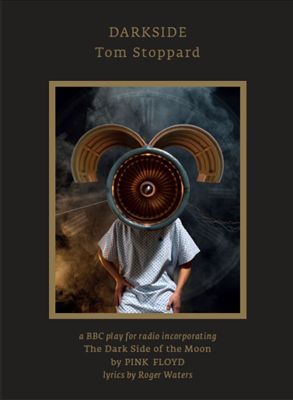
Darkside
Last week, the most unusual pop album ever was released. That’s an incredible overstatement, literally unbelievable, because who has listened to all those truly out-there albums and how could you possibly contrast and compare them anyway?

Okay, last week, the most philosophical unusual pop album ever was released.

Tom Stoppard, maybe the greatest of all living English-language playwrights, is a longtime Pink Floyd fan, with a special place in his heart for Syd Barrett, the disturbed creator who sparked the group, even after his untimely but unavoidable departure. You may know Stoppard most popularly for his Oscar-winning work as co-writer of Shakespeare in Love. Before and after that, his total embrace of language, philosophy, literature and the overall beautiful strangeness of people led to masterful theatre and, often, radio plays.

When the BBC wanted to mark the 40th anniversary of Dark Side of the Moon, they asked Stoppard to create one of his radio concoctions. The result is Darkside, which integrates dramatic scenes into the music of the album.

Description is futile. Stoppard has always believed that philosophy is a form of play, that you can play philosophy the way you do language and music and entertain with it. Listeners and viewers might also learn something. Here we have clever demonstrations of moral philosophy and discussion of the nature of thought itself; that is, as he keeps pointing out, what he is doing is a thought experiment—as is all creativity. He then asks us and them about the juggler on the radio: there is a juggler on the radio, but not hearing him, how do we know? Do we believe in the juggler?

What is most clear listening to Darkside is not just that Stoppard knows how to play with words and mind, but that Pink Floyd was just as agile doing the same, with the addition of some of the most memorable and popular music of all time. Dark Side of the Moon was on the Billboard 200 chart for 14 years after it was released in 1973, and still hovers near there, 40 million copies later. Thousands still buy it every week and somewhere right now someone is listening and discovering something. Stoppard has devised a valuable appreciation of the weird wonder that is Dark Side, making it just a bit more wonderful. The lunatic is still on the grass and in your head.

All that you touch
And all that you see
All that you taste
All you feel
And all that you love
And all that you hate
All you distrust
All you save
And all that you give
And all that you deal
And all that you buy
Beg, borrow or steal
And all you create
And all you destroy
And all that you do
And all that you say
And all that you eat
And everyone you meet
And all that you slight
And everyone you fight
And all that is now
And all that is gone
And all that’s to come
And everything under the sun is in tune
But the sun is eclipsed by the moon
Eclipse, Dark Side of the Moon

Reviving Emerson

Ralph Waldo Emerson
It is time to bring Emerson back from the dead and ignored.

Up until the late 20th century, at least one of Ralph Waldo Emerson’s essays—usually the one titled Self-Reliance—was a staple of many high school curricula. So was the work of his fellow 19th century Transcendentalist Henry David Thoreau—though it was mostly Thoreau’s nature paean Walden, rather than On the Duty of Civil Disobedience. Maybe they are still there, but with our changing definition of what constitutes an American liberal arts education—if we consider that worthwhile at all—they have likely disappeared.

In the middle of the 19th century, the philosophical/political/religious/social/literary movement known as Transcendentalism gave birth to new ways of thinking and acting in America. Among the many intellectuals and activists associated with it, such as Thoreau and Margaret Fuller, none was more famous or prolific than Emerson. Transcendentalism gave new legitimacy to questioning the authority of convention and history. In the 1960s we would call this counterculture, and it is no coincidence that Thoreau became a guiding light to many in that generation.

Books and essays by the hundreds are devoted to Transcendentalism (see this entry from the Stanford Encyclopedia of Philosophy). They agree that pinning down exactly what Transcendentalism was and what it became over the years is a challenge. The same is said about Emerson, who unapologetically might contradict himself or change particular views over time.

With all that fluidity and vagueness, a few points of it are clear. According to Transcendentalism, we are driven to improve and grow, to aspire and rise higher. What drives us there is spiritual, but not in any conventional, narrow or simplistic sense. What we do is as important as what we believe and say. We must act, believe and speak as individuals, but knowing the nature of our particular individuality requires work and solitude. This life, this world, this existence are all-encompassing processes and not things—a concept that would later be refined as  a core of modern philosophy, but that had its origins in the most ancient roots.

All of the work of the Transcendentalists is in the public domain and widely available free online. Though more people are familiar with Thoreau, or at least some of his concepts, Emerson is a good place to start. In his Essays (First Series) you will find Self-Reliance. In it you will find what we might consider a libertarian distrust of the crowd and of the government, something shared with Thoreau. But this is an enlightened sort of selfness, different than modern mutations, because it makes no distinction between the one and the all, that is, if I do what is good for me but is not good for all, it is by definition no good at all. Figuring out how that exactly works is the mission of the Buddha, of Jesus, of just about every philosopher who urges us to find our unique self and act in the benevolent context of community, country and cosmos. Emerson was one of the first to say this in American, as an American, in America. Maybe he got lost in the rush to the shiny and new, but he’s still there, just waiting to be discovered.

Random Notes on Editing

Random Notes on Editing
1. Whether working on a business report, legal brief, story or even a non-written creation, you have either had the privilege to edit others or have suffered the tough medicine of being edited.

2. All works are improvable. Ask God.

3. There is a difference between edits that are improvements and changes based on subjective sensibilities, though there is a gray area in between.

4. It is easiest to identify improvement editing when the creation is discretely functional and results are measurable, as with some sorts of advertising copy. Some would say readability and clarity fall into this functional category—that is, unless tortured readability is a creative choice and can be handled deftly. Ask Faulkner or Joyce.

5. Voice may be the hardest part of editing. It may also be the hardest part of writing. Even the most technical sorts of work can convey a distinctive voice—you will find this in textbooks, in legal articles, even in judicial rulings. Some writers don’t know abstractly what a distinctive voice is because they just naturally have one. Others work to develop it. That is the dual quandary for editors. If a writer has a voice, or the beginnings of one, you want to cultivate it without editing it away. If a writer doesn’t have much of a voice, there is a risk of the editor—who is often a pretty good writer too—to substitute a different voice entirely.

6. The Bible is the most importantly edited work in Western history, maybe in human history. Speaking of voice, imagine being the one responsible for editing the voice of God, Moses or Jesus. Yet somebody did. These editors took no credit, though it is fun to consider what those acknowledgements might look like. “And finally I’d like to thank my editor, without whom these transcripts of my speeches would not have the power that they do. JC.”

National Poetry Day in the U.K.

National Poetry Day
National Poetry Day
In the U.K.
A day to turn away
From the plainness of prose
To levitate above its dull weight on hearts and minds
To read write appreciate celebrate
Fly on verse.

America has dedicated a month to it
The cruelest month of April
As if our rebel poems are 28, 30 or 31 times better
Than those of our exiled imperial masters.

Let your verse be free.
Ignore the Yankee codger Robert Frost
Who said free verse, without form or meter,
Was like playing tennis without a net.
Play poetry tennis as you will
Without net, without racket, without balls
Without clothes, without score.

Happy Poetry Day.

The Mad Dancers

The Mad Dancers
The Baal Shem Tov is the eighteenth-century founder of the Hasidic movement in Judaism. Jews and non-Jews who know the modern versions of the movement often don’t know much about its beginnings. Some of those contemporary manifestations may seem distant from the original spirit.

We have no writings by the Baal Shem Tov, so we rely on the records of his disciples, and on legends and stories that have come down the years—and that still have a remarkable power to inspire. Their authenticity is not in their being a verbatim record of what was said and what happened. Instead, they are an unmistakable reflection of a unique spiritual figure from any age or faith.

The Baal Shem Tov believed in and lived the direct experience of God everywhere in everything. Study and conventional piety took second place, which made him unpopular with the establishment, and would still today. He thought we should be outdoors in the trees, not indoors at the desks. Living in a divine state of optimism, joy and wonder was the ideal. People who live that way, of course, are remarkably hard to control.

This story is taken from The Golden Mountain (1932) by Meyer Levin.

The Mad Dancers

Already the voices of opponents were raised against the Baal Shem’s teaching, for many
rabbis could not understand his ways. Some said of him that he dishonored the Sabbath with singing and freedom, some said that his ways and the ways of those who followed him and called themselves Chassidim were truly the ways of madmen.

One of the scholars asked of the Baal Shem, “What of the learned rabbis who call this teaching false?”

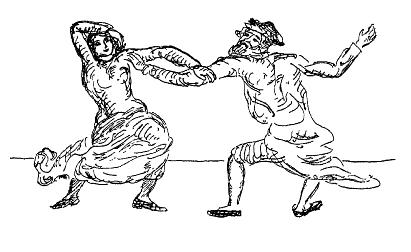
The Baal Shem Tov replied, “Once, in a house, there was a wedding festival. The musicians sat in a corner and played upon their instruments, the guests danced to the music, and were merry, and the house was filled with joy. But a deaf man passed outside the house; he looked in through the window and saw the people whirling about the room, leaping, and throwing about their arms. ‘See how they fling themselves about! ‘ he cried, ‘it is a house filled with madmen! ‘ For he could not hear the music to which they danced.”

Are Presidential Comparisons Odious?

Lydgate - Horse, Sheep and Goose
Comparisons are odious.

This phrase, roughly meaning that comparing people and situations can be unhelpful and counterproductive, is centuries old. It is variously attributed, but as good a source as any seems to be medieval British writer John Lydgate. It comes from his poem The Debate of the Horse, Goose, and Sheep (1436–37).

(For those concerned that this blog just makes stuff up, be assured that scholarly authorities have been consulted. Maura Nolan’s John Lydgate and the Making of Public Culture (2006) was not read in its 290-page entirety, but it was used. Consider this pertinent passage:

Lydgate’s debt to Gower in this passage is obvious; though he has clearly read both Isidore and Higden’s accounts (and possibly Bromyard’s as well), he takes from the Confessio Amantis the notion that the vagaries of Fortune constitute the lesson of the exemplum, a lesson he later directly applies to present-day rulers, ‘‘wise gouernours of euery londe and region’’ (65, lines 25–26). Note: Lydgate makes a similar point in ‘‘The Debate of the Horse, Goose, and Sheep,’’ dated 1436–37 by Pearsall ( John Lydgate (1371–1449), 51), telling his readers that ‘‘thees emperours . . . with ther victories & triumphes’’ (lines 638–39) are subject to Fortune and fall. The political message is explicit: ‘‘Beth war, ye pryncis, your suggettis to despise’’ (line 643). See MacCracken, ed., Minor Poems of John Lydgate, part 2, 539–66)

(Please feel free to show off to your friends and colleagues who wonder if your liberal arts degree, if you have one, is worth anything. Knowing that “In the fifteenth century Lydgate was the most famous poet in England, filling commissions for the court, the aristocracy, and the guilds. He wrote for an elite London readership that was historically very small, but that saw itself as dominating the cultural life of the nation” should impress them.)

About Presidents and odious comparisons: In the many crises of his presidency, including the most recent, President Obama has endured more comparisons than perhaps any other President. Just in the past few days, we have heard about Woodrow Wilson, George W. Bush, Lyndon B. Johnson, Ronald Reagan, Bill Clinton, Jimmy Carter, John F. Kennedy, and in this very blog, Harry Truman.

Comparisons are natural for a few reasons. It is an office that has been held by a relatively small number of people over more than two centuries, and so how you do the job is defined as much by what others did as some sort of abstract definitions and expectations. There is also the flawed logic: the United States is the greatest country in the world, the President is the leader of the United States, therefore the President is the greatest leader in the world. At moments yes, but please check history, the sometimes impossibility of situations, and the nature of imperfection of all powerful humans. Finally, Obama is so unlikely, if not unlike any of his predecessors, that you almost want to jump to comparisons.

My best attempts to find out what the horse, sheep and goose were debating about six centuries ago, and what it has to do with comparisons, have come up empty. So I do have had to make this part up. If the debate was about which one is superior—whether a horse, sheep or goose is better—the answer is elusive and equivocal. This is in no way to cut the current President the slightest bit of slack, as readers of the blog already know. But the presidency is not a single job, even in more stable and simple times, which these are not. So compare away, but don’t let those comparisons obscure clear thinking and distract us with reveries (or lingering antipathies) about this leader or that. That would be odious, in a country and world with odium enough.

Jane Austen To Be American Idol Judge

Jane Austen

Jane Austen is actually dead; has been for almost two centuries. Whether or not that would stop American Idol from circulating rumors about her possible addition to the ever-changing panel of judges is unknown.

There is a new Idol connection to one of the most popular of British authors. The headline from the Daily Mail:

Anonymous donor gives $150,000 to stop U.S. singer Kelly Clarkson buying Jane Austen ring and keep in the UK

An anonymous donor has handed a Jane Austen museum £100,000 so that it may try and buy one of the author’s rings back from U.S. singer Kelly Clarkson who wants to take it out of Britain.

Earlier this month, the British government placed a temporary export ban on the gold-and-turquoise ring in the hope that money could be found to keep it in Britain.

The Jane Austen’s House museum said it had raised £103,200 of the £152,450 asking price since launching a fundraising campaign on Friday, most of it from a single anonymous donation.

Clarkson, a big Austen fan who reportedly owns a first edition of Persuasion, was top bidder for the ring in a Sotheby’s auction. The museum appreciates that the attention of an adoring pop star will help further raise awareness of the already-trendy author (see the newly-released indie film Austenland). But it also bemoans how much of Austen’s legacy has already left Britain, and how little remains there.

Two of the many thoughts this sparks:

Is there an Austen-inspired Kelly Clarkson single or album in the offing? One can imagine tracks inspired by each of the novels.

Should American Idol give up on judges with musical backgrounds (or in at least one case, a comedy/talk show one), and go instead with literary types? It could be current authors (J.K. Rowling, for example). Deceased authors may be out of bounds, although technically they could go with holograms or “tribute” judges pretending, i.e., if Kelly Clarkson won’t be a judge as herself, she could appear as Jane Austen. Given some of the judging antics past, this sort of thing might not be a reach too far.

Relying on Ourselves and Not Rolling Stone

Rolling Stone - Tsarnaev

This is what upsets us? This magazine cover is our biggest problem?

As of today, some retailers—of those retailers who actually sell paper magazines any more—are refusing to the carry the new issue of Rolling Stone with a cover showing a youthful and attractive photo of Boston bomber Dzhokhar Tsarnaev. They, along with maybe millions in the socialsphere, are making a statement.

But what exactly is that statement, and why are they making it?

If it’s about not giving any more publicity to him, along with any coverage of the Boston bombing and the upcoming trial, you can make a case that that might be healthy for all of us. But since there’s been no call for less coverage, that can’t be it.

If it’s about continuing the coverage, but making sure the coverage only reflects one particular approach, what approach would that be, exactly? And if it’s about not “glamorizing” him, where is the directorate that is going to make sure that all photos, cover and otherwise, of the most despicable people look suitably evil and ugly?

We have reached a point, not unique in history but maybe more now than ever, where reaction to everything is often overtaking thought about everything. The theory of “the wisdom of crowds”—that individuals can be wrongheaded, but heads put together are self-correcting and frequently right—needs to be reconsidered, if not thrown out the window.

If this Rolling Stone cover is a threat to anything, we have a problem. If we think that this cover makes mass murder look “cool” and is a contributor to our social difficulties, we really don’t know what those difficulties are. If we think that we shouldn’t have magazine covers with social and political miscreants, the Magazine Cover Authority will have to make a much broader review of all publications, before they pass them on to the Magazine Content Authority.

We have to start relying on our own thoughts, and when that careful thinking leads to conclusions, on our own abilities to directly address what we find. If a Rolling Stone cover with Tsarnaev is emblematic of anything, it is that Tsarnaev is here, he did what he did, and we should be working on that, and not on choices that magazines make.

For more on self-reliance, you might read Ralph Waldo Emerson’s classic essay of the same name. There was a time when Emerson’s essays were widely taught in schools—back in the Stone Age, before America got so smart and well-connected, before we realized that science and technology were the key to the future, and that the musty, fusty words of some old fart from Boston really had nothing to offer us.

Whoso would be a man must be a nonconformist. He who would gather immortal palms must not be hindered by the name of goodness, but must explore if it be goodness. Nothing is at last sacred but the integrity of your own mind. Absolve you to yourself, and you shall have the suffrage of the world.
Ralph Waldo Emerson
Self-Reliance (1841)

Speed Men

Don Draper on Speed
Definition of Phantasmagoria
1. An exhibition of optical effects and illusions
2. A constantly shifting complex succession of things seen or imagined
3. A bizarre or fantastic combination, collection, or assemblage

The latest episode of Mad Men, Crash, is not the first to involve a car crash or the use of drugs. But it does use both as a device and as prefiguring of what is down the road for Don Draper and company.

Previously on Mad Men, besides the limitless consumption of alcohol and tobacco, in this late 1960s era there has been the increasing use of marijuana, and a few LSD experiments. This time, though, the drug of choice is speed.

Chevy is the agency’s new and prized client. Ken takes the Chevy guys out for a booze-fueled night, and drunken speeding results in a crash that leave’s Ken’s leg injured. Chevy is placing impossible demands on the agency, and so a weekend of work is ahead for the creatives and the account people. A sort-of doctor is brought in to inject the senior staff with a sort-of “stimulant”—a combination of vitamins and speed.

Speed heaven and speed hell break out. People are racing each other down office aisles and over desks, playing William Tell by throwing sharpened pencils at each other, wanting sex, talking nonstop. Don has two distinctive reactions. On the mental side, he seems  on the brink of a breakdown. His mind flows back to his growing up in a whorehouse, where we learn the possible origins of his sex addiction and other problems. He loses track of time, something that has happened before.

On the creative side, he has a breakthrough, the kind that speed can convince you (often falsely) that you are having. Don is obsessed by an old agency campaign for soup that he is sure holds the key to Chevy. He ultimately finds the ad, though it is for oatmeal; the soup is from his memory of a prostitute who nursed him back to health and was his first sexual experience. The headline says, “She Knows What You Want”.

But when Don calls everybody in to announce his creative triumph, the speed speaks, pontificating that, no, he hasn’t solved the Chevy puzzle—he has solved the big puzzle of life itself.

Events in and out of the office keep spinning. The speed has apparently “cured” Ken’s injury, as he throws away his cane and starts tap dancing. Don has left his children alone in the apparent, and an older black lady who calls herself Don’s Grandma Ida breaks in, confronts Don’s daughter Sally, and steals some of Don’s watches. Sally doesn’t believe Ida is Don’s grandmother, but since Sally doesn’t really know anything about Don’s real background, anything is possible.

The speed crash comes on Monday, and it is different than any other of the post-drinking hangovers that Don has ever suffered through. We can’t tell exactly what has gone on in his head, or what combination of murky and clear is operating, or whether he has really figured anything out. But he does something he has never done before, because being creative—making things up—is what his adult life has been about. He relinquishes creating for the Chevy account, and says he will only serve as creative director, managing what others come up with.

At this point, as he has a few times before, Don is seeing that if he keeps moving the way he has, he will crash. But he thinks that if he stops moving, he is dead. Of course, Don Draper is dead, killed accidentally and indirectly in Korea by the young Dick Whitman. Just as Draper’s suicidal younger stepbrother Adam Whitman was killed indirectly by Don, as was Draper’s suicidal partner Lane Pryce.

If it doesn’t stop on its own, maybe the uncaring laws of life and physics will take over. Maybe there will be a much more serious crash.

Shavuot and Ruth

Chagall - Naomi and Her Beautiful Daughters

Today is the Jewish holiday of Shavuot. It is said so often that Shavuot is “lesser known” that maybe it is now better known for being lesser known.

Its low profile outside the Jewish communities doesn’t mean it is insignificant, or that a host of meanings and traditions aren’t attached.

Shavuot began as an agricultural celebration. The name literally means Festival of Weeks, one of the three pilgrimage holidays, along with Passover and Sukkot. The Bible commands the counting of the omer, the days from the second day of Passover. After seven weeks, on the fiftieth day, a grain offering is to be made at the Temple. As a harvest celebration, Shavuot is also known as the Day of the First Fruits. If you’re into borrowing food traditions, Shavuot is a dairy holiday, and cheese blintzes and cheesecake are always appropriate.

Shavuot also celebrates the giving of the Ten Commandments and the Torah, the central event in Jewish life. Some make the case that dating this event on Shavuot is biblical. But attaching this event to the holiday seems more a matter of tradition than biblical precision. After the destruction of the Temple, agricultural pilgrimages ended.  This new tradition arose, a tradition that remains at the heart of the modern Shavuot celebration. Among the observances, some people gather and stay up all night reading the Torah, along with other scripture and literature.

There is a holiday calendar mashup surrounding Shavuot. Shavuot and Christian Pentecost often fall within a few days of each other—this year Shavuot starting on the evening of May 14 and Pentecost on Sunday May 19.

There are some holidays on the Jewish and Christian calendars that based on history and theology have a real and important relationship, such as Passover and Easter. There are holidays that may coincide on the calendar but have little to do with one another. And then there are Shavuot and Pentecost, which have an usual relationship.

To begin with, the holidays share the same name, sort of. As a festival marking seven weeks, Shavuot became known as Pentecost among Greek-speaking Jews, because it marks the “fiftieth” day from the second day of Passover.

Pentecost is a major feast on the Christian liturgical calendar. It represents the descent of the Holy Spirit on the apostles and others, on the fiftieth day (Pentecost) after Easter. It is often considered the birthday of the Church.

It is relatively straightforward to deal with the nexus between the events of Holy Week and Passover. There is evidence in the Gospels, and the weight of opinion is that the Last Supper was indeed a Passover meal. But the dueling Pentecosts, and the attempts to harmonize them, have caused nothing but confusion.

It is certain that the Jews of Jesus’ time would have celebrated the agricultural holiday of Shavuot. But beyond this, we have Christians who try to make the case that Christian Pentecost is “historically and symbolically” related to Shavuot, though it isn’t clear exactly how. On the other side, there are a few Jewish writers who claim that the name Pentecost was unknown to Jews, even Greek speakers, and that the name was given to Shavuot by Christians.

Finally, there is this coincidence. In Reform Judaism, youth confirmation is often held on Shavuot, in recognition of the giving of the Torah. In many Christian denominations, youth confirmation is held on Pentecost, in recognition of the work of the Holy Spirit.

If you take a big picture view, you can probably connect the dots and come up with a relationship between Shavuot (Pentecost) and Pentecost. This is especially tempting when the two holidays coincide so closely. But they are two distinct holiday, and harmonizing is a stretch.

As far as Shavuot traditions, maybe the most heart-lifting is reading the Book of Ruth. Separate from its religious meaning, this is a great piece of literature, a short story about unyielding devotion, commitment and loyalty to family—and one of the first and most famous to affirm the family of women. It is the touching antidote to every caustic mother-in-law joke that has ever been told.

In Ruth, the mother-in-law Naomi loses her husband, as her daughters-in-law lose theirs (above, Chagall’s Naomi and Her Beautiful Daughters). Seeming to have little else in common than her sons, Naomi urges them to leave and get married again. One does leave, but Ruth refuses, in words that are sometimes used to signify the power of Ruth’s conversion of faith, but that are a much more universal expression of devotion as solid as that of any marriage:

She then decided to come back from the Plains of Moab with her daughters-in-law, having heard in the Plains of Moab that God had visited his people and given them food. So, with her daughters-in-law, she left the place where she was living and they took the road back to Judah.

Naomi said to her two daughters-in-law, ‘Go back, each of you to your mother’s house. May God show you faithful love, as you have done to those who have died and to me. God grant that you may each find happiness with a husband!’ She then kissed them, but they began weeping loudly, and said, ‘No, we shall go back with you to your people.’

‘Go home, daughters,’ Naomi replied. ‘Why come with me? Have I any more sons in my womb to make husbands for you? Go home, daughters, go, for I am now too old to marry again. Even if I said, “I still have a hope: I shall take a husband this very night and shall bear more sons,” would you be prepared to wait for them until they were grown up? Would you refuse to marry for their sake? No, daughters, I am bitterly sorry for your sakes that the hand of God should have been raised against me.’

They started weeping loudly all over again; Orpah then kissed her mother-in-law and went back to her people. But Ruth stayed with her. Naomi then said, ‘Look, your sister-in-law has gone back to her people and to her god. Go home, too; follow your sister-in-law.’

But Ruth said, ‘Do not press me to leave you and to stop going with you, for wherever you go, I shall go, wherever you live, I shall live. Your people will be my people, and your God will be my God. Where you die, I shall die and there I shall be buried. Let God bring unnameable ills on me and worse ills, too, if anything but death should part me from you!’

(Ruth 1:6-17)