Bob Schwartz

Category: History

Syria: Things Fall Apart

I just checked to see how many posts I’ve published about or mentioning Syria. Twenty in the last four years.

Just when you think it couldn’t get worse, it does. When you think that nobody has “the answer” you are proven right. Again.

The oldest of the posts is Can Israel Stop the Syrian Genocide? (“Can Israel stop the Syrian genocide? On its face, the question seems practically preposterous and crazy….But in a world and region that continues to exhibit madness, maybe moments of crazy wisdom are what we need to break through. Because whatever we are doing isn’t working.”)

Of course, Israel wasn’t about to stop the Syrian madness, and hasn’t. Neither have we or any other nation, and neither are we or any other nation sure what to do—not only to stop the madness but to relieve the ongoing dismal and heartbreaking aftermath.

So we watch. It’s not the first time in our lifetimes, or in history, that good people have stood by uncertainly at the sight of spiraling tragedy and could not act or figure out what to do.

William Butler Yeats wrote The Second Coming in 1919, as the madness of World War I was just ended and the madness of the Irish War of Independence was just beginning. “Things fall apart; the centre cannot hold.” As Yeats saw it, one cycle was ending in utter darkness, but there was the possibility of light appearing again in history, as it had before.

This is a season of light for many people, but in Syria it is getting darker every day. We will do what we can, but if we and our leaders can do nothing, we can at least keep Syria in our hearts, right next to a burning light.

The Second Coming

Turning and turning in the widening gyre
The falcon cannot hear the falconer;
Things fall apart; the centre cannot hold;
Mere anarchy is loosed upon the world,
The blood-dimmed tide is loosed, and everywhere
The ceremony of innocence is drowned;
The best lack all conviction, while the worst
Are full of passionate intensity.

Surely some revelation is at hand;
Surely the Second Coming is at hand.
The Second Coming! Hardly are those words out
When a vast image out of Spiritus Mundi
Troubles my sight: somewhere in sands of the desert
A shape with lion body and the head of a man,
A gaze blank and pitiless as the sun,
Is moving its slow thighs, while all about it
Reel shadows of the indignant desert birds.
The darkness drops again; but now I know
That twenty centuries of stony sleep
Were vexed to nightmare by a rocking cradle,
And what rough beast, its hour come round at last,
Slouches towards Bethlehem to be born?

Lincoln Proclaims Thanksgiving: “Penitence for our national perverseness”

“Thanksgiving-Day,” by Thomas Nast, Harper’s Weekly, December 5, 1863.

“Thanksgiving-Day,” by Thomas Nast, Harper’s Weekly, December 5, 1863.

The modern Thanksgiving holiday begins with Abraham Lincoln issuing a Thanksgiving Day proclamation on October 3, 1863, at the height of the Civil War.

At that point, America was a country of two cultures; in fact, of two nations at war. Even history was the subject of dispute. The North traced our national origin to the Puritans of New England, thus Thanksgiving was their American holiday. The South believed America began with the settlement of Jamestown, Virginia.

In his proclamation, Lincoln calls for healing and for “peace, harmony, tranquillity, and union.” In terms of union, however, it isn’t clear who Lincoln refers to when he asks for “humble penitence for our national perverseness and disobedience.” Exactly who has been perverse and disobedient?

One thing is clear. Even with all his divine pleas, Lincoln calls this conflict of principles and cultures inevitable—“the lamentable civil strife in which we are unavoidably engaged.”

Lincoln held a famously and understandably dark view of his American times, shaded by realities and by his own depressive personality. We can and should take a brighter view this Thanksgiving, having come so far from the America of 1863, and having much to be thankful for. But just as we repeat his call for “peace, harmony, tranquillity” we are remiss to ignore the realities of 2016. Like Lincoln, we should be big, open and wise enough to see things as they are, and to change them as needed, always being painfully aware of the cost.

From his proclamation:

It has seemed to me fit and proper that they should be solemnly, reverently, and gratefully acknowledged as with one heart and one voice by the whole American people. I do, therefore, invite my fellow-citizens in every part of the United States, and also those who are at sea, and those who are sojourning in foreign lands, to set apart and observe the last Thursday of November next as a Day of Thanksgiving and Prayer to our beneficent Father who dwelleth in the heavens. And I recommend to them that, while offering up the ascriptions justly due to Him for such singular deliverances and blessings, they do also, with humble penitence for our national perverseness and disobedience, commend to His tender care all those who have become widows, orphans, mourners, or sufferers in the lamentable civil strife in which we are unavoidably engaged, and fervently implore the interposition of the Almighty hand to heal the wounds of the nation, and to restore it, as soon as may be consistent with the Divine purposes, to the full enjoyment of peace, harmony, tranquillity, and union.

Create a Fragrance by Abraham Lincoln

Trump Success Launch

We know what Donald Trump thinks that driven and confident men should smell like.

Success

“Success By Trump captures the spirit of the driven man. The scent is an inspiring blend of fresh juniper and iced red currant, brushed with hints of coriander. As it evolves, the mix of frozen ginger, fresh bamboo leaves and geranium emerge taking center stage, while a masculine combination of rich vetiver, tonka bean, birchwood and musk create a powerful presence throughout wear.”

Empire

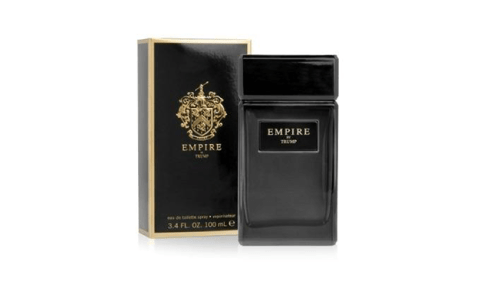
“Empire by Trump is the perfect accessory for the confident man determined to make his mark with passion, perseverance and drive. For those who aspire to create their own empire through personal achievement, this dynamic scent is both compelling and leaves a lasting impression. Bold notes of peppermint, spicy chai and a hint of apple demand attention.”

What would a fragrance by Abraham Lincoln be like? What would he call it? How would he describe it?

Abraham Lincoln

To get started, here is the list of ingredients Trump put in his fragrances, Success and Empire. But please feel free to be creative. You are creating a fragrance for one of our greatest Presidents.

Apple
Bamboo leaves
Birchwood
Chai
Coriander
Geranium
Ginger
Juniper
Musk
Peppermint
Red currant
Tonka bean
Vetiver

After 70 Years of Progress, America Must Face Itself Again

Church

Black Church Burned, With ‘Vote Trump’ Scrawled on Side

In 1945 America helped defeat Nazi Germany, a global force that threatened to engulf the world in virulent hate and tyranny. In the aftermath of a brutal but noble victory, and despite deserved self-congratulation, America was forced to look at itself. It was not immune to or unfamiliar with similar levels and types of hate within—in certain places, among certain people.

We worked at identifying and eliminating that sort of hate, institutionally and individually, to the extent that is ever possible. There were missteps and resistance, along with denials and rationalizations. Progress was made, sometimes in fits and starts, and the work goes on.

This has been a year of staggering, stupefying realizations. Among the things we know better, as if we weren’t aware, is that there are plenty of people with hate in their hearts who for a long while have felt marginalized and silenced by a degree of public decency. Another thing we learned, and should know, is that once public decency is called into question or invalidated, those same people will be encouraged and emboldened.

I wrote about this eight months ago, in a post Unleashing the Dogs of Hate. If you haven’t noticed, that hate is barking louder and starting to bite.

Like it or not, these are our countrymen. Pretending they are not has never worked, nor has giving up because there’s nothing to be done. Progress has been made, and though it would be comfortable to believe things inevitably move forward, they don’t. Backwards happens, but not if we start by facing up again to who we are and hope to be. And then get back to work.

British Victories in the American Revolution

British Occupation of Philadelphia

For those who are supporting an American political revolution, and may be discouraged by the results of some of the battles, take heart.

The original American Revolution, an attempt to bring truly representative democracy to the North American continent, was a long and seemingly impossible series of battles, many of which the colonists lost. And lost. And lost.

Today, of course, Americans of all beliefs celebrate the perseverance of those who, at the time, many considered political pests and unrealistic dreamers, naïve and fooling themselves into thinking that things could radically change.

Reason and evidence suggested that these revolutionaries were possibly delusional. Except. Except they didn’t think so, and thought that the naysayers were shortsighted or even traitors to the cause of freedom.

And so, for you political revolutionaries, a partial list of the British victories in the American Revolution. In case you forgot, the winner of these battles ultimately lost. Big time.

Battle of Kemp’s Landing – November 14, 1775
Battle of the Rice Boats – March 2-3, 1776
Battle of Block Island – April 6, 1776
Battle of The Cedars – May 18-27, 1776
Battle of White Plains – October 28, 1776
Battle of Fort Cumberland – November 10-29, 1776
Battle of Iron Works Hill – December 22-23, 1776
Battle of Bound Brook – April 13, 1777
Battle of Ridgefield – April 27, 1777
Battle of Thomas Creek – May 17, 1777
Battle of Short Hills – June 26, 1777
Siege of Fort Ticonderoga – July 5-6, 1777
Battle of Hubbardton – July 7, 1777
Battle of Fort Ann – July 8, 1777
Battle of Oriskany – August 6, 1777
Second Battle of Machias – August 13-14, 1777
Battle of Staten Island – August 22, 1777
Battle of Setauket – August 22, 1777
Battle of Cooch’s Bridge – September 3, 1777
Battle of Brandywine – September 11, 1777
Battle of Paoli – September 21, 1777
Siege of Fort Mifflin – September 26 –November 15, 1777
Battle of Germantown – October 4, 1777
Battle of Forts Clinton and Montgomery – October 6, 1777
Battle of Matson’s Ford – December 11, 1777
Battle off Barbados – March 7, 1778
Battle of Quinton’s Bridge – March 18, 1778
Battle of Crooked Billet – May 1, 1778
Mount Hope Bay raids – May 25-30, 1778
Battle of Alligator Bridge – June 30, 1778
First Battle of Ushant – July 27, 1778
Siege of Pondicherry – August 21–October 19 1778
Battle of Newport – August 29, 1778
Grey’s raid – September 5-17, 1778
Baylor Massacre – September 27, 1778
Battle of Chestnut Neck – October 6, 1778
Little Egg Harbor massacre – October 16, 1778
Carleton’s Raid – October 24-November 14 1778
Battle of St. Lucia – December 15, 1778
Capture of St. Lucia – December 18-28, 1778
Capture of Savannah – December 29, 1778
Battle of Brier Creek – March 3, 1779
Chesapeake raid – May 10-24, 1779
Battle of Stono Ferry – June 20, 1779
Great Siege of Gibraltar – June 24, 1779-February 7, 1783
Tryon’s raid – July 5-14, 1779
Penobscot Expedition – July 24-August 29, 1779
Action of 14 September 1779 – September 14, 1779
Siege of Savannah – September 16-October 18, 1779
Battle of San Fernando de Omoa – October 16-November 29, 1779
Action of 11 November 1779 – November 11, 1779
First Battle of Martinique – December 18, 1779
Action of 8 January 1780 – January 8, 1780
Battle of Cape St. Vincent – January 16, 1780
Battle of Young’s House – February 3, 1780
Battle of Monck’s Corner – April 14, 1780
Battle of Lenud’s Ferry – May 6, 1780
Bird’s invasion of Kentucky – May 25-August 4, 1780
Battle of Waxhaws – May 29, 1780
Battle of Connecticut Farms – June 7, 1780
Battle of Camden – August 16, 1780
Battle of Fishing Creek – August 18, 1780
Battle of Charlotte – September 26, 1780
Royalton Raid – October 16, 1780
Battle of Jersey – January 6, 1781
Battle of Cowan’s Ford – February 1, 1781
Capture of Sint Eustatius – February 3, 1781
Battle of Wetzell’s Mill – March 6, 1781
Battle of Guilford Court House – March 15, 1781
Battle of Cape Henry – March 16, 1781
Battle of Blandford – April 25, 1781
Battle of Hobkirk’s Hill – April 25, 1781
Action of 1 May 1781 – May 1, 1781
Siege of Ninety-Six – May 22-June 6, 1781
Action of 30 May 1781 – May 30, 1781
Battle of Spencer’s Ordinary – June 26, 1781
Battle of Green Spring – July 6, 1781
Battle of Dogger Bank – August 5, 1781
Battle of Groton Heights – September 6, 1781
Battle of Eutaw Springs – September 8, 1781
Siege of Negapatam – October 21-November 11, 1781
Second Battle of Ushant – December 12, 1781
Battle of Videau’s Bridge – January 2, 1782
Capture of Trincomalee – January 11, 1782
Battle of Saint Kitts – January 25-26, 1782
Battle of Wambaw – February 24, 1782
Action of 16 March 1782 – March 16, 1782
Battle of the Saintes – April 9-12, 1782
Battle of the Black River – April-August, 1782
Battle of the Mona Passage – April 19, 1782
Action of 20–21 April 1782 – April 20-21, 1782
Naval battle off Halifax – May 28-29, 1782
Battle of Negapatam – July 6, 1782
Battle of the Combahee River – August 26, 1782
Grand Assault on Gibraltar – September 13, 1782
Action of 18 October 1782 – October 18, 1782
Action of 6 December 1782 – December 6, 1782
Action of 12 December 1782 – December 12, 1782
Action of 22 January 1783 – January 22, 1783
Capture of the Bahamas – April 14-18, 1783


Why We Should Teach and Learn Ancient History First

Children in America who attend some sort of religious school, even before going to secular school, may learn some limited sort of ancient history. Ancient in that it concerns purported people and events from millennia ago. Limited in that some number of those people and events, however instructional and enlightening, may be of some historical question.

There is other ancient history worth teaching our kids early, and catching up with ourselves, just in case we missed it in our own education. There are continuous civilizations all around the world that have been ongoing, in the same place, also for millennia.

China, for example. Or India. Or the native populations in the Americas. This is where education should start, before we start talking about admittedly important people arriving on these North American shores and establishing an admittedly important nation just a few centuries ago.

Why? Because it would give us a sense of perspective on what we have, or have not, achieved so far. And because it would give us a missing sense of the scope of history, in that everything comes and goes. Which you could learn from the history of China. Or you could learn from reading the I Ching, the book about things changing, written in China millennia ago. Or if you prefer something more Western and familiar, from reading the Bible itself. A time for every purpose, it says. And so it goes.

A Visual Vacation in Fun and Relevant History: WPA Posters

WPA - Shall the Artist Survive

In case you think that government has no positive role to play in our lives, society or culture, especially in times of national stress, please have a look at the WPA posters from 1936 to 1943.

The Library of Congress has the largest collection:

The Work Projects Administration (WPA) Poster Collection consists of 907 posters produced from 1936 to 1943 by various branches of the WPA. Of the 2,000 WPA posters known to exist, the Library of Congress’s collection of more than 900 is the largest. The posters were designed to publicize exhibits, community activities, theatrical productions, and health and educational programs in seventeen states and the District of Columbia, with the strongest representation from California, Illinois, New York, Ohio, and Pennsylvania. The results of one of the first U.S. Government programs to support the arts, the posters were added to the Library’s holdings in the 1940s.

Here is a description of the WPA:

Of all of Roosevelt’s New Deal programs, the Works Progress Administration (WPA) is the most famous, because it affected so many people’s lives. Roosevelt’s vision of a work-relief program employed more than 8.5 million people. For an average salary of $41.57 a month, WPA employees built bridges, roads, public buildings, public parks and airports.

Under the direction of Harry Hopkins, an enthusiastic ex-social worker who had come from modest means, the WPA would spend more than $11 million in employment relief before it was canceled in 1943. The work relief program was more expensive than direct relief payments, but worth the added cost, Hopkins believed. “Give a man a dole,” he observed, “and you save his body and destroy his spirit. Give him a job and you save both body and spirit”….

When federal support of artists was questioned, Hopkins answered, “Hell! They’ve got to eat just like other people.” The WPA supported tens of thousands of artists, by funding creation of 2,566 murals and 17,744 pieces of sculpture that decorate public buildings nationwide. The federal art, theater, music, and writing programs, while not changing American culture as much as their adherents had hoped, did bring more art to more Americans than ever before or since.

It would be lovely to include dozens of the posters here. Instead, here are just a few more. Please visit and enjoy the entire collection.

WPA - Yellowstone

WPA - Mural Studies

WPA - Letter Writing

WPA - Music Project

WPA - Lack of Funds

U.S. voter turnout is very low. But what if something is happening here?


U.S. Voter Turnout

Pew Research reports that “U.S. voter turnout trails most developed countries.” But what if something is happening here?

What if U.S. voter turnout was more like Belgium (89% of voting age population)? Or Australia (82%)? Or Israel (76%)? To name just a few of the countries where people vote in great numbers.

Instead, U.S. voter turnout is mired at 54% of voting age population, just a few places from the bottom.

There are about 235 million Americans of voting age. If turnout increased to the top of the list (89%), that would increase the number of voters by 35% (89%-54%). Thirty-five percent of 235 million is about 82 million more voters.

82 million more voters. To put that in perspective, the winner of the last presidential election received about 66 million votes.

82 million more votes. Many young. Many not white. Many open to new ideas and proposals, as the old ones don’t seem to work so well. Many not committed to maintaining the status quo, which has not been all that good to and for them.

This is what should worry all the established political parties and politicians. And the establishments that depend on them and on predictable stability rather than change, radical or even incremental.

Except that the parties, politicians and establishments don’t seem, at least publicly, to be worried. They appear to believe that non-voting Americans won’t suddenly show up at the polls in great numbers to vote their own views and interests. And just in case, some of those establishments are ready to deploy tools to help keep those numbers down.

Sometimes history is a bending arc. Sometimes it’s a runaway train. Votes are the fuel. That train may already be rolling slowly. Getting ready to speed up.

Because something is happening here
But you don’t know what it is
Do you, Mister Jones?

Bob Dylan, Ballad of a Thin Man

“Wrong Direction” Is the Wrong Question: A Nation Lost

GPS

Seventy-five percent of Americans say the country is moving in the wrong direction. But that isn’t the problem they actually perceive. It isn’t that they think we should go East when we’re heading West. It’s that, like an unprogrammed GPS, we have no idea where we want to go.

Americans love their GPS. They love it not because it can tell heading North from South; any compass can do that. They love it because when you put in a particular location, it will, mostly, direct you there. But that presupposes that you have a particular destination in mind.

America was least lost in the years following World War 2. There had been two very specific objectives, both of which had been achieved. We wanted to restore a failed economy and introduce renewed prosperity. Done. We wanted to defeat the most evil threat the world had ever known. Done.

We proceeded on autopilot for decades, though there were bumps on the road. It was about prosperity and freedom. When there were obstacles to either, we eliminated or overcame them. There were recessions here and there, but they passed. There was global Communism, which we fought wherever we found it, and found it sometimes where it wasn’t.

Then some things happened. A new generation was born, which had no native knowledge of any of that. A new economic generation was born, with money machines on a scale that dwarfed anything in history. A new technological generation was born, transforming the nature of human experience. A new threat to freedom and security emerged, though it didn’t much look like the Communism we had come to know, hate, and fight. Whereas only two countries had world-destroying weapons after WW2, the list was now long and growing.

And then, on top of all that, the prosperity we had depended on for more than sixty years was put into question. It wasn’t that it was taking a break. Maybe it would never come back again, ever, at least not the way it had been.

Which brings us back to the ‘wrong direction” question. If we say that 20th century-style prosperity and that freedom and security are what America is living for, is our personal and national direction, there is nothing wrong with that. But what if that is something we can’t program into our national GPS because it is not a destination we can reach, at least not fully and unconditionally?

We can keep saying we are moving in the wrong direction. Politicians and leaders are more than happy to exploit this, telling us who to blame and how they can fix it. But maybe we are lost, and should admit it, and should spend our energy figuring out, very specifically, without vague ideas of “prosperity” and “freedom”, where exactly we want to go, and then how we might get there.

Hanukkah as Game of Thrones

The Hanukkah story of the Maccabees and the Hasmonean dynasty they founded is not for children. The aftermath of the overthrow of the Seleucid overlords is for grown-ups, a history of empire, guerilla wars, massacres, alliances made and betrayed, power marriages, expansionism, hegemony, and subjugation. And of course faith—the right kind, the wrong kind, and none at all.

It is the sort of story that belongs in Game of Thrones. You won’t see that series on HBO. We want simple tales of faith and miracles, for ourselves and especially for the kids. And why not? In troubled times and a troubled world, no one can begrudge any injection of light or miracles we can find or conjure up.

For a summary of this history, see this from the Israeli newspaper Haaretz: A Brief History of a Violent Epoch: Judas Maccabeus’ death would mark the end of the Maccabean revolt against the Greeks – and the start of the extremely unstable Hasmonean dynasty.

Here is a chart that outlines the chronology of the Hasmonean Dynasty:

Hasmonean Dynasty

Hanukkah has never been a major Jewish religious holiday, not on a par with Yom Kippur, Rosh Hashanah, Passover, and the rest. The events celebrated on Hanukkah do not appear in the Jewish bible. The canon of the Tanakh was closed before the Books of Maccabees could be included. Some of those books, though, can be found in Christian versions of the Old Testament.

Hanukkah was elevated, especially in America, as a seasonal companion to Christmas, for Jews living in decidedly Christian cultures. For a complete treatment of this phenomenon, see the book Hanukkah in America: A History.

The comparison to Christmas does suggest why we don’t have an epic series devoted to the Maccabees and their historical legacy.

The Christmas story has an even bigger and more significant and spectacular sequel. The newly born Jesus grows up to become the foundation of the faith and one of the great teachers in world history. The next part of his mission is told in the story of Easter. Sequels don’t get any bigger, clearer or cleaner than that.

The historical follow-up to the story of the Maccabees is more equivocal. It puts that era in Jewish history in a very real, human, political light that may clash with the simple idealized version of candles and dreidels.

This doesn’t mean we shouldn’t light the candles, eat the latkes, spin the dreidels, and commemorate the victory of God’s rule over the rule of the less godly. It’s just that sometime during the holiday, we might leave behind childish things and look at the history with eyes open. Not because it takes away from the holiday, but because it adds to it a fuller sense and understanding.

And because for two millennia, the exact same complexity has been unfolding in the exact same place. Not a children’s game. More like Game of Thrones. Only much more real.