Bob Schwartz

Category: Elections

Building the Perfect 2016 Candidate

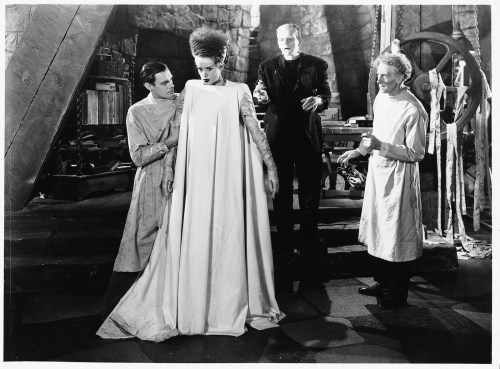
Frankenstein

A new report from the Pew Research Center doesn’t exactly tell us how to choose or build the most successful Presidential candidate for 2016. But the survey asking adults for their views of various Presidential traits offers some guidelines on who might be the best choices.

Views of Presidential Traits

Military service increases the likelihood of support more than any other factor. Being an atheist or never having held office before? Not so good. In between, take your pick. Being in your 70s is viewed as positive by just 6%, as negative by 36%. In fact, aside from atheism or inexperience, age is most likely to lose support. Interestingly, in 2008 when John McCain was running, Democrats overwhelmingly viewed age as a negative trait. They still don’t completely like candidates in their 70s, with 44% less likely to support, but something about the current possibilities seems to have softened that position (a favorite candidate who will be approaching 70, perhaps?).

If you look at the biggest differential between more and less likely to support, it appears that this is what Americans might be looking for:

Military veteran
Governor
Held office, but not Washington experience
Not in their 70s
Not gay or lesbian
No extramarital affair
Believes in God

How does your current favorite, if you’ve got one, fit that profile?

McCutcheon: Is This the Electoral Apocalypse? (Maybe Not)

SupremeCourtJustices_2012_032620121

Six months ago I wrote a post called The Man Who Could Kill Democracy about the case of McCutcheon v. Federal Election Commission. McCutcheon was asking the Supreme Court, on free speech grounds, to lift federal limits on aggregate campaign contributions. By a 5-4 decision, the Court today agreed.

In that post I wrote:

The First Amendment is central to American democracy, but it has never been absolute. It could be of course, and we would be free to destroy the reputations of others, or talk freely about overthrowing the government, or republish the words of others without penalty, or yell fire in that crowded theater. Instead, as an exercise in social priorities, we argue about balance, though sometimes the argument for the good of the many and “democracy” is cover for what’s good for me and mine.

Today’s decision finds that limits on what an individual can give to a single candidate is allowable under the First Amendment as a way to prevent corruption (that is, you shouldn’t massively buy a single election on a quid pro quo, one hand washing the other basis). But restrictions on what an individual may give in aggregate offends the First Amendment (that is, you are free to try to buy as many elections as your wealth allows).

The majority opinion of Justice Roberts was joined in by Justices Scalia, Kennedy and Alito; Justice Thomas concurred, but believes that all limits on campaign finance are impermissible under the First Amendment. Justice Breyer filed a dissent, in which Justices Ginzburg, Sotomayor, and Kagan joined.

Justice Breyer writes in his dissent:

Today a majority of the Court overrules this holding. It is wrong to do so. Its conclusion rests upon its own, not a record-based, view of the facts. Its legal analysis is faulty: It misconstrues the nature of the competing constitutional interests at stake. It understates the importance of protecting the political integrity of our governmental institutions. It creates a loophole that will allow a single individual to contribute millions of dollars to a political party or to a candidate’s campaign. Taken together with Citizens United v. Federal Election Comm’n, 558 U. S. 310 (2010), today’s decision eviscerates our Nation’s campaign finance laws, leaving a remnant incapable of dealing with the grave problems of democratic legitimacy that those laws were intended to resolve.

So is this it, the electoral apocalypse? In the earlier post before the decision I wrote:

Get smart.
Vote.

Without casting aspersions too wide, it does seem that a number of Americans really don’t do their homework on public issues. As far as voting, our abysmal turnout numbers tell the tale. But if Americans did do their homework and did vote, we really could have a pragmatic, centrist, reasonable and successful country—instead of an extremist-obstructed one based more on blustery ideology and vaguely-veiled self-interest. We can hope.

That’s still it. If we have an aware, informed, moral, discerning electorate that votes, there is hope that in spite of McCutcheon (and Citizens United and whatever other shoes the Supreme Court has yet to drop), we can maintain what Justice Breyer calls “democratic legitimacy.” Without that, despite what Imagine Dragons sing, the apocalypse may not be followed by a new age, but by some back to the future America of the overpowered and the underpowered.

If you believe that America has a problem in any of those areas—awareness, information, morality, discernment, voting—then do whatever you can. Don’t blame nice Mr. McCutcheon, or nice Justices Roberts, Scalia, Kennedy, Alito, and Thomas (even if they are wrong). And if you are hand-wringing, which is admittedly hard to avoid, do it only for a moment; it is unattractive and useless. Then get busy.

The Man Who Could Kill Democracy

McCutcheon v FEC

Today the Supreme Court hears arguments in the case of McCutcheon and Republican National Committee v. Federal Election Commission, an attack on the constitutionality of limits on individual contributions to federal elections. Just as the Court found in Citizens United that corporations have a First Amendment right to unlimited campaign contributions, so Alabama businessman Shaun McCutcheon would have that extended to people (since, as Mitt Romney pointed out, corporations are people too, ergo, people are corporations—at least for election money).

Mr. McCutcheon seems to be a decent and hardworking person, a loyal American, and he is of course entitled not only to his opinion but to his pursuit of it in the courts. But Mr. McCutcheon could conceivably be known as the man who killed American democracy, or at least the one nominally identified with its murder. Yes, he would have the heirs to Abraham Lincoln as his accomplices or co-conspirators, but his fingerprints would be on the weapon.

Is that hyperbole? Before Citizens United, it might have seemed so. But beyond theory, we now have proof that Big Money has a distorting effect on Big Democracy. A contortionate, twisted beyond recognition effect. There is reason to believe that if individual limits are lifted, the effect might go beyond injury to mortal blow.

You can read the submitted briefs here. After the arguments, you can listen to them here.

The questions presented on appeal are these:

Federal law imposes two types of limits on individual political contributions. Base limits restrict the amount an individual may contribute to a candidate committee ($2,500 per election), a national-party committee ($30,800 per calendar year), a state, local, and district party committee ($10,000 per calendar year (combined limit)), and a political-action committee (“PAC”) ($5,000 per calendar year). 2 U.S.C. 441a(a)(1) (current limits provided). Biennial limits restrict the aggregate amount an individual may contribute biennially as follows: $46,200 to candidate committees; $70,800 to all other committees, of which no more than $46,200 may go to non-national-party committees (e.g., state parties and PACs). 2 U.S.C. 441a(a)(3) (current limits provided) (see Appendix at 20a (text of statute)). Appellants present five questions:

1. Whether the biennial limit on contributions to non-candidate committees, 2 U.S.C. 441a(a)(3)(B), is unconstitutional for lacking a constitutionally cognizable interest as applied to contributions to national-party committees.

2. Whether the biennial limits on contributions to non-candidate committees, 2 U.S.C. 441a(a)(3)(B), are unconstitutional facially for lacking a constitutionally cognizable interest.

3. Whether the biennial limits on contributions to non-candidate committees are unconstitutionally too low, as applied and facially.

4. Whether the biennial limit on contributions to candidate committees, 2 U.S. C. 441a(a)(3)(A), is unconstitutional for lacking a constitutionally cognizable interest.

5. Whether the biennial limit on contributions to candidate committees, 2 U.S.C. 441a(a)(3)(A), is unconstitutionally too low.

Without going into the arguments so well-developed in the written briefs, and in the oral arguments today, one point should be stressed. The First Amendment is central to American democracy, but it has never been absolute. It could be of course, and we would be free to destroy the reputations of others, or talk freely about overthrowing the government, or republish the words of others without penalty, or yell fire in that crowded theater. Instead, as an exercise in social priorities, we argue about balance, though sometimes the argument for the good of the many and “democracy” is cover for what’s good for me and mine.

If the Court agrees that both the base limits (the per election money) and the aggregate limits (cumulative over two years) are unconstitutional on their face, anyone with money can attempt to influence public opinion and the action of public officials to the full extent that money can. And it can. Some say that this would simply level the playing field—the same way that everybody having guns would level the playing field, insuring that only the bad guys would get shot. Funny how the First and Second Amendments can work so well together.

In the worst case, where we may be speaking about McCutcheon as we do about Citizens United, only more so, there is still an answer. Simple but not easy:

Get smart.
Vote.

Without casting aspersions too wide, it does seem that a number of Americans really don’t do their homework on public issues. As far as voting, our abysmal turnout numbers tell the tale. But if Americans did do their homework and did vote, we really could have a pragmatic, centrist, reasonable and successful country—instead of an extremist-obstructed one based more on blustery ideology and vaguely-veiled self-interest. We can hope.