Bob Schwartz

Category: Business

Bookstores in New York


Rizzoli Bookstore

Bookstores in New York
The gleaming rooftops at sundown
Oh, bookstores in New York
It lifts you up when you run down

Dreamers with empty hands
They sigh for exotic lands

It’s bookstores in New York
It’s good to live it again

Apologies to Vernon Duke, Autumn in New York, the greatest of all Manhattan songs

The New York Times ran a story this week, Literary City, Bookstore Desert: Surging Rents Force Booksellers From Manhattan .

If you’re interested, you can read the story yourself. If you’re paying any attention to New York, business, media, or culture, you already know the story. Bookstores under siege by the rise of Amazon and digital books. Manhattan rents skyrocketing. The number of people who care about or have actually had the bookstore experience falling. The number of people who associate the Manhattan experience with the bookstore experience falling faster.

Above is a picture of the Rizzoli bookstore on West 57th Street. It will be closing soon, as the building owner will be tearing down the building. It is not the only great bookstore, past or present, which has contributed to the specialness of Manhattan. It is, though, a good example of that. If you have not walked down 57th, and have not turned into Rizzoli, and have not walked up those stairs and past those shelves, you will have to imagine. The same goes for all the other big and small bookstores of Manhattan, some less grand on less grand streets, all of them filled with books. All of them places to get lost for a while, for a long while if the aisles are long and the shelves high, the way you get lost in a flirtation or a lifelong love.

This is not nostalgia. This is not romance, at least not the kind that constructs an unreal and unattainable dream. It is real, it is still there, for now, the bookstores, the books, the place and time to scan the titles, to pick up and pull out and leaf through and browse. A refuge from the Manhattan streets, or whatever streets you walk, a place and time to be yourself, to be anywhere, and mostly to fall in love. It’s still good to live it.

Ukraine Sanctions: Who Is Poking Which Bear

Bear
The most interesting message about this morning’s U.S. sanctions to protest Russian actions came from one of those sanctioned. The travel bans and freezing of U.S. assets are aimed at a handful of Putin advisers and others complicit in the Crimean takeover, but not at the highest level (including Putin) or at any businesspeople.

Russian Deputy Prime Minister Dmitry Rogozin, who is being sanctioned, tweeted this:

“Comrade Obama, and what will you do with those who have neither accounts nor property abroad? Or didn’t you think of that?”

On this day when a prominent Russian television journalist, with an atomic mushroom cloud as background, pointed out—correctly—that Russia is the only country that can reduce the U.S. to “radioactive ash,” the tweet from Comrade Rogozin is most telling.

The U.S., even more than our allies, is being poked. Taunted. “Is that the best you’ve got? You can do better than that!” The U.S. and Europe can of course do better (meaning: more severe) than that, from big business sanctions to military intervention, all of which threaten global instability.

This is the point in every fight when power has to be harnessed in the service of strategy. Russia wants nothing more than any excuse to throw away the rulebook they don’t believe in anyway. They aren’t so much bringing guns to a knife fight as brandishing guns to bring out the other guns and look like the victim. The aggressor victim.

Let’s hope or pray for our leaders to be strong, wise, unselfish, non-partisan, and honest (with us and with themselves), who can interpret the language of pokes, and can act appropriately.

Grammy Nominations Time Again

Neon Philharmonic
It’s Grammy nominations time again, in advance of January’s awards for the best in recorded music.

In some circles, the relevance of the Grammys is beyond question—as in there’s no question that they are irrelevant. In part that’s because of their being behind the times and missing the mark at various points. Of course awards are matters of disagreement and controversy, so it does come with the territory.

Still, there have been some infamously wild choices. Most celebrated, and the emblematic botched call, was Jethro Tull’s winning the 1988 Grammy for Hard Rock/Heavy Metal, over Metallica among others. (When asked about this today, as he always is, Jethro Tull leader Ian Anderson simply notes that he presumes the band got the award for being “nice guys’ who had never won.)

It takes literally an hour to read the entire list of nominations and probably days to listen to all the nominated music. It might be fair and nice to acknowledge what Grammy got right, but that’s no fun. They don’t need anybody’s encouragement and way to gos/att boys. Instead it is more hopefully corrective to list some offbeat nominations or lack thereof.

Lorde is nominated for Record of the Year, Song of the Year (songwriting) and Best Popo Solo Performance for Royals. But she is somehow not in the running for Best New Artist. That single and the album (Pure Heroine) have been monstrously popular across a variety of audiences. By way of bonus, this is genuinely original and interesting music, and she wrote and recorded it when she was only sixteen. So if she shouldn’t win Best New Artist—there are some worthy competitors—she kind of deserved a shot at it.

On the other chronological end we have the oldsters. For that weirdness, you have to check out the Grammy history for Led Zeppelin. They were nominated as Best New Artist in 1970, but lost to Crosby, Stills and Nash (the other nominees were Chicago, Neon Philharmonic and Oliver. Oliver.). Then nothing, no nominations, nada. Even though all the major Zep albums sit somewhere in the all-time 100, not to mention some of the even-more iconic tracks. (To keep from singing Stairway, I listened to Neon Philharmonic’s big hit Morning Girl and Oliver’s Jean. That’ll keep you from getting too crazy heavy.)

The reunited Led Zeppelin performed at a benefit concert in 2007, and the soundtrack of the film of that concert was released, and has resulted in two Grammy nominations: Best Rock Performance for Kashmir and Best Rock Album for Celebration Day, the concert soundtrack.

That’s right. A band that broke up in 1980 (33 years ago), a band that reunited for one performance in 2007 (six years ago) to record a song it first released in 1975 (38 years ago) is up for two Grammys.

Take that you naysayers. Who says Grammy isn’t still “with it”? If that is what the kids are saying these days.

Rethinking Wireless: Why AT&T CEO is Right and May Be Wrong

AT&T
AT&T is again rethinking wireless service. At an investor conference on Tuesday, AT&T CEO Randall Stephenson spoke about changes in how the company provides devices and services to its customers.

“When you’re growing the business initially, you have to do aggressive device subsidies to get people on the network. But as you approach 90 percent penetration, you move into maintenance mode. That means more device upgrades. And the model has to change. You can’t afford to subsidize devices like that.”

To unpack and analyze this, a little history, wireless and otherwise, is in order.

AT&T has been at or near the forefront of changing directions in the industry. It successfully moved large numbers of its customers away from unlimited data plans, with more than 70% now paying for a fixed amount that they can use. Without the simplicity of unlimited bundling of voice, data and text, AT&T has still tried to simplify by grouping those formats in shared plans.

But then there were the devices to deal with.

The mobile device industry is out of control, which is what you would expect in a free market for an exploding technology. Manufacturers can do more and more, more quickly, asking more or less for it, depending on the configuration and profitability demands. The upshot is that smartphones are on an annual improvement cycle (the typically-used 18-month cycle is just bandied about to make it seem a little less crazy). And those smartphones are genuinely expensive, befitting miraculous pocket-sized computers, which they are.

This is where wireless providers like AT&T came in and how it became such a mess.

As the gatekeepers of wireless service, providers find themselves playing two supposedly synergistic roles. When you get to the gate, they sell you service and devices to use the service. One of those roles is relatively simple and straightforward. The other—as a reseller of hardware—has become the problem.

Back in the day, before changes in telecomm capped by the breakup of “Ma Bell” in 1982, it was this easy for AT&T and its customers. You leased a phone from AT&T and you paid whatever regulatory bodies allowed for your service. The attempt to inject the free market into this process more or less worked to radically reform that. You could get your service elsewhere and you could get your phone elsewhere and ultimately anywhere. Pricing for service and devices dropped accordingly and precipitously. AT&T and its emancipated children did not have to be in the business of selling phones, though particularly in the business sector, they still did.

Then came wireless and all bets were off.

Networks and devices came in pairs: if you want AT&T service, these are the cell phones that work on its network. AT&T did not want to be in the device-selling business, but as Stephenson pointed out, that was how you get customers on the network, where you sell your actual moneymaker.

The evolution to smartphones and data seemed on its face an opportunity. Those devices would be hungry for exactly the sort of meal that AT&T cooked up. AT&T would make the devices relatively easy to own. It was Business 101: Give away the razors, sell the blades. Manufacturers devised really nifty devices, applications for those devices proliferated like rabbits, and all should have been right with the world for AT&T, even if it had to subsidize those devices.

But few could foresee the frenetic hyperspeed at which devices would develop. A smartphone barely two years old could become a technological and experiential antique—or so it was made to seem to consumers. AT&T and others always had appropriate upgrade paths, still predicated on the seductively-priced device model.

When the tenability of that model came into question, the industry looked over its shoulder to another industry that has long had to deal with expensive devices: automakers. While the idea of owning a telephone would have seemed strange to consumers in the 1960s, so would the idea of leasing a car. But when money became tight for car buyers, that is exactly what the auto industry turned to. And when wireless providers decided to no longer deeply subsidize $600 smartphones, they came up with the same solution. For the moment AT&T is still offering smartphones at a somewhat reduced price with a two-year contract, but not as reduced as it once was. AT&T would love to leave that model behind and it may well disappear entirely. Instead, you can pay full price for the device or bring your own (with a small monthly service discount if you do), or you can pay on installments. After 20 months, the device is yours, but as with a car lease, you will owe the entire residual amount if you end paying installments early.

Here are items that Stephenson did not account for or disclose, at least publicly at the conference.

By pulling away from its role in the device distribution chain, AT&T will not curb the device development madness or the consumer desire for the latest and greatest, which is always a few months around the corner. Stephenson’s taking a stand is completely bottom-line rational, but is likely to prompt a new dynamic, in which synergy diminishes, replaced by some still-to-be-determined forces.

In essence he has said: This is nuts and we are not playing this game anymore. But if he thinks that the other players—consumers and manufacturers—are about to adapt to AT&T’s direction, it may not be that easy.

Manufacturers have been granted extraordinary freedom by the subsidy-model, freedom which certainly contributed to the accelerated upgrade cycle. They have developed expensive devices that they knew would be discounted and therefore more accessible to consumers. But they are in the business of innovation, and they can’t and won’t just stop. Either they slow down innovation, or they make devices more affordable, or they expect people to shell out big bucks every couple of years. This may or not be what Stephenson had in mind to do: shift the onus, get out from the tight space, and put the manufacturers between the rock and the hard place.

Consumers also don’t want to be left behind. The only thing moving faster than smartphone development are expectations of user experience. A good part of that is software-based, not necessarily requiring a newer or better device. But some of the most appealing and desired features and functions are device-bound. In keeping with Stephenson’s comments, the free market conclusion is that if customers want something, they should be willing to pay for it, if they are able. People might want to drive a Lexus or BMW, but some are just going to have to settle for a reliable Chevy. But that doesn’t mean customers are going to be happy, no matter how rational it is, when they’ve been driving the best for less up to now.

That isn’t the biggest question or unspoken prospect.

Consumers may not want or need as much service as AT&T has prepared to provide and plans to sell. It is evident, from research and from the rise of non-phone tablets, that this is now a Wi-Fi device world. The expense of data drove consumers there, and once they discovered that most of the capability of their smartphones could be accessed via free or cheap, and nearly ubiquitous, Wi-Fi, data and even phone service became the sometimes necessary sidekick turned to if and only if there was no Wi-Fi available. Which other than travelling, is increasingly rare.

All of us—manufacturers, providers and consumers—are rethinking the possibilities.

Online Gambling and Real Life Guns: It’s About The Children

sheldon-adelson-615cs013012
A team of highly-paid ex-politico lobbyists are out there arguing against proposed bills in Congress to allow Internet gambling. Under one of these bills, a 12% tax would be shared between the federal and state governments, 4% and 8% respectively. That would be a lot of revenue in these hard times.

Gambling is an American and ancient tradition. Lotteries helped fund the American Revolution, which makes them practically sacred. In this case, the main opponents of digital gaming for money are the wealthy owners of real-world casinos and establishments, most visibly billionaire Sheldon Adelson, who helped bankroll Mitt Romney’s quest for the Presidency. No surprise there. The practice of online gaming, which already goes on with offshore sites, would expand dramatically, leaving bricks, mortar and showgirl spots with a severely reduced market.

Some of the arguments against the bills are, on their own terms, not entirely unpersuasive. Gambling does support hospitality and tourism, and if the already declining dollars drop further, there are going to be folks who lose their jobs in this challenged economy. It’s not clear that the entrepreneurs getting rich off this have the will and creativity to come up with substitute businesses that would replace those jobs. Gambling is also already a social problem, damaging lives and families, and what is bad gets worse with increased volume. The final big argument is, naturally, about “the children.” No matter what we try to do, the online environment is notoriously freewheeling, and there is no question that underage players would find a way to play, just as they get cigarettes and alcohol.

On the tourism question, cultural and social trends have always left some forms of entertainment and diversion behind while other new or more appealing ones prospered. Either you believe overall in the free market or not. People who say that government shouldn’t be picking winners and losers shouldn’t be telling the government to pick winners and losers.

Out of control gambling can be pernicious, no doubt about it. But the argument, one actually made, that the poorest in society would be unfairly burdened by the attraction of online gambling is under current realities absurd. First, because it is not clear that all the opponents of online gambling care so very much for the lower tiers of American society. Second, because government already endorses, promotes and profits from easy-access gambling that does weigh on the most vulnerable—the lotteries. With all the strains on government budgets, it is unimaginable what state some states would be in without those gaming dollars.

Then there is the ultimate trump card: the children. That score is easy to answer. On the scale of things kids shouldn’t be allowed to do, alcohol is number 2, tobacco is a close number 3, and then comes gambling. Number 1 is easy. Children should not have guns, should not live in an environment where guns are widely available and acceptable, and where guns are regularly used to shoot, injure and kill innocent people—including children.

So if you happen to see or hear any of those lobbyists shilling for Sheldon Adelson and his ilk, talking about how it is about “the children” and how we must protect them from the evils of playing online poker or placing a digital bet on an NFL game, ask them if guns aren’t a tad more dangerous, and ask them what they’ve done to seriously reduce the ubiquity of those guns and to eliminate the personal and social costs that those guns have inflicted on all of us.

There likely won’t be a good answer, at least not one that isn’t laced with equivocation, hypocrisy and protests of irrelevancy. It is relevant. Ask them to put the two side by side, the harm to children from online gambling and from guns, and tell them that the billionaires are free to make billions more on their casinos—just as soon as the guns get put away.

Lesson from The Voice: Caveat Inspector

The Voice
The Voice is now the dominant singing competition on television, having surpassed, probably permanently, American Idol. There is a lesson from The Voice that goes beyond just music, a lesson that goes to the heart of what has become a more media centric/entertainment centric society.

The reasons for the success of The Voice are pretty simple:

A substantial number of solidly talented and interesting contestants.

Panels of likeable and helpful celebrity coaches, with real musical expertise and real chemistry between them: Adam Levine, Cee-Lo Green, Christina Aguilera and Blake Shelton in the fall; Shakira, Usher with Levine and Shelton in the spring.

The show process begins with the uber-concept in the show’s name. The first round is a blind competition, where the panelists can hear but not see the contestants sing. It is, at least in part, all about “the voice.”

This week began the Knockout Rounds, where votes from the TV audience determine who will stay and who will be eliminated. The first of two nights on Monday was peculiar, anomalous for any singing competition. Of the ten singers who performed, not a single one was criticized, even for a tiny misstep—even though a few performances were very good, some were okay, and some were just not quality singing.

American Idol never quite figured out how to deal with judges’ criticism of contestants. Starting with the original panel, and continuing through the revolving door of judges who failed, there were more or less roles for the judges: the more brutal but somewhat constructive one (Simon Cowell), the kind, encouraging and heart-on-the-sleeve, maybe a little ditzy one (Paul Abdul) and whatever one (Randy Jackson).

There was an underlying issue in all that. There is little doubt that the producers of Idol shaded and spun the show so that certain contestants might rise a little higher than others. Whether this amounted to rigging results is unsubstantiated overstatement. But clearly, with all the elements at their command, producers could shine a different light on different singers, light that might affect voting. A judge’s praise or criticism could certainly be one of those elements.

In so many ways, for the better, The Voice is not American Idol. But the toolbox has some of the same tools: heartwarming or heartrending back stories, strategic song choices, etc. If the panelists/coaches criticism could affect the outcome, on Monday the decision seemed to be to have none at all.

And it was weird. At some point, even as the least trained audience ears could sense a musical problem, you could see coaches forcing smiles and faint praise. One big tell is when a panelist begins by telling a singer how good they look or how wonderful a person they are. Which is utterly ironic, since the show is based on the premise that voice matters above all.

If Monday’s absence of criticism was notable, it was even more apparent as soon as the Tuesday Knockout Round began. From the first singer on, many of the performances received what was in all cases deserved small critiques—never devastating, sometimes not as big as it could have been, but critique nonetheless. It was as if someone behind the scenes had noticed and said: our audience may like certain singers for their look, their attitude, their personality, but the audience isn’t deaf or stupid. We have a panel with four eminently talented musicians, and while we don’t want brutality, their credibility as judges of performances—their honesty—is on the line.

Which brings us to the greater lesson that should never be forgotten. From the beginning of advertiser-paid media, newspapers to now, all of those media have dual roles to play. They are whatever they essentially do—report news, entertain us, stage competitions, offer ways to publish short messages to the world, etc. But they are all also ways of delivering eyes, ears, hearts and minds to advertisers. There is nothing wrong with this. Nor is there anything wrong with media not being transparent about this obvious dual role and announcing all the things they do to increase the audience.

So enjoy. Get invested in your favorites (this season: Caroline Pennell, Tessanne Chin and Cole Vosberry, all of whom could be The Voice, all of whom deserve success). But remember that in commercial media, along with caveat emptor (buyer beware), it is caveat lector (reader beware), caveat inspector (viewer beware), and on this day of the Twitter IPO, caveat tweeter.

League of Denial: The NFL’s Concussion Crisis

league-of-denial-raster-br10-8
You may not think that you want to watch the new PBS Frontline documentary League of Denial: The NFL’s Concussion Crisis.

You may not want to spend almost two hours on a documentary, even a superb one. You may not like football, may not know anybody who plays football at any level, may not care about the business of sports. Then again, some or all of those may apply to you.

It doesn’t matter. You can watch League of Denial online. Please watch it.

One of the many lessons you will learn, if you didn’t already know, is that we pay a price for everything. Or at least somebody does. The price is sometimes advertised and obvious, but sometimes hard to find or even hidden. The point is not that something is good or bad, right or wrong, but that we can only make informed and enlightened decisions when everything is known. No more or less.

Life Lessons from the End of the Regular Baseball Season

MLB Standings
The 162 games of the regular Major League Baseball season are over. Now the League Championship Series begin. For those who don’t care about baseball—or who think it a stupid waste of time—some generalized random thoughts about life lessons we can learn.

Cleveland Indians: The Indians closed the season with a ten-game winning streak. 10-0. That itself is a big deal. A bigger deal is that it came at the end of the season and kept them in the running for a spot in the playoffs.

Life Lesson: Winning streaks are good, well-timed winning streaks are better.

Boston Red Sox: Up until 2004, the Red Sox were one of the two legendary non-winners of World Series (Chicago Cubs are the other). Some attributed this to their selling Babe Ruth to the Yankees in 1919. Prior to that, the Red Sox were one of baseball’s great teams. After, the so-called Curse of the Bambino took over. They did get their mojo back, winning the World Series in 2004 and 2007, and having another great season this time around, with a 97-65 record—the best in baseball.

Life Lesson 1: Hang in there.

Life Lesson 2: There is no Curse of the Bambino.

Miami Marlins: The Marlins have the strangest history of any modern expansion team, maybe of any major league team at all. A rich guy owned them when they began in 1993. He bought a lot of talent, which led to their winning a World Series in 1997. He got rid of all the high-priced players before the next season, and so the World Champions had a record of 54-78. He sold the team to another rich guy, who would later own the Boston Red Sox. Before leaving, that rich guy set the stage for another World Series win in 2003. The current rich guy, who had previously owned a team that is now defunct, bought the Marlins just before that championship. He has subsequently changed his approach to baseball every year in a style that can be described as either whimsical or self-serving. To entice the leaders of South Florida to spend hundreds of millions on a new ballpark, he beefed up the team with lots of expensive talent for the 2012 season. He got the park, but the talent fizzled there, with a record of 69-93. He got rid of the talent, went for cheap and mostly untried young players, and the Marlins finished this season at 62-100. The most infamous upshot of his profitable penny-pinching was trading Miguel Cabrera to the Detroit Tigers in 2007, because he knew he could never pay what Cabrera might one day be worth. Cabrera is now almost certainly the greatest hitter of his generation, so it may not be the Curse of the Miguelito, but it’s close.

Life Lesson 1: When Eve complained to her nemesis in the Garden of Eden, the legless one who convinced her to break bad, the reply was simple: What are you complaining about? You knew all along that I was a snake.

Life Lesson 2: It’s all fun and games, but business is business. Not being cynical, just realistic. Whether you’re a fan of politics or music or baseball or whatever, enjoy the show, but don’t forget that.

Labor Day 2013

ILGWU - Yiddish, Italian, English
In talking about the labor movement, there are reasons to be encouraging and critical.

I grew up in a union household. My grandfather was an immigrant who joined and trained in the International Ladies Garment Workers Union (ILGWU), famous for its “Look for the union label” song. I keep his union card handy in my desk.

The contributions of unions to American life, to the creation of a huge middle class, are beyond debate. Whatever you think of unions today, the labor movement helped make America.

Any critical comments will be taken as ammunition by those who oppose unions reflexively as an un-American scourge on our economy and way of life. Some of these people would not only eliminate the labor movement from present day America, but would be pleased to go back in a time machine and wipe it from history. There is little doubt that if this could somehow be accomplished, America might look like Czarist Russia or some other unbalanced and benighted society.

Those are the caveats. Here is the current situation.

Organized labor is disappearing from American life. Union membership as a percentage of the work force was 35% in the 1950s; it now hovers around 11% and is still dropping. The relentless push for right to work laws goes on, but even without that, the numbers may not rise, and may continue to decline.

It doesn’t matter how it got like this. There are plenty of rear view mirror analyses, including things like admitted abuses and overreaching, along with a shortsighted sense that the party would never end. For a lot of workers, union and otherwise, the party is over.

This, however, is not the end of the story. A heroic effort to re-imagine and re-vision unions and the labor movement can take place. This is going to take brutal self-examination and, as is implied, imagination and vision. Unions can evaluate who they are and who they can be in the context of 2013 and beyond—including being a centerpiece for progressive change. But with that, unions must also figure out who they can’t be and shouldn’t be. This is where having eyes wide open comes in. It is also where courage comes in and defensiveness must go out.

The idea that agents of progress look the same in every age is patently untrue. It is one of the traps of progressive movements, thinking that who and what worked a century ago or a few decades ago will work forever. It won’t. But there is something that will. Creating that something doesn’t begin by blaming the enemies, though enemies there be. It begins by admitting that there is a problem making unions fit in with current America, and an opportunity to create a labor movement that does.

There are Labor Day cakes in the local supermarket, decorated with American flags. The stores probably didn’t mean that Labor Day is the patriotic, all-American equivalent of Independence Day. Last night the local country club exploded Labor Day fireworks. That probably isn’t a political or economic statement. So maybe, as organized labor gets to work trying to figure out what exactly a 2013 movement looks like, it might start with the simple task of putting the “labor” back in Labor Day.

How to Innovate: Hit ‘Em Where They Ain’t

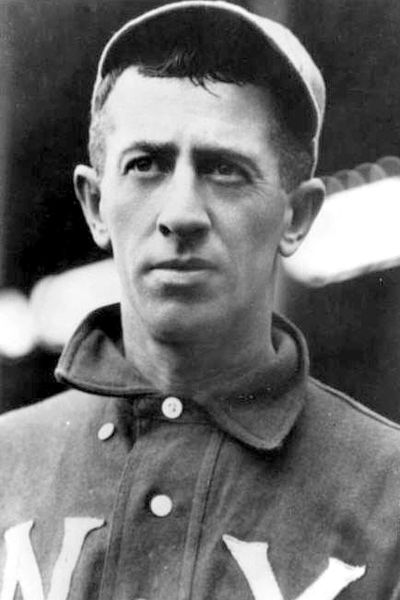
Willie Keeler

Here’s a bit of advice on innovation from baseball great Willie Keeler, who played in the majors from 1892 to 1910.

Batters usually hit to the field on the side of the plate they bat from. Right-handed batters stand on the left side of the plate and usually hit to left field. This is known as pull hitting. Some batters can time their swing so that they can hit to the opposite field—that is, right handers to right field—and this is appropriately known as hitting to the opposite field. In either case, when fielders know the tendency of the batter, they can be positioned to best catch the ball.

The greatest batters can hit the ball wherever they want, leaving fielders having to guess and work for every out, and leaving those hitters with awesome statistics.

Keeler was one of those greats. He was called “Wee Willie” because he was only 5’4-1/2” tall and weighed 140 pounds. That did not stop him from compiling a .341 career batting average (14th all time), hitting over .300 16 times in 19 seasons, and hitting over .400 once. If you’re not a baseball person, just trust that this is really good.

How did he do it?

He advised keeping the ball away from opposing fielders. “Keep your eye clear, and hit ’em where they ain’t.”

So if you are starting or renewing a business, starting or renewing a career, no matter how “wee” you think you are, take it from someone who knew. Hit ‘em where they ain’t.