Bob Schwartz

Category: Business

Life Lessons from the End of the Regular Baseball Season

MLB Standings
The 162 games of the regular Major League Baseball season are over. Now the League Championship Series begin. For those who don’t care about baseball—or who think it a stupid waste of time—some generalized random thoughts about life lessons we can learn.

Cleveland Indians: The Indians closed the season with a ten-game winning streak. 10-0. That itself is a big deal. A bigger deal is that it came at the end of the season and kept them in the running for a spot in the playoffs.

Life Lesson: Winning streaks are good, well-timed winning streaks are better.

Boston Red Sox: Up until 2004, the Red Sox were one of the two legendary non-winners of World Series (Chicago Cubs are the other). Some attributed this to their selling Babe Ruth to the Yankees in 1919. Prior to that, the Red Sox were one of baseball’s great teams. After, the so-called Curse of the Bambino took over. They did get their mojo back, winning the World Series in 2004 and 2007, and having another great season this time around, with a 97-65 record—the best in baseball.

Life Lesson 1: Hang in there.

Life Lesson 2: There is no Curse of the Bambino.

Miami Marlins: The Marlins have the strangest history of any modern expansion team, maybe of any major league team at all. A rich guy owned them when they began in 1993. He bought a lot of talent, which led to their winning a World Series in 1997. He got rid of all the high-priced players before the next season, and so the World Champions had a record of 54-78. He sold the team to another rich guy, who would later own the Boston Red Sox. Before leaving, that rich guy set the stage for another World Series win in 2003. The current rich guy, who had previously owned a team that is now defunct, bought the Marlins just before that championship. He has subsequently changed his approach to baseball every year in a style that can be described as either whimsical or self-serving. To entice the leaders of South Florida to spend hundreds of millions on a new ballpark, he beefed up the team with lots of expensive talent for the 2012 season. He got the park, but the talent fizzled there, with a record of 69-93. He got rid of the talent, went for cheap and mostly untried young players, and the Marlins finished this season at 62-100. The most infamous upshot of his profitable penny-pinching was trading Miguel Cabrera to the Detroit Tigers in 2007, because he knew he could never pay what Cabrera might one day be worth. Cabrera is now almost certainly the greatest hitter of his generation, so it may not be the Curse of the Miguelito, but it’s close.

Life Lesson 1: When Eve complained to her nemesis in the Garden of Eden, the legless one who convinced her to break bad, the reply was simple: What are you complaining about? You knew all along that I was a snake.

Life Lesson 2: It’s all fun and games, but business is business. Not being cynical, just realistic. Whether you’re a fan of politics or music or baseball or whatever, enjoy the show, but don’t forget that.

Labor Day 2013

ILGWU - Yiddish, Italian, English
In talking about the labor movement, there are reasons to be encouraging and critical.

I grew up in a union household. My grandfather was an immigrant who joined and trained in the International Ladies Garment Workers Union (ILGWU), famous for its “Look for the union label” song. I keep his union card handy in my desk.

The contributions of unions to American life, to the creation of a huge middle class, are beyond debate. Whatever you think of unions today, the labor movement helped make America.

Any critical comments will be taken as ammunition by those who oppose unions reflexively as an un-American scourge on our economy and way of life. Some of these people would not only eliminate the labor movement from present day America, but would be pleased to go back in a time machine and wipe it from history. There is little doubt that if this could somehow be accomplished, America might look like Czarist Russia or some other unbalanced and benighted society.

Those are the caveats. Here is the current situation.

Organized labor is disappearing from American life. Union membership as a percentage of the work force was 35% in the 1950s; it now hovers around 11% and is still dropping. The relentless push for right to work laws goes on, but even without that, the numbers may not rise, and may continue to decline.

It doesn’t matter how it got like this. There are plenty of rear view mirror analyses, including things like admitted abuses and overreaching, along with a shortsighted sense that the party would never end. For a lot of workers, union and otherwise, the party is over.

This, however, is not the end of the story. A heroic effort to re-imagine and re-vision unions and the labor movement can take place. This is going to take brutal self-examination and, as is implied, imagination and vision. Unions can evaluate who they are and who they can be in the context of 2013 and beyond—including being a centerpiece for progressive change. But with that, unions must also figure out who they can’t be and shouldn’t be. This is where having eyes wide open comes in. It is also where courage comes in and defensiveness must go out.

The idea that agents of progress look the same in every age is patently untrue. It is one of the traps of progressive movements, thinking that who and what worked a century ago or a few decades ago will work forever. It won’t. But there is something that will. Creating that something doesn’t begin by blaming the enemies, though enemies there be. It begins by admitting that there is a problem making unions fit in with current America, and an opportunity to create a labor movement that does.

There are Labor Day cakes in the local supermarket, decorated with American flags. The stores probably didn’t mean that Labor Day is the patriotic, all-American equivalent of Independence Day. Last night the local country club exploded Labor Day fireworks. That probably isn’t a political or economic statement. So maybe, as organized labor gets to work trying to figure out what exactly a 2013 movement looks like, it might start with the simple task of putting the “labor” back in Labor Day.

How to Innovate: Hit ‘Em Where They Ain’t

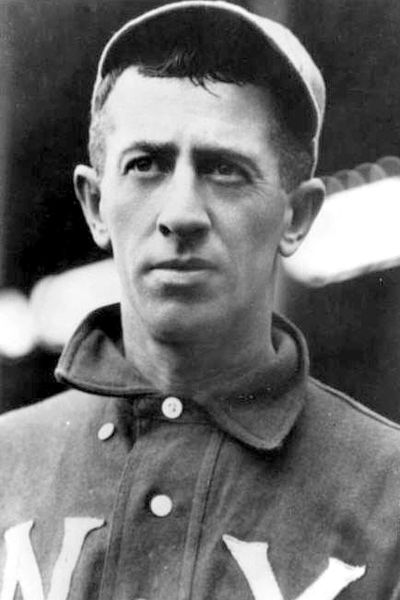
Willie Keeler

Here’s a bit of advice on innovation from baseball great Willie Keeler, who played in the majors from 1892 to 1910.

Batters usually hit to the field on the side of the plate they bat from. Right-handed batters stand on the left side of the plate and usually hit to left field. This is known as pull hitting. Some batters can time their swing so that they can hit to the opposite field—that is, right handers to right field—and this is appropriately known as hitting to the opposite field. In either case, when fielders know the tendency of the batter, they can be positioned to best catch the ball.

The greatest batters can hit the ball wherever they want, leaving fielders having to guess and work for every out, and leaving those hitters with awesome statistics.

Keeler was one of those greats. He was called “Wee Willie” because he was only 5’4-1/2” tall and weighed 140 pounds. That did not stop him from compiling a .341 career batting average (14th all time), hitting over .300 16 times in 19 seasons, and hitting over .400 once. If you’re not a baseball person, just trust that this is really good.

How did he do it?

He advised keeping the ball away from opposing fielders. “Keep your eye clear, and hit ’em where they ain’t.”

So if you are starting or renewing a business, starting or renewing a career, no matter how “wee” you think you are, take it from someone who knew. Hit ‘em where they ain’t.

Detroit: Motown and Corvettes and Tigers, Oh My!

Stingray 1963

Sometimes the best way to tell a story is not to tell it. The news about Detroit’s municipal bankruptcy, the biggest ever in America, is like that. Others will tell it at length. Sometimes the best way is to offer a few items that are interesting and related, and let readers and listeners make the connections, draw the lines, complete the picture.

Just in case your dot-connecting doesn’t make it clear, the story of Detroit’s bankruptcy is the biggest American story of the day, and possibly one of the biggest in many years. It is bigger than the story of Trayvon Martin and George Zimmerman, bigger than last fall’s story of the rich son of a former Michigan governor disastrously running for President (and loving those Michigan trees, though not Detroit), bigger than the continuing economic malaise, but related to all of them.

Fifty years ago, in July 1963, Motown Records, Hitsville U.S.A., released the single Heat Wave by Martha and the Vandellas. It reached #4 on the Billboard Top 100, but did top the R&B chart. Like so many Motown records, who cares about the numbers? Motown is some of the best pop music ever produced in America. Want proof? Just play Heat Wave, or other irresistible tracks by the Vandellas, the Temps, the Tops, or put on another Motown single from fifty years ago that did go to #1, the astonishing Fingertips (Part 2) by 11-year-old phenomenon Little Stevie Wonder. Motown founder Berry Gordy was not just a model of black entrepreneurship in a white country, at a time when black voting rights had still not been established, but was the model for some of the hugest entertainment moguls in the world, including Jay-Z. But that was fifty years ago in Detroit.

Fifty years ago, the Corvette Stingray was introduced. Edmunds not only rates it the best Corvette of all time; it says “A full half-century after its debut, the 1963 Corvette coupe remains one of the most alluring automotive designs ever conceived.” The ad above shows an airline pilot in Los Angeles (back when being a pilot was super-special manly, and LA was the city of the future) ogling the new Stingray. He was envying the Motor City vision. But that was fifty years ago.

This very day, as the second half of baseball season begins, the Detroit Tigers are one of the best teams in baseball, with maybe the best pitcher (Max Scherzer) and certainly the best hitter (Miguel Cabrera), who may be on his way to becoming the first player to win consecutive Triple Crowns. Detroit fans appreciate this, and have been showing up for home games at a solid pace, about 37,000 a game—equal to the attendance for the Los Angeles Angels and way more than the 17,000 fans per game that show up in “ultra cool” Miami.

Saying that Detroit will be back from beyond the brink isn’t just wishful thinking. The idea that Detroit can fail but that everybody else in America will be alright is all wrong. The 17th century poet John Donne said it:

No man is an Island, entire of itself; every man is a piece of the Continent, a part of the main; if a clod be washed away by the sea, Europe is the less, as well as if a promontory were, as well as if a manor of thy friends or of thine own were; any man’s death diminishes me, because I am involved in Mankind; And therefore never send to know for whom the bell tolls; It tolls for thee.

And if you don’t go for old poetry that you hated in high school, and would rather forget the troubles of Detroit and the world, Motown has lots to offer, especially on a sweltering July day.

Whenever I’m with him
Something inside starts to burning
And I’m filled with desire
Could it be a devil in me
Or is this the way love’s supposed to be?

It’s like a heat wave, burning in my heart
I can’t keep from crying, it’s tearing me apart

Familiar Faces and Founders Who Flee

George Zimmer
George Zimmer, founder of Men’s Wearhouse, has been terminated from the company he grew—on the day of its annual meeting.

He moved (was kicked upstairs) from CEO to the position of executive chairman in 2011, and he still has a 3.5% stake in the company. It is thought that he may have had some trouble letting go of the reins—a not unusual circumstance—and his firing is the result of the attendant conflicts.

Everyone with a television knows the bearded Zimmer, and has heard him promise that when you wear one of their suits, “You’re going to like the way you look. I guarantee it.” And with 1,239 stores in the Men’s Wearhouse family, many have seen one of its outlets.

There are shareholders to please, a different situation than with Zimmer’s first store in Houston forty years ago. Times are changing for suits, ironically the very fact that Zimmer highlights in the latest series of ads. So if a fresh take was called for, both in the business and the marketing, he may have been seen as standing in the way.

You know George Zimmer. But do you know John Sculley?

Everybody who studies or practices big business does, but few others any more. In 1983, Steve Jobs recruited Sculley from Pepsico to run Apple. Differences almost immediately began cropping up about exactly how Apple was going to reach the next level on its way to make money (Sculley) or make money by changing the world (Jobs). It is reported that Sculley wanted to emphasize the Apple II until the Macintosh was powerful enough to fulfill its promise. No doubt where Jobs stood; just watch the historic Macintosh “1984” ad that ran during the Super Bowl that year. Jobs was demoted in 1985 and quickly left the company. Sculley would leave Apple in 1993, after a few successes but mostly under a cloud. Jobs would, of course, return to Apple—demonstrating in the long run just how potent a founder’s combination of entrepreneurship, vision and hard-nosed business can be. Today, practically everybody on the planet knows Steve Jobs.

It’s sometimes true that founders get it, but can’t take it to the next level. It’s also sometimes true that those outsiders who think they can take it to the next level can’t because they don’t get it.

George Zimmer didn’t sell the world’s most popular and powerful digital devices, actually changing the world. He sold men’s suits. Getting that isn’t so very tough, so he may be expendable. On the other hand, he has proven that over the course of four very tumultuous decades, he did know how to sell those suits.

Sometimes founders really can’t be trusted to evolve themselves or their offerings for a changing market and world. But the possibility that they can shouldn’t summarily be dismissed, and neither perhaps should they. George Zimmer may not be back. But we know who he is, to the benefit of Men’s Wearhouse.

Do founders sometimes know what they’re doing? George Zimmer? Steve Jobs? John who?

DNA and the Supreme Court Reading Program

DNA Court
Today’s Supreme Court decision on the patentability of genetic material, Association for Molecular Pathology v. Myriad Genetics, Inc.  is another example of just how informative and fun these opinions can be, as opposed to just hearing the media summaries. This leads to a suggestion for a Supreme Court Reading Program.

Earlier posts have covered the value—in knowledge and entertainment—of reading current Supreme Court opinions, even if you are not a lawyer. This also includes reading the briefs in support of various positions, from a range of people and organizations. When the marriage equality cases were argued back in March, a post was devoted to The Briefs on Marriage Equality.

In this complex and significant gene case, the unanimous opinion of the Court (Justice Scalia concurred in a very short comment of his own) is that particular genetic material that isolated and identified (here, the site of mutations leading to breast and ovarian cancer) is not patentable, but that a new synthesized version of that same material, with the deletion of some parts, is.

Among the things that makes the opinion so interesting is its cogent explanation of a technical area. Genetics isn’t easy, and the opinion is really an understandable primer on a difficult topic.

Even more interesting are the array of briefs submitted in the case. Along with companies that want to be able to hold lucrative proprietary interest in genes, there are scientists and health care advocates who want nothing to stand in the way of free and open development and application. (The Humane Genome Project, for example, from the first offered all the work on the mapping the human genome to humanity.) Lawyers and intellectual property activists also chimed in, with intense interest in how patent law is a mess in these hyper-advancing times, having fallen so far behind the realities of digital and bio innovation. Also interesting is a brief from the Southern Baptist Convention, which taken from their church perspective makes a pretty good argument that, to put it bluntly, you can’t patent God.

So when you hear mention of an interesting Supreme Court case, either when it is argued or decided, step away from the media reports, even when those are reliable from experts you trust. Instead, visit the Supreme Court site to read or download the opinion (the opinion is published on the site almost immediately). Then visit the American Bar Association site that collects all the amicus briefs for each case that is argued. There will be a lot of those briefs—more than a hundred in the case of marriage equality—so you will want to pick and choose. Sometimes the name of the person or organization submitting the brief will catch your interest, just by who or what they are.

That certainly applies to the gene patent case. There among the many briefs is one identified as Brief for James D. Watson, Ph.D. in Support of Neither Party. Just in case the name isn’t familiar, James Watson, Ph.D. is the co-discoverer of the double helix structure of DNA, for which he and Frances Crick were awarded the Nobel Prize in Physiology in 1963. Even if he wasn’t one of the most important scientists in history, his delightful and erudite 26-page brief would be worth reading. It’s just one more example of how a Supreme Court Reading Program can be an enlightening and surprising addition to whatever else you’re currently paying attention to.

Pepsi and the Line between Stupid and Clever

Mountain Dew
You’ve got to love the movie Spinal Tap. Below the surface of this hilarious fake “rockumentary”, beyond the wisdom of lines such as “It’s such a fine line between stupid and, uh…clever”, is a genuine commentary about what happens when popular art meets commerce.

When the band tries to revive its fading fortunes with an album called “Smell the Glove”, the record label rejects a cover photo of a woman on a leash being forced to, well, smell a glove. Instead, the album is released with a plain black cover.

Pepsi has long looked at its Mountain Dew brand as the edgiest of its beverages, with potential youth appeal. That would explain why it hired a 22-year-old hip-hop artist and music producer known as Tyler the Creator to create a series of videos for the brand. The storyline is that a goat named Felicia, voiced by Tyler, is obsessed with Dew and angry at its being in short supply. The goat brutally attacks a white waitress. In the third video, the injured waitress is at a police station, looking over a lineup of four black men and the goat. The goat threatens her, among other things reminding her that “snitches get stitches.” She is scared off and will not “dew” it.

After complaints about its being the most racist commercial ever, PepsiCo removed it from the web (you may still be able to see it here).

PepsiCo said, “We understand how this video could be perceived by some as offensive, and we apologize to those who were offended. We have removed the video from all Mountain Dew channels and have been informed that Tyler is removing it from his channels as well.”

Tyler’s manager said:

“It was never Tyler’s intention to offend, however offense is personal and valid to anyone who is offended. Out of respect to those that were offended, the ad was taken down. For those who know and respect Tyler, he is known for pushing boundaries and challenging stereotypes thr[ough] humor. This is someone who grew up on David Chappelle. This situation is layered with context and is a discussion that Tyler would love to address in the right forum as he does have a point of view. As someone who hasn’t had the experience of being discriminated against I choose to respect the opinion of those who have. What I can speak to is Tyler, who represents much more than the current narrative this story suggests.”

“Contrary to what many may discern from this, Tyler is the embodiment of not judging others, his delivery may not be for everyone (which is true for anyone who pushes boundaries) but his voice is nonetheless important to the conversation since his demographic understands what he ultimately stands for and sees the irony of it all. Context may or not help those who are offended and I wholly respect that, but for those who are interested, I can offer the following and leave the rest to Tyler.

“1. This spot was part of an overall admittedly absurd storyline about a crazy goat who becomes obsessed with Mountain Dew, 2. The lady in front of the line-up is the waitress from the first spot, 3. The line-up consists of Tyler’s friends and Odd Future members who were available that day. (L-Boy, Left Brain, Garret from Trash Talk and Errol) 4. He absolutely never intended to spark a controversy about race. It was simply an…admittedly absurd story that was never meant to be taken seriously. Again, we apologize if this was taken out of context and would never trivialize racism, especially now in America where voting and civil rights are being challenged at the highest level. I can however stand firmly by someone I have believed in since we met, only because I know him and I know all of this was never his intent.”

It’s not clear who this “David Chappelle” that the manager mentions is, but Dave Chappelle is one of the funniest, strangest, most boundary-pushing comic artists of recent times. Chappelle created one great piece after another, including a bit where a blind black man is a vicious anti-black racist, because he thinks he is white. That’s brilliant, so let’s start with the fact that Tyler has a long way to go.

Artists are supposed to do whatever their vision tells them, and we shouldn’t be stopping them. Sometimes it works, sometimes it doesn’t, and sometimes the art is behind or ahead of its times.

But that doesn’t mean that those who pay for the work have to go along with everything that artists conceive and produce. There is actually a bit of cleverness here, but it is plagued by so much troubling text, context and subtext that it could not possibly have passed any feasibility test that any mainstream corporate advertiser might apply.

One thing that makes this even a little more troubling is PepsiCo’s quasi-apology. We are supposed to have gotten used to cleverly crafted statements that are meant to sound like apologies but aren’t quite. That is now the norm. We are not that stupid. “We apologize to those who were offended” is a defensive or even condescending posture: if you are among those who don’t get it (or as Tyler’s manager says, not part of “his demographic [that] understands what he ultimately stands for and sees the irony of it all”), then we are sorry. Mass media have mass audiences, and if you want to put something out there that is likely to cause trouble but you believe will help you, either stand behind it or don’t. Apologize or don’t. It may turn out to be commercially smart or stupid. But at least you’re brave.

The Most Important Document In History

CERN W3
The Magna Carta. The Declaration of Independence. The Constitution. The Emancipation Proclamation. The number of essential documentary moments goes on and on, both here and globally, each one of them a significant next step in progress.

Twenty years ago, what may turn out to be the most important document in history (above) was issued. The website of the European Laboratory for Particle Physics (CERN) explains the event:

On 30 April 1993 CERN published a statement that made World Wide Web (“W3”, or simply “the web”) technology available on a royalty-free basis. By making the software required to run a web server freely available, along with a basic browser and a library of code, the web was allowed to flourish.

British physicist Tim Berners-Lee invented the web at CERN in 1989. The project, which Berners-Lee named “World Wide Web”, was originally conceived and developed to meet the demand for information sharing between physicists in universities and institutes around the world.

Consider what the web would be like if it was a toll road and not a freeway. That was a possibility, had Berners-Lee and CERN decided to leverage and exploit the technology. But the web was born free and continues to resist chronic attempts to control and monopolize it.

One of the strangest ironies about the freedom of the web is that it was born on a NEXT computer. If you know digital history, you will recognize that NEXT was the company that Steve Jobs founded, in between his first stint at Apple, from which he was bizarrely let go, and his second stint, when he turned Apple into the richest technology company in the world.

Sir Tim Berners-Lee did not get as rich as Jobs. But he did get a knighthood, and recognition as an unsurpassed visionary, and the thanks of billions for shaping the world as few before or after did or ever will.

Happy Record Store Day: I Like It Like That

I Like It LIke That
To celebrate International Record Store Day on April 20, Ambassador Jack White might have visited I Like It Like That Records & Tapes on Main Street in Newark, Delaware.

The problem is that the second most important record store in my life is no longer around. Hasn’t been for years. And even if it was, I’m not sure Jack White would be there, though he would have been welcome.

(The first most important record store? A hole in the wall in New Jersey, which soaked up every bit of available adolescent cash, like a dealer peddling stuff to an underage junkie. A gateway drug.)

For the record, Newark has a number of musical distinctions.

The Stone Balloon, also on Main Street, was the site of some epic performances by not-quite-yet-superstars like Bruce Springsteen. That The Balloon is now a “Winehouse” says something about civic and commercial evolution, though there’s too much loud laughter to tell that story.

The Deer Park, also on Main Street, is even more important musically than The Balloon. George Thorogood and the Destroyers began as George Thorogood and the Delaware Destroyers, and back then George could be found some Thursday nights at the Park, finishing off the destruction of masses of Newark townies with his guitar.

But this is about I Like It Like That. Main Street had a number of worthwhile places to simultaneously be enlightened and spend/kill lots of time. Two in the pantheon were the world’s greatest and most significant bookstore and I Like It Like That.

Somewhere in space, the sounds of I Like It Like That are still reverbing, though those alien rockers will be missing the feeling of walking through that door into another world (though, technically, they are in another world).

To celebrate, one thing would be a marathon playing of Frampton Comes Alive—the most overbought and traded-in album of all time, at least by ILILT standards. Wah-wah-wah-wah-wah-wah-wah-wah-wah.

Better yet, the name of the store is I Like It Like That. So let’s sing:

They got a little place
Across the track
The name of the place is
I Like It Like That
Now, you take Sally
And I’ll take Sue
And we are gonna rock away
All our blues

Now, the last time I was down there
I lost my shoes
They had some cat
Shoutin’ the blues
The people was yellin’
Out for more
And all they were sayin’
Was, ‘Go man go’

Come on, let me show you where it’s at
The name of the place is
I Like It Like That

Every record store, past, present and future, is where it’s at. BJL, JG and DC—thanks and rock on.

When Brands Are Like Packaged Bad Mortgages

Once upon a time, a home loan was a simple but powerful thing. It allowed people who could not afford a house get one and get on the path to full ownership. And it allowed financial institutions to have a concrete obligation that could be sold, the value of which was based on the house and on the ability and duty of the borrower to pay.

If the solid simplicity of that is not completely gone, we know that over the last few decades, culminating in a mighty disaster, very creative financial craftsman were able to turn this into something supposedly bigger and better, but something not rooted in anything other than itself. Once that became obvious, as with the naked emperor, all hell broke loose, and the economy collapsed

Every maker and marketer of goods and services should be students of this phenomenon. Brands, for example, are truly things, and things of value. So much value that we attach a measure to it—brand equity—and for some companies, it is their greatest asset.

The idea that brand, or marketing, or messaging, exists independent of some more basic thing is seductive but silly. In American politics, we are witnessing this debate on a grand scale. Is reliance on creating or refurbishing a brand, ignoring the unvarnished nature of the product you’re selling, a form of denial? Or is it an implicit acknowledgement that adapting products to the times, to demographics, and to competition is just really, really hard—and sometimes impossible.

This isn’t only, or primarily, about politics. It is about business, about companies who may have come to believe that marketing is all there is, and that ever more sophisticated approaches can leave the basic realities behind for fancier and more valuable derivatives. The sophisticated and fancy can be important, but it’s not all of it, or even most of it.

The smartest people in the room (they would say in the world) forgot that a mortgage was nothing more than a house and borrower. We all, sadly, paid the price for that arrogance and, let’s say it, stupidity. Products and services of all kinds are exactly the same. Businesses, no matter how big, no matter how branded, forget those basics at their peril.