Bob Schwartz
Month: December, 2025


December 31, 2025
New Year: I Ching Hexagram 64—Not Yet Fulfilled

64
Fire Over Water
Wei Ji • Not Yet Fulfilled
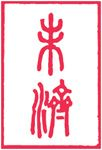
The ideograph of wei above is meticulous—it looks simple, yet its meaning is profound. The stem of the ideograph is a tree, mu. A second curved stroke was added through the tree and thus the ideograph of wei was created. Without the horizontal stroke we have a picture of a tree with its roots growing downward and its branches growing upward. The horizontal stroke represents the ground. The portion of the tree underneath the ground is still alive. It has already grown to its full height (fulfilled its growth), and now it starts a new cycle of growth. The structure of the ideograph supplies a vivid picture of having achieved one’s goal, but not yet having been fulfilled. There is a new cycle to come. The meaning of the ideograph of ji signifies crossing a river, from here to there, or from beginning to end.
SIGNIFICANCE
This gua ends the sixty-four gua and the three hundred and eighty-six yao of the I Ching. But the principle of change continues without end. Events in the universe move forward and alternate in cycles. The stage of Not Yet Fulfilled will gradually reach the stage of Already Fulfilled. The stage of Already Fulfilled is merely the fulfillment of certain events or of a certain stage in a cycle of events. If some occurrences have reached the stage of Already Fulfilled, there are always others that are Not Yet Fulfilled. The stage of Already Fulfilled is also the stage of Not Yet Fulfilled. The stage of Not Yet Fulfilled is the beginning, like the dark before the dawn. The I Ching starts with Qian, the Initiating, and ends with Wei Ji, Not Yet Fulfilled. When the development of events reaches the end of a cycle, Already Fulfilled, then another cycle, Not Yet Fulfilled, begins. In this way, the cycles of change and development repeat endlessly.
A transition from disorder to order is representative of the I Ching as a whole. In the beginning it swings from extreme to extreme, with no balance in between. By the time it reaches the final gua, Already Fulfilled and Not Yet Fulfilled, a perfect state of balance has been achieved.
During King Wen’s sitting in stillness he reflected on the past in light of the present. The destiny of the Shang dynasty had been fulfilled. The destiny of the Zhou was not yet fulfilled. Its situation was like that of the little fox who had almost crossed a river. There was success in store, and nothing was unfavorable.
The Complete I Ching, Taoist Master Alfred Huang
December 29, 2025
2026: Too Much of Nothing?
Too much of nothing
Can make a man feel ill at ease
One man’s temper rises
While another man’s temper might freeze
Now it’s a day of confession
And we cannot mock a soul
Oh, when there’s too much of nothing
No one has control
Bob Dylan, Too Much of Nothing
Count the items in your day. What you encounter and engage with. Inside and outside. Things and thoughts. Incidentally or by choice. It’s a lot.
As you count, you might consider the character and value of those items. What is each one adding? What is each one subtracting? More to the point, what is each one adding to or subtracting from what you value?
AI is literally trained on items, ready to process and offer those items. And it is an item itself. So if the volume of items already exploded with the digital access of internet and devices, that is now exponentially larger.
It is certain that 2026 will be another “year of AI”, as will every year in the foreseeable future. More items for us to encounter and engage in, incidentally and by choice, added to the proliferation of items we are already experiencing.
It is also certain that we, as lovely as we are, are not yet equipped to handles all these items in ways that are good for us as individuals and as societies. If we work at it maybe someday, but not yet, though hopefully before it overtakes us and we drown.
Which is why counting and valuing items may be helpful. It is, if you like to think of it this way, just awareness and consciousness of the items, their value, and your values. Once you are aware, you choose.
One person’s drowning is another person’s swimming in a vast ocean. If you understand the ocean and you know how to swim.
© 2025 Bob Schwartz
December 27, 2025
Media Balance v. Truth: “A Balanced Treatment of an Unbalanced Phenomenon Distorts Reality”
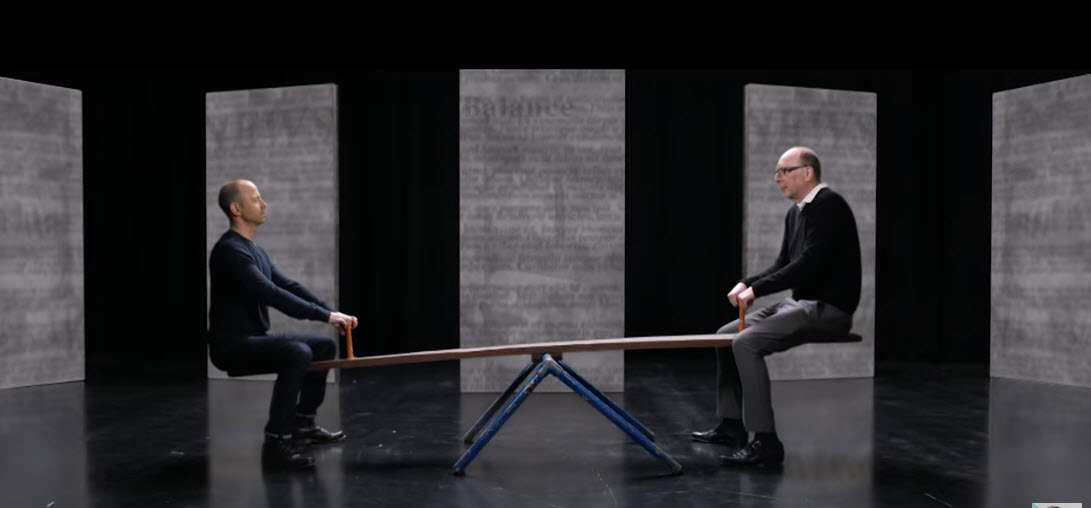
This is a replay of a post from April 30, 2019. It is repeated not only because at that time we were deep into the first Trump administration. It is repeated because here and now, the attempts to “balance” coverage of the second Trump administration are–hoping not to sound over-dramatic–existentially dangerous for America.
While we regularly employ balancing and weighing in our personal and public lives–the traditional pro-con lists–there is a special provision. The “joke” describing Mussolini’s fascist regime was “he made the trains run on time.” Yes, and he was a brutal fascist. The provision is that at some point, the weighing must end, because the damage is so overwhelming that balancing has no place.
The news principle of balance is considered almost sacred, and has its place under many circumstances. But not all circumstances. On the one hand, on the other hand, you decide, is no longer enough. For example, on the one hand, a president is by all evidence physically and psychologically unwell and perhaps unstable. On the other hand, he says he is in excellent, unparalleled, psychological and physical health. We report both, you decide.
Six years later, there is better news about news. Many more independent outlets are doing reporting that is reliable and “balanced” in favor of reality. Still, some of the major once-respected news organizations are shying away from reality, sometimes running away from it, out of their own leanings or out of fear.
You may have seen or heard about Samantha Bee’s Not the White House Correspondents’ Dinner on TBS. The first one of these two years ago was meant to point to Trump’s attempt to diminish journalism by not attending, as president’s have for decades. In years past, the WHCA Dinner became known as the Nerd Prom, combining a celebration of a free press, journalists, celebrities and sharp roasting—including roasting the president.
This year, thin-skinned Trump not only held his usual alternative rally at the exact same time, but somehow cowed the White House Correspondents’ Association into abandoning roasting, humor and celebrities entirely, in favor of earnest attention to journalism. Samantha Bee would have none of it, instead offering her own combination of humor, entertaining discussion, and celebrities.
The segment getting the most attention is probably her closing roast of Trump, which was no holds barred. But in the analysis category, no segment was better than the one on how media attempts to offer “balanced” coverage is useless when the matter covered doesn’t really have two civilized and defensible sides. The segment was grounded in this from an op-ed piece by Norm Ornstein and Thomas Mann:
We understand the values of mainstream journalists, including the effort to report both sides of a story. But a balanced treatment of an unbalanced phenomenon distorts reality. If the political dynamics of Washington are unlikely to change anytime soon, at least we should change the way that reality is portrayed to the public.
Our advice to the press: Don’t seek professional safety through the even-handed, unfiltered presentation of opposing views.
“Balanced” media coverage, not calling out demagoguery, venality and incompetence at an early stage, is part of how Trump managed to get elected, and how the current devolution of American democracy continues. For more than two centuries, a mostly two-party America could say that there were very fine people on both sides. But it is not only possible that that is not eternally true; we are living through the proof.
April 30, 2019
December 26, 2025
Feast of St. Stephen: Love your enemies
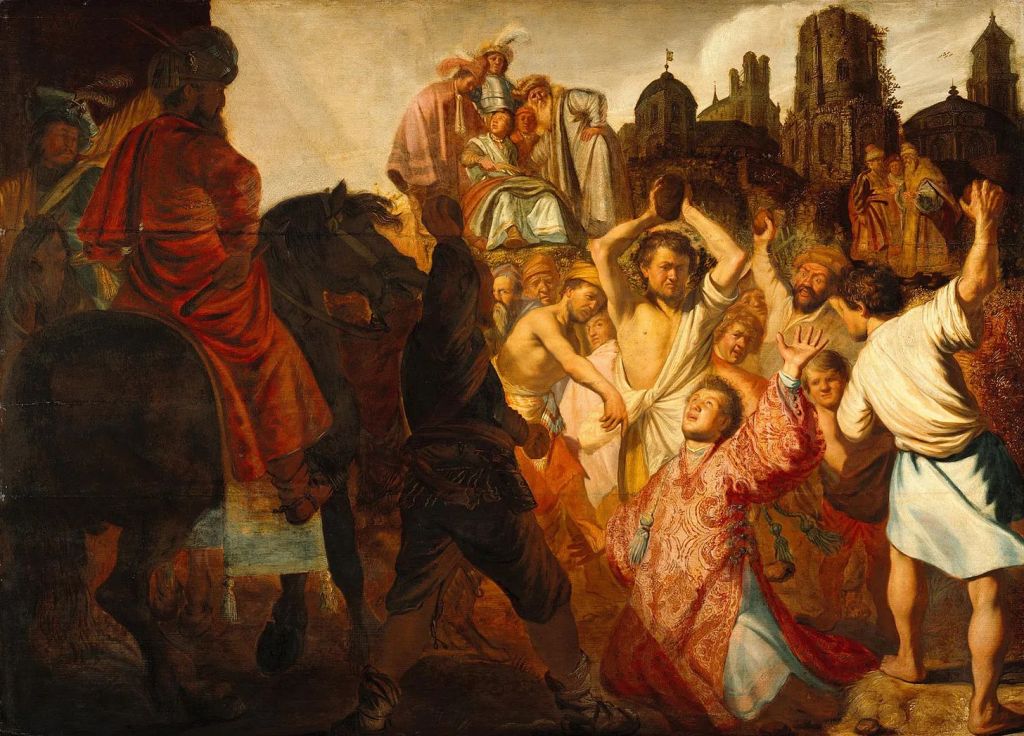
Today, the day after Christmas, is the Feast of St. Stephen, the first Christian martyr. As he was being stoned to death, he prayed for his attackers.
There is a video of the Christmas Eve dinner at Mar-A-Lago. Trump is sitting at a cordoned-off table, with his wife Melania and an unidentified man. Melania is talking to the man, Trump is alone, mostly ignored. It was sad.
In Buddhist traditions, we are asked to treat enemies as treasures and spiritual friends:
When I see ill-natured people,
Overwhelmed by wrong deeds and pain,
May I cherish them as something rare,
As though I had found a treasure-trove…
Even if someone whom I have helped
And in whom I have placed my hopes
Does great wrong by harming me,
May I see them as an excellent spiritual friend.
If you are one of the many affected directly or indirectly by what appears to be a one-man mission to carelessly hurt others and make things worse, it is beyond challenging to “love your enemy”—no matter that we have that advice on good authority.
A couple of things:
Empathy makes you stronger, not weaker.
Empathy does not mean giving up on trying to work against the worst and for the best, including opposition to those “ill-natured people, overwhelmed by wrong deeds and pain.”
December 23, 2025
Shop Christmas at Woolworth’s like it’s 1952!
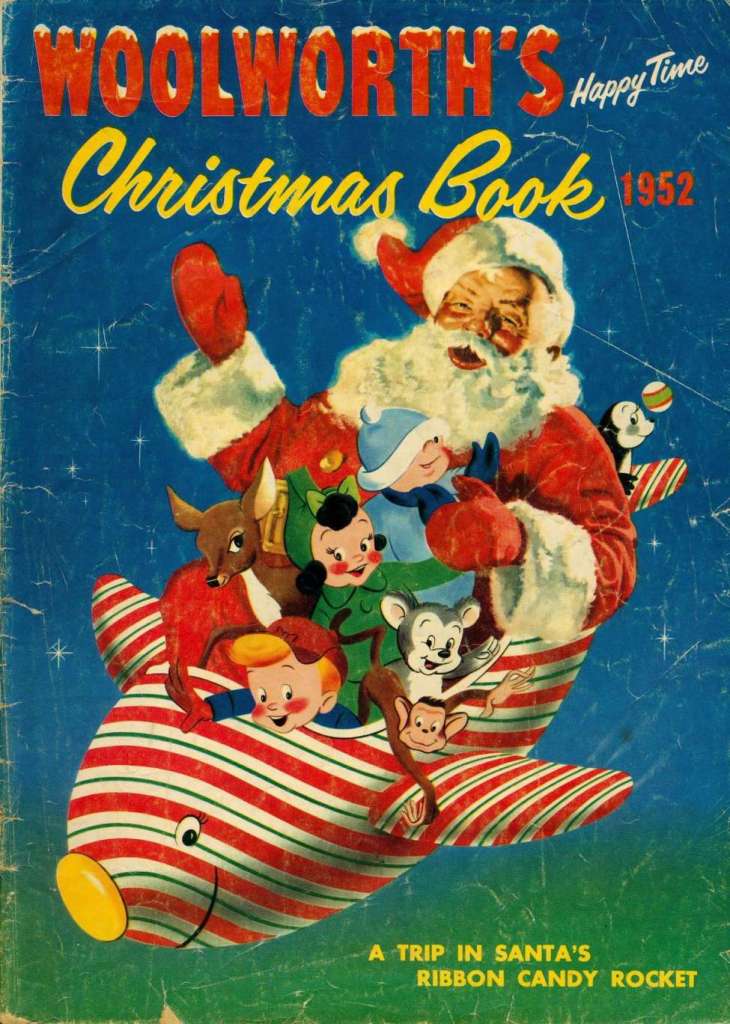
In the 1950s, Woolworth’s was one of America’s retail giants, with hundreds of stores everywhere in the nation. It was known as the “five-and-ten-cent store”, though by that time, while it was still a value variety store, most items weren’t a nickel or dime.
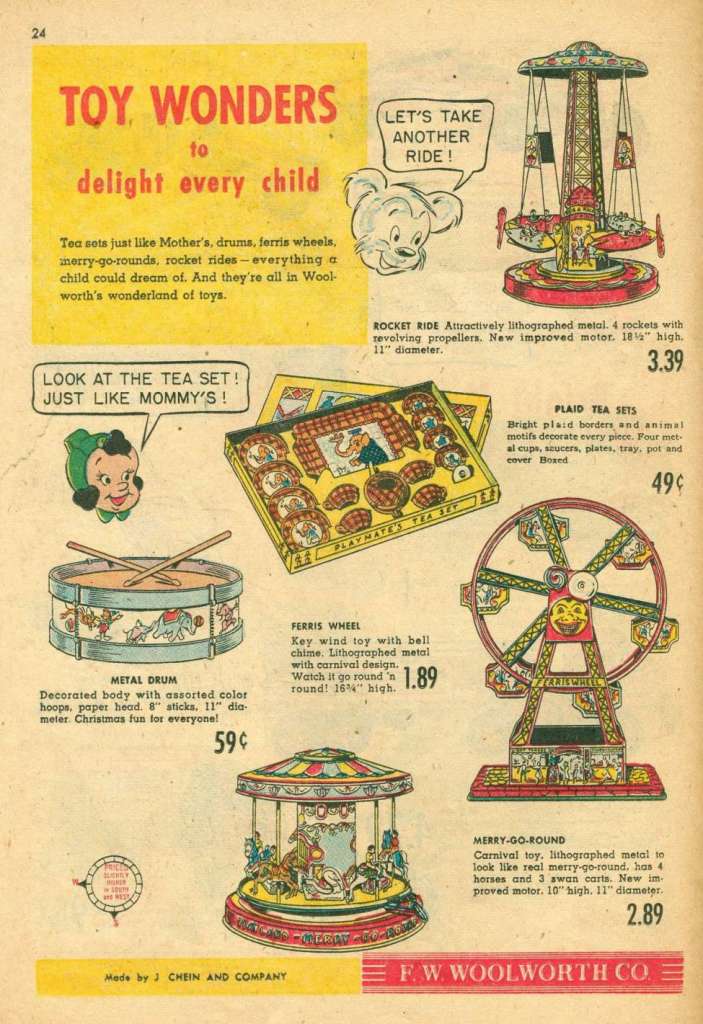
At Christmas, Woolworth’s published a comic book, Woolworth’s Happy Time Christmas Book. It contained a few holiday comics, but mostly it was page after page of product promotions aimed at kids—and at parents who did the shopping.
Below are just a few of the pages, a taste of the experience of Christmas, shopping, childhood and parenthood in America circa 1952.







December 23, 2025
Time Stood Still on Christmas?
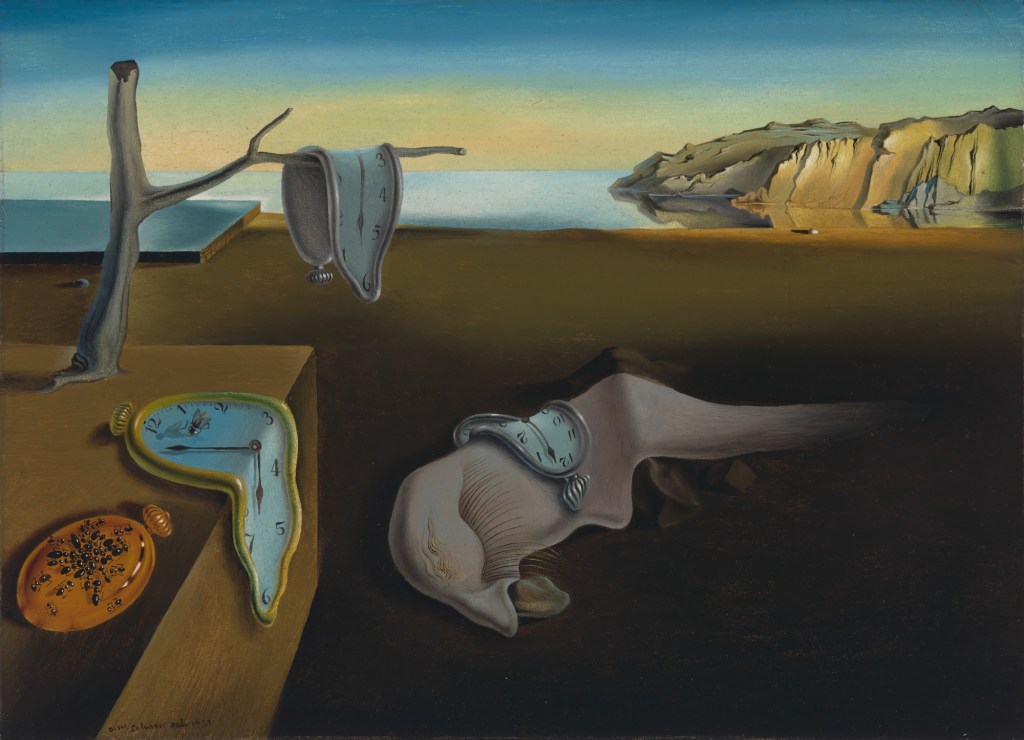
I’ve posted before about the infancy gospels, Christian texts that fill in missing information about the events surrounding the birth of Jesus. These gospels are apocryphal—they are not included in the biblical canon—but have been influential and interesting for centuries.
The Gospel of Pseudo-Matthew includes a fascinating story about dragons and wild beasts worshiping Jesus:
18
Baby Jesus Is Worshiped by Dragons and Other Wild Beasts
1 When they arrived at a certain cave where they wanted to cool themselves off, Mary came off the donkey and sat down, and held Jesus on her lap. There were three male servants with them on the road, and one female servant with Mary. And behold, suddenly many dragons came out of the cave. When the servants saw them they cried out. Then the Lord, even though he was not yet two years old, roused himself, got to his feet, and stood in front of them. And the dragons worshiped him. When they finished worshiping him, they went away. Then was fulfilled what was spoken by the prophet in the Psalms, who said, “Praise the Lord from the earth, O dragons and all the places of the abyss.”
2 The Lord Jesus Christ, though just a small child, walked along with them so that he might not be a burden to anyone. Mary and Joseph were saying to one another, “It would be better for those dragons to kill us than to harm the child.” Jesus said to them, “Do not think of me as a young child, for I have always been the perfect man, and am now; and it is necessary for me to tame every kind of wild beast.”
Then there is the Proto-Gospel of James:
Of all the early Christian apocrypha, none played a larger a role in the theology, culture, and popular imagination of late antiquity and the Middle Ages than the Proto-Gospel of James. This is the Gospel “prior to” the Gospel, an account of the events leading up to and immediately following the birth of Jesus.
Bart Ehrman, The Other Gospels: Accounts of Jesus from Outside the New Testament
In this story, time stands still for Joseph:
18
Joseph Watches Time Stand Still
1 He found a cave there and took her into it. Then he gave his sons to her and went out to find a Hebrew midwife in the region of Bethlehem.
2 But I, Joseph, was walking, and I was not walking. I looked up to the vault of the sky, and I saw it standing still, and into the air, and I saw that it was greatly disturbed, and the birds of the sky were at rest. I looked down to the earth and saw a bowl laid out for some workers who were reclining to eat. Their hands were in the bowl, but those who were chewing were not chewing; and those who were taking something from the bowl were not lifting it up; and those who were bringing their hands to their mouths were not bringing them to their mouths. Everyone was looking up. I saw a flock of sheep being herded, but they were standing still. The shepherd raised his hand to strike them, but his hand remained in the air. I looked down at the torrential stream, and I saw some goats whose mouths were over the water, but they were not drinking. Then suddenly everything returned to its normal course.
Bart Ehrman, a leading expert on these gospels, writes that every time he reads this passage, he thinks of the Twilight Zone.
Consider this history, consider this a story. It concerns a profound matter, for believers and non-believers, for philosophers and scientists.
In contracts, the term “time is of the essence” is commonly included. Meaning that it is a primary element of performance.
In the Bible, the story begins with time. The usual first word in translation is “when”, followed by a counting of days.
Time is of the essence. In our lives, we keep time, mark time, use time wisely, foolishly, carefully, carelessly. One thing we know, or think we know, whatever time is, it does not stop. Or can it?
An exceptional book about time: The Order of Time by Carlo Rovelli
December 22, 2025
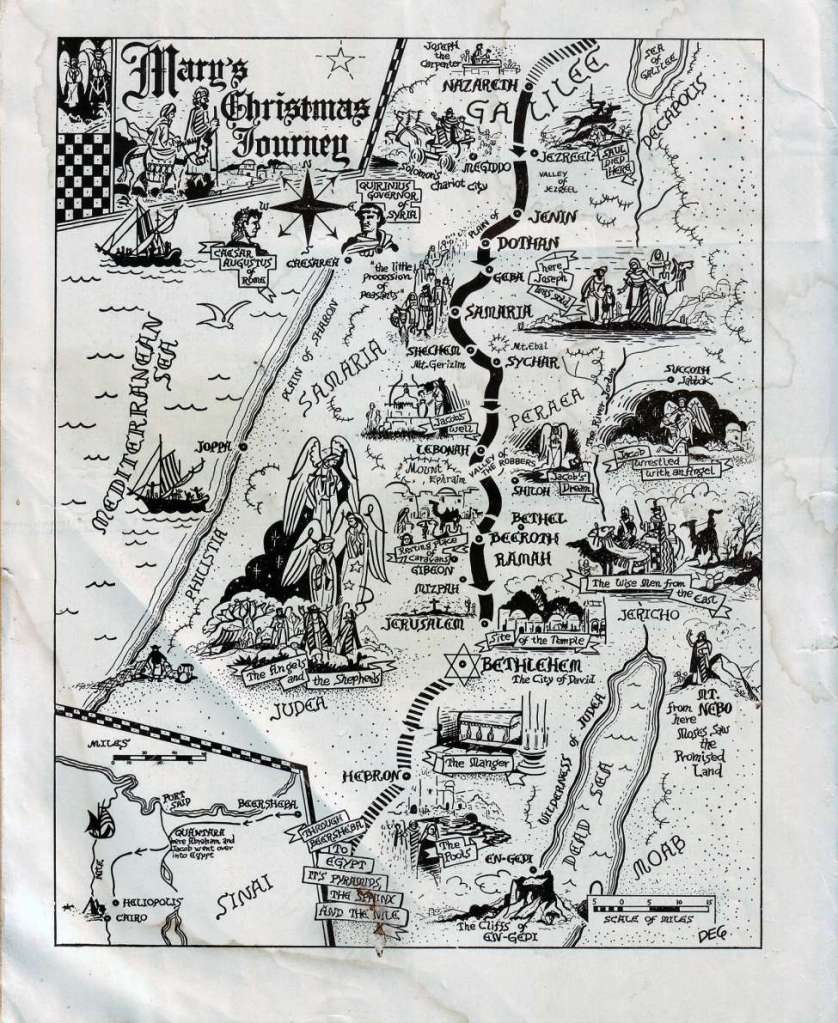
Experience the 3D First Christmas in 2 easy steps!
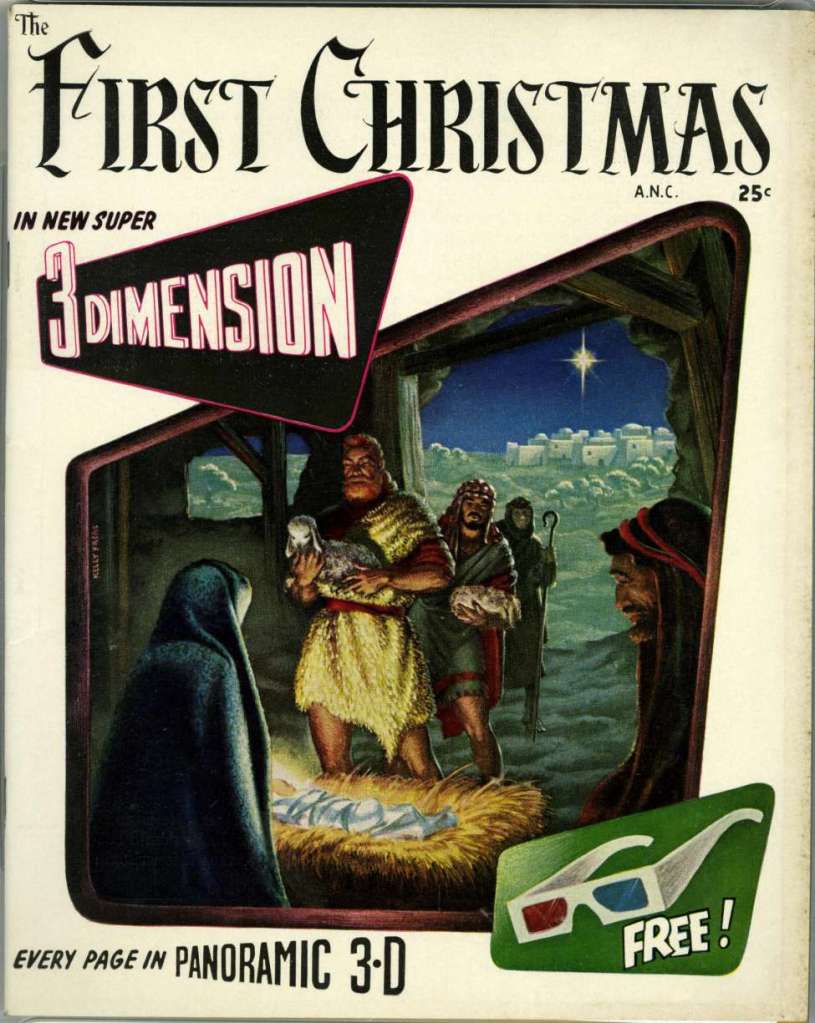
1. Go to Comic Book Plus and free download The First Christmas in New Super 3Dimension (1953)!
2. Buy a pack of 3D glasses for $3.95! You can still get them in time for Christmas!
Experience the Christmas story as never before!

December 22, 2025
The season to be a “better” (your religion here)
A number of religions, not just Christianity and Judaism, have major or minor holidays this time of year. While individuals focus on their own faith, it is also a time to think about following any religion.
The word “better” above is in quotes, because there is not a singular standard for what it means to be a good or better Jew, Christian, Muslim, Buddhist, etc. And among the options, I am in a weak position, or no position at all, to suggest what that might be. But I’m softly going to try, given the season.
If your idea of what it means to be a better adherent to your religion involves inflicting suffering, pain, abuse, damage to others, you should think again. Investigate whether there is something in your religion, maybe in the most basic and sacred moments and ideas, that contradicts that. Investigate whether you have been misled or have misled yourself, because they and you are human with all the human tendencies that those higher teachings are trying to change.
Christmas is just one example. Innocence is born, with the power and potential to do great good. Others are committed to eradicating that potential as soon as possible, and if not at the start, later on. If you think that is just a religious story, it is not. It is the story of history and the story of any day, this day, torn from the headlines.
Which side of the story are you on? Will you use your religion as pretext and excuse for being on the wrong side? Will you use your religion, which has been trying to teach you this, to rise above your natural human limitations and be…better?
December 21, 2025
The Grinches will not steal our winter solstice

Today is the winter solstice in the northern hemisphere. The shortest daylight of the year, the start of the inexorable amble to…more light!
During difficult times—war, pandemic, etc.—it can be hard to look away from whatever shady public events overwhelm our attention. It has been said this year that like the Grinch, some seem committed to stealing Christmas from us.
“They” haven’t stolen Christmas and “they” will not steal the winter solstice.
If you are in the northern hemisphere (some of you are not, so happy summer solstice), the winter solstice is a little different in different places. Warmer places get a little colder while more moderate places get a lot colder.
Here is the good news. The earth, our home planet, is circling and spinning. The day lights will get longer, the dark nights will get shorter. Spring will arrive in three months. Ever thus.
“They” will not and cannot change that.
Happy Winter Solstice!
 Bob Schwartz